Monday musings on Australian literature: Favourite books 2025, Pt 1: Fiction and Poetry

Around this time of December, I have, for some years, shared favourite Aussie reads of the year from various sources. Those sources have varied a little from time to time. This year’s are listed below.

This is not a scientific survey. For a start, the choosers’ backgrounds vary. Depending on the source, they may include critics, reviewers, commentators, subject specialists, publishers and/or booksellers. Then, there’s the fact that what they are asked to do varies. For example, some pickers are “allowed” to name several books while others are limited to “one” best (or favourite). And of course, they choose from different sets of books, depending on what they have read, and they use different criteria. In other words, this exercise is more serendipitous than authoritative. But, it still has value.

As always, I’m only including the choosers’ Aussie choices, but I include links to the original article/post so you can read them yourselves, should you so wish.

Here are the sources I used:

  • ABC RN Bookshelf (radio broadcaster): Cassie McCullagh, Kate Evans and a panel of bookish guests, Jason Steger (arts journalist and former book editor); Jon Page (bookseller); Robert Goodman (reviewer and literary judge specialising in genre fiction). I only shared their on air picks, not their extras.
  • Australian Book Review (literary journal): selected from many forms by ABR’s reviewers
  • Australian Financial Review (newspaper, traditional and online): shared “the top picks … to add to your holiday reading pile.” 
  • The Conversation (online news source): experts from across the spectrum of The Conversation’s writing so a diverse list.
  • The Guardian (online news source): promotes its list as “Guardian Australia critics and staff pick out the best books of the year”.
  • Readings (independent bookseller): staff “vote” for their favourite books of the year, then Readings shares the Top Ten in various categories.

To keep it manageable, I am focusing here on fiction (including short stories) and poetry, with a separate post on nonfiction, to follow.

Novels

  • Randa Abdel-Fattah, Discipline (Zora Simic, ABR; Clare Wright, ABR)
  • Shokoofeh Azar, The Gowkaran tree in the middle of our kitchen (Edwina Preston, The Conversation)
  • Dominic Amerena, I want everything (Julian Novitz, ABC; Jon Page, ABC; Andrew Pippos, AFR; Jack Callil, The Guardian) (Kate’s review)
  • Marc Brandi, Eden (Robert Goodman, ABC)
  • Paul Daley, The leap (Julie Janson, ABR; Bridie Jabour, The Guardian)
  • Olivia De Zilva, Plastic budgie (Jo Case, The Conversation)
  • Laura Elvery, Nightingale (Readings)
  • Beverley Farmer, The seal woman (1992, rereleased 2025) (Eve Vincent, The Conversation)
  • Jon Fosse, Septology (Marjon Mossammaparast, ABR)
  • Andrea Goldsmith, The buried life (Readings) (my review)
  • Madeleine Gray, Chosen family (Kate Evans, ABC) (Brona’s review)
  • Fiona Hardy, Unbury the dead (Jon Page, ABC; Readings)
  • James Islington, The strength of the few (Tim Byrne, The Guardian)
  • Brandon Jack, Pissants (Readings) (Kate’s review)
  • Toni Jordan, Tenderfoot (Readings)
  • Vijay Khurana, The passenger seat (Beejay Silcox, The Guardian) (Lisa’s review)
  • Sofie Laguna, The underworld (Sian Cain, The Guardian) (on my TBR, see my conversation post)
  • Charlotte McConaghy, Wild dark shore (Julia Feder, AFR) (Brona’s review)
  • Jasmin McGaughey, Moonlight and dust (Allanah Hunt, The Conversation) (See my CWF post)
  • Lay Maloney, Weaving us together (Melanie Saward, The Conversation)
  • Patrick Marlborough, Nock Loose (Jared Richards, The Guardian)
  • Angie Faye Martin, Melaleuca (Sandra Phillips, The Conversation)
  • Jennifer Mills, Salvage (Robert Goodman, ABC; Alice Grundy, The Conversation
  • Judi Morison, Secrets (Paul Daley, The Guardian)
  • Rachel Morton, The sun was electric light (Readings; Seren Heyman-Griffiths, The Guardian)
  • Omar Musa, Fierceland (Kate Evans, ABC; Readings; Giselle Au-Nhien Nguyen, The Guardian)
  • Andrew Pippos, The transformations (Jo Case, The Conversation; Cassie McCullagh, ABC; Readings; Zora Simic, ABR)
  • Nicolas Rothwell and Alison Nampitjinpa Anderson, Yilkari: A Desert Suite (Stephen Romei, ABR; John Woinarski, AFR) (on my TBR)
  • Josephine Rowe, Little world (Felicity Plunkett, ABR; Readings; Geordie Williamson, ABR; Fiona Wright, The Conversation) (Lisa’s review)
  • Craig Silvey, Runt and the diabolical dognapping (Jason Steger x 2, ABC and ABR)
  • Jessica Stanley, Consider yourself kissed (Lauren Sams, AFR)
  • Sinéad Stubbins, Stinkbug (Michael Sun, The Guardian)
  • Lenore Thaker, The pearl of Tagai town (Julie Janson, ABR)
  • Madeleine Watts, Elegy, Southwest (Steph Harmon, The Guardian)
  • Sean Wilson, You must remember this (Jason Steger x 2, ABC and ABR) (Kate’s review)

Short stories

  • Tony Birch, Pictures of you: Collected stories (Tony Hughes-d’Aeth, ABR; Julie Janson, ABR; Readings; Geordie Williamson, ABR; BK, The Guardian)
  • Lucy Nelson, Wait here (Marjon Mossammaparast, ABR; Bec Kavanagh, The Guardian)
  • Zoe Terakes, Eros (Dee Jefferson, The Guardian)

Poetry

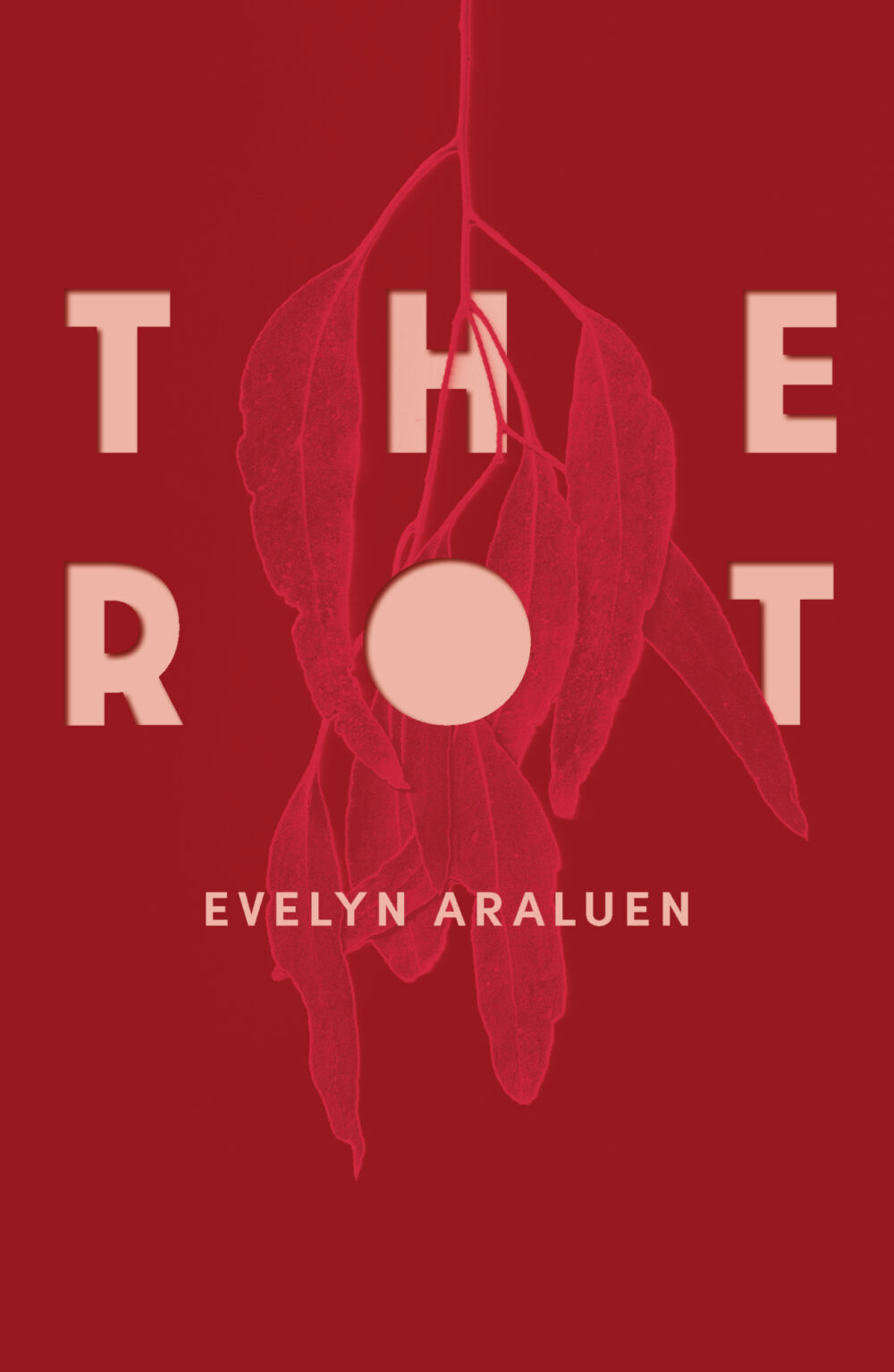
  • Evelyn Araluen, The rot (Tony Hughes-d’Aeth x 2, ABR and The Conversation; John Kinsella, ABR; Alison Croggon, The Guardian) (on my TBR, see my CWF posts 1 and 2)
  • Eileen Chong, We speak of flowers (Seren Heyman-Griffiths, The Guardian) (Jonathan’s review)
  • Antigone Kefala, Poetry (Marjon Mossammaparast, ABR)
  • Luke Patterson, A savage turn (Felicity Plunkett, ABR; John Kinsella, ABR)
  • Omar Sakr and Safdar Ahmed, The nightmare sequence (Jen Webb, The Conversation)
  • Sara M. Saleh and Zainab Syed with Manal Younus (ed.), Ritual: A collection of Muslim Australian poetry (Esther Anatolis, ABR; Julie Janson, ABR)

Finally …

It’s encouraging to see the increasing diversity in these lists, including (but not only) several First Nations writers, compared with the lists I made just three or four years ago. It’s also interesting to see what books feature most. Popularity doesn’t equal quality, but it does indicate something about what has attracted attention during the year. One book (Tony Birch’s short story collection) was mentioned five times, and three others four times:

  • Tony Birch, Pictures of you (short stories)
  • Dominic Amerena, I want everything
  • Andrew Pippos, The transformations
  • Josephine Rowe, Little world

Of last year’s most mentioned books, several received significant notice at awards time – some winning them – including Michelle de Kretser’s Theory & practice and Fiona McFarlane’s Highway Thirteen.

This year, I read three novels from last year’s (2024) lists, Brian Castro’s Chinese postman, Melanie Cheng’s The burrow, Michelle de Kretser’s Theory & practice.

So, what has caught my eye from this year’s list, besides the one I have read – Andrea Goldsmith’s The buried life – and those on my TBR? Well, many, but in particular Tony Birch’s short story collection. And, I have read Josephine Rowe and Shokoofeh Azar before, so I am keen to read their new books.

If you haven’t seen it you might also like to check out Kate’s list of the top 48 books (from around the world) that appeared on the 54 lists she surveyed.

Thoughts – on this or lists from your neck of the wood?

Kim Kelly, Touched (#BookReview)

In 2023, novelist Kim Kelly was one of the two winners of Finlay Lloyd’s inaugural 20/40 Publishing Prize, with her 1920s-set historical novel, Ladies’ Rest and Writing Room (my review). Publisher Julian Davies had hoped at the time to award one fiction and one nonfiction prize, but there was a dearth of good nonfiction entries. That was rectified in 2024, with Sonya Voumard’s book on dystonia, Tremor (my review), being one of the two winners. This year, Kim Kelly returned with a nonfiction work on anxiety, titled Touched: A small history of feeling – and won again.

There is an obvious similarity between these two nonfiction winners, given both deal with medical conditions that impinge significantly on their writers’ lives. However, as quickly becomes apparent, the similarity is superficial, probably due to their writers’ origins. Voumard and Kelly are both published authors with other books to their names, but Voumard is a journalist while Kelly is a novelist, and this I think informs their different approaches to their subject matter.

Finlay Lloyd describes Touched like this:

Why this book is different
Documenting the damaging role of anxiety in our lives is hardly new, but Touched takes us inside the destabilising riot of a three-day panic attack with such insight, honesty and humour that the perspective we gain is revelatory and overwhelmingly hopeful.

Why we liked it
This book has a wonderful breadth of understanding—of the author’s own crazily complex family, of the wider issue of anxiety across society, and of her own voyage as a highly competent yet vulnerable being in a worryingly unhinged world.

Both Voumard and Kelly use a personal narrative arc to frame their discussions. For Voumard it’s the brain surgery she is about to undertake as her book opens, while for Kelly it’s the three-day panic attack she has leading up to her Masters graduation ceremony. Kelly’s focus is this attack. She takes us into it, viscerally. It is the emotional and narrative core of this book. Voumard, on the other hand, weaves her own story through a wider story about dystonia, in which she explores its different forms and treatments through the experiences of others as well as her own. Both writers situate their conditions within a wider societal context, but very differently.

And here I will leave Voumard. After all, she has her own review already!

Kelly starts her book with an (unlabelled) author’s note in which she explains that memory is slippery, so dates and details may not be precise, but “everything in this memoir is true, in essence and in feeling”. I like this, because no-one can remember all the tiny details, and in most cases – crime, excepted – they are not important. What is important is being truthful to the experience, and this, I feel, Kelly achieves.

“It’s exhausting, being human”

Touched is divided into two parts – the lead up to graduation day, and then graduation day and its aftermath. Within these parts are single-word titled chapters starting, logically, with “contact”, and her contradictory responses to “touch”, to how physical touch can settle her but can also produce anxiety when it involves people she doesn’t know well, like, say, hairdressers, doctors and dentists. As for masseurs, no way! But “touched” of course has other meanings, including:

To be in touch, to communicate. To have the touch, a skill at something. To be touched, to be momentarily captured by some sentiment. To live in a vague state of craziness. To feel. Small word, wonderfully big inside its tight dimensions of spelling and sound.(p. 14)

Kelly, who is a book editor as well as a novelist, loves words, so her memoir is written with the eye of someone who is deeply engaged with the meanings of words and how they convey feelings. As graduation day approaches, and she and her partner drive to Sydney for it, she suffers an excruciating panic attack which she describes with a clarity that is revelatory for those like me who have not experienced that degree of psychic distress. At the same time, she looks back to history – including to the Ancient Greeks and philosophers like Aristotle – for ideas on anxiety. And she flashes back to her own past, exploring how and where and why it all began. Her Jewish roots, the experiences of poverty and war in her Irish Catholic tree, the insecurities of her parents, her own childhood fears, and wider societal issues like the imposter syndrome that is particularly common among women, all come into the frame.

It’s not all distress and misery, however, because in between her mulling she shares her wins, her strategies, and her optimistic self that keeps on going. The writing is beautiful, slipping between information-sharing, straight narrative, and light or lyrical, rhythmical moments when she takes a breath and so do we.

Touched is a personal story, and so, by definition, it can be intensely self-focused at times. However, the intensity serves a purpose for those unfamiliar with what anxiety can do. Further, with a keen sense of tone, Kelly regularly reins it in so it never wallows. At the time of her writing, she tells us, around 17% of Australians had experienced some form of anxiety disorder. That’s nearly one in five of us. This book is for all those people – and for the rest of us who know someone who has experienced it, or who might ourselves experience it one day. We just never know. We should thank Kim Kelly for putting herself out there, so beautifully and so honestly.

Read for Novellas in November (as novella-length nonfiction) and Nonfiction November, but not quite finished in time!

Kim Kelly
Touched: A small history of feeling
Braidwood: Finlay Lloyd, 2025
142pp.
ISBN: 9780645927030

Monday musings on Australian literature: recent Australian creative nonfiction on my TBR

Brona (This Reading Life) recently announced her main reading project for next year, Reading Nonfiction 2026, in which she plans to read 24 nonfiction books from her TBR. She has written a few posts on the project, including on two nonfiction categories on her TBR shelves, Australian Lit Bios and Environment, Climate and Travel. If you are looking for some good Aussie nonfiction – perhaps to get ahead of the game for Nonfiction November 2026 – these posts would be a good place to start.

While I also have nonfiction books on my TBR shelves, including some in the categories above, particularly the Lit Bio one, I thought I would share here some books from another “genre”, that described as creative or narrative or even literary nonfiction. As I have written before, including in my Supporting Genres post back in 2021, it generally refers to nonfiction writing that uses some of the techniques of fiction, particularly, but not only, in terms of narrative style. Wikipedia defines it as “a genre of writing that uses literary styles and techniques to create factually accurate narratives.” This is a good enough description (I’ll use “description” that rather than “definition”) for me to use here.

I do enjoy nonfiction, including history of all sorts but particularly social history, autobiography and biography, travel, science, and more, but the form which this writing takes can make a difference and, being a lover of fiction, creative nonfiction is my preferred form. As is my wont and as I explained in that 2021 post, I define it broadly, so I won’t repeat all that here. Instead, I’ll just list a few that are on my TBR right now that fill the bill. 

Interestingly, several of them come from Upswell Publishing which, as publisher Terri-ann White says on her About page, publishes “books that elude easy categorising and work somewhat against the grain of current trends. They are books that may have trouble finding a home in the contemporary Australian publishing sector.” They are, in fact, the sorts of books that tend to fall into the creative nonfiction basket. Other publishers who publish in this area include Transit Lounge, Text Publishing, and, although small in output, Finlay Lloyd. Interestingly too, these books are often, but certainly not always, written by writers of fiction.

So, here is a somewhat eclectic and random list of recent books from my TBR. I have ascribed some sort of “form” to them, but because, by definition, they are hard to categorise, these descriptors are loose, even those that don’t look like they are:

  • Anne-Marie Condé, The prime minister’s potato and other essays (Upswell, 2025, sociocultural studies)
  • Gregory Day, Words are eagles (Upswell, 2022, landscape writing)
  • Abbas El-Zein, Bullets, paper, rock: A memoir of words and wars (Upswell, 2024, memoir)
  • Helen Garner, Chloe Hooper and Sarah Krasnostein, The mushroom tapes (Text, 2025, true crime)
  • Kim Kelly, Touched (Finlay Lloyd, 2025, memoir, review coming soon)
  • Belinda Probert, Imaginative possession: Learning to live in the Antipodes (Upswell, 2021, memoir/place writing)
  • Susan Varga, Hard joy: Life and writing (Upswell, 2022, memoir)
  • Jessica White, Silence is my habitat (Upswell, 2025, ecobiographical writing)

What do you think about creative (or whatever you prefer to call it) nonfiction?

Monday musings on Australian literature: Selected Australian doorstoppers

A week or so ago, I saw a post by Cathy (746 Books) that she was taking part in a Doorstoppers in December reading event. My first thought was that December is the last month I would commit to reading doorstoppers. In fact, my reading group agrees that doorstopper month is January, our Southern Hemisphere summer holiday month. That’s the only month we willingly schedule a long book. My second thought was that I call these books “big baggy monsters”. But, that’s not complimentary I know – and I do like many big books. Also, it’s not alliterative, which is almost de rigueur for these blog reading challenges.

Anyhow, I will not be taking active part, but it seemed like a good opportunity for a Monday Musings. I’ll start with definitions because, of course, definition is an essential component of any challenge. The challenge has been initiated by Laura Tisdall, so she has defined the term for the participants. (Although, readers are an anarchic lot and can also make up their own rules! We wouldn’t have it any other way, would we?) Here is what she says:

Genre conventions vary so much. For litfic, for example, which tends to run shorter, I can see anything over 350 pages qualifying as a doorstopper, whereas in epic fantasy, 400 pages would probably be bog standard. Let’s say it has to at least hit the 350-page mark – and we encourage taking on those real 500-page or 600-page + behemoths 

I love her recognition that what is a doorstopper isn’t absolute, that it does depend on the conventions or expectations of different forms or genres. I will focus on the literary fiction end of the spectrum but I think 350 pages is a bit short, particularly if I want to narrow the field a bit, so I’m going to set my target for this post at 450 pages. I am also going to limit my selected list to fiction published this century (albeit the challenge, itself, is not limited to fiction.)

However, I will commence with a little nod to doorstoppers our past. The nineteenth century was the century of big baggy monsters, even in Australia. And “baggy” is the right word for some, due partly to the fact that many were initially published in newspapers as serials, so they tended to, let me say, ramble a bit to keep people interested over the long haul. Dickens is the obvious example of a writer of big digressive books.

In 19th century Australia, publishing was just getting going so the pickings are fewer, but there’s Marcus Clarke’s 1874 His natural life (later For the term of his natural life). Pagination varies widely with edition, but let’s average it to 500pp. Catherine Martin’s 1890 An Australian girl is around 470pp. Rolf Boldrewood’s Robbery under arms runs between 400 and 450pp in most editions, while Caroline Leakey’s 1859 The broad arrow is shorter, with editions averaging around 400pp.

By the 20th century, Australian publishing was growing. Like Leakey’s novel, Joseph Furphy/Tom Collins’ 1903 Such is life is shorter, averaging 400pp (Bill’s final post). Henry Handel Richardson’s 1930 The fortunes of Richard Mahony, depending on the edition, comes in around the 950pp mark. Of course, it was initially published as three separate, and therefore relatively short, volumes but the doorstopper edition is the one I first knew in my family home. Throughout the century many doorstoppers hit the bookstands, including books by Christina Stead in the 1930s and 40s, Xavier Herbert from the 1930s to the 1970s (when his doorstopper extraordinaire, Poor fellow my country was published), Patrick White from the 1950s to late in his career, and on to writers like Pater Carey whose second novel, 1985’s Illywhacker, was 600 pages. He went on to publish more big novels through the late 20th and into the 21st century.

Selected 21st Century Doorstoppers

The list below draws from novels I’ve read from this century. In cases where I’ve read more than one doorstopper from that author, I’ve just chosen one.

Peter Carey, Parrot and Olivier in America
  • Peter Carey, Parrot and Olivier in America (2009, 464pp, my review)
  • Trent Dalton, Boy swallows universe (2018, 474pp, my review)
  • Michelle de Kretser, Questions of travel (2012, 517pp, my review)
  • Sara Dowse, As the lonely fly (2017, 480pp, my review)
  • Richard Flanagan, The narrow road to the deep north (2013, 466pp, my review)
  • Elliot Perlman, The street sweeper (2011, 626pp, my review)
  • Wendy Scarfe, Hunger town (2014, 456pp, my review)
  • Steve Toltz, A fraction of a whole (2008, 561pp, my review)
  • Christos Tsiolkas, The slap (2008, 485pp, my review)
  • Tim Winton, Dirt music (2001, 465pp, read before blogging)
  • Alexis Wright, Carpentaria (2006, 526pp, my review)
Sara Dowse, As the lonely bly

There are many more but this is a start. They include historical and contemporary fiction. Many offer grand sweeps, while some, like Scarfe’s Hunger town, are tightly focused. The grand sweep – mostly across and/or place – is of course not unusual in doorstoppers. A few are comic or satiric in tone, like Carey’s Parrot and Olivier in America, while others are serious, and sometimes quite dark. The authors include First Nations Alexis Wright and some of migrant background. And, male writers outweigh the females. Perhaps it’s in proportion to the male-female publication ratio? I don’t have the statistics to prove or disprove this. Most of these authors have written many books, not all of which are big, meaning the form has followed the function!

Are you planning to take part in Doorstoppers in December? And, if you are, what are you planning to read? Regardless, how do doorstoppers fit into your reading practice?

Monday musings on Australian literature: Trove treasures (15), What Australia read in 1945

Help Books Clker.com
(Courtesy OCAL, via clker.com)

Another post in my Monday Musings subseries called Trove Treasures, in which I share stories or comments, serious or funny, that I come across during my Trove travels. 

Today’s story is longer than those I have mostly shared, but given it’s an annual recap of 1945, exactly 80 years ago, I’ve decided to share it. The article, “What we read in 1945” (29 December 1945), was written by Ian Mair* who may have been The Argus’ Literary Editor at the time, given his was the byline for the Argus’ Weekend Magazine Literary Supplement.

The first part of the article contains the titles of books by Australian writers – across various forms, including novels, short stories, poetry, and essays – published in Australia in 1945. Before these, however, he says this:

What must surely be from all reports the most important book of the year by an Australian, Christina Stead’s For love alone [my review], published in America, has been out some months, yet has not been seen in Australia, and is not likely to be seen here for some months yet.

Harumph. Indeed, he introduces his article with the comment that it had been an “odd” year for the Australian book world because importers had been “unable to get anything like the numbers required of the books they have ordered” and instead, “have had to half-fill their shops with whatever material of second rate interest the English trade cared to send them”. Nonetheless, trade had boomed, and Australian publishers and printers had “prospered”.

Do read the article yourself if you are interested, as I’m just going to share some of the authors and titles he names, and some of the issues he raises.

1946 Cheshire ed.

So, he makes a big call saying that “the most beautiful piece of Australian writing of the year”, in book form, was Alan Marshall’s nonfiction These are my people. Marshall was 42 when it was published, and it seems to have been his first book. Despite some reservations, Mair says that “it will very likely be still read years hence, and not only because it is the first book of a young writer who is obviously going places”. Well, Australians will know that Marshall did indeed go places, with his 1955 autobiography, I can jump puddles, becoming an Australian classic.

Mair also names two other nonfiction works as making “the two most important contributions to our literature” for “the light they throw on the Australian scene, and the different ways we have reacted to it imaginatively”. They are Sid Baker’s The Australian language, which is “more than philological” and is “by a true writer”, and Bernard Smith’s history of Australian art titled Place, taste and tradition. It is ‘less “literary” in feeling’ but offers new ideas “that everywhere illuminate Australian literature and life”.

All well and good, but I am more interested in fiction. After mentioning Marshall’s nonfiction work, he names James Aldridge’s war novel The sea eagle. It won, in 1945, the John Llewellyn Rhys Prize, which I’d never heard of, but was a British Commonwealth Prize that lasted from 1942 to 2010. Anyhow, Mair says it was a second book, and “still full of promise”, but less original than Marshall’s book. Mair felt it was too influenced by Hemingway. Its “prose and outlook are mannered … But Aldridge himself can imagine and write; he only needs time off to inspect the behaviour of people in general (not just soldiers), under less fantastic circumstances than those that environ his stories”. He was prolific, if Wikipedia is anything to go by.

I found this interesting but, reading on, I came across authors we Australian literature lovers know better. He says:

A year in which Katharine Susannah Prichard, Norman Lindsay, and Elinor [Eleanor] Dark put out novels should have been good.

Should? He was disappointed, describing them all as “deficient in basic thinking out”:

1944 Angus and Robertson ed.

Miss Prichard’s Potch and Colour (Prichard biographer, Nathan Hobby’s review) fell between her professions that they were either legend or simple slabs of life. Lindsay’s Cousin from Fiji worked over his favourite theme of flaming youth among puritans in a way that added nothing to it – and in literature if you don’t go forward you go back. Mrs. Dark’s Little company (Marcie’s review) was a tremendously solemn, vague argument that might be going on to this day for all the book showed.

I did like his point that “in literature, if you don’t go forward you go back”. Anyhow, fortunately for Mair, it was a good year for short stories – including Douglas Stewart’s collection Girl with the red hair – and for poetry. I should clarify that Prichard’s Potch and colour was also a short story collection.

Mair names more books, including essays, books of criticism, and biography, which you can read about in the article! I want to end on some comments he made about publishing in general. He says:

… considering the number of books bought during a year when money was plentiful, and so many consumers’ foods were scarce, Australian authors didn’t make much hay.

The problem was that the Australian market was small “for an author who really puts work into his [of course] writing”, but if Australian authors publish overseas – like Stead, for example – their books don’t reach their “fellow Australians at all” or reaches them “very late”. He names other authors, besides Stead, who publish overseas, like Henry Handel Richardson, Eleanor Dark and Kylie Tennant.

He says that “American publishers have surrendered the whole Australian market to the English book trade” and that English publishers are only interested in publishing an Australian book if “it will also sell reasonably well in England”. The end result is that “it is quite on the cards that an Australian novel published in what may well be as things are, its best possible market, that is, the United States, will not reach Australia at all”. If, however, an author does publish first in Australia, chances are American publishers will shy away, because it is no longer new – and it is “almost certain that an English publisher will reject it”. Catch 22 eh?

Some of this plight, he says, was being discussed by the Tariff Board, booksellers, publishers, and authors themselves. But, he moved on to his next point, which concerned something authors and publishers could do to potentially ‘improve matters”. This was, like Australia’s “exporters of tinned goods”, to “package things a bit better”. He said:

Australian dust-jackets, bindings, lay-outs, type faces, and printing are – generally speaking – awful. Dust-jackets are almost always completely without character, and usually in hideous colours. Even our most experienced publishers usually contrive to ruin the binding of a book with either ugly lettering on the spine, dirty use of gold-leaf, or even the title repeated in the front cover. And so on.

And this wasn’t all. He turned to the editing. Authors could write good or bad books, but no-one, he says, speaking to authors, would take them seriously if their “proofs are badly read” or their “grammar is rocky”, if they repeat themselves “unnecessarily”, or if they waste their adjectives on the first paragraph of the first page. A good publishing house should fix these – or,

in every capital city there are a number of newspaper sub-editors, able men, who could “clean up” and “tighten” many a book by a high-ranking Australian author or authoress in such a way that, though we may be ashamed of what in our books appears as lack of culture, we need no longer blush for our sheer illiteracy. I recommend this for all books, even for those morally-offensive pretentious ones of which there have been a few this year.

Moral delinquency is an awful spectacle indeed at any time; it is doubly so when it has egg on its chin.

He didn’t pull his punches, our Mr Mair. This article was, it turned out, a little treasure.

What say you?

* According to AustLit, Ian Mair (1907-1993) was a “librarian, lecturer, writer and critic”.

Monday musings on Australian literature: Forgotten writers 16, Edna Davies

Of all the forgotten writers I’ve researched, Edna Davies proved by far the most difficult. Even AustLit had nothing on her besides a list of a few works, but she intrigued me so I soldiered on. This post, like most of my recent Forgotten Writers posts, a revision, with a little bit of added information, of the one I posted there.

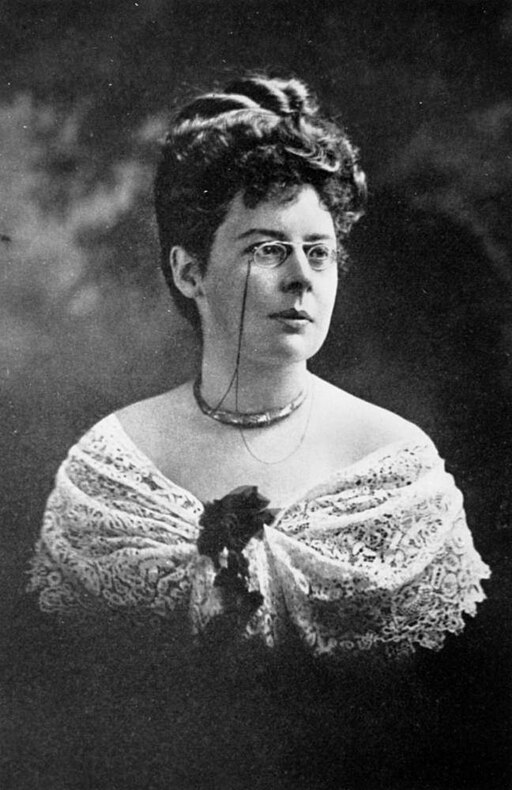
Edna Davies

So, for my AWW post I started at the end, where we get some facts. Her death was reported on 26 December 1952 in the Family Notices section of The Pioneer (from Yorketown, South Australia). It said she was 56 years old, which suggests she was born in 1896. The notice gives her name as Edna Irene, identifies her parents, and names her siblings as Daisy, Keith and Jack (deceased).

There are two other entries for her in the newspaper in December. On 12 December, a brief article announced that ‘Miss Edna Davies, “Pioneer” representative and correspondent, has been absent for some weeks because of ill health, and is at present in hospital, where she may have to spend some time yet’. They identify someone who will gather news, and add that “until Miss Davies’ return to Minlaton, advertisements, or payment of accounts, should be sent direct to the Pioneer Office”, which suggests she had an administrative role. They conclude this announcement, by saying that ‘The weekly feature “Comments on the News” (Written by Miss Davies) will, we regret, have to be temporarily suspended”, which confirms her writing contribution.

On 26 December, the same day the death notice appeared, they published a brief obituary. Here it is in full:

Press and Radio Correspondent Dies
Yorke Peninsula generally will feel the loss of Miss Edna Davies, of Minlaton who died in an Adelaide Hospital on Monday. Miss Davies, whose name is particularly familiar to readers of “The Pioneer,” has served many years as Southern and Central Yorke Peninsula’s chief correspondent for radio stations, provincial and metropolitan newspapers. People in many Peninsula towns will miss the friendly weekly phone calls she used to make in her search for news about the doings of local organisations and people. Her articles, as well as her Peninsula news items, have been of great value and interest, and we join her brother and sister and our readers in mourning her sudden demise.

So, it’s likely that she was born in Minlaton, central Yorke Peninsula, which is about 30 kms north of Yorketown, the home of her employer The Pioneer. Indeed, on 20 March 1926, a brief article appeared in The Pioneer, headed “Minlaton. Farewell to Miss Edna Davies”. The article describes an event that was held at the Minlaton Institute “to bid farewell to Miss Edna Davies and Mr. Jack Davies” (presumably the brother mentioned in the death notice.) They were leaving for London. (Indeed, according to Adelaide’s The Register, they left on 20 March). There were “eulogistic addresses” and “a useful cheque” was handed to Miss Davies. What does this tell us? Not a lot, but we can glean some information. She was around 30 years old, and seemingly not married. She was known in the community, at least enough for her departure to be reported on, albeit social news was more common at the time. It also tells us – from the headline – that it was she, not her brother, who was most known.  

Since writing my AWW post, I have done more research, and have discovered something about why she was known in the community. For example, Adelaide’s Observer (3 November 1923), writing on the Central Yorke’s Peninsula Agricultural Society’s annual show, observed that “the show committee provided the dinner … under the able management of Miss Edna Davies … Things worked smoothly in this department”. The article also praises the work of the Society’s secretary, Mr D.M.S. Davies, Edna’s father.

Anyhow, back to her chronology, three months after the report of her going to London, Moonta’s The People’s Weekly (12 June 1926) writes about the Minlaton Literary Society’s fourth annual musical and elocutionary competitions, advising that entries go to “secretary (Miss Edna Davies)”. This must have been a clerical error because, from the many newspaper reports under her by-line – and headed “Travel” or “Our London Letter” – it’s clear that she was in England by June 1926, then through 1927 and probably into early 1928. It’s possible that some of the articles dated later in 1928 were written back home.

Certainly, on 31 May 1929, there is a report in The Pioneer of the Minlaton Institute Literary Society’s seventh annual musical and elocutionary competitions and once again entries were to go to secretary Edna Davies. She probably was back on the job then. From this time, there are more articles, stories and columns – including her “Comments on the News” – by her South Australian papers. Together they build up a picture of who she was, and what she thought about life – local, national and international.

One that captured my attention was written from England, and published in The Pioneer on 6 January 1928. She starts by saying she hadn’t been doing much sightseeing so was “short of material” for her London Letter. So, she writes about some reading she’s doing about Australia, including a book by Mr Fraser. From what she says, I believe the book was Australia: The making of a nation (1911/12) by Scottish travel writer John Foster Fraser. Chapter 19 is tilted “A White Australia”. Fraser, a man of his times, understands the desire for a “white Australia”, but asks this:

What will Australian people say when the question is put to them, “As you are not developing this region [the great uninhabited north], what right have you to prohibit other people from developing it? It was not your land in the first instance. You obtained it by conquest that was peaceful. What can you do to resist conquest by force of arms? Who are you to say to the world, Let other peoples crowd together and be hungry owing to congestion of population, live cramped and struggling lives, but we, although doing practically nothing to develop our own resources, do not want anybody else to come in and develop the resources of a part of the world not given to us but given to the human race?'”

Davies is taken with this question and asks, “Have we all studied the pros and cons of the question carefully, so that should it be wanted, we can without hesitation give a carefully thought out decision after viewing the question from all sides. Looking back through history we see that no nation has ever come into, or held its own, without fighting for it, so why should we be an exception”. Her thinking – and Foster’s thinking – is not our thinking, but that she took the issue up and was published tells us something about her and the times. Neither of course consider that “little” line of Foster’s that “It was not your land in the first instance”.

Another randomly chosen example of her thinking comes from 20 June 1952, when she writes in her column “Comments on the News”:

READING about a press conference Mr. Menzies had recently in London this thought struck me — “What much wider outlook British pressmen seem to have than do their colleagues in Australia.”
And that’s a bad thing for Australia. Because if pressmen haven’t a wide outlook how can the public, who depend on them for news of the outside world, be expected to have one.

She slates it to the “old problem” of Australia’s geographic isolation, suggesting that “we are so isolated from other places that it it [sic] hard to realise that their welfare and their doings are important to us”.

AustLit lists 5 stories by her, and AWW lists 12 short stories in Stories from online archives (11 from the 1930s and 1 from the 1940s), but these are just a few of many short stories by her that were published in South Australian newspapers, and The Bulletin. I shared one of The Bulletin stories in my AWW post. Titled “Scrub”, it’s perfect “Bulletin-fare”, with its story of a woman who cannot get over a childhood nightmarish experience in the bush, and an intriguing take on lost-child-in-the-bush tradition in Australian culture.

Edna Davies turned out to be another example of an independent woman who seems to have made a career for herself in journalism and writing.

Sources

Edna Davies, “Scrub“, The Bulletin, Vol. 56 No. 2906 (23 Oct 1935)

All other sources are linked in the article.

Angus Gaunt, Anna (#BookReview)

Last month, I posted on the winners of the 2025 Finlay Lloyd 20/40 Publishing Prize, of which Angus Gaunt’s Anna was one. I am thrilled with this prize, not only because I love the novella form, but because of the variety of stories we are seeing. So far the fiction winners have been an historical novel from Kim Kelly, a contemporary coming-of-age novel from Rebecca Burton, and an audacious “what if” story from PS Cottier and NG Hartland. Three very different books, and now Anna makes it four.

When I started reading Anna, I thought I was heading into a dystopian novel. It is told third person from Anna’s perspective, and starts with her walking in the woods. A young man is following her. The woods are not identified, and neither is the young man, but she recognises him as a guard from the place she’s just left. Through their initial interaction, we learn that “the war is over” and the gates had been opened. Therefore, she firmly implies, he has no jurisdiction over her.

Anna, we discover as her journey continues, is about 15 years old, and had been taken to a labour camp with her family about three years ago. Her parents had died but she’s hoping her remaining siblings are ahead of her, safe in the exodus she’d missed. We know nothing about the woods – but they do not sound Australian – nor do we know the time setting. It is cold. There are some generic animals and plants – deer, hares, mushrooms, berries. The story focuses on Anna’s thought processes and her survival. There is almost nothing about the sociopolitical situation that got her there. We do know that Anna and the guard speak different languages, which suggests an invasion or some sort of oppression of minorities, but Gaunt does not go there. The notes I made during my reading, include this: “Timeless, placeless, non-political, means not dystopian? More allegory?”

The judges don’t call it either of these, but on “why this book is different” they say:

Winter is only beginning to thaw in a remote forest as Anna treks for her survival, accompanied by someone she cannot trust. With distilled clarity, this short novel carries the reader on a journey from victimhood to self-possession.

So, it is about survival, or, more precisely, about the inner resources you need to develop to overcome a dire situation.

Anna is a moving and absorbing read. Gaunt quickly engages our sympathy for his protagonist, young and defenceless in the woods. The language in the first two paragraphs sets up uncertainty. It starts:

Anna had already walked further than she meant to, but did not want to go back, not yet. She was basking in the sun … also in the silence. She had not done something like this for a long time … (p. 9)

Then she stops and looks up, where she sees “a large predatory bird … floating on secret air currents, delicate wing tips spread”. “Predatory” but “delicate”. Should we be worried? Then she sees the young guard, later identified as Yevgeny. He’s very young, uncertain, and in a show of bravado he tries to shoot the bird, but fails. He’s never shot anything before. And so the narrative and its main characters are established. Anna is alert, sensitive, intelligent and has some nous and wisdom about her. The guard, also young, lacks confidence, experience and nous, and is confused about his role as a man, a soldier, a human. This makes him potentially dangerous but also vulnerable. We – like Anna – are on the watch for which way he might go.

And so the novel progresses as this uneasy, wary-of-each-other pair journey through the woods, looking for the railroad and its promise of civilisation. Early on, during a brief time when she and Yevgeny are not together and she has returned to the camp, Anna meets a dying man who gives her his last food. Then later, together, they come across a cottage containing a barely surviving couple.

This brings another literary form to mind, the journey narrative, the search for home, a new one or old one, and – perhaps – for self. In journey narratives, physical and spiritual or emotional challenges are faced, and people are met. The journeyer must rely on inner resources to overcome the challenges, including assessing whether the people met are to be trusted or not. This is what we watch Anna do. We are privy to her thoughts as she goes, as she draws together past knowledge and present experience, and we gain confidence in her ability to make good decisions. Nearly half way through the story, her mind drifts to the schoolroom. It is comforting, but she stops herself,

recognising that she was attracted by the emotion of it rather than its practical application. There was not room for emotion. She was glad of this thought. Feelings and emotion could only cloud the mind, waste precious resources. All resources were precious. Her mind was clear now. She had a choice to make and she made one. (p. 56)

Of course it’s not a straight line, and Anna, like any journeyer under stress, slips back several times before getting a grip once more.

Anna is beautiful to read, from the first sentence. The language is tight but expressive. The necessary tension is off-set by moments of tenderness and hope, not to mention some subtle foreshadowing. And the characterisation is warm and empathetic.

I concluded my post on last year’s winner, The thirty-one legs of Vladimir Putin, that it was an audacious “what if” story. Anna is also audacious, in a different way. It calls on the tropes of established forms, like allegory and the journey narrative, but makes them into something new, something that confronts issues like trust and power in a way that feels both modern and timeless.

Read for Novellas in November.

Angus Gaunt
Anna
Braidwood: Finlay Lloyd, 2025
110pp.
ISBN: 9780645927047

Review copy courtesy Finlay Lloyd.

Helen Garner and Sarah Krasnostein in conversation with Beejay Silcox

Last night’s ANU/Meet-the-Author event was a sold-out affair, in a 500-seat theatre. And why not? Helen Garner, Chloe Hooper, and Sarah Krasnostein are among Australia’s top writers of narrative nonfiction, and they have just produced a book about the Leongatha mushroom murders. Indeed, it’s only because they have written about it that I am interested in reading about this case. Of course I knew about it, but I didn’t follow it intensely because these tragic criminal cases that capture the public’s attention so often become unedifying spectacles in which emotion overtakes reason in much of the public discourse. And I don’t want to go there.

As always, Colin Steele did the introductions, including explaining that Chloe Hooper had had to pull out due to her young son being sick. He referenced Jen Webb’s recent article on The mushroom tapes in The Conversation, and quoted her statement that “If I were asked to pick three people to write about this dramatic, yet banal, crime story, I’d choose them”. Yes! He then handed the floor over to Beejay Silcox.

The conversation

I was disappointed not to see Chloe Hooper because I have seen Helen and Sarah in action before, and because Kate (booksaremyfavouriteandbest) loved the event she attended with the three of them. So, Chloe’s absence created a significant hole, but Helen and Sarah filled it wonderfully – and graciously. They were open, thoughtful, and, as Kate found, still discovering new things to talk about.

Beejay started by quoting Janet Malcolm, who, she clearly knows, is a favourite of Garner’s. Malcom has argued that what journalists do is “morally indefensible” because of the way they draw in and then report on their subjects. But, continued Beejay, good journalists will overcome this risk by not rushing in, by, I think she said, applying “a tilt” to the way they look at things. And these writers are “masters of the tilt”.

On working together

The conversation covered the sorts of things you would expect for a book like this, including our complicity as readers/spectators, why this case, the need to resist easy answers, their process, their thoughts on the trial, and where the trust in each other had come in.

Sarah noted that there is no division between Helen’s work and her person, which of course is what so many of us love about her, but which has also brought her criticism. They all respected each other – not surprisingly – so had no doubts about each other’s personal processes. Helen said they were like people who had been in and survived a car crash. They were friends for life now.

Beejay referred to the fact that each had shared what their opening line would have been had they written the book alone (though they wouldn’t have, they said). Their lines (pp. 4-5) capture something about their individual approaches. Helen’s, which plays on lines by Sir Walter Scott, sounds baroque, Shakespearean. It speaks of empathy and the question of where is the line that an ordinary person crosses to commit such a crime. Chloe’s is more sociological (as in, what in society created this), while Sarah’s is more legal. As Sarah said, each had her own tone and vibe, her own interest in what they were observing.

Sarah commented on how the case had “asserted itself into public discourse with velocity”.

There was more talk about how and why they decided to write this book. They admitted to bristling at the assumption from others that it was “their story”. They found the sensationalism repellent. (In a humorous interaction, Helen dobbed Sarah and Chloe in as readers of the Daily Mail, which she eschews, but didn’t mind their passing on its news!)

It was an exhausting process, given the trial lasted 10 weeks. Helen talked of how you cope with something like this, on defending yourself against awfulness and pain of the trial, how the mind turns off. They noticed early that the journalists had formed a gang, presumably their way of coping. Beejay suggested that humour is another way, and that Helen provided some of the book’s comic relief.

On the court – and their approach to understanding it

The court is a workplace, said Sarah, so alongside extraordinary grief and distress are all the administrative aspects, such as when to have lunch, managing a juror needing a toilet break. They shared examples of humour and drama in the witness box. Sarah described their work as an “ethnography of a micro-world”, one in which they tried to capture the humanity of court.

Observing that their book is more about watching, than about the judgement, Beejay asked what was important to see, that we normally wouldn’t. Helen’s answer came quickly. It was distress and suffering. You see the survivors. Helen said they dreaded people thinking they were taking suffering lightly. Sarah agreed, adding that one of the heaviest things is that this is not a story of exceptionalism but more of “there but for the grace of god …”

They talked about emotions versus the banality, the quotidian details, such as, for Helen, Erin’s toe in the hiking sandals she would wear. She commented on being nearly undone by the domestic nature of it all, such as survivor Ian talking about having “a nice bowl of porridge” in the morning with his wife of many years, and now she’s gone.

Beejay described the book as both spectacle and literature, and quoted Helen’s comment in it that “everything could become a metaphor here“. The discussion went roundabout here, but essentially they agreed that in a case like this, metaphor must be handled carefully. In fact, Helen suggested that the urge to get metaphorical doesn’t belong in nonfiction. Sarah shared something from documentary filmmaker Ken Burns. He said that to find a detail that stands for the whole is a gold nugget, but then realised that that detail (from his Vietnam War film) represented the piece of a man’s soul that had come at great cost – so “gold nugget” was not appropriate. So, said Sarah, you must handle metaphor carefully, as you are dealing with human meaning. Helen had never heard Sarah say this. They agreed that nonfiction deals with facts you must honour, that it is chained to reality in a certain way.

On Erin

This led to a conversation about Erin, how the public had turned her into “a character”, and how information that had come up in the pre-hearings (such as probable earlier attempts on her husband’s life) was deemed inadmissible in court because there was no evidence. This decision would enrage a family, Sarah said, but is necessary to protect the presumption of innocence. (There was humour in the conversation here because Daily Mail readers knew this information, but Helen didn’t – and had felt an idiot!)

But, who was Erin? Mostly, women kill to protect, so Sarah had gone into the hearings with this understanding, but as information came out she had to reassess her thinking.

Helen found Erin a strange person, but thought the court artists’ depiction of her as evil, witch-like, was appalling. Later, they described the way the media/the public feasted on her was a form of horror.

Sarah said that when Erin started speaking on the witness stand, she was articulate, funny, recognisable, but gradually, as she was questioned, this picture melted. It was hard to separate Erin’s self from the persona. The unpalatable parts of her personality were on display. The bad-tempered teacher-like tone she used in response to the prosecutor was a misstep. It’s a middle-class story, said Helen.

Re explaining Erin’s crossing that line into murder, Helen was surprised to find that the prosecution doesn’t have to find a motive. She doesn’t have an answer. Like most humans, Erin embodied various people, mother, crabby teacher … Sarah added that Erin is not legally insane but is a deeply disordered person, so how do you apply “order” to her? We want answers, but we can often be mysterious to ourselves. Erin is recognisable as a mother, but like many of us can also harbour a primal rage.

Q & A

On how such an intelligent, well-educated woman could think she could get away with it: Helen has a theory about murderers. They have a great desire to do it, and a fantasy about how they are going to do it, but this all stops at the lethal blow because they haven’t thought about what happens next. So, for example, Erin hadn’t concealed evidence of her ownership of the dehydrator. This was astonishing,

On ethical issues they considered during the process: There were many, including the children, the community, whether they should look at sites (like the home). Are you adding to harm or does not looking do harm too? They questioned whether they were looking out of human curiosity, were they just perving? Sarah said that Helen has a view about “utility”. Courts are public, so we should understand them, we should ask questions about what they are doing. Hannah Arrendt described such crimes or behaviour as “a rent in the social fabric”. The law is being acted in our name, so we have duty to know what the law is doing. Part of the “utility” is to add complexity to our understanding, to show that the law, and these cases, are not simple.

On the role of gender in how the case played out publicly: Gender absolutely played a role. Had the crime been committed by a man it would not have held the public’s attention for so long. This was a middle class mum, set around something domestic, the serving of a meal. Her behaviour was a violent inversion of a major archetype of what women are. The gleeful mocking tone employed by some commentators was an insult to victims. (And reminiscent of how Lindy Chamberlain was “feasted upon”.)

Finally…

Beejay described the book as “a love letter to doubt”, to which Helen responded that she is a fan of ambivalence. Yes! She is not the god of all knowing consciousness; she wants readers to be there, questioning along with her. Doubt comes in different forms. At times, Helen and Sarah would be sentimental and mushy, while Chloe would remonstrate, “Guys, she’s planning to poison them”. They agreed that their essential subject matter was the preservation of doubt

Beejay concluded by asking them what they wished we all knew or felt. Sarah named the mockery, caricature, parody that was applied to the case. Why do people do this? These are people’s lives, and it affected a family and an entire community. Helen agreed, adding that “you want to preserve the tenderness in the story”. The old people who died kept disappearing from the story, but they were plain country people with faces of kindness, people who had helped Erin in need (which she recognised).

So, another excellent conversation with some meaningful takeaways encompassing how we respond to crimes like this, how we value writers who bring them to us in a considered thoughtful way, and how doubt and acknowledging complexity should be our mantras.

ANU/The Canberra Times Meet the Author
MC: Colin Steele
Lowitja O’Donoghue Cultural Centre, Australian National University
19 November 2025

Monday musings on Australian literature: Canberra Writers’ Festival 2025 recap

Back in 2019, the Canberra Writers Festival sent subscribers a report on the event. I don’t think they’ve done so since, which is a shame, as I loved reading (and writing about) it. This year, thanks to Colin Steele, who runs the ANU/Meet-the-Author series, I was able to see a report on the Festival that was published in the paywalled Books+Publishing*.

The report included some stats:

  • the festival recorded more than 10,000 audience attendees, an increase of 55% on the 2024 festival. 
  • the 5-day program included 114 events, of which 50 sold out and 24 reached 75% of audience capacity.

CWF also presented its inaugural schools program, and a Kids and YA day which featured writers like Andy Griffiths, Jack Heath, and Craig Silvey. These were apparently successful enough that they see opportunities “to further develop programs for younger audiences”. Excellent, eh?

Books+Publishing quoted CWF festival director Andra Putnis, as saying:

“The Canberra Writers Festival continues to grow because it connects people through story – whether they’re exploring global issues and politics or their love of literature, poetry, crime, memoir or page-turning fiction. This year’s record numbers show that Canberrans have an appetite for joyful and challenging conversations…

Gathering to listen to each other’s stories is what art and humanity are all about, and this year Canberra truly showed up for it. We really can’t thank enough all the international, interstate and local artists that came together to truly shine and share their work.”

I did not attend most of the big note sessions, such as those featuring Trent Dalton and Heather Rose. Time available, cost and the inevitable clashes all affect decision-making. And I really wanted to attend some of what sounded to be meatier sessions, like Reckoning, Our worlds, our way, and Poems of love and rage (see my posts linked below).

For me, it was an excellent Festival. When, in 2016, Canberra “got” a writers festival again, many of us fiction readers were frustrated that fiction did not feature highly in the program. Gradually, and particularly through Beejay Silcox’s time as Artistic Director, the balance shifted, resulting in far more sessions feeding those of us who aren’t only interested in history, memoir, and crime written by journalists (all of which are fine, I hasten to add! It’s the balance that was frustrating, not the individual works and their authors.) This year, this balance continued, and I felt spoilt for choice, which brings me to…

The main challenge of this Festival, for festival-goers anyhow. I have written about this before – and it is probably not an uncommon issue – but it’s the geographic spread of venues, across both sides of the lake. This is largely because the venues are sponsored, and who turns down a sponsor? The Festival does a good job of theming the different locations, which helps, but choices still have to be made. My practice is to choose a venue for a day on the basis of one or two events I really want to attend and then plan my bookings around that. Last year, that meant one day at one location, and the other day at another. This year it meant both days at the same location. For those who did some venue-hopping, it was, luckily, a good weekend weather-wise.

A few more facts

The National Library of Australia Bookshop, which was one of the participating booksellers, reported their Top Ten sales during the Festival. These sales presumably drew mostly from those sessions held at the Library so may not reflect the Top Ten sold throughout the Festival’s multiple venues, but we all like lists don’t we:

  1. Trent Dalton, Gravity let me go (Fourth Estate)
  2. Heather Rose, A great act of love (A&U)
  3. Garry Disher, Mischance Creek (Text, bought for Mr Gums for Christmas – don’t worry, he knows!)
  4. Brigid Delaney, The seeker and the sage (A&U)
  5. Hannah Kent, Always home, Always homesick (Picador)
  6. Madeleine Watts, Elegy, Southwest (Ultimo)
  7. Kathleen Folbigg and Tracy Chapman, Inside Out (Penguin)
  8. Devoney Looser, Wild for Austen (Ultimo, bought an e-version so mine won’t have counted here)
  9. Lev Grossman, The bright sword (Penguin)
  10. Rachael Johns, The lucky sisters (Penguin)

As you can see, I didn’t contribute much to this list, but I did buy some other books including Evelyn Araluen’s The rot, and some as gifts (so my lips are sealed). I already had some books relating to sessions I attended, including Darren Rix and Craig Cormick’s Wirra Wirra Wai and Susan Wyndham’s Elizabeth Harrower: The woman in the watchtower.

Back in 2019, I listed my posts in their order of popularity (that is, by number of hits), so I thought I’d do that again:

  1. All Things Austen: Jane Austen Anniversary Special (with Susannah Fullerton, Devoney Looser and Emily Maguire)
  2. Reckoning (with Craig Cormick, Paul Daley, Kate Grenville)
  3. (Tied) ACT Book of the Year (with Andra Putnis, Qin Qin, Darren Rix and Craig Cormick) AND Our Worlds, Our Way (with Evelyn Araluen, Lisa Fuller, and Jasmin McGaughey)
  4. Finding Elizabeth Harrower (with Susan Wyndham)
  5. Poems of Love and Rage (with Evelyn Araluen, Maxine Beneba Clarke and Omar Musa)
  6. What happened in the Outback (with Garry Disher and Gail Jones)

The posts ranked from 3rd to 6th were closely bunched, with the top and second ranked posts well out in front and somewhat separated from each other. You can tell something about my readers though, when you see that the crime-related session was my least popular post, while its participant Disher’s book (and Looser’s) were the only ones to make the Top Ten from the sessions I attended.

In conclusion …

Whatever the reason – programming, the weather, the truly engaged volunteers, and/or the fact that the cafe at my venue (the Library) stayed open for longer this year – there was a real buzz at this year’s festival. It was a joy to attend – and, I came away with some new insights and things to think about.

* This post draws partly from the Books+Publishing report (with the agreement of the Canberra Writers Festival).

Teffi, The examination (#Review, #1925 Club)

Mostly for the Year Clubs, I read an Australian short story, usually from one of my anthologies. However, for 1925, I couldn’t find anything in my anthologies, so turned to other newspaper-based sources, including Trove, but I mainly found romances or works that were difficult to access. And then, out of the blue, I found something rather intriguing, a story titled “The examination”. It was written by a Russian woman named Teffi, translated into English by J.A. Brimstone, and published in The Australian Worker, an Australian Workers’ Union newspaper, on 25 November 1925. I don’t know when it was originally written, nor have I been able to found out who J.A. Brimstone was.

Who is Teffi?

The Australian Worker ascribes the story to N. Teffi. This nomenclature is interesting. My research suggests that Teffi, not N. Teffi, was the pen name of Nadezhda Lokhvitskaya (1872-1952). Wikipedia gives her pen name as Teffi, but its article on her is titled Nadezhda Teffi. Curiously, the article’s history page includes a comment from a Wikipedian, dated 11 June 2014, that “Her pen name is only Teffi, not Nadezhda Teffi”. This Wikipedian “moved” the article (Wikipedia-speak for changing titles) to “Teffi”, but it was later moved back to “Nadezhda Teffi”. Seems to me it should be under “Nadezhda Lokhvitskaya” or “Teffi”. But, let’s not get bogged down. There’s probably more I don’t know about how she used her name over time.

The more interesting thing is who she was. Wikipedia provides what looks like a fair introduction to her life, so I won’t repeat all that here. Essentially, it says she was a Russian humorist writer who could be both serious and satirical, but whose gift for humour was “considered anomalous for a woman of her time”. However, she proved them wrong, “skyrocketing to fame throughout Russia with her satirical writings, so much so that she had candies and perfume named after her”.

Literary scholar Maria Bloshteyn, writing in the LA Review of Books in 2016, would agree. She starts her piece by describing Teffi as “once a Russian literary superstar”, and says that “Nadezhda Lokhvitskaya claimed that she took the comic-sounding and intentionally androgynous nom de plume for good luck”. Bloshteyn writes:

She began to publish in her early 30s and tried her hand in various genres, but it was her short stories, with their keen and hilarious observations of contemporary society, that were read by everyone from washerwomen to students to top government officials. They won her literary success on a scale unprecedented in pre-Revolutionary Russia.

My short story, however, was written post-Revolution, given we are talking 1925. But, I’m jumping ahead. Tsar Nicholas II was a big fan, Bloshteyn says, as was Vladimir Lenin “with whom she worked in 1905 at the short-lived New Life [Novaia Zhizn’] newspaper”. She left Russia in 1919, during the “Red Terror” when things started to turn sour. Her popularity continued in the émigré world. After the collapse of the Soviet Union, her books were read again and “celebrated as recovered gems of Russian humor”.

This potted history sounds very positive, but Bloshteyn explains that there was also darkness in her life, including the death of her loved father when she was young, difficult relationships with siblings, a failed marriage, mental health problems, and more. Also, “she became a victim of her immensely successful but severely confining brand”, meaning editors and readers “only wanted the Teffi they knew” and, worse, “they perceived all of her stories as funny, even when they were clearly tragic”. How frustrating that would be, eh?

She was inspired by – and has been likened to – Chekhov. Bloshteyn says:

Her appreciation of the absurd, of the comic minutiae of life, helps set off the darker or more transcendent aspects of our existence, but her main focus, in the tradition of the great 19th-century Russian writers, was always human nature itself: what makes us tick and why.

I’ll leave her biography here, but if you are interested, start at Wikipedia, and go from there.

“The examination”

“The examination” tells the story of a young girl, Manichka Kooksina, who is sitting for her end-of-year exams which will decide whether she moves on to the next grade. Important things ride on passing them, including staying with her friend Liza who has already passed and getting the new bike her aunt promised her if she passed. However, instead of knuckling down to study she fritters her time, trying on a new dress, reading, and finally filling her notebooks with a prayer “Lord, Help”, believing that if she writes it hundreds or thousands of times she will pass. Needless to say, she does not do well.

The story is beautifully told from her perspective, with much humour for the reader as she flounders her way through preparation and the exam itself. She feels persecuted, an animal being tortured, and resorts to the absurd solution of writing lines, while her nervous peers have at least tried. I wondered why this particular story of hers was chosen by The Australian Worker. Was it the only one available to them in English? Did the examination theme feel universally relevant? According to Bloshteyn, Teffi said that “even the funniest of her stories were small tragedies given a humorous spin”. This is certainly a “small tragedy” for the – hmm, foolish, procrastinating, but believable – Manichka.

Bloshteyn’s essay is primarily a review of two books that had been recently published, Tolstoy, Rasputin, others, and me: The Best of Teffi and Memories: From Moscow to the Black Sea. The former includes sketches and some of her “best loved short stories”. GoodReads says of it that “in the 1920s and 30s, she wrote some of her finest stories in exile in Paris … In this selection of her best autobiographical stories, she covers a wide range of subjects, from family life to revolution and emigration, writers and writing”. I don’t know whether “The examination” is one of them, but Bloshteyn writes, of the child-themed stories she mentions, that all “show children in the process of getting to know the world around them and finding the means to cope with it”. Manichka, although showing some resourcefulness, has a way to go.

I was thrilled to find this little treasure in Trove, and will try to read more Teffi. Has anyone else read her?

* Read for the 1925 reading week run by Karen (Kaggsy’s Bookish Ramblings) and Simon (Stuck in a Book).

N. Teffi
The examination” [Accessed: 21 October 2025]
in The Australian Worker, 25 November 1925