Monday musings on Australian literature: on 1923: 2, The Platypus Series

My first post in my Monday Musings 1923 series featured an update on the 1880-established NSW Bookstall Company, which, you may remember, focused on supporting Australia’s writers and readers by publishing Australian books and selling them for just one shilling each. In 1923, another publishing initiative appeared on the scene, Angus and Robertson’s Platypus Series.

This series, though, is a little more complicated. In 1923, as far as I can gather, the books were published by Angus and Robertson under their own imprint. Then, from 1924 to 1929, some, though maybe not all, were published under a different Angus and Robertson imprint, Cornstalk Publishing, before returning to Angus and Robertson in 1930. Through all this, however, it remained the Platypus Series.
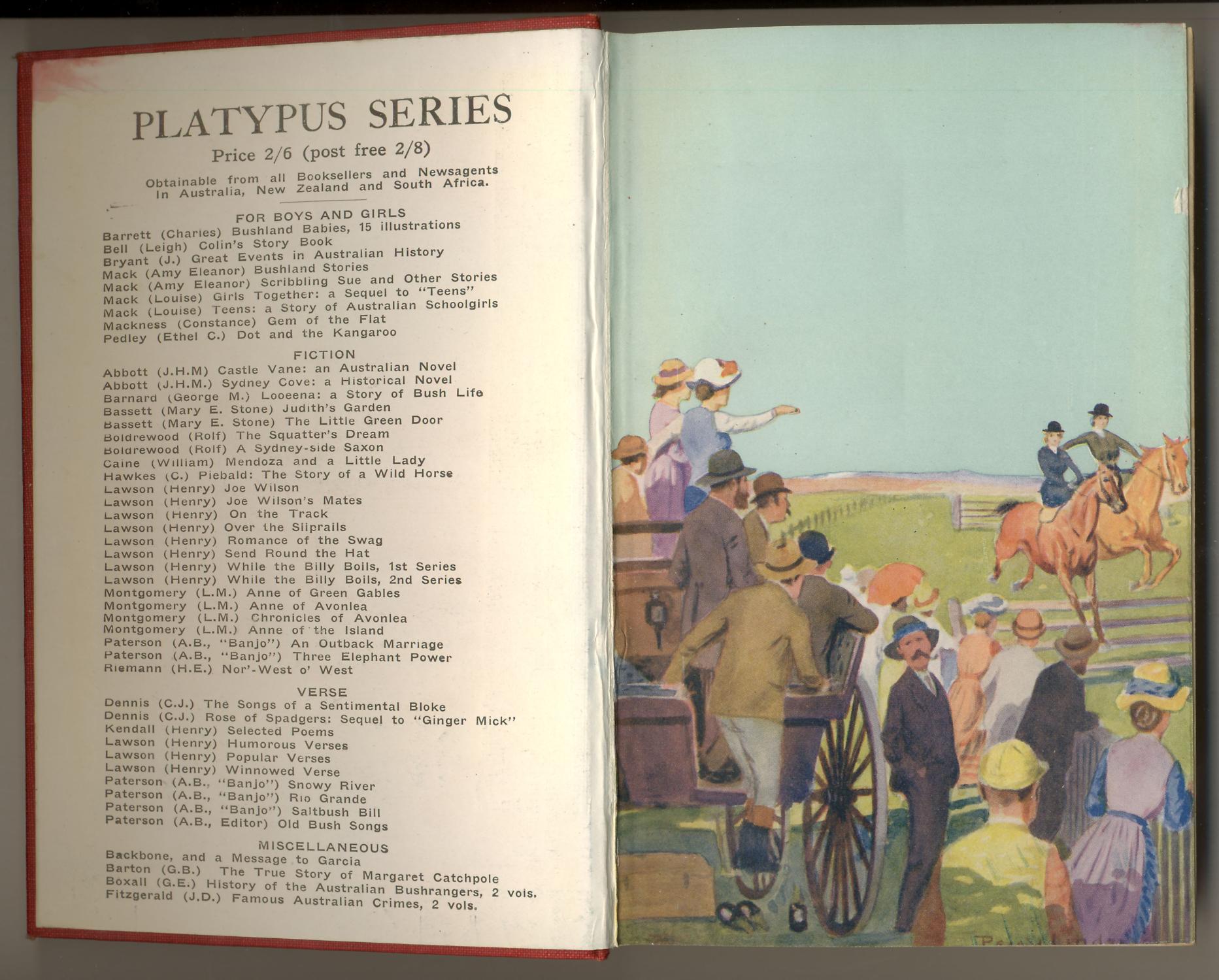
So now, let’s get to 1923, to November in fact, when newspapers started reporting on receiving the first 8 books in a new series of books from Angus and Robertson. They all reported that seven of the books were classics, with the eighth, J.H.M. Abbott’s historical novel, Sydney Cove, being new fiction. The books, at half-a-crown (2/6), were more expensive than Bookstall’s 1 shilling.

The articles made some other interesting points, prime of which concerned the economics and profitability of publishing. Western Australia’s The Beverley Times, put it particularly clearly:

The publishers suggest that they [the books] could not have been turned out in Australia had not Henry Ford’s methods been applied to their manufacture by a Sydney firm of printers and binders. “More power to the elbow” for the venture has kept thousands of pounds worth of work in “this country,” and good Australian books which have perforce gone out of print have been made available with more to follow. 

Most articles reported on the “mass production” used to produce the books, though only some referenced Henry Ford. Some quantified the amount as £10,000.

Many of the articles, like those writing about the NSW Bookstall Company, commended Angus and Robertson for, as Sydney’s The Sun wrote, “catering for the local market by encouraging the local author”. Some added their own flavour to their description of the series. Victoria’s The Ballarat Star, which described Angus and Robertson as “one of the firms that believes in Australian literature for Australians”, provided its own perspective on the state of Australian literature:

We are, as a nation, rearing our own literary atmosphere. It is not a hasty progress, but it is in sound lines, and when a firm of the standing of Angus and Robertson, of Sydney, can find that it pays to keep Australia to the front in the matter of the “making of books,” well, there is encouragement for the authors also.

And I did love The Sydney Stock and Station Journal‘s little admonition to readers, that there are “other volumes in preparation — sixteen promised by next February, so you can’t growl about the high cost of good reading any more”. But, it’s The Sydney Morning Herald which provided the most information about the Series’ overall plans. It advised that “at least 84 volumes are contemplated”, across several categories – “For Boys and Girls,” “Fiction,” Poetry,” and “Miscellaneous” – and concluded that from what they knew “it is clear that anyone who purchases the series will acquire much of the most characteristic literature that Australia has produced”.

Platypus Series books, 1923

The first eight books in the series were published in 1923:

  • J. H. M. Abbott, Sydney Cove
  • Henry Lawson, Joe Wilson 
  • Henry Lawson, Joe Wilson’s mates
  • Amy Eleanor Mack, Bushland stories, stories for children
  • Amy Eleanor Mack, Scribbling bus
  • Louise Mack, Teens: a story of Australian school girls  
  • Louis Mack, Girls together (a sequel to Teens
  • Ethel C. Pedley, Dot and the kangaroo

Most of the articles discussed the books, but tended to say the same things – whether due to syndication or publisher’s press release, I’m not sure. One of the repeated comments was that the set included “five of the best School Library and Prize books ever written”. That’s a big call. “Ever written” in the world? In Australia? And which were the five? None make it clear. But it sounds good.

While many of the articles gave a little extra information about the new book, Abbott’s Sydney Cove, The Ballarat Star, cited above, wrote more than most on the other books, saying that the two Henry Lawson’s were ‘fine specimens of what the London “Academy” well termed the “artless art” of Henry Lawson’. It also praises Louise Mack’s two books – both for their writing and for being Australian:

She makes the Australian school girl really live, and in her two books — Teens and Girls together which is a sequel— any Australian children will revel because it is their own atmosphere free from artificiality, and redolent of the Australian school life, which is so different from that of England or America. One of these days outsiders who try to write school stories of Australia will have to go to Miss Mack and Ethel Turner, and Ethel Pedley and Amy Mack, and many others of our Australian girl writers for Australian atmosphere.

I love the idea that “outsiders” might want to write Australian school stories, but, regardless, this is lovely praise. It then describes Louise’s sister Amy’s books as “two daintily written kiddie stories, written evidently from the sheer joy of writing”, and says that ‘one of the brightest little things in the Bushland stories is the “Bird’s Alphabet.” It is a lesson inside a story for the author had to drag in the scientific name for the familiar silvereye (“Zosterops”), to complete the Alphabet”. And, it commends Pedley’s Dot and the kangaroo as having a “flavor” of Lewis Carroll, and being “a delicious story of the Australian bush inhabitants and their quaint and wonderful ways”.

Finally, while several articles commented on the value of publishing Australian authors for Australians, Sydney’s The World News made this very clear when it praised the initiative “for everyone knows it is far less risky to sell British and American books, and much more profitable, than publishing works by Australian authors”. That said, it was apparently in the Platypus Series (in 1924) that Anne Montgomery’s Anne of Green Gables made her first appearance in Australia! Just saying.

Photo credit: From Rolf Boldrewood’s A Sydney-Side Saxon 1925 (via Abe Books)

Other posts in the series: 1. Bookstall Co (update)

Ambelin Kwaymullina, Fifteen days on Mars (#Review)

In 2014, Ambelin Kwaymullina, whose people are the Palyku of the Pilbara region of Western Australia, described herself in a Kill Your Darlings essay as writing “speculative fiction for young adults”. Three years later, in the 2017 Twelfth Planet Press anthology, Mother of invention, she said that she was “a Palyku author of Indigenous Futurisms”, citing Grace Dillon (as did I in this week’s Monday Musings) as the term’s originator. I share this progression in her thinking because it’s indicative of the energy and intellectual engagement among First Nations people with literature and the politics of what they are doing. Kwaymullina is an example of a First Nations Australian writer who is actively engaged in First Nations culture and thinking, as well as in the craft of writing.

I first came across Kwaymullina early in my volunteer work for the original Australian Women Writers Challenge, because many reviews for her young adult novels were posted to our database. But, I had not read her because YA literature is not my thing. However, I decided to read Ellen van Neerven and Rafeif Ismail’s anthology Unlimited futures: Speculative, visionary Blak+Black fiction for Bill’s (The Australian Legend) Australian Women Writers Gen 5 Week 15-22 January, and the first work in the anthology by an Australian woman was “Fifteen days on Mars” by Kwaymullina. Woo hoo… here was my chance to finally read her. I will post on more in this fascinating book, which I’ve not yet finished, later.

“Fifteen days on Mars” is an accessible short story, told chronologically from Day One to Day Fifteen. The politics is made clear in the opening paragraph, by beautifully skewering colonial settler behaviour concerning the naming of places:

It had been almost a year since we came to Mars. That was what I called this place although it had another name. It was Kensington Park or Windsor Estate or something like that but I couldn’t have said what because I could never remember it.

Our first person narrator Billie and her mum have come to Settler suburbia, where they are “the only Aboriginal people”, for some reason that is not immediately clear though we sense there’s a specific purpose. Billie hadn’t wanted to come but, as her mother’s only offspring without children, she’d drawn the short straw. The story starts with her pulling weeds from their garden, the very plants that the rest of the neighbourhood love, plants (I mean “weeds”) like roses. In this metaphorical way the colonial setting is established. This is a world we know. Very soon a new couple moves in across the road. Billie, at her Mum’s insistence, does the neighbourly thing, and makes contact. She quickly realises that their new neighbour, Sarah, is being abused by her husband, whom Billie calls The Suit. What to do?

To this point, notwithstanding the hint at the start that there’s something unusual about the situation, the story reads like a typical piece of contemporary fiction – that is, set in the known present world. But slowly, we become aware that something else is going on. Billie refers to “the rules”. Does she just mean the normal “rules” of social behaviour? Nope, our suspicion is right, there is something else. There’s reference to Sarah needing to “ask”, and to whether what or how she asks is “good enough for them upstairs”, aka “the Blue”, as Billie’s mum calls them. Billie says:

the truth was we knew very little about them, except they were some kind of intergalactic healers. But we knew why they’d come. It was because of the Fracture.

So now it’s clear we are in speculative fiction/Indigenous Futurism/Visionary Fiction/SFF territory. This is the sort of speculative fiction I can enjoy, something that doesn’t require me to learn a whole new world but that injects something new into the world I know, something that upends it a little.

The Fracture is not fully explained, but “something had smashed into the relationships that were space-time and cracks had spread out from the point of impact” resulting in, says Billie, “bubbles of the past floating across my reality”. The Blue, we are told, are trying to repair this Fracture, leaving humans “to do something about the bubbles” – but to the Blue’s rules. Billie’s mum had signed up “for the job of changing the bubble-world, or at least, of changing some of the people enough so they could exist in our reality”. Hmm, this makes them sound a bit like missionaries. An ironic twist?

Anyhow, the story continues, with a strong reference to the Stolen Generations, as Billie and her Mum, recognising these are “strange times”, try a different tack to save Sarah, and call on the ancestors. They hope the Blue won’t mind.

I will leave it there. I enjoyed the story – because it tells a First Nations story truthfully but generously; because the characters of Mum and Billie, while being somewhat stereotypical (the wise Mum and the reluctant Billie), are warm and engaging; and because the ideas and the story itself are intriguing to watch being played out.

In her 2017 piece cited above, Kwaymullina describes Indigenous Futurisms as “a form of storytelling whereby Indigenous peoples use the speculative fiction genre to challenge colonialism and imagine Indigenous futures”. This is exactly what she does in “Fifteen days on Mars”. The colonial legacy is unmistakeable, with most inhabitants of Settler suburbia remaining “unbelievably ignorant”, but she also offers glimmers of hope. I don’t eschew bleakness, but as an optimist I also appreciate it when writers can see paths to a better future. It’s energising.

Ambelin Kwaymullina
“Fifteen days on Mars”
in Ellen van Neerven and Rafeif Ismail (ed.), Unlimited futures: Speculative, visionary Blak+Black fiction
North Fremantle: Fremantle Press in association with Djed Press, 2022
pp. 42-64
ISBN: 9781760991463 (eBook)

Monday musings on Australian literature: First Nations Australia speculative fiction

This post is my first contribution to Bill’s (The Australian Legend) Australian Women Writers Gen 5 Week 15-22 January. Gen 5 encompasses women who have been writing from the 1990s to now. Bill argues that two major trends characterise this era: “the rise and rise of Indigenous Lit” and “writing which in earlier days would have clearly been SF – but which now is generally characterised as Climate Fic., Dystopian, or less frequently, Fantasy/Surreal/Postmodern.” With this in mind, Bill decided that AWW Gen 5’s focus would SFF – Science Fiction/Fantasy.

Given Bill observed that First Nations Women are writing in this genre, I have decided, for this post, to combine the two trends. It won’t be comprehensive, but more in the spirit of providing an introduction or overview. Here goes …

I have seen various terms applied to SF, or what I prefer, though Bill doesn’t, to call Speculative Fiction. Introducing their anthology, Unlimited futures, Ellen van Neerven and Rafeif Ismail speak of Visionary Fiction, which Wikipedia explains is not “science fiction” because it is driven by “new and uncanny experiences (mystical, spiritual and paranormal) in the neural web”. Wikipedia quotes Michael Gurian, who was one of the first to promote the genre on the web. He defines visionary fiction as “fiction in which the expansion of the human mind drives the plot. Where science fiction is characterized by storytelling based in expanded use of science to drive narrative, visionary fiction is characterized by storytelling based in expanded use of mental ability to drive narrative.” So, it may not be traditional SF, but I believe it can be encompassed under the speculative fiction umbrella, particularly as First Nations people see it.

Claire G Coleman, Terra nullius

The other main term I want to share, I found in BookRiot, in their 2020 article, “Explore Indigenous Futurisms with these SFF books by Indigenous authors”, by Danika Ellis. Ellis, who also uses the umbrella term, Speculative Fiction, writes that “Indigenous Futurisms” was coined by Dr. Grace Dillon, professor in the Indigenous Nations Studies Program at Portland State University. It was inspired by Afrofuturisms, which explores speculative fiction through an African diaspora lens. Ellis explains that “depictions of Indigenous people in mainstream media has often placed them in a historical context, not recognizing the Indigenous cultures and individuals of today, never mind the future. Indigenous Futurisms imagine Indigenous people into every context: space travel, fantasy worlds, alien invasions, and more.” BookRiot’s list includes Claire G. Coleman’s Terra Nullius (my review) and Ambelin Kwaymullina’s young adult novel The interrogation of Ashala Wolf. Ellis makes the point that:

Indigenous Futurisms brings a much-needed perspective to a genre that is often uncritically colonial, whether it’s fantasy rooted in Medieval England, or space travel that celebrates conquering new worlds.

Good one. Not being a reader in this genre, I hadn’t clocked this.

Meanwhile, closer to home, last June The Conversation ran a review by Yasmine Musharbash of This all come back now: An anthology of First Nations speculative fiction, which was edited by Mykaela Saunders. This anthology, you will have noticed, uses the term Speculative Fiction, and Musharbash accepts this, offering her understanding of the genre:

In my view, speculative fiction – the narrative exploration of “what-ifs”, the creative probing into latent possibilities, the imaginary voyaging into potential futures – is the genre of our times. We are on the brink of … something. Environmentally, for sure. But also socially, politically, economically. 

What this something is, when it will happen, how it will shape the future: these are the questions at stake. 

This all come back now, she says, is the “first Australian anthology of First Nations speculative fiction”. This might be so, but of course First Nations Australians have been writing speculative fiction for some time. Musharbash discusses what characterises this anthology as “First Nations”, and says the first thing is “Country with a capital C, in that very First Nations sense of something utterly fundamental and intimately related to the self, is centrally present across these pages. Many of these stories are fully immersed in Country.” This is not surprising, nor, really is the other recurring element she identifies, humour. I have mentioned before First Nations humour and its particular flavour. Musharbash describes the humour as being cheeky, and often “bitter-funny”.

First Nations Australia SFF

I wrote above that First Nations Australians have been writing speculative fiction (SFF) for some time, and I’ve reviewed a little here on my blog, including Coleman’s Terra nullius, and Ellen van Neerven’s “Water” (my post), which is included in This all come back now. Coleman, in fact, is making this space a bit of her own, with two more novels, The old lie (Bill’s review) and Enclave (Bill’s review), published

Book cover

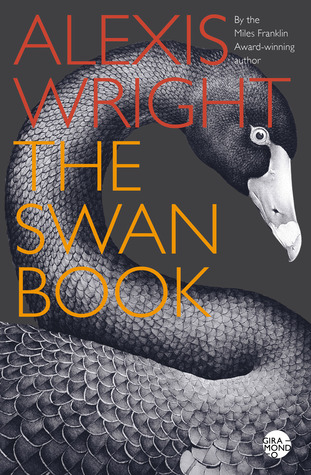
Before them was Alexis Wright with Carpentaria (my review) and, more obviously, The Swan book (Lisa and Bill). Bill describes this latter as being set “some time in the future after the countries of Europe have been lost in the Climate Wars”. It is still on my TBR.

However, there are several other writers whom I’ve not read or reviewed (yet) on my blog, like Karen Wyld and Alison Whittaker. Another is Ambelin Kwaymullina, who is best known for her YA speculative fiction series, The Tribe. Six years ago, she wrote a post, titled “Reflecting on Indigenous superheroes, Indigenous Futurisms and the future of diversity in literature on the loveozya blog. She starts with a strong argument about how Indigenous writing has been measured, against Western concepts, and addresses that colonisation aspect I mentioned above. She also addresses the point I have heard Alexis Wright make about “magic”, and takes it further:

In Australia and elsewhere, Indigenous peoples have also long been able to interact with the world in ways that the West might label as ‘magic’, but this is because the West often defines the real (and hence the possible) differently to the Indigenous cultures of the earth. There are many aspects of Indigenous realities that might be called ‘speculative’ by the West (such as communicating with animals and time travel). There is also much in Western literature that Indigenous peoples regard as fantasy even though it is labeled as fact, including the numerous negative stereotypes and denigrations of Indigenous peoples and culture contained within settler literature. 

Another good challenge to our worldview. She too references Dillon’s “Indigenous futurisms”, explaining that it describes “a form of storytelling whereby Indigenous peoples use the speculative fiction genre to challenge colonialism and envision Indigenous futures”.

Kwaymullina argues that there’s a growing Indigenous presence in speculative fiction, including in YA and Children’s fiction, and names some writers – Teagan Chilcott, Tristan Michael Savage, graphic novelist Brenton McKenna, and the young Aboriginal people responsible for NEOMAD (my post).

So, an exciting time for the genre and for literature in general, but I’ll close here …

Have you have read any First Nations (anywhere) speculative fiction? If so, care to share?

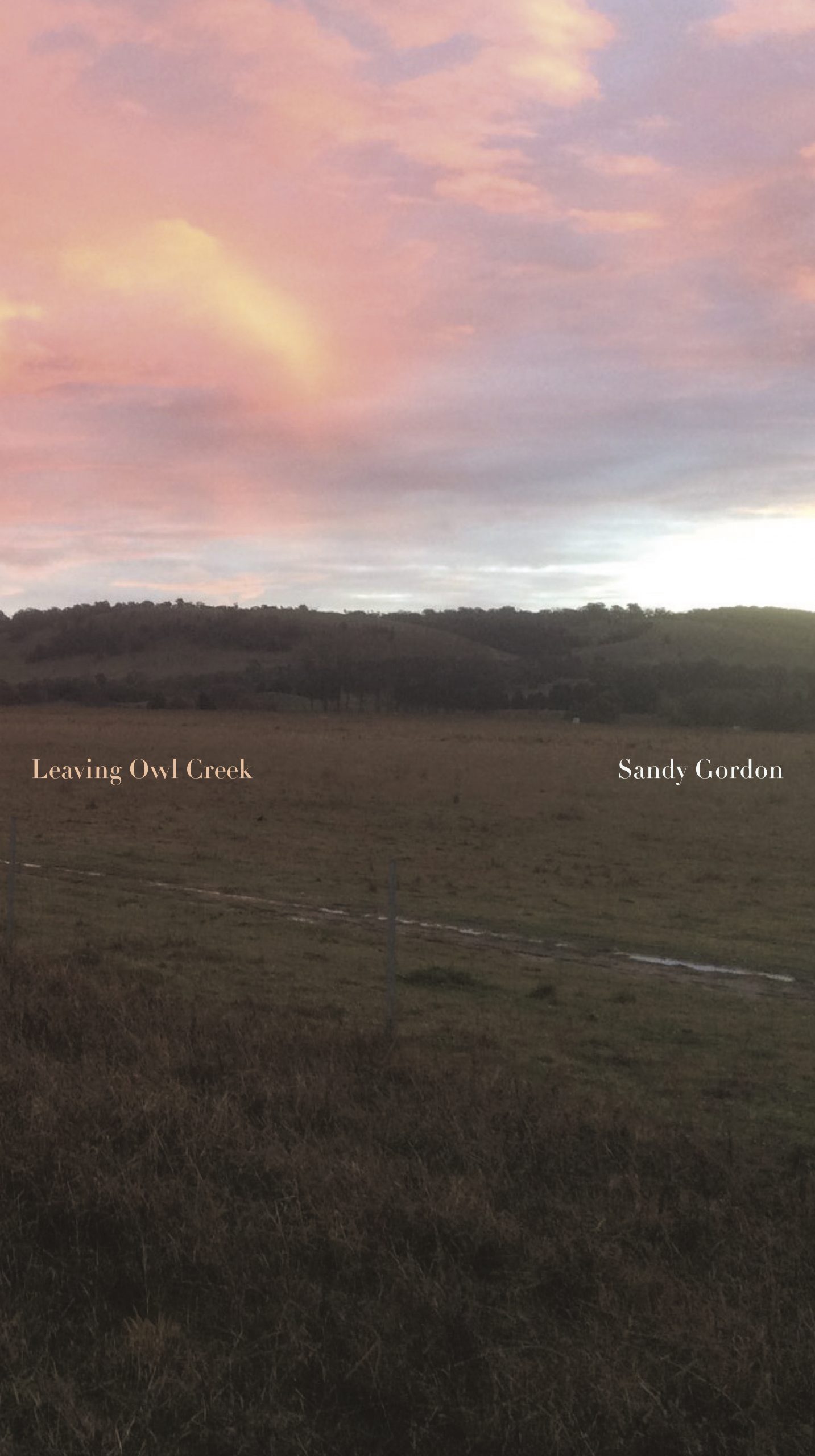
Sandy Gordon, Leaving Owl Creek (#BookReview)

I do enjoy receiving books from non-profit independent publisher, Finlay Lloyd. Their books are physically distinctive, being longer and narrower than the norm, and they have a stylish, minimalist, design, which makes them lovely to look at and hold. They also appeal content-wise because Finlay Lloyd consciously, it seems to me, publishes books that regardless of form or genre interrogate prevailing values and attitudes, books that contribute to the conversation. Sandy Gordon’s Leaving Owl Creek is another such book.

Sandy Gordon could be included in my late bloomer category, meaning he’s an older first time novelist. A grandfather now, he is, however, not a late bloomer in terms of achievement because, as the book’s front-matter explains, he has had a significant academic and public service career, especially in the areas of intelligence and national security. The notes say that “when he finished his last academic book in 2014, he vowed never to write another footnote – hence the novel”. Lucky us.

Leaving Owl Creek is a dual narrative story, alternating between the first person diary of Nicholas (Nick) MacLean, who has been captured by the Mujahideen in Kashmir, and the third person story of his life which begins on the family property of Owl Creek. It’s not just his story, though, as also at Owl Creek are his sister Lilly, and Richard and Kate Connolly whose family has worked for the MacLeans for generations. The novel takes place over several decades covering the second half of the twentieth century, a time of significant social, cultural and political change. Two fundamental issues of change are introduced in the first chapter, one relating to class and status, and the other to gender, and particularly to masculinity.

However, the novel opens not with this chapter, but with Nick’s diary. He reports playing chess with his main captor, the Mujahid, and their discussing Nick’s western versus the Mujahid’s Islamic values. It is clear that Nick’s survival very likely depends on the Mujahid. This provides the main narrative tension for the novel, but it’s not the main interest, albeit I cared deeply about what might happen to Nick. (Gordon knows whereof he speaks, having written a nonfiction work about the region, India’s rise as an Asian power: Nation, neighborhood, and region.)

What I enjoyed about the novel was its portrayal of those issues I’ve mentioned. Nick and Lilly were born into the squattocracy, Protestant of course. They are privileged – materially, anyhow. In other ways, not so, because the expectations are not only high but they are conservative, which means, for example, that Nick is expected to live up to the traditional idea of manhood, an idea that focuses more on “honour” than on feelings. This does not sit well with Nick who is cut of a more sensitive and artistic cloth. He’s interested in art and poetry, which to his father are “not sound in a man”. Richard, the son of Catholic station workers, is closer to Mr MacLean’s idea of a man. This difference creates another tension in the novel as we watch Nick and Richard (named, ironically, for Richard Wright, but often more pointedly referred to as Dick) grow from boys to men. We do also have their sisters, who are each attracted to the other’s brother, but Leaving Owl Creek is not a cliched family drama. While these sisters’ roles are important to fleshing out the main themes, their relationships do not play out in the standard rural romance way – because, this is not rural romance. It’s a novel written by a man primarily about men.

“man of affairs” to “affairs of men”

So it is this that I’d like to tease out a little more. The second half of the twentieth century, and into the present, has been a difficult time for men. As women have found their place (albeit this has not yet translated into full equality) men have had to work out how their place fits in. For Richard, his Catholicism and working class background mean he starts with a handicap, but he’s a hard worker, a real “man”, and he gets opportunities as a result. He takes them and becomes a confident, successful, and powerful man, a politician in fact, but in the process he manipulates and betrays others, and loses his self. He talks big about a “man of affairs” being a humanist, but in the end, “the affairs of men” comes to encompass for him the ends justifying the means.

Nick, on the other hand, grows up with everything except what he wants most, the freedom to follow his own path. His struggle is great. He is sent to a prestigious boarding school, where his artistic preferences are not supported. On leaving school, he goes to university and gets caught up in the Push (about which I wrote early in this blog), and other leftist intellectual groups. It’s the 60s, and unsettled Nick falls prey to substance abuse. He fails his father’s expectations, and ultimately ends up in India where he finds a place for himself – until his capture. Nick too reflects on what it means to be a man but is less concerned with “manhood” than with what human beings are. In a fraught conversation with some leftist intellectuals, he sees the issue in terms of “moral choice”.

Politics provides the backdrop to the novel, and Gordon presents us with a broad sweep from Richard’s mother’s statement that their family had come out from Ireland for “political” reasons, through various wars, to our contemporary concerns with Indigenous dispossession and the increasing conflict between Eastern and Western values. But, threaded through this historical expanse is a recurring issue, the role of men, and the importance of “duty” and “honour”. Nick’s refusal of his Vietnam War call-up is the last straw for his father, and he is disinherited. From his father’s point of view:

‘If your country says it needs you … that has to be good enough. Beyond that it’s a question of honour …’

In the closing pages of the novel, Nick, still a captive of the Mujahideen, returns to these ideas:

The Mujahid. The thing is, he likes me, perhaps even loves me. Why then is it not enough? Why is it never enough?

Because duty, as he sees it, trumps liking, even love. Duty, honour, loyalty, death – these four ride side by side over the blistered landscape and will do so for as long as we humans occupy the planet.

Leaving Owl Creek is a highly readable and deeply thoughtful novel that tackles some complex issues, intelligently and generously. We feel for each of the characters at different points in their lives. We see the pressures they face – social, political, psychological – and we are encouraged to understand why they are who they are, and, beyond that, to consider how on earth we might all be better. Like Lisa, I recommend this book.

Sandy Gordon
Leaving Owl Creek
Braidwood: Finlay Lloyd, 2021
358pp.
ISBN: 9780994516565

(Review copy courtesy Finlay Lloyd)

Monday musings on Australian literature: on 1923: 1, Bookstall Co. (update)
Last year I wrote a series of posts about 1922, drawing primarily from Trove. I enjoyed doing it, and have decided to repeat the exercise this year, and perhaps continue annually, to build up a picture of the times. My first 1922 post was about the NSW Bookstall Company which was established in 1880, but which around 1904 began publishing and selling Australian books for one shilling each. When I started my 1923 Trove search, this company featured heavily, so I’ve decided to lead off with an update of it.

Now, I noted last year, that the company’s longstanding managing director, A.C. Rowlandson, had died that year, but that the company planned to continue. During this year’s research, I found that in 2000 the University of Melbourne’s Baillieu Library put on an exhibition titled “Sensational Tales: Australian Popular Publishing 1850s-1990s”. One of the “tales” concerned the NSW Bookstall Co. They confirmed that the Company had “helped make writing a viable occupation for a generation of Australians, a number of whom – including Norman Lindsay, Vance Palmer and ‘Steele Rudd’ – achieved lasting reputations”. However, they also say that the Company’s publishing program did decline after Rowlandson’s death, and that it issued fewer than 70 titles between 1924 and 1946. By the end of World War II, the Company had “reverted to being a retail distributor of books and magazines”. How much of this decline was due to Rowlandson’s death and how much to changing times, they don’t say, but, from what I’ve read of him, I suspect the former played a role, as Rowlandson was clearly a powerful and inspirational force.

Anyhow, on with 1923. I plan to share the fiction that I’ve identified as published by them in 1923. What is interesting is not just who the Australian authors were and what they were writing, but what the reviewers and commentators were saying about both the company and the specific books, and what it all reveals about Australia’s literary environment of the time.

Bookstall Series books, 1923

Although the University of Melbourne’s exhibition notes the company’s decline, it was still going strong in 1923:

  • Vera Baker, The mystery outlaw (pub. 1920, and 1923)
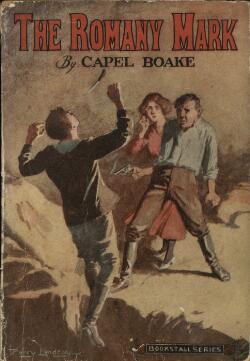
  • Capel Boake, The Romany mark
  • Dale Collins, Stolen or strayed
  • Arthur Crocker, The great Turon mystery
  • A.R. Falk, The red star
  • J.D. Fitzgerald, Children of the sunlight: stories of Australian circus life
  • Jack McLaren, Fagaloa’s daughter
  • Jack North, A son of the bush
  • Ernest Osborne, The plantation manager
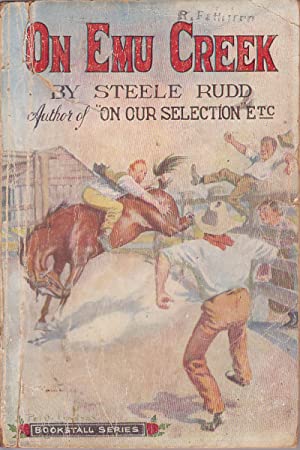
  • Steele Rudd, On Emu Creek
  • Charles E. Sayers, The jumping double: a racing story
  • H.F. Wickham, The Great Western Road

Most of these authors are male. Indeed, Capel Boake and Vera Baker seem to be the only woman here.

I found several references for most of the books listed above. Some were not much more than listings, and some seemed to be somewhat repetitive (which could be due to syndication and/or drawing from publisher’s publicity. It’s hard to know without deeper analysis.) However, there was also some more extensive commentary.

First though, as you can probably tell from the titles, the books tend to be “commercial” or genre books, most of them adventure with some mystery thrown in. One of my 1922 posts focused on the time’s interest in adventure, so I won’t repeat much of that except to say that many of the reviewers/columnists talked about “thrills”, “exciting reading”, fast pacing, and the like. The majority of the novels are set in the bush, reflecting our well-documented ongoing interest in outback stories. But A.R. Falk’s detective novel The red star, is set in Sydney. The Brisbane Courier’s reviewer (23 June) argues that Australian writers hadn’t “developed the field of detective fiction to any extent”, which is interesting given its popularity now. This reviewer praises the book saying that Falk had “written a far better detective story than the majority of those that are imported”. S/he says that “the fight between detectives and a clever gang of thieves and murderers is told in a very convincing manner” and that while “the ending, perhaps, is forced” the story “takes a high place among current detective fiction”.

That’s higher praise than some of the books received at the hands of our reviewers. J.Penn tended to write a little more analytically. I haven’t been able to identify who J.Penn is, but s/he wrote a new books column in Adelaide’s Observer and Register titled “The Library Table”. S/he generally praised Ernest Osborne’s The plantation manager but did note a weakness at times for ‘making people “talk like a book”‘ (Observer, 5 May) and was critical of Steele Rudd’s On Emu Creek which s/he felt lacked the satirical edge of his Dad works. S/he writes that “Steele Rudd is firmly convinced that his readers will find sufficient fun in the mere fact of some one being humiliated or hurt, without the author’s having to worry to hunt for words” (Register, 19 May). The Murray Pioneer and Australian River Record (3 August) described On Emu Creek as humorous but qualified this with “the reader may be pardoned if he fails to see in the more recent books the same rich vein of humor that characterised the earlier chronicles of the Rudd family” while The Age (5 May) was gentler, calling it “an agreeable story, without any affectation of style, and containing points of humor”

Penn described (Register, 21 April) Dale Collins’ Stolen or strayed as ‘a “shilling shocker” of modern Australia’. Set mostly on the Murray, “it is,” writes Penn “a joyous yarn, and, as generally happens nowadays, the literary style is more than worthy of the tale it unfolds”. Interestingly, though, Collins’ book generated more disagreement than most. The Queenslander (12 May) was less impressed, saying that “neither the workmanship nor the characterisation show any especial ability” and The Sun (22 April) said that “It is a story just good enough, so far as construction is concerned, to lead one to hope that the author will do much better some day.”

Overall, several reviewers commented along the lines of Perth’s Western Mail (26 April) reviewer, who said, regarding Stolen or strayed and The planation manager, that “both books will no doubt be read with avidity by those who care for stories of this kind”. This is fair enough given these readers were Bookstall’s target market.

Now, some quick observations, before closing. I was interested that some reviewers seemed to give the whole plot away, which we don’t see now. Also, I’ve not (yet) been able to identify several of the authors, but a few were also journalists – like Dale Collins and Jack North – and some used pseudonyms, like Capel Boake about whom I’ve written before.

Finally, despite what seemed to be qualified praise for many of the books, it’s clear that the endeavour was valued for providing a career for Australian writers and illustrators at a time when they struggled to get published. And, as Hobart’s Mercury (18 August) wrote

Beyond question, they are more than worth the money, the thing most prejudicial to their success being the gaudy “Deadwood Dick” types of covers in which they appear.

Trove (et al) under threat

You all know how much I rely on Trove. Back in 2016 I wrote a post in support of it when its survival was threatened. Well, it’s under threat again, and Lisa posted on it today. She references an(other) article in The Conversation that addresses not only the situation for the National Library of Australia and Trove, but other significant national cultural institutions like the National Film and Sound Archive and the National Gallery of Australia. These services and institutions are the lifeblood of academics, writers, journalists and other researchers (professional and general). Their role is to acquire, preserve and make available our heritage. They are not dispensable. They are essential.

Six degrees of separation, FROM Beach read TO …

A new year, and here we are again with our Six Degrees meme. Before I get stuck in, though, I would like to wish you all the best for the New Year, and hope that 2023 proves to be a healthy and peaceful one for us all. We could all do with it, particularly those in troubled and disaster-affected parts of the world. Meanwhile, on with this post’s business. If you don’t know how it works, please check meme host Kate’s blog – booksaremyfavouriteandbest.

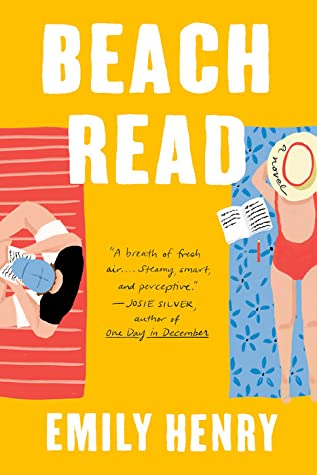
The first rule is that Kate sets our starting book. In January it is another book I haven’t read, Emily Henry’s Beach read, but, what’s new! It sounds somewhat intriguing. According to GoodReads “A romance writer who no longer believes in love and a literary writer stuck in a rut engage in a summer-long challenge that may just upend everything they believe about happily ever afters.” It is of course a perfect title for a down under January book …

Mary Grant Bruce, Early Tales

So, it would be easy to go with what my choice of a beach read, but that’s not where I’m going. Instead, I’m looking at author’s name. Emily Henry’s last name can also be a man’s first name. This is also the case with Mary Grant Bruce, so it is to her juvenilia, The early tales (my review), that I’m linking to first.

From linking on author’s name, I’m next going to title, and another Australian oldie, Price Warung’s Tales of the early days (my review). This title is so similar to that given to Bruce’s juvenilia, but the work is very different. Bruce’s juvenilia are family stories, though not without socio-historical interest, while Warung’s are about convict days and lives, and have clear political intent.

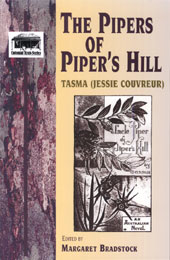
Next, we are going back to author’s name for the link. Price Warung is a pseudonym used by William Astley (1854-1911). Another Australian writer, pretty much a peer in fact, is Jessie Catherine Couvreur (1848-1897). She wrote under the name Tasma, so it is to her satirical Uncle Piper of Piper’s Hill (my review) that I am linking to next.

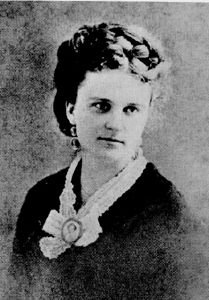
Kate Chopin
Kate Chopin (Public domain, via Wikipedia)

And now, enough of names and titles! My next link will likely push your credulity a bit, but, you know, all’s fair in six degrees linking, so here goes. As I recorded above, Tasma died in 1897. That year Kate Chopin’s short story “A pair of silk stockings” (my review) was published. It’s a powerful short story, and I want to leave Australia, so that’s where we are going.

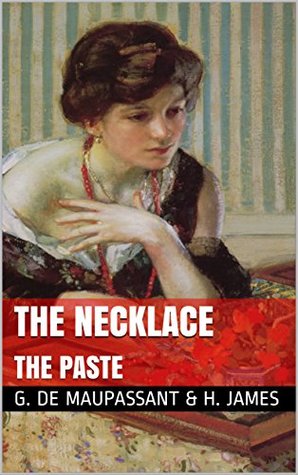
Now, since I’ve pushed things a bit, I’m going to push it again. If you’ve read any of Chopin’s stories, you won’t be surprised to hear that she was inspired by Guy de Maupassant. In my review of the story above, I shared some of Chopin’s thoughts about de Maupassant, which included that, in him she saw, “Here was life, not fiction”. Another writer who admired de Maupassant, albeit with some reservations about the man I understand, was Henry James. However, he did say that his story “Paste” (my review) was inspired by Maupassant’s famous short story, “The necklace”.

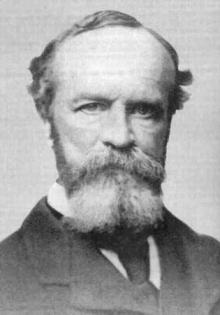
William James
William James (Public domain, via Wikipedia)

For my last link, I am taking the easy path, and linking to Henry James’ brother, the philosopher William James and his essay “On some mental effect of the earthquake” (my review).

So, a bit of an unusual chain this month. Despite the fact that several of my links are straightforwardly on authors and titles, all of the works I’ve linked to are nowhere near contemporary, and the last three are short works rather than books. Some of you, though, may have read Chopin’s or James’ stories, at least? I’ll be interested to hear. Meanwhile, it does seem that this month we’ve not roamed far … staying essentially with “New World” authors.

Now, the usual: Have you read Beach Read? And, regardless, what would you link to?

Monday musings on Australian literature: Some New Releases in 2023

Maintaining tradition, my first Monday Musings of the year once again focuses on “new releases”. As before, it is primarily drawn from the Sydney Morning Herald. Jane Sullivan and the team do a wonderful job of surveying publishers large and small, but I have added a couple of my own! Also, as this is Monday musings on Australian literature post, my focus is Australian authors in areas of interest or relevance to me. Click on the SMH link to see the full list, which includes non-Aussies, Aussies I haven’t selected, plus additional info about many of the books.

As usually happens, some books listed here were listed last year but, for some reason, were not published on schedule.

Links on the authors’ names are to my posts on those authors.

Fiction

I have read a very small number from last year’s list, but a few more are on my TBR and will be read this year. (Indeed, one is almost finished right now!) Here’s this year’s selection:

  • Kim E. Anderson, Prize (Pantera Press, April)
  • Tony BirchWomen and children (UQP, November)
  • Stephanie Bishop, The anniversary (Hachette, April)
  • Benjamin Stevenson, Everyone on this train is a suspect (Penguin Random House or PRH, October)
  • Trent Dalton, untitled (Fourth Estate, October).
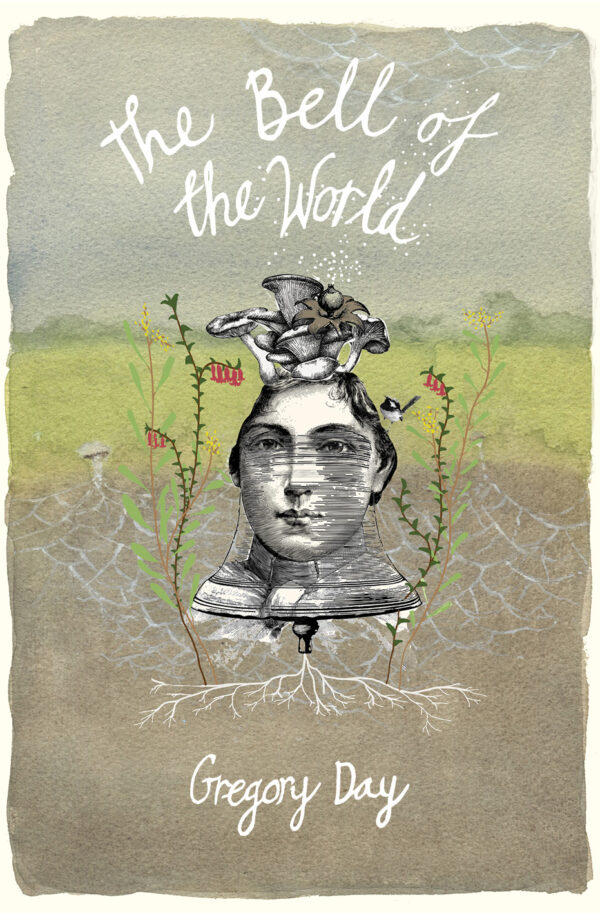
  • Gregory Day, The bell of the world (Transit Lounge, March)
  • Robert Gott, Naked ambition (Scribe, May)
  • Kate GrenvilleAlways greener (Text, July)
  • Toni Jordan, Prettier if she smiled more (Hachette, April)
  • Leah Kaminsky, Doll’s eye (PRH, September)
  • Melissa LucashenkoEdenglassie (UQP, October)
  • Catherine McKinnon, The great time (Fourth Estate, August)
  • Rachel Matthews, Never look desperate (Transit Lounge, September)
  • Drusilla Modjeska, Ways of being (PRH, November)
  • Kate Morton, Homecoming(A&U, April)
  • Graeme SimsionCreative differences (Text, January) 
  • Tracy Sorensen, The vitals (Picador, second half 2023)
  • Christos Tsiolkas, The in-betweens (A&U, November)
  • Pip Williams, The bookbinder of Jericho (Affirm, April)
  • Chris WomersleyOrdinary gods and monsters (Picador, second half 2023)
  • Alexis Wright, Praiseworthy (Giramondo, April) 
  • Emma Young, The disorganisation of Celia Stone (Fremantle, September) 

SMH lists many books under Crimes and Thrillers, but this is not my area of expertise. So, I’m going to leave you to check SMH’s link if you are interested, and just bring a couple to your attention. They tell us that “the ever-popular small town with dark secrets plot gets a good work-out” in:

  • Lucy Campbell, Lowbridge (Ultimo, July); 
  • Nikki Mottram, Crows Nest (UQP, February)

I mention them because UQP and Ultimo are worthwhile independent publishers. Dervla McTiernan has another book coming out, and there’s more, as I said, if you are interested.

SMH also lists Debut Australian fiction, including some the result of “heated auctions” and some winners of manuscript prizes:

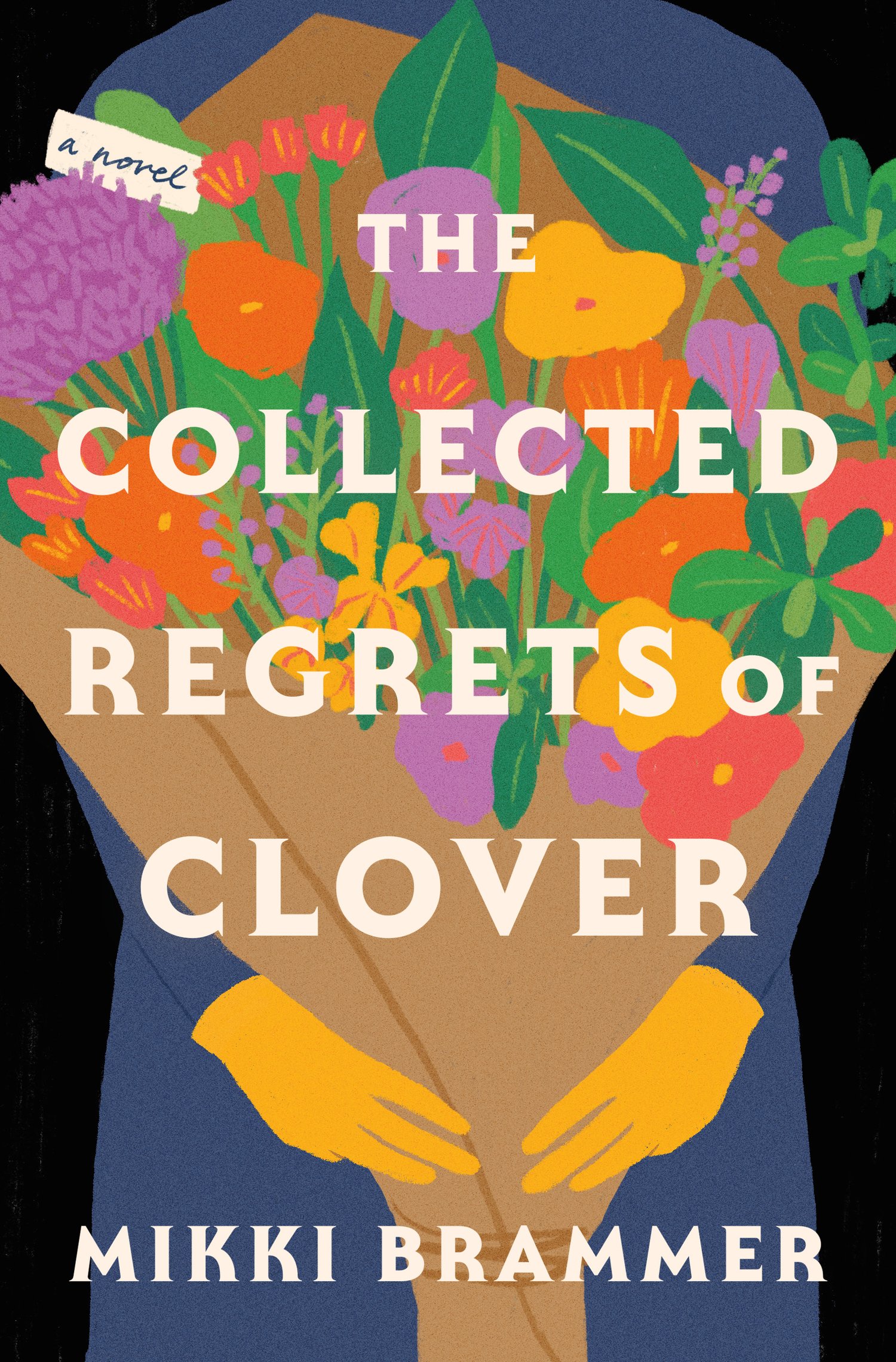
  • Mikki Brammer, The collected regrets of Clover (Viking, May): sold in 23 countries
  • Andre Dao, Anam (PRH, May): won the Victorian Premier’s fiction award for an unpublished manuscript 
  • Pip Finkemeyer, Sad girl novel (Ultimo, October)
  • Annette Higgs, On a bright hillside in paradise (PRH, July): won the 2022 Penguin literary prize
  • Megan Rogers, The heart is a Star (Fourth Estate, May)
  • Molly Schmidt, Salt River Road (Fremantle, November): won the City of Fremantle Hungerford prize
  • Aisling Smith, After the rain (Hachette, May), won the Richell prize
  • Michael Thompson, How to be remembered (A&U, March)
  • Dianne Yarwood, The wakes (Hachette, March)

Short stories

  • Carmel Bird‘Love letter to Lola’: Eighteen stories and an author’s reflection (Spineless Wonders, May)
  • J.M. CoetzeeThe Pole and other stories (Text, July) 
  • David Cohen, The terrible event (Transit Lounge, June).
  • Laura Jean McKay, Gunflower (Scribe, October)

Non-fiction

SMH includes a wide range of new non-fiction books, so this is just a selection.

Life-writing (loosely defined, and selected to those focused mainly on the arts and activism)

  • Belinda Alexandra, Emboldened (Affirm, April): novelist on some women who saved her after she ran from home in terror
  • Ryan Cropp, The life of Donald Horne (Black Inc, August): biography
  • Robyn Davidson, Unfinished woman (Bloomsbury, October): Tracks author’s memoir
  • Marele Day, Reckless (Ultimo, May): novelist’s memoir about her long friendship with an international fugitive 
  • Helen Elliott, Eleven letters to you (Text, May): journalist/critic on her younger years
  • Deborah Fitzgerald, In search of Dorothea (Simon & Schuster, August): biography of Dorothea Mackellar
  • Martin Flanagan, untitled (PRH, no date): journalist’s memoir on his time at a Catholic boarding school
  • Anna Funder, Wifedom (PRH, July): biography of Eileen Orwell, George Orwell’s ignored-by-biographers wife
  • Louise Hansen, Smashing serendipity (Fremantle Press, February): Binjareb Nyoongar woman’s story of her fight against violence and racism
  • Susan Johnson, Aphrodite’s Island (A&U, May): novelist on a year with her mother on the Greek island of Kythera
  • Krissy Kneen, Fat girl dancing (Text, May): third in her memoir series
  • Sarah Krasnostein, On Peter Carey (Black Inc, June): from Writers on Writers series
  • Matthew Lamb, Frank Moorhouse: A Discontinuous Life (PRH, December): biography of Moorhouse, proponent of the “discontinuous narrative” 
  • Frances Peters Little, Jimmy Little: A Yorta Yorta man (Hardie Grant, April): daughter on her First Nations’ musician father
  • Priya Nadesalingam with Rebekah Holt, Back to Biloela (A&U, October): on the refugee family’s ordeal on Christmas Island and final return to Biloela
  • Sam Neill, Did I ever tell you this? (Text, March): actor’s memoir
  • Matt Preston, Big mouth (PRH, November): billed as “a rock’n’roll memoir of death, guns and the occasional scandal”.
  • Jeanne Ryckmans, Trust: A fractured fable (Upswell, August): memoir and detective story 
  • Emmett Stinson, Murnane (MUP, August): biography of Gerald Murnane

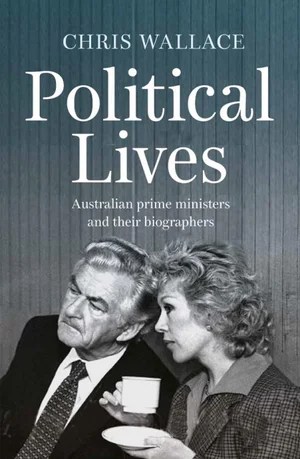
SMH also lists biographies and memoirs on/by politicians but, again, I’m taking a break from parliamentary politics, so check SMH’s link, if you are interested. However, I will note that journalist Chris Wallace’s Political lives (NewSouth, February) is based on her interviews with all living 20th-century Australian prime ministers and their biographers. That second part increases its interest for me.

There are also two whistleblower stories coming out: Bernard Collaery’s The trial: Defending East Timor (MUP, late 2023) on being prosecuted, with “Witness K”, by the federal government for allegedly breaching the Intelligence Services Act, and David McBride’s The nature of honour (PRH, no date) on his facing prosecution for exposing alleged war crimes.

History and other non-fiction (esp. racism, sexism, environmental issues)

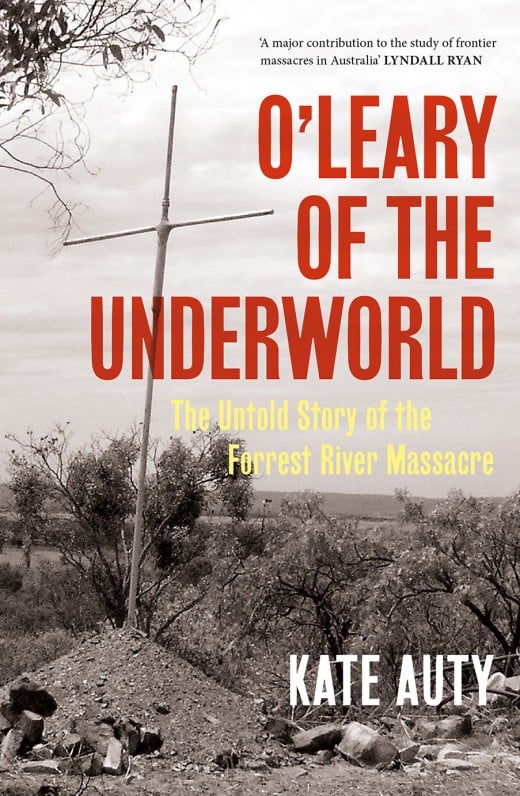
  • Kate Auty, O’Leary of the Underworld (Black Inc, February): examines a massacre
  • Victor Briggs, Seafaring (Magabala, April): history, with First Nations perspective
  • Chanel Contos, untitled (Macmillan, no date): “a radical rethinking of what yes means when it comes to sex”. 
  • Megan Davis, Quarterly Essay On the Uluru Statement from the Heart (Black Inc, June): First Nations
  • Osman Faruqi, The Racist Country (PRH, August): racism
  • Clementine Ford, I don’t (A&U, October): challenges accepted ideas about marriage
  • Stan GrantThe Queen is dead (Fourth Estate, May): “pull-no-punches” look at colonialism, the monarchy and its bitter legacy for First Nations Australians
  • David Marr, A family business (Black Inc, October): history, First Nations focused
  • Shireen Morris and Damien Freeman (ed.), Statements from the Soul (Black Inc, February): First Nations issue
  • Lucia Osborne-Crowley, Maxwell (A&U, second half of 2023): on Ghislaine Maxwell’s trial and its implications for reparative justice
  • Grace Tame and Michael Bradley, Cancelled (Hardie Grant, September): on cancel culture.
  • Ellen van NeervenPersonal score (UQP, May): racism
  • Penny van Oosterzee, Cloud Land (A&U, February): on the tropical rainforest of northern Queensland
  • Justyn Walsh, Eating the earth (UQP, July): “an incisive celebration and a critique of modern capitalism”
  • Dave Witty, In search of lost trees (Monash University Publishing, May): meditation on nature

Poetry

Finally, for poetry lovers, here’s what they list, but there are more if you go to the relevant publisher websites:

  • Stuart Barnes, Like to the Lark (Upswell, February)
  • Bonny Cassidy, Monument, (Giramondo, October)
  • Amy Crutchfield, The Cyprian (Giramondo, September): 2020 winner of the Gwen Harwood Poetry Prize,
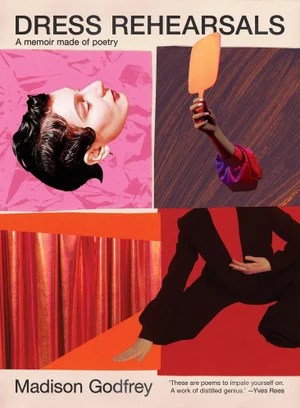
  • Madison Godfrey, Dress rehearsals (A&U, March): verse memoir about “a decade of performing womanhood in a non-binary body”
  • John Kinsella, Cellnight (Transit Lounge, April): verse novel
  • John Kinsella, Harsh Hakea (UWA Publishing, February): collected poems, volume 2
  • Kate Larsen, Public.Open.Space (Fremantle, July): debut collection after a decade working as an insta poet
  • David McCooey’s The book of falling (Upswell, February)
  • Kate Middleton, Television (Giramondo, October)
  • S.J. Norman, Blood from a stone (UQP, November): verse memoir about the legacy of violence towards women
  • PiO The dirty t-shirt tour (Giramondo, August): verse account of a US poetry tour
  • Omar Sakr, Non-essential work (UQP, April)

And, one final surprise – we do expect to see the winner of Finlay Lloyd’s 20/40 Prize in November. That could be anything – but whatever it is, it is sure to be worth waiting for.

Anything here interest you?

Blogging highlights for 2022

As is my tradition, I have separated out my annual Reading highlights from my Blogging highlights, mainly because combining them would result in one very long post.

Top posts for 2022

In recent years my top posts gradually shifted to contain more posts on current Australian books. However, this year’s list has reverted to the “old look”, with one exception, which is that, unusually, two posts that were published during the year have made the Top Ten. This is rare because, mostly, they have not had the time to build up a following. It’s also a bit curious, because on those occasions that a this-year post has reached the Top Ten, the reason has been obvious – it’s been a runaway hit of a book, like Trent Dalton’s Boy swallows universe. That’s not the case here, as you can see.

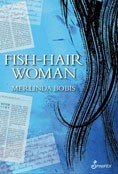
Merlinda Bobis Fish-hair woman

Here is my 2022 Top Ten, in popularity order:

Observations:

  • Four of these (London, Ordering food in a restaurant, Twain and Bobis) were Top Tens last year. These, along with Barbara Baynton, who just missed out last year, are now serial Top Tenners (with some occasionally dropping into the Top Twenty, only to reappear again in the Ten.) All are related, I think, to assignments.
  • Five of this year’s Top Tens are debuts, including, curiously, my post on epiphany in Elizabeth Harrower’s “The fun of the fair” from Belinda Castles’ book. Perhaps the word “epiphany” has been the drawcard here?
  • Last year, six of the Top Ten posts were for full-length books, but that was clearly an aberration, as this year we returned to my more usual motley mix of mainly short stories/essays.
  • Five, versus last year’s seven, of the Top Ten posts were published over 5 years ago, which tells us that blog posts have staying power!

Just three Australian posts appear in the next ten: Barbara Baynton’s “Squeaker’s mate” (16), my post on the Canberra Writers Festival’s session with Germaine Greer (17), and Red Dog (19). Only Red Dog featured in this group last year, but a different Baynton did also. Red Dog was a Top Ten regular for years until 2020 when it moved to the Top Twenty, where it still remains.

Regarding posts actually written in 2022, this year saw two appearing in the Top Ten, whereas last year the first one appeared at no. 32.

Here are the Top Ten 2022-published posts (excluding Monday Musings and meme posts), with their ranking, month published, and relevant nationality:

One of last year’s 2021-published Top Ten, Shirley Jackson’s “The lottery”, jumped to this year’s “actual” Top Ten. Will any of the above achieve that this year? What surprises me most here is Wallace’s essay on Tracy Austin. Que?

My most popular Monday Musings posts were:

Random blogging stats

The searches

Help Books Clker.com
(Courtesy OCAL, via clker.com)

I love sharing some of the search terms used to reach my blog, although search term visibility is no longer what it used to be, which spoils my fun. However, some still get through.

  • this year there were a couple of very long searches … “i mean there is this guy who aparently is using me as his muse to do some form of story telling and writing and pass it off as satire… hmmm… i wonder who the person in the satire could be?…” (this found my Satire tag I think)
  • and this one that seems to have been copied from an assignment question, “dialogue about you at the restaurent you place an order but everything goes wrong the service is poor the food when it comes isnt what you order its poorly prepared even plates and cutlery were not good write your responsetothewaiter andthewaitercomplain” (no prizes for which post this one found)
  • there are always some that mystify me, like “virtuallightexperiments” and ‘“ashfield tamil” wardrobe‘, though repeating the search does reveal what they found (though not whether it was what they were looking for!)
  • as always, several searches seemed to be for assignments, like “writing a war story irony” (which found Wharton, presumably) and “everything good will come. settings” (which found who knows what?)

Other stats

Overall, 2022 was a challenging year for me blog-wise and it shows in the stats. I only wrote 138 posts, which is well under my long term average of 155. However, I wrote significantly more words per post this year, and my overall hits for the year increased by 8% on last year. Clearly my posts weren’t too long!

The top countries visiting my blog are the same as last year: Australia, the USA, Britain, India, the Philippines, Canada, Germany, France, Mexico and China, in that order.

Challenges, memes and other things

I only do one regular meme, Kate’s (booksaremyfavouriteandbest) #sixdegreesofseparation, and occasionally do others, which you can find on my “memes” category link. And, of course, as mentioned in a recent post I continue to be part of the Australian Women Writers blog.

As last year, I also took part, to different degrees, in Lisa’s (ANZLitLovers) First Nations Reading Week, Bill’s (The Australian Legend) AWW Gen 4, Nonfiction November, Novellas in November (Cathy of 746 books and Rebecca of Bookish Beck), the #YEAR Club (by Kaggsy’s Bookish Rambling and Simon’s Stuck in a Book), and Brona’s Aus Reading Month.

All of these align with my reading practice, with some providing a welcome opportunity to explore outside my blog’s main focus.

And so, 2023 …

As always, thank you to all of you who commented on my blog this year – the regulars who have hung in with me year in year out, and the newbies who have taken the time to visit and comment. I hope you have enjoyed the community here enough to stay. A sadness this year was the death in December of longterm friend Neil who had become a semi-regular commenter here and on other blogs. It is a testament to his lively personality and to the community feeling that blogging creates that his loss was commented on with genuine feeling (it seemed to me) by many. Thank you too to the lurkers. I may not know who you are but I know you are there and appreciate your interest and support too.

I also want to thank all the wonderful bloggers out there. I have done a poor job of keeping up this year, but I do appreciate you and enjoy reading your posts when I can. I wish you all good reading and great book talk in 2023.

Finally, huge thanks to the authors, publishers and booksellers who make it all possible – and who prove again and again that the book is far from dead. Roll on 2023 …

Reading highlights for 2022

Regular readers of my blog will know two things about my end of year reading highlights post, but I’ll reiterate them here: I always do my list right at the end of the year when I have read (even if not reviewed) all the books I’m going to; and I do not do a list of “best” or even, really, “favourite” books. Instead, I do a sort of overview of the year through highlights which I think reflect my reading year. I also like to include literary highlights, that is, reading related activities which enhance my reading interests and knowledge. All being well, tomorrow I will share my blogging highlights.

Literary highlights

My literary highlights, aka literary events, saw a return to more live events this year, though the pandemic has taught us that there are opportunities to be had by also continuing online experiences – so this year like last I enjoyed a bit of both

Reading highlights

I don’t have specific reading goals, just some “rules of thumb” which include reducing the TBR pile, increasing my reading of First Nations authors, and reading some non-anglo literature. While I didn’t make great inroads into these, I did make some, and, regardless, I had many reading highlights. Last year, I framed this post around my reading preferences, but this year I’m returning to my practice of pulling out random observations that epitomise my year’s reading.

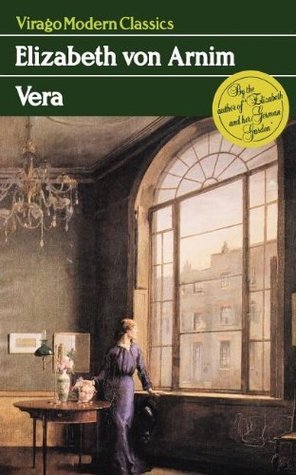
  • Re-find of the year: Elizabeth von Arnim was an author I loved back in the 1990s, and I managed to finally revisit her again this year, via not one but two novels – Vera and Expiation – which reminded me why I enjoy her so much. She is sharply observant about men and women but also witty. I also read this year one of the three biographies recently published about her, Gabrielle Carey’s Only happiness here.
  • Retelling of the year: Retellings can be hit or miss for me but I was greatly moved by Tom Gauld’s graphic novel, Goliath.
  • Topic of the year (1): Mothers and daughters featured heavily in this year’s reading, through Jane Sinclair’s memoir Shy love smiles and acid drops, Elisa Shua Dusapin’s Winter in Sokcho, Lucy Neave’s Believe in me, Nell Pierce’s A place near Eden, Jessica Au’s Cold enough for snow not to mention that absolute classic, and a reread for me, Jane Austen’s Sense and sensibility.
  • Topic of the year (2): Colonialism and racism are issues that many of us read about in order to educate ourselves, and this year I read some magnificent explorations, from Damon Galgut’s The promise and Audrey Magee’s The colony to several works by people of colour, including Nella Larsen’s classic 1929 novel Passing, Julie Koh’s astonishing Portable curiosities, Evelyn Araluen’s Stella winner Dropbear, and Anita Heiss’s historical novel Bila Yarrudhanggalangdhuray.
  • New nationality (for me): I love to add new nationalities to my reading diet, and this year it was Uruguayan, via Ida Vitale’s intriguing Byobu.
  • New genre: Bibliomemoirs are not new, but the term for them is relatively so! Besides Gabrielle Carey’s Only happiness here (mentioned above), I read Carmel Bird’s thoughtful and engaging Telltale.
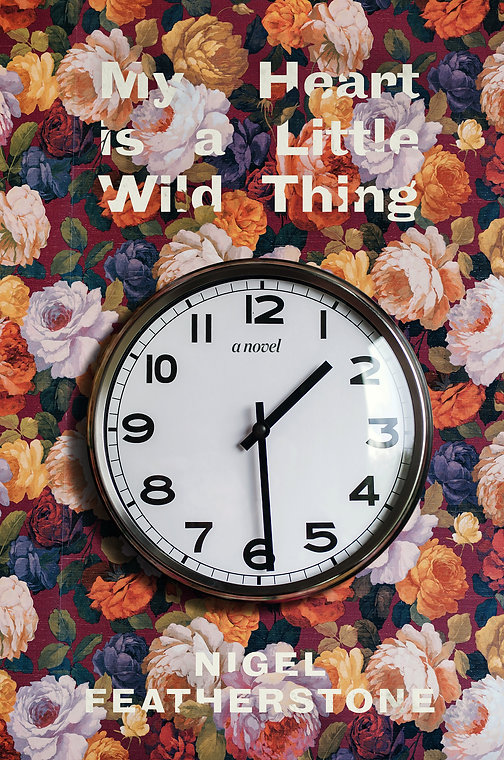
  • Totemic critters: Every year something interesting pops out from my reading. An odd narrator, perhaps – like a skeleton. This year, it was totemic critters with a few books featuring a lurking critter, such as Nigel Featherstone’s quoll (My heart is a little wild thing) and Lucy Neave’s fox (Believe in me).
  • The locals have it: I like to support local authors, and this year I have read more than usual – Nigel Featherstone’s My heart is a little wild thing, Shelley Burr’s debut rural noir Wake, Lucy Neave’s Believe in me, Nell Pierce’s A place near Eden, and (then resident) Margaret Barbalet’s Blood in the rain, plus two nonfiction works, Mark McKenna’s Return to Uluru and Biff Ward’s memoir-of-sorts, The third chopstick. I also read, but didn’t review several books by local picture book creators. For a little region, we achieve a lot!

These are just some of 2022’s highlights…

Some stats …

I don’t read to achieve specific stats, but I do have some reading preferences which I like to track to keep me honest to myself! This year I was closer to my preferred ratios in most of the categories than I have been for years – without specifically trying. It just happened:

My preferences are …

  • to read mostly fiction: 74% of my reading was fiction (meaning, everything not non-fiction, so novels, short stories, and poetry). This is close to my plucked-out-of-the-air 75% rule of thumb, and I’m pleased with that.
  • to give precedence to women: 64% of this year’s reading was by women writers, which is similar to last year’s 65%, and around my preferred two-thirds proportion.
  • to read non-Australian as well as Australian writers: 32% of this year’s reading was by non-Australian writers, which is close to my goal of around one-third non-Australian, two-thirds Australian.
  • to read older books: 34% of the works I read were published before 2000, which is more than in recent years. I did say last year that I wanted to increase this, because I love checking out older works.
  • to support new releases: 19% of this year’s reads were published in 2022, which is rather less than last year’s 25% for that year’s releases, but I’m fine with that – even if my to-be-reviewed pile isn’t.
  • to tackle the TBR, which for me means books I’ve had for over 12 months: This year I read just 5, which is similar to the last few years. I’d really love to lift this number because I have so many good (older) books there waiting to be read!

Overall, it was a perfectly fine reading year but I didn’t read as much as I was hoping, mainly because Mr Gums and I are travelling more often to Melbourne to visit family. This is a good thing so I’m not complaining, but still, I’d like to have read more. 2023 is going to be a challenging year with a downsizing move in the offing, as well as our trips to Melbourne. Watch this space!

Meanwhile, a huge thanks to all of you who read my posts, engage in discussion, recommend more books and, generally, be thoughtful and fun people. Our little community is special, to me!

I wish you all an excellent 2023, and thank you once again for hanging in this year.

What were your 2022 reading or literary highlights?

Jessica Au, Cold enough for snow (#BookReview)

What did I say about mothers and daughters recently? Just when I thought I’d done with them for the year, along came another, Jessica Au’s gorgeous novella, Cold enough for snow. However, before I get to that, let me describe the award it won, The Novel Prize.

Cold enough for snow was the inaugural winner of this plainly named, but ambitious prize which was established by three independent publishers, Australia’s Giramondo Publishing, the UK and Ireland’s Fitzcarraldo Editions, and North America’s New Directions. It is “a biennial award for a book-length work of literary fiction written in English by published and unpublished writers around the world”, and looks for “works which explore and expand the possibilities of the form, and are innovative and imaginative in style”. The winner receives US$10,000 and simultaneous publication of their novel in Australia, New Zealand, the UK and Ireland, and North America.

Jessica Au’s novel was selected from over 1500 entries worldwide, and was published in the above-named territories this year, but is to be published in many more. It has made quite a splash, and was one of the most favourited Australian books in my recent 2022 Favourite Picks post. Those who nominated it used words like “meditative”, “mesmerising”, “elegance”, “exquisite” and “quietly brilliant”. I would agree with those.

Told first person, Cold enough for snow revolves around a holiday in Japan organised by a daughter for herself and her mother. They walk, and travel by train; they visit shops, cafes, galleries, churches and temples, the things you do in Japan. Very few places are identified, keeping the focus on the characters and the ideas being explored, rather than on travel. As someone who has visited Japan several times, I was initially frustrated by this. I wanted to compare my experiences with theirs, but I soon realised that this was not that sort of book. Once I accepted that, I also realised that it was, in fact, the sort of book I enjoy.

By this I mean that it is one of those quiet, reflective books, ones without a lot of plot – albeit I like plots too – but with lots to say about life and relationships, and with much to make you think. The novel has an overall chronological trajectory following the daughter and her mother’s journey but, along the way, the daughter – our first-person narrator – digresses frequently to consider other people and relationships in her life, particularly with her sister and partner. It is in these digressions, in particular, that we get a sense of what this trip is about.

Ostensibly, the book is about the daughter and her mother, who live in different Australian cities, reconnecting. In the opening paragraph, the daughter describes their walking to the train station:

All the while my mother stayed close to me, as if she felt that the flow of the crowd was the current, and that if we were separated, we would not be able to make our way back to each other, but continue to drift further and further apart.

However, it soon becomes clear that it is the daughter who is more concerned about drifting further apart. A couple of pages in she mentions that on a previous trip to Japan with her partner Laurie – one of the few named people in the novel – she “remembered thinking” that she wanted to share some of the fun she’d had with him with her mother. On the next page, she refers to a bonsai plant that her mother had had, and “remembered disliking it”, perhaps because it looked “unnatural, lonely, this very detailed, tiny tree, almost like an illustration, growing alone when it looked as if it should have been in a forest”. Subtly, Au has conveyed in the opening pages that the seemingly sure and in-control young woman we thought we had met is not that at all. Gradually this becomes more explicit. Nearly halfway through the novel, in one of her many digressions, she describes house-sitting for a lecturer and comments that “somehow it felt like I was living my life from outside in”.

There is a melancholic tone to this novel, which is not to say it is unhappy. It is simply that our narrator is uncertain about her life, while her mother, for whom she feels responsible, is quietly self-contained. Her relationships – with her partner, Laurie, with her sister, and with her mother – seem positive enough. It’s a ruminative book, in which the daughter’s thoughts roam between history, art, and life past and present, seemingly at will, but of course all carefully structured by Au to lead us to a deeper understanding. It’s a short book but I took time to read it because the thoughts and ideas, so quietly and delicately expressed, would constantly pull me up – because I am used to looking for meaning and answers in my reading. For example, early in the novel, she recounts looking at some pots in a museum. They were “roughly formed but spirited”, their handmade utility “undifferentiated from art”. I could grasp these ideas. So, it’s about art and life I thought, but then later, discussing Laurie’s father’s art, the daughter remembers feeling she didn’t “even know enough to ask the right questions”. And I realised that, perhaps, neither did I – and that this book, in which time and memory move fluidly rather than exactly, is about something very different.

The Japanese setting is perfect for this novel, because Japan too is paradoxical. In the cities, particularly, where our two spend most of their time, Japan is a bustling place but it also, sometimes in the smallest ways, manages to simultaneously exude stillness and quietness. Similarly telling is that the trip takes place in autumn – the mother and daughter’s favourite season – which is surely the season most conducive to reflection, and to the idea of change over which we have no control.

Early in the novel, one of the issues confronting our narrator becomes clear, that concerning whether to have children. She and Laurie have been discussing it exhaustively – between themselves, with their friends, and, it seems, also with her mother. She’s aware that, unlike her own generation, her mother very likely never had the opportunity to choose, and she comes to wonder

if it was okay either way, not to know, not to be sure. That I could let life happen to me in a sense, and that perhaps this was a deeper truth all along, that we control nothing and no one, though really I didn’t know that either.

Cold enough for snow is not easy to write about because its very essence is the mutability of life. How do you pin down something that seems to be about being unpinnable? And yet, Au manages to pin down this very fact, or, at least, to convey the idea that, as the daughter glimpses near the end, “perhaps it was alright not to understand all things, but simply to see and hold them”. A good book, methinks, to end the year on!

Lisa also reviewed this novel.

POSTSCRIPT: An excellent interview with the author on the publisher’s website.

Jessica Au
Cold enough for snow
Artarmon: Giramondo, 2022
98pp.
ISBN: 9781925818925