Six degrees of separation, FROM Tom Lake TO …

Last #SixDegrees I was in the land of the Wurundjeri Wandoon people of the Greater Kulin Nation, that is in my part of Melbourne, but this month, I’m home in Ngunnawal/Ngambri country. Where will I be next month? Time will tell – and do you care? So let’s get to the meme. If you don’t know how this #SixDegrees meme works, please check host Kate’s blog – booksaremyfavouriteandbest.

The first rule is that Kate sets our starting book. And this month it is, of course, one I haven’t read. I’m told, however, that it’s well worth my considering, so that I’ll do. It’s Ann Patchett’s Tom Lake.

Now, I had several goes at this meme, but they didn’t lead to where I wanted to end, so, I decided to do one of my #SixDegrees poems. Here goes (with links on titles going to my posts on those books):

Tom Lake*
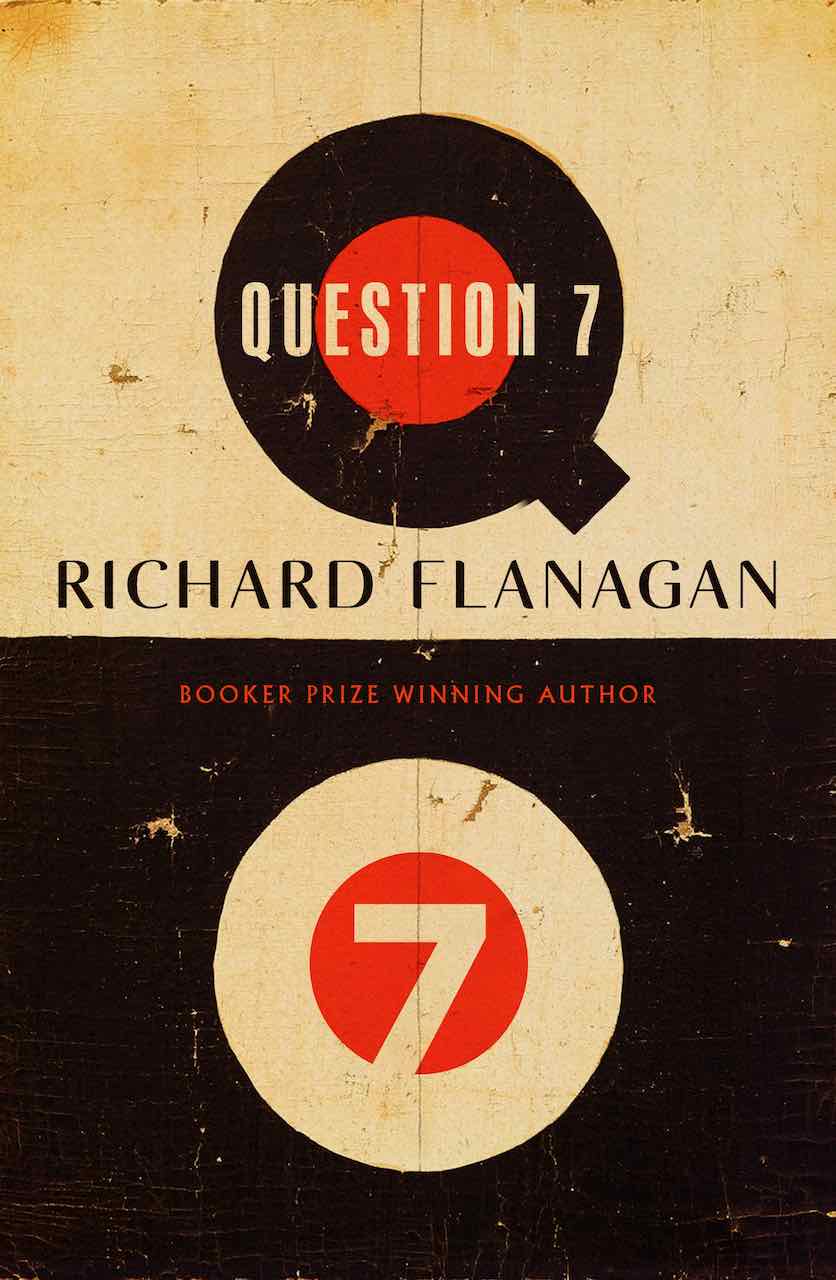
was discussing Question 7
with Elizabeth Finch,
when Chinongwa cried out,
What if Things fall apart?
Never fear, they replied, there’s a Crossing to safety
in the Valley of Grace.

With thanks to Ann Patchett, Richard Flanagan, Julian Barnes, Lucy Mushita, Chinua Achebe, Wallace Stegner and the inspirational and much-loved Marion Halligan. Her funeral was held yesterday, and I wanted to end this #Six Degrees on this beautiful book by her – after sharing some books that ask big questions.

* And yes, I know Tom Lake is not a person, but for my purposes “he” is. It’s called artistic licence!

I used more filling words than I like to do with these poems, but it’s the best I could do.

We’ve travelled far this month – to North America, Britain, Africa, and Australia – and I’m 50:50 on author gender. How good is that?

Now, the usual: Have you read Tom Lake? And, regardless, what would you link to?

Monday musings on Australian literature: Stella Book of the Month

Most readers here know the origins of the the Stella Prize. I have written about it many times before, but it was in my post on the inaugural longlist in 2013 that I described its origins and goals in a little detail. I wrote then that:

The award was created by a group of 11 women, including the writer Sophie Cunningham, in response to what many of us felt was an abysmal under-representation of women writers in Australia’s major literary awards and other literary activity (such as reviewing and being reviewed). The Stella Prize people want to turn this around …

And I then listed their goals as they expressed them at the time. These goals have remained roughly the same but are expressed on their website now in more depth and with clarity about how they are working to achieve them. They make it very clear that they are about more than the prize. Stella, they say,

delivers a suite of year-round initiatives which actively champion Australian women writers, tackle gender bias in the literary sector, and connect outstanding books with readers. (Accessed 26 February 2024)

As most Australian readers of my blog will know, many of the original drivers have been achieved, quantitatively speaking at least. There is better representation of women writers in our literary awards, and in the reviewing sector, as the Stella Counts of 2019 and 2020 showed.

Most of my posts, however, have been about the annual prize. I have rarely mentioned the other initiatives Stella has implemented, but they are important because Stella knows – we know – that achievement in the social justice arena can never be taken for granted. Their initiatives are many and you can read about them on the Initiative pages on their site. They range in size and reach, but include events, residencies, and a lot of work in education to encourage more reading of books by Australian women writers in schools because, really, that’s where reading habits very often start.

Stella Book of the Month

One of their more recent initiatives was announced in December last year, “the book of the month”. As far as I can tell – as there’s not much that I can find specifically about the initiative – the aim is to shine a light each month on a book which has been listed for, or won, the Stella Prize. We all know how easily books – no matter how good they are – disappear from the shelves and then from public consciousness. With this initiative, Stella is staying true to its aim of keeping Australian women’s writing to the fore, which means not just the latest writing, but the body of writing by women. Of course, the Stella prize is just over 10 years old, so a blip on the radar of Australian women’s writing, but 11 years worth of lists is not inconsequential either, and has a chance of still being available. They list the books on their own site, and on their Facebook page.

It’s a new initiative, so there just three books have been chosen to date:

  • December 2023: Carrie Tiffany’s Mateship with birds (my review): Tiffany’s book, as the prize’s first winner in 2013, is an obvious choice for kicking off this initiative.
  • January 2024: Georgia Blain’s Between a wolf and a dog: Stella introduces this choice by saying it “celebrates … a heartfelt and intelligent book shortlisted for the 2017 Stella Prize, and the life of its author, the late Georgia Blain”. They say that this, Blain’s last novel before she died, has been republished with an introduction by Charlotte Wood. This is what we like to hear, eh?
  • February 2024: Maxine Beneba Clarke’s The hate race (my review): The reason for choosing this memoir seems to be its having been “adapted to the stage”. It was shortlisted for the 2017 award along with Blain’s novel. Clarke was the first author to be shortlisted for the Stella Prize twice, after her short story collection, Foreign Soil, was listed in 2015

Each “book of the month” page (linked on the titles above) contains useful content about the books, such as interviews, and links to reviews and reading notes. This may not be the most exciting of their initiatives, like, say, their Stella Day Out program, but not all initiatives have to be exciting. They just have to play their part in achieving their overall vision. I have chosen it for my post tonight because we are readers, and we all love a list!

I wonder what will be next – and why? In the meantime, all being well, I will be posting on this year’s longlist next Monday, in lieu of Monday Musings.

What do you think about initiatives like this, and, is there a Stella winning or listed book you’d like to see as a “book of the month” selection?

Karen Viggers in conversation with Alex Sloan

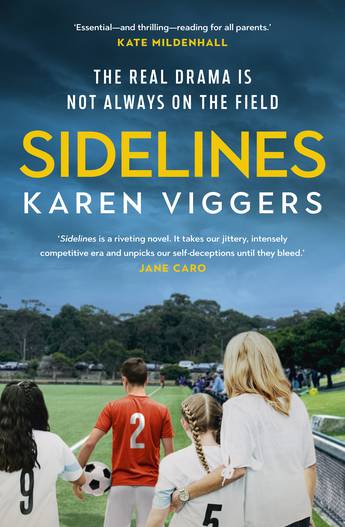
When Colin Steele emailed out the schedule, to date, for this year’s Meet the Author series, I immediately marked in my calendar those events I could attend. There weren’t many, as life is busy with yoga, tai chi, reading group and concert subscriptions, but the first I could attend was local author Karen Viggers (who has appeared several times on my blog) in conversation with Alex Sloan about her latest novel, Sidelines.

The conversation

MC Colin Steele, who was so deservedly made a Member of the Order of Australia in this year’s Australia Day Honours, opened proceedings by acknowledging country and introducing the speakers. He then paid tribute to Marion Halligan who had died this week, and who had planned to attend this event. There was an audible sigh in the audience because she really was much loved here. But, moving on, as we must … Colin introduced the conversation, describing Sidelines as “social commentary on modern society”, before passing us over to another local luminary, Alex Sloan.

Alex opened with a point I had planned to make in my post on the book, which is that it’s quite a departure from Viggers’ previous environment/landscape-based novels. Sidelines is set in the suburbs, whereas her previous four novels are set in “wild, rugged places”. But then, on reflection, she added, suburban Sidelines is “rugged” too. It “has teeth”.

However, before asking Karen about her novel, she too paid tribute to Marion Halligan. How could she not, given this week, this place, and this interviewee? Karen responded by saying what a “terrible loss” Marion’s death is. She had been a “huge supporter” and friend, and had lived life right to the end. Isn’t that how we’d all like to go?

Karen then shared a statement made by Marion, in an interview with Gillian Dooley, about what novels are about:

It seems to me that novels are very much about this question of how shall we live, not answering it but asking it, and what novelists do is look at people who live different sorts of lives, and often people who live rather badly are a good way of asking the question.

This is so Marion! Karen suggested that Sidelines looks at people living badly … but not at bad people. There’s a difference – one that people don’t always make, I think.

She also said – and this is the other thing I was planning to raise in my (coming-soon) post on the book – that she realised she is an “issues-based writer“. She can only write what is inside her. This book grew partly out of her thinking of her own behaviour but was also inspired by an Under-12 Canberra football game in 2014, which had ended in parents brawling on the field. Were these, she wondered, really bad parents or parents who had got carried away?

There is a line between support and pressure, and she wanted to use fiction to consider the issue – not just in sport, but in society overall. Where is the line drawn?

Alex asked about the fact that she has said that her first draft was written in anger. Karen explained that she had seen her son, a volunteer referee, cop a lot of abuse which has resulted in his giving up refereeing. This and other injustices she’d seen had made her angry.

Alex then moved to the characters, asking Karen to talk about them and their role in the novel – the well-to-do Jonica and Ben who start the book, and the succeeding characters who include the working-class Greek-Australian family, Carmen and Ilya, and the young talented player Griffin. Alex, as became clear through the rest of the interview, disliked Ben and loved Griffin.

Karen teased out her characters a little. Ben is one of those fathers who have to win at everything. For him winning at sport is all, and it gives social currency. However, Karen wants people to think about what success really is. Sport brings very different people together, people who may not otherwise ever meet each other. Choosing this subject-matter gave her an opportunity to explore class.

Turning to Griffin, Karen talked about how sport can also be a way out of poverty. She wanted to include all the different elements of sport – class, cultural, economic, and so on. She said if a child shows an ounce of talent, parents are sold the idea that their child can play for Australia, but only a tiny percentage do. Later in the conversation, Karen said that the lovely Griffin had been inspired by a particular young player she knew. He provides one of the novel’s epigraphs.

Karen said she had started this novel thinking she was writing about sport, but soon realised that, in fact, she was writing about modern society and parenting.

Alex mentioned the dog Honey and its importance to teen Audrey, noting that there’s always a dog in Karen’s books. Doglover Karen commented that animals are a great support to families, and that we can’t underestimate their role in our mental health. (Yes! Like her character Audrey, I found much-needed solace from my beagle when I was a teen.)

The conversation then segued to how well Karen had got into the heads of teens. We often forget the pressures of being a teen, Karen said, and how something like sport, which is meant to be fun, becomes pressure.

From here, we moved on to writing characters. Karen said she likes it when her characters start to take over and tell her who they are. Her first angry draft was too black and white. It needed more nuance. Alex, still disliking Ben, asked about the writing of badly behaving characters. Karen didn’t see the characters as all unlikable, and anyhow, she said, characters don’t have to be likeable. The structure of Sidelines is like The slap (my post). It is told chronologically but through six different characters, with each character picking up the story from the one before.

Alex mentioned the references to the arts in the novel. Had Karen specifically intended to pit the arts against sport? Audrey, said Karen, is a teenager who is interested in many things. She did want to play for Australia, but she also wanted to try other things like theatre. However, her father had told her to choose what you are best at. The arts vs sports question hadn’t been a conscious theme, but she had pared the novel back to leave gaps for people’s own thoughts. She didn’t want to be didactic.

The conversation turned to specific examples of young talented sportspeople and the role of parents in their lives – like Jelena Dokic (whom the world had watched being abused by her father), David Beckham whose parents had different ideas about their role in his success, and Ellyse Perry whose parents had never applied pressure but had always supported her. There is, said Karen, a wide range of parental behaviours and she wanted to leave space for readers to think about all this, particularly in terms of expectations and ambitions.

Regarding writing about the actual playing of sport, Karen said that watching someone who is really good is a form of beauty, like experiencing poetry or music. Alex suggested that beauty is usually revealed in her novels through nature, but in Sidelines we see it through Griffin.

Given how well Karen had captured teens, Alex wondered whether this novel would be suitable for schools. Karen felt that it could work for, say, Year 10, but is more interested in seeing it discussed in book and sports clubs. She’d like people to think about about how to be better parents, how to be better sports parents, and, more broadly, about our society and its attitude to competitiveness. She shared the story of a child being asked about the best thing about playing sport, and answering that it was the time with her friends before and after their games. If we want children to keep playing sport through childhood and into adulthood – something that is good for people’s health – we need to tap into how to make it enjoyable.

Q & A

On her professional versus writing life, and how the former helps the latter: Karen said her work as a vet keeps her in touch with the real world, and enables her to meet people from all walks of life.

On what talented athletes need besides their natural talent: Karen felt it was all those obvious things, like grit, the inner desire to play, support from others, persistence, willingness to take risks, knowing what to do afterwards (which Audrey points out to Griffin in the novel). In particular, she said, it’s the ability to be a team player, and being able to make the team look great as well as oneself.

On (referencing the Adam Goodes booing affair) being a good watcher: Karen talked about the importance of adults role-modelling good behaviour. When parents and coaches abuse referees, so will children. She hopes her novel will stimulate discussion about these sorts of issues.

On her popularity in France and how she thinks this book will go: The novel is currently being translated. The French love her “big landscapes”, but they also like philosophical questions so she hopes this novel will appeal to them for that.

On whether parents and children have different wants, different attitudes to winning and losing: After some sharing of quotes about winning and losing, Karen said that “how” you win or lose is more important than “whether” you win or lose.

Vote of thanks

Emma Pocock, wife of Federal independent senator David Pocock, gave the vote of thanks. (Pleasingly, it was Emma, not the organisers, who referred to her husband. She was introduced in her own right, as the founder of FrontRunners and an emerging writer). She shared a poem she had written at the end of her husband’s sporting career. It concludes with a reference to all those winning trophies/cups. They are, she wrote, all hollow, and must now be filled with something tangible, something that was really him.

Sidelines isn’t, she said, about neatly sorting characters into good and bad – as she’d initially tried to do – but about our behaviour individually and collectively. It asked her, she concluded, to think.

This was a lively but warm-hearted evening at which the local literary community came out in numbers to hear and talk about Karen’s timely book, to think about its intent, and to share in some camaraderie in a sad week.

ANU/The Canberra Times Meet the Author
MC: Colin Steele
Australian National University
22 February 2024

Vale Marion Halligan (1940-2024)

Such sad news. I have just heard that Marion Halligan, one of Australia’s literary treasures, died yesterday. She has been frail for some time, but the last time I saw, and spoke briefly to, her was at the 2023 ACT Book Awards in December. She was her usual engaged self, though also frustrated with the limitations her health was placing on her life. Getting old, as many of us know, isn’t a heap of fun.

Before I share a few thoughts of my own, here is how I heard the news. It was from Karen Viggers, via Facebook. I hope she’s OK with my sharing this:

It is with infinite sadness that I share the sad news with you today that the wonderful literary champion, Marion Halligan, died peacefully last night.

Marion was just the most amazing, beautiful, graceful, wise and generous person. She always had time to talk to and support other writers and was always generous in her friendships. She had a sparkling wit and personality, was always astute and sharp in conversation and she enjoyed books and literature to the end.

She has had an incredible life and will be very sadly missed.

Marion Halligan Valley of grace

It is so hard to know where to start. I do not want to write an obituary, as there will be plenty of those in the coming days and weeks. Rather, I’d like to share my experience of her, which started in the 1980s when I decided to focus my reading on women writers, and particularly on Australian women writers. I read three of her novels with my reading group, Lover’s knots, The golden dress and Valley of Grace. For this last discussion, Marion attended our meeting. What an absolute treat that was.

Outside of the reading group, I have read more of her books, including The fog garden and The point, and I have around five others waiting on my TBR. It was through Marion, too, that I met Carmel Bird when she approached me about posting the speech she was making to launch Marion’s novel Goodbye sweetheart.

Carmel Bird and Marion Halligan
Halligan launching Bird’s Family skeleton

Marion lived her writing life in Canberra, and was a member of the “Canberra Seven” or “Seven Writers” group about which I have written. I have seen her at award events, festivals and conversations, sometimes the interviewer and sometimes the interviewee. One memorable occasion was when she interviewed Margaret Atwood back in the early 2000s. Atwood was not easy to interview, but Marion held her ground with grace and humour. I will never forget it. (I was glad it was she and not me in that seat!)

Marion is loved here as our grand dame of literature, and her presence will be greatly missed. Not only did she support local writers generously, as Karen Viggers says above, but she was for many years patron of the ACT Writers Centre (now named Marion partly in her honour), was at one time the chairperson of the Literature Board of the Australia Council and also an organiser of Canberra’s previous writers festival, the Australian National Word Festival.

She was a versatile writer. She wrote eleven novels, several of which won and/or were shortlisted for some of Australia’s best literary awards, and which included a little foray into crime fiction. She was a big supporter of the short story form, ruing their unpopularity with publishers, and she also wrote non-fiction books, as well as journalism, including articles on food. Wikipedia lists her books and awards. Searching her in your browser will retrieve several interviews with her, and she was interviewed by Irma Gold and Karen Viggers for their Secrets from the Green Room podcasts I posted on recently. You can see most of my posts involving Marion on this tag. (There are few reviews here, though, because most of my reading of her books was before blogging.)

I could go on, but this is enough for now. I will close with a quote I’ve shared before on this blog. It comes from one of my favourite books of hers, a work of autofiction, The fog garden. I just loved this book, her cheeky, wry way of telling us that it was fiction not biography. It’s a lesson, in fact, in how to read fiction, and it also has one of my favourite statements about the value of reading. It goes like this:

Read a wise book and lay its balm on your soul.

All I can say is, thanks Marion for your intelligent wit, your warmth and your wisdom – and for the balm you laid on our souls. We will miss you muchly.

Monday musings on Australian literature: Lothian Book Publishing Company

As I research for my 1924 Monday Musings series, I am coming across articles that don’t neatly fit into 1924-dedicated posts but that I want to document. The most recent one concerned the Lothian Book Publishing Company. It was about a specific initiative, which I will discuss at the end of this post, but I was intrigued to find out more about the publisher itself.

AustLit tells us that, while now an imprint of Hachette Australia, Lothian has a long history, starting well over a century ago, in 1888 in fact, when it was founded by John Inglis Lothian. Then it was a Melbourne-based book distribution company, but it started publishing in December 1905 under John’s son, Thomas Carlyle Lothian. During its first three years, it produced 40 books and four periodicals. AustLit then jumps to the interwar years (the 1920s and 30s) and says that it “was particularly notable” for publishing Australian poets, such as Bernard O’Dowd and John Shaw Neilson. Lothian also represented Penguin Books in Australia until the end of the Second World War. Cecily Close, in her article on Thomas Carlyle in the ADB, provides more information, and adds other authors to their list, like Miles Franklin and Ida Outhwaite.

The company was active, and by 1945, it had offices around Australia and in Auckland, and had literary agents in London and New York. It remained a family-run affair, with Thomas Carlyle Lothian being followed by his son Louis Lothian, and then Louis’ son Peter Lothian.

Austlit says that the company moved into children’s publishing in 1982, which has remained a big part of its activity since. Then the take-overs started. In December 2005, the Time Warner Book Group acquired Lothian and formed the Time Warner Book Group (Australia), with Lothian Books becoming an imprint of Time Warner. Very soon after, in February 2006, Hachette Livre acquired the global Time Warner business, with Lothian Books now becaming an imprint of Hachette Livre Australia. Lothian Books’ CEO Peter Lothian retired in July 2006.

The focus on children’s books has continued with Hachette Australia expanding its children’s publishing, and branding its children’s books with the Lothian imprint. AustLit says that as part of the new arrangement, some adult publishing would continue, as a ’boutique’ list of Australiana titles, both already published and to be commissioned, but I’m not sure that this eventuated, or, if it did, that it lasted. Hachette Australia’s website does not clearly differentiate its imprints.

Lothian stories

It was a story about Lothian that inspired this post, but while researching it, I found another intriguing story, so I’m closing with two little anecdotes about Lothian.

Lothian and Henry Lawson

The State Library of Victoria’s La Trobe Journal carries an article by John Arnold about the relationship between Lothian founder, Thomas, and Henry Lawson. You can read the article yourself as the story is not a short one but, essentially, it started in 1907 when, on a business trip to Sydney, Thomas Lothian signed a contract with Henry Lawson to publish two collections of his writing, one of prose and one poetry. The contract was signed in James Tyrrell’s bookshop in Castlereagh Street, Sydney.

I won’t go into the details but it was a standard Lothian printed contract. The author would receive a 10% royalty for each title. Lawson was to deliver the completed manuscript of both titles to the publisher, two weeks after the signing of the contract, and Lothian was to publish the two books no later than three months from receipt of manuscript. The contract “declared that the author was the proprietor of the copyright of the material proposed to be published and it gave the publisher the world serial, translation and dramatic rights to the material in question”.

This is not what happened, and Arnold writes that “this commercial agreement … was in a short time revised, revised again, then broken, leading to false promises, abuse of copyright, and a falling out between author and publisher. The proposed books were not to appear for six and a half years”.

It was a tortuous process, due largely to Lawson’s “erratic behaviour” but also affected by Lothian’s busy and ambitious workload. Arnold concludes his article with:

Despite his unrewarding and frustrating dealings with Henry Lawson, Lothian was still willing to chip in when the Lawson hat was sent round after the author’s death. In 1928 he became a Life Member of the Footscray-based Henry Lawson Memorial Society, and in 1931, as one of Lawson’s publishers, wrote a one-page testimonial to be read at the society’s annual meeting.

The handsome certificate with which Lothian was presented by the Henry Lawson Society in 1938 stated that Life Membership was awarded for ‘Unselfish and Generous Services rendered to this Society and Australian Literature generally’ …

Lothian and Nettie Palmer

Finally we get to the article that inspired this post, the announcement in The Argus of 8 May 1924 that Nettie Palmer had won a “prize of £25 offered by the Lothian Book Publishing Company for the best critical essay dealing with Australian literature since 1900”. Her essay was titled “Australian literature in the Twentieth Century” and was to be published in June. On 18 July, The Albury Banner and Wodonga Express, reports on this work, now titled Modern Australian literature, describing it as ‘an interesting “measuring up” of Australian literary work from 1900 to 1923’. Vivian Smith, editor of UQP’s Nettie Palmer anthology, which includes this work, says the piece “is significant for what it reveals of the expectations and hopes of the time”, and also that

Nettie, like Vance, was concerned for the relationship between a national literature and the national experience behind it, but both explored this relationship in a tentative and programmatic way and had no readymade formula to account for it.

Nettie has appeared here several times, and will again, but I’ll leave her here for now. (Except, I’ll share that the Goulburn Evening Penny Post (23 October 1924) reported that she gave her prize money to the “Blinded Soldiers”.)

My initial idea was to write a post about this Lothian Prize, but I’m not sure it continued. However, I’ve written posts about publishers before, and Lothian seemed perfect for another.

Lucy Mushita, Chinongwa (#BookReview)

Where to start with this complex, unusual and gorgeously written novel that manages to convey the horrors of child marriage, of colonialism, and of patriarchal cultures, without eulogising or demonising the characters involved? It’s quite a feat, and it made this book a deeply involving read.

The place to start, I suppose, is the beginning, which is that Chinongwa is the debut novel of Zimbabwean author Lucy Mushita. Published most recently by Australia’s Spinifex Press in 2023, it was originally published in 2008 in South Africa, under the author name of Lucy Michot (which I discovered when searching for the book cover in GoodReads.) Its eponymous protagonist, Chinongwa, is 9 years old when the novel opens:

Chinongwa Murehwa was nine, but her age was not vital. Just her virginity. Though she was not yet washing, her fruits were already protruding. That was a relief for her family. Anyway, she was the only one they could use.

And there you have it. For a reason that soon becomes obvious, Chinongwa is to be “used”, that is, married off to save the rest of her family from starvation. The root cause of this starvation is colonialism – the arrival of the “kneeless” or vasinamabvi and the fact that Chinongwa’s family ended up with the poorest quality land in the village because her paternal grandfather had stood up to the vasinamabvi and arrived late at the place their community settled.

So, in Book 1 of the novel, 9-year-old Chinongwa is “hawked” around neighbouring villages by her father and aunt, with little success. Can you imagine it? She is starved and thin, not one of those “juicy” nubile young women men desire and are happy to pay for with cows and grain. At last, however, a childless woman, Amai Chitsva, for reasons of her own, offers to take Chinongwa as a second wife to her own husband. Not only is this husband, Baba Chitsva, thirty nine years her elder, but he does not want a second wife. Regardless, Book 1 ends with Chinongwa about to start her new life with her new family.

Now, before I get to Book 2, I should explain that this book is a novel, but one based on the life of a real person. I say this because a Chronology is provided at the beginning of the book. It tells us that Baba Chitsva was born in 1871, and Chinongwa in 1910, that Baba Chitsva died in 1935, and, finally, that “Chinongwa is telling all” in 1940. There are other dates, but these are the most relevant in terms of grounding the book.

So, Book 2. Unlike Book 1, which is told from the third person voice (albeit mostly through Chinongwa’s eyes), Book 2 is told in the first person voices of Amaiguru (Amai Chitsva) and Chinongwa, with one chapter in Baba Chitsva’s voice. This shift works because in Book 1 Chinongwa is a child, so not fully aware of the ways of the adult world, whereas in Book 2 she grows up – very rapidly. It’s a heart-breaking story of a young woman who is essentially groomed to seduce a man who doesn’t want her, a young woman who subsequently has her first baby at the age of 11.

For the first few years she and Amaiguru make it work well enough, as we hear through their individual voices. Chinongwa has no other real option, while Amaiguru tries to make work what she had started. But things turn sour when, upon her mother’s death, Chinongwa finally realises she is on her own, and that it’s time to be more independent:

I now had to take my destiny into my own hands: I would have to return to my jail and fight for my freedom from within.

And so she does with disastrous results.

What makes the novel such good reading is that Mushita is able to convey the culture, how and why it tolerates the practice of child marriage and polygamy, including the economics of it all – how cows are passed back and forth between families, for example – while simultaneously recognising the humanity of those involved. These men and women – the mothers and fathers, the child-brides, the first wives and second wives, the husbands, the aunts, the villagers – are human beings with the full range of social and emotional behaviours. Some are kind and some cruel, some are envious, some are sensible, some are weak, some are manipulative, some are scared, some are wise, and so on. Chinongwa eventually recognises this truth:

At first I refused to accept what life had dealt me. I said that my load was too heavy. But, with time, and as I look around me, I decided that one will never know the weight of one’s neighbour’s load. Maybe if I were to carry it, I might ask for mine back. Only that one who carries it knows its weight.

In other words, people will be people. They are rarely to blame for the system in which they find themselves. Some will survive and some won’t, but that’s not the point. The point is the system, and its complex historical and cultural interconnections. The point, too, is that child marriage still happens, and that patriarchies still govern much of women’s lives. In Chinongwa, Mushita conveys the economic, social and cultural imperatives that underpin these practices while also showing the personal costs. It makes compelling reading.

A little contribution to Bill’s Africa Project. Lisa also enjoyed this novel.

Lucy Mushita
Chinongwa
Little River, Vic/Mission Beach, Qld: Spinifex Press, 2023 (orig. pub. 2008)
235pp.
ISBN: 9781925950816

(Review copy courtesy Spinifex Press)

Monday musings on Australian literature: Forgotten writers 3, Marion Simons

Back in 2021, I started a Monday Musings sub-series on forgotten Australian writers, but to date have only written on two – Helen Simpson and Eliza Hamilton Dunlop. I have been intending to get back to it and with this year’s slight revamp of Elizabeth Lhuede’s and my contributions to the Australian Women Writers blog, now is the time. In the revamp, Elizabeth and I are going to focus on sharing public domain works published in 1924 – or written by writers who died in 1924. My first contribution was by Marion Simons.

This post expands on that blog post – but doesn’t include the piece written by Simons, a short column titled “To the old gumtree”, that I included there. To see that, please go to AWW. It is a short piece and worth reading!

The more we research Australia’s earlier women writers, the more we become aware of just how many used pseudonyms – sometimes more than one. Marion Simons was one such. Using pseudonyms was, as we know, not uncommon for women. Often it was to hide their gender, so they would be published and/or read, or to protect themselves from criticism for stepping outside the expectations of their gender and daring to write in the public domain. Sometimes, though, writers used pseudonyms – still do, in fact – to keep their different styles of writing separate. Unfortunately, we don’t know a lot about Marion Simons, so we can’t be sure of her motivation. However, she did use several pseudonyms, and some at least seem to have been used to differentiate different writing personas.

Marion Simons

So, who was Marion Simons? Most of what I’ve found has come from the (partly paywalled) AustLit database, and from Trove, mostly from pieces by her and but I did also find the occasional brief reference to her. The fourth of seven children, Simons was born in 1883 in Crystal Brook, South Australia, and spent her childhood years there and in Port Germein and Port Pirie. She never married, and when she died in 1952, she was living with one of her brothers in Mile End, a suburb of Adelaide.

It’s difficult to know exactly when or how her writing career started. AustLit, which describes her as a freelance radio script writer and journalist, says that she wrote radio plays for school broadcasts for the ABC between 1939 and 1949, including adaptations of classics. For these, AustLit says, she used her birth name, “Marion Simons”, but they add that she also wrote short stories and articles under the pseudonym “Stella Hope” and radio talks as “Lady Tulliver” (a reference, it seems, to George Eliot’s Milll on the Floss character, Maggie Tulliver). She used other pseudonyms too, including Quilp, Robin Adair and Nardoo. These were difficult to research, “Quilp” and “Nardoo”, for example, being used by more than one writer.

Book cover

Simons was clearly versatile – she probably had to be to make a living as a writer – as she also wrote plays for the theatre, including  “Casablanca”, which won the 1932 Repertory Prize, and a small 1941-published book, The Innkeeper’s wife, that was based on the Thomas Hardy poem “The oxen”Adelaide’s News (22 November 1941), reported that this story, then unpublished, won first prize in a short story competition conducted by the South Australian branch of the Fellowship of Australian Writers. (Read it online at the State Library of Victoria). It’s not clear exactly when she moved to Adelaide, but from Trove, I’d day she was there by the early 1930s, if not in the 1920s. Simons was active in Adelaide’s literary society, with various Trove articles dated from the 1930s to the 1950s reporting her being on the Poetry Society’s Council, the last librarian of the University Shakespeare Society (before it folded), Vice-President of the Adelaide Dickens Fellowship, and President of the Y.M.C.A. Dinner Club which would feature speakers at their dinners.

In addition to revealing her involvement in the above organisations, Trove also told me that she was cousin to one J.J. Simons. She may not appear in Wikipedia, but he does. He was born in Clare, South Australia, in 1882, and, says Wikipedia, “was an Australian businessman and politician, best known for establishing the Young Australia League” (in 1905), which started as a football league but, says Wikipedia, “diversified to include literature, debating, band music, sport and theatrical performances, as well as outdoor pursuits such as hiking and camping”. It still exists. He was also active in publishing, but all this was in Western Australia where he moved in 1896, and I am digressing a bit too much now, so back to Marion. (You can read about him at ADB, if you are interested.)

Given Simons’ use of pseudonyms, it’s difficult to identify her earliest writings. However, Port Pirie’s Recorder (10 November 1934) says that she wrote as “Quilp” while living in Port Pirie, and I found a “Quilp” writing the “Comment and Criticism” columns in the Port Pirie Recorder and North Western Mail of 1906. I believe this is Simons because this “Quilp” mentions not having been long out of school. (I found some earlier columns by a “Quilp” in a Port Augusta paper but they were dated 1902 when Simons was 19 and they seem to have been by an older man.) In late 1907, “Quilp” seemed to be also writing a column “Odds and Ends from the Oracle” in the Quorn Mercury and the Petersburg Times. A letter to the editor, referencing one of “Quilp’s” columns, describes “Quilp” as “your comic writer”. Certainly “Quilp” used a humorous tone used for reporting local events and activities, much as you find in modern columnists. Take for example this from her “Comment and Criticism” column in the Port Pirie Recorder and North Western Mail (of 5 December 1906):

I went to a garden fete the other day and helped to damage a very nice garden…

“Quilp” was also referenced in another (1907) report as delivering a paper on David Copperfield to Port Pirie’s St Barnabas Literary Society.

The “Stella Hope” by-line appeared in South Australian newspapers in the early 1920s. These pieces included general interest columns, also delivered with a touch of humour, and short stories. The first piece I found was “February the Fourteenth, St Valentine’s Day” in The Journal (17 February 1923).

My first in this series were novelists, which Marion Simons was not, but she was prolific enough across a number of forms to make her worth including here. I’d love to know more about her life but, despite her active involvement in Adelaide’s literary community, I have not yet located an obituary. I’ll keep looking though.

Duane Niatum, Crow’s sun (#Review)

Duane Niatum’s “Crow’s sun” is the tenth story of fourteen in the anthology, Great short stories by contemporary Native American writers, and moves us into the 1990s, where we will remain for the next two stories before ending up in the early 2000s.

Duane Niatum

Anthology editor Bob Blaisdell provides more information about Niatum than he does for some of the writers, but I am supplementing that with information from Wikipedia and the Poetry Foundation. Variously described as a poet, fiction writer, playwright, essayist and editor, Niatum was born in 1938 in Seattle, Washington, to a Klallam (Salish) mother and Italian-American father. After his parents divorced when he was just 4, he spent a lot of time with his maternal Klallam grandfather, from whom he learnt tribal ways and oral traditions. He is an enrolled member of the Klallam Tribe (Jamestown Band).

At 17, Niatum enlisted in the United States Navy, and served in Japan. On leaving the Navy, he did his B.A. in English, at the University of Washington, studying with poets, Theodore Roethke and Elizabeth Bishop. He then earned his M.A. at Johns Hopkins University, and a Ph.D. in American culture from the University of Michigan.

Poetry was his main love, it seems. Wikipedia states that he “established himself as one of the most influential promoters of Native American poetry”. He edited a Native American author series at Harper & Row Publishers, producing two “influential anthologies”. He has published essays on Native American literature, and his poetry has been translated into many languages.

The Poetry Foundation says that his “writing is deeply connected with the Northwest coast landscape, its mountains, forests, water and creatures” and that “the legends and traditions of his ancestors help shape and animate his poetry”. However, it is a short story, of course, that Blaisdell has chosen for his anthology.

“Crow’s sun”

I’ve now read a couple of Niatum’s poems at Poetry Foundation, but none that specifically illuminate this story. “Crow’s sun” presumably draws from his experience in the Navy as it deals with a young sailor named Thomas sentenced to 30-days in the brig. I’m not saying that the story is autobiographical. It may be – I don’t know – but my point is that his Naval experience, and its treatment of people of colour, is sure to have informed the story.

The narrative takes place over one day. It starts with Thomas, just one year into his service, waiting to be taken to the brig and ends with him behind bars. Not a lot of action, in other words, but a lot goes on. This is a story about systemic racism. Thomas, we learn, had let his mother and step-father talk him into enlisting under-age, a common story for youths of colour with limited opportunities. In his case, he’d already been kicked out of home after he’d “stopped his step-father from beating up his mother in a drunken brawl”.

Once in the Navy, things don’t go well. Thomas “cannot fathom why sailors 17 to 70 live in some dream of future glory, which is the oldest myth of the military”. We are not told what Thomas has done, but it appears, from Shore Patrolman Cook’s advice as he delivers Thomas to the brig, that Thomas has been treated harshly:

“This hole’ll be your home for thirty days, Thomas. And buddy, you’d better watch your mouth in this joint. Do your time with your trap shut, until you’re running free. Don’t act the wise-guy. I don’t like your face, Thomas, but I don’t think those hicks from the base were right. You’re a punk, but who isn’t at your age. They went too far. I believe burning a man at the stake’s too much like what like what I left in Alabama.”

This surprises Thomas, because Cook, who “is a spit and polish sailor married to the idea that blind obedience to orders is the only law”, has never really liked him. His advice, then, means something, and Thomas thanks him for it. The rest of the story tells of his admission interview with the Brig Warden – and we get the full measure of the racism he is likely to experience. The Warden aggressively violently enforces his will. He calls Thomas, insultingly and erroneously at that, a “wetback”. He ridicules Thomas’ name insisting it should be “Pancho Villa or Willy Garcia”. I don’t need to continue because you’ve surely seen or read enough scenes like this to get the gist.

What makes this story is how Thomas handles the situation, which is to call on the wisdom of his grandfather. At the first sign of the Warden’s aggression:

The muscles in Thomas’ face tighten; his eyes thicken; narrow into tiny moons peering from behind a shield of fern. He sways slightly; stiffens his whole body, not sure what to expect from the man closing in. Grandson to Cedar Crow, Thomas feels his fingers change to claws, to a wing of thrashing spirit flying wildly inside his ear. (Be calm and steady now. This man could be your enemy. Know his every move. Break him like a twig if he tries to harm you. Be the Thunderbird of our song. I am Crow, your father.)

From here on, Thomas draws on his grandfather’s wisdom to assess and manage the situation. There is violence but he sees death is not on the cards. We learn that many Klallam people had lost faith in their beliefs and practices, but not Thomas. His late grandfather, “the quiet man of family, sea and forest had counselled him well”. From here to the end, where we leave Thomas standing in his cell, we observe him watching and responding to the Warden and drawing on his spirit wisdom.

It’s a strong story about the power and value of knowing your culture.

Duane Niatum
“Crow’s sun” (orig. pub. 1991)
in Bob Blaisdell (ed.), Great short stories by contemporary Native American writers
Garden City: Dover Publications, 2014
pp. 75-83
ISBN: 9780486490953

Monday musings on Australian literature: Secrets from the Green Room

I have planned to write about the Secrets from the Green Room podcast series pretty much since it started in late 2020, but for one reason or another time has got away from me and here we are, some four years later … and I’m finally there. The good thing is that it is still going so, you know, better late than never.

Book cover

This podcast series was created by two (then) Canberra-based writers, Irma Gold and Craig Cormick (links on their names go to my posts featuring them), and first went to air, mid-pandemic, in November 2020. The latest episode, no. 40, went live just a week ago, on 30 January. During this time, Irma Gold moved to Melbourne, and Craig Cormick handed over his baton to another Canberra author, Karen Viggers, but, the show went on …

As I’m sure you all know, there are thousands of literary podcasts out there. I don’t listen to many because, despite my enthusiasm for literary matters, when I get a spare moment I tend to go for quiet. You just can’t do everything. But, for podcast lovers, it can be hard to track down what to listen to. Early this year The Conversation shared “15 literary podcasts to make you laugh, learn and join conversations about books”. The article’s writer, Amber Gwynne, quotes another writer Tom McCallister who claims that ‘while traditional reviews may be in decline, literary podcasts are not just “filling the void”. They’re “fracturing and reshaping” the “world of book discussion”’.

Gwynne adds that

like community reviews and the more recent surge of #BookTok and #Bookstagram content on social media, literary podcasts feed the rich social networks that form around books. They transform what’s often a solitary activity – reading – into a widely (but intimately) shared experience.

These networks are what keep most of us bloggers involved in social media, aren’t they? But, back to Gwynne. She explains that the format’s mainstays are author interviews and criticism that ranges from comprehensive reviews to casual banter, with the end result being that they “invite audiences to engage with books and writing in all kinds of ways”.

Some podcasts work primarily for readers. They introduce us to loved authors or to new authors; they show us other ways of finding out about the literary landscape; and they offer us options to focus narrowly on specific genres or to cast our nets more widely. Whatever your reading interest, there is likely to be a podcast out there. Many of these podcasts have a side-benefit for authors. By providing opportunities for writers to do readings and/or engage in conversations, podcasts can help promote authors. Indeed, as Gwynne says, podcasts “can be a valuable platform for emerging authors, providing exposure and amplifying diverse voices.”

Other podcasts, though, focus specifically on the writers. Their aim is to support writers and help them develop their craft. This latter is where Secrets from the Green Room primarily slots. The title, in fact, gives that away. Promotion for the series explains that in each episode the hosts

chat with a writer about their experience of the writing and publishing process in honest green room-style, uncovering some of the plain and simple truths, as well as some of the secrets — whether they be mundane or salubrious — and having a lot of fun in the process.

The episodes usually start with the hosts chatting about their own practices and experiences – such as whether they find writers’ retreats useful, or how much (or whether) they plot out their stories in advance, or whether they take notes and if so how, and so on. Then they move onto, mostly, a conversation with a single author, who is drawn from across the spectrum (literary, crime, cli-fi, to name a few). The conversation focuses on the craft aspect – how do they write, how did they get published, how did they find the editing process, and so on. But, there are also episodes devoted to other aspects of the trade that could be useful to writers, such as conversations with booksellers, a sales rep and a festival director. Again, the focus is on what writers need to know about these activities and functions. Should writers, for example, turn up at a bookshop offering to promote their book? Are there right and wrong ways to go about approaching a bookshop? This must surely be gold (excuse the pun) for writers, but for readers like me who are interested in – nay fascinated by – the wider literary landscape, this “stuff” is just wonderful to hear.

Book cover

Gwynne’s The Conversation article starts with Australian podcasts, and has Secrets from the Green Room second in the list. Her description is that Irma and Karen “invite guests to candidly share their own experiences navigating the world of publication, landing on topics as varied as ghostwriting [Aaron Faaso and Michell Scott Tucker], the “creep” of imposter syndrome [Nikki Gemmell], and the challenges of teaching writing at university [Tony Birch]”.

Secrets from the Green Room is available, free of charge and from multiple platforms, like most podcasts that I know, but here is the Spotify entry with list of episodes.

Do you listen to literary podcasts, and, if so, care to make a recommendation or two?

Six degrees of separation, FROM Demon Copperhead TO …

I am back in the land of the Wurundjeri Wandoon people of the Greater Kulin Nation, which means I’m back in my part of Melbourne for our family’s annual February birthday season. (Three have their birthdays between the 3rd and 9th, inclusive.) It all starts today, that means, but I did have time to prepare my Six Degrees in advance. If you don’t know how this meme works, please check host Kate’s blog – booksaremyfavouriteandbest.

The first rule is that Kate sets our starting book. Every now and then she mixes it up and doesn’t set a specific book. This month is one of those, with our assignment being to make our starting book the one we ended our January links on or the last one we read in January. Barbara Kingsolver’s Demon Copperhead is the last book I completed in January – for my reading group on Tuesday 29th – though I didn’t post my review until the first of February.

When I started reading Demon Copperhead I was immediately reminded of JD Vance’s memoir Hillbilly elegy. That’s an obvious link given Vance also grew up as a “poor hillbilly”. However, I was also reminded of another novel about a boy growing up poor with an addicted mother, albeit an alcoholic in this case. That book is Douglas Stuart’s Shuggie Bain (my review) so that’s my first link. Shuggie is a very different boy, but he captured my heart just as Demon Copperhead did.

Both Demon Copperhead and Shuggie Bain are titled for their protagonists, who grow up during the course of the book. Another novel I read which is named for a young protagonist who grows up during the book is Gwendolyn Brooks’ Maud Martha (my review). All three of these young characters have much to contend with in their young lives. But now, we are moving on from characters to …

Laurie Steed, You belong here

Form. Maud Martha is a novella told through vignettes from the titular character’s life. Another book I’ve read which tells the story of a family through vignettes is Western Australian author Laurie Steed’s You belong here (my review). Maud Martha covers around two decades in 100 pages, while You belong here covers around four decades in two hundred and fifty pages.

Book cover

The back cover blurb of Steed’s novel describes it as having “all the dysfunction of an Anne Tyler novel, but with a distinctly Australian feel.” I’ve read and thoroughly enjoyed a few Anne Tyler novels over the years, but only one since I started blogging, so that’s my next link, Anne Tyler’s Redhead by the side of the road (my review).

Simsion, The Rosie Project

Tyler’s protagonist, Micah Mortimer, is a routine-driven character who has trouble forming deep relationships with people. Another routine-driven character who doesn’t find romance, in particular, easy is Don Tillman in Graeme Simsion’s popular Rosie series, so it’s to the first in this series, The Rosie project (my review), that I’m linking next.

For my final link, we are staying in Australia, and I’m using one of those more tricksy links, namely the birth year of the authors. Susan Johnson, whose Life in seven mistakes (my review) I’m making my last link, was born the same year as Simsion. Like many of the books this month its subject matter is problematical families. Such, though, is the common stuff of fiction, eh?

We haven’t travelled far this month, spending most of it in the USA or Australia – with one little foray to Scotland. We’ve also stayed within the last century. I’ll see if I can be more exciting next month.

Now, the usual: Have you read Demon Copperhead? And, regardless, what would you link to?