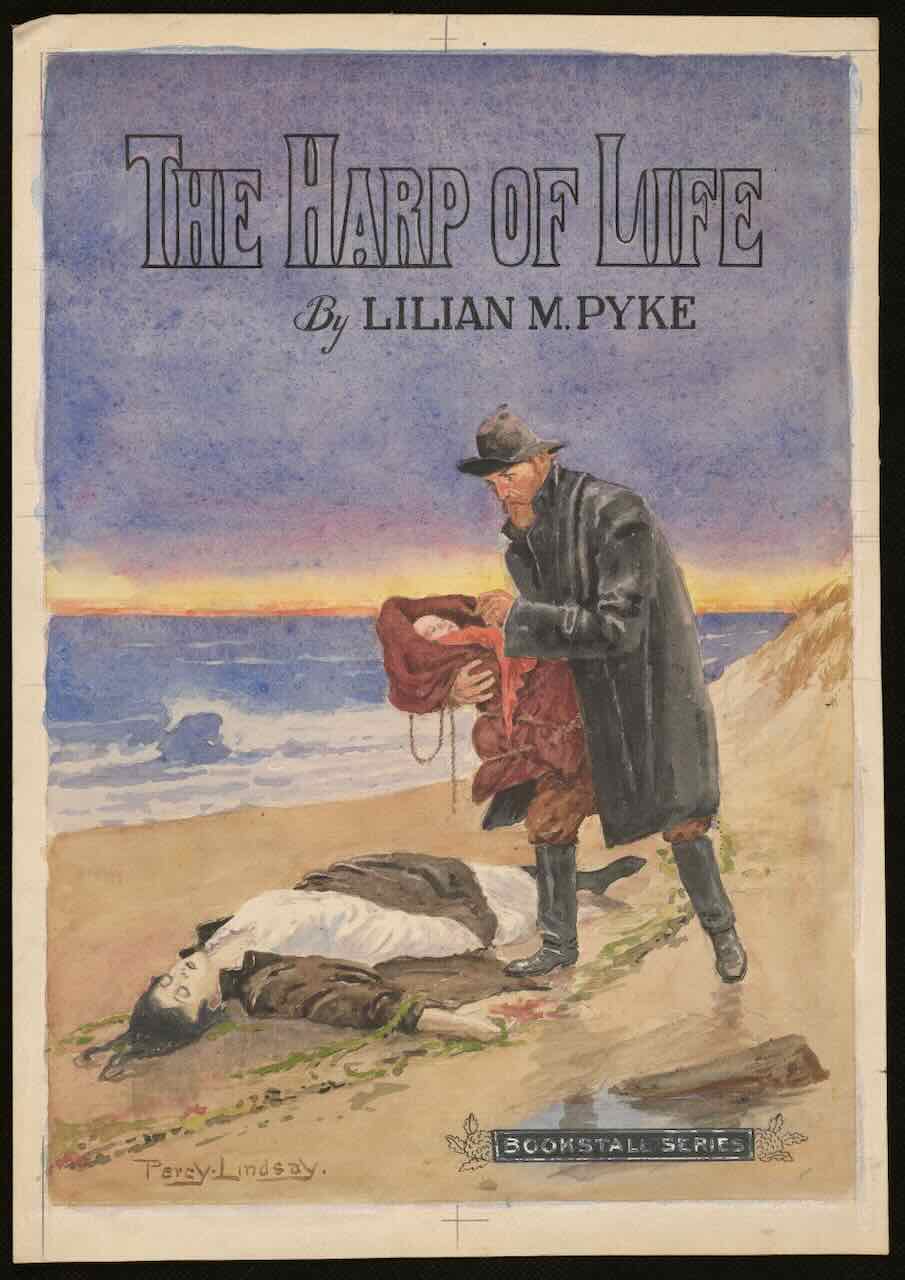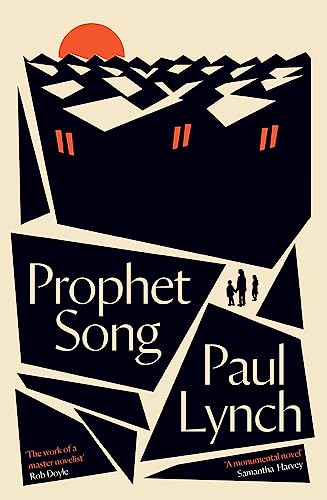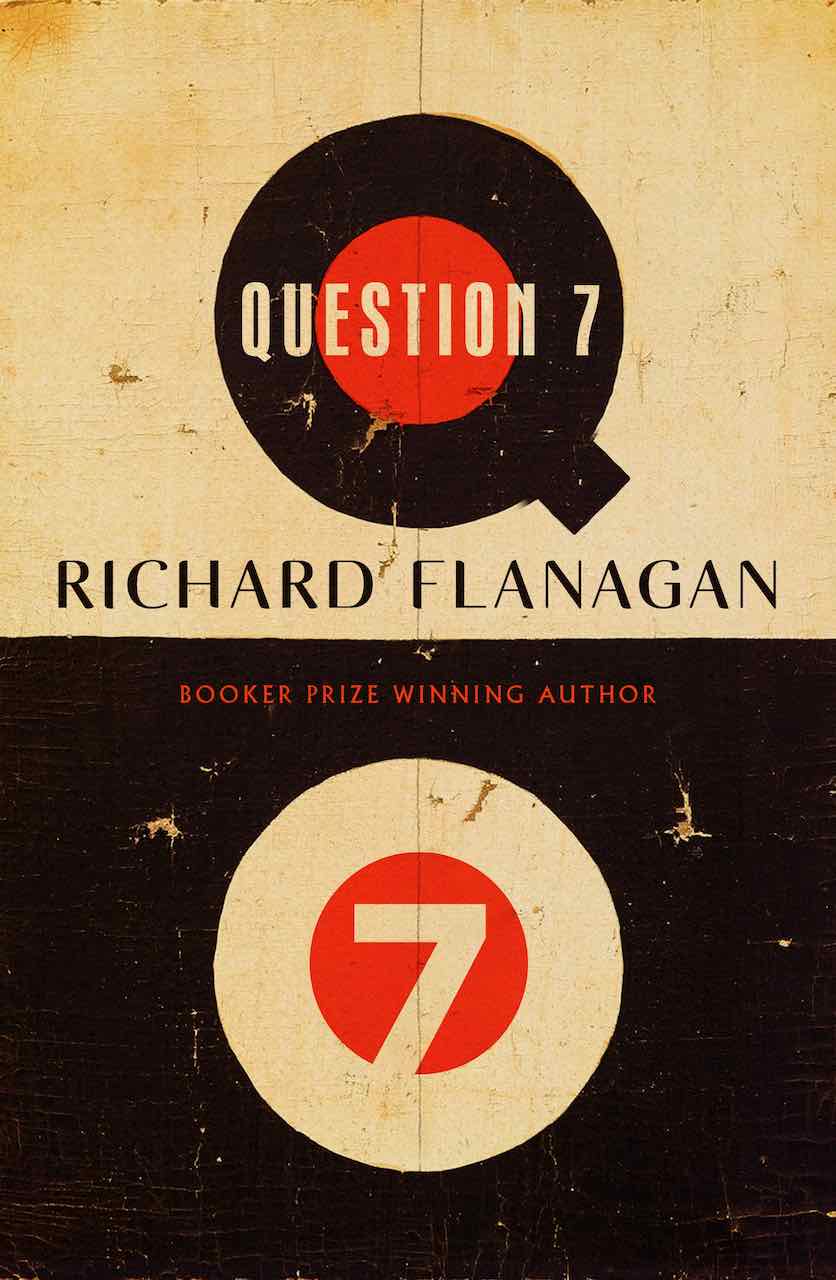
Frank Dalby Davison, Dusty (#BookReview)

It’s a strange coincidence that my second review for Bill’s Gen 1-3 Aussie male writers week is for a novel titled Dusty, when my first was for a short story titled “Dust”. One of those funny little readerly synchronicities. The title, however, is about the only synchronicity because, although both stories allude to the dusty Australian landscape, Casey’s short story is about miners’ lung dust disease while Davison’s novel is about a part-kelpie part-dingo named Dusty.

A bit about Frank Dalby Davison

Davison (1893-1970) was best known as a novelist and short story writer, and was a significant figure in Australian literary circles of his time. There are useful articles for him in Wikipedia, and the Australian dictionary of biography, and I plan to devote a Monday Musings to him soon. Meanwhile, as background to this post, it’s relevant to say that he was born and schooled in Melbourne, but left school in his early teens to work on his father’s farm near Kinglake. The family moved to the United States in 1909, when he was 16. After working there in the printing trade, he travelled more, eventually enlisting for World War 1 in England. After the war, he took up a Soldier Settlement selection near Injune, in central western Queensland. 

Davison wrote several novels, but his best known is probably Man-shy (1931), which won the Australian Literature Society Gold Medal. Featuring a red heifer, it was my introduction to Davison in my first year of high school in the 1960s. Dusty (1946) is also about an animal – this time a dog – and has been in my sights for some time. Both novels drew on his experiences in Injune. AustLit reports that the manuscript of Dusty, ‘entered under the title “Stranger”, and the pen-name “Tarboy”, won the Melbourne Argus and Australasian Post 500 pound Novel Competition in 1946′. 

Dusty

At the end of my edition of Dusty is a promotion for Man-shy which quotes from H.M. Green, the literary historian who inspired Bill’s “generations”. Green writes:

Although other novelists have made animals their principal characters and drawn them realistically, Davison is the first to make a serious attempt to get inside their minds. The red heifer and the mob of wild cattle to which she belongs stand for the spirit of freedom and dogged, untameable resistance; their struggle is made extraordinarily real to us … Davison has a genuine and individual talent.

This could equally apply to Dusty, which tells the story of a dog, sired by a kelpie to a dingo mother. Violently wrenched from his lair when he was a few weeks old, he is sold to a decent man, a bushman named Tom. Tom is no fool. He recognises the mixed blood, but also sees potential in the pup, and trains him to become a champion sheep dog. Their bond is strong but is tested when Dusty’s “dingo blood” starts asserting itself, and he turns sheep-killer by night. This will not do, and Tom knows it. The novel, however, does not play out quite the way you’d expect, and we are left guessing until the end about what will, indeed, happen to Dusty.

That’s the plot, but like many plots it doesn’t tell you much about what the book is really about, or what makes it a good read. Told in three parts, Dusty is a realist novel, detailing life on Australian sheep stations and cattle properties, and told mostly through the perspectives of Tom and Dusty. Yes, you heard right, Dusty, the dog. I was completely engaged because not only is there none of the sentimentality common in stories about a man and a dog, but there’s also nothing anthropomorphic in the dog’s point-of-view. He feels pure dog, which I thought quite a feat. Early on, for example, Tom, having previously given Dusty his dinner without ceremony, puts the food down and starts some training:

Then followed a series of mystifying events. A hand appeared just above the dish and twitched, giving forth a series of soft snapping sounds; then there was a little soft whispering, and then a voice that, like the hand, kept repeating a small noise over and over again. He could make nothing of it …

This dog’s-eye view of the world, based on his experiences to date, continues through the novel.

Soon, though, bigger issues are at play involving the two parts of Dusty’s being, “the ancient battle between conflicting heredities, and between early influence and present environment; the mother against the father, nature against art”. Then Davison adds something interesting. The dingo is the product of nature, while the kelpie, the working dog, is “a product of art”. But, Davison adds, “nature, if man fails in toil or vigilance, hastens to reclaim her own”.

In other words, beneath this deeply interesting story about a man, his dog and outback farming, is a wider story about “nature”, or the essence of our beings. Contained within Dusty is the struggle between the two forces – that of freedom, of following his instinct, and that of living by his training, by rules and responsibilities. After Dusty’s dingo side becomes apparent to all, Tom knows what must be done but chooses to change his life rather than kill his dog. He becomes a self-employed possum scalper in cattle country, and finds, “without meaning any ingratitude for past kindnesses”, that he relishes his new situation in which he is invited to share a meal as “a guest and not just the hired man”. In other words, as a possum scalper, Tom is freer to be his own man.

But, while I think Tom’s life is part of this wider theme, the main focus is animals, and the idea that, in them, “is a whole scheme of values outside those familiar” to us.

There is no easy ending for Tom and Dusty, and we are left, three paragraphs from the end, with a dingo howl, “a cry of mournfulness and dark mirth, of drollery and love and hate and longing, of the joy and sorrow of life, of the will to live, of mockery and despair”.

Dusty is not a didactic book. There is no moralising, no subjective pronouncements about choices. Instead, with its objective tone, and plain but expressive prose, it feels more elemental, something that examines the essence of who we are and what we do to live. And that makes it feel timeless.

Frank Dalby Davison
Dusty
Sydney: Angus & Robertson, 1983 (Arkon ed., orig. 1946)
244pp.
ISBN: 0207133891


Monday musings on Australian literature: Prime Minister’s Summer Reading List, 2024

In early December last year, I started looking out for the Grattan Institute’s Prime Minister’s Summer Reading List for 2024. But somehow, although it was published on their website on 9 December, I missed it. I have no idea how, because I went to their website, but maybe I was a day or two too early, and then forgot in my Christmas-busyness-befuddlement. Anyhow, I believe it still has value, even if the PM is back at work, so here goes …

For those of you who haven’t caught up with this initiative, some background. The Grattan Institute is an Australian non-aligned, public policy think tank, which produces readable, reasoned reports on significant issues. They have also published annually, since 2009, their Prime Minister’s Summer Reading List which, as they wrote back in 2009, comprises “books and articles that the Prime Minister, or any Australian interested in public debate, will find both stimulating and cracking good reads”.

Here is the 2024 list in their order (but with the author first), accompanied by an excerpt from their reasoning, which is available in full on their site):

  • Clare Wright, Ṉäku Dhäruk The Bark Petitions: How the people of Yirrkala changed the course of Australian democracy (Australian): “The truths told in Wright’s Näku Dhäruk make it essential reading for the Prime Minister and the Australian people. If studying history helps us learn from our mistakes, Australia’s dismissal of the bark petitions is a chapter worth poring over.”
  • Adam Higginbotham, Challenger: A true story of heroism and disaster on the edge of space (British): “At its heart, Challenger is a human story … The frozen rubber O-rings that ultimately led to the disaster were a known problem. But a flawed decision-making process allowed it to become merely one ‘acceptable risk’ among many. As demands on governments grow even as trust in institutions declines, Higginbotham provides a timely reminder of the role of individual agency in shaping the success or failure of humanity’s greatest endeavours.” 
  • J. Doyne Farmer, Making sense of chaos: A better economics for a better world (American): “Farmer argues that traditional economics fails to grapple with the complexity and uncertainty of real-world economies. He makes the case for complexity economics, a new approach that draws insights from biology, neuroscience, and physics. This framework models the economy from the ground up, simulating the dynamic web of interactions between people, goods, and institutions … With vast data and computational power now available, complexity economics could be the next testbed for evidence-based policy.”
  • Caitlin Dickerson, Seventy miles in hell (American): “In contemporary debates, where migration policies are entwined with political positioning, easy scapegoating, and a way for politicians to signal ‘toughness’, migrants are often treated as numbers, inputs into an economy, or worse, rather than as human beings with their own hopes, strengths, and impossible choices … Dickerson’s message is clear … ‘What I saw in the jungle confirmed the pattern that has played out elsewhere: The harder migration is, the more cartels and other dangerous groups will profit, and the more migrants will die.’”
  • Madhumita Murgia, Code dependent: Living in the shadow of AI (Indian): “as AI is increasingly embedded in our systems and decisions, what does this mean for our society? … Murgia argues that our blindness to AI systems and how they work makes it harder for us to understand when they go wrong or cause harm. And there’s a risk that those harms disproportionately affect marginalised groups … The questions that policymakers must grapple with are almost as numerous as the possible uses of AI: How do we know if AI technologies are safe, or if they are being manipulated or used in discriminatory ways? Which laws need to be amended to take AI into account? More broadly, who is ultimately responsible when AI technologies cause harm?” 
  • Ceridwen Dovey, Only the astronauts (Australian): “Dovey, an Australian science writer as well as novelist, shows us humans as they might appear to the objects we create and use. Like Adam Higginbotham in Challenger, Dovey critiques the masculine bravado of the space race … This inventive collection of stories has moments of beauty, as well as laugh-out-loud fun …”

The selection process, we’re told, was rigorous. The staff book club “read, loved, loathed, and debated an extensive array of novels, non-fiction books, essays, and articles”. They believe their final six are “all cracking good reads”, and summarise their choices as follows:

Ṉäku Dhäruk and Challenger are case studies in how a handful of people can shape the course of history, for better or for worse.

Making Sense of Chaos argues that we can glean new insights into the economy by modelling individuals’ behaviour from the ground up.

Seventy Miles in Hell and Code Dependent remind us of the human consequences of our high-level policy choices on migration and AI.

Our last pick, Only the Astronauts, is a little different: it’s a series of vignettes about inanimate space objects. But it too offers a new perspective on the human experience by looking in from the outside.

It’s interesting – and, I admit, disappointing – that only two are by Australian writers. And again, only one is a work of fiction. Also, while the ongoing challenge of reconciling our colonial past is included, it’s not in a work by a First Nations writer – as excellent as Clare Wright is. However, I do like that, while it may look like some critical issues are not covered, there seems to be some big picture and lateral thinking included here, which is important.

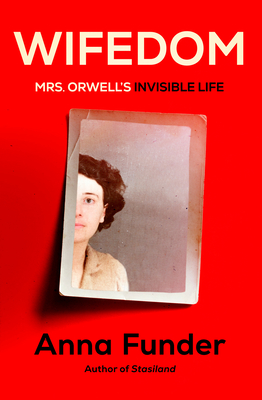
My track record for reading Grattan’s selections is poor. To date, I have read two of 2022’s list, Debra Dank’s We come with this place (my review) and Jessica Au’s Cold enough for snow (my review), and only one of 2023’s list, Anna Funder’s Wifedom (my review), though I had hoped to also read Ellen van Neerven’s Personal score. Let’s see how I go with 2024’s list!

You can see all the lists to date at these links: 2009, 2010, 2011, 2012, 2013, 2014, 2015, 2016, 2017, 2018, 2019, 2020, 2021, 2022, 2023.

If you had the opportunity to make one book recommendation to the leader of your country, what would it be?

Six degrees of separation, FROM Dangerous liaisons TO …

It’s the first Saturday in February so it must be Six Degrees time, and this month, I’m not going to engage in any chatty intro but just get into it … as always, if you don’t know how the #SixDegrees meme works, please check Kate’s blog – booksaremyfavouriteandbest.

The first rule is that Kate sets our starting book. This month, it’s a book I probably should have read – being a classic – but haven’t. It’s Pierre Choderlos de Laclos, Dangerous Liaisons, an epistolary novel published in 1782.

Now, commenting on last month’s Six Degrees, one of my most loyal commenters here, MR, who often ponders on the – let’s say – quality of my links, suggested that I just list the books and let those of you who read the post work out the reasons. So, this is what I’m doing this post. I did think about giving the reasons in a follow-up post, but have decided that’s pushing the friendship a little too far so I am providing the answers at the end (after the image gallery). I’ve tried not to make the links too hard, and for some there are multiple ways the books could be linked.

So, here goes:

Now, for the link reasons. Dangerous liaisons is an epistolary novel, as is Jane Austen’s Lady Susan. (Both were also published in the 18th century.) Maria Edgeworth’s Leonora, is about a coquette visiting friends, as is Lady Susan, albeit in this case the coquette is not the titular character but Leonora’s friend. (Leonora is also an epistolary novel, and is written by an English-born woman.) Elizabeth von Arnim’s Vera has a woman’s first name as its title. (It was also written by a woman, who is English, though she wasn’t born in England.) Jane Caro’s The mother is about a coercive control by a husband, which is also the idea behind Vera, though coercive control wasn’t known as that then. (Jane Caro is also a woman, though that’s a very broad link!) Bonnie Garmus’ Lessons in chemistry is a debut novel by a 65-year-old-woman, and was The mother. (Like Caro’s novel, it also has a mother-daughter thread, though that’s not the main idea.) And for my last link, I’ve made it super-easy. Peter Carey’s The chemistry of tears has “chemistry” in the title, as does Garmus’ book.

How did you go? Did you find some links I didn’t?

And, have you read Dangerous liaisons and, regardless, what would you link to?

Andrew O’Hagan, Caledonian Road (#BookReview)

When my reading group started back in 1988, most of us were time-poor mothers so we had a rule-of-thumb that our books could not be longer than 350 pages. Those days, however, are long gone, and some time ago we agreed that our January (aka summer) read could be a BIG book. Last year, for example, it was Demon Copperhead (my review). This year, some were keen to read Andrew O’Hagan’s Caledonian Road, so that’s what we scheduled.

My problem is that while it’s summer, January is also tennis season. I don’t watch much sport, but I do love the tennis. Reading a big book while trying to keep up with the tennis is always a challenge. As is the fact that, as most of you know, I love short books. Give me a novella and I’m (usually) happy. However, I also love my reading group, and so I gave myself extra time and got stuck in. I was immediately engaged. The protagonist, fifty-two year old Campbell Flynn, art historian, writer and academic, captured me. There was a certain Jane Austen tone to the opening:

Tall and sharp at fifty-two, Campbell Flynn was a tinderbox in a Savile Row suit, a man who believed his childhood was so far behind him that all its threats had vanished.

Ha! He certainly was a tinderbox, as he was about to slowly implode. Further, as we soon discover, his childhood was not at all behind him, and is implicated in his unravelling. The first paragraph ends with some foreshadowing telling us that the first of his “huge mistakes” was not to “take people half as seriously as they took themselves”, with the second being “the proof copy” he had in his briefcase.

It is Thursday 20 May 2021, so the first wave of the pandemic is over but its long shadow provides a quiet background to the novel which is told over five parts, from Spring 2021 to Winter 2022, concluding around the time of the invasion of Ukraine in February 2022.

Now, back to my reading journey. I was interested, but as I read on, following the ups and increasing downs of Campbell’s life, along with those of an ever-growing cast of characters, there was a point where I started to baulk. It felt like a long wallowing in the ills of the modern western world. Did I need 640 pages of it? And then it clicked. I realised I was reading a modern take on the 19th century “condition-of-England” novel. These novels, as the The Victorian Web explains, “sought to engage directly with the contemporary social and political issues with a focus on the representation of class, gender, and labour relations, as well as on social unrest and the growing antagonism between the rich and the poor in England”. We’re talking Dickens’ “big” novels, Elizabeth Gaskell’s North and south and Mary Barton, and so on. I loved them.

“a deep dive into the era’s shallows” (Campbell)

These novels have to be big, because a nation’s “condition” does not comprise one issue but a network of them, and this is what O’Hagan pulls apart in Caledonian Road. Through a cast of around 60 characters, O’Hagan explores a grab bag of the various ills we read about every day, with a British spin. All the big issues are here, including toxic masculinity; intergenerational wars; racism; modern technology with its related concerns like security, privacy, hacking, and digital identity; disruption as activist action; financial corruption and malfeasance; foreign interference; and human trafficking. Grab bag these might sound, but they are overlaid and connected by the traditional biggies – class, entitlement and privilege, economic inequality, and now, globalisation.

There’s a lot going on, but O’Hagan’s characters are vividly drawn, the plot is compelling if complicated, it is satirical in tone, and the language is so captivating that I enjoyed reading it after all. It is, necessarily, a disjointed read with the narrative constantly switching between the different storylines that make the whole, but I found I didn’t need the cast of characters helpfully provided at the beginning because the context always made clear who they were.

Before I return to the subject matter, I must share a couple of perfect character descriptions. First is Milo, a person whom Campbell doesn’t take seriously enough, and second is Candy, Campbell’s sister-in-law, the fey do-gooder wife of the egregious Duke of Kendal:

The young man had edges and they often glinted on the blade of his charm. (p. 76)
and
Candy stood like an emaciated meerkat looking out for an opportunity to enthuse. (p. 262)

So now, back to the “condition-of-England” idea. The characters range across the breadth of British society, from twenty-somethings to eighty-somethings, and include MPs, aristocrats, academics, journalists, business people, actors, criminals, activists, do-gooders, hackers, landowners, renters, gang members, migrants, factory workers, and lorry drivers. But, what most of them have in common is an idea of what England is. The most poignant comes from the migrants, like Polish Mrs Krupa and her son’s undocumented employee, also Polish, Jakub. As Jakub’s life, under the control of human-traffickers-cum-drug-lords, starts looking different to what he expected, he begins “to wonder if England was anything like the myth he … had bought into”.

O’Hagan, then, explores with clarity and a healthy sense of irony, today’s England (or Britain). The flawed but self-questioning Campbell – increasingly conflicted by his middle-class success and working-class origins – is our guide through a story in which hope, promise and sincerity are set against hypocrisy, greed and hatred. Desperate to remain relevant to the times, and to be a decent person, Campbell lets his guard down, allowing the driven, idealistic Milo into his life. Both are complex characters, who test our moral compass. Others not so much, like the aristocratic Duke of Kendal and Lord Scullion, the Russian oligarch Aleksandr Bykov, the corrupt billionaire William Byre, and the criminal Bozydar, all of whom, indirectly or directly, slash and burn those around them. In between are the decent, including women like Campbell’s wife Elizabeth and sister Moira, and the powerless, like rapper Travis and undocumented migrant worker Jakub.

Towards the end of the novel, the unravelling Campbell, who has become “lost in the sprawling web of it all”, inverts my favourite EM Forster quote when he reflects to himself, “only disconnect”. It’s a paradox. Campbell’s survival will depend on disconnecting from all that is wrong in his world (technologically and personally), while hanging tight – keeping connected, in other words – to all that is good. Ultimately, while O’Hagan paints a grim picture of what is wrong – the superficial, the hypocritical, the greedy and the cruel – in England, he also leaves us with a glimmer of hope. There are good people and they can prevail – but, will they, is the question we are left with.

PS Caledonian Road, being a big book, invites multiple responses. You can read those by Brona and Jonathan, who approached it from different angles and perspectives.

Andrew O’Hagan
Caledonian Road
London: Faber & Faber, 2024
642pp.
ISBN: 9780571381388 (Kindle edition.)

Monday musings on Australian literature: Historical fiction by First Nations writers

With this weekend in Australia being a long weekend for Australia Day (or, Invasion Day), I decided that the best thing I could do would be to write a post promoting historical fiction by First Nations Australian writers. While there are First Nations historians writing histories, I figure more people read historical fiction, given I’d like to encourage us all to broaden, fill out, revise our understanding of Australia’s history, then historical fiction seemed a good place to start.

Of course, there’s the obvious proviso. Historical fiction is not history. However, I believe that good historical fiction does provide truths about the past that can inform our understanding of what happened. Historical fiction by First Nations writers ensures that this understanding extends beyond the point of view of the victors to that of those who were displaced and dispossessed. Historical fiction can also provide some facts, but we can’t assume what we read is factual. It is fiction after all. All the books I list here have some basis in fact, but how much, and what sort of fact varies. All, though, offer important truths.

The books – which include some I’ve not read – are listed in rough chronological order by their time setting, and organised under some broad “eras”, because while some issues are overarching or ongoing, there are experiences and ideas particular to different eras. Stories that encompass multiple timeframes are listed under the earliest one. Where possible, and to the best of my ability, I have identified places using both their local and settler names.

Early settlement

The books set in this period explore what happened when white settlers first appeared on land belonging to First Nations peoples. These novels explore the clashes that occurred, the mistakes that were made, the possibilities for doing it differently or the moments where it might have gone differently, and the ultimate dispossession of the traditional owners.

Jane Harrison, The visitors (2021): 1788; Warrane/Sydney Cove: reimagines the arrival of the First Fleet from the perspectives of elders from seven nations (Brona’s review).

Julie Janson, Benevolence: 1816-1842, Dharug Nation/Western Sydney: based on the author’s ancestor, tells the story of Muraging who, when around 12 years old, is handed over by her father to the Parramatta Native Institution, in the hope that she will help their people by learning British language and ways (my review).

Anita Heiss, Dirrayawadha (Rise up): around 1824, Wiradyuri Country/Bathurst: inspired by the 1824 Bathurst War, fought between the Wiradyuri people and the British, tells the story of the Wiradjuri resistance leader Windradyne, through the eyes of his fictional sister Miinaa (my CWF 2024 post).

Kim Scott, That deadman dance (2011): 1826-1844, Noongar Country/Southwest WA: a first contact story set in Western Australia in which the generosity of the local people, and their willingness to engage, is ultimately met by rapaciousness and violence (my review).

Julie Janson, Compassion (2024): 1836 on, Dharug Nation/Western Sydney: sequel to Benevolence, and based on the life of another Janson ancestor, Muraging’s outlaw daughter, a horse thief and resistance fighter who took on colonial authorities (including in the courts). 

Melissa Lucashenko, Edenglassie (2023): 1850s and 2020s, Magandjin/Brisbane: a “what if” story in which armed resistance to the dispossession, massacres and other brutalities from the colonisers is told alongside attempts from both sides to work together (my review).

Mid to late 19th century

By this period, the settlers had established themselves throughout Australia, with First Nations people surviving as best they could – often in the employ of the settlers and living, of course, under British law. Their lives, health and culture were severely affected by dislocation, and they lived at the mercy of the settlers. Many were separated from their Country, with culture, including language, was being lost.

Anita Heiss, Bila Yarrudhanggalangdhuray (River of dreams) (2021): 1852 on, Wiradjuri Country/Gundagai and Wagga Wagga: inspired by the story of the four First Nations men who, using bark canoes, saved 40-70 people during Gundagai’s 1852 flood; tells the fictionalised story of the daughter of one those men, her ending up working for one of the landowning families, and being forced to leave her country (my review).

Ali Cobby Eckermann, Ruby Moonlight (2012): 1880s, mid-north South Australia: verse novel about a teenage girl, Ruby Moonlight, whose family is massacred by white settlers, and who meets the lonely “colourless man”, Miner Jack (my review).

Leah Purcell, The drover’s wife (2017): 1890s, Ngarigo and Walgalu Country/Snowy Mountains: re-visioning of Henry Lawson’s classic short story, turning the drover’s wife into a First Nations woman left to fend for herself in a hostile world (my review of the film version).

Federation to 1930s

Larissa Behrendt, Home

While the facts of First Nations lives at this time are largely a continuation of the previous era, fiction set in this period starts to address more specifically the impact of the missions, and of government policies, on First Nations’ lives.

Larissa Behrendt, Home (2004): 1918 through to 1980s, Eualeyai Country/North-western New South Wales: based on the story of the author’s grandmother, who was abducted from her camp in 1918, and following her seven children. (Lisa’s review)

Post World War 2

As we move closer to contemporary times, the fiction addresses more contemporary issues, particularly regarding government polity, while still retrieving stories from the past that are little known.

Anita Heiss, Barbed wire and cherry blossoms (2017): 1944, Wiradyuri Country/Cowra: inspired by the 1844 breakout from the Cowra POW Camp, imagines a relationship between escaped Japanese POW Hiroshi and the daughter of a First Nations couple who offer him refuge at Erambie Mission. But, mission rules, and government protection and assimilation policies limit their choices. (Lisa’s review)

Marie Munkara, A most peculiar act (2020): 1940s, Larrakia Nation/Darwin: follows the trials and tribulations of a 16 year-old Aboriginal fringe-camp dweller, in Darwin during the Japanese bombing raids, and her resistance to protectionist policies like the Aboriginal Ordinances Act and the “White Australia” policy (Lisa’s review).

Dylan Coleman, Mazin Grace (2012): 1940s and 50s, Kokatha Mula Country/western South Australia: fictionalised version of the author’s mother’s childhood at the Koonibba Lutheran Mission (Lisa’s review).

Alexis Wright, The plains of promise (1997): 1950s Gulf Country of Queensland: starts at St Dominic’s Mission in the Gulf Country of Far North Queensland, where a young Aboriginal woman is taken away from her mother, and explores the brutality of colonisation at the mission and beyond (Tony’s review).

Book cover

Tony Birch, The white girl (2019): 1960s, fictional rural town: tells the story of Odette who is determined to save her granddaughter from being removed, against the backdrop of the egregious restrictions of the Aboriginal Protection Act are in force (my review).

Karen Wyld, Where the fruit falls (2020): 1960s-70s, multiple locations: spans four generations of women, over several decades, with a focus on the 1960s and 70s, a time of rapid social change and burgeoning Aboriginal rights (Lisa’s review)

There should be something here for everyone!

Any thoughts? Or, do you have any historical fiction titles to add?

Alice Ruth Moore, A carnival jangle (#Review)

Over the last two years I worked my way through the anthology Great short stories by contemporary Native American writers that was sent to me by my American friend Carolyn. It introduced me to many writers I hadn’t read before, and, valuably, to the issues and concerns facing some of America’s first peoples. Many of these issues – such as identity, and the long-lasting, all-encompassing fallout from dispossession – overlap with the issues First Nations Australians are confronting. It was an excellent reading project, so I was thrilled when, a year ago, Carolyn sent me another Dover anthology, Great short stories by African-American writers. I’ve read a few more of these authors than I had of the Native American collection, but not many, so I’m looking forward to another worthwhile reading project. Thanks again, Carolyn!

Alice Ruth Moore

The first thing to say about Alice Ruth Moore is that she is better known as Alice Dunbar Nelson, which is the name Wikipedia uses. Born Alice Ruth Moore in New Orleans in 1895, she married three times – Paul Laurence Dunbar (1898–1906), Henry Arthur Callis (1910–1916), and Robert J. Nelson (1916–1935). Poet Dunbar died in 1906, but it had been an abusive relationship and she’d left him before his death. Her marriage to physician and professor, Callis, ended in divorce, and she did not it seems take – or keep – his name. Her final marriage was to poet and civil rights activist, Nelson, and this marriage lasted for the rest of their lives. His name she used, but she also retained Dunbar. Fascinating.

A poet, journalist and political activist, Dunbar Nelson, who had a black mother and white father, was among the first generation born free in the South after the Civil War. She was also one of the prominent African Americans involved in the Harlem Renaissance (about which I wrote in my post on Nella Larsen’s Passing.) She lived in New Orleans for 21 years, and briefly taught primary school there, before moving to Boston and then New York, where she co-founded and taught at White Rose Mission, a school for coloured working girls (in the non-euphemistic meaning of the term!) She also lived in Washington D.C., Delaware and Pennsylvania.

Racism was an important issue for her, but she also took a wider view of human rights. She was an activist, for example, for African American’s rights and women’s rights. By the 1920s, she was concerned about social justice and the struggles of minorities in general. Wikipedia’s article concludes with this:

Much of Dunbar-Nelson’s writing was rejected because she wrote about the color line, oppression, and themes of racism. Few mainstream publications would publish her writing because they did not believe it was marketable. She was able to publish her writing, however, when the themes of racism and oppression were more subtle.

“A carnival jangle”

“A carnival jangle” appeared in her first collection of stories and poems, Violets and other tales, which was published by The Monthly Review in 1895, while she was still in New Orleans. She wrote a brief, self-deprecating introduction to the collection, commenting on the number of books being foisted on the market, and then offering her “maiden effort, — a little thing with absolutely nothing to commend it, that seeks to do nothing more than amuse”. Many of “the sketches and verses” had appeared in before, but many others were new.

There is also a preface by Sylvanie F. Williams (d. 1921) whom Wikipedia describes as New Orleans-based “educator and clubwoman“. (Click on the link to find out more about the women’s club movement in the USA.) She says the author ‘belongs to that type of “brave new woman who scorns to sigh”, but feels that she has something to say, and says it to the best of her ability”. However, she is also young, “just on the threshold of life, and with the daring audacity of youth makes assertions and gives decisions which she may reverse as time mellows her opinions, and the realities of life force aside the theories of youth”. Love this.

Williams also writes that “there is much in this book that is good; much that is crude; some that is poor”. I haven’t read any Moore/Dunbar Nelson, so I have no way of knowing where “A carnival jangle” sits in terms of her oeuvre, but it certainly feels like a standout in this collection.

Set during New Orleans’ Mardi Gras festival, “A carnival jangle” is fundamentally a mistaken identity story. It is just 4 pages, but delving into it – as the podcasters at CodeX Cantina did – reveals an impressively complex story offering multiple readings. I don’t usually go looking for analyses before I write my posts, but I came across CodeX Cantina when I was researching who Moore/Dunbar Nelson was. I’m glad I did because they teased out some culturally specific aspects that I didn’t know. For example, I completely misread the use of “Indians” in the story. These are the New Orleans or Mardi Gras Indians – an African-American carnival subculture, not Native Americans.

The story opens:

There is a merry jangle of bells in the air, an all-pervading sense of jester’s noise, and the flaunting vividness of royal colors; the streets swarm with humanity, — humanity in all shapes, manners, forms, — laughing, pushing, jostling, crowding, a mass of men and women and children, as varied and as assorted in their several individual peculiarities as ever a crowd that gathered in one locality since the days of Babel.

It’s tight and short, and tells of a young girl named Flo, who, hovering “between childhood and maturity”, is drawn away from her “unmasked crowd” by a “tall Prince of Darkness”, “a shapely Mephisto”, who promises to “show [her] what life is”. She is swept away to a costume shop and disguised as a “boy troubadour”, before joining the masked dancers – but things don’t turn out the way she is promised.

The two podcasters discussed “the tower of Babel”, which is alluded to in the opening paragraph and which suggests the idea of people coming together, until all falls apart, and the Faustian bargain, which is implied through the narrative and which presages a promise not fulfilled. The masked society can be understood as one in which all are equal, regardless of race or gender. However, masked people can also be invisible, unknown, and this tension between freedom and danger underpins this story.

The language is vibrant and lush capturing the excitement of the carnival, but is also constantly subverted by references and allusions to darker things. Carnivals, after all, tend to encompass opposing ideas – fun versus pandemonium, humour versus derision. The revellers here include “jesters and maskers, Jim Crows and clowns, ballet girls and Mephistos, Indians and monkeys…”, an odd and unsettling assortment which reflects not only traditional carnival characters but the diversity of New Orleans, and the racial tensions developing as Jim Crow laws were being enacted. Moore’s New Orleans is a place in flux, and the carnival motif is a perfect vehicle for conveying that.

The CodeX Cantina podcasters don’t talk much about Flo, and the fact that we don’t know what she wants or thinks. Described as “the quietest and most bashful of the lot” when she is drawn away, she seems to have no choice or agency in what happens to her. Is this because she’s simply a tool in the wider story, or is there a comment on gender, or both? What does it mean that she’s white?

“A carnival jangle” is a sophisticated story about a complex place and time, written by someone who was just starting her writing journey. It warrants more teasing out than I’ve done here, because it has so many angles to think about. Do read it, and, if you have time, listen to the CodeX guys. They don’t have all the answers but they do some good thinking.

Alice Ruth Moore
“A carnival jangle” (1893)
in Christine Rudisel and Bob Blaisdell (ed.), Great short stories by African-American writers
Garden City: Dover Publications, 2015
pp. 1-4
ISBN: 9780486471396
Available online at louisiana-anthology.org

Monday musings on Australian literature: Vale SPN or?

Late last year I went looking for the 2024 winner of the Small Press Network’s Book of the Year (BOTY) Award, originally called the MUBA (Most Underrated Book Award). It is/was an annual award highlighting ‘authorial and publishing excellence by small and independent publishers’, and is/was open to any book released by an SPN member during the previous calendar year. It aimed to provide some of the recognition and promotional opportunities for publishers and authors that the big awards facilitate. I didn’t always post on this award but I always checked it out.

But, I was surprised and disappointed to find no mention of the 2024 award. Instead I found articles suggesting that the sponsoring organisation, the Small Press Network, was on the brink of collapse.

I wrote a post back in 2011, on SPUNC (or, Small Press Underground Networking Community) as it was initially called until – as with their award – they renamed it to something with a little more gravitas, to the inoffensive SPN! It was formed in Melbourne in 2006 and its aim was “to promote independent publishing and support the principle of diversity within the publishing industry as a vital component of Australian literary culture”. It seemed to be a wonderful organisation, with an information-rich website (no longer available as far as I can tell) and an active Facebook page (but inactive since March last year.)

So, what happened? Unfortunately, most of the information sources, like Books+Publishing and ArtsHub, are paywalled, but I did glean some information from ArtsHub. On 22 October 2024, Thuy On penned a news report headlined “Small Press Network to terminate unless new board is formed” followed by the news that the organisation was at risk of ceasing operations within the month. The full article is paywalled. However, the article’s publicly available intro said that SPN had emailed its members and supporters that the current Board would be wound up, but there was an option for the community to reform a new Board. Failing that the organisation would cease to exist. SPN’s email apparently cited “numerous reasons” for all this, but those are presumably hidden behind the paywall.

Coming soon from Anna Solding’s MidnightSun

Around the same time, on 17 October, writer, author advocate and presenter, Anna Featherstone wrote a brief blog post titled “Australia’s Small Press Network (SPN) to shutter”. She writes that she’s loved attending SPN conferences over the years “for some incredible nuggets of wisdom and plenty of publishing and book stats” so was sad to hear that it was “officially winding down”. “Totally understandable”, she writes, “but still a loss for the local publishing industry who aren’t the Big Five”. She then quotes SPN’s then board chair, Anna Solding, as saying the the Board had “worked hard to find feasible ways to make SPN financially tenable again but have not found any viable way to achieve this”. Featherstone concludes her post with links to her highlights posts from the 2021, 2022 and 2023 conferences.

The next piece of information I found was also at ArtsHub. Dated 13 December and written by George Dunford, a writer and digital content expert, its headline is “The future of Australian small press”. It continues that the pausing of the SPN was seen by many as “a death knell for independent publishing” but that it had a new Board and “looks set to again champion small press in 2025”. It says that former SPN General Manager Tim Coronel had said that SPN ‘saw “a big membership boost during COVID” as many writers thought it would be a great time to start self-publishing’ … and then we go behind the pay wall. Doh!

So, with the website gone and Facebook inactive, I can find out nothing more, but I do hope it survives, that it revives those sites, and offers its BOTY award again.

Does anyone know anything more?

Gavin Casey, Dust (#Review)

I have had to put aside the novel I was reading for Bill’s Gen 1-3 Aussie male writers week, as my reading group book called. I will get back to it, and post on it later, but in the meantime, I wanted to post something in the actual week.

So, I turned, as I have for other Reading Weeks, to The Penguin century of Australian stories, an excellent anthology edited by Carmel Bird. Given Bill’s week encompasses writers working from 1788 to the 1950s, Bird’s anthology offered almost too many choices. Besides the obvious Henry Lawson, there were Steele Rudd, Tom Collins, Vance Palmer, and more, ending with Judah Waten’s 1950 story, “The mother”. I considered several, but Gavin Casey captured my attention because in her Introduction to the anthology, Kerryn Goldsworthy, looking at the 1930s and 40s, commented that Gavin Casey’s “Dust” and John Morrison’s “Nightshift” exemplified the more overtly political stories of this era. She added that:

they are stories in simple, unadorned language … that focus on workers and workplace disasters, on the physical dangers lying in wait for working men and women.

I have been interested in this period – and its socialist-influenced political thinking – for some time, so it had to be Casey or Morrison. Casey it was because I have listed him in a couple of Monday Musings posts but knew nothing about him.

Who was Gavin Casey?

Casey (1907-1964) was an author and journalist, born in Kalgoorlie, Western Australia, to an Australian-born father and Scottish mother. 

He doesn’t have a Wikipedia article but there is a useful biographical entry for him in the Australian dictionary of biography (ADB). Written by Anthony Ferguson, it says he had a sketchy education before obtaining a cadetship with the Kalgoorlie Electric Light Station. However, he left there to work in Perth as a motorcycle salesman, only to be “forced” back to Kalgoorlie in 1931 by the Depression. He then worked “as a surface-labourer and underground electrician at the mines, raced motorcycles and became a representative for the Perth Mirror“. He married in 1933, but “poverty plagued them, long after their return to Perth next year”.

By 1936, he was publishing short stories in the Australian Journal and the Bulletin, and in 1938 he was foundation secretary of the West Australian branch of the Fellowship of Australian Writers. His two short story collections – It’s harder for girls (1942), which won the 1942 S. H. Prior memorial prize and in which “Dust” appeared, and Birds of a feather (1943) – established his reputation. Ferguson writes:

Realistic in their treatment of place and incident, his stories showed—beneath the jollity and assurance of his characters—inner tensions, loneliness, unfulfilled hopes, and the lack of communication between men and women.

You may not be surprised to hear that his first marriage failed!

Overall, he wrote seven novels plus short stories and nonfiction works. His novels include Snowball (1958), which “examined the interaction between Aborigines and Whites in a country town”, and Amid the plenty (1962), which “traced a family’s struggle against adversity”. There is more about him in the ADB (linked above).

Ferguson doesn’t specifically address the political interests Goldsworthy references. Instead, he concludes that critics liken Casey’s earlier works to Lawson, seeing “a consistent emphasis on hardship that is tempered, for the male at least, by the conviviality of mates”. Ferguson also praises both for “their perceptiveness” and “their execution”.

The reality of Casey is a bit more nuanced, I understand. For a start, his men are not bush-men but suburban workingmen. Consequently, I plan to write more on him in a Monday Musings Forgotten Writers post, soon. Meanwhile, on with “Dust”.

“Dust”

“Dust” features male characters only, and there are some mates but, while they are important, they are not central. “Dust” also must draw on Casey’s experience of working in Kalgoorlie’s mining industry. It’s a short, short story, and is simply, but clearly constructed. It starts with a physical description of dust swooping through the township, over housetops and hospital buildings, and “leaving a red trail wherever in went”. It sounds – almost – neutral, but there are hints of something else. Why, of all the buildings in town, are “hospital buildings” singled out with the “housetops”, and does the “red trail” left behind signifiy anything?

Well, yes it does, as we learn in the next paragraph. Although this dust comes from “honest dirt” and can do damage like lifting roofs off, it is “avoidable” and is nothing like the “stale, still, malicious menace that polluted the atmosphere of far underground”. Ah, we think, so the “dust” we are talking about is something far more sinister than that flying around the open air.

And here is where the hospital buildings come in. Protagonist Parker and his miner friends are waiting for their six-monthly chest x-rays checking for the miners’ dust lung disease which killed his father. Things have changed since his father’s times, Parker knows. Not only are there the periodic medical examinations, but there are mechanisms to keep the dust down, and a system of “tickets” and pensions for affected miners. But, the risk is still there, and Parker’s anxiety increases as he watches his mates go in one by one, while he waits his turn.

This is a story about worker health and safety – but told from a personal not political perspective. It’s left to the reader to draw the political conclusions. However, it is also a highly relatable story about humans, health, and risky choices and behaviour, because it seems that Parker does have a choice. I won’t spoil it for you, but simply say that the ending made me smile – ruefully.

Gavin Casey
“Dust” (orig. 1936)
in Carmel Bird (ed.), The Penguin century of Australian stories
Camberwell: Penguin Books, 2006 (first ed. 2000)
pp. 86-90

Gideon Haigh, My brother Jaz (#Review)

When I posted my first review of the year – for Marion Halligan’s Words for Lucy – I apologised for starting the year with a book about grief and loss. What I didn’t admit then was that my next review would also be for a work about grief and loss, Gideon Haigh’s extended essay, My brother Jaz. This does not herald a change in direction for me, but is just one of those little readerly coincidences – and anyhow, they are quite different books.

For a start, as is obvious from its title, Haigh’s book is about a sibling, not a child. It was also much longer in the making. Halligan’s book was published 18 years after her daughter’s death, and was something she’d been writing in some way or other all along. Words are also Haigh’s business, but he ran as far as he could from his grief, and it was only in 2024, nearly 37 years after his 17-year-old brother’s death, that Haigh finally wrote, as he says in his Afterword, “something I had always wanted to write, but had suspected I never would”.

Before I continue, I should introduce Haigh for those of you who don’t know him. Haigh (b. 1965) is an award-winning Australian journalist, best known for his sports (particularly, cricket) journalism, but also for his writing about business and a wide range of social and political issues. He has published over 50 books. I’ve not read any, but I am particularly attracted to The office: A hardworking history, which won the Douglas Stewart Nonfiction Prize in 2013. However, I digress …

Unlike Halligan who, to use modern parlance, leant into her grief in what I see as a self-healing way – as much as you can heal – Haigh did the opposite. He did everything he could to avoid it; he worked, he writes, “to flatten it into something I could roll over”. And it affected him. If he, just 21 at the time, was a workaholic then, he doubled down afterwards and work became his refuge, his life:

It was the part of me that was good; it was the only part of me I could live with, and that sense has quietly, naggingly persisted. Go on, read me; it’s all I have to offer. The rest you wouldn’t like. Trust me. You don’t want to find out.

If this sounds a bit self-pitying, don’t fear, that is not the tone of the book. It is simply a statement of fact, and is not wallowed in. It represents, however, a big turnaround from someone who admits early in the book that he was known for his “pronounced, and frankly unreasonable, aversion to autobiographical writing”. This aversion was despite the fact that, “at the same time, trauma, individual and intergenerational” was something he’d written about – and been moved by – for a long time. So, in this first part of his six-part essay, we meet someone who had experienced deep pain, but had shrunk from indulging in a certain “kind of confessional nonsense”, and yet who increasingly found himself “backing towards an effort to discharge this story” to see if it made him “feel differently”.

What changed? Time of course is part of it. Haigh shies from cliches, as he should, but grief will out. It just can’t be bottled up forever, no matter how hard he tried, and so in early 2024, during the Sydney Test Match no less, “something previously tight had loosened” and over 72 hours he wrote the bulk of this essay. A major impetus was the break up of a relationship. It was time for a “reckoning”, he writes on page 76, but much earlier, on page 47, he alludes to it:

Why did I even start this? The only reason I can think of is that it has to be done. It can’t remain unwritten, just as I could never leave Jaz unremembered. I have myself to change, and how am I to do this unless I examine this defining event in my life face on?

This idea of the examined life is something Halligan mentions too in her memoir. She writes near the end of her book that “I do believe that the unexamined life is not worth living, and that an enormous part of that is the recollected life”.

What I hope I’ve conveyed here is the way this essay is driven – underpinned – by a self-questioning tone, more than a self-absorbed one. Even as Haigh writes it, he is interrogating his reasons (and perhaps by extension anyone’s reasons) for writing about the self. That this is so is made evident by the way the narrative, though loosely chronological, is structured by the writing process rather than by the “story”:

“OK it’s getting on to dawn, and I’m going to click on ‘Jasper Haigh [inquest] Reports for the first time” (p. 29)

“It’s raining, but I’ve just returned from a walk. I often walk when I have something to turn over in my head.” (p. 33)

“I’m at the point right now where I just wonder what the hell I am doing.” (p. 47)

“I have picked this up again after putting it aside to draw breath, to consider what next … So, I’m going to stagger on, with the excuse that this is no memoir: this is less a geology of my life than a core sample.” (p. 61)

This approach helps us engage with a writer who prefers to push us away. It finds, in a way, the art in the artifice, and enables Haigh to write something that questions the memoir form while at the same time paying the respect that the best memoirs deserve. It’s a juggling act, and I think he pulls it off.

By the end, Haigh is not sure whether writing this work – this raw “reckoning” to re-find his emotional bearings – has achieved anything. It is, he believes, “too early to tell”, but I wouldn’t be so sure. He is a writer, and he has put on paper the defining event – the “core sample” – of his life. That has to mean something.

Gideon Haigh
My brother Jaz
Carlton: Melbourne University Press, 2024
87pp.
ISBN: 9780522880830

Monday musings on Australian literature: Bill’s Australian White Men Gen 1-3

For several years now, Bill (The Australian Legend blog) has run a week dedicated to “generations” in Australian literature, focusing until this year on Australian Women Writers. This year, however, he has changed tack, and decided to look at Australia’s early male writers – who were, of course, in that colonial landscape, mostly white. He has also decided to do three generations at once, which means we are covering writers who were active from 1788 to the 1950s. This, says Bill, will be his last “Gen” – and fair enough, it’s been a big effort, one that many of us have enjoyed taking part in. Bill deserves a big thanks for bringing older Australian writers to the fore, and encouraging discussion about our literary history – the writers, the influences (including his “favourite”, The Bulletin) and the trends.

As before, Bill has created a page of Gen 1-3 writers to which he will add reviews posted for them or for writers he’s not yet listed. In this post I am going to list the writers I have read who suit this period, as my first contribution to Bill’s project.

Now, like Bill, my reading focus is women writers. Each year they represent 65-75% of my reading. I do like reading men too – and I would read more, if I could carve out more reading time – but my point here is to explain why my contribution is paltry.

Sometimes a bloke gits glimpses uv the truth
(CJ Dennis, “In Spadger’s Lane” in The moods of Ginger Mick)

The Gums’ Gen 1-3 List

In alphabetical order by author (compared with Bill’s chronological one by date of birth) … and with links on titles to my reviews of their books.

Knowledgable eyes will notice that my list does not include some of the big names of Australia’s male writers of the 19th century – Rolf Boldrewood, Marcus Clarke, Joseph Furphy, Henry Kingsley and Henry Lawson. Or Watkin Tench’s first hand accounts of the early colony. I have read a couple of these before blogging, but overall they have not been high priorities for me.

But, just to prove my interest, I have also read a couple of biographies of Australian male writers:

I have also read a couple of short journalistic pieces by Vance Palmer.

The books in my list span a century, from John Lang in the 1850s to Martin Boyd and D’Arcy Niland in the 1950s. John Lang’s A forger’s wife is a colonial novel with a 19th century melodrama feel, and is about, as I wrote in my post, issues like “the survival of the wiliest, and the challenge of identifying who you can trust”, things deemed critical to survival in the colonial mindset. By the ’90s, we were well into the time of social realism* and writers were looking outwards – to the sociopolitical conditions which oppressed so many. This is reflected in William Lane’s novel. It is also reflected in Price Warung’s stories, which, although “historical fiction” about the convict days, are written with a social realist’s eye on the inhumanity of the system. By the time we get to the mid-20th century, fiction was increasingly diversified. The world wars, increasing awareness of gender and continued concern about those issues the social realists cared about, not to mention modernism’s interest in the self, intellect, art, and their intersection with each other (to put it very loosely) can be found in the books I’ve read from that period.

When Bill started this project, he was inspired by the divisions suggested by Henry Green in his history of Australian literature. Green’s divisions were “conflict”, 1789-1850; “consolidation”, 1850-1890; “self-conscious nationalism” 1890-1923; and “world consciousness and disillusion”, 1923-1950. There is some sense to these divisions, and they provided a loose skeleton for the Gens! However, in her introduction to The Cambridge companion to Australian literature, Elizabeth Webby shares several studies or surveys of Australian literature, discussing their different approaches and goals, but she does say that several identify the 1890s as “being crucial to the development of a national literature”.

I could go on delving more deeply, but I won’t, as this post’s main goal was to tell Bill which books I can contribute to his male Gen 1 to 3 list, and I’ve done that.

Are you joining in or do you have any thoughts to add?

* There is some confusion regarding social versus socialist realism, but I am using social realism broadly to mean concern with sociopolitical issues – particularly regarding the working classes – with or without political “isms” behind it.