Monday musings on Australian literature: 1952 in fiction (2), a national stocktaking

I said in last week’s Monday Musing, which was dedicated to (Kaggsy’s Bookish Rambling) and Simon’s (Stuck in a Book) 1952 “Year Club”, that I wouldn’t write about the ongoing issue of journalists and academics feeling the need to defend Australian literature, because I’ve discussed it before. However, I did read an interesting article on the wider issue that I thought worth sharing. Yes, I know the week officially ended yesterday, 27 April!

Bartlett on Aussie culture

The article I’m talking about came from someone called Norman Bartlett. Born in England in 1908, he migrated to Western Australia with his parents in 1911, so he grew up Australian (albeit he did live in England again with his mother and sister between 1919 and 1924). According to the NLA’s Finding Aid for his papers, he studied journalism, obtained an Arts degree, and served with the RAAF in World War 2. In 1952, he was literary editor and leader writer for Sydney Daily Telegraph and Sunday Telegraph. The article in question was written in reflection of the 1951 Golden Jubilee of the Commonwealth of Australia.

Titled “Let’s take stock of Australian culture”, it appeared in the Daily Telegraph (5 January). Bartlett’s fundamental question was whether Australia had “grown up as a nation”. This meant, he argued, much more than things like “Dominion status, industrial development, the fighting reputation of the A.I.F., a record wool cheque, and prowess at tennis, cricket, and, with reservations, Rugby, football”. Yes, indeed! Rather, it means

maturity in art and literature; a distinct and original “way of life”; a quickened awareness of what being an Australian means; and why being an Australian is different from being an Englishman, an American, or a European. 

A national culture is much more than a cultivated minority’s appreciation of good books, pictures, music, and architecture. 

It is the way we — the majority — feel, think, act, talk, wear our clothes, play our games, and fight our wars.

When our literature, art, music, architecture, and philosophy reflect our national idioms and attitudes they become part of our national culture. Thus, a truly national culture is the expression of a particular people living in a particular place for a long time.

Of course, he doesn’t consider the nation’s original inhabitants in any of this, particularly when he says “originally, Australians were colonials. That is, slips from older stock transplanted into an initially alien soil”. I will just leave that thought, because we are talking 1952 and I think the best thing for us to do is to recognise this context in all he says.

His article aimed to analyse “whether we’ve taken root; whether we are making a collective, intelligent attempt to adjust ourselves to our environment; whether our environment reflects itself in our speech, attitudes, art, music, and literature”. He argues that by the late 19th and beginning of the 20th centuries, writers and artists were moving away from “writing and painting in the English style”. They were “beginning to wake up to the fact that Australians had grown different from the parent British stem”. Not only were writers like Henry Lawson, Joseph Furphy (“Tom Collins”), “Banjo” Paterson, A. H. Davis (“Steele Rudd”) expressing this difference in their stories and verse, but they were writing in “everyday idioms of the Australian people”, as Mark Twain had done in America.

He quotes American critic, C. Hartley Grattan, who argued that a fundamental characteristic of ‘this budding Australian literature was an “aggressive insistence on the worth and unique importance of the common man”.’ But, Bartlett says, with “the growth of a more sophisticated city life, many writers began to feel that aggressive semi-socialistic nationalism [as seen in many of the above-named writers] wasn’t enough”. Writers and artists like the Lindsays and Kenneth Slessor wanted to “liberate the Australian imagination from droughts, gum trees, drovers, and the wide-open spaces”. In 1923, they created a literary magazine called Vision, but soon, says Bartlett, the Lindsays’ romanticism, with its “bookish carnivalia rosy with the fumes of canary wine and cheerful with the seductions of full-breasted wantons … blunted itself on Australian realism”. Love this!

By the Jubilee, increasingly more Australian writers were “realising that life is where you look for it”. He said writers like Kylie Tennant, Frank Dalby Davison, and Xavier Herbert showed there was ‘still plenty of kick in the Australian “bush” tradition”‘ while those like Ruth Park, Dymphna Cusack, M. Barnard Eldershaw, and Dal Stivens, were “more interested in the cities”. He separates out Eleanor Dark, who, despite setting some of her novels in country towns, had “a sophisticated interest in character rather than place”. Overall, he argued, that Australia’s contemporary fiction writers were “more analytical than exultant about the Australian way of life”.

Bartlett also wrote about poetry, visual arts, music and, briefly, dance. You can read these thoughts at the link provided above. He concludes by stating that “Australians are a reading people”, who spent significantly more on books than Americans and Canadians. This rather quantitative conclusion doesn’t answer much in terms of his framing question. However, I liked his discussion of how the bush and city strands were playing out in mid-20th century Australian literature, and his assessment of contemporary writers being more “analytical than exultant” is what I’d like from our artists of all persuasions. What do you think?

Kylie Tennant, The face of despair (#Review, #1952 Club)

Once again, as I’ve been doing for most to the Year Clubs, I am using it as an opportunity to read an Australian short story, usually from one of my anthologies. For 1952, however, the anthologies came up empty, but I did find one via AustLit, and then tracked it down in The Bulletin. The story, Kylie Tennant’s “The face of despair”, was first published in 1952, but has, I believe, been anthologised since.

Who is Kylie Tennant?

Kylie (or Kathleen) Tennant (1912-1988) was born in Manly, NSW, and grew up (says the National Portrait Gallery) in an “acrimonious household”. In 1932, she married teacher and social historian Lewis Charles Rodd, whom she had met at the University of Sydney, and they had two children. When Rodd was appointed to a teaching position in Coonabarabran in rural New South Wales, she left her studies and walked 450 kilometres to join him.

This must have worked for her because she did more firsthand research for her novels, taking “to the roads with the unemployed during the 1930s Depression, lived in Sydney slums and with Aboriginal Communities and spent a week in gaol” (NLA’s biographical note). She also worked as a book reviewer, lecturer, literary adviser, and was a member of the Commonwealth Literary Fund Advisory Board.

Tennant wrote around 10 novels, including Tiburon (1935); The battlers (1941); Ride on stranger (1943); Lost haven (1946); Tell morning this (1967, which I read with my reading group); and Tantavallon (1983). She also wrote nonfiction (including Speak you so gently, about life in an Aboriginal community), poetry, short stories, children’s books and plays. She won several literary awards, including the ALS Gold Medal for The battlers.

Her Australian Dictionary of Biography entry by Jane Grant says that although the early years of her marriage with Rodd “were complicated by the conflicts between Tennant’s attraction to communism and Rodd’s High Anglicanism, it proved to be an extremely successful creative partnership”. According to Grant, she was briefly a member of the Communist Party in 1935, but resigned a few months later believing the party had lost touch with working-class politics. Grant says that, like slightly older writers such as Vance Palmer and Katharine Susannah Prichard, she believed her novels could ‘educate the public about poverty and disadvantage and change what she termed “the climate of opinion”‘. In other words, she wrote more in the realist style, than the modernism of peers like Patrick White, Christina Stead and Elizabeth Harrower. However, as Grant says “the social message of her novels … was always leavened by humour” – and we also see this in my chosen short story.

“The face of despair”

“The face of despair” tells of a small fictional country town, Garrawong, which, at the story’s opening, had just survived a flood:

WHEN the waters of the first flood went down, the town of Garrawong emerged with a reputation for heroism. “Brave but encircled Garrawong holds out,” a city paper announced, and a haze of self-conscious sacrifice like a spiritual rainbow shone over everyone.

The story has a timeliness given our recent flooding frequency here in Australia. In the third paragraph we are told that “There was a feeling abroad that Garrawong had defeated the flood single-handed” but, a few more paragraphs on, “out of all reason, the rain began again”. Once again the librarians, who had just re-shelved their books, must carry them back out of harm’s way, emitting “small ladylike curses” as they did. But, others weren’t so willing:

“The police began to go round in their duck rescuing the inhabitants; but a strong resistance-movement was developing. They refused to be rescued. They had had one flood—that was enough.”

The story is timely, not only for the recurrent flood issue, but for its description of what is now recognised as “disaster fatigue”. Some residents, like the Doctor, don’t believe it will be as bad as before, that the dam won’t break this time, so they refuse to properly prepare or to accept rescue offers. Others, like the Nurse who runs a maternity home, just can’t do it again. She tells her housekeeper, “I’ll shut the place. I can’t start again, I won’t. No, not again.”

Now, when I was researching Tennant for my brief introduction to her, I found a 2021 article in the Sydney Review of Books. It was by poet and academic Julian Croft and focused on her novel Lost haven. It was published in 1946, just a few years after her best-known books, The battlers and Ride on stranger, but a few years before this story. He writes that Margaret Dick who had written a book on Tennant’s novels in 1966

saw Lost haven as a maturing step away from the ‘austerity’ of Ride on stranger towards ‘a resurgence of a poetic, instinctive response to nature and a freer handling of emotion, an unselfconscious acceptance of the existence of grief and despair’. This was a necessary step towards the maturity of what Dick considered Tennant’s best novel (and I would agree) Tell morning this.

I share this because “The face of despair”, published in 1952 – that is, after Lost haven and before 1967’s Tell morning this – feels part of this continuum. It has such a light touch – one I could call poetic, instinctive, freer – yet doesn’t deny the truth of the situation and what it means for the residents of Garrawong. Tennant uses humour, often lightly black, as she tells of the various reactions – stoic, mutinous, resigned, defeated – from householders, nurses, farmers, shopowners, not to mention the poor rescue police (who “did not seem to realise that they were now identified with the flood, were part of it, and shared the feelings it aroused”). It reads well, because it feels real – with its carefully balanced blend of adversity and absurdity.

Early in the story, the narrator writes of those who felt “mutinous”, who “refused to shift” as they had in the previous flood, adding that

… in the face of this renewed malice there was no heroism, only a grim indignation and a kind of dignity.

Towards the end, the title is referenced when Tennant decribes how “the face of despair” looks in different people as they ponder the flood’s impact. For example, “in the farmer in the thick boots it was the foam in which he had wiped his feet”, but in the poor old vagrant woman, it is “blue lips”. Tennant follows this with:

Despair does not cry out or behave itself unseemly, despair is humble. Its face does not writhe in agony. There is no pain left in it, because it is what the farmer said it was —“The stone finish.”

There is more to the story, and it’s not all grim. Rather, as Dick (quoted above) wrote, there’s “an unselfconscious acceptance of the existence of grief and despair”, and, as the last line conveys, one that encompasses a survivor spirit despite it all. A great story.

* Read for the 1952 reading week run by Karen (Kaggsy’s Bookish Ramblings) and Simon (Stuck in a Book).

Kylie Tennant
The face of despair” [Accessed: 16 April 2025]
in The Bulletin, Vol. 73 No. 3791 (8 Oct 1952)

Monday musings on Australian literature: 1952 in fiction

Once again it’s Karen’s (Kaggsy’s Bookish Rambling) and Simon’s (Stuck in a Book) “Year Club” week. This week, it is 1952, and it runs from today, 21 to 27 April. As for the last 7 clubs, I am devoting my Monday Musings to the week.

The 1950s represent the main period of the Baby Boomer generation (1945-1964), but of course, those born at this time had little to say about the literature of the period! Instead, Baby Boomers, of which I am one, are the product of times that were prosperous in the west (at least) but also overshadowed by the Cold War and its fear of a nuclear war. It was a conservative time, with men in charge, and women and other minority groups oppressed, which led to the various rights movements that appeared in the 1960s.

I wrote a post on 1954 when that was the Club’s year back in 2018, so much of what I found for that year, applies to 1952.

A brief 1952 literary recap

Books were, naturally, published across all forms, but my focus is Australian fiction, so here is a selection of novels published in 1952:

  • Martin Boyd, The cardboard crown (on my TBR)
  • Jon Cleary, The sundowners (read long before blogging)
  • Ralph de Boissière, Crown jewel
  • Helen Fowler, These shades shall not vanish
  • T.A.G. Hungerford, The ridge and the river
  • Rex Ingamells, Aranda boy AND Of us now living
  • Philip Lindsay, The merry mistress AND The shadow of the red barn
  • Colin MacInnes, June in her spring (aka Colin McInnes and Colin Thirkell; son of Angela Thirkell; primarily known as an English novelist)
  • Charles Shaw, Heaven knows, Mr Allison
  • Nevil Shute, The far country (read in my teens)
  • Colin Simpson, Come away, pearler
  • Christina Stead, The people with the dogs
  • E.V. Timms, The challenge
  • Arthur Upfield, Venom house

Two of these writers – Martin Boyd and Christina Stead – are recognised today as part of Australia’s literary heritage. Others are still remembered, and at least occasionally read, such as Jon Cleary (whose The sundowners was adapted to a film starring Robert Mitchum in the main Aussie role!), Arthur Upfield (whose novels were adapted for the Boney TV series , and Nevil Shute (who has been adapted mutilple times for film and television). T.A.G Hungerford is especially remembered in the West where there is an unpublished manuscript award in his name.

Born this year were novelists Janine Burke, Nicholas Jose, Larry Buttrose, John Embling, Suzanne Falkiner, and John Foulcher. Suzanne Falkiner edited the first book my reading group did back in 1988, an anthology of short stores by Australian women writers, Room to move.

Cover

There were not many literary awards, but the ALS Gold Medal went to T.A.G. Hungerford for his novel, The ridge and the river. Fourtriplezed who often comments here has reviewed it on GoodReads, noting that its racist language would not be acceptable today, but that it is nonetheless “a very “important and significant piece of Australian literature”. The Grace Leven Prize for Poetry went to R.D. Fitzgerald (whom I don’t know).

The state of the art

As for previous club years, I checked Trove to see what newspapers were saying about Australian fiction. There was the ongoing issue of writers/journalists/academics feeling the need to defend Australian literature, but I’ve discussed that often before, so will not focus on it here, because they essentially bring out the same arguments, including that Australia did have great writers, like Henry Handel Richardson, Christina Stead, and Xavier Herbert.

However, two issues, in particular, captured the imagination of the papers – the idea of banning “indecent” or “crude” literature for Australia’s youth, and the place of “red” or Communist literature in Australian society. These two issues in particular encapsulate much about 1950s Australia – its conservatism, and fear of Communism.

On “indecent” or “crude” literature

The main issue here seemed to be the influx of American comics and movies. It got a wide range of people excited, including First Constable Pat Loftus, Children’s Court prosecutor, and the visiting Mrs J. Kalker, a Dutch headmistress representing the International Montessori Organisation. North Queensland’s The Northern Miner (5 July) cited these two as urging parents to censor what children were reading and seeing. Mrs Kalker, for example, “was horrified to see so many Australian children going to picture matinees and reading comics” and said that “some films and comics are evil influences that contribute to sex crimes and delinquency”. She also said

Australian children were more intense, more restless, and more undisciplined than Dutch children.

Ouch!

On 9 July, in the Illawarra Daily Mercuryit was the state premiers who took up the cause. Indeed, “a magazine with a photograph of a nude woman on the cover was passed around the table at the Premiers’ Conference” during a discussion about “the undesirable comic books being imported into or published in Australia”. Tasmanian Premier, Mr. Crosgrove, wanted such books and comic magazines to “be passed by the censor before their distribution was permitted” but conservative Prime Minister Robert Menzies neatly side-stepped, saying that works published in Australia, to which Cosgrove had referred, was a State issue!

Meanwhile, in the same newspaper report we are told that Mr. Kelly, the N.S.W. Chief Secretary, had received complaints about children being “found during school hours examining indecent publications they kept hidden under their desks” and that he’d sought “legal advice whether a number of publications now circulating in N.S.W. could be regarded as indecent literature. Churchmen and others had represented to him that an evil existed through these publications”.

In August, there were reports in papers like Tasmania’s Advocate (18 August), about the Young Christian Workers’ Movement aligning itself ‘in the battle for a ban on the sale of indecent literature … especially the violent and sex-ridden U.S. “comics”.’ They were developing their own campaign, and were including in their sights an Australian nudist magazine.

The articles abounded, including another report later in the year from the Australian Council of School Organisations, but I think you get the drift.

On “red” literature

There was an earnestness about socialist literature at the time, one that led to what now seems like a narrow definition of what is “valid” literature. Joan Clarke, President Sydney Realist Writers, praised the Communist newspaper the Tribune (28 May), for “publishing so many of the winning poems and stories from the Literary Competitions run by the Youth Carnival for Peace and Friendship” but offered a criticism of two winning stories in the spirit of encouraging development. The authors of the stories aren’t named, but their stories failed in her eyes because, while they were in the approved “realist” style, one failed to identify the “larger reality” surrounding the issue at hand while the other failed to extract “the essential dramatic truth” (as, she says, Frank Hardy does in Power Without Glory).

This was the year that the Australasian Book Society, about which I wrote last month, was formed. Frank Hardy, a member of the Communist Party of Australia, was quoted by Queensland’s Maryborough Chronicle (25 October) as saying its aim was to “foster the country’s cultural literature”, and that “the best authors were people who would concentrate upon human and down-to-earth stories” – and these, the Society believed, were realist stories.

Of course, this was the 1950s and there was much anxiety about Communist influences. On 5 September, the Sydney Morning Herald reported on a little furore regarding Commonwealth Literary Fund grants. Apparently during the parliamentary Estimates debate, Liberal MP, Mr. W. C. Wentworth, and Labor MP, Mr. S. M. Keon charged that too many of the fellowships granted by the Fund had gone to Communists. The paper presented the arguments for and against, referencing past and present Prime Ministers, and identifying several writers who were accused of being said Communists, such as Judah Waten, Frank Hardy, John Morrison, Frank Dalby Davison, and Marjorie Barnard. It was a he-said-she-said type article, with no resolution, but concluded with a reply by Labor MP, Mr Haylen. The article closes on:

“There are certainly no Communists in the literary fund, whose leader is the Prime Minister himself.”

Mr. Haylen said members of the advisory committee had done an honest job. There had not been one book published under sponsorship of the committee that had the faintest tinge of Communist propaganda.

Politics never changes!

That will do for my brief introduction to 1952, unless I decide to share a little more next Monday!

Sources

  • 1952 in Australian Literature (Wikipedia)
  • Joy Hooton and Harry Heseltine, Annals of Australian literature, 2nd ed. OUP, 1992

Previous Monday Musings for the “years”: 1929, 1936, 1937, 1940, 1954, 1962 and 1970.

Do you plan to take part in the 1952 Club – and if so how?

Helen Garner, The season (#BookReview)

In 2023, The New Yorker published a piece on Helen Garner. Written by Australian journalist, Helen Sullivan, its title, “The startling candor of Helen Garner”, captures exactly what I like about Garner, as does this a little further on:

Her writing is elegant but colloquial, characterized by an impulse to say and share things others might keep private.

Garner’s latest book, The season, is a gentler book than most, if not all, of her previous books, but these things – the writing and the honesty – are still in play. BeeJay Silcox, in conversation with Garner about the book, described it as “a graceful book, a love letter from a grandmother to boys and men” and suggested that it’s “not very different” from Garner’s other books as some have said. As is my wont, I take a middle ground. I did find it quieter, less contentious, but it still has her openness, her often self-deprecating honesty, and her clarity about what she is and isn’t doing.

“a nanna’s book about footy”

What Garner isn’t doing in this book, and what surprised many of those she spoke to as she was writing it, is some sort of social or societal analysis of footy. “Blokes”, for example, who’d been “formed by footy”, expected “fact and stats and names and memories”, while others, particularly women, assumed she was writing “something polemical, a critical study of football culture and its place in society” (like, say, Anna Krien’s Night games. Indeed, in my review of that book, I reference Helen Garner’s writing.) These assumptions panicked Garner somewhat. She was not writing these, but “a nanna’s book about footy”, a book

about my grandson and me. About boys at dusk. A little life-hymn. A poem. A record of a season we are spending together before he turns into a man and I die.

Pure Garner: it describes what her book is, but belies the insights and observations that lie within. However, both sides are described and hinted at in the opening pages of the book, when Garner writes about her grandchildren. She understands her granddaughter she says, but

having never raised a son, I now began to learn about boys and men from a fresh angle, to see their delicacy, their fragility, what they’re obliged to do to themselves in order to live in this world, the codes of behaviour they’ve had to develop in order discipline and sublimate their drive to violence.

During Melbourne’s extended pandemic lockdowns, Garner watched more footy, and saw it in a new light. She glimpsed “what is grand and noble, and admirable and graceful about men”.

Given all this, and the fact that Amby (Ambrose) is her youngest and last grandchild, she wanted to better know him, “before it’s too late”. She wanted to “learn what’s in his head, what drives him; to see what he’s like when he’s out in the world, when he’s away from his family, which I am part of”. She decided to follow his Under-16s football team, driving him to training and attending their matches.

“It’s boys’ business. And my job is to witness it.”

The footy season starts, and there is Garner, “a silent witness” on the sidelines, with notebook in hand. She’s the quintessential invisible woman, and happy to be so, albeit she asked Amby’s and the new 21-year-old coach’s permission first. What follows is something that reads rather like a diary. In the aforementioned conversation, Garner said she initially struggled to turn her experience into a book. She started writing it in the past, but that gave it an historical feel, so she changed to present tense, and voilà, she had her story. And she was right. It feels fresh and personal.

The book, essentially a memoir, is well-paced, partly because of the chronological drive implicit in the training-playing season, but also because of the way Garner mixes gorgeous description and small snatches of dialogue, with astute reflections and self-questioning. There are times when she loses heart: it’s cold on the sidelines; is she “trespassing on men’s territory, ignorant of their concerns and full of irrelevant observations and thin-skinned responses”; who does she think she is, “intruding on his [Amby’s] privacy, feeding off his life”. But she “slog[s] on”, because writing is what she does.

What she also does – whether it be a novel about a dying friend (The spare room) or a true crime book about the trial of a man accused of killing his children (This house of grief) – is capture life in all its messiness. If you’ve read any Garner, you will know that she understands messiness and will not shy away from it. Here, it encompasses her own aging and being a grandparent who can only ever be on the periphery; an adolescent boy’s challenge in coping with school, girls, and training; and the emotional ups and downs of football, the rigours of training, the errors that let the team down, the wins and losses.

I am not into football, but I found The season compelling. I enjoyed spending time with Garner again, but I also appreciated her insights into masculinity. Throughout, Garner asks the men and boys around her – Amby in particular, but also coaches, trainers, fathers – pertinent questions, such as why have a mullet (haircut), what is good about tackling, is he proud of his battle scars. The answers are sometimes surprising, occasionally funny, but nearly always enlightening. Amby tells why he likes tackling:

“I guess it’s basically inflicting physical harm but with no actual hard feelings. It’s just aaaaapchwoooooo and then you get up and keep playing, and then at the end you shake hands, and no one remembers anything.”

Football, Garner sees, is “a world in which a certain level of violence can be dealt with by means of ritual behaviour”. I never will understand this violence and men thing, but Garner’s sharing her time with the boys and men – particularly her willingness to ask the right questions, to listen and to reflect – did continue my education (and hers).

However, it’s not all about masculinity. There are all sorts of other observations, some self-deprecatingly humorous, such as this reflection on a match where Amby’s team “verses” a bigger, stronger team:

How quiet our team’s supporters are! We stand there like inner-city intellectuals, analysing our boys, criticising their every move, using modal verbs in knuckle-rapping tenses: should have, ought to have.

This made me laugh, but it also conveys Garner’s ability to mix tone, and to flip modes, between the grittiness of football and quiet, humorous, compassionate observations.

The season is exactly what Garner intended, a warm-hearted “life-hymn” about a season spent getting to know her youngest grandson as he transitioned from boy to man. It’s an attempt to understand what makes men tick, and the role footy can play in forming young boys into men. I find it hard to buy the “warrior” stuff that goes with male sport, as Garner seems to, but I can understand where it comes from, because there can be nobility and grandeur in sport.

If, like me, you are not a football follower, don’t let that put you off. The season is not a sporting memoir full of facts, figures and rules. Instead, it’s a nanna’s story about time spent with a loved grandson, a story with footy at its centre but that is, fundamentally, about the things Garner does best, character, drama, and emotion.

Kimbofo also loved this book. It would make a good companion to Karen Viggers’ novel about youth football (soccer), Sidelines.

Helen Garner
The season
Melbourne: Text Publishing, 2024
188pp.
ISBN: 9781922790750

Monday musings on Australian literature: Vale Kerry Greenwood

I was sorry to hear a few days ago that the Australian writer Kerry Greenwood (1954-2025) had died on 26 March, at the too-young age of 70. Her death was only publicly announced week ago, which is fair enough. Families have a right to grieve their loved person in private if they so desire. It appears she had been seriously ill for some years, but was still writing to the end. Once a writer …

Kerry Greenwood, The Castlemaine murders

Greenwood has appeared a few times on my blog, but more in passing – such as being the inaugural winner of the Davitt Lifetime Achievement Award in 2013 – than as a featured author. This is because she mostly wrote in a genre I don’t tend to read, crime fiction. She is best known for her Phryne Fisher historical crime detective series, which was turned into a very successful television series, and a movie. I saw both the series and the film, which is how I consume most of my crime, rather than through reading.

She was, however, a prolific writer, as you can tell from her Wikipedia page. She wrote across many forms and genres including mysteries, science fiction, historical fiction, children’s stories, and plays. She won many awards for her books, including Australia’s various crime awards, and a few children’s book awards. She was, from what I’ve read, as colourful, brave and inventive as her heroine.

Allen & Unwin, Greenwood’s publisher since 1997, wrote on Facebook that:

Kerry was a gifted writer, a generous spirit, and a fierce advocate for creativity, joy and justice. She brought us the iconic Phryne Fisher and Corinna Chapman—two unforgettable heroines who continue to inspire readers around the world.

Since 1997, we’ve had the honour of publishing her work, with over 1.4 million copies sold globally. A new Phryne Fisher novel, Murder in the Cathedral, will be published later this year.

The Guardian’s obituary shares more from Allen & Unwin, including that she’d said she “had two burning ambitions in life: to be a legal aid solicitor and defend the poor and voiceless; and to be a famous author”. She certainly achieved the latter, and I understand that as a lawyer she did her best to achieve the former. Melbourne’s Her Place Museum shared this little video on Facebook, in which she talks about her decision to become a lawyer. The beautiful obituary on her website, by her partner, the “Duty Wombat” (aka David Greagg), tells more about her legal work.

But, I’ll end with some words from Sue Turnbull’s obituary in The Conversation. Many of her books, she writes

sit within what has often been characterised as the “cosy” genre: a subgenre of crime fiction to which Kerry’s crime fiction certainly belongs. Until recently, cosy crime has tended to be underrated, compared to the kind of “gritty” crime fiction that wins accolades. 

This has obscured the achievement of crime fiction such as Kerry’s, in which historical and contemporary social issues are reflected back to us in ways that give us pause, even as they are presented in a form designed to entertain.

This is Kerry’s legacy: a wealth of entertainment with a heart. Her novels are provocations to care about social justice.

Many tributes are being planned, such as a screening of the outrageously flamboyant movie, Miss Fisher and the Crypt of Tears, at Yarraville’s Sun Theatre, on 16 April.

Vale Kerry Greenwood.

Jane Austen, Emma (Vol. 1, redux 2025)

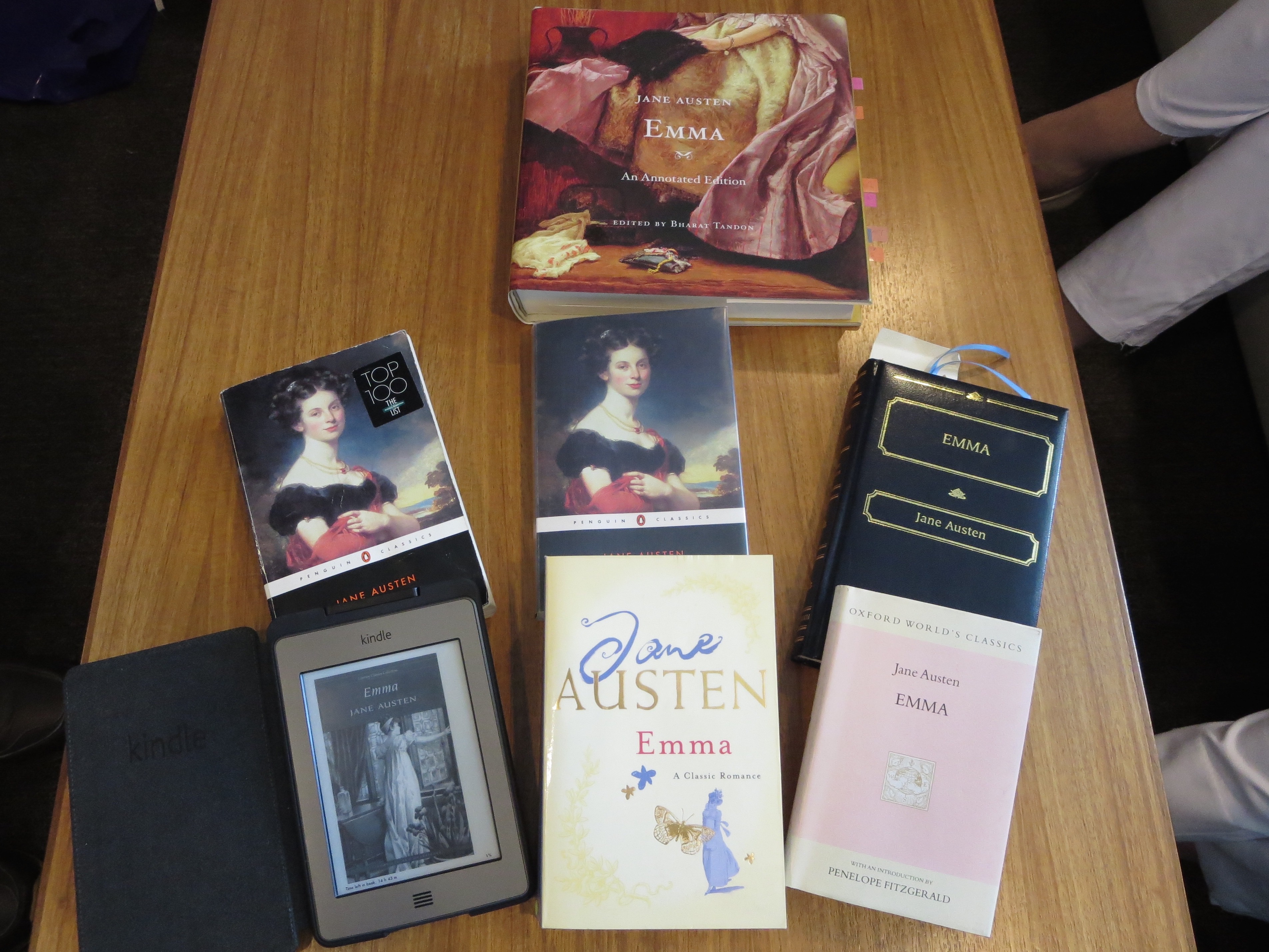
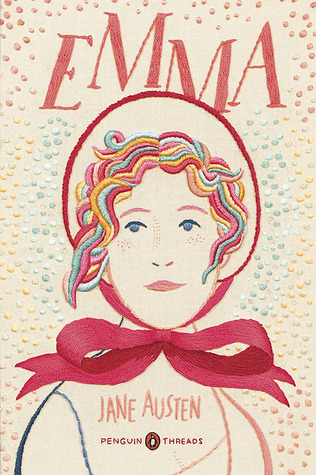
EmmaCovers

As long-time readers here will know, my Jane Austen group did a slow read of Austen’s novels over several years, starting in 2011. In 2022, we decided it was time to repeat the exercise, and are again reading them chronologically, one each year, making 2025 Emma’s turn.

Our slow reads involve reading and discussing the chosen novel, a volume at a time. We “try” to read as though we don’t know what happens next, to help us focus closely on what we think Austen is doing. Of course, we can’t read like a first-time reader, but it’s a useful discipline.

We always wonder whether this time, after so many reads, we will see anything new or fresh. But, we always do. Just the march of time, with its impact on our knowledge, experience and tastes, means we see the books differently. Take Emma, for example …

Jane Austen, Emma, Penguin

A few re-reads ago, what stood out for me was its beautiful plotting. There’s barely a word or action that doesn’t imply or lead to something telling, even if we are unaware at the time. From my last major re-read, in 2015, I noticed how often the word “friend” or the notion of “friendship” was appearing. The novel starts with Emma losing her governess-then-companion Miss Taylor to marriage. They’ll remain friends but Emma is left alone with her gentle but fussy father. So, she nurtures a friendship with the 17-year-old Harriet. In my post on rereading Volume 1, I explored the idea of friendship, and then watched in Volumes 2 and 3 to see whether the idea continued. It did. This is not to say that what we might identify in a slow read will overtake previous ideas, but that these re-reads enable us to tease out more of the details, which usually results in a deeper understanding of the whole.

So, what would I find this time? I did consider choosing something to look for, like the role of letters or music in the novel, but decided to just see what played out. Sure enough, something popped up, the idea of young people lacking guidance. It relates to issues like character development and to themes like parenting. And, I found it all there in the first few chapters.

The novel begins:

Emma Woodhouse, handsome, clever, and rich, with a comfortable home and happy disposition, seemed to unite some of the best blessings of existence; and had lived nearly twenty-one years in the world with very little to distress or vex her.

This can be teased out in many ways, but, remembering that “very little to distress or vex her”, I’m focusing on where Austen goes next. As explained above, the novel opens with Emma’s governess-then-companion Miss Taylor having just married, so Emma, who lost her mother when she was very young, is left alone with her “valetudinarian” father, “a nervous man, easily depressed”. She indulges him, as only a devoted daughter can, but otherwise, she is untrammelled. Austen describes her life, to this point, in the third and fourth paragraphs:

Emma doing just what she liked; highly esteeming Miss Taylor’s judgment, but directed chiefly by her own.

The real evils indeed of Emma’s situation were the power of having rather too much of her own way, and a disposition to think a little too well of herself.

And there it is, “directed chiefly by her own [judgement]”. Neither Emma’s “nervous” father nor the mildly-tempered Miss Taylor/Mrs Weston question or guide her. However, in the same chapter, we learn that there is one who does, her brother-in-law Mr Knightley, “a sensible man about seven or eight and twenty”. Austen writes that:

Mr. Knightley, in fact, was one of the few people who could see faults in Emma Woodhouse, and the only one who ever told her of them …

We see several examples of his chiding her in Volume 1, including about her interference in Harriet’s response to a marriage proposal. We also see him discussing Emma with Mrs Weston, telling her that she had been a good companion to Emma but had also been better at submitting her will to Emma than in giving Emma the “complete education” he thinks she needed.

Now, moving on to Chapter 2, we hear of another young person, the three or four and twenty, Frank Churchill. His mother, too, had died when he was very young, and, for a number of reasons, he

was given up to the care and the wealth of the Churchills [aunt and uncle], and he had only his own comfort to seek, and his own situation to improve as he could.

The implication here is that he too had been left to his own devices with little guidance other than “his own comfort”. It occurred to me, during this reading, that he is being set up as a parallel and perhaps eventual foil to Emma. But, hold that thought, because Frank does not physically appear in Volume 1. There is, however, a telling discussion at the end of the Volume about his not coming to Highbury to meet his father’s new wife, Mrs Weston. Mr Knightley – note, it’s him again – argues that while Frank’s aunt and uncle are given as the reason:

There is one thing, Emma, which a man can always do, if he chooses, and that is, his duty.

Frank simply needed to use the “tone of decision becoming a man”, and there would have been “no opposition”.

Finally, there is a third example, the aforementioned Harriet Smith, who is introduced in Chapter 4. She

certainly was not clever, but she had a sweet, docile, grateful disposition; was totally free from conceit; and only desiring to be guided by any one she looked up to.

The natural child of an unknown person who had paid for her schooling and now for her boarding at that school, Harriet has no parent to guide her, only school teachers – and now, the flawed Emma. By the end of Volume 1, it is not going well for Harriet, who has lost one real and one imagined suitor due to Emma’s guidance.

So, as Volume 1 progresses through its 18 chapters, we see some of the fallout of Emma’s being a law unto herself and ignoring the wisdom of others. I look forward to seeing if this idea is followed through in Volume 2. Is it important to Austen’s world view? Watch this space …

Irma Gold in conversation with Karen Viggers

The Canberra launch of Irma Gold’s latest book, her second novel Shift (my review), was a joyful affair that reminded me of other launches of books by Canberra writers, such as Karen Viggers’ Sidelines and Nigel Featherstone’s My heart is a little wild thing. Canberra is a comparatively small jurisdiction so when one of our own launches a book, local authors, booksellers, publishers, editors, critics, reviewers and readers turn out to cheer them on. Such was the case tonight when Irma Gold came to town to launch Shift. She now lives in Naarm/Melbourne, but was active in the Canberra literary community for over a decade.

Both Irma Gold and Karen Viggers have appeared many times in my blog, so I won’t introduce them again, but I will remind you that they now jointly produce the Secrets from the Green Room podcast. They are clearly simpatico, and the conversation, as a result, flowed easily while still covering meaningful ground.

The conversation

Karen commenced with an acknowledgement of country and a rundown of Irma’s many achievements, and then led into the conversation with a cheeky question …

Had the several outstanding reviews she’d received in the first month after publication gone to her head? It has been a dream response, admitted Irma, but what means most to her are the supportive messages she’s received from her friends in Soweto.

Karen then briefly summarised the book. It’s about portrait photographer Arlie who goes to Kliptown, in Soweto, partly because his South African mother refuses to talk about it. The sensitive and somewhat lost Arlie needs to know more, to understand his mother, and, he’d like to prove himself to his father. Karen said she found the ending deeply moving.

Why South Africa? Irma’s father was born there, so she’s always been interested. This was further sparked in her teens when she read Biko, resulting in her reading more about freedom fighters and South Africa more widely. She didn’t get to South Africa until her 40s, when she went with her youngest brother. Through a chance meeting, they were introduced to Kliptown, a community with no electricity, school or sewerage, among other things. A seed was sown then. She visited again, with another brother (a trip which I followed through Irma’s Instagram account. It was fascinating, if I can use such a shallow-sounding word for such a poorly supported community.) Karen then asked how dangerous it was. Irma felt safer in Kliptown, despite its reputation for violence, than in other parts of South Africa, mainly because she and her brother were working in and for the community.

On the haves vs have-nots. Karen spoke of how well Irma had illustrated the gap between the haves and have-nots; how she’d shown Arlie displaying his privilege without always being aware of it, while other times he’d catch, and be embarrassed by, his stumbles in this regard. Irma shared an anecdote about giving money to someone who had been their guide, and the difference it had made for him. She felt guilty all the time. As she was writing the novel she reflected constantly on how, by virtue of birth, she lives here in privilege and they live there.

On creating a great sense of place. Irma kept notebooks, and took lots of phots and videos. Watching the videos would take her right back there, and she’d remember more including things she hadn’t written down. People didn’t mind her taking photos. In fact they loved it, but she was working with the community.

On the characters and their names. Irma has no idea where Arlie came from. He was in her head when she made her first trip to South Africa. Also, she didn’t specifically choose photography for him but in retrospect, she realises it’s the perfect choice, because photography is all about different ways of seeing things. She’s always loved photography, but she did have expert advice from a photographer in the Canberra writing community. Jigs, Arlie’s brother’s fiancee, also just came to her, but the spark for Glory came from seeing a gorgeous young woman in a local gospel group. As for her African characters’ lively names, many of the Africans she met know what their names mean, why they were given their names. Being an “over-sharer” herself, she loves their openness and willingness to tell their stories.

On Mandela. Irma was shocked to find that Mandela was not the hero in young Africans’ eyes as he was in hers. They feel they’ve been sold a “broken dream”, that things have not improved as they were promised. Bob Nameng of SKY (Soweto Kliptown Youth) kept telling her that she had to write about the situation because no one is listening, nothing changes. This is not to say that Kliptown is all tragedy. There is also a lot of joy. She saw so much art and music in the community, and an overall “lust for life”.

On relationships. Karen was particularly interested in what Irma was trying to show in Arlie’s difficult relationship with his father. Irma said that Arlie judges his father harshly, but Glory suggests to him other ways of looking at the situation. Forgiveness and openness are important in relationships.

What is she asking of her readers? Irma liked the idea that she was “making the invisible visible”. She grew up in a family that had strong feelings about injustice. Ultimately, the book is about people. They are the most important thing to her. Kliptown is its people. She also likes Charlotte Wood’s idea of following “wherever the heat is”.

Q & A

On the title: It was a complicated process. Her original title was either disliked or deemed forgettable. In the end she produced a list, from which the publisher made a selection, and she chose one of those! She now likes her title.

On being published in South Africa. Currently only Australia-New Zealand rights have been sold. It’s difficult getting books into other jurisdictions.

Karen concluded by asking whether there was a “drive for change” in the novel. Although Irma had said that people and relationships are her over-riding interest, she admitted that change is also part of what it is about. Yes! I remember that Irma also said her first novel The breaking was primarily about the relationships. However, it too is about an issue – elephant tourism – that she would like to see changed. The way I see it is that her novels are inspired by justice-related issues that she would like to see changed, but that relationships are what fascinate her. In truth, you probably can’t solve big issues without having good relationships. Combining a passion for driving change and for good relationships between people makes, I’d argue, for good reading.

Thanks

The evening concluded with Irma thanking many in the Canberra community who had helped her, including of course Karen Viggers, but also John Clanchy who had read many drafts and whose honest feedback was instrumental in the book’s coming into being, Dylan Jones for being her photography consultant, the wonderfully supportive Canberra writing community, ArtsACT for helping her with some funding (again), and the Street Theatre for hosting the event.

Irma Gold – Shift: Book Launch
The Street Theatre, Canberra
9 April 2025

Monday musings on Australian literature: UNESCO Cities of Literature

A year before I started this blog, Melbourne was designated as a UNESCO City of Literature, something I briefly mentioned in a 2010 post on the Victorian Literary Map. The City of Literature program is part of UNESCO’s wider Creative Cities Network which was launched in 2004, and which itself grew out of UNESCO’s 2002 Global Alliance for Cultural Diversity initiative. According to the Cities of Literature website, the Creative Cities Network encompasses seven creative fields: Crafts & Folk Art, Design, Film, Gastronomy, Literature, Music, and Media Arts. Currently there are 53 Cities of Literature, across 39 countries in 6 continents.

Edinburgh was the first City announced in 2004, with Melbourne becoming the second in 2008. Iowa City was also designated that year. Since then 50 more have been added with a second Australian city, Hobart, being among the most recent added to the list, in 2023. The full list is available online at the Cities of Literature website.

What does it mean, and how does a city become a City of Literature? To start with, it is up to cities to apply to be so designated. Once they apply, they are assessed against a number of criteria. These criteria aren’t specifically listed, but the Cities of Literature website says that these Cities “share similar characteristics”, which presumably draw from the criteria? The characteristics are:

  • Quality, quantity and diversity of publishing in the city
  • Quality and quantity of educational programmes focusing on domestic or foreign literature at primary, secondary and tertiary levels
  • Literature, drama and/or poetry playing an important role in the city
  • Hosting literary events and festivals which promote domestic and foreign literature
  • Existence of libraries, bookstores and public or private cultural centres which preserve, promote and disseminate domestic and foreign literature
  • Involvement by the publishing sector in translating literary works from diverse national languages and foreign literature
  • Active involvement of traditional and new media in promoting literature and strengthening the market for literary products.

UNESCO has pages for some of the cities. Melbourne’s (Naarm) commences with:

Celebrated for its vibrant literary culture, Melbourne supports a diverse range of writers, a prosperous publishing industry, a successful culture of independent bookselling, a wide variety of literary organisations, a well-established culture of reading and is actively involved in many events and festivals.

It then lists other facts and figures about Melbourne’s literary credentials.

Hobart’s (nipaluna) page doesn’t seem to exist yet … But its page on the specific Cities of Literature site starts with the state’s First Nations people:

Lutruwita/Tasmania has a strong arts and culture presence, especially around nipaluna/Hobart. Over time, an authentic Tasmanian voice has developed in our literature and storytelling. The Tasmanian Aboriginal community drew on their knowledge, history, resilience and creativity to retrieve and revive their language, palawa kani, a composite of Lutruwita’s original Aboriginal languages. This has seen this island’s First People’s interpreting their own stories in their own language.

Today, nipaluna/Hobart is home to a multitude of award-winning and best-selling authors who have been recognised both nationally and internationally, winning awards such as the Vogel Award, Stella Prize, Commonwealth Writers Prize, Prime Minister’s Literary Awards, and the Booker Prize. From self-published authors to Richard Flanagan, winner of the Booker Prize, Hobartians have taken this special place to readers on every continent. 

Although nipaluna/Hobart was designated in late 2023, it’s at this year’s Hobart Litfest, which is running now (from 3 to 12 April), that they are celebrating the city’s designation, with the litfest’s theme being “Celebrate Hobart’s designation as a UNESCO City of Literature at Hobart LitFest!” If you’d like to check out the program, click here.

Meanwhile, the opening event featured a keynote speech by author Peter Timms in which the promotion said he would focus on how Hobart became a City of Literature & how Hobart sits against other global cities. He also, according to the promotion, was going to “delve” into Hobart’s “rich literary history, cultural influences, and key milestones” that shaped the city’s identity in the literary world, and also identify what sets Hobart apart and what it can learn from the successes of the other cities. My brother attended the keynote and reported (in comments on last week’s Monday Musings) that “he spoke about needing a regular writers’ festival (which we haven’t really had since the 1990s, if ever), support for writers through re-funding a Tasmanian Writers’ Centre and highlighted the foundation and development of the Wheeler Centre by the Victorian State Library to build on Melbourne’s declaration as a City of Literature”. I love it when people offer good, clear and aspirational but also achievable ideas.

Anyhow, do you live in a UNESCO City of Literature? Or one of the other creative cities? What do you think about the concept?

Irma Gold, Shift (#BookReview)

If Australian writer Irma Gold suffered from Second Book Syndrome while writing her second novel, it certainly doesn’t show. Her debut novel, The breaking (my review), is well-written and a great read. However, in Shift, I sense a writer who has reached another level of confidence in fusing her writing, story-telling, and the ideals and beliefs the drive her. She is passionate about her subject matter, as she was in The breaking, but in Shift she ups the ante to encompass wider themes about art. The result is a strong read that offers much for its readers to think about.

Shift is not the first novel I’ve reviewed about post-apartheid South Africa, but it is my first by an Australian author. Published, says MidnightSun (linked below), in the 70th anniversary year of the Freedom Charter, which outlined the principles of democracy and freedom in South Africa, Shift is set in Kliptown, where this charter was signed. Protagonist, Arlie, is a thirty-something art photographer who has just sold his first work to a significant gallery. It’s potentially career-changing and he should be happy, but he can’t “get his shit together”. He can’t keep girlfriends and while he gets on well with his happily established brother, his relationship with his parents is fraught. He feels his successful architect father has expectations he can’t (or doesn’t want to) meet, and his mother refuses to talk about her South African upbringing. But, Arlie wants to know.

So, after yet another relationship break-up, Arlie decides to go to South Africa, and ends up in Kliptown, in Soweto. He becomes immersed in its life, mixing with visionary choirmaster Rufaro, singer Glory and her younger brother Samson, and other locals such as his favourite photographic subject, the 80-something, “sassy as hell” Queenie. Can he create an exhibition out of his experience? Rufaro would like that …

“sold a dream”

The bulk of the novel comprises Arlie’s experiences in Kliptown, where he is the only white person. Through his eyes, we see the dire situation the people find themselves in. Early in the novel, he goes on a date with Glory to a spoken word evening at Soweto Theatre, where he hears some truths:

The people here had been sold a dream and yet more than two decades on they found themselves still in the same relentless poverty. Mandela was the broker of broken freedom.

Which is not, necessarily, to say that Mandela achieved nothing, but that life is far more complex than a “god”, as Mandela was to Arlie’s mother, can ever be. What Arlie sees, then, is poverty, drug addiction, violence and hopelessness. He sees young people, like Samson, not believing there’s any point to school. He sees a settlement without proper sewerage, electricity, or running water to their homes, not to mention with “asbestos sheeting everywhere”. However, on the flip side, he also sees community, hard work and hope.

So, back to my opening claim about Gold and her second novel. Taking the writing and the storytelling first, the writing is tight. It has the confidence of an editor, which Gold is, but mostly of one who is passionate about her material. The descriptions are fresh and vivid. We can visualise the place, with, for example, its “ramshackle tapestry of shacks constructed from discarded materials, each one rippling into the next”. The characters – who are drawn from Gold’s travels to the region (see here) – feel authentic. They are not stereotypes, but breathe life into the story with their thoughts, worries, fears and hopes. Arlie questions his actions, are they that of “a white saviour”? The colourful Glory, with her orange hair and fake orange nails, doesn’t “try to please”. She has her own views, and “plays her own game … take it or leave it”. The visionary Rufaro is passionate about the power of singing. It shows everyone, he says, who they are, that “we will be more … we are more”. Samson is a boy on the cusp of manhood, exuding bravado one moment, begging to play soccer the next.

The novel, too, is well structured. It opens with a shocking event to which we return at the end, and then follows a chronological arc from Arlie’s personal crisis and his decision to go to South Africa, through his time there, to his ultimate return home. There is drama along the way. Arlie’s father Harris visits, and Gold perfectly captures the discomfort between them alongside their unspoken love for each other. There is no simple resolution, just, perhaps, another step along the way to understanding. There is also love, violence and tragedy, but I won’t spoil those.

“make the invisible visible”

Shift is a story about a forgotten, if not betrayed, community, but one that survives all the same. It’s about a man who cannot keep a girlfriend, who is at odds with his father and distanced from his troubled mother, but who wants better relationships. It is a multi-layered love story – to a community and its people, and between Arlie and the people he cares for. But, most of all, it is a story about the power of art – or, if not that, at least about hope for art’s power. From first meeting Arlie, Rufaro has a dream that he will create “an exhibition that will show the world the truth about Kliptown”. He tells his choristers that Arlie

is going to expose what the government is doing here. That they have forgotten us. The pressure must come from outside, because our government does not listen to us.

Arlie, Gold writes later in the novel, “had always believed that art could change minds, that if enough minds were changed then the world changed” but, when it comes to it, he wonders “what could his photos possible achieve?” Can he “make the invisible visible”?

This brings me back to my opening paragraph and Gold’s wider themes. Shift is a strong, moving novel about a struggling community that has been left behind, for all the promises of freedom. However, it is also a novel that believes art can expose truths and, through that, shift our thinking and thus nudge the world towards being a better place. Gold has written her heart out in this novel to “make the invisible visible” – and to make room for hope. The next move is ours.

Irma Gold
Shift
Rundle Mall, SA: MidnightSun, 2025
269pp.
ISBN: 9781922858566

(Review copy courtesy MidnightSun Publishing)

Six degrees of separation, FROM Knife TO …

And so the year rolls on. It’s the first Saturday in April, so here I am again with another Six Degrees. It’s autumn here and we are starting to feel the change in the air. Time to get out my cool weather wardrobe again, more’s the pity! Now, I’ll get onto it … but first, if you don’t know how the #SixDegrees meme works, please check Kate’s blog – booksaremyfavouriteandbest.
The first rule is that Kate sets our starting book. This month, it’s a book I would like to read, Salman Rushdie’s memoir, Knife, in which he shares his experience of a traumatic knife attack, some thirty years after that fatwa that was ordered against him. It’s “a reminder”, says GoodReads, “of literature’s capacity to make sense of the unthinkable, an intimate and life-affirming meditation on life, loss, love, art—and finding the strength to stand up again”.

Susan Varga, Rupture

I have reviewed a Rushdie novel here, but instead of linking there, I’m choosing a poetry collection in which the poet shares her experience of a traumatic event, and of recovering from it. The poet is Susan Varga, and her traumatic event was a stroke. Her collection is titled Rupture (my review). I could also have linked on the fact that both books have stark, dramatic single word titles.

The bee hut, by Dorothy Porter

Susan Varga writes of a poet’s devastation of losing “sounds, words, sentences”. However, as I wrote in my post, it is not a bitter book, which reminded me a little of Dorothy Porter’s poetry collection, The bee hut (my review). It was the last book she wrote before she died of breast cancer at 54, and the final poem, written just two and a half weeks before she died, expresses gratitude for her “luck”.

Bill McKibben, Oil and Honey

Porter was a poet, and for her bees were a metaphor, said her partner, for “danger amid the sweetness and beauty”. I’m linking, however, to a book by someone who was fascinated by real bees, Bill McKibben’s memoir Oil and honey (my review). This book is subtitled “the education of an unlikely activist”, and is about his two main passions, one being bees, honey and good farming practice, and the other being oil, or the fossil fuel industry, and how to stop its impact on the climate. The book is both a memoir, and a manifesto about McKibben’s coming out as an environmental activist.

So, I am linking next to a novel about an eco-warrior/environmental activist, Donna M. Cameron’s The rewilding (my review). It’s a thriller by genre, but as I wrote in my review it’s about values, about the lines you draw, about the life you choose to live, and about what that means personally and politically.

Eco-warrior Nia is one of the protagonists of Cameron’s novel, but it opens with a young man, Jagger, sitting in his office deciding to do something that will lose him his flashy fiancée Lola. Just before I read Cameron, I read Willa Cather’s short story “The bookkeeper’s wife” (my review). It commences with a young man, Percy Bixby, sitting in his office deciding to do something in order to keep his flashy fiancée Stella, so it’s to Willa Cather than I am linking next.

Jane Rawson, A wrong turn at the office of unmade lists

Finally, to close this chain, I’m following two young men pondering problems in their offices to a novel with office in its title, Jane Rawson’s A wrong turn at the Office of Unmade Lists (my review). This novel is partly a time-travel book, and the office appears in the GAP between two worlds. But what makes this book an extra good link for today’s chain is that it’s also a climate change book, which links it back nicely to McKibben’s and Cameron’s books. I’m not sure, however, that I can link it back to Knife.

So, four of my six books are by Australian writers; three are about climate change and activism; and two are by poets. Oh, and four of my six are by women, which is the case in my chains more often than not.

And, have you read Knife and, regardless, what would you link to?