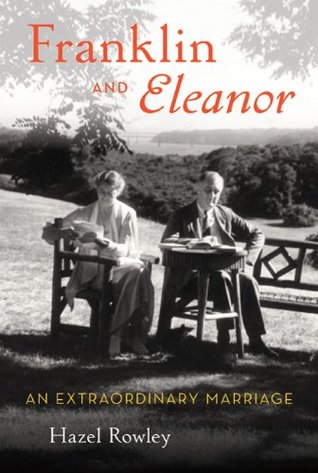
Back in 2013, I wrote about the Hazel Rowley Literary Fund which was set up in 2011 by Rowley’s sister and friends, in association with Writers Victoria. Hazel Rowley was, as many of you will know, one of Australia’s most respected biographers. Her subjects were diverse, and not exclusively Australian. Indeed, most were not Australian, as besides the Australian writer Christine Stead who spent much of her writing life overseas, she wrote on the African American writer Richard Wright, the French writers Simone de Beauvoir and Jean-Paul Sartre, and the American power couple, Franklin and Eleanor Roosevelt (my review). Unfortunately, Rowley, born in 1951, died too young – of a cerebral haemorrhage in New York in 2011.
The aim of the fund was “to commemorate Hazel’s life and her writing legacy through activities that support biography and writing in general”. Its main vehicle was the Hazel Rowley Literary Fellowship which provided money to support a writer researching a biography, or some aspect of cultural or social history compatible with Rowley’s interests. It was offered annually, with the initial award of $10,000 gradually increased to the $20,000 this year’s winner received.
Now, those of you with eagle eyes may have noticed that I wrote “was”. As Wikipedia reports, which I confirmed on the official website, the Fellowship ends with this year’s award. The website summarises its achievements in this paragraph:
The Fellowship has been running for the past 14 years since Hazel died in March 2011. It was created to honour Hazel as a skilled biographer and to encourage others to write with the same care and enthusiasm in this time-consuming and exacting genre. Based on Hazel’s own experience we recognised the need to support a work in progress by providing money for research and travel. Over the past 14 years the Fellowship has supported more than 20 writers to progress and finish their projects.
They do not say why it is ending, but presumably the money has run out. Bequests, even well managed ones, do not last forever. I am guessing, but perhaps it was a case of either offering decent prize money – as in a useful amount – until it runs out, or award small amounts that risk not being enough to make a real difference to the winning project.
So now, the final award … $20,000 is going to Jennifer Martin for her proposed biography of Austrian-born Eva Sommer. She was the inaugural Walkley award winner in 1956 when she was a cadet on the Sydney Sun. She died in 2019 at the age of 84. The fellowship also gave $10,000 to each of three commended writers: Monique Rooney, Theodore Ell and Ashleigh Wilson, who are writing on Ruth Park, Les Murray and Barry Humphries respectively. All good subjects, but I’d love to see Ruth Park done.
You can see the complete list of awards made, including which ones have – to date – resulted in publication, as well as the shortlisted authors and their projects, at the above-listed Wikipedia page.
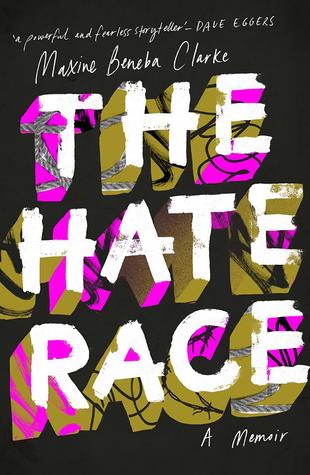
Of the 15 winners to date (including this year’s which, by definition, is presumably still in project stage), 9 have been published, and I have reviewed one of them, Maxine Beneba Clarke’s The hate race. I’d like to read several others, but if I had to choose one, it would be Mandy Sayer’s on Australia’s movie-making sisters, The McDonagh Sisters.
However, there are some on the shortlist that I would also love to see come to fruition, including those on Louisa Lawson (Michelle Scott Tucker), David Malouf (Patrick Allington), Gerald Murnane (Shannon Burns) and Amy Witting (Sylvia Martin). Hmm … given Sylvia Martin was later shortlisted for a different subject, which has now been published – Double act: Eirene Mort and Nora Kate Weston – I fear for my Amy Witting wish.
This brings me to the fact that, of course, several on the shortlist have been published, including those on Shirley Hazzard (Brigitta Olubas, on my TBR), Elizabeth Harrower (Helen Trinca, my review), Elizabeth Harrower (Susan Wyndham, on my TBR).
What these lists show is that biography is alive in Australia. How well it is, is another question. Writing a biography is no simple task. It can take years (and years) of research during which authors receive no money – unless they win or obtain fellowships like this one. It’s a shame it has ended, for whatever reason, but we should be grateful for the 15 years of support it did give.
I’d love to hear your thoughts on biographies. Do you like them? Do you have favourites? What do – or don’t you – like in them?
 Whispering Gums
That’s a pity about the Fellowship (also a pity that we have a government that would rather fund fossil fuel production and nuclear submarines than the arts).
I bought Rowley’s Stead biography recently AND I intend reading it this year.
Of your winners and shortlistees my favourite is Sylvia Martin, who has written some very lively and off the beaten track biographies.
Thanks Bill re Sylvia Martin. I do hope she’ll still do that one on Amy Witting. I know of Martin, but haven’t read her biographies. Do you have a favourite of hers to recommend?
Are you sure you haven’t read the one about Sydney’s head librarian. My favourite is still probably Passionate Friends – Miles Franklin and (gone out of my head, E the bush hut lady). But her Aileen Palmer is excellent too.
Yes, I’m sure! I’ve just looked it up … Ida Leeson. I’ve never heard of her but the book sounds interesting.
I’m sad to see both the Hazel Rowley Award and the Seymour Biography Lecture end. I think biography was in the doldrums – when I was managing the Lecture finding writers of big lives was tricky for a while there – but I’ve been thinking it’s been on the rise again. I’m hoping it’s on the rise again.
Thanks Kathryn … I loved the Seymour Biography Award too. We only got to a few of them because of timing – we are often away at the time of year it was on – but it was special. Fingers crossed it’s on the rise again. (BTW I am so sorry I will be missing the Upstageing Event with you, Deb and Alex Sloan. It’s such a good idea and will be wonderful, I’m sure.)
Hi Sue, I do like biographies It is a disappointing that money has run out for the Hazel Rowley Literary Fund. I have read Elizabeth Harrow by Susan Wyndham and it was a fascinating read. I was impressed by Wyndham’s research. I would be interested in the David Malouf biography.
Thanks Meg, I have the Wyndham on my TBR. I have read Trinca’s biography of her – I think it was also shortlisted. I wanted to read Wyndham’s close to reading Trinca’s but I haven’t managed it and time is passing.
Hi Sue, if you are in Melbourne on 31 March, at Readings, Sylvia Martin will be in discussion with Jeff Sparrow.
Thanks Meg … I will be in fact. Are you talking Readings Carlton? I guess we need to book?
Hi Sue, sorry, I should have told you the details! Readings Carlton 6.00 pm.
Thanks Meg … for some reason this went into moderation and because of my busy week, I’ve only just seen it.
To be honest, biographies make me nervous because I’ve read so many that appear obvious unbalanced, as if the author had a theory he/she wanted to prove and ended up finding and including only information that supports that theory. One book I’m excited to read when I get the chance (it’s really long) is a new(ish) Malcolm X biography. Of course, he dictated and edited his own autobiography, which you would think would be the definitive text, but of course, autobiographers also leave out information! Zora Neale Hurston notoriously fibbed and covered things in hers, especially to keep her white patron happy. (I believe it was her biographer who outed this info). Anyway, the new Malcolm X book is exciting, so I’m going to read that. Apparently, the coauthors did a lot of research using primary sources! See, if it’s primary resources, that’s a biography I want to read. I know it sounds silly, but what the authors did was “simply” go to all the libraries in the areas where Malcolm X lived and looked at newspaper sources and tried to contact people whom Malcolm X knew. I write “silly” because it seems very “duh” to go to local libraries and talk to people, but really, to have the time and money to travel around and take out the time of day to research is no small feat. I do recall trying to read a biography on Shirley Jackson that focused heavily on her husband (so I DNF’d it) and switched to one that had a lot of primary sources (interviews with friends, etc.) that was quite mean to Jackson, especially harping on what she ate, smoked, did, etc.–basically saying she was a fat, gross slob who didn’t take care of herself or her children, which may be true, but the author made no exceptions for things like possible mental health issues. If she was struggling so hard, why was she struggling so hard? The author didn’t bother to find out.
You’ve made great points here Melanie re biography and autobiography. I think those points about biographers wanting to prove a theory and autobiographers wanting to present themselves in a certain way identify the fundamental challenges of those forms.
Re biography, I think a big challenge for biographers is filling in the gaps – which can be why a person behaved the way they did (and Shirley Jackson is a good example) or can be big fact gaps in their biography where we have little or no evidence for parts of their lives so biographers have to find ways of presenting that. Jane Austen is a good example. There are many gaps and different biographers have handled it in different ways. Australia’s Elizabeth Harrower is another example. I’ve read one of the recent biographies but need to read to other to see how they handled the gaps and questions.
I honestly wish they would just write that a gap exists, here is what we do know, here is why we don’t know what we don’t know, and leave it at that. No theories or speculations needed.
I don’t mind theories or speculations providing they clearly flag that’s what they’re doing. But I’m also happy for them to be left as gaps.
Disappointing about the Fellowship, but I will happily read the winner and all the shortlisted books – they are all interesting subjects. But disappointed to see that no-one seems to be writing a bio about Kylie Tennant…
Yep, I noticed that too Brona, re Kylie. I wonder why we are not hearing about people interested in her.
Anyone writing the biography of a writer may be challenged by the subject’s own words competing with the biographer’s in the reader’s mind. When the writer is somebody like Mark Twain, the competition is hard for the biographer to win.
In general, I do enjoy reading biographies.
Good point George. Your Twain comment made me laugh. Do you have particular sorts of subjects you are interested in – political biographies, literary biographies, science/inventor biographies, traveller biographers, war experience biographies, biographies of ordinary people ignored by history, sports biographies, and so on, or are you more interested in who the biographer is and their reputation? For me it’s mostly certain subjects but biographer reputation can persuade me.
For some of the categories I would reflexively say no, then think of a counter-example.
For example, I am wary of biographies of scientists, just because so much of their work I simply don’t understand. On the other hand, the physicist Richard Feynman, the chemist Glenn Seaborg, and the mathematician Adam Ulam all wrote fascinating memoirs.
Sports biographies are probably the one category you give that I don’t much read. It may be because the competitive part of an athlete’s life is brief–from adolescence to in the best case about 40 on the one hand, a few hours a day or two a week on the other, and are somewhat opaque to the reader. I can read a writer’s memoir and perhaps learn something to improve my writing. I could have read Bill Bradley’s memoir Life on the Road repeatedly fifty years ago without any effect on my basketball skills.
The one biographer that I followed was Roy Jenkins. His biography of Gladstone led me to read his biography of Churchill and then his biography of Asquith.
Great answer George – in the sense that it makes sense to me. There are some biographers I like. And I do like writer’s biographies not so much to improve my writing but because I am fascinated buy writers’ lives. I am not much interested in sport and like you am not sure on would understand much science, but I did read and enjoy Feynman’s Surely you’re joking … which I think is the one you mention!
I never had the honour of winning the Hazel Rowley Fellowship but I can honestly say that being shortlisted for it (2012, 2021, 2024, 2025) changed my life – especially that first one. Prizes awarded to published books are fabulous, and necessary, but money awarded to help an author to finish a book? Just as crucial.
As a then unpublished, emerging writer, that first shortlisting gave me the confidence to apply for other things and, when the time came, it let publishers know that my work might at least be worth having a look at. Indeed, after the subsequent shortlistings, publishers reached out to me (!) to see if I already had a contract or not. So even though I never won the cash, the cachet was in many ways just as valuable.
Therefore, from me a heartfelt thank you and vale to the Hazel Rowley Fellowship. It really did make a difference, in all sorts of ways.