As I say every year, I don’t do well at having read the Stella Prize longlist at the time of its announcement. In recent years the most I’ve read at the time of the announcement has been two (in 2019). Last year I’d read one. I have read 9 of the 13 winners to date, which is a fair run for me.
As I also say every year, Stella works hard to keep their judging panels fresh, so again none of this year’s judges were on last year’s panel, though some have judged before. This year’s panel comprises bookseller, editor, and author, Jaclyn Crupi; academic and author, Sophie Gee; author, screenwriter, and broadcaster, Benjamin Law; journalist, writer, and facilitator, Gillian O’Shaughnessy; author and editor, Ellen van Neerven. Sophie Gee is this year’s Chair.
The longlist
Here is the list, in alphabetical order by author, which is also how they were presented:
- Eunice Andrada, Kontra (poetry)
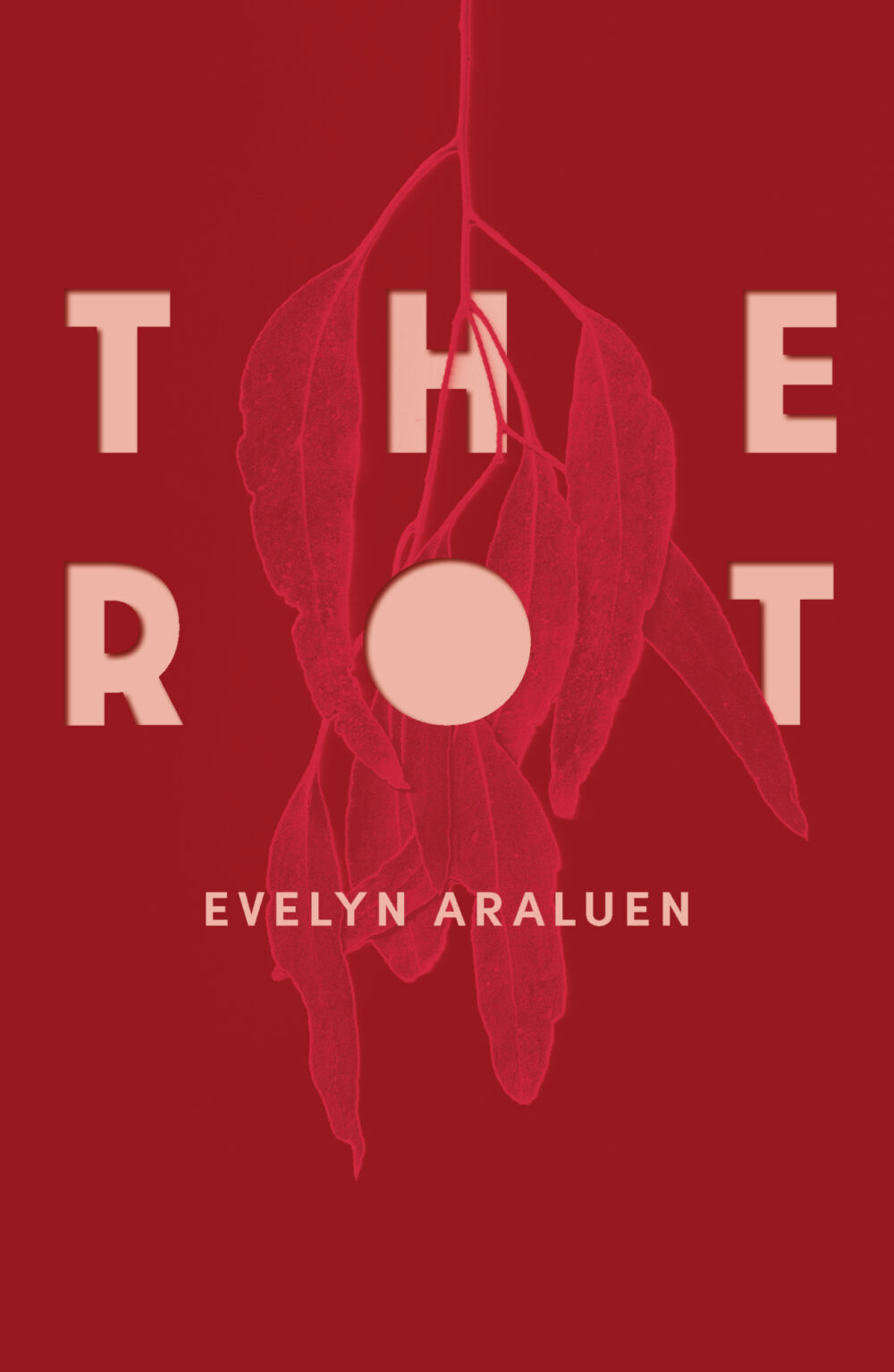
- Evelyn Araluen, The rot (poetry) (on my TBR) (CWF Session 5 and 6) (Jonathan’s review)
- Geraldine Brooks, Memorial days (memoir) (Kate’s review)
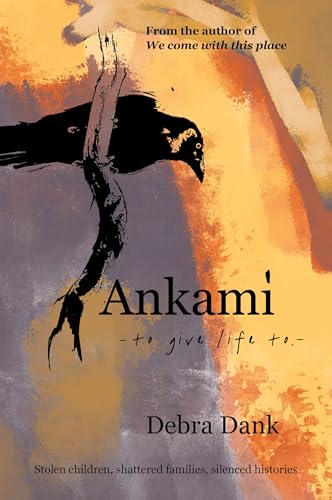
- Debra Dank, Ankami: Stolen children, shattered families, silenced histories (nonfiction/memoir) (on my TBR)
- Miranda Darling, Firewater (novel)
- Natalie Harkin, Apron-sorrow/Sovereign tea (nonfiction)
- Lee Lai, Cannon (graphic novel)
- Charlotte McConaghy, Wild dark shore (novel) (Brona’s review)
- Lucy Nelson, Wait here (short story collection)
- Micaela Sahhar, Find me at Jaffa Gate: An encyclopedia of a Palestinian family (nonfiction/memoir)
- Marika Sosnowski, 58 facets: On violence and the law (nonfiction)
- Tasma Walton, I am Nannertgarroook (novel)
So, 5 fiction (including one graphic novel and a short story collection), 5 nonfiction (including 3 memoirs), and 2 poetry collections, this year. And four, I think, by First Nations writers – Araluen, Dank, Harkin and Walton. You can read about the longlist, including comments by the judges, at the Stella website.
As I did last year, prior to the announcement, I pre-loaded this post with 25 potential longlistees, partly in the hope that it would speed up writing this post if I had a goodly number of the listed titles already in the post, but I only guessed 4 of the selected books.
As always, I won’t question the selection, though I did have a couple of favourites I’d love to have seen here. But, the Stella is a diverse prize that aims to encompass a wide range of forms and styles, including some I don’t necessarily chase, and I can’t pretend to have read widely from 2025’s output. But I do have some on my TBR or in my sights. Certainly, contemporary political issues are evident in the listing, which is what we’d expect from a prize that wants to encompass good writing that reflects the diversity of Australian writing (by women and non-binary authors). Many of these writers are the brave ones confronting us with their presence and their ideas.
You can read the judges’ report at the link I’ve given above, so I’ll just share two paragraph from it:
As we narrowed the field to a long-longlist, we commented often on how virtually every book reimagined and transformed a different life story, through fine-grained attention, creative intelligence and technical skill. The twelve longlist titles reflect the excellence of all the entries, virtually all of which accomplished something moving and true through narrative, structure, voice or description.
In the other, they define what they mean by originality:
Originality consists in a book that recognisably inhabits its genre or form, and at the same time purposefully breaks it. Original writing changes the scope of what can be thought, felt and envisioned. A sign of great originality is often that, as readers, we think new thoughts, or feel changed by sentences, images and ideas. Originality reaches beyond the book itself to shift the lives of readers.
Each of the longlisted authors receives $2000 in prize money, donated by the Copyright Agency’s Cultural Fund, while shortlists will receive $5000. The winer will receive $60,000. There were over 200 submissions this year.
The shortlist will be announced on 8 April, and the winner on 13 May.
Any comments?
 Whispering Gums
I’m so behind the game this year… didn’t have time to do a Stella prediction post and didn’t even have time to think about the longlist at all… I’ve only read one – Memorial Days – which I really enjoyed. I have a bunch of others on reservation at the library and will see I can get through before round two!
I also feel a little bad about the fact that half of these authors I don’t know (and here I was thinking I was relatively engaged in Aus literature). On the flip side, I guess it’s a good thing that the Prize raises the profile of authors we may not have otherwise heard about.
That’s a good way of seeing it Kate.
I started reading one book that I thought was a good possibility for the list but then very early into it I realised it was only published this year! It won an ms award last year but wasn’t published then.
I wonder if they;d ever pick a graphic novel. Nice they change the judges. The only book I;ve read on this list is the Geraldine Brooks one which I enjoyed. I just really like her as a person.
Thanks Pam. Yes, I wonder. They’ve listed graphic novels before, but one winning – not yet.
I think I’d like the Brooks. I think good books on grief are well worth reading.
I agree with you. I’ve read a couple in the past but not for awhile.
I have Wait here on my TBR and would like to read the Brooks and the Araluen, and I will certainly check out the new-to-me authors.
So much to read … I meant to note that the fiction to nonfiction ratio is different this year. 7 works of fiction last year, and 5 this year.
It’s interesting to read the judges’ thoughts on originality. I’ve always thought that it’s one of those words we use and assume its meaning is obvious, but it matters when its a criterion for judging awards, so I’m really pleased to see them having a go. I really like the definition, though I wonder whether a book has to break its genre or form to be original. Dunno. Anyway, lots to think about. And lots to read!!
I love that you like that definition too, Robyn, or, like the fact that they gave it a go. Your question is a good one and I think perhaps you can. I think that it depends on what we mean by “break away”. My thoughts are that a book can inhabit a genre so that it’s recognisably historical fiction or crime and yet break away from some of the conventions of that genre.