No, not me, much as I wish it were! I’m talking books. Today being the day after International Women’s Day, I thought to feature women in this week’s Monday Musings. But how? Then I remembered that somewhere last year I’d seen a list of books turning 50, so decided to take inspiration from that and share books by Aussie women which are turning 50 this year, meaning they were published in 1976.

Researching this wasn’t easy. Wikipedia’s 1976 in Australian literature was inadequate, but I have beefed it up somewhat now. It had only one novel by an Australian woman under “Books” and one entry under “Short Stories”. So, I searched Wikipedia for authors I knew of the time and found more titles. I also used Hooton and Heseltine’s Annals of Australian literature (though that was tedious because many of the authors are listed under last name only. Is Bennett female or male, for example? Female I discovered. In she went into Wikipedia’s 1976 page too, but she doesn’t have her own page despite her body of work.)
By the time I finished I had added four novels by Australian women, two short story entries, three poets, another dramatist, and three children’s works. I could have added a few more but time and, to some degree, the work’s significance (or “notability” in Wikipedia’s world), resulted in my stopping where I did. My point in sharing this is not to beat my own drum but to say that it is really important, when we can, to improve Wikipedia’s listings in less populated areas, such as entries for women and other minorities. For all its faults, Wikipedia is a triumph, but it is up to all of us who have the time and skills to keep it that way. End of lesson …
Books turning 50 in 2026
During my research into writers who, I knew, were writing around this time, I checked, for example. Thea Astley. She published 15 novels between 1958 and 1999, but only 2 in the 1970s, neither in 1976. Jessica Anderson published three novels in the 1970s but not in 1976. The same went for Barbara Hanrahan. Now, the lists …
Links on names are to my posts on those authors. I have made some random notes against some of the listings,
Novels
- Nancy Cato and Vivienne Rae Ellis, Queen Trucanini: historical fiction, which was of course Cato’s metier. I haven’t read it, but we have moved on in knowledge and thinking so it has very likely been superseded. I haven’t included nonfiction works here, but will mention Cato’s Mister Maloga: Daniel Matthews and his mission, Murray River, 1864–1902, also published in 1976. The mission failed, for various reasons, and I don’t know Cato’s take, but reviewer Leonard Ward praises its detail, and says that “As an historical document Mister Maloga earns a place on the bookshelves of those who have at heart the welfare of the Aboriginal people”. Potentially paternalistic, but Cato did support FN rights in her day.
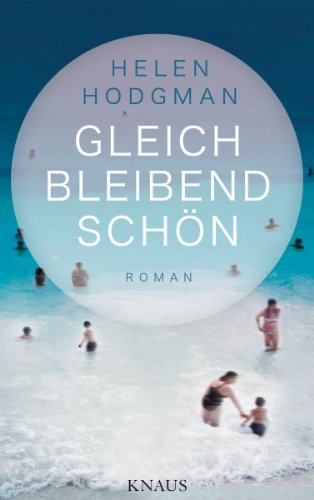
- Helen Hodgman, Blue skies: apparently this novel was translated into German in 2012. I’ve read and enjoyed Tasmanian-born Hodgman, but not this one. (Lisa’s review)
- Gwen Kelly, Middle-aged maidens: a new author for me but worth checking out. This, her third novel, was, said the Sydney Morning Herald, “a perceptive portrait of three headmistresses and the staff of an independent girls’ school” and “was considered somewhat controversial in Armidale” where Kelly was living. Her Wikipedia page shares some of the reactions to it, including that it offered a “fierce appraisal of small-town shortcomings … [an] acerbic depiction of a private school for girls in Armidale.” Another was that “the headmistresses’ characters are sketched with sharp and brilliant lines … Gwen Kelly draws from us that complexity of response which is normal in life, rare in literature”, while a third wrote “spiteful, malicious, cunning, intensely readable … Delicious, Ms Kelly … you know your Australia and you’ve a lovely way with words”. Intriguing, eh?
- Betty Roland, Beyond Capricorn: I have Betty Roland’s memoir, Caviar for breakfast on my TBR, but still haven’t got to it. For those who don’t know her, she had a relationship with Marxist scholar and activist Guido Baracchi, a founder of the Australian Communist Party. They went to the USSR, and while there, according to Wikipedia, she worked on the Moscow Daily News, shared a room with Katharine Susannah Prichard, and smuggled literature into Nazi Germany. Caviar For Breakfast (1979), the first volume of her autobiography, covers this period.
- Christina Stead, Miss Herbert (The suburban wife): Stead needs no introduction (Bill’s review).
Short stories
- Carmel Bird, Dimitra: Bird’s first published book, by Orbit (from her website), but it seems to have almost completely disappeared from view (at least in terms of internet searches)
- Glenda Adams, Lies and stories: a story by Adams was in the first book my reading group did – an anthology. It wasn’t this story, but so much did we enjoy the one we read, that we went on to read a novel.
- Shirley Hazzard, “A long story short”: published in The New Yorker 26 July 1976 (excerpt from The transit of Venus)
- Elizabeth Jolley, Five acre virgin and other stories: for many years this collection was my go-to recommendation for people wanting to try Jolley. It captures so much of her preoccupations, style, and thoughts about writing (including reusing your own material).
Poetry
- Stefanie Bennett, The medium and Tongues and pinnacles: prolific and still around but does not have her own page in Wikipedia.
- Joanne Burns, Adrenaline flicknife: Burns won the ACT Poetry Prize Judith Wright award, and was shortlisted for and/or won awards in the NSW’s Kenneth Slessor Prize, but not for this collection.
- Anne Elder, Crazy woman and other poems: Anne Elder’s name is commemorated in the Anne Elder Award for Poetry.
- Judith Wright, Fourth Quarter: Like Stead, Judith Wright needs no introduction – to Australian readers at least.
Drama
This is not my area of interest and not only are plays best seen, but I think they have an even shorter shelf life. However, a few playwrights were published in 1976, including Dorothy Hewett, who also wrote poetry and novels.
Children’s literature
I won’t list the books here, but most of the authors are well-known to older Australian readers: Hesba Brinsmead, Elyne Mitchell (of The Silver Brumby fame), Ruth Park, Anne Parry (the least known of this group), Joan Phipson, and Eleanor Spence.
Do you have any 50-year-old books in your list of favourites? Several of these authors are important to (and not forgotten by) me, but the book from this year that is the important one is Jolley’s.
 Whispering Gums
I’m on my phone, which restricts me a bit, but I have 5 women who first published in 1976, including Ann Brooksbank and Carmel Bird. I’ll add a bit more in the morning
Bill, where would I have heard of Ann Brooksbank ? Did she have anything to do with film ?
(Sorry for the ridiculous first question, mate …)
Married to a writer, satirist. No, name escaping me. Something Ellis? Had to look it up, Bob
Yep, that’s the link: they were the Writers heading the Writing Workshop at the Film & Television School in Sydney when I was working in the Production Workshop, Fulltime Program.
Well done you !! 🙂
I was in my 2nd or 3rd first year at uni when Review and then Nation Review came out, and was an avid reader. They had a wonderful stable of writers – Ellis, Mungo MacCullum, John Hepworth …
My dear, we are such ancients !
But we have such memories. 🙂
There has to be something going for us!
I remember National Review, and Ellis and MacCallum. Loved his name.
How could you forget Bob Ellis!
I’ve found Carmel Bird – in her Wikipedia article. I checked that but when I saw her first novel as being in the 1980s which accorded with my memory I didn’t scroll further down. She had one book Dimitra in the 70s and it was 1976. It looks like it might be a short story collection but the NLA doesn’t even seem to list it. She mentions it on her website I have discovered.
For AWW Gen 4 I only listed women who first published in the 1960s and 70s. For 1976 I have:
Anne Brooksbank (1943- ), Mad Dog Morgan; Helen Hodgman (1946- ), Blue Skies; Anne Parry (1931- ), The Land Behind the World (YA); Wendy Scarfe (1933- ), The Lotus Throne; Glen Tomasetti (1929-2003), Thoroughly Decent People; Christine Townend (1944- ), Travels with Myself; Carmel Bird (1940- ), Dimitra (Short Stories)
None of them being books I have read (or even heard of). Do this again next year and we’ll have Monkey Grip.
Thanks Bill… Ah yes, Mad Dog Morgan … I did see that and decided not to list it because I think it was co-written with Ellis but mostly because I believe it was written after/based on the film so not exactly what I was looking for. I had Anne Parry in my list and I did add her to the Wikipedia page but I decided not to list the children’s authors, just because they are not my main focus, though I do review Aussie ones occasionally (including recently!) I’ve read some Wendy Scarfe but hadn’t known about that one.
Anyhow, armed with all this I will further improve the Wikipedia page!
Oops, I was replying on my phone so wasn’t looking at my post. I did list the children’s authors, including Anne Parry, but not the dramatists besides Dorothy Hewett.
I have added Scarfe, Tomasetti and Townend to the Wikipedia page. I see Tomasetti was McPhee Gribble’s first book.
Lovely idea of posts!
Thanks W&P!
Strong memories here of my beloved second-eldest sister, who was a friend of several writers – Dorothy Hewett and Elizabeth Jolley from this post.
So thank-you, ST. 🙂
Glad this post meant something to you MR. Your sister clearly was someone special.
Yes I had Anne Brooksbank Bill, but she was one of the dramatists and I didn’t name them all as I noted in the post. But I thought I expressly looked for Carmel Bird and didn’t find a 1976 book. I will add it if we find one.
Hi Sue, my mind kept going to the 80’s and then I checked the book case. I found Colleen McCullough’s Tim, and Shirley Hazard’s The Bay of Noon.
Thanks Meg … but are they later editions? I think the Hazzard is 1970? And Wikipedia has Tim as 1974. I’d be interested to know about Tim. I’m pretty sure the 1970 is right for The bay of noon.
Hi Sue, you are correct.
Thanks Meg … it’s tricky with editions!!
ST, I suspect your question to Bill was associated with things olfactory. Certainly that is my never-to-be-forgotten aspect.
Which question MR … I’ve got lost in the myriad of comments here.
Oh, my goodness, you did this post on hard mode. I would have picked any book 50 years or older, perhaps sticking to the 70s in general, but you really went for the specific year! Also, I didn’t realize you made edits on Wikipedia. Nice job!
Thanks Melanie. And haha, I did say 50, not around 50 after all! In the past I have created Wikipedia pages, but now I mainly do edits, and sporadically at that. But when something like this post comes along it’s a good opportunity to give Wikipedia a little boost.
I enjoyed this post. There are several authors here I have heard of which means I’ve now lived in Australia long enough to recognise the names. 😄🌻
Excellent Pam … you are a true Aussie then.
The only Australian title from 1976 that I’ve read & reviewed is the children’s book by Eleanor Spence (which kind of makes sense as I was only eight yrs old at the time)
https://bronasbooks.com/2013/11/26/the-october-child-by-eleanor-spence/
For the record there was a Colin Thiele book published in 1976 – Fight Against Albatross Two (which served to remind me that eco-fiction has been something I have sought out from a young age).
Thanks Brona … yes that’s the Eleanor Spence the Wikipedia article has, but interestingly it doesn’t have Colin Thiele. I was focusing on women so I didn’t research him, but Wikipedia should have him! I’ll check that and add it to the page.
I admire your Wikipedia work Sue. One day I will ask you more about it.
Happy to talk to you about it some time. Simple editing is pretty straightforward though they keep changing things !!!
Interestingly I did find a book by Thiele published in 1976, “The Hammerhead Light”, but the one you named was I think first published in 1974 at “Albatross Two”!
I’m not sure I sought out eco-fiction in particularly, but I realise that Australian books with a strong sense of place do feature highly in the books I love.
It’s tricky working out the pub dates for some of these books and this appears to have two different titles….
So I’ve just checked – Fight Against Albatross two is about 14 yr old Link Banks working on an oil rig while Albatross Two is about (I assume) his sister, Tina rescuing penguins after a spill (which also sounds like the story in Pinquo except it is from the penguin’s POV from memory). Hope this helps.
Thanks Brona, so both albatross books were published in 1974. I did find a Fight against Albatross two in Google books.