A week or so ago, I saw a post by Cathy (746 Books) that she was taking part in a Doorstoppers in December reading event. My first thought was that December is the last month I would commit to reading doorstoppers. In fact, my reading group agrees that doorstopper month is January, our Southern Hemisphere summer holiday month. That’s the only month we willingly schedule a long book. My second thought was that I call these books “big baggy monsters”. But, that’s not complimentary I know – and I do like many big books. Also, it’s not alliterative, which is almost de rigueur for these blog reading challenges.
Anyhow, I will not be taking active part, but it seemed like a good opportunity for a Monday Musings. I’ll start with definitions because, of course, definition is an essential component of any challenge. The challenge has been initiated by Laura Tisdall, so she has defined the term for the participants. (Although, readers are an anarchic lot and can also make up their own rules! We wouldn’t have it any other way, would we?) Here is what she says:
Genre conventions vary so much. For litfic, for example, which tends to run shorter, I can see anything over 350 pages qualifying as a doorstopper, whereas in epic fantasy, 400 pages would probably be bog standard. Let’s say it has to at least hit the 350-page mark – and we encourage taking on those real 500-page or 600-page + behemoths
I love her recognition that what is a doorstopper isn’t absolute, that it does depend on the conventions or expectations of different forms or genres. I will focus on the literary fiction end of the spectrum but I think 350 pages is a bit short, particularly if I want to narrow the field a bit, so I’m going to set my target for this post at 450 pages. I am also going to limit my selected list to fiction published this century (albeit the challenge, itself, is not limited to fiction.)
However, I will commence with a little nod to doorstoppers our past. The nineteenth century was the century of big baggy monsters, even in Australia. And “baggy” is the right word for some, due partly to the fact that many were initially published in newspapers as serials, so they tended to, let me say, ramble a bit to keep people interested over the long haul. Dickens is the obvious example of a writer of big digressive books.
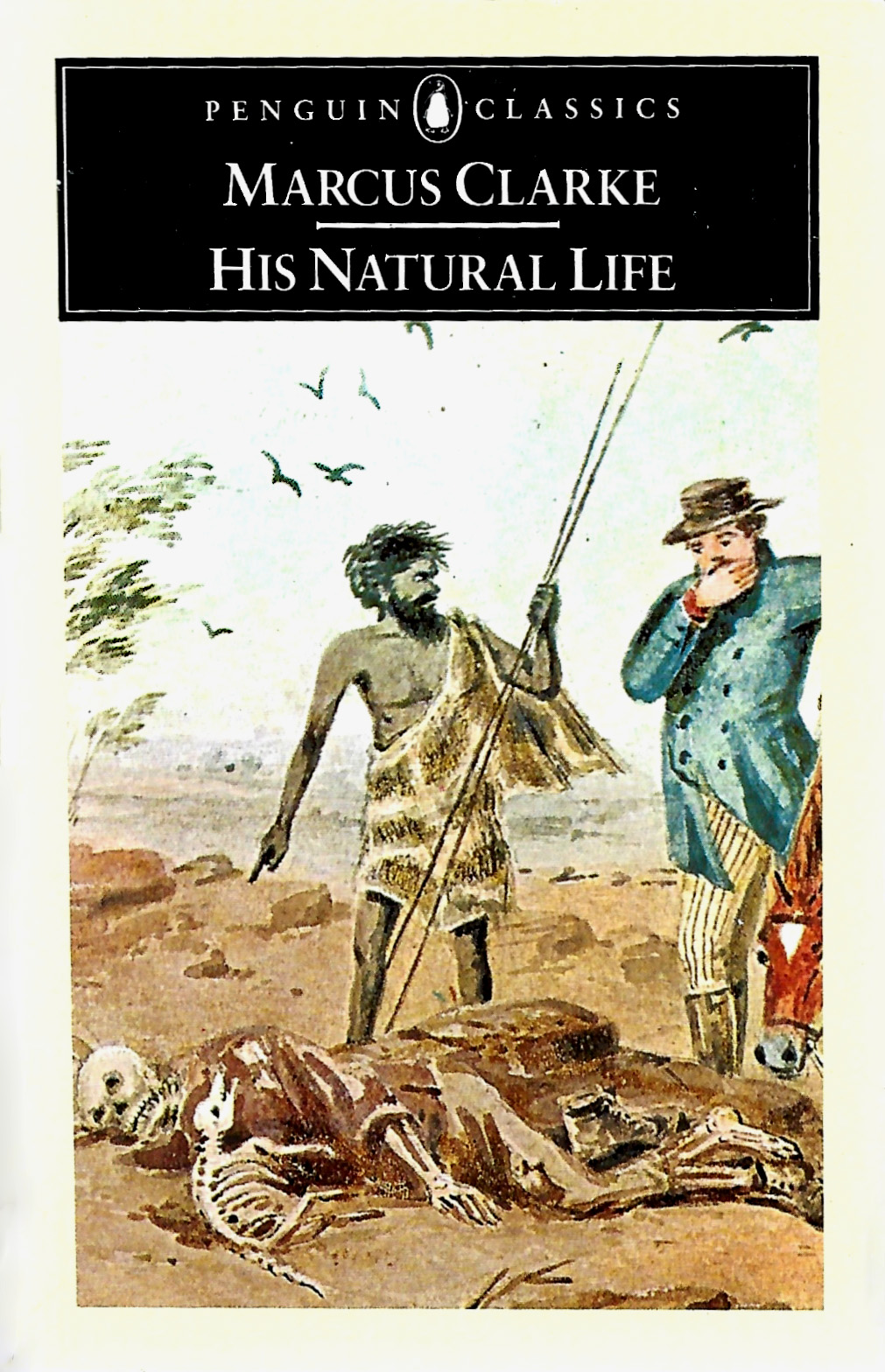
In 19th century Australia, publishing was just getting going so the pickings are fewer, but there’s Marcus Clarke’s 1874 His natural life (later For the term of his natural life). Pagination varies widely with edition, but let’s average it to 500pp. Catherine Martin’s 1890 An Australian girl is around 470pp. Rolf Boldrewood’s Robbery under arms runs between 400 and 450pp in most editions, while Caroline Leakey’s 1859 The broad arrow is shorter, with editions averaging around 400pp.
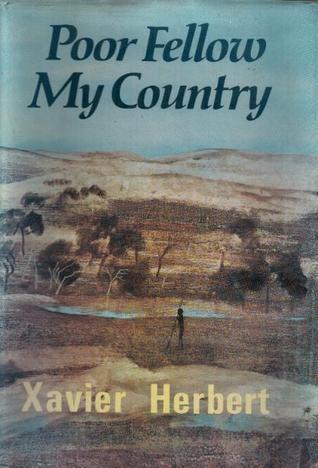
By the 20th century, Australian publishing was growing. Like Leakey’s novel, Joseph Furphy/Tom Collins’ 1903 Such is life is shorter, averaging 400pp (Bill’s final post). Henry Handel Richardson’s 1930 The fortunes of Richard Mahony, depending on the edition, comes in around the 950pp mark. Of course, it was initially published as three separate, and therefore relatively short, volumes but the doorstopper edition is the one I first knew in my family home. Throughout the century many doorstoppers hit the bookstands, including books by Christina Stead in the 1930s and 40s, Xavier Herbert from the 1930s to the 1970s (when his doorstopper extraordinaire, Poor fellow my country was published), Patrick White from the 1950s to late in his career, and on to writers like Pater Carey whose second novel, 1985’s Illywhacker, was 600 pages. He went on to publish more big novels through the late 20th and into the 21st century.
Selected 21st Century Doorstoppers
The list below draws from novels I’ve read from this century. In cases where I’ve read more than one doorstopper from that author, I’ve just chosen one.
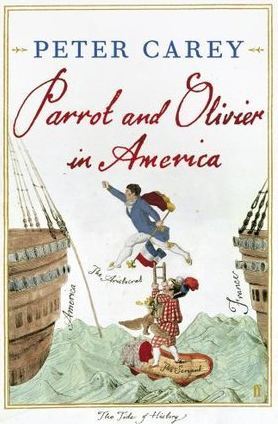
- Peter Carey, Parrot and Olivier in America (2009, 464pp, my review)
- Trent Dalton, Boy swallows universe (2018, 474pp, my review)
- Michelle de Kretser, Questions of travel (2012, 517pp, my review)
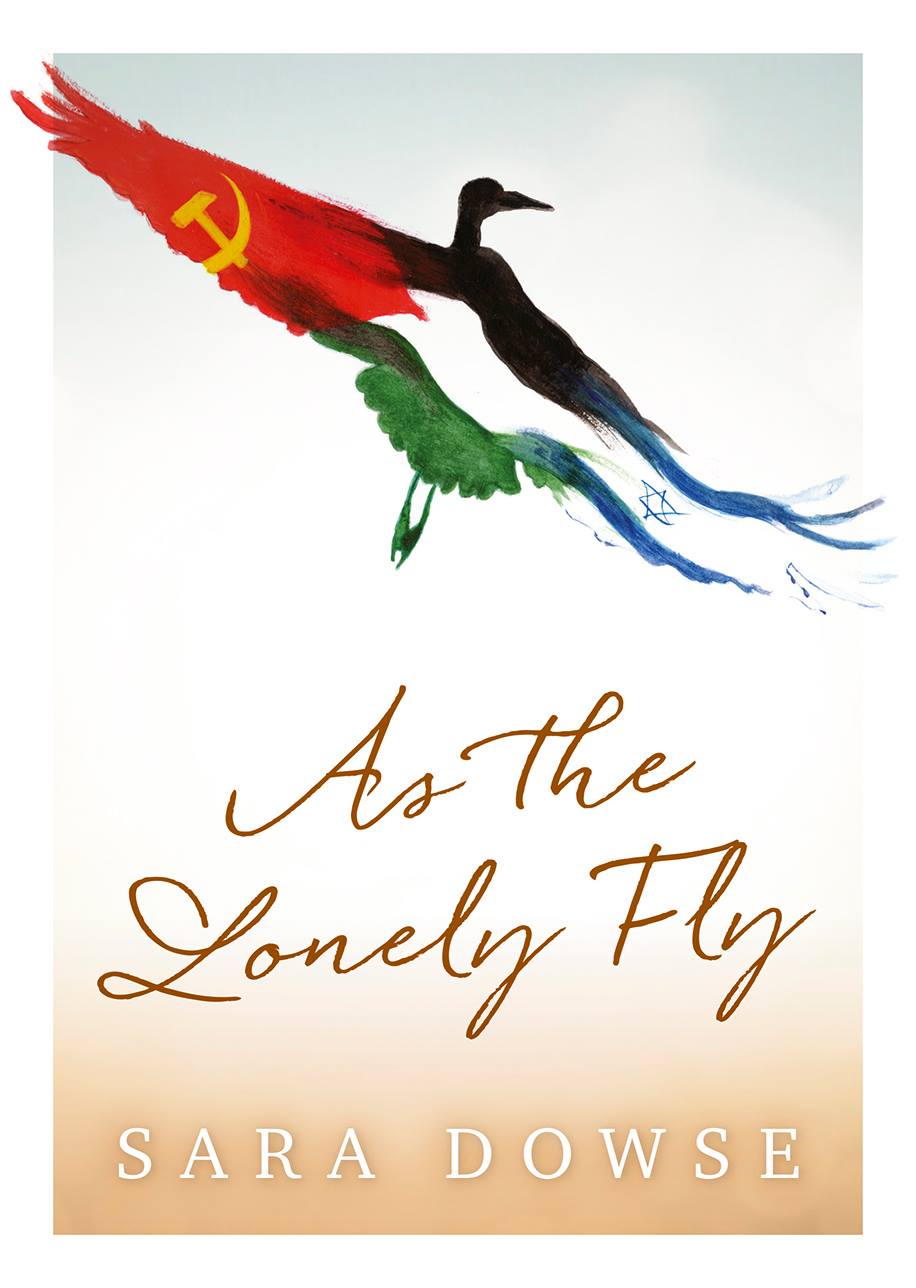
- Sara Dowse, As the lonely fly (2017, 480pp, my review)
- Richard Flanagan, The narrow road to the deep north (2013, 466pp, my review)
- Elliot Perlman, The street sweeper (2011, 626pp, my review)
- Wendy Scarfe, Hunger town (2014, 456pp, my review)
- Steve Toltz, A fraction of a whole (2008, 561pp, my review)
- Christos Tsiolkas, The slap (2008, 485pp, my review)
- Tim Winton, Dirt music (2001, 465pp, read before blogging)
- Alexis Wright, Carpentaria (2006, 526pp, my review)
There are many more but this is a start. They include historical and contemporary fiction. Many offer grand sweeps, while some, like Scarfe’s Hunger town, are tightly focused. The grand sweep – mostly across and/or place – is of course not unusual in doorstoppers. A few are comic or satiric in tone, like Carey’s Parrot and Olivier in America, while others are serious, and sometimes quite dark. The authors include First Nations Alexis Wright and some of migrant background. And, male writers outweigh the females. Perhaps it’s in proportion to the male-female publication ratio? I don’t have the statistics to prove or disprove this. Most of these authors have written many books, not all of which are big, meaning the form has followed the function!
Are you planning to take part in Doorstoppers in December? And, if you are, what are you planning to read? Regardless, how do doorstoppers fit into your reading practice?
 Whispering Gums
I read A Fraction of the Whole pre-blog and really loved it.
Thanks Cathy. It’s an out there book isn’t it? I read his next one, which had a similar vibe as I recollect. I’d love to hear him in a conversation.
Pingback: #DoorstoppersInDecember: Master Post | Laura Tisdall
You always – somehow – manage to squeeze in just one more topic, ST ! 🙂
Haha MR, they just keep presenting themselves to me.
Thanks, WG, for mentioning As the Lonely Fly. Alas, given what has been revealed over the past two years, if I were writing the book now I would necessarily be far more emphatic in my concern over setting up a Jewish-privileged state in Palestine. We can’t say we hadn’t been warned, by some of the finest, most humane Jewish minds of the last century. Hannah Arendt, Sigmund Freud, Judah Magnes, Martin Buber, I.F. Stone, Albert Einstein – all were opposed to the aims of Political Zionism, which has evolved, as they predicted, into the most cruelest, inhumane forms of ethnonationalism.
Thanks Sara … I have thought about you and this book a lot over the last couple of years. It’s just unbelievable to me but as you say not to some fine thinkers!
Above typo – should be ‘the most cruel, inhumane’ – a good indication of my angst over this issue. But I’m glad I did write the book, even though it was so hard to find a publisher for it. Israel’s hasbara is ubiquitous.
Avoiding Doorstoppers this month, and reading as much of Alice-Miranda and other books I’ve been waiting to get to…with no review books at the moment, I’m taking the chance to do this.
I didn’t think some of the books you cited were ‘doorstoppers’ when I read them, The Slap for instance. On the other hand Alexis Wright makes the reader work, though I have her first novel now, Plains of Promise, and that’s an easier looking 385pp. The biggest (Australian) novel I have in my reading future is Frank Dalby Davidson’s The White Thorntree – two volumes each 570pp.
No, I didn’t think they were either Bill – and I made the criterion tougher than the challenge has. I think the modern trade paperback editions do make books look longer than they are so some paginations vary widely.
Thanks for reminding me about The thorn tree (BTW, and FYI, he is Davison without the D)
I think you might have told me that before (and the books were right in front of me as I wrote). Hopefully this time it sinks in.
Haha Bill, I suspect I could have. My librarian brain tends to be very aware of name variations though it’s fading in acuity for new names now I think!!
Oh boy, I would never call anything around 350 pages a “doorstopper.” Charles Dickens is rolling in his grave. Also, I’m not sure where this idea that “litfic” is typically 250 pages comes from. You know me, though. “Literary” is not a genre, and I’ll die on that hill. Basically, “litfic” means any book of fiction that is well written. I just saw this definition on Reddit:
“Genre fiction: hero gets the girl (20 years younger than him).
Literary fiction: professor gets the girl (also 20 years younger than him).”
Hi Sue, I am not planning to take part in Doorstoppers in December. Last December I did read a doorstopper – The Coventry of Water by Abrahm Verghese – a great read. Last month I also read a doorstopper Katabasis by RF Kuang. Bill, mentioned my first thoughts, the White Thorn Tree. Then I remembered Patrick White wrote many doorstoppers. And just to name a few; The Tree of Man, The Vivisector and The Eye of the Storm.
Thanks Meg … yes Patrick White wrote quite a few.
I’ve read a couple on your list but the one that come to mind (because it’s taking up room on my shelf!) is Come in Spinner at approx 720 pages.
Oh that’s a good one too Kate. I didn’t check the length of her novels… I just checked a few to get some representative examples but it would have been good to include her so I’m glad you did!
It has stayed on my shelf because I received it as a book prize at high school! (I think it would have been around the time they made a TV series of the story?? Do you remember in the eighties how there were quite a few really good mini-series made in Australia?).
I sure do … but I think I was living in the USA when this one was released. Did they also do Ride on stranger?
Door stoppers for me are over 600. “How do doorstoppers fit into your reading practice?” Well, is the one word answer.
I have had a look, 1 in 10 books I read is over 600 pages. On the TBR it is the same, 1 in 10. Big books done worry me at all. I do have Poor Fellow My Country. Just on that book why “fellow”? I have always heard it “fella”.
Yes, John, I really would agree with you that door stoppers are seriously big books, not just 400 or 500 pages. Thanks for weighing in. I am more put off by them now when I can sense the end of the road! There’s so much I want to read that a door stopper really needs to be head and shoulders above the rest to make it worth giving up three others great books to read it.
As for “fellow”, don’t ask me!
If we’re going just on page count then I wouldn’t consider 350 to be a doorstopper either; it just seems the average length of a book to me. Your rule of thumb of 450 sounds more like it.
However, the book length could just be a matter of the text size/layout rather than the number of words. I have books with small densely packed text which would take me as much or even longer to read than some of the “official” doorstoppers
Exactly Karen, which made it hard for me to identify some of the older books because their pagination counts raised wildly depending on whether they were those tightly printed Penguin Classics or a more spacious lay printed hardback. And then there’s modern books printed in trade paperback format which tend to use larger print and more white space. Is 450 pages in that book really 450 pages in a penguin classic?
No. Fortunately, this is just fun and we can make our own rules.
I am not quite prepared to endorse Callimachus’s dictum “big book, big evil”. There are quite a few long books on my shelves. But the author who wishes to write at Tolstoyan length ought to justify the length with Tolstoyan ability. In my experience, they usually don’t.
Our book club read The Street Sweeper, and I didn’t remember it as running to more than 600 pages, though it appears from Barnes and Noble that the American edition did. I didn’t much like it, though I don’t think the length weighed heavily with me.
I guess whatever the length we want top ability but I guess if you are investing significant time you need it to be worthwhile.
Re The street sweeper, it was probably one of those books whose size was inflated by the trade paperback format. I can understand your not liking it much. It was big and baggy as I recollect. Perlman does wear his heart on his sleeve, and I like his heart so forgave the bagginess and literary looseness!
I forgot about A Fraction of a Whole! What an absorbing read it was too – I took it on a mini-break – the kind where we lay by a pool for several days and I all-but finished it. Trouble is I now think it was set in Palm Cove 🙂
What makes you think that? And do you mean in the Cairns area? It’s so long since I’ve read it I have little memory of the details.
I can’t remember details about the setting either, but I was holidaying in Palm Cove when I read it, so my reading setting has embedded itself into the book!!
Haha Brona, fair enough.
Hi Sue, after saying I would not participate in December doorstopper, I have accidently. I was in the library on Thursday, and saw on a week’s loan, Legacy by Chris Hammer that had been recommended to me. I borrowed it and find it has 478 pages! Being a crime novel, it is a quick read. You only have to worry about what happens next; and except for one section it is a fast-moving read.
Haha, love it Meg, never say never, eh!
This is the first year Doorstoppers really registered for me, and I didn’t make my list until midway through November, in the thick of MARMness, so I don’t think I’ll actually read anything for it this year, but I’ll keep it in mind for next. One year I read Bleak House as my only book through December, which was quite a different kind of habit for me, and I was surprised that I actually really enjoyed it (usually I would prefer to spread out a Dickens novel akin to its serialisation originally and I hardly ever am reading only one book at a time, let alone for a whole month); I’ve often thought I should try it again, but instead, I suspect I would still have other books alongside (I think I am an even moodier reader now than ever).
Me too, Marcie, re Doorstoppers. Is it a new challenge (if that’s what we call these reading months?) or has it been around for a while? I had a feeling it was new when I read Laura’s intro but I didn’t actually check any further.
I live Bleak House. It tends to be my go to example of Dickens. If you read another Dickens which would it be? For me it would be Our mutual friend or Pickwick Papers. (I’ve only read about 5 of his).
I’m not sure how long it’s been going on, but I know I’ve seen Bookish Beck mention (she of the Angus synchronicity that transformed all Anguses into murderers for me) it in previous conversations before this year, often enough that the phrase registered for me, but I didn’t connect it with Laura’s challenge and just assumed it was one of Bookish Beck’s reading habits. And I see I missed this comment, and you clarified your Dickens goals elsewhere. TPP is definitely one that I want to read, and I thiiiiink I have a copy of Our Mutual Friend that awaits as well (I’ll check).
You are more likely right about Doorstoppers December than I am then! SNAP re TPP.
Thanks for this! I’m glad you find the flexible word length helpful! With 350 pages, I guess I was thinking more of experimental litfic, which often runs very short – I agree that standard litfic would need to be at least 400+ pages to count as a doorstopper.
Thanks Laura. I think your flexible word limit is sensible when catering for the range you are.