With the idea and practice of diversity under attack in more than one place around this world of ours, it’s encouraging to see publishers continuing to support the need for more diversity in their output.
I’ve written several Monday Musings about diversity in publishing, including these, listed from the most recent to the earliest:
- Bundyi (2024): on a new First Nations imprint, being curated by Dr Anita Heiss, and under the auspices of Simon & Schuster
- Canberra Writers Festival 2023: 2, Celebrating the classics (2023): on a panel discussion about UQP’s First Nations Classics initiative
- First Nations Classics (2022): introducing UQP’s First Nations Classics initiative.
- Magabala Books (2022): spotlight on this First Nations publisher, which was established in 1984.
- Diversity and memoir (2021): on the issue that people from diverse backgrounds are expected to write memoirs about their experience rather than free to write on their choice of subject.
- Multicultural NSW Award (2019): on this award that celebrates the publishing of books dealing with or furthering our understanding of migrant experience, cultural diversity or multiculturalism in Australia
- Who is publishing the interesting books (2014): looks at what “interesting”means from a number of angles including diverse writers
Of course I’ve written posts on diversity from other angles – such as on festivals, or listing books by diverse writers – and I have reviewed many books by diverse writers.
I was inspired to write this post by another publishing initiative in this space, Allen & Unwin’s Joan Press. It was created, in fact, in 2020, but I only cam across it recently. Curated by Nakkiah Lui, a Gamilaroi and Torres Strait Islander woman, and a writer, actor and director, it describes itself as “Radical, inclusive, rebellious”. Its simple home page says:
Joan publishes books across all genres and forms. Each Joan title creates space for voices that get pushed to the fringes; voices that challenge and interrogate the world around them. Named after Lui’s grandmother, Joan Press recognises that storytelling is both the legacy and the future of any community, and aims to be a home for stories and storytellers who are redefining the mainstream in a way that is radical, inclusive and bold.
As far as I can tell, Joan has so far published three books:
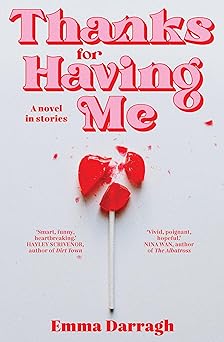
- Emma Darragh, Thanks for having me (2024), Joan Press’s first fiction title, described as comprising “interwoven stories about three generations of women in one family as they navigate girlhood, motherhood and selfhood, perfect for fans of Jennifer Egan, Meg Mason and Paige Clark”.
- Sarah Firth, Eventually everything connects (2023), a work of graphic non-fiction, described as “a delicious mix of daily life, science, philosophy, pop culture, daydreams and irreverent humour”
- Madison Godfrey, Dress rehearsals (2023), described as “A memoir made of poetry, Dress Rehearsals documents a decade of performing womanhood in a non-binary body”.
Unlike some of the publisher sites I’ve visited recently, Joan does seem to be currently still accepting submissions.
And a little extra …
Related to the issue of diversity in publishing is that of diversity in the publishing workforce. In March and April of 2022, a survey was conducted of diversity and inclusion in the Australian publishing industry. You can read about it here 9where there are links to further details including the full report, but the summary drawn was that
The publishing industry in Australia is highly educated, driven by women and has strong LGBTQ+ representation, yet struggles to reflect Australia’s cultural and social diversity, according to the first survey examining diversity in Australian publishing.
The summary said that the survey yielded “important insights that will help to push for change in the sector”. Some of you may remember this survey, because it got quite a bit of coverage at the time. But what has happened since? That has been hard to find, as my search on the subject produced a page or more of hits on the 2022 survey, but a page or so in, I found a Books + Publishing article from February 2024, titled “APA [Australian Publishers Assoication] releases diversity and inclusion plan” and stating that APA had released ‘a diversity and inclusion plan “to guide and support industry progress over the next two years”‘. The article lists eight recommendations for publishers to work on, and provides a link to the plan.
I also find an announcement from August 2024 that Hachette Australia and Media Diversity Australia (MDA) “are excited to announce a significant partnership, with Hachette becoming the inaugural book publisher member of MDA. This collaboration also marks the launch of the Hachette x MDA Publishing Traineeship, aimed at championing diversity and inclusivity within the publishing industry”. Besides this traineeship, membership of MDA apparently gives Hachette “access to a suite of valuable services, including the MDA TalentHub to reach a more diverse talent pool; participation in advocacy initiatives and industry roundtables; and customised Diversity, Equity, and Inclusion training and guidance”.
Too early to see how all this is playing out, but it’s surely positive.
Any thoughts? Do you seek writing my diverse authors, and if so, how easy is it to find?
 Whispering Gums
Several years ago there was a blogger who identified as gay and Latinx. He only blogged about diverse books. However, he wrote something that completely changed my perspective. Typically, when bloggers say “diverse books,” what they mean is they read a book by a non-white person who is maybe LGBTQIA+. What we should mean when we say diverse books is we’ve read a diversity of books by Mexican authors or trans authors or Nigerian authors, etc. According to him, it’s incorrect to read one book by a group of people and say we’re reading diversely. I absolutely understand and respect his point. Even I tried reading a book from each African country and called it diversity, but his point is if you’ve read one, you’ve read one, not diversely.
Yes thanks very much for this Melanie … I nearly defined what I meant by diversity but deleted it because it – particularly labelling – felt so fraught. I understand what he’s saying but on the other hand I think you can say you read diversely if in a year, say, you read one trans author book, one First Nations book, one African book, one book by a neurodivergent author, one translated book, one book from a migrant community in your country, and so on. I think that’s just as diverse as reading several books in one of those groups. But to read only one book from a diverse group in a year is not reading diversely. To my mind!
For me, my most concentrated diverse reading is First Nations Australian. I would meet that blogger’s definition there, but in addition I try to read a smattering of others when and where I can. I don’t trumpet it when I do but I will usually identify the author’s origins or group or the national literature during the post if it feels relevant and, often, the category or tag I apply will identify it.
I agree with you. I think his concern was some readers are one and done with a certain population and then virtue signal about it.
Which is patently tokenistic isn’t it.
I find it hard to get hold of certain kinds of diverse books, mainly those treating Indigenous communities. Which is why I was delighted to receive a review copy of (the new edition of?) Alexis Wright’s “Tracker” today!
Oh that’s great to hear Liz … I presume a new edition. I have still to read that. I know Wright doesn’t approve but I am confronted by long books. If a long book is great but so are three novellas I would rather go for the three novellas. My decades on this earth are running out!
Aha – I’ve had another look and it’s a first UK edition published with Arts Council etc. funding by an independent publisher. It’s up for the Women’s Nonfiction Prize which is how I got hold of it to review for Shiny New Books.
Liz, Tracker is enormous, brilliant, but enormous! Good luck with reading it. From memory the second half is about Indigenous politics, which will require a lot of context to follow.
I would love to find time to read it Bill, but enormous is such a challenge for my time and style of reading.
That’s great Liz .. thanks for checking that out.
I wonder what the difference is between diverse and eclectic. I’ve always thought of myself as quite an eclectic reader, everything from translated to travel to biographies to non fiction. Whatever I randomly come across really. Then there is random reading, haha. Interesting post and a bit to think about here. 🌻☕️☕️🌻 Share a coffee with me here.
Thanks Pam, I would see eclectic as more general. As you say, more about form and subject – like I read classics and literary fiction and historical fiction and literary biography and etc, whereas I think diversity is more about voices that aren’t the mainstream and often don’t get heard – that is, in our culture, that aren’t middle class standard issue white (for want of a better description.)
That description makes sense. After all work forces try to teach diversity training, not eclectic training.🌻😁🌻
Haha, you are right. Both are great words for readers … particularly if they both apply to the same reader! But in the end we can only read what we want to read can’t we.
Hi Sue, I do not intentionally seek out diverse books, though I do read them. I have no author in mind, it is the subject matter or person that interests me as to what I read.
Thanks Meg, that’s fair enough. After all, reading is our hobby not our job.
But I know you read widely and diversely anyhow, because you are open to different writers and ideas aren’t you?
The NYT did a count, 95 percent of books published between 1950-2018 were written by white people. Just How White Is the Book Industry?
New data shows the extent of the race problem in the publishing world. https://www.nytimes.com/interactive/2020/12/11/opinion/culture/diversity-publishing-industry.html
In Australia, slightly better:
Disturbing figures revealed about diversity in Australian literature
90% of books published in 2018 were by white people
https://www.smh.com.au/culture/books/fewer-than-1-in-10-aussie-books-published-by-people-of-colour-report-finds-20221013-p5bpj4.html
https://www.vu.edu.au/about-vu/news-events/news/research-confirms-lack-of-cultural-diversity-in-published-literature
Then there’s the lack of perceived relatability.
I’ve had readers come up and be so surprised they related to my memoir ‘even though they’re not Asian.’ (these are the self-selecting ones who choose to read supposedly ‘ethnic literature’).
I tell them, ‘yes, I’ve been reading and relating to books/memoirs by non-Asians my whole life.’
Then I see the *lightbulb moment* in their eyes. *SIGH* Thanks for writing about this.
Oh my, Qin Qin, this “I’ve had readers come up and be so surprised they related to my memoir ‘even though they’re not Asian’” is pretty shocking. Where does this idea come from that being a different culture, colour, ability, sexuality etc doesn’t change our fundamental humanity. We can relate to anyone who loves, laughs, cries, hates, grieves, plays and so on.
Thanks for commenting and sharing those reports.
Thank you WG, it is pretty shocking. Also though, it’s understandable given the small pool of non-white published authors.
The non-white authors who are published may end up being tokenised in the writing process as you noted in your previous blog post about diversity.
Have a good week ahead and thank you for your continued writing.
It is understandable but that doesn’t make it right does it.
Well, you’ve just made a sale – I put your book on my wishlist but it’ll be prioritised for purchase once I’ve cleared some backlog. I’m interested in different people’s lives and experiences to my own, there’s always something “relatable” but that’s not particularly what I’m looking for, more to learn. I’ve been pursuing themes in Australian writing around narratives of Indigenous lives and (first, second, other generation) lives from other cultures, so your book sounds perfect for me.
Hi Liz, I’ve subscribed to your blog! Thank you for putting my book on your TBR list (which I saw is very long and I’m astounded you’re getting through so fast). Glad to connect 😊
She is an amazingly fast reader Qin Qin.
Ah yes I need to transfer it from my Amazon list to my website one, where I will put it in bold to remind myself to get it soon!
Love hearing about people’s TBR systems!
I chase diversity in that I have just about given up on white male middle class writers. But I’m not interested in checking out authors’ sexuality. I was happy though that the one trans novel I came across was by a trans author.
It’s hard to keep track of everything isn’t it Bill and in a way it sometimes feels intrusive to inquire into author’s private lives.
Part of the problem is the lack of diversity in publishing houses themselves. This was a big issue in the UK when I lived there as most staff were predominantly white and middle-class and there was a bit of a push to employ more working class and ethnic minorities. This homogeneity can influence editorial decisions, potentially limiting the range of voices and stories that are published. It’s exactly the same in news rooms, which are predominantly white.
I like TravellinPenguin’s point that there’s a difference between diverse reading and eclectic reading. I see myself in the latter camp, but I do try to “decolonise my bookshelves” as it were by reading fiction produced by writers of African descent, Asian descent and Indigenous Peoples, an approach inspired by the book “This is the Canon: Decolonize Your Bookshelf in 50 Books” by Joan Anim-Addo, Deirdre Osborne & Kadija Sesay George
Thanks kimbofo. Yes, good point, I did address the issue of diversity in the workforce in the post but it would have been good to have made more clear that connection between that and what is being published. The world on publishing and newsrooms I feel is changing, but very slowly. It will necessarily change methinks as our population balance changes?
I loved Pam’s question. I guess I put myself in both camps. I am an eclectic reader (which doesn’t mean I read all forms and genres but I do read a variety of them) but I also choose my books with some eye to diversity. Initially my focus was women, and then it moved to include ethnicity/race (including First Nations). These are probably my main areas of diversity but I do also read LGBTQIA+ authors, and others as come my way I think more than my seeking them out.
Many years ago, I fell in love with Isabel Allende’s novel The House of the Spirits, and I noticed that my public library at the time had a copy of it in the original Spanish; I loved the book so much that I just wanted to see what it looked like in the language in which it was written, so I sought out the shelf to paw at it…and discovered the Spanish-language section at the end of the Fiction section I knew so well. And discovered that I hardly recognised ANY of the authors’ names (partly because I was unfamiliar, partly because not all were available in translation). Somehow it struck home in that moment, that I had not ever properly understood just HOW MANY good books there were to read. Which was even more notable because I had SO loved that one book, which drew the connection with the idea that there were not only more books from other countries/cultures that I might find i-n-t-e-r-e-s-t-i-n-g but books which I might really and wholly love. That’s when I began to broaden my reading selections and I’m so very glad I did, because I could have filled my reading time with all the authors I already “knew” and enjoyed, but prioritising variety has brought so many amazing stories into my stacks that younger-reading-me could never have imagined.
Oh I love this story Marcie. I don’t have any such aha moment. I think travel probably was the main thing that opened my eyes PLUS maybe falling in love with Camus in high school. I didn’t chase more French etc books right then … too much school reading to do, but I recognised there was more out there! I know what you mean though about recognising so few of the authors names when I’d see translations on literary fiction shelves.