It’s the first Saturday in February so it must be Six Degrees time, and this month, I’m not going to engage in any chatty intro but just get into it … as always, if you don’t know how the #SixDegrees meme works, please check Kate’s blog – booksaremyfavouriteandbest.
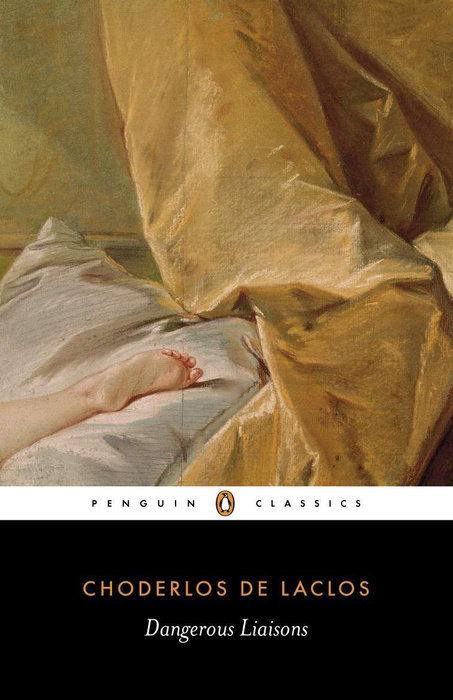
The first rule is that Kate sets our starting book. This month, it’s a book I probably should have read – being a classic – but haven’t. It’s Pierre Choderlos de Laclos, Dangerous Liaisons, an epistolary novel published in 1782.
Now, commenting on last month’s Six Degrees, one of my most loyal commenters here, MR, who often ponders on the – let’s say – quality of my links, suggested that I just list the books and let those of you who read the post work out the reasons. So, this is what I’m doing this post. I did think about giving the reasons in a follow-up post, but have decided that’s pushing the friendship a little too far so I am providing the answers at the end (after the image gallery). I’ve tried not to make the links too hard, and for some there are multiple ways the books could be linked.
So, here goes:
- Starting book: Pierre Choderlos de Laclos, Dangerous Liaisons
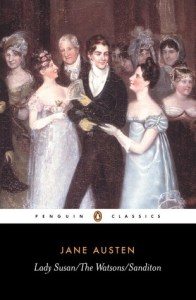
- Link 1: Jane Austen, Lady Susan
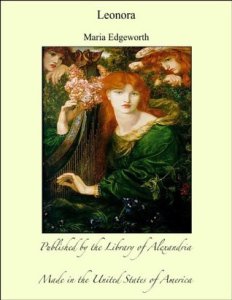
- Link 2: Maria Edgeworth, Leonora
- Link 3: Elizabeth von Arnim, Vera
- Link 4: Jane Caro, The mother
- Link 5: Bonnie Garmus, Lessons in chemistry
- Link 6: Peter Carey, The chemistry of tears
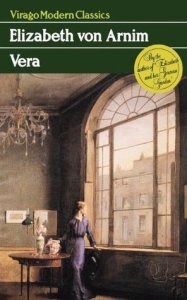
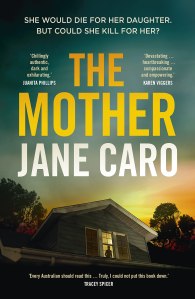
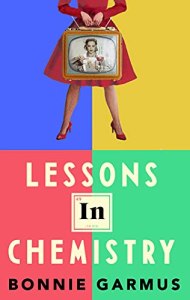
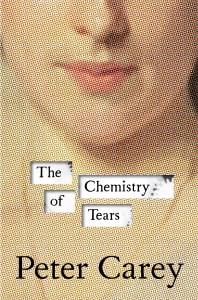
Now, for the link reasons. Dangerous liaisons is an epistolary novel, as is Jane Austen’s Lady Susan. (Both were also published in the 18th century.) Maria Edgeworth’s Leonora, is about a coquette visiting friends, as is Lady Susan, albeit in this case the coquette is not the titular character but Leonora’s friend. (Leonora is also an epistolary novel, and is written by an English-born woman.) Elizabeth von Arnim’s Vera has a woman’s first name as its title. (It was also written by a woman, who is English, though she wasn’t born in England.) Jane Caro’s The mother is about a coercive control by a husband, which is also the idea behind Vera, though coercive control wasn’t known as that then. (Jane Caro is also a woman, though that’s a very broad link!) Bonnie Garmus’ Lessons in chemistry is a debut novel by a 65-year-old-woman, and was The mother. (Like Caro’s novel, it also has a mother-daughter thread, though that’s not the main idea.) And for my last link, I’ve made it super-easy. Peter Carey’s The chemistry of tears has “chemistry” in the title, as does Garmus’ book.
How did you go? Did you find some links I didn’t?
And, have you read Dangerous liaisons and, regardless, what would you link to?
 Whispering Gums
“Dangerous Liaisons” is the story of two amoral lovers-turned-rivals who amuse themselves by ruining others and who ultimately destroy each other. Epistolary.
IMMORALITY LEADING TO DESTRUCTION
“Lady Susan” is about the horrible flirt Lady Susan Vernon, a widow in her thirties who has an affair with a married man.
EPISTOLARY ON MUCH THE SAME TOPIC
“Leonora” centers on the newly married Leonora and her decision to bring back to England a woman whose controversial behaviour with regard to her marriage had driven her to France, where she cultivated an aristocratic, “French” sensibility that exists apart from conventional ideas.
EPISTOLARY ON BAD MORALITY
“Vera” a frightening analysis of the naivety of a young woman, as she falls into the power of a pathologically narcissistic husband.
BAD MORALITY – BAD RELATIONSHIP
“The Mother” looks at the life of a family placed under great duress by a toxic relationship.
BAD RELATIONSHIP
“Lessons in Chemistry” is about a ’60s chemist who doesn’t get the respect she deserves. Her life takes an unexpected turn when she becomes the host of a famous cooking show. With her platform, she encourages viewers to push the boundaries the same way she did.
MIDDLE-AGED WOMAN FINDS MEANING IN OCCUPATION
“The Chemistry of Tears” features a middle-aged horologist working in the Swinburne Museum in London, who for the last 13 years has been in love with a married co-worker. When he dies suddenly she is distraught.
MIDDLE-AGED WOMAN FINDS MEANING IN OCCUPATION
Close to perfect M-R … my link to Lessons in chemistry from The mother was a bit obscure and my link to The chemistry of tears from Lessons in chemistry was way less obscure. I’m not sure how you linked The mother to Lessons?
Bum. Not one correct. 😦
I think you were close on the money … in most of them. Vera was a particular type of bad relationship and epistolary was part of my first two links. For the last one though you reached too far. I tried to make that one very easy.
I should not have done the Caro to Garmus one … that was a bit unfair!
I have not read Dangerous Liaisons, but must confess that I did see the movie with John Malkovich, Michelle Pfeiffer, etc. Anyway
Degree one will be Adolphe, by Benjamin Constant, a novel setting out the
disturbing consequences of an affair undertaken from vanity or boredom.
Degree two is The Last Attachment by Iris Origo, not a novel, but an account of Byron’s affair with Teresa Guiccioli–he upset her by giving her a copy of Adolphe to read.
Degree three is The Age of Innocence by Edith Wharton, wherein adultery is considered, but not (by the main characters) undertaken.
Degree four is Put Out More Flags by Evelyn Waugh, for the curiously disturbing affair of Basil Seal and Angela Lyne.
Degree five is The Locusts Have No King, by Dawn Powell, in which the judgment of adultery is more or less esthetic, according to how sympathetic the parties are.
And I will conclude with Amelia by Henry Fielding, because in it the other woman finishes the novel in good shape, overweight and tyrannizing over the man who keeps her.
Haha George, love your trajectory … I’ve only read the Wharton but I’ve heard of most of the others.
Hi Sue, I have not read Dangerous Liaisons, but I have seen the film. My links are: Possession by A S Byatt; Couples by John Updike; The End of the Affair by Graeme Green; Damage by Josphine Hart; The Awakening by Kate Choppin; and Notes on a Scandal by Zoe Heller.
Thanks Meg … I haven’t read it either … but Possession sounds like a good first link to me … and the rest follow nicely.
Hahaha. That’s a fun and novel way to do your #6Degrees ! Good on MR for suggesting it.
Thanks Kimbofo… it was fun doing it this way.
I figured out the first one, and the last one, but… never mind. Great chain; that’s what’s important.
That’s a good start Davida … the second last one was too hard. I’ll try better another time!
Hmm. If you don’t know the books, divining the links is a bit hard, so I didn’t do very well. I was almost alone in our book group in disiking Lessons in Chemistry, so I’d love o know what you thought. Great chain nevertheless!
Thank you for trying, Margaret! A couple of them were title based – like woman’s name, and the word “chemistry”. One was too hard I think. But the others would be guessable for anyone knowing the books. And of course not everyone does. I might try it again, but it’s tricky finding books most will know. Otherise it would all have to be just words in the title? That could be boring!
My reading group mostly liked Lessons in chemistry. I enjoyed it quite a lot, but had some reservations. It was among my group’s top picks at the end of 2023, but I didn’t vote for it which tells you something. (We are each allowed 3 votes). You can check my post if you are interested – as I’ve linked it on the title in my chain. I share a bit about what the group thought in that post.
Oooh, I’ll be back later to read that! Duties call at the moment…
Just if you are interested … life is busy I know.
That is a different and interesting way of doing this post. I might try it next month.
It was fun to try Margaret … but hard to give people a fighting chance.
You’ve reminded me that I have Lessons in Chemistry on one of my TBR shelves. About the issue of explaining links: I always appreciate a short bit of explanation (by which I mean about 1 sentence) of the linkage, especially if the link is contextual or thematic (rather than something obvious like a repeated word). Great job here!
Thanks Mary … it’s always a challenge about how much detail to provide isn’t it?
This is a fun way to do it for sure!
Thanks Emma… I like mixing it up a bit.
Nice one WG! I got the first two and the last two 🙂
Oh good for you Stefanie … you get a silver star (haha) … I’m glad it worked for some.
I love your idea of letting the readers guess the links but am glad you gave the answers too; I didn’t do very well at all–except for the immoral characters in Dangerous Liaisons and Lady Susan (I’d completely forgotten the latter was epistolary–nor knew that the former was :P) and of course the obvious ‘chemistry’ link in the last two. Vera is a von Arnim book I haven’t read yet but must look up.
Glad you liked the idea Mallika … you did well. I’m glad MR suggested the idea – take a bow MR! And I’m glad I decided to put the answers in the same post!
Vera is darker than all the other Von Arnims I’ve read but a great read.
Must look up a copy. I have a few of hers waiting to be read as well.
I think you’d like her Mallika but I’d suggest you start either one of the others, like Enchanted April.
I’ve read and loved The Enchanted April and the two garden books–German garden and the Solitary Summer but yet to try the others
Ah I probably knew that you know Mallika .. I nearly suggested the garden ones but they are not to everyone’s taste. I love them though and you are clearly impressed too!
One of my favourite things from the Garden books is the baby who was two foot square!
Oh, good memory Mallika… she is so good isn’t she?
Very; I’m looking forward to reading more–The Caravaners, Mrs Skeffington, Father and now also Vera
I’ve also read Mr Skeffington but am keen to read The caravaners next and I think one called Christopher and Columbus, or am I making that up?
There is Christopher and Columbus, indeed. I haven’t read that either.
Thanks Mallika for confirming that!
Interesting chain. I have read books by Jane Austen, Elizabeth von Arnim, and Peter Carey. And I have Lessons in Chemistry on my TBR pile, so I’m really looking forward.
Thanks for visiting my post:
https://momobookblog.blogspot.com/2025/02/six-degrees-of-separation-dangerous.html
That’s great Marianne … mostly people know very few of my books!
Same here. Looks like we have a similar taste.
I think we might!
Hah, that’s fun. Good on MR for making you stretch and making us all into game-players along the way.
She keeps me on my toes Marcie!