For several years now, Bill (The Australian Legend blog) has run a week dedicated to “generations” in Australian literature, focusing until this year on Australian Women Writers. This year, however, he has changed tack, and decided to look at Australia’s early male writers – who were, of course, in that colonial landscape, mostly white. He has also decided to do three generations at once, which means we are covering writers who were active from 1788 to the 1950s. This, says Bill, will be his last “Gen” – and fair enough, it’s been a big effort, one that many of us have enjoyed taking part in. Bill deserves a big thanks for bringing older Australian writers to the fore, and encouraging discussion about our literary history – the writers, the influences (including his “favourite”, The Bulletin) and the trends.
As before, Bill has created a page of Gen 1-3 writers to which he will add reviews posted for them or for writers he’s not yet listed. In this post I am going to list the writers I have read who suit this period, as my first contribution to Bill’s project.
Now, like Bill, my reading focus is women writers. Each year they represent 65-75% of my reading. I do like reading men too – and I would read more, if I could carve out more reading time – but my point here is to explain why my contribution is paltry.
Sometimes a bloke gits glimpses uv the truth
(CJ Dennis, “In Spadger’s Lane” in The moods of Ginger Mick)
The Gums’ Gen 1-3 List
In alphabetical order by author (compared with Bill’s chronological one by date of birth) … and with links on titles to my reviews of their books.
- Herz Bergner (1907-1970) Between sky and sea (1946)
- Martin Boyd (1893-1972), A difficult young man (1955)
- Frank Dalby Davison (1893-1970), Dusty (1946)
- CJ Dennis (1876-1938), The moods of Ginger Mick (1916)
- Fergus Hume (1859-1832), The mystery of the hansom cab (1886)
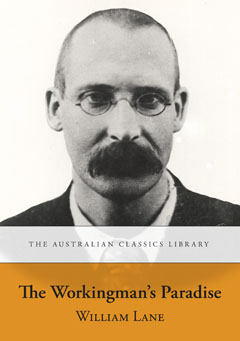
- William Lane (1861-1917), The workingman’s paradise (1892)
- John Lang (1816-1864), The forger’s wife (1853)
- D’Arcy Niland (1917-1967), “The parachutist” (1953) and collaborative memoir with Ruth Park, The drums go bang (1956)
- A.B. Paterson (1864-1941), The man from Snowy River, and other verses (1895)
- Price Warung (1855-1911, pseudo. for William Astley), Tales of the early days (1895)
- Patrick White (1912-1990), Happy Valley (1939)
Knowledgable eyes will notice that my list does not include some of the big names of Australia’s male writers of the 19th century – Rolf Boldrewood, Marcus Clarke, Joseph Furphy, Henry Kingsley and Henry Lawson. Or Watkin Tench’s first hand accounts of the early colony. I have read a couple of these before blogging, but overall they have not been high priorities for me.
But, just to prove my interest, I have also read a couple of biographies of Australian male writers:
- Philip Butterss, An unsentimental bloke: The life and works of CJ Dennis
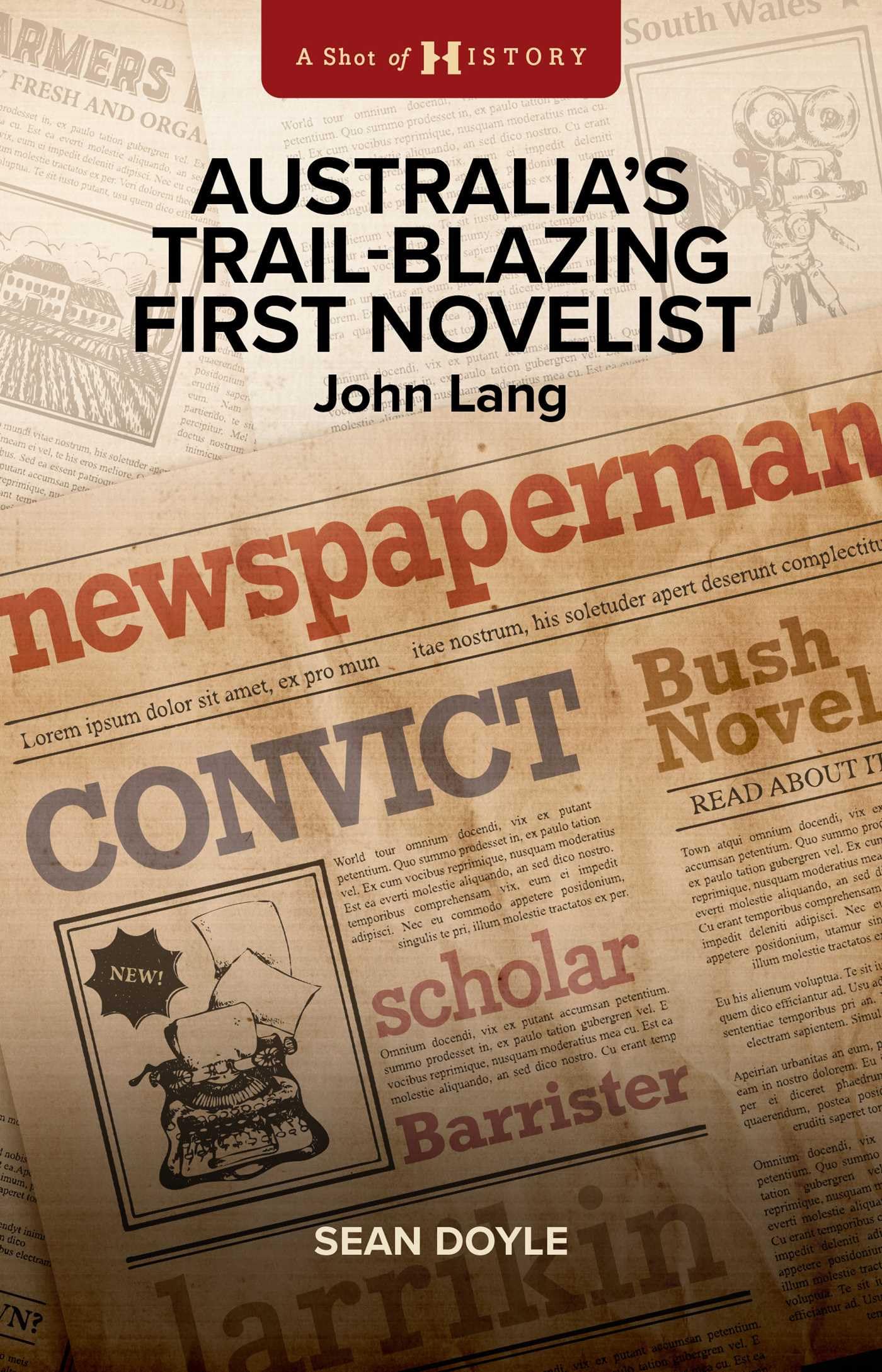
- Sean Doyle, Australia’s trail-blazing novelist: John Lang
- Rod Howard, A forger’s tale: The extraordinary story of Henry Savery, Australia’s first novelist
I have also read a couple of short journalistic pieces by Vance Palmer.
The books in my list span a century, from John Lang in the 1850s to Martin Boyd and D’Arcy Niland in the 1950s. John Lang’s A forger’s wife is a colonial novel with a 19th century melodrama feel, and is about, as I wrote in my post, issues like “the survival of the wiliest, and the challenge of identifying who you can trust”, things deemed critical to survival in the colonial mindset. By the ’90s, we were well into the time of social realism* and writers were looking outwards – to the sociopolitical conditions which oppressed so many. This is reflected in William Lane’s novel. It is also reflected in Price Warung’s stories, which, although “historical fiction” about the convict days, are written with a social realist’s eye on the inhumanity of the system. By the time we get to the mid-20th century, fiction was increasingly diversified. The world wars, increasing awareness of gender and continued concern about those issues the social realists cared about, not to mention modernism’s interest in the self, intellect, art, and their intersection with each other (to put it very loosely) can be found in the books I’ve read from that period.
When Bill started this project, he was inspired by the divisions suggested by Henry Green in his history of Australian literature. Green’s divisions were “conflict”, 1789-1850; “consolidation”, 1850-1890; “self-conscious nationalism” 1890-1923; and “world consciousness and disillusion”, 1923-1950. There is some sense to these divisions, and they provided a loose skeleton for the Gens! However, in her introduction to The Cambridge companion to Australian literature, Elizabeth Webby shares several studies or surveys of Australian literature, discussing their different approaches and goals, but she does say that several identify the 1890s as “being crucial to the development of a national literature”.
I could go on delving more deeply, but I won’t, as this post’s main goal was to tell Bill which books I can contribute to his male Gen 1 to 3 list, and I’ve done that.
Are you joining in or do you have any thoughts to add?
* There is some confusion regarding social versus socialist realism, but I am using social realism broadly to mean concern with sociopolitical issues – particularly regarding the working classes – with or without political “isms” behind it.
 Whispering Gums
Thanks for this – I won’t say fulsome, because I prefer its old meaning, so – excellent contribution to and advertisement for my week.
I’ll set up a Page based on the post you have linked to and anyone who brings a review to my notice will be added. I’m going to be reading older Australian men throughout the year.
You’ve reminded me I have Happy Valley in the shelf of books I’m planning to read ‘soon’, but I’m not sure I’ll fit it in.
Thanks Bill … I like that you plan to be reading older Australian men through this year. I’ll be interested to see what you read and what thoughts you have.
The pair of you are researching fools ! 🙂
Haha MR, probably … particularly the latter!
I trust you comprehend the use here of the noun …
I believe I do MR … at least I hope so!
Hi Sue, like you I seem to read more women authors compared to men. Though I do have more old novels written by men. Changing times! I have also read a few of your selected novels. I remember my mum reading F J Thwaites and E V Timms novels. However, my favourite Australian memoir by a man is Dust on My Shoes by Peter Pinney. It was published in 1952, but I only read it a couple of years ago. I will read Bill’s blogs.
Thanks Meg, I think I remember your mentioning that book. Must keep an eye out for it. The Aussie I saw most on my parents’ shelves was Ion Idriess, though I do remember EV Timms.
Not really a propos, but speaking of parents I have Gwen Meredith’s Blue Hills on my shelves. I really must find an excuse to read it one day.
Oh, I’ve never thought of reading it, Bill. Is there just one book?
Maybe not. I see now my book is called Beyond Blue Hills (1953) – sadly, a first reprint rather than a first edition. The inside dust jacket says “Gwen Meredith has transposed a further part of her famous radio serial Blue Hills into book form.”
Ah, “a further part”. I’m sure I’ve heard of it before … perhaps from you?
No, I don’t think so. The radio serial began in 1949, so she must have written a novel based on it quite early in the piece. And it ran for 27 years, there might be a whole row of novels (though none in her wiki entry)
I checked Trove and it looks like this was the only book she wrote … first pub 1950 and a summation of the first year.
Dust on My Shoes by Peter Pinney is an excellent book.
Thanks for that fourtriplezed!
I really enjoyed reading the Frank Moorhouse edited collection about Henry Lawson’s short story The Drover’s Wife (and, along the way, the other works inspired by Lawson’s story, whether in homage to it or in attempt to correct/redirect it) for this event. I don’t have a lot of context for Australian literature but I enjoy dabbling around the edges and occasionally piecing together a couple of things along the way. Also, I agree that one’s site/blog isn’t necessarily representative of older reading habits: sometimes it’s shocking what we’ve “missed” along the way, if one thinks only in terms of what the online presence suggests has been one’s reading experience.
I have still to read that book, Marcie, though I think I have to still haven’t sorted out my TBR properly since downsizing. I think you do more than dabble around the edges!
As for what we’ve missed along the way… let’s not even go there!
Pingback: Australian Writers: Men’s Week, a Wrap | The Australian Legend