Last week I wrote a post on “literary outback Queensland”, following the route of a trip we had just finished. That trip ended up in Magandjin (or Brisbane), which is very definitely not “outback” so I decided to hold over Brisbane fiction for another post.
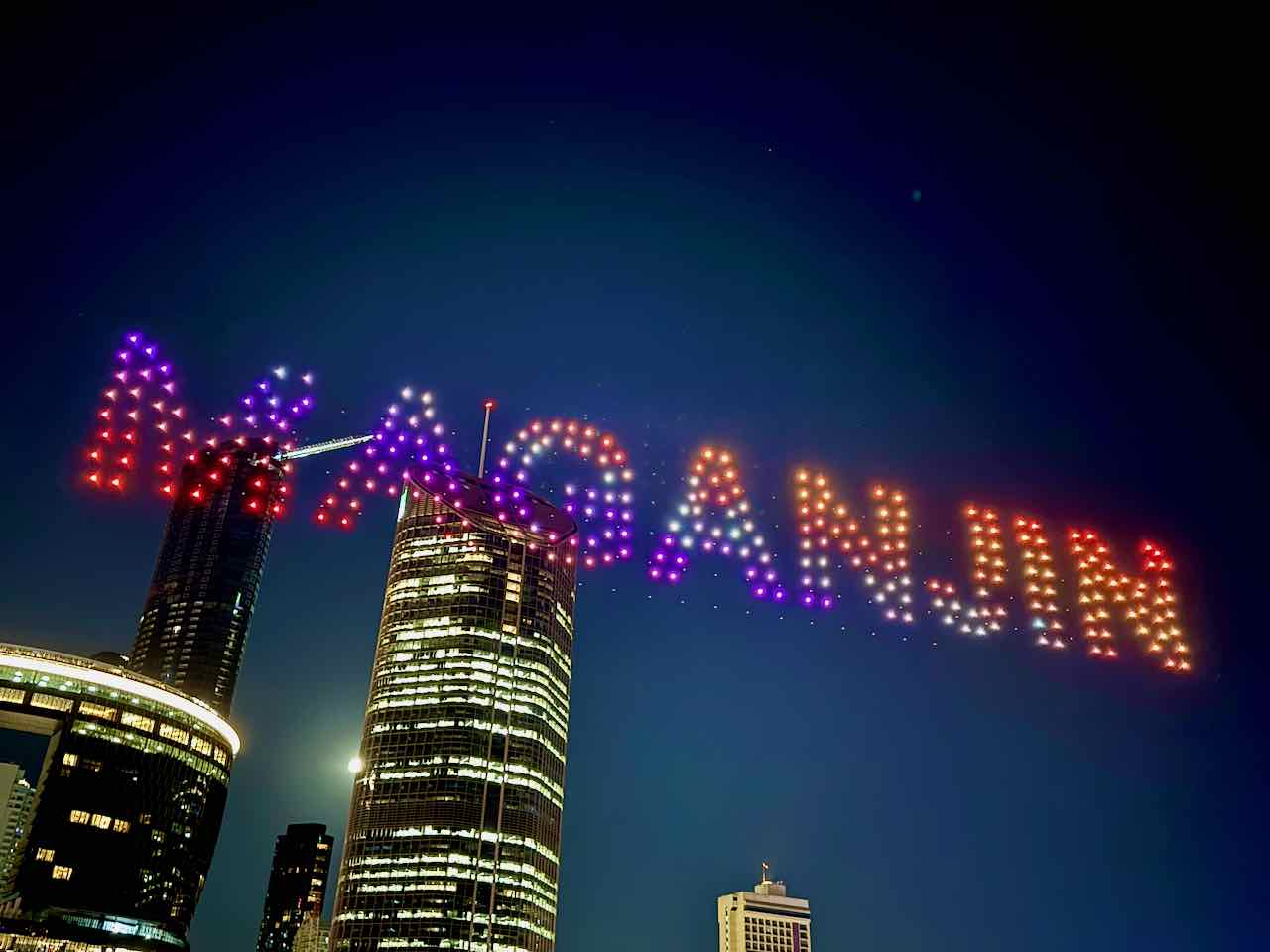
Brisbane is the capital of the state of Queensland. However, occupation of course long predates this colonial history. The oldest archaeological evidence for Aboriginal occupation dates back 22,000 years but the report used to provide these dates adds that “Brisbane is probably far older than [these dates suggest], with earlier evidence likely destroyed by the changing coastal and sub-coastal environment, coupled with rapid urban expansion”. Several Aboriginal groups claim traditional ownership of this area, including the Yagara, Turrbal and Quandamooka peoples. And these people have their own names for the city. The one best known to settler Australians is Meanjin, a Turrbal word for the land on which parts of the city are built, but another is Magandjin (sometimes spelt Maganjin), a Yagara word referring to the tulipwood tree. I’m not across the finer details here, but this seems to be the name that is the accepted or preferred name.
Colonial occupation commenced with the establishment of the Moreton Bay penal settlement at Redcliffe in 1824, but this settlement was moved to North Quay on the Brisbane River in 1825. From here the city developed in fits and starts as cities often do. You can read about it at the link on Brisbane above if you are interested. I lived in Brisbane through most of my primary school years.
For this post I’ve decided to share a selection of books in chronological groupings – by setting, not by publication. Listing the books chronologically by publication would have its own validity in terms of capturing the interests of the period they were written (regardless of the period in which they were set), but I’ve decided to take the simpler route and focus on the picture they build of Brisbane. Most on my list I’ve read, some before blogging, but there are some TBR wishlist books here too.
Colonial era (19th century)
I have chosen two novels to represent Magandjin’s colonial area:
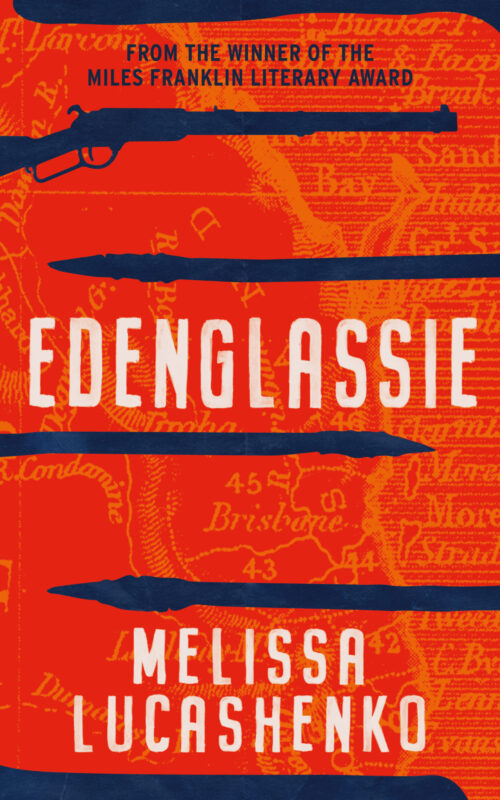
Melissa Lucashenko, Edenglassie (2023, my review): set primarily in colonial Brisbane in the 1850s, with a brief section set in the 1820s as the settlers started to arrive, and a contrasting modern narrative set in 2024, Edenglassie paints a picture of colonial society from a First Nations perspective. Lucashenko said her main aims were to ask “what was going through these people’s [the colonisers’] minds?” (as things could have been different) and to counteract the trope of the dying race. It’s a vivid and engaging book.
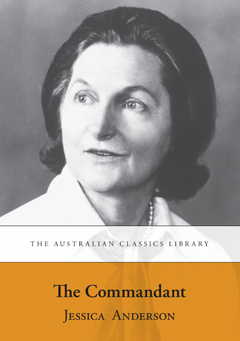
Jessica Anderson, The commandant (1975, my review): also set in colonial Brisbane, but in the abovementioned penal colony of Moreton Island in 1830. It is Anderson’s only historical novel, but was apparently her favourite. It was inspired by the real story of its commandant, Patrick Logan. Known as a harsh leader, he was murdered while out on an expedition. The story is told mostly through the eyes of his (fictional) younger, visiting sister-in-law.
20th Century
Brisbane is Australia’s most northern state capital – Darwin being a territory capital – and was closest to the South West Pacific Area theatre of World War II. Consequently, it played a major role in Australia’s defence, and became a temporary home to thousands of Australian and American servicemen and women. Naturally, this significantly affected the city’s social and political environment. Many novelists have explored this time, but I’m sharing just a few, followed by some novels set later in the century.

Ariella van Luhn, Treading air (2016, my review): set in Townsville 1922, and then Brisbane 1945, this work of historical fiction was inspired by a petty criminal named Lizzie O’Dea. Van Luyn creates vivid pictures of Brisbane, including the story of Lizzie’s theft of “bully beef and US army blankets”, which conveys much about the stresses of the time.
Melanie Myers, Meet me at Lennon’s (2019, my review): set in WW2 Brisbane when American servicemen were in town, sweeping young women off their feet and not always paying attention to their moral compass! My 1929-born Mum was a young woman at the time, and her school was taken over by the American military. Myers’ novel fictionalises the stories and places mum told us about.
David Malouf, Johnno (1975, read before blogging): semi-autobiographical novel about growing up in 1940s-50s Brisbane, with the first person narrator telling of his friendship with his schoolmate, “Johnno”. Malouf captures well-to-do Brisbane life, but also the challenges of growing up and finding one’s place.
Thea Astley, The slow natives (1965, on my TBR): set in the mid-1960s, says Wikipedia, examining “the relationships between suburban Brisbanites, including a priest, nuns and a couple and their teenage son”. Explores the sort of emotional and spiritual aridity that is often at the heart of Astley’s fiction, and that may have stemmed, at least partly, from her youthful experience of life in Brisbane.
Toni Jordan, Fragments (2018): a dual narrative literary mystery which moves backwards and forwards between 1930s New York and balmy 1980s Brisbane.
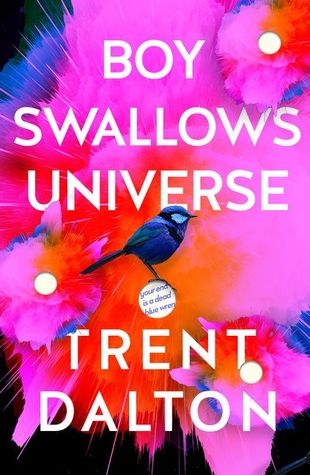
Trent Dalton, Boy swallows universe (2018, my review): semi-autobiographical story of a young boy growing up in the 1980s and 90s, in working class suburban Brisbane; a story about a childhood characterised by drugs and violence, but also love.
Andrew McGahan, Praise (1992, read before blogging): set in 1990s Brisbane, this novel triggered the Australian literary genre, grunge lit, which Wikipedia describes as, “an Australian literary genre usually applied to fiction or semi-autobiographical writing concerned with dissatisfied and disenfranchise young people living in suburban or inner-city surroundings”. Andrew Stafford reviewed Praise in The Guardian, drawing some comparisons with Johnno:
it captured the town’s torpor and the ambivalence of its inhabitants better than any book since David Malouf’s Johnno.
But whereas Malouf luxuriated in detailed poetic descriptions and may have been the first writer to describe Brisbane as a “big country town” (and Johnno moved at about the same pace), Praise was full of pent-up energy. A classic of Australian dirty realism, it’s a novel in which not a lot happens – but like Brisbane itself, all the action is happening beneath the banal facade, fuelled by frustration and repressed rage.
21st Century
Brisbane in this century has experienced some major disasters, including serious flooding, which are increasing in frequency due to climate change. (This report from the Queensland government is instructive.) It has also been a period of high population growth and significant infrastructure development. It feels like a city on the move, but not without tensions over the potential for negative outcomes.
Donna Cameron, The rewilding (2024, my review): set in contemporary Australia, this work of ecofiction takes us on a wild road trip from Sydney to northern Queensland via disaster-struck flooded Brisbane where our eco-warrior protagonist, Nia, takes risks amongst Brisbane’s skyscrapers to promote her planet-saving cause.
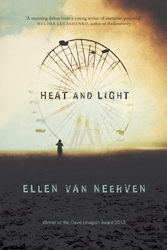
Ellen van Neerven, Heat and light (2014, my review): three-part work, set largely in Brisbane, but with stories set throughout Australia. The middle part, “Water”, is a longform story set in the near future, at least it was from 2014 when it was written, as it’s set in the 2020s. Australia is a republic with a female president, a new flag, and Jessica Mauboy’s song “Gotcha” as the national anthem. However, life isn’t perfect. Narrator Kaden is a Cultural Liaison Officer who thought she’d be working with “other Aboriginal people”. Instead, she she’s to work with “plantpeople” who are sort of mutant plants with human features created during “islandising” experiments. It’s a story about how we treat other, about segregation, discrimination and dirty politics.
Brisbane is home to many wonderful novelists whom I haven’t mentioned here (like Susan Johnson, and Nick Earls), and to the impressive University of Queensland Press which does a sterling job of supporting First Nations and other Australian writing.
Do you have any favourite Brisbane-based books?
 Whispering Gums
My wife and I think of Brisbane as a sparkly city. Over the past seven years we have stayed a couple of times – in Kangaroo Point and in the city across from the Anglican Cathedral. I always thought of Brisbane as a Janette Turner Hospital kind of place – and yes, of course – David Malouf – one of my lecturers in 1966 at Sydney U – his 12 Edmondstone Place (have I remembered the title correctly) evoked an earlier era of the city. When I did a literary pilgrimage – the house was gone. Also the city of Lest. We. Forget. Yassmin Abdel Magied – until bigotry/racism caused her to – in some senses – flee to the UK. I relished Malouf’s Johnno – one of the best descriptions of trench warfare – and of surfing – later in the book – I have read. Other books you have mentioned Edenglassie one in particular I have yet to purchase . Thanks. (Just now reading the recent book – That Librarian: The Fight Against Book Banning in America – by Amanda Jones. (Ron de Santis and Christian fascists…)
Thanks Jim … yes, a sparkly city is a good description.
I mentioned Janette Turner Hospital last week in my Queensland post but did she write a Brisbane set novel? I think nearly all of hers I’ve read … about 4 … have need set in Sri Lanka or North America.
Thanks re Magied … I haven’t read her.
PS I chose Johnny over 12 Edmondstone Street because the latter is non-fiction and I didn’t want to get caught up in non-fiction.
I like your selection of Brisbane novels and can add a few of my favourites. Venero Armanno’s “The Volcano” is a powerful Brisbane novel exploring the origins and experiences of Sicilian migrants to New Farm. Nick Earls’s “Zigzag Street” was a ground-breaking novel of life and love among the steep streets and old timber houses of Red Hill. More recently, “Lola in the Mirror “ by Trent Dalton is a moving, exciting novel set among the homeless people of South Brisbane and Kurilpa Point.
Thanks Rose … I thought about Earls but didn’t really know which would be a great example as I’ve only read one book by him. I hadn’t heard of Zigzag Street, but I’m now intrigued. I’ve heard of Armanno’s The volcano but to be honest that’s all I know – not what it’s about or even where the author was based. I’m interested in it too. Re Dalton, thanks. I decided I’d just name one of his but am glad for this description. So thanks very much for these suggestions.
Earls, Armando and Dalton have been major players in the Brisbane Writers Festival and the Qld Writers Centre for years. It’s a small town for writers still!
As is Canberra, even more! Thanks for this. I saw last week that there was a Dalton Love stories activity at the Museum of Brisbane.
We went to the staged version of “Love Stories “ last week. Very cute, and VERY Brisbane…
How great … I’m feeling I should read the book.
I wasn’t aware of The Commandant, and I shall follow up !
Thank-you, as always, dear ST !!!
Oh great MR … really glad that you are interested … surely it’s available in audio!
Fantastic list. I haven’t read any of these. I did, like Roseobrienwriter, love Lola in the Mirror. The descriptions of the Brisbane river remain with me.
Thanks Rach. I loved Boy swallows universe so it sounds like I need to read Lola too. There are so many good Aussie writers now that I tend to read one by an author then move on, but there are exceptions.
I’m quite interested to read more about your mom and the U.S. army occupying her school! What was happening in Brisbane? What did she think about it all? I’m not sure if you heard the story from her before her passing, but if you have anything to share, that would be lovely.
The awful thing is Melanie that for some reason I didn’t ask all the questions I should have. The basic story was known to me all my life so it just became part of life. I wish now that when I studied WW2 at school I asked more. But the basic story is that her school, Somerville House, in 1942 sometime, when she was 13, and day girls like she was were moved to other schools. The school’s sites were occupied by The United States Army’s East-Asian Command, under General Macarthur, and the General Headquarters United Army Forces Far East, United States Army Service of Supply and Base Section 3, until 1945. Mum would talk about servicemen being all around but she was a young teen so not really aware of ghetto behaviours happening. The main story she told was of a run in her mum had with a teacher. The teacher gave them all work to knit socks for the soldiers but mum’s mum sent the wool back because mum was already knitting for the cause through a group Nan was involved in. The teacher took out badly – really!? – and mum’s mum came in and told the teacher off. That teacher was awful to mum for the rest of the year.
Mum, like many of her generation, never trusted Japan. Coming from a postwar generation, I wasn’t aware of the depth of her feelings until after our son went there to teach and we also fell in love with the place. She was friendly and kind to our son’s Japanese girlfriend when she visited us so it wasn’t until sometime after that that I discovered how negatively she felt, and did through her life, about Japan. It was clearly visceral.
I love that your grandma stood up against the sock knitting project. Such seemingly small acts of defiance remind me of what is beautiful about people. I can see the beauty in animals and plants, but people are trickier. Unfortunately, it seems like a theme from that time period that those in power, even a teacher, were more than able to get away with abuses of power and retribution.
Yes I think you are right about people in so-called authoritative positions getting away with wielding power unnecessarily and as you say sometimes abusively then. I worry now that the pendulum has swung too far the other way OR is it just that different people feel they have power? It seems difficult to find situations where people will just talk through their issues and differences reasonably rather than aggressively.
Well, you’ve named three of my favourite books – fancy them all being set in Brisbane – Edenglassie, The Commandant and Heat & Light.
I read a novella by Brisbane-based writer Mary-Rose MacColl a few years ago, but I believe she mostly writes non-fiction.
Thanks Brona I love those books too. I’ve heard of MacColl but don’t know much about her.
I have read a few mentioned in both your blog and a few that are mentioned in comments so I wont add others than one that is lost with time IMO and that is The Delinquents by Criena Rohan. This was made into a film with Kylie Minogue starring. Goodreads says it “is now considered an important member of the school of Australian social realism that flourished in the two decades after World War II.” I cant say I know if that is true or not but conceptually it is worth a read even if I found the writing a bit poor. It is street Brisbane from the 1950s that I am not sure I have read about anywhere else in fiction form.
I’m interested in social realism fourtriplezed so I will note this. I remember that film coming out but didn’t see it and wasn’t aware it was adapted from a novel. You learn something new every day because of commentors like you stop thank you.
And I have just thought of Gerard Lee who I have read a couple of, True Love and How to Get It by and Pieces for a Glass Piano.
Oh thankyou fourtriplezed. I haven’t heard of Lee at all.