With a certain event happening in Paris, and other parts of France at the moment, I thought it would be fun to briefly explore, some literary connections between Australia and France. I say “some” because there’s no way I could know, let alone list, all the ways in which our countries have connected over the years through literature. My aim, instead, as I often do in Monday Musings, is to introduce the topic with some ideas and let you all do the rest.
Settler Australia’s connection with France starts right back at the time of the arrival of the British in 1788, when French explorer Jean François de Galaup, comte de Lapérouse, and his expedition, met Captain Phillip’s First Fleet in Botany Bay in January 1788. After spending a few weeks in the settlement, the French left, and, as Wikipedia reports, “neither he nor any members of his expedition were seen again by Europeans”. In early 1801, another French explorer, Nicholas Baudin, led an expedition to map the coast of New Holland, as Australia was called back then, not leaving until July 1803. During this time they met Matthew Flinders’ expedition which was also charting the coast. Baudin stopped in Mauritius en route home, and died there of tuberculosis.
These were just the start of many links between France and Australia over time. Some have been negative (often military in origin, like nuclear testing and a certain submarine cancellation) and some positive (mostly cultural, like the work of Alliance Française and an interesting organisation called ISFAR, or Institute for the Study of French-Australian Relations), but overall there are strong and continuing connections. After all, who can resist some French pastries with their coffee?
Now, though, my main point, literature …
Australian novels set in France
Australians being the travellers they are, it’s not surprising that our novelists sometimes set their stories in places other than Australia, like, say, France, albeit their reasons vary as greatly as their novels. War is one reason characters find themselves in France, and work is another, while for others it is travel, or study, or following lovers. Many of the novels I list here are not fully set in France, but all spend some time there – and they are almost all from this century.
- Diana Blackwood’s Chaconne (2017, my review): starting in Cold War Paris, about a young Australian who goes to Paris for love only to find it’s not what she expected.
- Michelle de Kretser’s The life to come (2017, my review): a big novel about contemporary social issues including emigration and personal challenges, one of its five parts is set in Paris.
- Alan Gould’s The lake woman (2009, my review): a “romance” involving an Australian airman who parachutes into a lake in France just before D-Day.
- Marion Halligan’s The golden dress (1988, read before blogging): multigenerational novel set in Newcastle, Paris and Sydney.
- Marion Halligan’s Valley of Grace (2009, my review): set wholly in contemporary Paris, and about fertility, babies and children.
- Anita Heiss’ Paris dreaming (2011, my review): one of Heiss’ “choc lit” books about professional First Nations’ women, this one about a young art curator mounting an Indigenous Australian art exhibition in Paris.
- Mark Henshaw’s The snow kimono (2014, my review): a mystery set mainly in mid-late 20th century Paris and Japan about two men, their fractured lives, lies and memory.
- Katherine Johnson’s Paris savages (2019): historical fiction based on the true story of three Badtjala people from Queensland’s Fraser Island, who, in 1882, were taken to European cities, including Paris, as ethnographic curiosities.
- Mary Rose MacColl, In falling snow (2013): historical fiction about an elderly woman in 1970s Australia reflecting on her life as a nurse in France during WW1.
- David Malouf’s Fly away Peter (1982, read before blogging): about three very different Australians, and the impact on them of their experience of WW1 in France.
- Alex Miller’s Lovesong (2009, my review): the love story of Sabiha and John who met in Paris, told to a writer in Melbourne, who ponders the art and responsibilities of storytelling.
There are also Australian short story collections which contain stories, sometimes just one, set in or referencing France, including Emma Ashmere’s Dreams they forgot, Irma Gold’s Two steps forward, Paddy O’Reilly’s Peripheral visions, and Tara June Winch’s After the carnage.
Australian novels written or published in France
Too many Australian novels have been translated into French over the years, so here I’m sharing some different examples of connections that can happen.
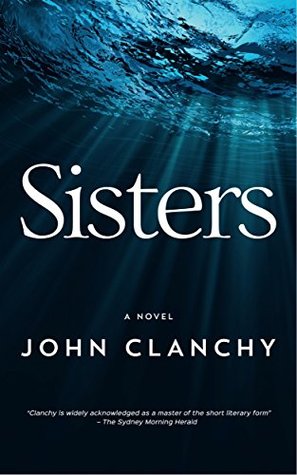
Writers’ retreats are loved by many writers for the opportunity they provide for dedicated, uninterrupted writing time, but not many Australian writers get to do so in France. This however is what John Clanchy did in 2008. His novel Sisters (2017, my review) was originally drafted at the La Muse writers retreat in southern France, and was later published by the retreat. The retreat is open to all sorts of creators, besides writers.
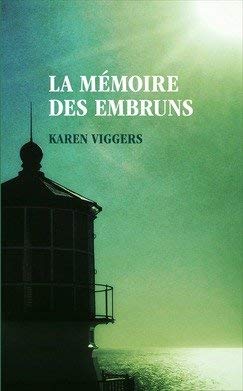
When it comes to translation, a highly successful contemporary Australian writer is Karen Viggers (see my posts). She is a bestselling author in France, with her novel The lightkeeper’s wife having also been awarded the Les Petits Mots de Libraires literary prize. Her latest novel (her fifth) is being translated. On why she is so popular in France, she says that they love her “big landscapes”. Most of her novels have strong environmental themes and are set in gorgeous Australian landscapes. (She has a French page on her website.)
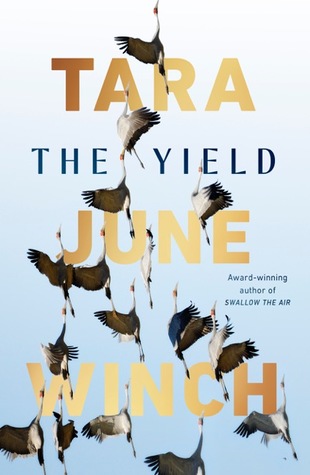
Then, in a different again example of Australia-France literary connections, there is Wiradjuri author Tara June Winch who moved to a French country town when, as a young woman in her 20s, she found herself caught up in the Andrew Bolt “It’s so hip to be black” discrimination case. She withdrew from the legal action taken by several First Nations Australian identities, and disappeared from view for some years, during which, living on her French farm, she wrote her award-winning novel The yield (2020, my review). As far as I know, she is still based in France.
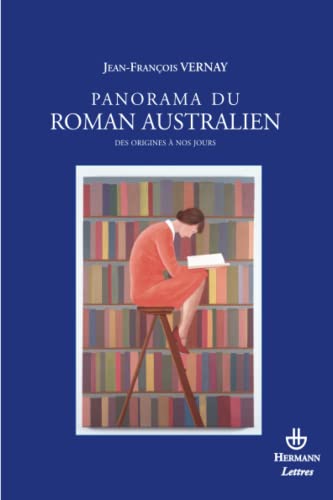
Different again, but still relevant, is Noumea-born Jean-François Vernay, whose somewhat quirky book about Australian novels, Panorama du roman Australien, was published in France in 2009. (It was later revised and expanded, and published in Australia as A brief take on the Australian novel, on my TBR).
Finally, there is our lovely French blogger, Emma (bookaroundthecorner) who includes Australian books in her reading diet, giving our often strange idioms her very best shot.
Now, you know what to do – share your love of bookish France.
 Whispering Gums
I have a Frenchman who was a grazier in Australia and published Australian bush stories in French: Paul Wenz (1869-1939). His one collection in English is Diary of a New Chum. And to be further multi-national, he met Jack London in Sydney and translated his ‘Love of Life’ into French.
Oh thanks Bill … that’s a great addition. Are those bush stories translated anywhere?
What did you think of The Golden Dress?
Oh Guy, I read it so long ago … around 1990 … so my memory is indistinct but I remember liking it. It was the early days of a new blossoming in Australian women’s writing and we gobbled up stories about women and families told by us. Have you read it? Or are you asking whether I’d recommend it? If the latter I probably would despite my poor memory!
My dear Mauritian friends, most of whom are dead now, hélas !, used that phrase all the time but spelled it differently, ST:
Hé toi !!
was their version. I do like it better, as it is simply calling attention to the speaker rather than being a conjunction.
I wouldn’t want you to think I’ve stopped being an interfering old fart, after all … [grin]
That’ll be the day … that I cry!
I’ve been to Mauritius but didn’t know that.
I’ve just finished Left Bank Waltz by Elaine Lewis. It’s not a novel, but it’s the author’s recount of her time running The Australian Bookshop in Paris. Unputdownable.
Thanks Trish … I decided not to include memoirs etc in my list because there are so many of them, but I’m very glad to hear about them from commenters! That title reminds me of a favourite piece of music by Peter Sculthorpe.
Lucinda Holdforth wrote a delightful memoir that I read pre-blog all about French women writers – True Pleasures – it was a walking, reading treasure that I still recommend to special customers 🙂
https://www.penguin.com.au/books/true-pleasures-9781742743622
Oh The Sitter by Angela O’Keeffe has a Paris setting and Anam | André Dao has a French connection and then, of course, there were Mary Moody and Sarah Turnbull who had best selling books about moving to France from Australia.
I haven’t read those two novels so hadn’t picked those up Brona, so thanks.
I do remember Mary Moody’s and Sarah Turnbull’s memoirs from when they came out as both made a bit of a splash at the time didn’t they? (I think Sarah Turnbull went to school in Canberra, though I may have forgotten that?)
Thanks Brona … as I wrote to Trish above, I decided not to include memoirs etc in my list because I know there are so many of them. However, I’m very glad to hear about them. I have heard of Lucinda Holdforth, I feel, but I don’t think I know about this book.
Also Katy Kell’s recent debut novel Chloe published by Echo, and memoir Reckless by Marele Day published by Ultimo, longlisted for the Davitts. (Et merci beaucoup!)
Haha, Emma, c’est un plaisir!
And thanks for these suggestions. I decided not to include memoirs because there are so many of them – but am happy for commenters to share them, and love that already there have been a few. I hadn’t heard of Chloe, so am particularly pleased to hear about it.
Ah I wondered about memoirs… and I did mean to mention Angela O’Keefe’s novel The Sitter (UQP) on lots of award lists I seem to recall!
Thanks Emma – this connection just makes me want to read The sitter even more!
Interesting post, WG! As for me, just doing one entry for Paris in July. Have you seen The Taste of Things? Don’t miss it. 🙂
Oh no I haven’t Arti. My film viewing has been greatly reduced in recent times, but I’ll try to remember this one. I’ll check out your Paris in July post.
There is also Spider Cup by Marion Halligan.
And – Marion’s Cockles of the Heart is a memoir set in France
Oh thanks Carmel. I have Spider cup on my TBR, but haven’t read it yet. Knowing she loved Paris, I wondered if it appeared in more novels.
I didn’t include memoirs because there are so many of them, but I love that you and others have named some.
BTW This first comment did post to the blog, so I’ll delete your second attempt. Who knows why WordPress behaves the way it does.
What a lovely idea for a post, and I thoroughly enjoyed reading about all these literary connections between Australia and France! The Michelle de Kretser sounds especially appealing. I recall a lot of buzz about another of her novels, Questions of Travel, ten years or so ago.
Thanks Jacqui – and good memory re de Kretser, Questions of travel is a great read.
Thank you for this post!
Great post and thanks for the mention 🙂
My knowledge of Australian literature was very limited before reading yours and Lisa’s blogs. Like Colleen Mac Cullough and that’s all.
My first encounter with the Australian bush was in The Dead Heart by Douglas Kennedy.
Nowadays, I see on display tables in bookstores : Karen Viggers (I’ve never read her but she sure sells a lot of books here. Like 700 000 copies of The Stranding.), Liane Moriarty, Tim Winton, Jane Harper, Richard Flannagan and Madeleine St John.
A pleasure, Emma. I’ve been a bit AWOL on blogs lately. The last three or four years have been difficult years and I’ve not really kept up with much, but I love your interest in Australian literature. I must say that I don’t know Douglas Kennedy at all. But I am interested to hear what authors you are seeing on tables in your bookstores, and the ones you are seeing don’t surprise me. I’ve read Winton, Flanagan and St John, but not Harper and Moriarty.
Douglas Kennedy is an American writer best known in France. He lives here. Some of his books are only published in French translation.
Ah, thanks Emma, not Australian so that makes me feel better! I think I have heard of him – just…
What a fun way to participate in a “certain event” from the margins (literally)! hee hee
For the first time in years, I actually enjoyed that certain event a great deal (including the attention brought to the state of the Seine, despite recent efforts to improve its health, in hopes that this would serve as an economic incentive to make reparations, where moral concerns aren’t pressing enough apparently). I enjoyed meeting/seeing so many “Australian” teams and individuals, and thinking about yall down under reading while the TV played thonk-plonk-splash-bang-swish noises of competitions while yall were determinedly reading instead. (Read and loved Fly Away Peter years ago!)
Ha ha Marcie, I like the picture of us reading while the TV played thonk, etc, but we were more likely to be sleeping. I still managed to enjoy some favourite sports, however.