This week’s question is the Novella version of Nonfiction November’s Book Pairings. It goes like this
Pair a novella with a nonfiction book or novel that deals with similar themes or topics.
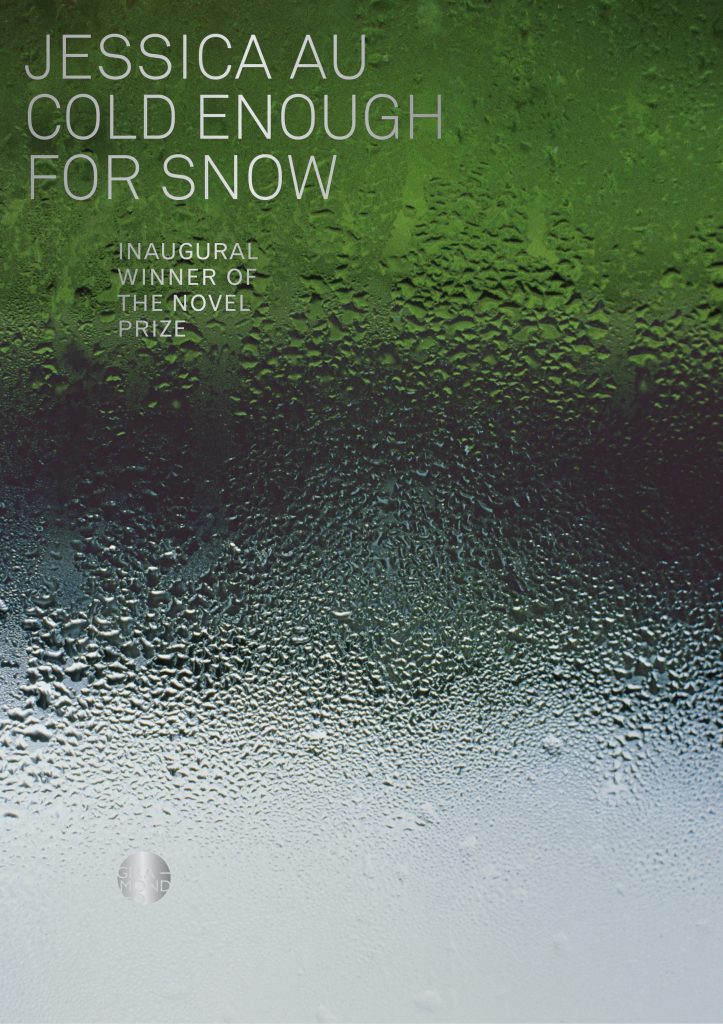
I am doing several pairings with Jessica Au’s novella Cold enough for snow (my review), because although it’s a “little” book, it’s so rich.
- Mother-daughter trip instigated by a daughter, novella-novel pairing: Larissa Behrendt’s novel, After story (my review), is about a daughter taking her mother on a literary tour of England. Behrendt’s novel, however, had a clearer resolution than Au’s complex “little” book in which the issues to be resolved are more subtle and internal.
- Mother-daughter migration stories, novella-memoir pairing: I’m pairing three books here, Susan Varga’s Heddy and me (my review), Anna Rosner Blay’s Sister, sister (my review), and Halina Rubin’s Journeys with my mother (my review). These three hybrid biography-memoirs are all about post-war migrations, and in each the daughter is challenged by her mother, though in different ways. Sometimes it’s that the mother is hesitant to share a painful past, while in others the mother is a challenging personality. In Cold enough for snow, the issue seems to be a sense of distance or difference that the narrator feels with her migrant mother, and their respective expectations, and a desire to work that through.
- Mother-daughter disconnect, novella-novella pairing: Elisa Shua Dusapin’s Winter in Sokcho (my review) is about a daughter who struggles to live up to her mother’s expectations and those of the society she lives in. Both daughters seem uncertain about their relationship with their mothers, and both have decisions to make about the way forward in their own lives. Both novellas have open endings.
- Daughters questioning their relationships with their mothers, novella-memoir anthology pairing: Rebellious daughters (my review), edited by Maria Katsonis and Lee Kofman, contains stories about rebellions against mothers (and also some against fathers and grandmothers). Not all are resolved but as I wrote in my post, in most of the stories, age and experience eventually bring rapprochement: daughters come to understand their mothers (or whomever) a little more, while their mothers likewise learn to accept the daughter they have. In Au’s book, there is a sense that the daughter has come to understand her mother more but also to understand that there are limits to this understanding.
Do you have any pairing ideas?
Written for Novellas in November 2023
 Whispering Gums
Learned.
Learned what?!?
No, LEARNed. learned.
Ha, thanks MR! Your generosity always does my heart good!
So many stories can be written between mothers and daughters.
That sure can Pam.
Clearly I need to read the Jessica Au – all those themes you’ve identified make it sound a wonderful piece of fiction
It is one of quiet those pieces that you keep thinking about Karen because it’s hard to pin down but it feels real.
Love the way you’ve done this prompt, plus it shows the depth and breadth that can be captured in a novella.
Thanks Cathy, I enjoyed showing that.
I would say Bones on Ice by Kathy Reich for the novella and Into Thin Air by Jon Krakauer for the nonfiction.
Oh, good one Melanie. I didn’t know Reichs had written novellas but then I haven’t read her.
Just a couple, and I have to say, after reading her first novel, her novellas are much stronger. She adds a lot of stuff that doesn’t matter into her novels.
Just gotta love a novella , eh!
Did you ever read Carol Shields’s novel Unless? It feels like an excellent pairing/companion to Au’s novella to my mind and heart because more of the seeking and yearning in Unless is on the mother’s side in the narrative (but, in both books, both mother and daughter are actually seeking, we just only receive one side of the story in the narrative).
Oh no, Marcie, but it’s one I have (had) on my TBR and really wanted to read. Now you say that, I’m even more intrigued. Did I keep it or did I also put it out. Ah, but maybe the library has an eBook? (Trouble is, I like to “write” in my eBooks. I reckon this should be possible for library eBooks where some app software for borrowed books could hive off the notes you make to a special user file! Don’t you reckon?
If you decide you’d like to read it, I would be up for rereading. And I might end up doing so next year anyway, as I’ll be starting a new short story project on Carol Shields’s work next year too (I haven’t officially announced it yet but it’s been on the books for more than a year behind-the-scenes) which could take me back into her novels as well.
Hmmm, I hesitate to mention this, because you’ve got some tech challenges on your plate as it is, with WP, but there is a way to do this; if you ever decide to take it on, I’m happy to share the little bit I know backchannel so you can make and keep notes from e-reading. Such a time-saver. And there’s also a way to share your notes with others who use the same technique, so like many little conversations in the margins…very, very cool.
I do make notes on eBooks I own, but just using the eBook software (like Kindle) Itself. I’d love to hear if you have other strategies. With print books I write marginalia (which I can do in eBooks I own) but I also make notes on themes, style, structure, characters, whatever overall ideas I am developing on the end pages. I can’t do that in eBooks. I can always do it in Notes but that just slow reading down even more! Any efficiencies you’ve developed I’d love to hear.
I saved this to answer later (but not quite THIS late hehe) but I have, since, looked it up and what I was using is no longer current/supported, which I’m sad to learn, but when/if I find an alternative, I’ll let you know. It’s a frustration and a marvel how quickly these app’s come and go!
I have found an improved method! I read eBooks on the Kindle app on my iPad mostly these days. I suddenly realised that I could use the slide-over function to have the Notes app Immediately available. I’ve only just started this system and I think it’s going to work! I’m a bit excited – haha!
Hahaha I know what you mean…it’s these moments of discovery that keep things going!