As I have done for most “year” reading weeks*, I decided for 1962 to read a short story by an Australian author. I read two, in fact, and may post on the second one later.
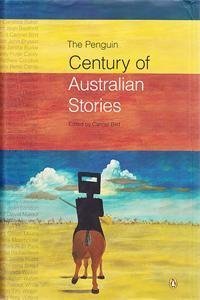
Today’s story, though, is Shirley Hazzard’s “The picnic” which I found in an anthology edited by Carmel Bird, The Penguin century of Australian stories. It was my mother’s book, which Daughter (or Granddaughter to her) Gums gave her for Christmas 2006. I’m glad she kept it when she downsized. Shirley Hazzard is a writer I’ve loved. I have read three of her books, including the novels, Transit of Venus and The great fire, but all of this was long before blogging. I have mentioned her on the blog many times for different reasons, but an early one was in my Monday Musings on expat novelists back in 2010.
Who was Shirley Hazzard?
Hazzard (1931-2016) is difficult to pin down, and can hardly be called Australian given she left Australia in 1947 when she 16, returned here briefly, but left here for good when she was 20. Wikipedia calls her an Australian-born American novelist. As I wrote in my expat post, Hazzard didn’t like to be thought of in terms of nationality. However, she did set some of her writing in Australia, and did win the Miles Franklin Award in 2004 with her novel The great fire, against some stiff competition.
According to Wikipedia, she wrote her first short story, “Woollahra Road”, in 1960, while she was living in Italy, and it was published by The New Yorker magazine the following year. This means, of course, that “The picnic”, first published in 1962, comes from early in her writing career. Her first book, Cliffs of fall, was published in 1963. It was a collection of previously published stories, including this one. Her first novel, The evening of the holiday, was published in 1966, and her second, The bay of noon, was published in 1970, but it was her third novel, The transit of Venus, published in 1980, that established her.
She is known for the quality, particularly the clarity, of her prose, which, it has been suggested, was partly due to her love of poetry
“The picnic”
It didn’t take long for me to discover that “The picnic” is the second story of a linked pair, which were both published in The New Yorker in 1962. Together they tell of an affair between the married Clem and a younger woman, Nettie, his wife May’s cousin. The first story, “A place in the country”, concerns the end of the affair, while in “The picnic” the ex-lovers meet again, eight years later. They are left alone by May, probably deliberately thinks Clem, while she plays with their youngest son down the hillside.
This is a character-driven slice-of-life story in which not a lot happens in terms of action but which offers much insight into human nature – and into that grandest passion of all, love.
In 2020, The Guardian ran a review of Shirley Hazzard’s Collected stories, edited by Hazzard biographer Brigitta Olubas. Reviewer Stephanie Merritt writes that “Hazzard’s recurring themes here – enlarged upon in her novels – are love, self-knowledge and disappointment”. From my memory of Transit of Venus in particular, this rings true. And, it is certainly played out in “The picnic”.
So, love, albeit a failed love, is presumably played out in the first story, but in this story it is still present in its complicated messiness. The two ex-lovers look at each other uncomfortably. Self-knowledge is part of it, but it’s not easily achieved for Clem for whom self-deception has also powerful sway. There’s resignation about love – “an indignity, a reducing thing” which he sees can be a “form of insanity” – and about marriage, which involves “a sort of perseverance, and persistent understanding”. There’s also a male arrogance. He didn’t, he realises, “know much about her [Nettie’s] life these past few years – which alone showed there couldn’t be much to learn”. By the end of his reverie, he comes to some self-understanding, despite earlier denials, about his true feelings and about the decision he’d made. Whether the reader agrees or not, he feels he has “grown”.
Nettie’s reveries tread a roughly similar path. There’s not a lot of regret to start with. She sees he is nearly fifty, and with “a fretful, touchy air”. She sees his self-deceptions, and his caution, and yet her feelings, like his, are conflicted. For her, too, love is a complicated thing:
… one couldn’t cope with love. (In her experience, at any rate, it always got out of hand).
What I haven’t conveyed here, because you have to read it all to see and enjoy it, is the delicious way Hazzard conveys their internal to-ing and fro-ing, through irony and other contradictions. They say nothing to each other, but in their thoughts and observations, while they rationalise what happened and why it was right, they reveal their true feelings. Love and disappointment or disillusion live side by side, never quite resolved.
The story is told third person but from shifting perspectives. First Clem, followed by Nettie, reflect on their situation at some length. Then, in a surprise switch, the short last paragraph moves to May, whose feelings neither of them had seriously considered in all their internal ponderings. But Hazzard makes sure we see them. This technique reminded me of Kevin Brophy’s very different short story “Hillside” which does a similarly powerful switch of perspective in the last paragraph. In both cases, concluding with the perspective of someone who is both outsider but very much affected by the situation just nails it.
Not only did I enjoy this story, but I’m very glad to finally have Hazzard reviewed on my blog.
* Read for the 1962 reading week run by Karen (Kaggsy’s Bookish Rambling) and Simon (Stuck in a Book). This week’s Monday Musings was devoted to the year.
Shirley Hazzard
“The picnic” (orig. pub. The New Yorker, 16 June 1962)
in Carmel Bird (ed.), The Penguin century of Australian short stories
Camberwell: Penguin Books, 2006 (first ed. 2000)
pp. 178-185
 Whispering Gums
Oh wow, Sue! Thanks to Winston I just now came across the #1962 Club and read blog pages from him routing me to Simon – then I found Lisa’s 1962 post and now yours! And just prior to coming across this blog meme I had been thinking maybe it’s time for me to be rereading some old favorites. Then a related thought had been rattling around in my noggin, what old Halloween books can I read this year? How about a Novella? (November Novellas?). – Omg – but in considering this I came across that oldie but goodie classic “We Have Always Lived in the Castle” by Shirley Jackson and published in … ta-da … 1962! I already have that – somewhere – lol!
Anyway – more to your post – I love Shirley Hazard’s books and went through a whole phase of reading her, but missed The Picnic for some reason – too early? No access? – ??? In a collection somewhere probably.
Oh well – I’m happy – I’ve got the new Booker Short List and We Have Always Lived in the Castle and who knows what else?
Thanks –
Haha Bekah …. Love this. And Shirley Jackson is good. The picnic will mostly be in collections.
Oh well done, Sue, but however did you find the publishing date? I’m guessing that it’s noted in Carmel’s collection?
I have both Cliffs of Fall (1963) and People in Glass Houses (1967) on the TBR, but infuriatingly, in my Virago editions, neither of them date the stories in the collection, nor do they say where they were first published.
So I looked it up in the Olubas bio which I have yet to read, and frustratingly it has some yada yada about her stories from 1961-2 deriving from her personal life, but there’s no bibliography…
Yes, the Bird anthology beautifully dates the stories – in two places, a lovely useful table and on the story itself. In the acknowledgements at the end, though, it’s noted as coming from Cliffs of fall, which as you say is dated 1963. BUT Carmel clearly knew its original date and made sure that was the main date shown in the book.
Well done, Carmel!
Absolutely … as I’m sure her hand was in that aspect of the book as well as choosing the content.
It seems to me men often feel they have ‘grown’ where women just see more of the same. It’s a long time since I read Transit of Venus, so I can’t comment on Hazzard’s writing, but I prefer stories with just one POV.
From other reading Jolley’s An Accommodating Spouse is on my mind, and the wife there I think leaves the husband and his possible lover together to get it over with/sorted out, which is probably sensible, but brave.
I responded to this but it doesn’t seem to have taken. Preferring one POV stories must surely limit your reading these days. I thought you liked experimental writing. That can often play with POVs can’t it?
It’s a long time since I read An accommodating spouse, but I think you are right, and I agree, brave.
I like that we get all three viewpoints in the story. Poor May, it would seem was conveniently forgotten by both, though I’m sure she must have known all along what was being done to her.
I do too Mallika … and yes, though I haven’t read the first story, I think she learnt it at some stage then, and in this story it was she who invited Nettie over.
I enjoy various points of view but not too many. Our shared reading group read several short stories a couple of years ago but now I forget them. Funny I loved short stories as a uni student, then got away from them and now enjoy them again. Funny how our moods change.
Thanks Pam. It can of course depend on how they – the points of view – are managed, doesn’t in it. In the two stories I mention here, there are three and they are just frst POV, second POV and then that final one, so they are easily identified, and it’s easy to remember who is who,
Yes, I loved short stories in my youth through uni, too, but then didn’t read many again until my 40s. Though I was in my 30s when my reading group started, and our first book was an anthology of short stories. I have read SO many this year, way more than I can ever remember.
*slaps forehead* I have a copy of The Penguin Century of Australian Stories that I picked up in a secondhand store last year. It is sitting in the pile on my desk to be added to my short story collection drop down menu and tabulated so I can find individual stories when I want/need them!! Alas the system is only as good as my data entry!
But as I was reading you review, I realised I had read this story recently, from my Collected Stories by Hazzard, one-third read by my bed. So many half-finished reading and blogging projects *sigh*
Which is my longwinded way of saying bravo for not only finding an Australian 1962 story in time, but posting about it as well 🙂
Thanks Brona. I have a couple of Australian short story anthologies, but I think this is the best one. Like you, I love keeping records, but data entry can be so time consuming.
Did you like the story?
Sue, as it turns out my library has several of Shirley Hazzard’s books. Which do you think would be good to start with? Here is what we have: https://sjcpl.bibliocommons.com/v2/search?query=Hazzard%2C%20Shirley&searchType=author
Oh great Melanie. I would go with Transit of Venus though it’s fairly intense. I haven’t read Bay of noon, but slosh enjoyed The great fire. I’ve read a memoir too but I don’t see it there, and it’s probably more niche anyhow.
Okay, I added Transit of Venus. All her later book synopses start with, “From the author of the classic Transit to Venus…”
I’m not surprised. It’s such a standout book I think.
Pingback: AusReading Month Masterpost 2023
Pingback: Sunday Lowdown #147 – Grab the Lapels
Sometimes I am shocked to see that a major Canadian writer only is referenced on BIP, too, when I’ve read so many of their books but years prior; it’s good you finally got a SH post so she no longer needs to feel overlooked or left out where WG is concerned. hee hee Hazzard is one I’ve done a great job of collecting but not actually reading, but sometimes I’m just so sure I’ll love an author’s work that reading it almost seems besides the point. /rollseyesselfward
Haha, love your sign off! But yes, you clearly know how I feel about all that reading we did before blogging. I find that short stories can be a great way of getting them at least a serious mention rather than just some references.
A belated thanks for bringing Shirley Hazzard to the table – I’ve not read her, but know of her, so another author I need to read!
She is a great writer, Karen, and wasn’t prolific so it’s easy to make a choice!