Yesterday was the start of Lisa’s (ANZLitLovers) 2022 First Nations Reading Week which coincides of course with NAIDOC Week. As has become my practice, I’m devoting this week’s Monday Musings to the cause.
NAIDOC Week’s theme this year is Get Up! Stand Up! Show Up! Its focus is encouraging First Nations people to continue “getting up, standing up, and showing up” to achieve “systemic change” and to “narrow the gap between aspiration and reality, good intent and outcome”. They also say,
The relationship between Aboriginal and Torres Strait Islander peoples and non‑Indigenous Australians needs to be based on justice, equity, and the proper recognition of Aboriginal and Torres Strait Islander peoples’ rights.
I would like to think that our blogs help in some way by sharing our engagement with First Nations Australian writing, and hopefully inspiring others to engage too. There is a lot of truth-telling in First Nations writing and I greatly appreciate what I am learning. Although it can be confronting at times, it is exciting to feel my understanding expanding and deepening.
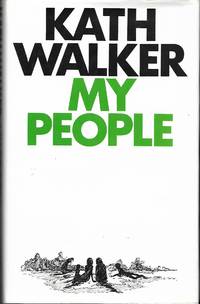
And this brings me to this post, because my introduction to First Nations Australians’ experience and thinking came through poetry. It was in my teens in the late 1960s. I had become interested in racial inequality, and discovered the work of Kath Walker, as she was known then.
Kath Walker was, of course, Oodgeroo Noonuccal (1920-1993). According to the Macquarie Pen anthology of Aboriginal literature, edited by Anita Heiss and Peter Minter, Walker “readopted her tribal name” in 1988 “as a protest against Australia’s Bicentenary celebrations and a symbol of her Aboriginal pride”. Heiss and Minter say that her 1964-published collection, We are going, “was the first book of poetry by an Aboriginal writer and the first book by an Aboriginal woman”.
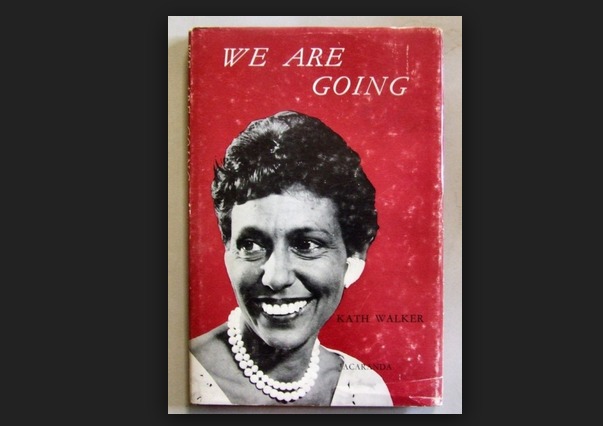
For Poetry Month last year, you may remember that I asked people to share their favourite poem (or poems). One of mine was Oodgeroo Noonuccal’s “We are going”, and I see that it is one of the eight that Heiss and Minter selected for their anthology. As they say in their introduction to her, “Oodgeroo was politically active from the late 1940s and became one of the most prominent Aboriginal voices”. Her poetry reflected her politics, as is common among poets from marginalised, disempowered people. Poetry, after all, is a powerful tool. It can make points succinctly, and do so in ways that you want to repeat. Listen to the end of “We are going” – the repetition, the rhythm and tone it creates, and the final line. Wham!
We are nature and the past, all the old ways
Gone now and scattered.
The scrubs are gone, the hunting and the laughter.
The eagle is gone, the emu and the kangaroo are gone from this place.
The bora ring is gone.
The corroboree is gone.
And we are going.
Oodgeroo varied her style, and often used rhyme, but here she uses free verse to such rhetorical effect.
I’m embarrassed to say that I didn’t read much First Nations poetry again for a few decades, until I read contemporary poets like Ellen Van Neerven, Ali Cobby Eckermann and, right now, Evelyn Araluen. However, First Nations people were writing poetry right through, and Heiss and Minter include many in their anthology. These writers include Jack Davis (1917-2000), who wrote a poem titled “Walker (For Kath)”. It starts, “Fight on, Sister, fight on/Stir them with your ice”.
Then, there’s Kevin Gilbert (1933-1993) and his daughter Kerry Reed-Gilbert (1956-2019), and Lionel Fogarty (b. 1958), who also wrote a poem for Oodgeroo titled “Kath Walker”. It starts, allusively, with “We are coming, even going”. There’s Tony Birch (b. 1957), some of whose prose I’ve reviewed, and Sam Wagan Watson (b. 1972), son of novelist Sam Watson (1952-2019).
There are writers I don’t know so well, like Lisa Bellear (1961-2006), who, say Heiss and Minter, was a “notably political poet”. (But, then, how many weren’t and aren’t.) Her poem, “Women’s liberation”, speaks to that issue of the movement being largely for and by white middle-class women. It’s witty and pointed. You can read it at Poetry International.
“got something for you to swallow”
(from “Gather”, by Evelyn Araluen)
I have, though, written on First Nations poetry in this blog. My post on the digital publication, Writing black, that was edited by Ellen Van Neerven, includes references to several of the poets I’ve named above, including Kerry Reed-Gilbert and Lionel Fogarty. I enjoyed Writing black especially because it introduced me to some of these voices I’d heard of but had not yet read.
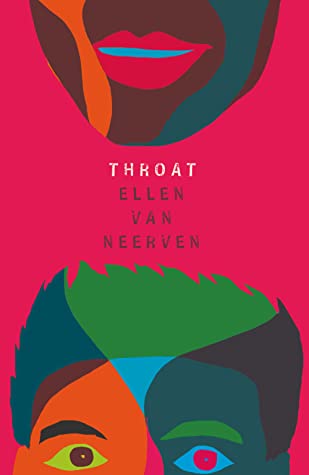
Ellen van Neerven is a well-recognised First Nations poet. Indeed, she was caught up in a controversy when her poem, “Mango”, unbeknownst to her I believe, was included in an HSC exam a few years ago. You know you have arrived on the Australian literary scene when you’ve been embroiled in a controversy. Anyhow, her second poetry collection, Throat, was shortlisted for several literary awards. Jonathan Shaw (Me fail? I fly) has reviewed it, describing it as “a rich, accessible, many-faceted collection from a strong, challenging and self-questioning voice”.
Another collection I haven’t read is Alison Whittaker’s BlakWork, which won the 2019 Judith Wright Calanthe Award. Bill (The Australian Legend) and Brona (Brona’s Books) have both reviewed it. Brona, in particular, connected with it.

However, I have read some contemporary First Nations poetry, including Ali Cobby Eckermann’s historical fiction verse novel Ruby Moonlight (my review) and her collection Inside my mother (my review). I’m currently reading Evelyn Araluen’s 2022 Stella Prize winning Drop Bear, which Brona has reviewed. Like much First Nations poetry it’s political and powerful, but is also witty.
This has been a brief and selective survey. There are many First Nations poets I haven’t mentioned, but if you are interested to hear what First Nations people are thinking, you won’t go wrong if you check out some of their poetry. I hope this post offers those interested some ways in.
Do you have any favourite First Nations poets – or, even, poems?
Written for Lisa’s First Nations Reading Week

Click here here for my previous ILW/FNRW/NAIDOC Week-related Monday Musings.





 Whispering Gums