Mary McCarthy, The group (#BookReview)

Book coverMy reading group has a few loose “rules” for choosing our reads, but one of the more rigid ones is that each year we like to read at least one classic. This year’s first classic – yes, another is coming – was Mary McCarthy’s The group. As I wrote in last week’s Monday Musings, it was published in 1963 and became a New York Times best-seller. I was initially uncertain about this choice, because I had read it and there are so many classics I still haven’t read, but, as it turned out, I was glad to read it again. This is because it is a true classic, by which I mean it’s a book that you can read again, at a different time in your life, and find new richness.

For those of you who don’t know the story, it centres on the lives of eight women from Vassar College’s Class of ’33 (of which McCarthy herself was a member, so she knew whereof she wrote – Bill!) The novel follows their lives for the next seven years as they, variously, marry, divorce, have children, find jobs, and in the case of one, die. In doing so, it also evokes their era beautifully. This was a time when America was coming out of the Depression, when women’s expectations about their lives were starting to change, when medicine was starting to assert its authoritarian self, when Trotskyism was attracting the radical intelligentsia, and when Europe was moving into World War 2. Our eight women – Kay, Lakey, Polly, Dottie, Priss, Libby, Pokey and Helena – having received a liberal Vassar-style education, are engaged in the issues of their day. Indeed, the role of education is one of the themes of the novel. Early in the novel, Kay recognises that:

That was the big thing they taught you at Vassar: keep your mind open and always ask for the evidence, even from your own side.

Late in the novel, Norine, a friend of the group, and also Vassar ’33, voices the challenge their education has posed for them: “our Vassar education made it tough for me to accept my womanly role”. Some, of course, found it easier to accept than others.

[SLIGHT SPOILER ALERT FOR THE NEXT PARAGRAPH ONLY, BUT THIS IS A CLASSIC SO I’M INCLUDING IT]

I loved the novel – the satire, the writing, the details, the individuation of the characters. What was not to like? Well, there are flaws for some readers. It doesn’t have a strong plot, and the structure is episodic, so that just as you get into one person’s story, you leave her to move onto another. This can be alienating for readers who love to emotionally engage with their characters. I can see all this but, for me, they are not overriding issues. Firstly, while there isn’t a strong plot, there is a narrative trajectory that sees relationships develop and change over time as the girls mature from new graduates to experienced women. Also, the novel commences with the wedding of a character, who recurs more frequently than do others as the book progresses, and it neatly concludes with her funeral. Secondly, despite the episodic approach, I engaged with the lives of each character as she came into focus for a chapter or so. Of course, some engaged me more than others, and, in fact, McCarthy gives some more time than others. What made McCarthy’s approach work for me were the ideas being explored through the various characters, and the writing used to do this. Evocative and/or witty writing expressing interesting ideas or viewpoints will get me every time.

So, for example, the book contains wonderful set pieces that seem to just keep coming, including Dottie’s deflowering and the sociology of the “pessary”, Priss’s (shock! horror!) breast-feeding in hospital under the instruction of her paediatrician husband, Priss versus Norine on child-rearing, Hatton the butler’s management of “his” family, Kay’s time in a mental hospital, to name just a few. These vignettes – which provide such insight into the lifestyles, the political interests, health and medicine, and so on, of these women – make the novel a rich source for social history of the times. Being educated, and generally of a liberal bent, most of the group are actively engaged in the political issues of their day. Some support Roosevelt’s New Deal, while those more radical become involved in socialism, Trotskyism in particular. There are references to World War 2, and the tensions between the America Firsters (sound familiar?) and those who thought America should join the war.

Gender is also an issue. Educated they may be, but these women find themselves, more often than not, controlled by men in what was still a patriarchal society. The women believe that:

It was very important … for a woman to preserve her individuality; otherwise she might not hold her husband.

But the truth is somewhat different. Kay is mischievously committed to a mental hospital by her husband, without her knowledge, and finds she needs his agreement to be discharged, while Priss

did not recommend sacrifice, having meekly given up her job and her social ideals for Sloan’s sake. It was now too late, because of Stephen [her son], but she was convinced she had made a mistake.

And then, as you expect from a classic, these more temporal concerns are wrapped up in bigger, more universal themes, such as juggling love and friendship, managing relationships and work, balancing theory versus practice, or navigating the gap between appearance and reality. Our characters reflect the gamut of human nature, being, variously, conservative, radical, idealistic, pragmatic, confident, kind, empathetic, proud, manipulating, ambitious, pompous, opinionated, naive. You name it, you are likely to find it amongst the eight.

Besides its rich content is the writing. It’s so sly and satiric that it carries you on regardless of the story:

Now, in the chapel, they rearranged their fur pieces and smiled at each other, noddingly, like mature little martens and sables: they had been right, the hardness was only a phase; it was certainly a point for their side that the iconoclast and scoffer was the first of the little band to get married.

Moreover, McCarthy can skewer character with just a few words. Candace Bushnell, in her Introduction to my edition, writes that “Readers who desire ‘likeable characters’ in their fiction above all else may be disturbed to find that every one of her characters is flawed.” This is true, and is, in a way, what I liked best. There’s no perfection here, there’s just young women struggling to make lives for themselves with an education that didn’t always make it easy for them to live in the world they found themselves. Here are couple of McCarthy’s character descriptions:

she had an image of herself as a high-bred, tempestuous creature, a sort of Arab steed in an English sporting primitive. (Libby)

fat cheerful New York society girl with big red cheeks and yellow hair, who talked like a jolly beau of the McKinley period, in imitation of her yachtsman father. (Pokey)

a solemn, ashy-haired little girl who looked like a gopher and who felt it her duty to absorb every bit of word-of-mouth information that pertained to consumer problems. (Priss)

In the last chapter, Polly, the most sympathetic of the women, thinks “how young and superstitious they had all been … and how little they had changed.” Perhaps, though I think she’s being a bit hard and that some wisdom had been achieved. Regardless, the ending, when a certain male character gets his comeuppance, is delicious – and was loved by the members of my group!

Mary McCarthy
The group
London: Virago (Hachette Digital), 2009 (Orig. ed. 1963)
438pp.
ISBN: 9780748126934
Chris Womersley, A lovely and terrible thing (#BookReview)

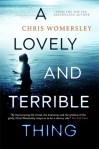
Book coverDescribed as “twenty macabre and deliciously enjoyable stories for readers of Fiona McFarlane and Lauren Groff”, Chris Womersley’s newest book – his debut collection of short stories – wasn’t necessarily a natural fit for me. I haven’t read Lauren Groff, but I have read and really liked Fiona McFarlane’s clever, memorable, The night guest (my review). However, the macabre is not something I naturally gravitate to. Still, I did like The great unknown (my review), edited by Angela Meyer, and I have been wanting to read Chris Womersley for some time, so I decided to put aside my reservations and give it a shot. I’m glad I did, because although there certainly is an element of the macabre here, the stories aren’t all so macabre that I felt the need to strap in for a shivery ride as the promos were also suggesting. This is not meant to put off those who like shivery rides, but to encourage those who don’t. It’s meant to say, in other words, that there’s something for most readers here.

The stories, in other words, do offer some variety. Most are told in first person male voices, but these voices range from children to teens to grown men, from sons and fathers, to brothers and friends, to husbands. There’s a hunchback, a junkie or two – and three stories use female voices. Despite this variety, however, there is an overall similarity in tone – somewhat melancholic, somewhat reflective. Many, in fact, are stories about something that happened in the past so they have that tone of – hmm, regret, or, if not that, of an uneasiness that has carried through to the present. Or sometimes, it’s just resignation. If you like nostalgia, this is not for you, as the first story makes clear:

My God, those suburban evenings, so full of hope and all its little victims. (“Headful of bees”)

So, what are they about? Fundamentally, and not surprisingly, they are about relationships – families, friends, neighbours, strangers, and, particularly, fathers and sons. Many relationships are under some sort of internal or external stress, or are unusual in some way. Most of these stories can be simply weird and, in some cases, even hopeful. But in other relationships, there’s power at play, and it is more often in these that the macabre, if not downright horror, ensues. In some stories, then, like the opening “Headful of bees”, a young person is mystified by the behaviour of an adult neighbour, while in others, such as the second one, “The house of special purpose”, a well-intentioned or naive person is cruelly taken advantage of by those who wield power.

The stories have been ordered in a way that manages our emotions. The truly macabre stories are interspersed with others, which reduces tension a little but also keeps us guessing. Will this story, we wonder, disturb and unnerve, or simply sadden us? There are a few truly shocking stories, and they include my favourites. Naming them, however, would spoil their impact. As one character, not from one of these stories, says:

You think you know people, but they always have something hidden away. It’s an awful lesson, corrosive … (“The age of terror”)

Fortunately, the collection ends on a story that, while containing tragedy, also offers hope about humanity. It’s not a happy story, but neither is it a complete downer, so we close the book feeling at least a little reassured that our journey has not been completely in vain.

Of course, there’s more to enjoying this book than the variety in and challenge of its stories. There’s also the writing. Womersley’s plotting and language is exquisite. I enjoyed his wordplays, and his use of metaphor. In “The middle of nowhere”, the drug-addicted protagonists are both literally and spiritually lost, and in “Growing pain”, a young adolescent girl’s grief and sense of alienation is manifested in a strange, physical way. Water features in many of the stories, as is signalled by the epigram from Moby Dick which ends with “as everybody knows meditation and water are wedded forever”. However, as everyone also knows, water is a paradoxical element – “another dimension, a netherworld” – that can both give and take. And so it is in these stories. Some of the most gruesome of them have water (or a place of water) at their core.

I said above that the stories are about relationships, which they are, but of course these relationships are explored through stories that deal with the things that confront us as humans. There are grieving parents and children, and people with regrets and failed aspirations. There are dreamers, junkies and mentally ill people. There’s birth and death, there’s deep love and desire for true connection, but there’s also revenge, child abuse and cruelty. Many of the stories explore, in some way, “the chasm that exists in all of us – between who we imagine ourselves to be and the person we truly are” (“The mare’s nest”). A character in “Dark the water, so deep the night” tells the young protagonist that “We tell stories to impose order upon the world, to give things meaning. To give us hope.” If there’s one thing we learn here, it’s that stories, on their own, can’t impose order. More often, they illuminate the chaos!

Of course, I didn’t love them all equally, and there is, as I’ve already said, some sameness to them. The tone is similar, and many are told by a narrator remembering the past. Also, many of the protagonists are young people trying to comprehend the adults around them, though there are older protagonists, including a 79-year-old woman in “The age of terror”.

However, I didn’t find one of them boring. This is not surprising because, although A lovely and terrible thing is Womersley’s first collection, he has been writing short stories for a long time. Sixteen of the twenty here, in fact, have been published before, from 2006 on, in some of the best literary magazines around, including Granta, Meanjin, The Griffith Review. Not a bad record, eh? The stories are, to be a little corny, lovely and terrible things. They take us, as another title in the collection suggests, to “the very edge of things”. What I like about them is that they do this with such control that, even when they push us to the limit, they feel true. Highly recommended.

Chris Womersley
A lovely and terrible thing: Short story collection
Sydney: Picador, 2019
270pp.
ISBN:

(Review copy courtesy Pan Macmillan Australia)

Monday musings on Australian literature: Books banned in Australia

Book coverThis week, my reading group will be discussing an American classic, Mary McCarthy’s The group. Published in 1963, it sat on the New York Times best-selling list for five months. It also has the honour of having been banned in Australia! I realised that I’ve never done a Monday Musings on banned books, so now seemed a good time …

Last year, in Banned Books Week, The Canberra Times’ Karen Hardy wrote on the subject. She quotes Meredith Duncan, Library Manager at the ANU, as saying that the main type of books that used to be banned in Australia were those “seen as obscene”. She told Hardy that our attitudinal changes towards sex and sexuality have shaped literary censorship over the years:

“In the introduction to one of the editions we have here of the Kamasutra, which was banned in Australia for many years, reads ‘This is only to be read by married men or medical professionals’.

“A lot of censorship revolved around the idea of women taking charge, a lot of men weren’t comfortable with that.”

As times changed, she said, “homosexuality became a hot topic”.

However, as a National Archives of Australia (NAA) blog post says:

Literary and scholarly works made up only a small proportion of the publications banned by Australian Customs. The bulk of prohibited imports were pulp fiction novels, comics, magazines and pornographic material. These items were considered to be a threat, not only to our morals, but also to Australia’s literary standards. They were banned by Customs under special provisions introduced in 1938 to address the growing number of cheap books and magazines entering the country.

Consequently, in the 1940s and 1950s, those popular pulp fiction crime and detective thrillers with their “themes of both sex and violence” were frequently banned by Customs. (Do check out the blog post to see a selection of these, such as Darcy Glinto’s Road floozie!) Adult magazines, too, “were often subject to blanket prohibitions lasting years”. Playboy, for example, was banned here from 1955 to 1960.

Most of the information below comes from posts on the NAA’s Banned blog which they published over 2013. It is worth checking out, as it includes a wonderful selection of primary source documents. Use this Books page link to check out individual banned books.

Ten books banned in Australia

  • James Baldwin’s Another country: partially banned in 1963, until 1966, allowed only for “the serious minded student or reader”. Among the comments made by Kenneth Binns, of the Literature Censorship Board, was that the description of a homosexual incident “on pages 367-375 would both shock and offend the average Australian reader for he is not as sex conditioned as are readers in most other countries”. (Oh, we innocent little Aussies!) He was also concerned that a ban might “even be associated with Australia’s misunderstood ‘White Australia’ policy and her refusal to support UN condemnation of South African Apartheid”. (Poor misunderstood Australia!)
  • William Burroughs’ Naked Lunch: banned 1960 to 1973. The last work of fiction to be banned in Australia, it was banned for being “hard-core pornography”. It was reviewed by the Commonwealth Literature Censorship Board in 1963 after Clem Christesen, Meanjin’s founder, applied to import the novel. The Board allowed Christesen’s request but unanimously agreed to retain the ban on the general sale of the book. Chairman Kenneth Binns said that “there is no need to note any particularly objectionable scene or passage for the book is so full of them and the general writing so extremely coarse that one need only consider the general character and tone”.
  • Aldous Huxley’s Brave new world: banned 1932 to 1937. Ireland was the only other country to ban it. The ban, says the NAA, was supported “with great gusto by church-related associations and temperance movements” but opposed by librarians (of course) and publishers. The NAA writes that the ban was lifted after the appointment of an Appeal Censor, and that “a sexually permissive culture did not follow, nor did a seditious and morally bankrupt one”. (Funny that!)
  • DH Lawrence’s Lady Chatterley’s lover: banned 1928 to 1965, for, says Duncan, being “sexually obscene, with explicit relationships”.
  • Mary McCarthy’s The group: banned in Australia, Italy and Ireland, says Wikipedia, for “being offensive to public morals.”
  • Grace Metalius’ Peyton Place: banned 1957 to 1971, after initial approval and dissension within the Board. Positive comments about its depiction of small-town America were set against opinions like those of, yes, Kenneth Binns. He thought the novel’s “profanity and obscene expressions” were excessive, and wrote that “It is unfortunate that Mrs Metalious is so flustered with sex, for she often writes well”.
  • Vladimir Nabokov’s Lolita: banned 1955 to 1965, though in 1964 its prohibition was appealed when the ANU’s Dr Bob Brissenden added it as a text for his course on American literature. Apparently, a member of the Liberal and Country Party State Council “wondered why students should not study books such as the Bible, or works by Milton, Shakespeare and Dickens” even though this was a course in American literature!
  • Philip Roth’s Portnoy’s complaint: banned 1969 to 1971, and the last work of fiction to be taken to court in Australia. The National Literature Board of Review called it “obscene”, “filthy”, while Chipman of the Department of Customs and Excise noted that it was a bestseller in the America where “permissiveness is unlimited”. (Take that, Americans!) However, literary experts, including Patrick White, argued that it had merits. Its banning history is interesting regarding the role of the states.
  • JD Salinger’s Catcher in the rye: banned 1956 to 1957, although it had been circulating in Australia since publication in 1951. Talk about after the horse bolting! As with most bannings, it resulted in discussion in the media. The Sydney Morning Herald wrote in 1957, that “this country has one of the most arbitrary – and perhaps one of the most inefficient – systems of book censorship in the world”. The Commonwealth Literature Board could, but didn’t have to, review books banned by Customs. In this case, the Board had “no hesitation” in releasing it!
  • Kathleen Winsor’s Forever Amber: banned 1945 to 1958, for its “crude and obvious appeal to the sexual instinct”, for lacking literary merit and over-emphasising sex. Customs Minister Senator Richard Keane said, “The Almighty did not give the people eyes to read that kind of rubbish”.

Counter-arguments for not banning, or for lifting bans, included practical ones, such as that the book was too expensive for many readers, and that the book was not likely to be of popular interest. (Of course, if they banned it, it would certainly become so!)

Finally, Karen Hardy reminded us in 2018 that there are several non-fiction titles still banned in Australia, including two guide books – Dr Philip Nitschke’s voluntary euthanasia one, The peaceful pill handbook, and The anarchist cookbook, on how to make explosives and weapons, and manufacture drugs. Further, some books remain restricted. Bret Easton Ellis’ 1991 novel, American psycho, for example, cannot be bought in Queensland by those under the age of 18.

As a librarian, I support the freedom to read (freedom of information.)

Comments anyone?

World Refugee Day – #StepWithRefugees

World Refugee Day was denoted by the UN General Assembly in December 2000, and has been celebrated on June 20 ever since. Why 20 June? Because this was the date on which many African countries had already been celebrating Africa Refugee Day. The Day’s aims, as for all UN International Days, are “to educate the public on issues of concern, to mobilize political will and resources to address global problems, and to celebrate and reinforce achievements of humanity.”

It’s probably worth, at this point, sharing the definitions provided by the UN on its World Refugee Day site:

  • Refugee: someone who fled his or her home and country owing to “a well-founded fear of persecution because of his/her race, religion, nationality, membership in a particular social group, or political opinion”, according to the United Nations 1951 Refugee Convention. Many refugees are in exile to escape the effects of natural or human-made disasters.
  • Asylum seekers: someone who says he or she is a refugee and has fled his/her home as refugees do, but whose claim to refugee status has not (yet) been definitively evaluated in the destination country. (And we all know how hard some countries can be, don’t we.)
  • Other related groups – Internally Displaced Persons, Stateless Persons and Returnees – are also included in their list.

There’s always been movement of people escaping their homes for a safer, more secure life, but over the last century they have included Jews escaping persecution before, during and after WW2, Southeast Asians (particularly Vietnamese and Cambodians) escaping civil strife around the 1970s, people of diverse backgrounds escaping the Yugoslav Wars of the 1990s, and the ongoing movement of people from multiple countries in the strife-ridden Middle-east, and South and Central Asia.

Anyhow, each year has a theme, with this year’s being:

#StepWithRefugees — Take A Step on World Refugee Day

I figured that one step could be to highlight some fiction and non-fiction Aussie books that might help educate us about the experience and lives of refugees, and thus in turn mobilise some action. So, here’s a small selection (alphabetically by author):

Non-Fiction

Behrouz Boochani, No friend but the mountains

Anna Rosner Blay’s Sister sister (1998) (my review): While I’m not sure the word “refugee” is specifically used in this book, Blay’s extended family left their home-land of Poland, after experiencing the atrocities of the Second World War, because post-war anti-Semitism meant it was no longer “home”. “We could feel we were not welcome”, Blay’s aunt Janka tells her.

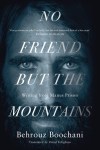
Behrouz Boochani’s No friend but the mountains (2018) by Iranian-Kurdish journalist who has been on Manus Island since 2013 – an inhumane and unacceptable situation. Most Australians will know this book, because it has won multiple literary awards over the last few months, including the Victorian Prize for Literature. I wrote about taking part in a marathon reading of it a couple of months ago, and Bill (The Australian Legend) reviewed it last week.

Anh Do’s The happiest refugee: My journey from tragedy to comedy (2010): I haven’t read this, but it’s hard to ignore. Do and his family came to Australia in 1980 on a boat from Vietnam. He was 3 at the time. His book chronicles the horrors of that trip, and the challenges of the family’s early years in Australia.

Alice Pung’s Unpolished gem (2006), Her father’s daughter (2011) (my review): Pung was born in Australia a year after her Teochew Chinese parents from fled Cambodia and the Khmer Rouge in 1980. Her two books share her experience of being the child of refugees. I have also written about a conversation between her and Sam Vincent at this year’s Festival Muse.

Olivera Simić’s Surviving peace: A political memoir (2014) (my review): Academic Simić writes about the challenges of being a refugee from the wrong side. It’s a moving, but also analytical, analysis of the long term impact of violence, on those who find themselves in the centre of it, though no choice of their own.

Fiction (long and short)

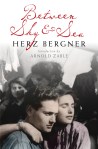
Hans Bergner, Between sea and skyHans Bergner’s Between sky and sea (1946) (my review): This is a gut wrenching story about a group of Jewish refugees from the Nazi invasion of Poland, bound for Australia on an old Greek freighter. The story is reminiscent of the historical MS St Louis which kept being turned away from port to port.

Michelle de Kretser’s Questions of travel (2012) (my review) and The life to come (2017) (my review): Migration has featured in a few of de Kretser’s books. In The life to come, a do-gooder employs refugees to serve food at her party, while other characters in the novel stereotype refugees and migrants. In Questions of travel, too, de Kretser reveals misunderstandings about refugees and other migrants.

Irma Gold’s “Refuge” in Two steps forward (2011) (my review): A short story about a medical officer in a detention centre, and her reaction to the dehumanisation she’s forced to be part of. Most of the stories we read focus on the refugees and asylum seekers themselves, so I appreciated reading this story from another perspective.

Nam Le’s “Love and honour and pity and pride and compassion and sacrifice” and “The boat” in The boat (2009) (my post): These two autobiographical short stories bookend the collection. They draw on his life and on his family’s experience of migrating to Australia from Vietnam as boat refugees, in 1979, when Le was just one.

AS Patric, Black rock white cityAS Patrić’s Black rock white city (2015) (my review): Patrić’s Miles Franklin Award winning book is about two refugees from the Yugoslav Wars, who, academics in their own country, are forced in their new one to work as cleaners and carers. Fiction, but oh so true! This is a complex book which fundamentally questions how are we imperfect humans to live alongside each other.

Arnold Zable’s Cafe Sheherezade (2003): It’s a long time since I read this unforgettable novel. As its name suggests, it contains multiple stories – in this case of Jewish refugees from World War 2. The novel’s cafe is based on an actual cafe in Melbourne which was frequented by displaced Jewish people. The book is confronting and affecting, and affirms the importance of memory and story to survival.

Once I started looking, I found, in fact, that I couldn’t stop. I apologise to all those authors I’ve read but not listed here, but hope this sample is representative.

Now, I’d love you to make your contribution to this commemoration of World Refugee Day by sharing some of your reading on the topic.

Monday musings on Australian literature: Irish-Australian writers

With yesterday being Bloomsday – at which Lisa (ANZLitLovers) took part in a reading marathon – I thought it might be interesting to talk about writers in Australia who have an Irish background. But, how to define this? Wikipedia lists hundreds of Irish-Australians, although not all are writers of course!

The Irish were among the first of colonial Australia’s immigrants. As Wikipedia describes it they came from the late eighteenth century on, as criminals, as prisoners of war, such as from the 1798 Irish Rebellion, and as settlers fleeing the Irish famine and the harsh years that followed. By the late 19th century Irish-Australians constituted up to a third of the country’s population – though definitions, here, are tricky. Certainly Wikipedia’s definition is pretty broad, so I’ve decided to narrow it to writers whose “Irishness” goes no further back than grandparents.

In popular imagination – and perpetrated by the Ned Kelly story – they were seen as the underdogs in colonial Australia, often oppressed and discriminated against. And there was some truth to that, related in particular to the persecution of Catholics in Australia, versus the “approved” Protestantism of the English. However, many Irish also thrived in the colony, and reached senior positions in the society. It’s a complex story, and is nicely summarised in an essay by National Museum of Australia curator Richard Reid.

Meanwhile, onto some writers, listed in chronological order of their birth.

Joseph Furphy (1843-1912)

Book coverFurphy, who used the pen-name Tom Collins, is often described as the father of the Australian novel. He was the son of Irish-born Samuel, a tenant farmer who migrated to Australia in 1840. Furphy’s most famous book, Such is life, published in 1903, is a fictional account of, says Wikipedia, “the life of rural dwellers, including bullock drivers, squatters and itinerant travellers, in southern New South Wales and Victoria, during the 1880s”. Its title comes from what are believed to be last words of our most famous Aussie Irishman, Ned Kelly.

I must say that I assumed that our slang term, “furphy” (meaning “tall story”) came from him. Seems likely doesn’t it? However, apparently, scholars believe it probably originated with water carts, produced by J. Furphy & Sons, which was owned by Furphy’s brother John. Interestingly, though, Such is life probably contains the first written usage of the Australian and New Zealand idiom “ropeable”.

Christopher Brennan (1870-1932)

Australian poet and literary critic, Brennan, was born to Christopher and Mary Ann, both of whom had migrated from Ireland. Brennan has appeared a couple of times on my blog, most recently as a poet admired by that American professor, Bruce Sutherland, who championed the study of Australian literature in the USA.

Brennan lived a colourful life, marrying a German woman he’d met while living in Berlin on a scholarship, then later divorcing her and living with Violet Stringer who died in an accident a few years later, in 1925. That year he had also been removed from his associate professorship at the University of Sydney University, due to his divorce (shocking, of course, in those days) and to his increasing drunkenness.

Brennan is regarded as one of Australia’s top poets, with his contribution being recognised in the Christopher Brennan Award.

Mary Durack (1913-1994)

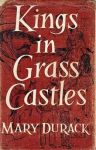
Book coverAuthor Mary Durack is best known for her Australian history classic, Kings in grass castles, about her family’s pioneering role in the Kimberley pastoral industry. The family’s story, as told in her book, starts with her grandfather, Patrick Durack (born 1834), who emigrated to Australia from Ireland in 1853 with his struggling tenant-farmer family.

I have reviewed Brenda Niall’s biography of Mary and her controversial sister, Elizabeth, True north: The story of Mary and Elizabeth Durack.

Jessica Anderson (1916-2010)

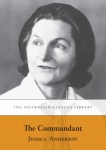
Jessica Anderson, The commandant Book coverAnd now we come to someone whom I’ve actually reviewed here, Jessica Anderson. Her father was the youngest of a large Irish family, and the only one born in Australia after the family emigrated here. Wikipedia says that Anderson’s mother, Alice, came from a staunch Anglican family, and disapproved of her marriage to the Irish Catholic Charles. Alice’s mother, for the rest of her life, refused to see Charles or any of her grandchildren. (Such is the power of prejudice, eh!)

The two novels of hers that I’ve reviewed here are her third (and her only historical fiction), The commandant, and her final one, One of the wattle birds. I read her best known novel, Tirra Lirra by the river, long before blogging. The commandant is about the real Scottish-born penal settlement commandant Patrick Logan (who was reputed to be strict-to-the-point-of-cruelty), his Irish-born wife, Letitia O’Beirne of Sligo, and her sister Frances. (Letitia did have a sister who lived with them, Hannah, but Anderson’s Frances, is, I believe, fictional.)

Thomas Keneally (b. 1935)

And finally, to round up this little list, is the well-known writer with a very Irish name, Thomas (or Tom) Keneally). Wikipedia says that both Keneally’s parents were born to Irish fathers. Apparently Keneally was known by that very Irish name “Mick” until he started publishing, at which point his publisher advised him to use his “real” first name.

Keneally is a prolific writer, and has won the Miles Franklin Literary Award, twice, as well as the Booker Prize for Schindler’s ark.

Wikipedia quotes Australian academic Peter Pierce as saying of Keneally, that

Keneally can sometimes seem the nearest that we have to a Balzac of our literature; he is in his own rich and idiosyncratic ways the author of an Australian ‘human comedy’.

Unfortunately, while I’ve read some of his work, and have mentioned him here before, I have not read any since blogging.

You’ll have noticed that, despite the title for this post, I haven’t tried to draw any conclusions about the impact of these writers’ Irishness on their work. I’ve simply taken the opportunity of Bloomsday to highlight what is a very long-standing tradition of Irish contribution to Australian literary culture. Oh, and to say, that it’s not all about Ned Kelly!

I’d love you to share any of your favourite Irish-background authors, in the comments.

Lecture and Book Launch: Australia’s first naturalists

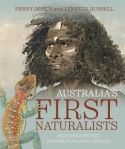
I don’t usually write up book launches, mostly because the speeches are brief, and I hope to eventually read and review the book itself. However, as the title of this post tells, the launch for Penny Olsen and Lynette Russell’s book, Australia’s first naturalists, was also billed as a lecture, hence this exception.

Australia’s first naturalists was published by NLA Publishing, and is subtitled Indigenous peoples’ contribution to early zoology. The event was MC’d by NLA curator Nat Williams, with the first speaker being Rebecca Bateman, who is the NLA’s first indigenous curator. She talked about the NLA’s collections relating to indigenous people, and how, in some cases, they contain information, including language, that can help people regain lost culture. Then it was over to the authors…

The authors

Penny Olsen, Honorary Professor in the the Australian National University’s Division of Ecology, Evolution and Genetics, has worked as a field biologist and ecological consultant, but now mostly writes books about Australian natural history. She started by saying that it feels like there’s been a sea change in awareness and appreciation of indigenous people’s part in Australia’s story (and I think she’s right.)

However, she said, while their roles as guides and trackers, as workers in the cattle industry, in mining, on stations, and in whaling, is well-known, less known is the significant role they played in the advancement of science – particularly in zoological science. She said that researching the contributions made by indigenous people was challenging, because sometimes their help would simply be referenced in a throwaway line. Other times, though, there would be more detailed accounts. Her reading of these relationships between indigenous people and scientists, was that indigenous people were willing, but also that the relationships ranged from exploitative to warm friendships.

Olsen then talked about some of the collecting partnerships she found – chronologically, starting with James Cook in 1770 – illustrating them with powerpoint slides. These partnerships involved activities such as indigenous people locating specimens, and sharing their knowledge about animal behaviour.  Sometimes the indigenous people were named, sometimes not. Sometimes scientists worked with individuals, sometimes with families or whole groups. It was fascinating, and whetted my appetite for the book!

She finished with a quote from geologist Cecil Thomas Madigan’s 1946 book, Crossing the dead heart, which included:

… but I knew the value of natives on trips such as these, real bush natives who know the habits of all bush creatures and catch them. They are of the greatest help to the biologist and botanist in collecting …

(She also made a disclaimer about the terminology – like “natives” – that is used in historical sources.)

Then it was co-author Lynette Russell’s turn.

Lynette Russell, Professor at Monash University’s Indigenous Studies Centre, among other roles, calls herself an anthropological historian who focuses on developing an anthropological approach to the story of the past. She welcomed us briefly in the language of her great-grandmother – and then commenced, not surprisingly, by saying that “stories are important to understanding the past”. She won’t get any disagreement from us on that, will she?

Anyhow, she then shared various stories, also using images to support her points. She explained, for example, how long-lived traditions in indigenous culture contain information about climate change, such as the rise of sea levels, and how rock art provides evidence of indigenous peoples’ understanding of anatomy. She talked about how millennia of fire-stick farming has resulted in many Australian plants being fire resistant. And she commented on the arrival of feral animals, and their impact on indigenous peoples’ ability to sustain their environment.

The book is organised chronologically into 5 chapters, with the first chapter titled “Pre-European: Australia’s first naturalists”, and the last, “Epilogue: Contemporary Aboriginal and Torres Strait Islander Land and Sea Managers”. This last chapter, she said, discusses Indigenous Protected Areas, and indigenous ranger programs, which enable those who so desire to remain living on country and thus to maintain their traditional ecological knowledge and ensure its continuity. Traditional ecological knowledge is, she said, an “attribute of societies having continuous connection to their country”. Aboriginal peoples’ faunal knowledge is still extant; creating these new collaborations, replicates in some senses, those of the 19th century. Now, like then, indigenous people are generous with their time and knowledge.

She referred to Bruce Pascoe’s Dark emu (my review), saying it has managed to make promulgate more widely information about indigenous land management practices that archaeologists have known for a long time.

Finally, she noted that this book is an act of reconciliation.

Q & A

There was an interesting Q&A, with topics being:

  • why indigenous people wear clothing in some pictures and not others: they were interested in clothing, and were often “paid” in clothing.
  • why this information about expeditions has escaped us for so long: Australian history has focussed on squatters, and tragedies (like the Burke & Wills Expedition), but their research has uncovered a different story about real relationships and friendships.
  • whether the names of any indigenous people were used in scientific names for creatures they helped scientists “discover” (good question!): they couldn’t find any!
  • what was the quality of the expeditions in terms of their end-product: most were good for their time but tend to lack information we’d like today, such as animal behaviour, distribution, ecology. Their focus was – surely understandably? – more on identifying, categorising and naming.
  • what motivations did indigenous people have to help, besides being given items like sweets and clothes: friendship, it seems, and a genuine interest in these strange white men.

It’s encouraging to see yet another book furthering scholarship and understanding of indigenous peoples’ lives and culture, and of their very real role in forming modern Australia. A most enjoyable launch.

Lisa (ANZLitLovers) has already reviewed this book!

Lecture and Book Launch: Australia’s first naturalists
National Library of Australia
11 June 2019

Monday musings on Australian literature: Some queer Australian writing

Well, it’s Gay (or LGBT) Pride month in the USA, and since I don’t think we have a specific national month here, I thought I’d give a little shout out to some of our queer writers. Now, I’m not sure about labelling, but Readings bookshop posted three years ago on “queer reads”, while Wikipedia has a category called Australian LGBT Writers and the Australian Women Writers challenge has a list for Lesbian and Queer Women Writers. I have settled on queer for the title of this post, which I hope is acceptable.

That was the first decision. The next concerned how to narrow this post down to something that would be interesting but not too long. This involved some arbitrary decisions. One was to focus on fiction (including verse novels). This means no memoirs or other forms of writing. The other was to focus on content rather than the writer. In other words, I think it’s worth sharing some works that put queer people in the picture, because too often their stories are hidden. The more we see that everyone’s stories have similar truths – recognising of course that some of us don’t have to hide, or face discrimination and abuse – the better our world can be. However, even with this narrowing, there are too many books, so I’ll be focusing mostly on books I’ve reviewed here, with a ring-in!

So, here’s a small selection in alphabetical order:

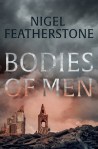
Nigel Featherstone, Bodies of men

Nigel Featherstone’s Bodies of men (my review): The most recently reviewed book in this list, Bodies of men is primarily a story about men and war, about what being a man is. But it is also a love story between two men, at a time when such relationships were taboo. However, while the relationship and its challenges are important, they are not, really, the defining issue that the two male protagonists confront in the novel.

Susan Hawthorne’s Limen (my review): A verse novel about two women on a camping trip, this focuses on issues and challenges external to the nature of their relationship, on changes and thresholds, physical and perhaps spiritual, to be faced.

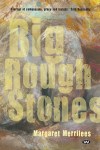
Margaret Merrilees, Big rough stones

Margaret Merrilees’ Big rough stones (my review): Spanning roughly three decades from around 1970s on, this novel tells the lives of Ro and her lesbian sisterhood in Adelaide. While Ro’s romantic relationships form part of her story, this book more widely encompasses the feminist activism and sociopolitical concerns of those decades.

Dorothy Porter’s Monkey maskFirst published in 1997, this verse novel can, I think, be called a classic. Because I haven’t, to my shame, read it, I’m going to quote for you part of the blurb at GoodReads: “Fuelled by homicide, betrayal, and a femme fatale to go to hell for, The Monkey’s Mask is an erotic mystery novel written in verse. But forget what you know about poetry. This is not a love sonnet. From one of Australia’s most innovative writers, The Monkey’s Mask drives headfirst into murder, manipulation, and the consuming power of sex, and is a thriller to make other whodunnits seem mild”.

Ellen van Neerven, Heat and light, book cover

Ellen van Neerven’s Heat and light (my review): This complex book, with its three separate sections, explores all sorts of indentities, with, in the middle section, a very clever exploration of “othering”. The Readings post mentioned above describes it as follows: “Many of the characters are queer and Neerven writes about sexuality with a light touch that never feels forced.”

So, a small selection, but a varied and, I think, interesting one.

Now, before I conclude, I want to discuss what was really the first decision I made in writing this post – whether to write it at all. I’m still not sure it’s the right thing to do, and yet, promoting “diversity” is seen as a good thing. Diversity, in this sense, means, recognising that people vary in such ways as “race, ethnicity, gender, gender identity, sexual orientation, age, social class, physical ability or attributes, religious or ethical values system, national origin, and political beliefs”. And promoting “diversity”, of course, is seen as a good thing because, historically, the majority – white heterosexual men, in particular – have controlled the stories that are told about who we are. I get this. It’s why I like to read widely. But I’m also uncomfortable labelling people, because it feels like slotting people into boxes, suggesting that that label is all they are. So, in the interests of balance, I refer you to this excellent post by novelist Andrea Goldsmith on her blog on the whole practice of labelling LGBTQI people. She makes sense to me, and makes me almost decide to pull this post. But, I’ve written it, and I’m hoping it serves a purpose, so I’ve decided to leave it here.

What do you think?

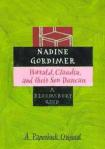
Nadine Gordimer, Harald, Claudia, and their son Duncan (#BookReview)

There are authors I read long before blogging whom I really want to document here, in some way. One of these is Nobel Laureate Nadine Gordimer who first came to my attention in 1983 with her memorable, confronting 1956 short story collection, Six feet of the country.

Nadine Gordimer, as I’m sure you know, had a lifelong concern for economic and racial inequality and injustice in South Africa, and this is evident in her short story, Harald, Claudia, and their son Duncan. The story is told third person through the perspectives of a mother and father, the titular Claudia and Harald. Early in the story, they are visited by Julian, their 30-year-old son Duncan’s friend. They assume there’s been an accident, but

This Julian draws the flaps of his lips in over his teeth and clamps his mouth before he speaks.

A kind of … Not Duncan, no, no! Someone’s been shot. Duncan, he’s been arrested.

This description of Julian is so typical of Gordimer in the way, in a few words, she conveys something grotesque, something that feels more than the bringing of bad news, even before we know why he is there.

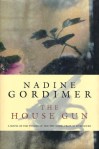
Book coverHowever, this 1996 story is particularly intriguing because it seems to be related to her 1997 novel The house gun. As far as I can tell, the first third of the story I read is very close to the first chapter of that book, but after that I don’t know. I do know that the details of the crime seem a little different in “my” story (but it may just be that they are not fully revealed). Also the novel’s Duncan is 27, while the story’s Duncan is 30. So, did Gordimer write the short story and then decide to flesh it out into a novel? I don’t know, but here is what Wikipedia says about The house gun, which was her second post-apartheid novel:

It follows the story of a couple, Claudia and Harald Lingard, dealing with their son Duncan’s murder of one of his housemates. The novel treats the rising crime rate in South Africa and the guns that virtually all households have, as well as the legacy of South African apartheid and the couple’s concerns about their son’s lawyer, who is black.

While the short story doesn’t emphasise all this, there is a reference to people having guns for protection, and there’s the sense that we are dealing with the post-apartheid world.

Anyhow, back to the story. What I love, as I’ve already intimated, is how Gordimer creates tone. Here’s our couple on hearing that the crime for which Duncan has been arrested is murder:

He/she. He strides over and switches off the television. And expels a violent breath. So long as nobody moved, nobody uttered, the word and the act within the word could not enter here. Now with the touch of a switch and the gush of breath a new calendar is opened. The old Gregorian cannot register this day. It does not exist in that means of measure.

What a wonderfully fresh way of conveying the sense of discombobulation, of unreality, that results when the world seems to change in an instant.

From here – it’s a Friday – we follow Harald and Claudia through to their son’s arraignment on Monday, and into the hours immediately after, at which point the story ends, fairly suddenly.

One of the themes, in the story anyhow, concerns the idea that no matter how much you try to lock yourself away from the “outside”, you can’t keep it from coming in. This has a political as well as a personal reading. The story starts by telling us that Harald and Claudia had recently moved from a house to a “town-house complex with grounds maintained and security-monitored entrance”. Later in the story, Claudia, a doctor, does her shift at the clinic which services “areas of the city and once genteel suburbs of Johannesburg where now there was an influx, a rise in and variety of the population.” During this shift, she considers the pain that it is her job to assuage – the pain that comes from inside, like a tumour, and that which comes from the outside, like being burnt or, yes, hit by a bullet. She reflects:

The pain that is the by-product of the body itself, its malfunction, is part of the self; somewhere, a mystery medical science cannot explain, the self is responsible. But this – the bullet in the head: the pure assault of pain.

This is surely a metaphor for that fear of the “outside” by the well-to-dos who choose to live in security-monitored complexes. What’s inside, the implication is, cannot be necessarily controlled but it’s part of your own world; what’s outside is to be feared. In this section of the story, there are references to socioeconomic differences. Claudia gives out diet sheets, for example, to people, mostly black, who, she knows, are “too poor for the luxury of these remedies”.

It is, then, just the sort of story I like to read. The careful word choice, the slightly odd syntax, plus things like the references to class and race, combine to convey something that is more than a simple murder plot involving a son and his devastated parents. As the narrator slyly says:

This is not a detective story. Harald has to understand that the mode of events that genre represents is actuality, this is the sequence of circumstantial evidence and interpretation by which a charge of murder is arrived.

Circumstantial evidence and interpretation. The stuff of complex lives in complex times, eh? I’d like to read the novel now.

Nadine Gordimer
Harald, Claudia, and their son Duncan
London: Bloomsbury Publishing, 1996
(A Bloomsbury Quid)
41pp.
9780747528913

Nigel Featherstone, Bodies of men (#BookReview)

Nigel Featherstone, Bodies of menNigel Featherstone’s latest novel, Bodies of men, is a brave book – and not because it’s a World War 2 story about love between two soldiers at at time when such relationships were taboo, though there is that. No, I mean, because it’s a World War 2 story that was inspired by Featherstone’s three-month writer-in-residence stint at the Australian Defence Force Academy, in 2013. That’s not particularly brave, you are probably thinking, but wait, there’s more. What’s brave is that this novel, this story inspired by that residency, is about some darker sides of war – it’s about deserters, and violence from your own side, for a start … It’s certainly not about heroics, or, to be accurate, not the sort of heroics you’d expect. Courage, it shows, comes in many forms.

Here is what self-described pacifist Featherstone wrote in his blog two months into his residency:

I came here with the idea of exploring ‘masculinity in times of conflict’ …  Perhaps, like always, I’m being driven by that central question: what does it mean to be a good man, which, of course, is almost exactly the same as asking, what does it mean to be a good person?  But the military, especially the Australian kind of military, is all about men, isn’t it, the warrior, that iconic ‘digger’, that myth of our country, that brave saviour of everything we’re meant to stand for (whatever that is).

Those men who could do no wrong.  Except I don’t believe that for a second.

So, what did Featherstone actually write? It’s the story of two Australian soldiers from Sydney. William is from a conservative, well-to-do North Shore Sydney family, with a Member of Parliament father, while James comes from a poorer working class family, with a widowed mother who runs a shop but who’s also a socialist, a pacifist, and committed to helping homeless people. The boys had met and spent a few times together in their youth, but had lost touch for some years – until they find themselves in Egypt in 1941.

The novel opens with a reconnaissance that turns into an ambush. At an important moment, William, just off the boat, prevaricates, but James, there with a different military section, takes the initiative, and saves the day. The men vaguely recognise each other – “The officer”, thinks James, “does look familiar … but no it can’t be” – but have no opportunity to follow up, each returning immediately to their sections. From here the narrative, told third person from the alternating perspectives of William and James, follows the two men on their different paths. William, soon to be a lieutenant, is sent to manage a training camp in the desert. Believing he needs to redeem himself from that first experience of action, he sees this as an opportunity. He excels as a leader of men, finding the right balance between toughness and friendliness, but is dogged by his cold father’s voice, and worries about his ability to be the man his father expects. However, his mind is on that young man he glimpsed. Meanwhile, James goes AWOL on a military motorbike, which he crashes. Luckily, a family takes him in, a family which has its own tricky background and secrets, but James is just the right person to not rock their boat, so a warm relationship develops.

It’s not long before William works out a way of tracking James down. The story is told chronologically, but with frequent flashbacks which fill in that boyhood friendship. It was short, but intense. Both felt it, but William, in particular, struggled to understand it. It is therefore James, who, upon their renewed acquaintance, takes the lead – and the novel becomes, in part, a love story. Featherstone finds the right balance, here, conveying their tenderness and warmth, without sentimentality. We are never allowed to forget that this is war-time, and that both William and James are taking serious risks in their desire to be together.

However, this is not simply a boy-meets-boy, boy-loses-boy, boy-finds-boy again story. As mentioned above, Featherstone’s goal was to explore what it means to be a good man, against the backdrop of war. We do see some action, besides that opening scene, and there is an over-riding sense that something sinister could happen at any moment, but the main theme concerns men and their reactions to their circumstances – soldiers, men in hiding, men displaced, men in resistance. Each of these men provides the reader with a perspective on how men might choose to be. Courage and risk-taking, passion for a cause, recklessness, fear, commitment to helping others, tenderness and kindness – all of these come into play as the story progresses. And, as in all good novels, there are no simple answers. A love story this might be, but a genre romance or war-story it’s not.

How does Featherstone achieve this? Well, sometimes it’s hard to pinpoint these things, isn’t it? In a later post on his blog, Featherstone says that he wrote 38 drafts. You can tell this, and yet you can’t tell. You can tell, because you can feel the craft in the book. You can’t tell, because it also feels organic, not overworked. There’s skill in that. This skill includes the characterisation. William and James are sensitively fleshed out, well individuated, and grow through their experiences. But there are other characters too, including two strong women characters. James’ grounded, supportive mother is one, and open-minded Yetta, the woman who cares for James after his accident is another. It is she who articulates some of the novel’s main messages, including:

‘People must care for people. It’s not more complicated than that.’

There’s skill also in the narrative structure. The novel has a lightly episodic touch, with little breaks marked on the paper between “scenes”, but the story nonetheless flows. These breaks simply provide a way for the narrative to be progressed without unnecessary explication.

And, of course, there’s the writing. It’s spare, and yet perfectly evocative – of life at William’s desert camp, of the nervous busy-ness of war-time Alexandria where wells of quietness can also be found, and of William and James’ love. Here’s an example showing the edgy sort of tone Featherstone creates:

But now, something new: he was – he and James both were – sliding into the back seat of a car. They were being driven along one of Alexandria’s palm-lined boulevards; before long they were surrounded by blackness. William wound down his window and was about to yell, BUGGER THE WAR! – the night was getting away from him – but he managed to drag the words back down to where they belonged, in the pit of his gut.

Bodies of men, then, is a war novel that questions war. But, it is told with a generous touch that doesn’t undermine or betray those who choose to go. It’s a page-turner, underpinned by a fundamental understanding of humanity. It’s a very good read.

Nigel Featherstone
Bodies of men
Sydney: Hachette Australia, 2019
324pp.
ISBN: 9780733640704


Monday musings on Australian literature: American apologist for Australian literature

If you read my 1965 series Monday Musings post on literary visitors, you will know the subject of this post. It’s Professor Bruce Sutherland, who was credited with establishing one of the first university courses on Australian literature in the USA (at Pennsylvania State University, in 1942) and who became the first American Professor of Australian Writing in 1950. He was regarded as a pioneer in promoting the study of “Commonwealth literature.”

Tischler, writing about Sutherland in Antipodes, says that, originally a medievalist, he was converted, saying that “Nowadays, I prefer to feel the keen wind of the contemporary world blowing through my study windows.”

Hume Mystery of a Hansom CabSo, he offered his course for the first time in 1942, just after Pearl Harbor was attacked. Australian books were hard come by in the American market, and with the war, they became “almost impossible to import”. Tischler says that at the time he started the course there were four Australian titles in the Penn. State Library:

  • John Boyle O’Reilly’s Life … with complete poems
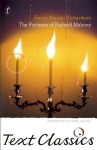
  • Henry Handel Richardson’s The fortunes of Richard Mahony
  • E.W. Horning’s Stingaree 
  • Fergus Hume’s The mystery of a hansom cab (my review)

I wonder how many Aussies know all these? I’ve only vaguely heard of two of them: O’Reilly and Hornung. Anyhow, Sutherland began collecting Australian literature, resulting in Penn. State having “one of the best research collections outside Australia”. Carter and Osborne write that Sutherland’s teaching and his collection of Australian books “became a touchstone for the organised study of Australian literature in America”.

His first courses, Tischler says, relied heavily on a Henry Lawson short story collection, a poetry collection, Katharine Susannah Prichard’s Moon of desire, Richardson’s The fortunes of Richard Mahony, Miles Franklin’s All that swagger, and Kylie Tennant’s Battlers. She praises this selection for its “openness” and “willingness to include women as well as men, popular and classically shaped pieces, modern and nineteenth-century titles.”

In 1945, Sutherland wrote an article titled “Australian books and American readers” for America’s The Library Quarterly. He listed some of his favorites, says Tischler,

noting that Richardson was “perhaps the greatest living Australian novelist”. Others, whose works he cites are Marcus Clarke, Lawson, Joseph Furphy, Prichard, Christina Stead, Tennant, Eleanor Dark, Edith Littleton [sic], and Xavier Herbert.

Edith Littleton? Ah, it’s Edith Lyttleton, who wrote as GB Lancaster. She won the ALS Gold Medal in 1933, but seems to have lived mostly in New Zealand.

In a Meanjin article in 1950, Sutherland described his course, explaining that he examined the general movements in Australian literature, using materials, writes Tischler, “covering history, geography, explorations, flora and fauna, customs and manners, travel, biography, and literary criticism”. He included all the major forms – novels, short stories, poetry, plays, and essays. Tischler suggests he was teaching at a good time, being before the explosion in opposing ideas about literary criticism. He could, she writes, “simply bring his interest in social, historical, and biographical criticism to bear on his criticism, rather than limiting himself to the text as the “New Critics” might have done, or questioning the text and its voice as the “Deconstructionists” might have done later on.”

Sutherland did visit Australia, as we know from my Monday Musings. His first trip, though, was not 1965, but 1951 on a Fulbright scholarship to study A.G. Stephens, that long-term editor of The Bulletin “whom he considered Australia’s foremost literary critic.” Sutherland was apparently an affable man who could get on with all sorts of people. Tischler quotes the Sydney Telegraph as saying that he looks like “the young Abe Lincoln, speaks like a college educated Gary Cooper, and has the homespun simplicity of Will Rogers.” He became good friends with Miles Franklin.

“There is more to Australian literature than most Australians realise” (Sutherland, 1952)

He also – and many of us won’t be surprised by this – found that Australia’s university students back then were mainly interested in “a classical, academic course of study” which limited their engagement with their own literature and culture. Sutherland’s response was to take “on the role of apologist and critic” for our literature! Nice that someone did, eh?

Things did improve, he noticed, over time. Nonetheless, in the second issue of Australian Literary Studies, in 1963, he noted that although there is literary criticism in Australia “no Australian author is in danger of being smothered under an avalanche of critical commentary”. Hmm …

In his Meanjin article “An American looks at Australian literature”, Sutherland, Tischler explains, said he was looking for an “indigenous” literature, “an honest and sincere attempt at self-expression in Australia”. Australia had “no Emerson, no Hawthorne, no Melville, no Poe, no Whitman” all of whom “combined a knowledge of old world culture with new world conditions”. But, it did have, he said, Shaw Neilson and Christopher Brennan. Also, Henry Kingsley was “a rough Australian equivalent to Fenimore Cooper”; and “in For the term of his natural life” could be found, he said, some of the moral indignation that produced Uncle Tom’s cabin”. He believed that there were many other parallels “among local colour and regional writers of both countries”. Indeed, he said, “Tom Collins could well have been an Australian Mark Twain had he been recognized soon enough and given the backing and encouragement that Twain received from the common man in America.” Darn it, eh!

Book coverI hope you’ve enjoyed this little portrait. I’ve loved discovering this American enthusiast for our literature. I’ll finish with comments he made about one of his favourite Australian authors, Henry Handel Richardson, after her death. He said (reported The Argus in 1946) that she’d been “snubbed by her old school and ignored for many years by the [Australian] reading public” but that “she nonetheless regarded herself as Australian” which was demonstrated by “her choice of Australia as the background for most of her work.” Of The fortunes of Richard Mahony, he wrote

in this family chronicle she reached her highest peak as a writer, as an analyst of character, and as a proponent of tragedy that is Shakespearian.

Oh, to have such a supporter, eh?

Sources:

  • Book news: American Tribute (1946, July 27). The Argus. p. 15.
  • Carter, David and Bruce Osborne. Australian books and authors in the American marketplace 1840s–1940s. Sydney University Press, 2018. p. 338.
  • Praise for Australian literature (1952, June 17). The Age. p. 2.
  • Sutherland, Bruce. ‘Review by Bruce Sutherland.’ Australian Literary Studies, vol. 1, no. 2, 1963.
  • Tischler, Nancy. ‘Bruce Sutherland and images of Australia.’ Antipodes, vol. 7, no. 2, Dec. 1993, pp. 135-138.