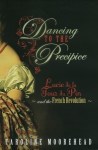
Caroline Moorehead, Dancing to the precipice (#BookReview)

Unusually, my reading group read two biographies about non-Austrian women this year, Jane Fletcher Geniesse’s book on Freya Stark (my review) in January and now, this month, Caroline Moorehead’s book Dancing to the precipice: Lucie de la Tour du Pin and the French Revolution on the French aristocrat Henriette-Lucy, Marquise de La Tour-du-Pin-Gouvernet. Interestingly, Moorehead has also written a biography of Freya Stark. Moreover, while Caroline Moorehead is an English writer, it turns out that her father was the Australian war correspondent and historian Alan Moorehead. How tangled is all this!

But now the book itself. Dancing to the precipice chronicles the life of French-born aristocrat Lucie, from her birth in 1770 to her death in 1853, a period which, you’ll realise, covers some of Europe’s and, in particular, France’s most tumultuous times. Lucie de la Tour du Pin, as Moorehead calls her, saw most of it up close and personal, but somehow managed to survive. The evocative title conveys a sense of how tenuous that survival could be. It comes from Lucie’s own words written just before the storming of the Bastille. She wrote:

Amid all these pleasures we were laughing and dancing our way to the precipice.

Lucie, Moorehead tells us, went on to say that while this blindness was pardonable among the young, it was “inexplicable in men of the world, in Ministers and above all, in the King”. She wasn’t wrong – and the rest of the book tells us how often throughout their lives they nearly went over the precipice.

Dancing to the precipice is a thorough work, thorough in its description of Lucie’s life, and thorough in the research carried out by Moorehead. The biography is footnoted (though not intrusively) and contains an extensive list of sources at the end. It is also well-indexed. All of these are important – to me, anyhow! The reason the book is able to be so thorough – without Moorehead ever needing to resort to gap-filling – is because her life is so well documented, by herself primarily.

Lucie, in fact, has been described as the Pepys of her generation because of the memoir she started writing when she was 49. Titled Journal d’une femme de 50 ans, it was published posthumously and covers her life through the Ancien Régime, the French Revolution, to the time of Napoleon, until March 1815 when he returned from exile on Elba. In her Afterword, Moorehead explains that in addition to this memoir, which apparently has never been out of print, she had access to an extensive collection of letters written by Lucie to a god-daughter and many others, and the papers and correspondence of her husband. A wealth of resources that I suspect many biographers would die for.

Except, it’s perhaps this wealth that has caused my one little criticism of what is, really, an excellent biography. My criticism, as you’ve probably guessed, concerns the amount of detail in the book. There were times when I wondered whether I really needed to know as much as she gave, for example, about the wedding of a half-sister or the love-life of her friend. In terms of social history, perhaps yes, but there were times I wanted a tighter focus, and to not be inundated with quite so much information about so many people. That said, Dancing to the precipice is a fascinating story about an astonishing period of history and an engaging and resilient woman.

There were many aspects of the book I enjoyed, starting with refreshing my old high school and university history studies in the French Revolution. As Moorehead revealed each new phase in that tortuous process by which France moved from the ancien regime to the final republic, I remembered. I loved the description of Lucie and her husband’s time as émigrés in Albany, NY, in America, and the resourceful way they fit into the life there, despite their aristocratic training. I also loved the descriptions of fashion and food in Paris, and of the salons, and the role played by women in encouraging intellectual discussion and debate. Every time the émigrés felt it was safe to return to Paris, the salons started up again (until, eventually, they didnt!) Moorehead draws a stark comparison between the engagement of women in public debate in France versus that of their English counterparts:

Englishwomen remained, to the surprise and annoyance of their French guests, firmly in their segregated and inferior places, expected to withdraw after dinner to allow the men to talk literature and politics. In England, a visitor smugly remarked, women were ‘the momentary toy of passion’, while in France they were companions ‘in the hours of reason and conversation’. As Jane Austen put it, ‘Imbecility in females is a great enhancement of their personal charms’, something that Lucie, brought up to talk intelligently, would find extraordinary. (Loc 4713)

What most retained my interest in the book, though, was Lucie herself. Always the aristocrat but also believing in the need for change, her resilience and resourcefulness in the face of blow after blow was inspiring. Besides the escapes from France and the returns, only to have to escape again, there was the loss of her children. Only one from her ten pregnancies outlived her, something Moorehead argues was extreme, even accounting for the times. Lucie was also unusual for a more positive feat, that of having a successful, loving marriage for 50 years. She and Frédéric were, it appears, true partners.

So, there was more to enjoy about the biography than to criticise, and I’m very glad I read it. I’ll conclude with a quote from the book describing Frédéric’s last days, and his statements about the importance of studying history:

He now spent much of his time in his room, reading and writing to [grandson] Hadelin, long letters mulling over his own life and urging the young man to study, to think on serious matters, to develop a taste for reflection. He should turn, he wrote, towards ‘the vast questions of humanity: there you will find true riches’. […]  It was in history, he told Hadelin, that he should seek to find ways of understanding the world, and to learn how to make his mark on it; for it was to history that ‘one must look to discover motives and judgements, the source of ideas, the proof of theories too often imaginary and vague’. Reflection, he added, was ‘the intellectual crutch on which the traveller must lean on his road to knowledge’.

It’s astonishing that this couple who, Moorehead writes, stood out “for the reckless ease with which they challenged political decisions they considered to be lacking in morality or common sense”, regardless of who was in power, survived into their old ages. It says, I suspect, something about both the respect with which they were held and their ability to judge when it was time to skedaddle. A most interesting read.

Caroline Moorehead
Dancing to the precipice: Lucie de la Tour du Pin and the French Revolution
London: Vintage, 2010
ISBN: 9781409088929 (ePub)
Monday musings on Australian literature: Teaching indigenous texts

This post was inspired by an email I received from Reading Australia announcing a partnership with the Broome-based indigenous publisher Magabala Books for a project that was

inspired by the many teachers who reached out to Reading Australia to ask for more resources on works by Indigenous creators, and particularly units that showed non-Indigenous teachers how to teach Indigenous texts.

Then, quite coincidentally, I read on my Twitter feed this morning about a one-day seminar that had been run last week by AustLit’s BlackWords (about which I’ve written before) called Teaching with BlackWords Symposium – so I decided to broaden this post a little. As someone who is keen to promote and review indigenous writing but is always a bit anxious about it, I’m thrilled to see programs like these offering to help people who feel the same and who have formal responsibilities for teaching and sharing.

Reading Australia and Magabala Books

When I clicked on the link in my email announcing the Reading Australia-Magabala Books partnership, I discovered that this was the second such project, supported because of the success of the first. Both projects are funded by the Copyright Agency’s Cultural Fund.

The first project, implemented in 2017, involved Magabala Books creating resources for 15 books for primary school teachers to use in classrooms. You can access resources for 11 of the nominated 15 books on the Magabala site. I’m assuming that the rest is still to come.

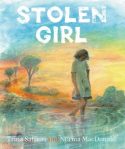
Saffioti, Stolen girlSo, for example, the resource for Stolen Girl (which was written by Trina Saffioti and illustrated by Norma MacDonald) starts with a section titled “connecting to prior knowledge” and points teachers to additional resources like the Bringing them home report. The resource says the book is suitable for around Year 4 (ie around 9-10 year olds). It starts by encouraging children to think about the meaning of “home” and the difference between “house” and “home”. It asks teachers to carry out an Acknowledgement of Country, to discuss its meaning and to talk about the name of the country in which the school is located. It also refers them to use stories from a site called Australians Together. These are just a few of a whole raft of activities helping teachers explore the ideas and history behind this book.

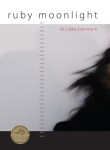
Ali Cobby Eckermann, Ruby MoonlightThe 2018 partnership turns to secondary school teaching. It identifies 8 books (listed in the order used on the site) for which resources will be written:

  1. Becoming Kirrali Lewis by Jane Harrison
  2. Dark Emu by Bruce Pascoe (my review)
  3. Grace Beside Me by Sue McPherson
  4. Jandamarra and the Bunuba Resistance by Banjo Woorunmurra and Howard Pederson
  5. Ruby Moonlight by Ali Cobby Eckermann (my review)
  6. Songs That Sound Like Blood by Jared Thomas
  7. Ubby’s Underdogs: Heroes Beginnings by Brenton E. McKenna
  8. Us Mob Walawurru by David Spillman and Lisa Wilyuka

I’ve only heard of a few of these books, but from what I do know it looks like a good variety.

I wonder how well promoted this program is, and how much it is being used in schools?

Teaching with BlackWords Symposium

Moving up the educational tree, the BlackWords Symposium was geared to secondary and tertiary teachers. The symposium was subtitled Best Practice for Teaching with Indigenous Stories, and promoted as “an important professional development event for teachers.”

The promotion continued:

Have you ever felt concerned, awkward about, or ill-prepared to teach Indigenous authored texts and issues into your classroom?  Would you like advice on how to respectfully use Aboriginal and/or Torres Strait Islander stories and history in your teaching? Do you think your teaching could benefit from a deeper understanding of the concerns and issues that First Nations writers address in their work?

The symposium was apparently sold out. How wonderful is that?

The  speakers were some of our big movers and shakers in promoting indigenous literature, Dr Anita Heiss, Professor Larissa Behrendt, Dr Sandra R. Phillips, and Samuel Wagan Watson. Also, someone I don’t know, Lindsay Williams, described as the “English Teacher Guru”, led a workshop on “using AustLit’s BlackWords resources in the classroom”. The day was chaired by Anita Hess and Kerry Kilner (of AustLit). AWW team member and author Jessica White, whose novel Entitlement I’ve reviewed, tweeted that it was “an amazing day”. Lucky her.

Things are happening, consciousnesses are being raised – but we are a long way, yet, from resting on our laurels.

Non-fiction November 2017, Weeks 4 and 5

Nonfiction November 2017 bannerIn my last My Literary Week post, I took part (sort of) in the Non-Fiction November meme, giving my responses for the first three weeks. Because the last two weeks ask some questions, I’d like to answer, I’ve decided to combine them is a second post. It’s probably cheating, but …

Week 4, Nov. 20 to 24: Nonfiction Favorites

For this week the question is to discuss our favourites and what makes them so. Is it to do with the topic? Or the style, or tone? Or what?

Helen Garner, This house of grief book cover

Courtesy: Text Publishing

I can name some non-fiction books that I remember years after I finished them, but can I find some common threads in them? Well, perhaps, and it’s not the topic. For example, a non-fiction work that stands out for me is one I read before blogging, so that’s more than 10 years ago. It’s Erik Larson’s Isaac’s storm about the lead up to and aftermath of the damaging 1900 hurricane in Galveston. It’s told through the eyes of meteorologist Isaac Cline, and is in that style loosely called creative non-fiction, which means it uses many of the techniques of fiction to tell its story. I discovered long ago that creative or narrative non-fiction is the non-fiction style that most appeals to me. If that makes me shallow, then so be it!

Other books using this style that I’ve read in the last decade include Chloe Hooper’s Tall man, Ann Krien’s Into the woods (my review), Richard Lloyd Parry’s People who eat darkness (my review), and Helen Garner’s First stone, Joe Cinque’s consolation and The house of grief (my review). The topics vary in these books – there’s a natural disaster, an environmental investigation, a sexual harassment case, and four very different true crime stories (including an Aboriginal death in custody, a serial killer and two focusing largely on court cases) – but they all use a narrative approach.

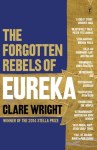
Book cover, The forgotten rebels of Eureka

However, there are two topics that are likely to attract me, regardless of style – Australian history and literary biographies/memoirs. Of the former, books like Inga Clendinnen’s Dancing with strangers and Clare Wright’s The forgotten rebels of Eureka (my review) appeal, partly because they explore history from different angles, from angles that question existing paradigms (if I dare use that word), and partly because both historians share the process of their research with the reader as they write. I like this direct engagement with me. Not only do I find it more readable, but importantly this more personal approach reminds me that this is one historian’s view of the past – a well-supported valid view (hopefully, and in these two cases, absolutely) but their view nonetheless.

My favourite recent literary biography has to be Karen Lamb’s Thea Astley: Inventing her own weather (my review) because I love Thea Astley and because Lamb’s book, though clearly positive about Astley, provides a “real” picture of an intelligent, passionate and sometimes prickly woman, of the woman, in other words, that I imagined Astley to be.

Week 5, Nov. 27 to Dec. 1: New to My TBR

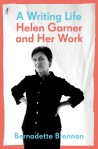
Bernadette Brennan, A writing life Helen Garner and her workI think here we are supposed to mention books that we’ve read in other posts on this meme – and link back to the blog which inspired us. However, I’m afraid I’ve been a bit remiss in keeping up with all the posts, and with noting the books that have appealed when I have read the posts, so I’m going to start with a book that I’ve recently added to my TBR because it’s a must for me to read. It’s a literary biography, Bernadette Brennan’s A writing life: Helen Garner and her work. I will read this in the next two months!

And, just to show I did read some Non-fiction November posts, I was attracted to a book posted by Buried in PrintTanya Talaga’s Seven Fallen Feathers: Racism, Death and Hard Truths in a Northern CityBuried described it as “a gripping story, bound to appeal to readers who appreciate elements of true crime, history, memoir, social justice and narrative-driven journalism.” If you’ve read my Week 4 above, you’ll know exactly why this book appealed to me! It’s about the deaths of students who were attending an Indigenous-run high school in Thunder Bay, Ontario (a fairly remote place which daughter Gums visited three or four years ago). Buried explains that “to understand the importance of this educational opportunity (even with the challenges of students’ adjustments to city life and the embedded racism in the community), it’s useful to have some understanding of the residential school system, which was wielded like a weapon against Indigenous communities from the later nineteenth-century until 1996.” With our own problematical treatment of indigenous people, and my ongoing interest in racism, this book sounds particularly interesting to me.

POSTSCRIPT: Oops, I clicked the Publish button before writing my conclusion! I wanted to say that I’ve read a lot of great non-fiction in the last few years, so it’s been hard to name just a few in this post and the previous one. Different Non-fiction November questions could very well have resulted in my naming different books.

Stephanie Buckle, Habits of silence (#BookReview)

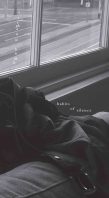
Stephanie Buckle, Habits of silenceI have been champing at the bit to read local author Stephanie Buckle’s debut short story collection, Habits of silence, ever since I attended its launch in August by John Clanchy at the Canberra Writers Festival. The readings that both Clanchy and Buckle herself gave from the book grabbed my attention and convinced me that this would be a book I’d like. However, it had to wait its turn in my review copy pile. Finally its number came up – and I devoured it. I will never understand why some readers don’t like short stories. At least, I understand their reasons in my head, but I don’t in my readerly heart! (If that makes sense.)

John Clanchy, in launching this beautifully designed book, spoke about its title which is not, as commonly occurs, the title of one of the stories inside. When this happens, it’s logical to consider what the title means, and for Clanchy it reflects the book’s interest in communication, and particularly in the part played by silence. Silence, he said, can be positive or negative, and both of these are explored in Buckle’s stories. This is not to say that all the stories are specifically about, or even feature silence in a major way. But even in those that don’t, there’s usually some missed communication or miscommunication that might just as well be silence.

And now I come to that part that’s always a challenge with reviewing short story collections, which is whether to quickly survey all the stories or focus on a couple or try to do a bit of both. I usually opt for the last of these, and will probably do so again here. One day I’ll come up with an exciting new way to discuss short story collections, but I haven’t found it yet!

So, the survey part. There are fourteen stories, some of which have been published before, with a couple having won awards. There are both first-person and third-person stories – providing lovely variety – and the protagonists range in age, situation, and gender. It feels like a collection that could only be written by someone with a good few decades of life experience under her belt (but perhaps that’s denying what imagination can do). I’m certainly not saying that Buckle has experienced all she writes about, but the stories do feel imbued with a deep sense of knowingness.

One of the stories that is specifically about silence is titled, well, “the silence”. It’s about two brothers, Jim and his older brother George Clayton (love this cheeky last name), who live in a country town and have run the family furniture business for years, without speaking to each other. Each works alternate days and George communicates with Jim by letter, because, it seems

Silence is safe. Silence commits to nothing. Far easier to be silent than to speak.

Except, this silence is burning Jim up – that, and his brother’s complete inflexibility about changing anything in their increasingly anachronistic shop to bring it up to date. I liked this story, the beautiful realisation of the characters, and its tentative but by no means certain resolution.

Another story in which silence is central is “fifty years”. This is one of the stories read from at the launch, and it tantalised me. It concerns a woman who has been rendered mute by a stroke. She’s in hospital, attended by her husband of fifty years and her daughter, from whose point of view the story is told. Here’s part of the excerpt read at the launch. It comes after the husband has been prattling on with platitudes:

And that’s when I see it, the first time. It’s the expression you make when you think no one’s looking. The one you make to yourself, with your back turned. It’s the one that makes all the others look like masks, as if all the cups of tea, and all the ironed shirts, are just pretending. She turns from me and regards him quite steadily, but as if she sees him down the wrong end of a telescope, or as if he’s a fly buzzing still against the window, that she briefly thinks she might stir herself to deal with, but can’t be bothered. Are you still here? it says.

If that doesn’t make you want to read this book, then I’d say you’re a lost cause! Buckle’s insights into human relationships make you sit up and pay attention – and her honed spare writing is well-suited to her theme.

The second story in the collection, “sex and money”, is also about a lonely wife who feels unappreciated. Like the husband in “fifty years”, Frank appears to know little about the wife he lives with, and is more likely to help a neighbour than do something she’s asked. And yet, in his head, he loves – at least he desires – his wife. Rose meanwhile finds her own way of obtaining pleasure. It’s all to do with money, but not what you might be thinking. Buckle’s playing with ideas of lust, desire and money here is cheeky – and telling.

But not all marriages, not all relationships in the book, are poor. The woman in “the man on the path” has been grieving her beloved husband’s death for four years. She has come to the Lakes, a favourite holiday place of theirs, for a break, but feels out of place amongst all the happy holidaying couples. Then, out walking, she meets a man on the path, but a “failure of courage”, an inability to communicate appropriately, sees an opportunity to make a connection pass. She perseveres with her walking, however, and, well, you never know, there could be a second chance …

There’s nothing like mental illness to focus us on essential truths about humanity. Lillian, in the opening story “lillian and meredith”, is developing dementia – her “words scatter in all directions” – but, like many of the book’s characters, she’s lonely so when new patient Meredith appears she sees her opportunity. Meredith is welcoming, but when money goes missing, it all falls apart and poor Lillian is handled with less than kindness by the staff. This is just one of several stories which feature mental illness, with three of them – “us and them”, “frederick”, and “no change” – set in the same place, Cedar Grove Psychiatric Facility. There is no cross-over in characters, but there’s something nicely grounding in returning to a familiar place, even if when we get there we are confronted by questions about duty of care and our frequent failure, for whatever reasons, systemic or personal, to provide it.

Buckle’s stories, then, explore all sorts of relationships – between couples, siblings, parents and children, friends, teachers and students, and even staff and patients – showing that none are immune from communication challenges, from silences that hide true feelings to words which do the same, from convictions that relationships are true to realisations that they aren’t, from attempts to connect to refusals to do so. Although some stories impacted me more than others, I was engaged by them all, reminding me once again why I love short stories. It’s their little nuggety insights into human nature – and Buckle’s Habits of silence provides just that.

aww2017 badgeStephanie Buckle
Habits of silence
Braidwood: Finlay Lloyd, 2017
202pp.
ISBN: 9780994516534

(Review copy courtesy Finlay Lloyd)


Monday musings on Australian literature: Genre Worlds

While reading the GenreCon 2017 twitter feed, which resulted in last week’s Monday Musings, I came across the twitter handle @PopFicDoctors. Intrigued, I checked them out and discovered they are behind a research project and manage the website Genre Worlds: Australian Popular Fiction in the Twenty-first Century. The project is being funded by an ARC (Australian Research Council) Discovery Project Grant, for three years from 2016 to 2018. It involves four academics (the Doctors!) from universities in Queensland, Melbourne and Tasmania. You can read more about them on the site’s Research Team page.

Popular fiction is, they say, “the most significant growth area in Australian trade publishing since the turn of the century” and so their project has been framed “to systematically examine 21st-century Australian popular fiction”. Fascinating. On one level it seems a bit weird to me, with the second decade of the century not even over, to be studying trends in the 21st Century. However, having learnt a lot about Australian popular fiction through my involvement in the Australian Writers Challenge, I can see that the chosen topic – Australian popular fiction – is worth researching. I’ll be intrigued to see what the PopFic Doctors come up with.

They identify their areas of investigation as:

  • the publishing of Australian popular fiction;
  • the interrelationships between Australian popular fiction and Australian genre communities; and
  • the textual distinctiveness of Australian popular novels in relation to genre.

To do this, they will focus on thirty novels in three genres (fantasy, romance and crime) in order to produce “a comprehensive picture of the practices and processes of Australian popular fiction”. (I’d love to see their list but I don’t see it on the website.) The research process involves “detailed examination of trade data, close reading of texts, and interviews with industry figures.” That sounds comprehensive – and, to me, interesting. They have produced a flyer documenting what they achieved in the first year of the project.

GenreWorlds Conference

Now, back to Twitter, I was initially confused about some of their #GCoz tweets because they said they were at “GenreWorlds”. Well, the website explains it. Genre Worlds was a one-day academic conference that was run in association with GenreCon. Its specific areas of interest were: Genre Fiction and New Media, Genre Elements in Play, Industry Developments, Travelling through Time and Space, Genres and Society, and Shaping Genre Fiction.

And so, as I did last week, I’m going to share some of the info I gleaned from that conference’s tweets (#genreworlds17) with the tweeter’s username given in brackets, where not otherwise identified.

Romance fiction

One of the presentations that was popular with tweeters was Dr Sandra Barletta’s on “women of a certain age” in Romance fiction. Claire Parnell tweeted Barletta as saying ‘Romance as a genre for everyone consistently depicts older women as Other’. Other tweets on her paper were:

  • Romance fiction has been at the forefront of acknowledging the importance of diverse representation, but still largely fails to include older women as part of this. (PopFic Doctors)
  • Older women face a double standard in media in regards to fuckability that does not apply to men aka the silver foxes. (Claire Parnell)
  • Romance publishers are starting to seek mature women protagonists … but define mature as 35-45. (Claire Parnell)

So older women are “other” and just 35 to 45 years old! There’s a way to go yet … and Barletta apparently threw out the challenge:

Sandra Barletta’a advice to publishers, writers: Flatter us. Give us something to aspire to be instead of old. Reshape what we see, because what we see matters. Come to the forefront of social change–and make money! (PopFic Doctors)

Other tweets on Romance fiction told me that “Self-published romance has grown substantially from 2010-11 to 2015-16″ (Claire Parnell) and that “Romance far outstrips other genres” (Kate Cuthbert).

And then there was this interesting one about Romance heroes in Harelquin novels versus self-published ones: “@cparnell_c research found Harlequin novels feat. heroes w/ ‘masculine’ jobs – cowboys, officers – and self-pub novels feat heroes w/ wealth-based jobs” (Kate Cuthbert).

Other genres

There were tweets about other genres and sub-genres too. Did you know, for example, that there’s such a thing as Football Fiction? I didn’t, but this tweet informed me: “Representation of female protagonists in YA football fiction is fairly equal. Lee McGowan suggests this is because fiction offers women a place to see themselves in sport when streaming on tv is limited” (Claire Parnell). I think something has been lost in the translation to twitter here, but I’m intrigued that this sub-genre exists.

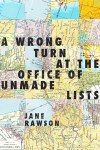
Jane Rawson, A wrong turn at the office of unmade lists

Disguised Speculative Fiction perhaps?

There was also interest in something called interstitial fiction. Laurie Ormond tweeted “Interstitial fiction (blending literary and genre tropes) has been increasingly visible in the last few years” and Angela Hannah tweeted “Are you reading speculative fiction disguised as literary fiction? Interesting discussion of interstitial fiction”. I’m a bit uncertain about the point being made here regarding “disguise”, but Laurie Ormond, probably reporting on the same presentation, tweeted “Literary works are deploying techniques and tropes of genre fiction to explore climate change”.

And here’s another tweet about the relationship between genre, literary fiction and classification: “Australian noir is closely linked to literary fiction and is not always categorized as noir – Leigh Redhead” (Claire Parnell). Is this implying that Australian noir is/can be disguised as literary fiction?

Oh, and there was also talk of New Adult Fiction, but I don’t have many tweets for that – a topic for another day.

On readers, book clubs and literary fiction

Of course, as a reader, I was particularly interested in tweets about the reading end of the spectrum, and there were a few of these.

It’s so fantastic hearing other academics talking about the significance of book clubs and reader experience. (Caitlin Francis)

A couple of other tweets referred to book clubs and their focus on literary fiction:

  • Vassiliki Veros – ‘literary fiction’ dominates library & online clubs. Q&A: lack of ‘gf book club guides.’ (Lynette Haines)
  • Librarians are cultural gatekeepers, especially when selecting books for book clubs @VaVeros(Beth Driscoll)

I’d love to have heard this presentation by librarian-academic, Veros. My reading group rarely uses book club/reading group guides because we have rarely found the questions relevant to how we discuss books, so it’s interesting to see Haines’ tweet suggesting that the lack of such guides for genre fiction may be one reason for such fiction being less commonly read by reading groups. However, being a librarian, albeit a retired one who didn’t work in this area, I take the point about the gatekeeper role played by librarians. They should be alert to the needs of their readers – that’s their job – but selection is always a juggle.

If there’s one overall thing I’ve gleaned from the tweets, it’s that more will be said about the relationship between genre and literary fiction!

Anyhow, there were other intriguing tweets, including one about genre-tagging by GoodReads’ members, but I think this is enough. I was pleased to read that papers from this Conference will be published in a special edition of Australian Literary Studies. I’ll be looking out for it. You may hear more as a result!

Meanwhile, if you haven’t had enough of genre, I’d love to know if anything here has caught your attention.

Viet Thanh Nguyen, The sympathizer (#BookReview)

Viet Thanh Nguyen, The sympathizerA cover blurb on my edition of Viet Thanh Nguyen’s Pulitzer Prize winning novel, The Sympathizer, captures the novel perfectly when it calls it “intelligent, relentlessly paced, and savagely funny” (Wall Street Journal). I loved reading it. It’s quite coincidental that I read this straight after Hoa Pham’s Lady of the realm (my review) but they make an interesting pairing because both deal with the Vietnam (or American) War and its aftermath, both are written in first person from a Vietnamese character’s point of view, and both question what happens when revolutions win. But, their approaches couldn’t be more different.

The sympathizer starts with an in-your-face statement by a never-named narrator: “I am a spy, a sleeper, a spook, a man of two faces.” It is April 1975 and the war has ended with the capture of Saigon by the North Vietnamese Army, but in the second paragraph we discover something else about our narrator. He is not talking to us but to a “Commandant”. So, where is he, and why is he talking to a Commandant? We don’t fully find out until near the end, although we soon discover that he is being held captive and is writing his “confession”. The story he tells, the story we read, is his confession. And what he confesses to is his life as a North Vietnamese mole in the close employ of a South Vietnamese General.

In this role, he leaves Saigon in the chaotic evacuation and ends up in Southern California, still working (now unpaid) for the General, while at the same time sending covert reports back to his “aunt” in Paris. In other words, in the USA, he maintains his life as a man of “two faces”, a man who is “able to see any issues from both sides”. He can do this, not only because of his role as a mole, but also because he is a bastard, the son of a Vietnamese woman and a French priest who had seduced her and had never acknowledged his son. With feet in both camps – the Orient and the Occident – he is well-placed to comment on their respective cultures and actions while, at the same time, symbolising their conflicts, confusions and misunderstandings. Near the end he says:

I was always ever divided, although it was only partially my fault. While I chose to live two lives and be a man of two minds, it was hard not to, given how people had always called me a bastard. Our country itself was cursed, bastardised, partitioned into north and south, and if it could be said of us that we chose division and death in our uncivil war, that was also only partially true. We had not chosen to be debased by the French, to be divided by them into an unholy trinity of north, centre and south, to be turned over to the great powers of capitalism and communism for further bisection …

What makes this book such a great read – besides its heart and themes – is its writing. Nguyen migrated to the USA with his parents when he was 4 years old. In the notes at the back of my edition, he describes growing up in a Vietnamese enclave in California, and how he’d decided that he couldn’t live life well with two languages, so decided to “master one and ignore the other. But in mastering that language and its culture, I learned too well how Americans viewed Vietnamese”. This seems to the main driver for this book – to tell a story about the Vietnam War from a Vietnamese perspective – but his aim is wider than that too. It is to comment on war, on its futility, and on the way American culture seems to thrive on it.

The first chapter introduces us to the central feature of Nguyen’s writing, satire, and my, it shows how well he mastered his adopted language. If the pace is relentless, as the Wall Street Journal says, so is the satire. Its targets are broad, and non-discriminatory, though, admittedly, American life and culture bear the major brunt. In Chapter 3, he discusses prostitution:

I am merely noting that the creation of native prostitutes to service foreign privates is an inevitable outcome of a war of occupation, one of those nasty little side effects of defending freedom that all the wives, sisters, girlfriends, mothers, pastors, and politicians in Smallville, USA, pretend to ignore behind waxed and buffed wall of teeth as they welcome their soldiers home, ready to treat any unmentionable afflictions with the penicillin of American goodness.

The language is sly and wry, as our narrator of the divided-soul teases us – provokes us – again and again with dualities and paradoxes. Literally, he is a communist sympathiser, but his true sympathies are broader. “Although it’s not correct, politically speaking”, he says, he feels “sympathy” for the South Vietnamese poor who were attacked by their own soldiers. “No one asks poor people if they want war”, he writes.

And so the book continues. There are comic set-pieces such as his role as a Vietnamese expert on the making of a film that reads very much like Apocalypse Now. The experience teaches him that not controlling the way you are represented results in “a kind of death”. There are also awful scenes of torture and violence, including those where he is ordered by the General, even in the USA, to eliminate apparent opponents. He says of the General’s plans:

The General’s men, by preparing themselves to invade our communist homeland, were in fact turning themselves into new Americans. After all, nothing was more American than wielding a gun and committing oneself to die for freedom and independence, unless it was wielding that gun to take away someone else’s freedom and independence.

This idea of “freedom and independence” is the complex conundrum that underpins the fundamental irony of the book, from its opening chapters when Ho Chi Minh is quoted as saying “Nothing is more important than independence and freedom”. What these mean, what people do in their name, and why so often they are taken away by the very people who called for them, are scrutinised by Nguyen via his narrator.

The sympathizer is, in many ways, a bitter novel, because it sees clearly into the human heart, and its messy, divided nature, its “moth-eaten moral covers” – but the bitterness is offset by a sense of resilience and a belief that it need not be like this. A big thanks to my Californian friend Carolyn for sending me this.

Lisa (ANZLitLovers) was also impressed by this novel.

Viet Thanh Nguyen,
The sympathizer
New York: Grove Press, 2015
382pp.
ISBN: 9780802124944

Tony Birch wins the 2017 Patrick White Award

The Patrick White Award is one of Australia’s very special literary awards, and one that I posted in detail about last year when Carmel Bird was the winner. It’s special for a number of reasons. It is named for Patrick White who is, to date, Australia’s only Nobel Laureate in Literature. But, as I wrote last year, it’s particularly significant because it was established by White himself, using the proceeds of his Nobel prize money. Known for being irascible, White was also a principled and generous person. Having won two Miles Franklin Awards, among others, he stopped entering his work for awards in 1967 to provide more opportunity for other less-supported writers. His award goes to writers who have made significant contributions to Australian literature but who haven’t received the recognition they deserve.

This year’s award, as I heard on ABC Radio National when I was heading out for my patchwork group’s fortnightly cuppa, was announced at Melbourne’s Wheeler Centre last night. It is special for another reason:  the award has been made to Tony Birch, making it the first time the award has been made to an indigenous Australian writer. In one sense I feel uncomfortable about labelling, because Birch has won the award on the merit of his output, but on the other hand such wins can raise awareness and provide encouragement for all those “others” who feel (and, you’d have to say, are) locked out of the mainstream.

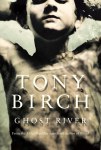
Tony Birch, Ghost riverSo, Tony Birch. He’s a Melbourne-based writer, who has written two novels, many short stories, and poetry. His first novel, Blood, was shortlisted for the Miles Franklin award, and his second, Ghost River (my review) won the 2016 Victorian Premier’s award for Indigenous writing. I have also reviewed one of his short stories, “Spirit in the night” (my review), which was published in the excellent Australian Review of Fiction series.

Australian literary editor Jason Steger, writing about Birch’s win, quotes Birch on White:

“I admired the fact that as a writer in his older age he protested against the Vietnam War, that he was a great supporter of Whitlam after the Dismissal and that he had been involved with Jack Mundey’s protests and the Green Bans.”

Steger continues that this attracts Birch:

because he is “very involved” with the campaign against the Adani Carmichael coal mine in Queensland. And as a research fellow at Victoria University, his work “is essentially about the relationship between climate change and what we now call protection of country”.

The most interesting (and most memorable) parts of Ghost River werefor me, the environmental story about saving the river and Birch’s depiction of the lives of and treatment of homeless men. Michael Cathcart, in his interview with Birch on ABC’s Books and Arts Daily Program, commented that while Birch’s work features indigenous characters, his themes seem broader. Birch responded pretty much as Steger also quotes him:

I suppose my writing is broadly about class, but more essentially about valuing people who might otherwise be regarded as marginalised.

Patrick White would, I’m sure, have been proud.

Monday musings on Australian literature: GenreCon 2017 by Tweet (#gcoz)

GenreCon 2017 BannerFirst off, no, I didn’t attend this year’s GenreCon which took place this weekend past in Brisbane, Queensland. However, I did see many of the tweets that emanated from attendees (using hashtag #GCoz) and found many of them extending beyond the genre focus. So, I thought I’d pass some on.

Not all tweeters identified the sessions their tweet/s related to, so I’m going to “curate” them under issues that interest me! (I will name the tweeter in brackets after their tweet. Note that the quote marks are for the tweeters’ words, which mostly comprise their summary of what they heard rather than a verbatim quote.)

But, before we get started, I’ll share my favourite tweet. It quotes Garth Nix on being an introvert at conferences:

“I just pretend to be the kind of person who likes to talk to people”. (Aiki Flinthart)

For writers

GenreCon is clearly geared to writers more than readers. Consequently the program included sessions like Writing Through Fear with Anna Campbell and Top Ten Tricks and Traps of Publishing Contracts with Alex Adsett, and discussion panels like What Every Writer Ought to Know about their Book Cover.

Tweeters shared advice on how to work within a “genre”, on the need to “know” your genre and its practitioners, and on what to do when your book is published, but I’ll leave those. You can check the hashtag yourself if you are interested. For readers here I’ve chosen other topics …

Americanising text

This is a controversial issue I’ve discussed with Lisa (ANZLitLovers) recently on her blog when she reported on the AALITRA Symposium. I’m not sure who originated the comment, I’m sharing here, but it makes a point: “Nothing throws someone out of a story like a misplaced thong” (Lynette Haines). Or a rubber! I guess tolerance for “Americanisation” depends on the audience you want to attract.

Book covers

Now this is another issue that can get hackles raised, though this didn’t come through in the GenreCon tweets. However, the point made by Escape Publishing/Harlequin publisher, Kate Cuthbert, is interesting:

“Covers are not about the image, they’re about the emotions they evoke” (Jess Irwin).

Cuthbert also apparently said that “Big W accounts for about 40% of Australian book sales, so if they come back and say they won’t stock a book with that cover, you change the cover” (Josh Melican).

And, most worryingly, Cuthbert said that  “Genre fiction has a representational problem which needs to be addressed. If you put a non-white character on the cover, it doesn’t sell as well. That’s a financial reality, but it’s shit. @katydidinoz [ie Kate Cuthbert] has refused to white-wash covers in the past” (Josh Melican).

Awards

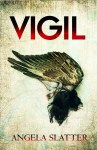
Angela Slatter, VigilAuthor Angela Slatter discussed awards in her plenary address, which she has now posted on her blog. One tweeter wrote: “The talented @AngelaSlatter discusses the ‘award-effect’ (and reminds us that everyone’s trajectory is different and your journey will not be the same” (Tehani Croft). Croft shared Slatter’s slide:

  • Winning an award does NOT make you a better writer
  • Losing an award does NOT make you a worse writer
  • Awards can be useful but your career will NOT die without them

And, just to make sure the point was clear, Slatter also said “Awards garner media attention … on slow news days” (Tansy Rayner Roberts).

The market

A few other points were tweeted about the market besides the Big W figure above. Most came from the literary agent Alex Adsett. She commented on “the energy put into international rights sales by smaller publishers like Text, particularly compared to less active and larger publishers” (PopFic Doctors). I’m certainly aware through overseas bloggers like Kim (Reading Matters) and Guy (His Futile Preoccupations) that Text is active in promoting their books in England and the USA. They are an inspiring publisher.

Adsett also discussed audiobooks, advising that “Authors retaining audiobook rights is becoming a dealbreaker for big publishers over the last 18 months because of how big audiobooks are becoming” (Claire Parnell). PopFic Doctors tweeted that “audiobooks now account for 1% of the market, which is BIG”. One per cent doesn’t sound big to me, but seems it is.

And finally, also from Adsett, is a comment about genre identification: “Many publishers won’t take horror so Alex will pitch as dark fantasy; can genre be spun as literary?” (Rivqa Rafael). Adsett apparently also said that in Australia, writers don’t need an agent, unlike in the USA, but I wonder if authors, on their own, would all know these finer nuances of pitching? As for Rafael’s question regarding whether “genre can be spun as literary”, I’d say yes, but therein hangs a tale for another day I think.

On writing

There were many sessions on the craft of writing, such as writing fight scenes (for women), developing characters, and writing sex and sexuality in the twenty-first century.

American author Delilah Dawson spoke about writing characters: “Delilah Dawson’s cheat sheet of quick ‘charisma points’ for characters: loyalty, wry humour, nice to kids, kind to animals, artistic in some way” (Jess Irwin) and “Delilah Dawson finds out what your characters most want and what they fear most and this feeds into the climax” (Leife Shallcross).

Fiji-born New Zealand writer Nalini Singh’s comment on how to handle hard times in writing was tweeted by many who loved her idea of “squirrels”: “I’m a big fan of having ‘play projects’ aka ‘squirrels’ (you’re working on a hard part in your main project & ‘ooh, squirrel!’) … having these side projects gets you off the treadmill … see where the squirrel leads you … keep it secret to avoid stress.” (Angela Meyer)

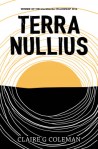
Claire G Coleman, Terra NulliusAnother writer who was frequently tweeted was debut indigenous Australian author, Claire G Coleman (Terra nullius). She clearly had a fresh way of saying things, such as this on inspiration: “A lightning bolt of inspiration is when something in one part of your brain collides with something in another part of your brain and they have babies (Tehani Croft). And this on editing: “Nobody finishes editing. Someone just takes it off you one day” (Narrelle Harris). I can relate to that! I often fiddle with my blog posts long after they’ve been published. Author Emma Viskic also entertained with her comment on editing: “I did kill them, or as I like to say: sent them to the farm to play with other happy words” (Elizabeth McKewin). Love it!

And finally, I liked this one on rules, from the aforementioned Adsett:

“if you’re good enough you can break the rules … but you have to show you know what the rules are” (Tansy Rayner Roberts)

On diversity

Several tweets discussed the issue of diversity. It was clearly a big issue at the conference. There were discussions about Romance fiction, whose popularity is increasing, including more diverse characters. Romance writer Jodi McAlister said that “we’re seeing many more narratives for queer characters beyond the coming out narrative. Queer characters are getting love stories as well as stories about dragons and adventures where it’s not about the character being queer, it’s just who they are” (Claire Parnell). In other words, “You shouldn’t need a reason to include diverse characters…” (Daniel de Lorne)

McAlister also said very pointedly that “Those seen as worthy of love in our love stories tells a lot about what our culture values” (Kali Napier). That’s also worth its own post.

Finally, the issue of how to write these diverse characters came up – relating to that issue we’ve discussed here many times regarding white writers writing black characters. Adsett tweeted Claire G. Coleman’s advice: “Don’t write any diverse character you haven’t had a coffee with, aren’t friends with”.

Creative Native, not an attendee I think, didn’t much like this advice, tweeting: “Plenty of people have ‘had a coffee’ or were friends w[ith] Native, disabled, Bipolar, Autistic, Fat me yet still managed to spout harmful nonsense.” Fair enough. It takes more than one coffee, but I suspect Coleman wasn’t being quite that simple. However, Creative Native did give good advice to writers: “Get a Sensitivity Reader w[ith] the marginalised identity/identites you’re writing about – & deal honestly w[ith] criticism (!!!)”. Which is exactly the approach I’ve come to think best …

Phew, this ended up being way longer than I planned. Hopefully my headings and highlighting have enabled you to pick out what interests you without having to read it all!

Did anything interest you?

My literary week (10), Non-fiction November and Lady Chatterley

I had hoped to finish my current book by this weekend, but it’s been a busy week with a two-day trip away, an exhibition launch, and a Friends’ of the NFSA event, on top of usual commitments. However, I do have some “literary” bits and pieces to share. I’ll start with the one that isn’t hinted at in the post title!

Starstruck: Australian Movie Portraits Exhibition

Stupidly, I didn’t take any pics of the two events I attended – a special members preview and the gala opening – for this exciting new exhibition at the National Portrait Gallery (NPG). Created collaboratively by the NPG and the National Film and Sound Archive (which provides most of the images), this exhibition contains 275 images from Australia’s film industry. I’m including it here – besides wanting to promote it – because the curators, Jennifer Coombes and Penny Grist, have organised the collection to convey a narrative, from set-up to resolution. This results in images from different eras and genres being placed side by side, forcing us to think about them from different perspectives. I’ll be back to spend more time. (Meanwhile, you might like to check out the interactive exhibition of the Cinesound movie company’s gorgeous Casting Books.)

Cover Story (or, Vinyl Covers with David Kilby)

Still with the NFSA, on Friday I went to an event organised by our Friends’ group at which record collector David Kilby presented a selection of record covers. David often collects records for their covers, rather than their contents, and at this presentation we could see why. But, how to present them? There are various possibilities, but the one David chose was to display examples from the “categories” he collects – and my, does he have some fascinating categories. Some relate to audio content – such as Religious songs, Instructional records, or Co-star with me – and some to the cover art. There are, for example, covers which use “stars” who have nothing to do with the content. Jayne Mansfield was a popular choice here! Wonder why! Then there are those which depict actions, such as smoking, or types of people, such as plumbers. You really had to be there!

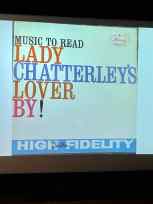
Music to read lady Chatterley's lover by, album coverBut, the group I’m sharing here is the “Music to [insert action] by”, and particularly, “Music to read by”. To represent this group, David displayed the cover for Music to read Lady Chatterley’s lover by. The music comes from Richard Shores and his Orchestra, and there are ten tracks: Love, Hate, Sorrow, Gay, Blues, Surprise, Frustration Nostalgia, Fear, Hysteria! The cover notes briefly refer to the novel’s controversial history – the censorship, and so on – and then continues:

Richard Shores [apostrophe?] initial venture into musical “no-man’s-land” may trip the same kind of alarm. Nature in the raw is seldom mild as can be seen when Shore utilizes his melodic pallet to characterize the spectrum of human emotions.

While music has always reflected the composer’s attempt to picture human emotions through the symmetry of naturals, sharps and flats, Shores flamboyantly exposes man’s innermost feelings relentlessly.

Gotta hear this one day!

Non-fiction November meme

Having seen some of my favourite bloggers – such as Lisa (ANZLitLovers) and Kate (booksaremyfavouriteandbest) – take part in the Non-fiction November meme sponsored by julzreads, among others, I considered joining in, but this week got the better of me. Consequently, I’m just going to respond briefly here:

Week 1, Oct 30-Nov 3: Your year in non-fiction

Two of the questions for this week were:

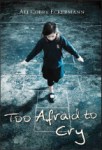
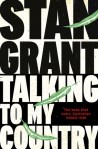
  • What was your favourite non-fiction read of the year? Without doing the count, I seem to have read more non-fiction this year than in recent years, so it’s tricky to answer this. In fact it’s so tricky that I’m going to give three: Kim Mahood’s Position doubtful (my review); Ali Cobby Eckermann’s Too afraid to cry (my review); and Stan Grant’s Talking to my country (my review). All three explore Australia, and what it means to be Australian, particularly in relation to indigenous people. (For more, see Week 3 below)
  • Bernadette Brennan, A writing life Helen Garner and her workWhat is one topic of nonfiction you haven’t read enough of yet? This would have to be literary biographies and memoirs. Two, in particular, have come out this year that I’ve not managed to read (yet), Bernadette Brennan’s biography of Helen Garner, A writing life: Helen Garner and her work, and Georgia Blain’s memoir, The museum of words. I did though retrieve (and read) from my TBR pile, Gabrielle Carey’s Moving among strangers (my review) so it hasn’t been completely hopeless.

Week 2, Nov 6-10: Book pairing

For Week 2 participants were asked to pair a non-fiction book with a fiction one, using your own criteria, but essentially meaning books that seem to go well together. Many bloggers have posted multiple pairings, but as I’m not devoting a whole post to this, I’m going with just one, the one that popped into my head the minute I realised the subject of my reading group’s August book, Min Jin Lee’s Pachinko (my review). It’s about Koreans in Japan, and their struggle to survive. My paired book is Richard Lloyd Parry’s People who eat darkness (my review). Parry’s analysis of the murder of a young English woman in Japan by a serial killer includes a discussion of the poor treatment of Koreans by the Japanese. It prepared me well for Min Jin Lee.


Week 3, Nov 13-17: Be the expert/Ask the export/Become the expert

From this group – which officially starts tomorrow, so I’m jumping the gun somewhat – I’m choosing the “be an expert option”. This asks me to share the title of three books on a single topic that I’ve read and recommend (thus making me an expert!). Well, I don’t claim to be an expert on this topic – it would be insensitive of me to do so in fact – but I would (and have) recommended these three memoirs on the experience of racism in Australia. Two of the books are by indigenous Australians, Ali Cobby Eckermann’s Too afraid to cry and Stan Grant’s Talking to my country, and one by an Australian-born writer of West Indian background, Maxine Beneba Clarke’s The hate race (my review). These books paint a picture of Australia that is depressing and distressing. When I first became aware of racism in my teens in the late 1960s, I’d have been horrified to think that half a century later so little progress would have been made in how we treat each other. What is wrong with us?


And here I will end. It would be cheeky answering Weeks 4 and 5 this far in advance.

However, I’d love to know your answers to these non-fiction questions.

Hoa Pham, Lady of the realm (#BookReview)

Hoa Pham, Lady of the realm

Hoa Pham was one of the participants at the recent Boundless Festival (my post), so it’s rather apposite that her latest work, Lady of the realm, popped up as my next review copy. The very brief author bio on the Festival site describes the novel as “about a Buddhist clairvoyant in Vietnam”. Well, it is, but it’s about far more than that too.

Vietnamese-Australian Hoa Pham was born in Hobart after her Vietnamese parents went there to study in the 1970s. She has written several novels, children’s books, plays and short stories, but her novella, Lady of the Realm, is the first that I’ve read. It’s a slim book, a novella in fact, told first person in a chronological sequence that covers nearly five decades from 1962 to 2009. If you know your south-east Asian history, you’ll realise that this time-span starts during the Vietnam or American War (depending on your perspective.)

It’s quite a challenge to cover such a long and tumultuous period in less than 90 pages, but Pham achieves it by keeping her focus tight – to the experience of the Buddhist monk Liên. Before we meet her formally though, there is a short prologue, which is also in her voice, albeit unknown to us at that point. She prepares us for the vignette-style in which she tells her story:

Looking back over the years, it seems that time stretches and contracts, depending on my experience of each moment. Some moments are etched in my memory, like the sunlight patterning the water in the river, ethereal moments captured only by my mind. Other longer stretches of time are a blur ….

This makes perfect sense to me in terms of how we remember our lives, and hence works for telling a story that covers a long life in a turbulent place. However, if you are someone who likes to get lost in a character and the ongoing drama of life, this book may not work for you.

So, Liên. She is introduced in 1962 as a young girl who has a prescient dream that the Viet Minh will come and destroy her fishing village. This marks her as the one to succeed her grandmother Bà as keeper of the shrine and mouthpiece for the Lady of the Realm (as she calls the Buddhist goddess of mercy, Quan Ám). Unfortunately, the village head ignores the warning, and the village is attacked with most in the village killed. Liên, however, escapes, and lives to chronicle the aftermath.

The book then takes us through moments in Liên’s, and therefore Vietnam’s, life in 1968, 1980, 1991 and 2007, before finishing in 2009 when Liên is now an old woman living in a Buddhist monastery. She has experienced much violence and oppression – through the war and the “fall of Saigon”, through the Communist regime which she “naively believed” would bring peace but which brought “re-education” and more death, and through later “reforms” which were supposed to open up Vietnam but saw her beloved Prajna Monastery destroyed. Liên survives it all, sustained by hope:

Ever hidden away the Lady could still bring hope, I thought. I had found the Lady in many guises, but the strongest seemed to be the Lady I had inside. (1980)

This hope is sorely tested, however, and in the last section she says:

Sanctuaries are an illusion, only suffering is real. I know that this is not what Buddha taught, and my experience has made my own sayings out of his teachings. I believe that any safety I find is temporary, any refuge is not permanent. But my teacher would say, all things are impermanent and change. I hope that our situation will change. Some days I cannot bear another moment of being under siege. (2009)

The tone, here, is typical of the book as a whole – calm, somewhat resigned, and sometimes hopeful.

Now, how to describe the writing? There’s the tone, and there’s Pham’s simple, direct language (which is also evidenced in the above excerpt). There’s also her preponderant use of short paragraphs. And there’s the episodic form, with each episode/year heralded by an epigraph, the last four by Buddhist monk and peace activist, Thích Nhất Hạnh. Together, these create a sort of prose-poem, and with that, dare I venture, a higher (or perhaps just universal) plane of truth!

In other words, Pham has contrived to tell a personal, human story through her character Liên, while also conveying a philosophical attitude to life based on endurance, compassion and most of all hope. A moving, inspiring read.

Lisa (ANZLitLovers) captures the book beautifully in her review.

aww2017 badge

Hoa Pham
Lady of the realm
Mission Beach: Spinifex Press, 2017
98pp.
ISBN: 9781925581133

(Review copy courtesy Spinifex Press)