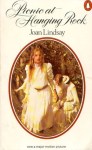
 Woo hoo, it’s Six Degrees of Separation day again, and for this month our host Kate (booksaremyfavouriteandbest) has selected a special book, Joan Lindsay’s Picnic at Hanging Rock, which is 50 years old this year. This meme, as you probably know by now, requires we players to create a chain of six more books, linking one from the other on whatever basis, flimsy or otherwise, we can justify. I have read Picnic, albeit nearly 40 years ago, and of course as always, I have read all the books I select for my chain.
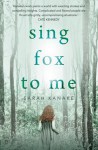 But, here’s where the problem started. I could think of so many ways to link from this book that I was stalled for a while. Would I link to another novel that readers thought was a real story, or a novel starting with a picnic, or a novel adapted to a popular movie, or, perhaps to another Gothic novel about mysterious disappearances. I decided on the last, and so my first link is to Sarah Kanake’s Sing fox to me (my review). Set in Tasmania, which is a favourite location for Australian Gothic novels, Kanake’s book is about a young 14-year-old girl, River Snow Fox, who disappears into the bush on a rainy night.
From here, given the prevalence of the lost child motif in Australian literature, I couldn’t not go to another book about lost young girls in the bush, Louis Nowra’s Into that forest (my review). Also set in Tasmania, it’s about two young girls, Hannah and Becky, who find themselves lost in the bush after their boat capsizes in a storm and Hannah’s parents drown. They are taken in by a Tasmanian Tiger pair, and live with them for four years until they are found – by Becky’s father. And then comes the problem, how to reintegrate into human society.
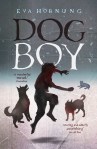 And now, if you know recent Aussie literature, you might guess my next link. Yes, Eva Hornung’s Dog boy (my review). It too is about a feral or wild child, this time a young 4-year-old boy who is taken in by a dog pack. In it, too, like Nowra’s, the boy returns to human society and again, reintegration proves a serious challenge. However, Hornung’s book explores the issue from a different, more scientific angle, and, although she is an Australian author, the book is set in Moscow. This gives me the opportunity to change my linking pattern from lost children to …
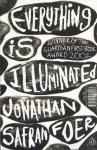 Setting, sort of. I have reviewed other books set in Russia, but we’re now going to Russia’s neighbour, Ukraine, and Jonathan Safran Foer’s Everything is illuminated (my review). Coincidentally, it also involves the search for a lost person, though in this case it’s the protagonist’s search for the woman who, he believes, saved his grandfather from the Nazis during World War 2. It’s a Holocaust novel, but it is also a rather wild, postmodern novel that plays within itself and with the reader. None of these factors, though, generate my next link. Instead I’m going whimsical, and am linking to …
 Another three-name author. I was surprised when I thought of going this way, just how many such-named authors I’ve read, like Gabriel Garcia Marquez, Tara June Winch, Ali Cobby Eckermann and Tegan Bennett Daylight. I love these names, they have such a wonderful ring when you say them. Anyhow, of these, I’m choosing Tegan Bennett Daylight’s collection of short stories, Six bedrooms (my review). This is not one of those linked collections, but most do share a theme, coming-of-age.
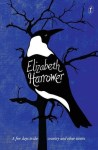
And now, I bet you thought I was going to link on the coming-of-age theme, didn’t you? But, I’m not. In 2016, Bennett’s book was shortlisted for the Stella Prize. It was a very interesting list, as its six books included two short story collections and an essay collection. For my final link, because I loved it so much, I’m choosing the other short story collection, Elizabeth Harrower’s A few days in the country, and other stories (my review). If you like short stories and you haven’t read it, then you have a thrill in store (is all I can say).
So, there you have it for another month. I’ve managed to include two male authors, and one non-Australian. We spent a lot of time in the bush with lost children, then ventured to the Ukraine and into bedrooms and other domestic spaces, before, guess what, somehow returning to the country (albeit not to lost children.)
Have you read Picnic at Hanging Rock? And whether or not you have, what would you link to?
 Whispering Gums