George Jean Nathan, Baiting the umpire

I haven’t posted on the last few Library of America stories, mainly due to lack of time and the fact that they’ve been by well-known writers anyhow. However, the one that lobbed in this week, “Baiting the umpire” by George Jean Nathan, looked rather intriguing and so I read it. It is really an essay, but a satirical one, rather than a short story – and is about the “sport” of baseball.

According to the accompanying notes, George Jean Nathan (1882-1958) was an “acerbic theater critic” and worked, for some time at least, with “his partner in venom” H.L. Mencken.

Mad baseball player

Mad baseball player (Courtesy: OCAL, clker.com)

The essay starts with describing baseball as the “national side-show” and argues that “baiting umpires is the real big-tent entertainment”.  Using word play, hyperbole, rhetorical questions and mock-heroic comparisons (equating baseball with a Spanish bullfight and likening the “bleachers”/spectators to matadors, and in a cultural leap equating baseball promoters with Solons), Nathan goes on to suggest that the only reason Americans enjoy baseball is for the “sport” of baiting (“killing”) the umpire. He provides examples of countries where baseball hadn’t (we are talking 1909 here) taken off, such as Japan, and suggests that the reason for this is that the Japanese accept the umpire’s rulings!

In Australia, however, and here my ears picked up, he said they went about introducing baseball the right way:

In Victoria, Australia, where a determined effort is being made to popularize baseball, the prime movers in the campaign, appreciating full well the important and necessary relation that killing-the-umpire bears to the game, have tried the novel experiment of working up the hostile spirit towards the referee by playing the baseball contests – all or in part – before the huge football crowds. These crowds are demonstrative in the extreme, and it is hoped by the baseball promoters that part of the excess football emotional tumult may, in time, be directed against the umpires, thus insuring the success of the game…

Hmmm…well, 100 years later baseball is, I know, played here but I’m not sure to the extent that you’d call it a success. Maybe our football crowds decided they liked something more to their games than simply baiting the umpire! In fact, from my own admittedly superficial experience, I think it is a more popular game in polite Japan than it is here. His other example of a surefire success for baseball is the Sandwich Islands where … well, that will give away the punchline and I don’t want to do that. Read it … it’s short and will give you a chuckle if nothing else.

Meanwhile, I will conclude with one little observation. As an Australian, I have always been bemused by the notion of World Series baseball in which the only teams playing are from the USA and Canada. Now that would have been an interesting topic for Nathan to explore!
The other Jane

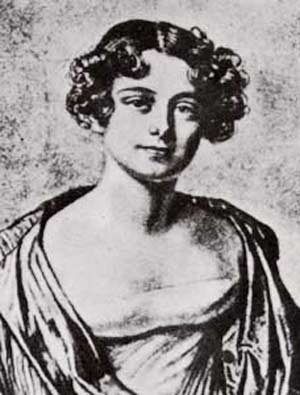
Lady Jane Franklin

Lady Jane Franklin (Presumed public domain, via Wikipedia)

Those of you who have read a bit of my blog will know that I am a big Jane Austen fan, and so when you see the name Jane in a post’s title you would not be wrong to assume that it’s about her. However, over the last decade another Jane has been coming to my attention. She’s not a writer, unless a lifetime of journal-writing counts, but she was born during Jane Austen’s time, and is a fascinating woman. Her name is Lady Jane Franklin (1791-1875), and these are the ways I’ve been meeting her:

  • Andrea Barrett’s The voyage of the Narwhal, dealing with one of the expeditions which set out to find Lady Jane’s missing explorer husband, Sir John Franklin, was the first thing I read that brought her truly to my consciousness;
  • Matthew Kneale’s English passengers in which as I recollect she is portrayed as the rather strange wife of the Governor;
  • Richard Flanagan’s Wanting which partly explores the Franklins’ time in Van Dieman’s Land and, in particular, their disastrous adoption of the little indigenous girl, Mathinna;
  • Resident Judge’s reviews of  Lady Franklin’s revenge by Ken McGoogan and This errant lady by Penny Russell;
  • Adrienne Eberhard’s Jane, Lady Franklin, a poetry collection written in the persona of Lady Jane (and given to me this year by my Tasmanian-based historian brother); and
  • Silkweed’s Lady Jane Franklin: an examined life, a musical-theatrical-visual presentation of her life, which I saw this weekend at the National Folk Festival.

Silkweed’s website describes her thus:

a woman ahead of her time; she was an explorer and adventurer, a prolific diarist and wife of Sir John Franklin, Arctic explorer and one-time Governor of Tasmania. John Franklin died searching for the North-West passage and his widow spent her later years ensuring his place in the history books.

Their production had some rough edges and is still, I think, being developed, but it was thoroughly engaging and made me finally realise that this is one rather astonishing woman. So, what have these various “sources” told me about Lady Jane? Well, first and foremost that she was a strong, intelligent woman who was intellectually curious and adventurous, who was ambitious for her husband whom she had married in her late thirties, and who had a lot of energy much of which she channelled into all sorts of plans for improvement or “doing good”. She was, paradoxically, both ahead of her times and firmly planted in them. For example, in Wanting she is presented as a childless woman who genuinely wanted to do the right thing by Mathinna but who really had no idea. For a woman who was ahead of her times in so many things, she was not so when it came to raising children or understanding the real needs of indigenous people.

I am well and truly intrigued now … and will try to read more about her, but for now I’ll end with some lines from the first poem in Eberhard’s book. The poem describes her well-documented plans to rid Tasmania of snakes and ends with:

No. For all this work,
this hatching of plans
– catching, dispatching –
when I close my eyes
the snakes multiply.

The Franklins did not have a smooth path in Tasmania, and their plans to create a “model society” failed, due partly to the machinations of self-interested others. I cannot help thinking that it’s not coincidental that Eberhard opens her collection with the failure of Lady Jane’s snake-removal plan, as there were indeed snakes in that grass.

David Malouf, Ransom

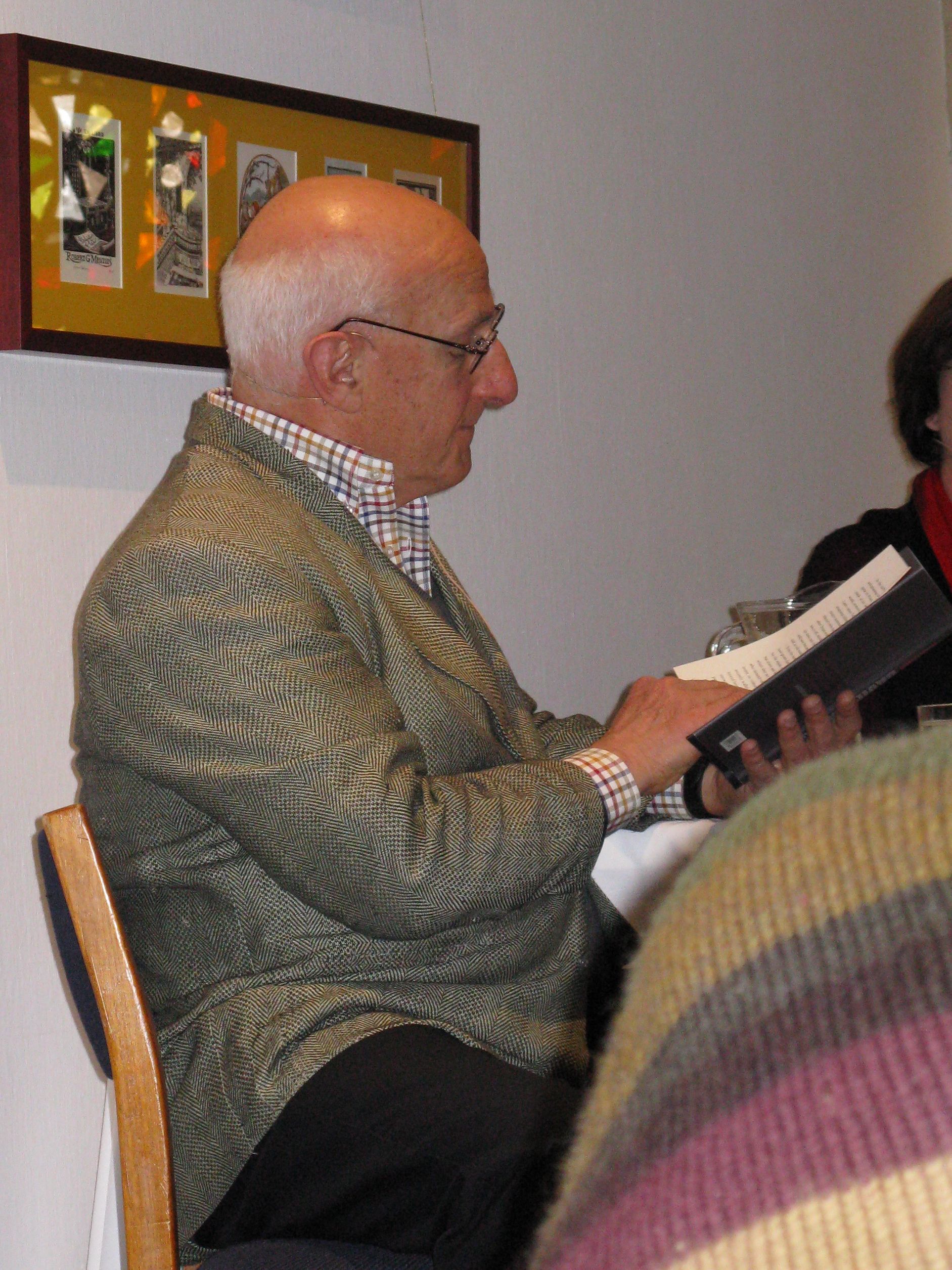
David Malouf reading Ransom

Malouf reading Ransom, National Library of Australia, August 2009

Words are powerful. They too can be the agents of what is new, of what is conceivable and can be thought and let loose on the world. (p. 61)

Is risk-taking only the province of the young? Do desperate times call for desperate measures? Or, more to the point, can the impossible be made possible? These are some of the questions that form the core of David Malouf’s most recent novel, Ransom.

WARNING: Spoiler if you don’t know the Iliad!

Ransom, as I wrote in my post last year, is Malouf’s re-visioning of the section of the Iliad (from Books 16-24) which chronicles Patroclus’ death at the hands of the Trojans, Achilles’ revenge killing of the Trojan prince Hector and his subsequent abuse of Hector’s body, and Priam’s visiting Achilles to ask for his son’s body back. Malouf says that he wanted to suggest a new kind of human, non-heroic consciousness, by re-visioning how Priam does this through deciding “do something extraordinary” (Malouf’s words). As Priam discusses with his wife Hecuba

I believe … that the thing that is needed to cut this knot we are all tied up in is something that has never before been done or thought of. Something impossible. Something new. (p. 58)

and

there might be another way of naming what we call fortune and attribute to the will, or the whim of the gods. Which offers a kind of opening. The opportunity to act for ourselves. To try something that might force events into a different course. (p. 61)

Ah, I thought, here is going to be Malouf’s vision (or recipe even) for our conflict ridden times. He wants to show, through Priam’s desire to do “something impossible. Something new” that  there is another way of managing conflict. But sadly, that is not what he is about. Sure, Priam does do something audacious – he enters Achilles’ compound as an ordinary man on a plain mule-driven cart driven by an even more ordinary man, the humble carter, Somax. But, I was disappointed, because after a lovely interval of humanity the story plays out as it always does with Achilles dying, and Priam being brutally killed by Achilles’ son. What I hoped Malouf was setting me up for wasn’t his goal at all. It was something both bigger and smaller. Smaller because he is not (really) making a political statement for our times, and bigger because he re-visions the story as one of humans rather than of heroes, and as one in which humans can be self-directed rather than at the whim of the gods. There is some irony here though because, as well as being accompanied by the humble Somax, he is for a while escorted by the god Hermes who facilitates their entry into Achilles’ compound. I did wonder about the meaning of this unlikely trio – common man, king, god – but it is in the original and so is not really part of a new message. That said, this is, as I am sure you are starting to realise, quite a complex book despite its small size – and I am only going to touch the surface here.

Some of the loveliest parts of the book are in fact the most human ones, such as the conversation Priam has with Hecuba when he reveals his idea, and Priam’s journey with Somax in which he learns to enjoy ordinary human (as against royal) pleasures. (“It had done him good, all that, body and spirit both”).

In the end after a beautifully rendered meeting with the conflicted Achilles, Priam achieves his goal and brings Hector’s body back for burial. It is a triumph of his vision, but

It is only a provisional triumph, of course; the gods are not to be trusted when they tilt the balance momentarily in your behaviour. And what sort of triumph is it to be bringing home the body of a son? But he has done something for which he will be remembered for as long as such stories are told …

Yes, he is “a man remade” because he has done a “deed that till now was never attempted”. Achilles too has been transformed (at least for a while): he is “visited by a lightness that is both new and a return”. But, and unfortunately there is a but, the story plays out as it always has…

So, what is it all about – besides, that is, the underlying themes relating to fathers and sons, grief, will versus fate, and humanity versus the gods? Perhaps it is simply this, that you can dare to try the impossible, and you can triumph. How big that triumph is, how long it lasts, is perhaps not the right question. The right question is the original one, “Dare I dream, and dare I do it?” It is also about the power of stories. Priam’s action will now be remembered “for as long as such stories are told”, while his killer, Achilles’ son, Neoptolemus, is not so lucky. The murder is a messy one and so “for him … however the story is told and elaborated, the raw shame of it will be with him now till his last breath”.

David Malouf Ransom

UK edition cover (Used by permission of the Random House Group)

In its rather ironic and paradoxical way, then, Ransom is redemptive … and is beautiful for all that. And yet, I do have this little nagging feeling that I’d have liked it to have been a little more. I did in fact want a recipe for our times, a suggestion that we can move our humanity forwards!

David Malouf
Ransom
North Sydney: Knopf, 2009
224pp.
ISBN: 9781741668377