And the Jane Austen bloggernaut just keeps rolling …

Late last year I created a blog for my local Jane Austen group and in the blog roll listed some of the well-known (among Austen circles anyhow) Austen blogs. Since then I have come across many bloggers like myself – such as, say, So Many Books and The Captive Reader –  who like Jane Austen but don’t focus their blogs on her. Nothing unusual about all this you might say, but then things start to get a little weird, almost as weird as the appearance of books like Pride and prejudice and zombies, because I recently came across another Austen-lover’s blog, this one a foodie. It’s called Pride and Vegudice and belongs to a vegan-lovin’ Austen fan. Now what would mutton-stew-and-roast-pork-eating Jane Austen think of that?

In the immortal words of another nineteenth century writer, it just gets curiouser and curiouser!

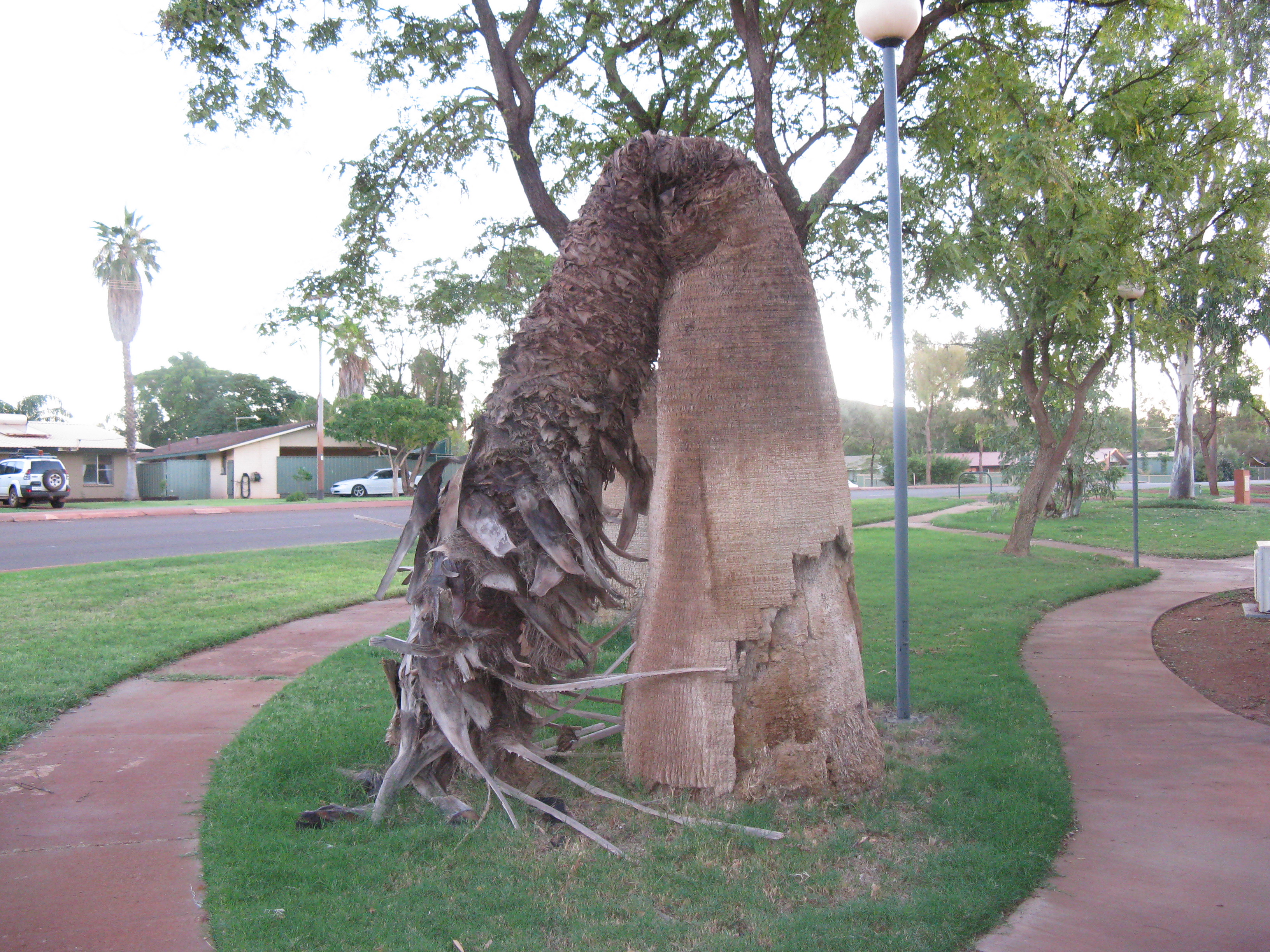
Fallen over palm

Almost as curious as this fallen over palm

I do like a bit of nonsense

You will never stub your toe standing still. The faster you go, the more chance there is of stubbing your toe, but the more chance you have of getting somewhere. (Charles Kettering, from thinkexist.com)

For over four months now, our daughter has been struggling with a toe-that-will-not-heal, her left big toe to be precise. It all started with a wedge resection done just a week before she headed off for the post-graduation grand adventure. She did have the grand adventure – those interested can check the link above – but through it all the toe refused to heal. She has now returned home and will have more surgery in a few days … so far so good, more or less.

Last week, while organising a table at an outside venue where I was to meet a couple of friends for lunch, I managed to drag said table onto my toe – my left big toe to be exact – and, well, I’ll spare you the gory details, but the end result is that mother and daughter are now sporting white-bandaged left big toes.

All this got me to thinking about toes, and what should pop into my mind but Edward Lear’s wonderful poem from my childhood, The pobble who has no toes. Now, at the beginning of the poem, the pobble happens to have toes, but by the end they are gone:

And when he came to observe his feet,
Formerly garnished with toes so neat,
His face at once became forlorn,
On perceiving that all his toes were gone

No-one knows where his toes goes went, but I do hope the same fate does not befall daughter and me. For the Pobble though, as I’m sure you all know:

… “It’s a fact the whole world knows,
That Pobbles are happier without their toes!”

But, moving on from toes, the point is that the Pobble made me think of nonsense-verse in general. The most well-known example is probably Lewis Carrol’s “Jabberwocky” (“‘Twas brillig, and the slithy toves …”) but according to Wikipedia there is a long tradition of nonsense verse in English, and over the years I’ve read my share, because …

I have always enjoyed a bit of nonsense. I loved reading Dr Seuss to my kids and I got a kick out of reading Flann O’Brien’s rollicking, exuberant, almost incomprehensible at times, At Swim-two-birds. But, extending this a bit further, I think a love of nonsense is related to a love of word-play – in all sorts of writing. It’s one of the reasons why I like Gerard Manley Hopkins so much. His word-play is at the other end of the scale from nonsense, but it demonstrates the same fascination with and desire to push language to its limits – and to challenge the reader. I must say that I don’t always rise to the challenge, but I do enjoy trying.

Jane Austen: Conservative or progressive?

I must admit that, fan as I am of Jane Austen (of her wit and clear-eyed observation of humanity), I have sometimes been conflicted about whether she is, as this post title asks, conservative or progressive.

She was innovative in terms of the history of the novel – her sure use of the third person omniscient narrator and her psychological and social realism were progressive for her time. But, what about her plots and their resolution? The fact that her heroines tend to marry well? Or, well enough, anyhow. I have often felt ashamed about my sorrow that sensible Elinor in Sense and sensibility did not “catch” as wealthy a husband as her emotional sister Marianne did. It’s not the money so much, but the fairness of it! Elinor deserved … but, she got what she deserved didn’t she? The man she loved!

But, I digress. The point is – and this is what seems to put some readers off – that Austen’s heroines always do marry, and they always marry within their class or slightly higher. They don’t throw it all to the wind to follow some passion; they are usually materially “sensible” even though they also determine to follow their heart. And so, there’s the conundrum. Austen’s heroines are independent of mind enough to hold out for a marriage of affection, but they don’t cast their net outside their kind. They seem to affirm the status quo.

However, as I also wrote in a recent post, I and many others see Austen as a protofeminist: while her plots and their resolution can be seen, superficially, to be conservative, there is something else going on. And this was presented from a fascinating perspective the other night by academic Glenda Hudson who spoke at the public library. Her topic was “Sibling love in Jane Austen, revisited” and was an updating of an article she published in 1989. She explored the role of sibling love and incest in Jane Austen – not that “actual” incest ever occurred in her books, but some of the highly sanctioned relationships, such as Fanny and Edmund in Mansfield Park, and Emma and Mr Knightley in Emma, have incestuous overtones (that are consciously articulated in the books).

Hudson claims that Austen promotes the value of fraternal (sibling) love in her novels – and defines this love as being based on shared moral and intellectual values and ideas. She argues convincingly that in many of Austen’s novels this idea is extended to encompass conjugal love, and that marriage in Jane Austen is presented as a meeting of like minds, as an egalitarian partnership between two people who, through the course of the novel, have come to love and respect each other. In fact, she argues that, through these marriages, Austen redefines gender roles in marriage.

Here is a description of Fanny with her brother, in Mansfield Park:

Fanny had never known so much felicity in her life, as in this unchecked, equal, fearless intercourse with the brother and friend [brother William] who was opening all his heart to her, telling her all his hopes and fears, plans, and solicitudes  … An advantage this, a strengthener of love, in which even the conjugal tie is beneath the fraternal. Children of the same family, the same blood, with the same first associations and habits, have some means of enjoyment in their power, which no subsequent connexions can supply … (Mansfield Park, Ch. 24)

Here is Edmund, realising at the end that Fanny just might be the one for him. It is interesting in to look at in light of the above, since Edmund and Fanny were, from the time Fanny was 10 years old, “children of the same family”:

… it began to strike him [Edmund] whether a very different kind of woman might not do just as well, or a great deal better: whether Fanny herself were not growing as dear, as important to him in all her smiles and all her ways, as Mary Crawford had ever been; and whether it might not be a possible, an hopeful undertaking to persuade her that her warm and sisterly regard for him would be foundation enough for wedded love. (Mansfield Park, Ch. 48)

Hudson’s conclusion is that Austen is both conservative and radical – that she confirms the validity of the traditional family in what was a changing world, but that her vision of that family incorporates something new. I found this argument pretty convincing – but then, of course, it doesn’t take much to convince me that Austen was ahead of her times in thought and writing.

Rudyard Kipling, An interview with Mark Twain

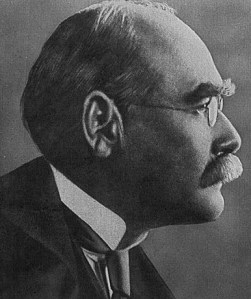
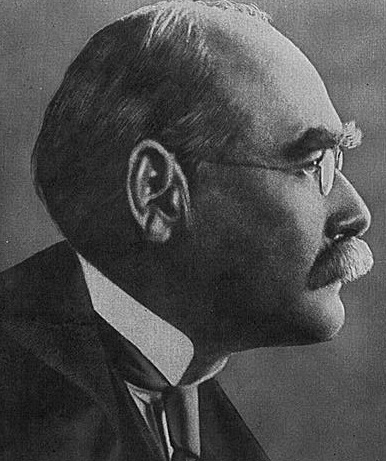
Rudyard Kipling

Kipling, somewhat older than 23! (Presumed Public Domain, via Wikipedia)

How could I resist reading this offering from the Library of America, featuring as it does two giants of the late nineteenth and early twentieth centuries? Both are writers I know well in a superficial way: I’ve really read only a little of their works. This essay, I thought, presented an interesting opportunity to get to know them from a different perspective.

“An interview with Mark Twain” was published in 1890, the year after Kipling, then 23 years old and on his overseas tour to Europe and the USA, interviewed the great man. Twain was 54, and staying in Elmira, NY, at the time. We know from the opening lines that Kipling idolises Twain:

You are a contemptible lot, over yonder. Some of you are Commissioners, and some Lieutenant-Governors, and some have the V.C., and a few are privileged to walk about the Mall arm in arm with the Viceroy; but I have seen Mark Twain … Understand clearly that I do not despise you, indeed I don’t. I am only very sorry for you, from the Viceroy downward …

Clearly this is going to be a positively reported interview! The essay starts though, rather humorously, with the challenges Kipling faced in locating Clemens (as he was known) but, one-third of the way into the essay, we finally meet Twain who, despite his grey hair (that “was an accident of the most trivial”) looked “quite young”.

Kipling’s next comment rather continues his hero-worship – and reflects the way many of we readers think when we think of our favourite writers:

Reading his books, I had striven to get an idea of his personality, and all my preconceived notions were wrong and beneath the reality. Blessed is the man who finds no disillusion when he is brought face to face with a revered writer.

You might think, from all this, that the rest of the interview will be rather hagiographic, with Kipling hanging on Twain’s every words. But, while there is an element of that, Kipling is delightfully self-conscious and there is a lovely sense of like minds engaging. Kipling reports on a conversation that ranges over a number of issues, including copyright, about which Twain has strong feelings, believing that a writer (and his heirs) should maintain control over “the work of his brains” (Kipling’s words) in much the same way as you might own “real estate” (Twain’s analogy). If you search the Internet, you will find a number of references to Mark Twain and copyright. As an (ex) librarian/archivist, I have a complicated relationship with copyright. I believe in abiding by it, I believe that creators need recompense for their work and that copyright is one way they can ensure that, but I also like people to be able to access the works they wish. According to my Internet research, Twain did not seek perpetual copyright, but enough to protect/provide for his immediate heirs. That sounds fair enough to me. And, it sounded fair enough to Kipling, though he was a little tongue-in-cheek in reporting that he saw Twain’s point, because he follows it up with “When the old lion roars, the young whelps growl. I growled assentingly”.

[If you are interested in copyright in the USA, check this timeline prepared by the Association of Research Libraries.]

Anyhow, they move on to discuss Twain’s books, and the possibility of a sequel to Tom Sawyer. Twain, teasingly, suggests that he hasn’t decided, that he could “make him rise to great honour and go to Congress” or he could “hang him”! This was too much for Kipling who says “I lost my reverence completely” arguing that Sawyer “was real”. Ah, fiction and reality I thought! This essay is speaking to me again.

Twain replies that Sawyer “is real … he’s all the boys that I have known or recollect” but then goes on to say that:

Suppose we took the next four and twenty years of Tom Sawyer’s life, and gave a little joggle to the circumstances that controlled him. He would, logically, according to the joggle, turn out a rip of an angel.

He calls this Kismet, and asks whether Kipling agrees. Kipling does to a degree, but suggests that Sawyer isn’t Twain’s property any more, “he belongs to us”. Hmmm…I’m not sure that this is the aspect of “reality” in fiction that interests me, but the discussion (which is not reported further) is interesting, if only because it reflects topics that engaged these two writers.

They they go on to discuss “truth and the like in literature” but the discussion focuses more on autobiography and Twain’s view that no matter how much an autobiographer may lie about him/herself, the “truth” will out. Ain’t that the truth! All of us writing blogs give ourselves away, regardless, I think, of how we may try to “present” ourselves… But, I think I’ll move on from this possibly murky mire!

And then, in a fascinating little discussion of novel-reading comes this point which may interest we bloggers. It’s about assessing novels. Twain says:

You see … every man has his private opinion about a book. But that is my private opinion. If I had lived in the beginning of things, I should have looked around the township to see what popular opinion thought of the murder of Abel before I openly condemned Cain. I should have had my private opinion, of course, but I shouldn’t have expressed it until I had felt the way.

Is he saying what I think he’s saying? A little later in the essay, and on a slightly different topic, Kipling says “and I am still wondering if he meant what he said”! Knowing a little of Twain, I must admit I’m wondering what was “true” in his comments, and what wasn’t … so much of his “truth” is behind rather than in his words.

Twain goes on to talk about fiction and fact, implying that he prefers the latter, that he doesn’t “care for fiction”. He then gives this advice which I love:

“Get your facts first, and” – the voice dies away to an almost inaudible drone – “then you can distort ’em as much as you please”.

I can’t think of a better point upon which to close this post … but, by way of conclusion, I found at The Huffington Post this comment made by Twain, many years later, about the meeting:

I believed that he knew more than any person I had met before, and I knew that he knew that I knew less than any person he had met before–though he did not say it, and I was not expecting that he would. . . . He was a stranger to me and to all the world, and remained so for twelve months, then he became suddenly known, and universally known.
Miles Franklin shortlist for 2010

It seems vaguely silly for all we bloggers to be announcing the same thing – except that perhaps each of us has a slightly different readership so maybe it’s not completely redundant for me to announce here what has already been announced elsewhere – at Musings of a Literary Dilettante.

The Dilettante has provided links to the Judges’ comments, so please check out his link (here) if you’d like to see them. The shortlist though is:

  • Alex Miller’s Lovesong
  • Brian Castro’s The bath fugues
  • Craig Silvey’s Jasper Jones
  • Deborah Forster’s The book of Emmett
  • Peter Temple’s Truth
  • Sonya Hartnett’s Butterfly

To date, I’ve still only read Jasper Jones, though Lovesong is creeping up the pile!

Now the fun – and the wait – really begin.

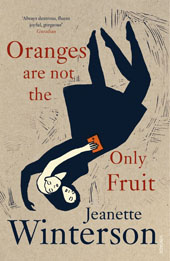
Jeanette Winterson, Oranges are not the only fruit

Winterson, Oranges are not the only fruit, book cover

Book cover: Used by permission of the Random House Group Limited

As I was reading Jeanette Winterson’s novella Oranges are not the only fruit, the question, rightly or wrongly, that was uppermost in my mind was “What is it with the oranges?” Is there something about oranges that I don’t know? Something specific that they symbolise?  I racked (wracked) my brain for something in my literary past that would give me a clue, but I came up with nothing. I guess she wanted to choose a motif to represent her mother’s limiting interactions with her and an orange seemed as good as anything? Certainly oranges are a recurring motif, and her mother regularly insists they are “the only fruit” until the end when a “pineapple” makes its appearance. I’m not sure, however, that this change heralds anything in their relationship other than compounding the paradoxes that seem to underpin this novel.

This is an intriguing book. It is a semi-autobiographical coming-of-age novel which tells the story of the first person protagonist, Jeanette, who was adopted by a religious zealot and is being brought up to be a missionary. However, around the age of 16 she discovers that her (homo)sexual leanings do not meet her mother’s (or her church’s) approval and, well, the plot is slim but perhaps I will leave it here nonetheless…

The novel exhibits some of the hallmarks of postmodernism, of which the most obvious is its metafictional elements, the way it contains stories within stories and plays around with the idea of stories in relation to “truth”. It all begins with Winterson naming the main character after herself and modeling that character’s life on much of her own, resulting in our being, from the start, teased by notions of what is “true” and “real”.

The book is divided into chapters titled appropriately, given Jeanette’s upbringing, by books of the Bible, such as Genesis, Joshua and Ruth. These titles are descriptive but also symbolic and even a little satirical; Jeanette, for example, has walls to confront just like Joshua. And the narrative, while roughly chronological, intermittently leaps from “reality” to “fantasy” as Jeanette tries to escape or make sense of her experience of life. Sometimes these stories – such as the Winnet story near the end – represent a parallel fantasy life for what is happening to her, but other times the reference point is more indirect, and draws on history and myth such as the King Arthur legend (and Sir Perceval’s search for the Holy Grail).

And this brings me to “story” and “history”. Readers of my blog will know that these notions, and the related one of “truth”, fascinate me when they are played out in fiction. I tend to enjoy reading books that deal self-consciously with them, that recognise the challenges and ambiguities inherent in them – and this is one of those books. Jeanette, the character, has some interesting things to say on these topics around the time the “truth” of her life, her sexuality, is becoming clear. She says in the short chapter titled Deuteronomy: The last book of the law:

Of course that is not the whole story , but that is the way with stories; we make them what we will. It’s a way of explaining the universe while leaving the universe unexplained … People like to separate storytelling which is not fact from history which is fact. They do this so they know what to believe and what not to believe. This is very curious …

And she goes on to discuss how history, the past, “can undergo change” because “the lens can be tinted, tilted, smashed”. She recognises that “perhaps the event had an unassailable truth” but we all see it through our own lens. Tellingly, near the end of the book, in the chapter titled Ruth, she runs into Melanie, her first lover (now married with a child):

…she [Melanie] laughed and said we probably saw what had happened differently anyhow … She laughed again and said that they way I saw it would make a good story, her version was just the history, the nothing-at-all facts.

Melanie, it seems, does not have the imagination to re-vision her “story”.

So, did I enjoy this book? Yes, pretty much. I like her attempt to make sense of what was a very particular childhood, and to try to draw from it some larger “truths” about how we might all manage the “stories” of our lives. It is not a straightforward read – and it is first novel with, perhaps, a little of the overdone in it. I’m not sure why, for example, she suddenly decides to include a little rant against Pol Pot. It usefully supports a point she is making about the uses of history, but it is odd in a story that is nowhere else political. Perhaps that’s just being post-modern!

In her introduction to my 1991 Vintage edition, Winterson claims to have written an experimental, anti-linear novel. Well, it is a bit of that I suppose, though not dramatically so. I would have called it reasonably linear – at least in the chronological sense – but perhaps the ideas in it do “spiral” (as she calls it) a bit in the way she toys, through the various narratives, with the idea of “story” and what it means to us. What it means, I think, is not always clear – we like stories but we cannot (perhaps need not) always draw conclusions from them. That is the paradox of our lives. As she says near the end

…not all dark places need light. I have to remember that.

Jeanette Winterson
Oranges are not the only fruit
London: Vintage, 1991 (orig. 1985)
171pp.
ISBN: 9780099935704

Jane Austen’s letters, 1811-1813

Mansfield Park book covers

Mansfield Park book covers - Penguin wins

Early in my blogging career I wrote a post on the letters Jane Austen wrote (well, those remaining anyhow) between 1814 and 1816. This was to coincide with my local Jane Austen group’s reading of Emma. This year we are reading Mansfield Park and so decided to read the letters she wrote during her writing of that novel, which was published in 1814.

These letters are less rich than the later ones in terms of containing specific information about her writing style and process, and they can be somewhat demanding to read as they are full of the names of people met and places visited. Le Faye, who edited the edition I read, provides excellent annotations and indexes to the letters so that you can look up the people and the places, but this can be tedious if you just want to get on with it. However, if you go with the flow, not worrying too much about all this detail, you can in fact glean a lot.

The most significant thing you learn, besides her biting wit as you will quickly see from the quotes below, is what a keen observer of people she was. This becomes very clear in a letter written from London in 1811, in which she speaks of visiting some museums:

… I had some amusement at each, tho’ my preference for Men & Women always inclines me to attend more to the company than the sight.

The letters are, consequently, full of her observations of people, and it’s easy to tell that they come from the pen of Jane Austen:

They have been all the summer, in Ramsgate, for her health, she is a poor Honey – the sort of woman who gives me the idea of being determined never to be well – & who likes her spasms & nervousness & the consequence they give her, better than anything else.

And I can’t help thinking that this woman provided the model for Miss Bates in Emma:

Miss Milles was queer as usual and provided us with plenty to laugh at. She undertook in three words to give us the history of Mrs Scudamore’s reconciliation, & then talked on about it for half an hour, using such odd expressions & so foolishly minute that I could hardly keep my countenance.

Many readers of Jane Austen, and I am one of them, see her as a protofeminist. There is a lovely, very Austen-ish, comment in an 1813 letter which supports this view. It regards the poor treatment of the Princess of Wales by her husband, the future George IV:

I suppose all the World is sitting in judgement upon the Princess of Wales’s Letter. Poor Woman, I shall support her as long as I can, because she is a Woman, & because I hate her Husband – but I can hardly forgive her for calling herself “attached and affectionate” to a Man whom she must detest…

And there is this on the education of the children of Reverend Craven:

…She looks very well & her hair is done up with an elegance to do credit to any education … & the appearance of the room, so totally un-school-like, amused me very much. It was full of all the modern Elegancies – & if it had not been for some naked Cupids over the Mantlepiece, which must be a fine study for Girls, one should never have Smelt Instruction.

As many of you probably know, her first novels were not published under her name, but during these years it was becoming harder for her to maintain her anonymity. In 1813, she writes to her brother Frances:

… but the truth is that the Secret has spread so far as to be scarcely the Shadow of a secret now – & that I believe whenever the 3rd [her third novel published, Mansfield Park] appears, I shall not even attempt to tell lies about it. – I shall rather try to make all the Money than all the Mystery I can out of it. – People shall pay for their Knowledge if I can make them.

As the poor daughter of a deceased clergyman, Austen highly valued the money she made from her books.

All this said, she does say a few specific things about writing. I found this one particularly interesting. It’s related to her finally receiving her “own darling Child” (that is, Pride and prejudice). She writes that:

There are a few Typical [typographical] errors – & a ‘said he’ or a ‘said she’ would sometimes make the Dialogue more clear – but ‘I do not write for such dull elves/As have not a great deal of Ingenuity themselves’*.

Hmm … perhaps that’s what Hilary Mantel would like to say to those readers who can’t cope with her use of “he” in Wolf Hall.

Another comment that gives us a sense of what she sees as important in a novel is this on Mary Brunton’s novel Self control:

I am looking over Self Control again, & my opinion is confirmed of its’ being an excellently-meant, elegantly-written Work, without anything of Nature or Probability in it.

Jane Austen, you see, was a realist. And in this section of letters we also discover the amount of research she did to get her facts right in Mansfield Park – ships, hedgerows in Northamptonshire, and buildings in Gibraltar are all things she wanted to get right.

These letters are full of other things too – family, food, and fashion feature heavily, as do the books she’s reading and the theatre she attends. If I have piqued your interest you can read them online here. In the meantime I’ll end with one of my favourite quotes from this section:

By the bye, as I must leave off being young, I find many Douceurs in being a sort of Chaperon for I am put on a Sofa near the Fire & can drink as much wine as I like.

Is it any wonder I like Jane Austen?

* Jane Austen here paraphrases Sir Walter Scott’s lines from his long poem Marmion.

Deirdre Le Faye
Jane Austen’s letters (3rd ed)
Oxford: Oxford University Press, 1995
642pp.
ISBN: 9780192832979

Note: The spellings, punctuation etc used in the above quotes come from Le Faye’s edition.

P.T. Barnum, In France

P.T. Barnum, by Matthew Brady

P.T. Barnum (Presumed Public Domain. By Matthew Brady, via Wikipedia)

When I saw that this week’s Library of America story was by P.T. Barnum, I knew I had to read it. Like most people I’ve heard of Barnum and his travelling shows, but had never read anything by him.

“In France” is not a short story, as most of the Library of America offerings are, but an excerpt from his 1869 memoir Struggles and triumphs. The whole memoir can be read online at the Internet Archive, here. While “In France” is the title of Chapter 12 in the memoir, the Library of America has not selected the whole chapter. Rather, they have published the middle of it, focusing on the story of how Barnum managed to present “General Tom Pouce” (ie Thumb), wearing his famed Napoleon Bonaparte costume, to the anti-Bonapartist King Louis Philippe. This was 1844, and Stratton (Tom Thumb) was just 6 years old!

You don’t read this for the writing. As memoir, or as travel writing, it is pretty prosaic. He doesn’t do much reflection – at least in this excerpt. You do not get a sense of how he felt about what he was doing, and you certainly get no idea of how his “exhibit”, General Tom Thumb, felt about being dressed up in costumes and paraded. However, it is interesting for its insights into Barnum’s modus operandi – particularly his economic and diplomatic nous. He knew how to work the system, though we are given the impression that he was a hard but not a dishonest negotiator. There is a funny little story running through this excerpt about the licence fee he needed to pay for exhibiting “natural curiosities”. Barnum felt the fee (25%) was too high and succeeded in negotiating a lower one, partly because the official involved did not believe that Barnum would make much money. When it came time for renewal, the official realised his mistake but was once again (legally) finessed by Barnum who argued that Tom Thumb should not be seen as a “natural curiosity” but as a “theatrical” performance (which incurred a much lower 11% tax)!

He also talks about how he worked his promotion – and makes this delightful comment on the French versus the English:

Thus, before I opened the exhibition all Paris knew that General Tom Thumb was in the city. The French are exceedingly impressible; and what in London is only excitement, in Paris becomes furor.

I don’t know when merchandising associated with the arts/performance first took off, but in Paris in 1844 it was in full flight. Barnum writes that:

Statuettes of ‘Tom Pouce’ appeared in all the windows, in plaster, Parian, sugar and chocolate; songs were written about him and his lithograph was seen everywhere. A fine café on one of the boulevards took the name of ‘Tom Pouce’ …

While this merchandising, generated by others for their own benefit, clearly also served Barnum well, there’s no mention of his licensing Tom Thumb’s image for promotional purposes. I can’t help thinking that the master showman missed an opportunity here!

Like the previous Library of America offering this is a short piece: it’s well worth reading for our “historical” if not “natural” curiosity!

On the literary road, in north-east Victoria

Last year I wrote a couple of posts about places of literary interest that we passed through on a road trip. Here is another such post, again using The Oxford literary guide to Australia as my main source.

Yarrawonga, Vic

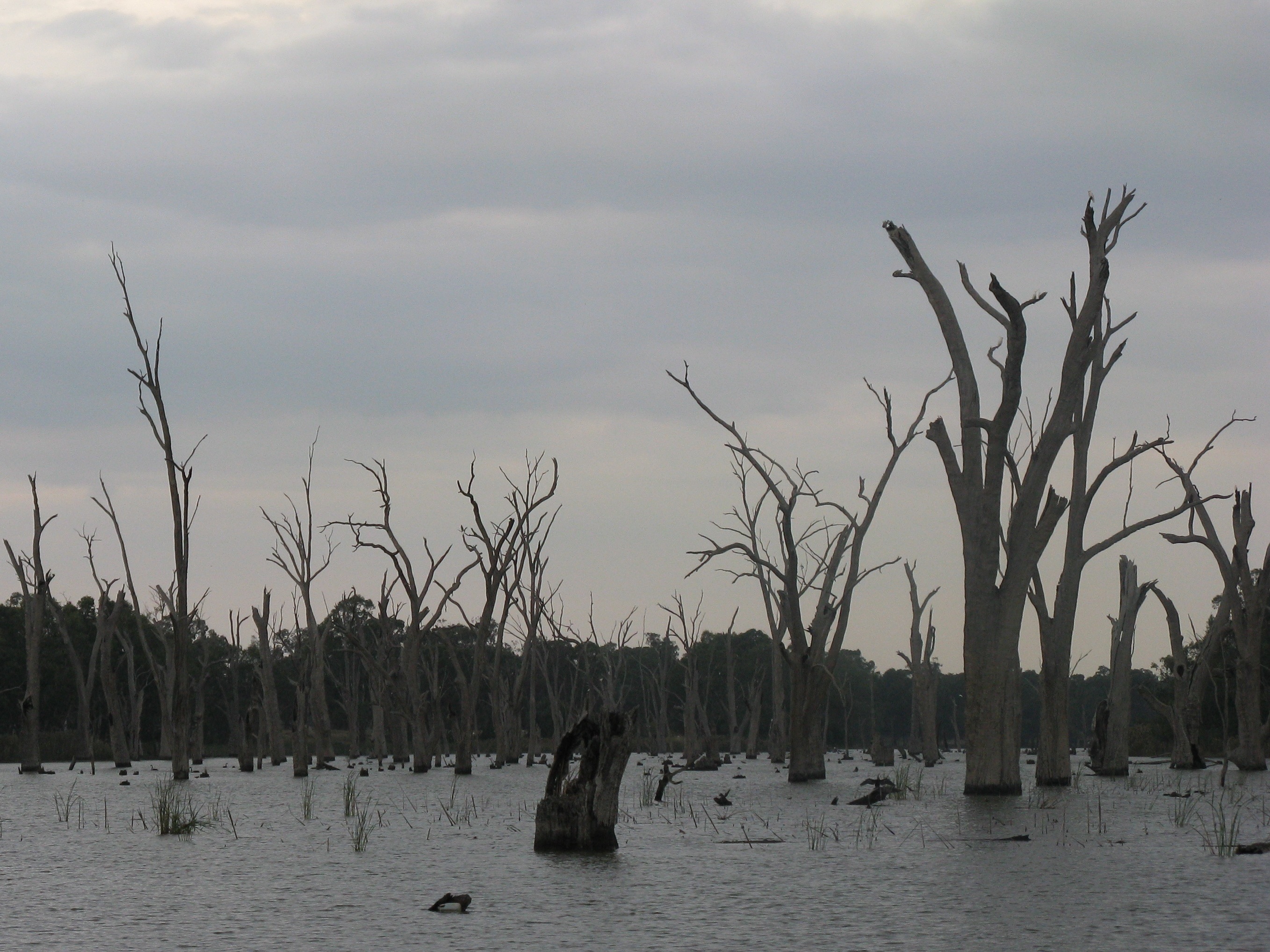
Lake Mulwala at dusk

Lake Mulwala at dusk

Yarrawonga was where, on this trip, we hit Victoria first. It is a twin town with Mulwala which is on the New South Wales side of the border. The border, here, is formed by Lake Mulwala which was created by a dam built on the Murray River in 1939. This lake is rather eerie due to the dead tree trunks protruding from its waters. This however is not its literary connection, which is, really, a bit of a far fetch. The town features in the poem, “Night vision, Yarrawonga” by Christine Churches who, from what I can see, never really lived there.  Oh well, it gets the town in the book – and these lines are rather evocative of the slow flowing Murray and its eucalyptus lined banks:

At sunset we came to the river
slow water feeding through the trees

Chiltern, Vic

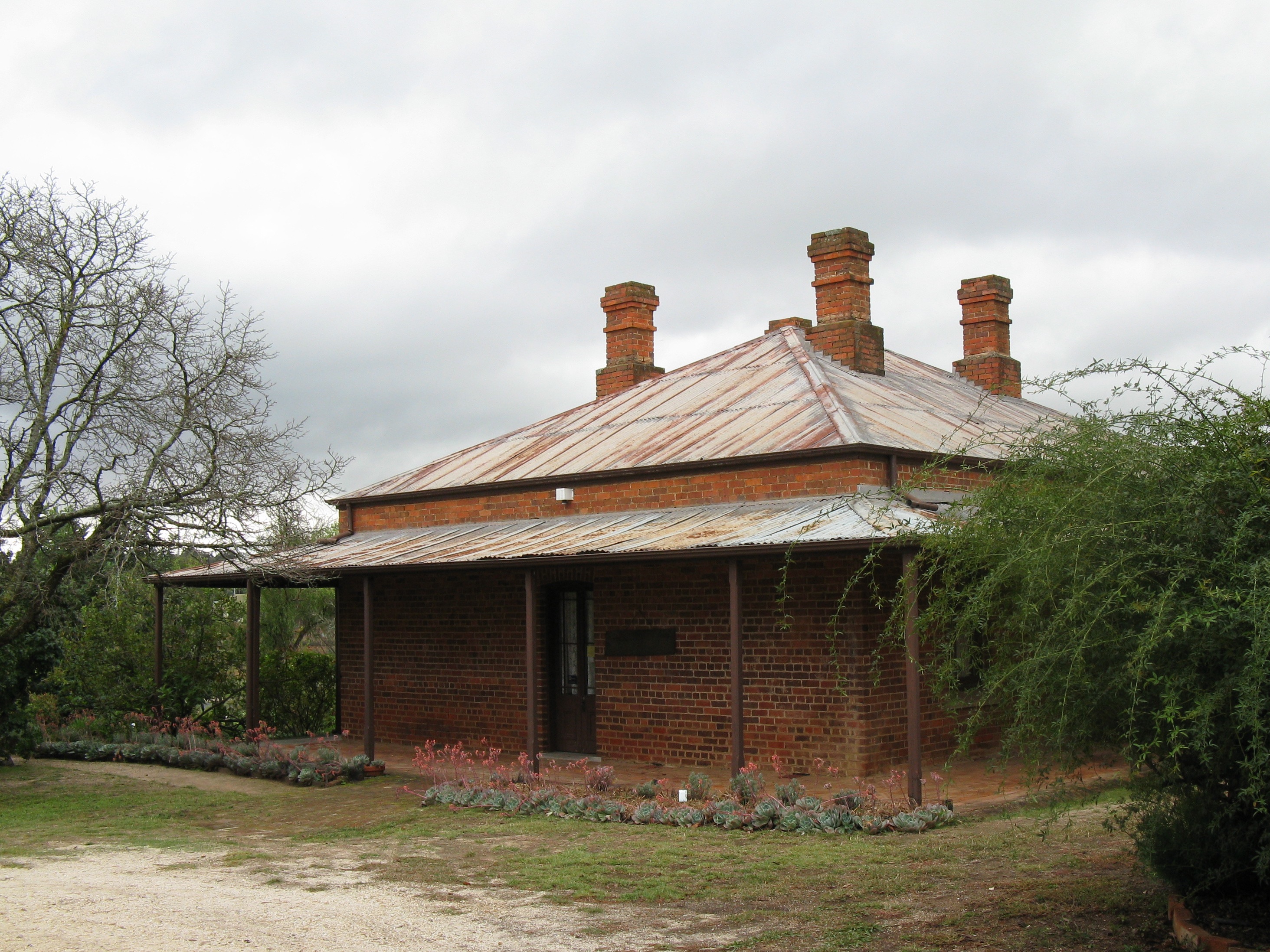
Lake View House, Chiltern (built 1870)

Lake View House, Chiltern (built 1870)

This pretty little town’s literary credential is far less arguable as the significant Australian writer Henry Handel Richardson spent part of her childhood here, and the house, Lake View, in which she lived, still stands. In her autobiography, Richardson says this is where she first smelt wattles in bloom. (For more on Henry Handel Richardson in Victoria, check out ANZLitLovers here).

Beechworth, Vic

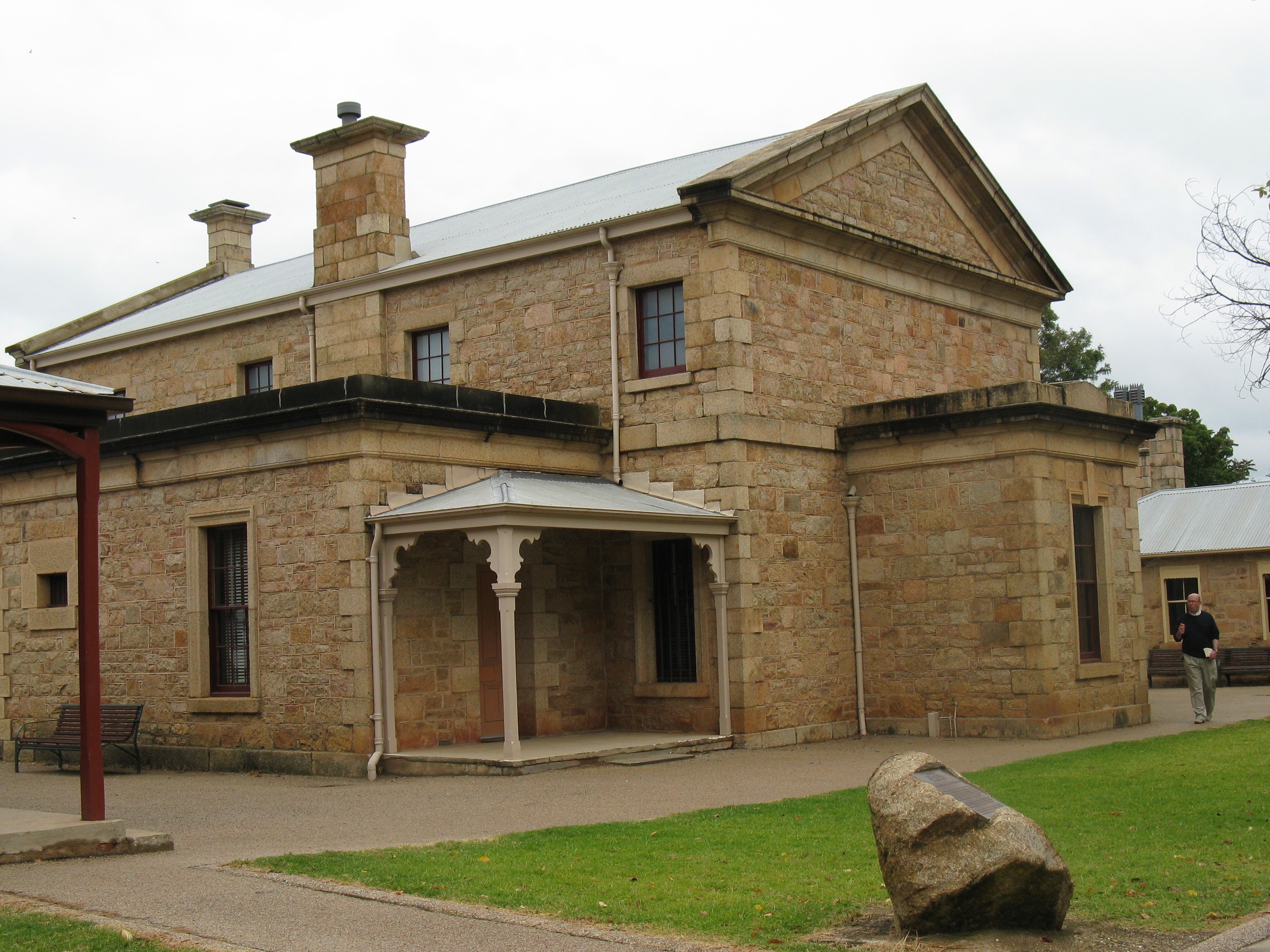
Beechworth Courthouse

Beechworth Courthouse, est. 1858, where Ned Kelly was committed to stand trial for murder

Beechworth’s big claim to fame is that the Australian outlaw, Ned Kelly, was first jailed here! However, it also has “real” literary connections as several novelists lived or visited here, including Henry Kingsley (brother of the English novelist Charles Kingsley), Mary Gaunt, Ada Cambridge, Ronald McKie and David Martin.

I’ve only read one of these, Ada Cambridge. She was a prolific writer but, like many of our early (turn of the century) women writers, receives far less attention than she deserves. She was a strong woman who often tackled issues that were close to women’s hearts but not deemed proper for the clergyman’s wife that she was. I was surprised and delighted when I first read her in the 1980s – and horrified that I had not known of her before.

Here ends the formal literary highlights of this most recent trip! Informal “literary” highlights had more to do with signs and town names. I will leave you with just one that tickled our fancy:

Road sign for Burrumbuttock

Road sign for Burrumbuttock (Photo: Courtesy Carolyn I)

Burrumbuttock, NSW, is, apparently, affectionately known as “Burrum”. Seems sensible to me!

Peter Pierce (ed)
The Oxford Literary Guide to Australia
Oxford: Oxford University Press, 1983 (rev ed)
501pp.
ISBN: 0195536223

So you have a book collection…

… but how well do you care for it?

Bookcase

Too loose (Courtesy: OCAL via clker.com)

In a recent post, I reviewed (if you could call it a review) Leslie Geddes-Brown’s book titled Books do furnish a room. That book focused on the aesthetics of having a book collection, but what about how best to ensure its longevity? The April 2010 edition of goodreading includes an article by Darren Baguley on how to protect your book collection, which made me think a bit about my own book collection management. As a librarian/archivist (albeit retired), I am familiar with the issues of caring for books and paper but do I really practise what I have preached over the years? Hmmm … well, not completely.

So, what should we do?

  • Firstly, we should look out for the three enemies of paper: light, dust/pests, moisture level. Paper does not like too much light and it shouldn’t be too dry or too humid. We all know about pests, of course, but how often do you dust your books and check for bugs?
  • Secondly, what do you store your books on/in? Particle board bookcases, for example, can off-gas. Books need air circulation so should not be pushed to the  back of the shelf. Oh dear … what if you want (need) to double shelve!
  • Thirdly, how do you “stack” or “place” your books? Generally they should be stored upright but not too tightly nor too loosely. Oversize books are best laid flat because their spines cannot support them well, but they should not be stacked more than three high.

This is pretty general. If you want to know more, check:

  • The Northeast Documentation Center here
  • The Library of Congress here
  • The State Library of Victoria on packing and storing books here
  • The Institute of Conservation here

Storage, though, is only one issue. Is your collection insured? Do you know what you have? A simple spreadsheet will work well. However, I use LibraryThing: not only can I maintain an online record of my holdings – which I can mostly create by simply entering the ISBN – but I can export back to myself a csv file of my data so that if LibraryThing ever disappears I still have my data. Not all online services offer (or did when I chose LibraryThing) this functionality.

And then of course, can you find what you have? But I think I’ll leave it here. After all, you can lead a horse to water, but …