World Poetry Day 2025 – a day late

World Poetry Day was declared by UNESCO in 1999. It is a day, says UNESCO “to honour poets, revive oral traditions of poetry recitals, promote the reading, writing and teaching of poetry, foster the convergence between poetry and other arts such as theatre, dance, music and painting, and raise the visibility of poetry in the media”. In Australia, and we are not unique in this, we also have National Poetry Month that aims to do this too, but that is in August.

I’ve let World Poetry Day slip in recent years, and I let it slip a day this year as the actual day is 21 March, but … I have two recent poetry books on my TBR so decided to use this day to give them a little outing.

Australia’s version of the Twinkl educational resource site, tells me that the theme for the 2025 World Poetry Day is – and it’s not surprising – Poetry as a Bridge for Peace and Inclusion. It aims “to highlight poetry’s transformative role in the promotion of peace, inclusion and creativity”. Do my two books suit this theme?

The two books were both published in 2024, and it’s a little amusing because Tasmanian poet Helen Swain’s collection, Calibrating home, was published by the New South Wales-based 5 Islands Press, while Sydney poet Vanessa Proctor’s collection, On wonder, was published by the Tasmanian-based Walleah Press.

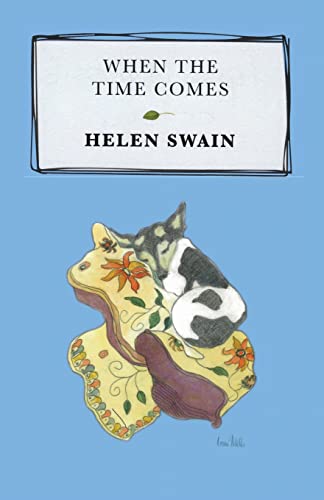
Helen Swain’s Calibrating home is the second of hers given to me by my Tasmanian-based brother. I still hope to read the previous one, a verse novel titled When the time comes. It is speaking to me! (Sometimes I think I should give up blogging so I can read more.) The brief bio in the book tells me that Swain “lives and works on the foothills of kunanyi/Mt Wellington” and that “she works as a poet in residence in the health sector”. Calibrating home is her third poetry book.

I read the first few poems when I received the book, and then put it on my bedside table for more reading – but, well, you all know how that goes! So, I picked it up again, and somehow the very first poem, “Traced”, seems to speak to the theme. It’s about a fossilised creature, possibly a moth, that has been transformed over time. The poet asks about the traces she finds of an “unnamed creature” in the rock:

How to tell what will leave a mark,
Which struggle will be recorded?

How indeed?

She wants to hold, to own this little piece of rock. She wants to set it on a ledge in her kitchen and

draw from a soft compressible insect
rock-solid endurance.

Wouldn’t we all? I love the language, the imagery here, from the domestic kitchen and the idea of softness but also of violence in the insect’s compressibility, to a desire – and need for – something hard, for endurance. It’s a strong end to the poem – and a strong opening to the collection.

The poems in this collection slip between past, present and future, often within the same poem, as you can see in “Traced”. There is a sense of struggle, but also of tenacity and endurance. War is evident, in specific poems like “Meeting up (for Michael O’Neill, killed in Ukraine May 2022” and in gentle poems like “Teacups” (“Grandmother’s teacups/survived the war”) where the domestic collides with violence. The shock of violence or war, and the cold displacement of people, is never far away in these poems. But, neither is the domestic, the peace, the connections, the gentleness (in “Suzi and the Spider”), and the humour (in “Mary”).

And of course, there is thinking and wondering. Listening to her neighbour who is bemoaning capitalism and the ills of the world, the poet says:

and I don’t know what to think
but I do think…
and somehow
I still know deeply
about the goodness of people
(“Leaning on the Fence Listening to my Neighbour in the Garden”)

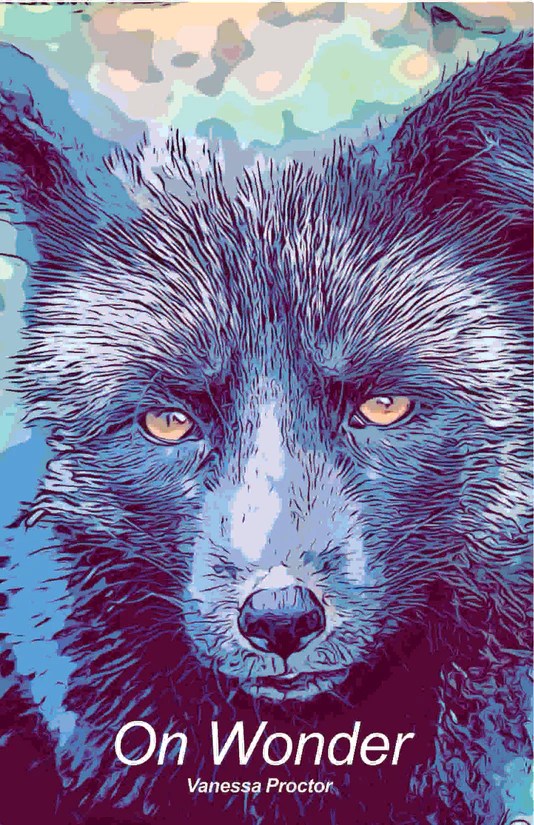
Vanessa Proctor’s On wonder was given to me by on old schoolfriend. It comes from a poet steeped in the haiku tradition, but it meets Swain at various points. One delightful synchronicity occurs between Swain’s “Suzi and the spider” which tells of Suzi gently releasing back into the wild a spider that has come into her house, and Proctor’s “A dragonfly” in which the narrator carefully unravels a spider’s silk from a dragonfly to set it free. Both speak of gentleness and respect for nature, and of connections between living things.

But now, a bit about Proctor. On wonder is her first volume of free verse, but she is an experienced haiku poet of over thirty years standing. She has been published in Australia and overseas, and her poems have been translated into many languages including Croatian, French, Hungarian, Japanese and Romanian. Her haiku artistry is evident throughout this collection in the tight gorgeous little images that appear in so many of the poems.

Other poems, however, branch out into something more expansive – not that tight images can’t also be expansive, of course. I enjoyed the gentle humour in the title poem, which, referencing Rosemary Dobson’s poem, “Wonder”, suggests a gap in understanding between teacher and student. Or, is there? There is cheeky humour too in “Helleborus Niger” whose

… roots may be used in witchcraft
to summon demons or to fight them.
Such a practical plant to grow
in the quiet of the suburbs.

Like Swain’s poems, many here are grounded in the domestic. Here too are kitchen sinks, bathrooms and gardens, but Proctor also opens with nature “stripped down” (“In the park”), albeit in her case it’s to “this moment/this place, this now”. It’s a centring to what is essential – now. “Bathroom orchid”, partway through the collection, conveys a different, but perhaps related, sense of being. “An impulse buy … a guilty pleasure”, it is “placed by the sink”:

With its glossy leaves
and velvet tongue
it knows exactly
how to be.

There’s something both unsettling and grounded here.

Proctor’s poems range widely over place – across Australia, and overseas – and over time, from 11th century Japan through world wars to now. Some respond to, or reflect on other works – on an Olive Cotton photograph, for example – or we meet historical figures like Chiune Sugihara and Murasaki Shikibu. We visit gardens and museums, experience childhood and other family memories, and are nurtured by nature. The titular theme of wonder is not laboured, but through the poems that I have read, we confront it in its various meanings of awe, curiosity, amazement, fascination – and, in the final poem, joy.

While I haven’t read these books thoroughly, my sense is they engage deeply with ideas about peace, inclusion and creativity.

This is my sixth World Poetry Day post.

And now, do you enjoy poetry? And if so, care to share any favourite poets or poems?

Favourite quotes: from a Musica Viva program

Back in 2015, I started a little ad hoc Favourite Quotes series but so far have only written four posts. This is not because I have a dearth of favourite quotes but because I don’t find time to share them. However, in the program for the most recent Musica Viva concert we attended, I came across a reference to a quote that intrigued me – and I just had to find who said it, which I did:

“How much do you know about Shakespeare?” I once asked a friend who has committed much of her life to studying the Bard. She replied, ”Not as much as he knows about me”. Remember this the next time someone tells you literature is useless.” (Arnold Weinstein, in The New York Times)

”Not as much as he knows about me”. Don’t you just love this understanding of how meaningful literature can be?

In the Musica Viva program, this was part of an interview question put to the performer – mezzo-soprano Anna Dowsley. I’d like to say that the question led to an engagement with this point, but it didn’t really. The interviewer didn’t include the “Remember this …” bit in her question, but asked instead, “How are you relating to these songs personally?” Dowsley went on to talk about the timelessness and relatability of the songs, rather than engage with Weinstein’s point. I’m not criticising the singer, here, because the way the question was put doesn’t seem to really invite the discussion I’d love to have heard.

However, the statement certainly spoke to me, because Shakespeare often comes to my mind at significant moments in my life, as do other writers, like Jane Austen. So, I went digging to find out who this Arnold Weinstein was. He has a Wikipedia article, which told me that he was born in 1940, and was (maybe still is) the Edna and Richard Salomon Distinguished Professor of Comparative Literature at Brown University. More usefully, I found an opinion piece in the Brown Daily Herald written by him in April 2022. It is titled “The case for studying literature at Brown”, and is a response to falling enrolments in literature courses. He discusses why students should choose to study literature. It’s brief but makes its point. He says, for example, that “it will sound loopy, but I believe we read literature to become other”, which is an idea that he knows will be rejected by current trends which favour “objectivity and distance” over “reader identification”. I like his thinking, though “reader identification” is a broad church and can be misapplied, so I do get those who are critical of focusing on this.

Anyhow, to conclude, he ends with the quote above, which is clearly a favourite anecdote of his, but he frames it this way:

What makes it [studying literature] worth doing? I’ll answer that with a question I asked a friend who had devoted her entire life to doing programs on Shakespeare. My question: How much do you know about Shakespeare? Her answer: not as much as he knows about me. Not as much as he knows about me. Chew on this a little. We go to literature, not because we’re professors or students, but because important books shine a unique beam on human behavior, thought and feeling. Reading these books adds something unique not only to our database but to our actual identity. For we’re never through discovering who we are. 

Today is World Poetry Day. How better to commemorate it than with this reference to the Bard – and with thoughts about why we read him and literature in general?

What do you think about Weinstein’s view?

Monday musings on Australian literature: World Poetry Day, on anthologies

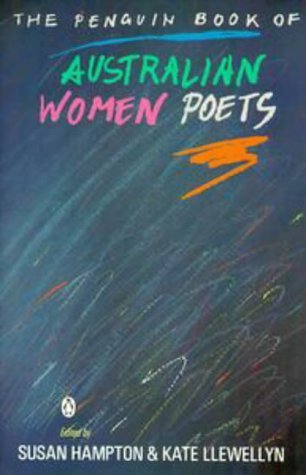
Last week, Brona (This Reading Life) wrote a post on Eve Langley’s poem, “Native-born”, in which she shared the statement from Wikipedia that it appears regularly in Australian anthologies. As I responded to Brona, I checked my three “modern” Australian poetry anthologies and only found it in the most obvious one, The Penguin book of Australian women poets. This got me thinking about Australian poetry anthologies. I’m not an expert – by any stretch – on these, but it’s World Poetry Day today, so I thought to explore them a little.

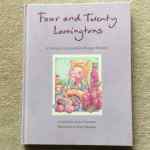
Cover, Four and twenty lamingtons

This will be the fifth post I’ve done on World Poetry Day. In my first, I mentioned that I bought many children’s poetry anthologies when my children were young. I loved reading poems to them, and loved that these anthologies would include poems not written specifically for children.

Anyhow, I’ll start by sharing my four (adult) anthologies, listing them in the order I acquired them:

  • Ian V. Hansen, The call of the gums: An anthology of Australian verse (1962): my first year of high school poetry text. I treasure/d this book (loved the title, of course). It’s organised by subjects/themes.
  • Susan Hampton and Kate Llewellyn, The Penguin book of Australian women poets (1986): produced partly in reaction to years of male-poet-heavy anthologies; organised chronologically.
  • Jamie Grant, 100 Australian poems you need to know (2008): organised by themes.
  • Bertram Stevens, Golden treasury of Australian verse (1912): my oldest, but most recently acquired, it was given to my grandmother in 1914.

And here, I lost three hours work, when WordPress suddenly told me I don’t have the right to save my work, and I hadn’t noticed that it wasn’t saving! I feel defeated as I just can’t sit down now at 8pm and rewrite the whole thing. I usually copy and paste my content elsewhere when something like this happens, but I didn’t tonight and lost it all. So, a summary instead, to which you may all say, phew!

Essentially, I was writing about the value of anthologies, starting from the point of view that national anthologies can play a role in defining a canon (putting aside whether defining a canon is a good thing or not). I had found an excellent article in JSTOR, written by poet Geoff Page in 1994. He discusses Australian anthologising through much of the 20th century, focusing particularly on the impediments to their canon potential. Impediments include the times in which they were compiled (such as the nationalistic/imperialistic tenor of one in 1922), and, in Australia’s case, differences of opinions between poets. This has been well documented over the years but he simply alludes to it here, making the point that different prejudices have played out in the anthologies produced. He says:

No editor, of course, can really escape his or her own subjectivity but it is remarkable how many ones seem to feel it was not worth the effort anyway.

Page’s survey and analysis of inclusions and exclusions in several anthologies is fascinating.

He suggests that anthologies compiled by academics have tended to be the “fairest”. He also talks about the gaps in representation – such as of women, First Nations, and non-English speaking background poets – and notes some slow improvements in these areas.

He also makes the obvious-when-you-think-about-it point that it’s not just who is included or excluded but what poems are chosen. Page recognises the impact (on canon formation) of

the universal anthologist’s desire to discover what has not been anthologised before–which often, when space for only two or three poems is available, means passing up a classic for something less central.

I can understand this desire from both the compiler’s and reader’s point of view. However, there can be a darker side to the choice of a, perhaps, “lesser” poem, or, say, fewer poems for one poet over another. With anthologists becoming, Page writes, “more cautious about omission […] it’s not so much about exclusion now but branding by short measure”!

Anyhow, the end result is that “there is no generally agreed canon; various traditions contend or, increasingly, coexist”. This is not necessarily a bad thing, particularly if, as Page suggests, “the quality of the best work bears comparison” with that of other countries, and if, as Page also suggests, poets who “represent, or identify with, minority groupings … are slowly [my emph] being more widely represented in major anthologies”. Page concludes

the situation is lively and in flux, and is likely to continue that way for some time. Some allegiances are changing, some borders are being crossed, but the presence of long-established loyalties and demarcations are not about to disappear.

And, it seems, he was right, because, nearly twenty years later, in 2012, academic and poet Ali Alizadeh wrote a negative review in Overland of a 2011 anthology, Australian poetry since 1788 by Geoffrey Lehmann and Robert Gray (whose earlier 1992 anthology Page had discussed). Alizadeh writes that the anthology

is not only a collection of some of the more timid and uninteresting poetry produced in this country since British invasion, it also propagates ideological notions that are comprehensively trite and reactionary …

He comments not only on who is included, but also what, noting, for example, that

the only poem by the radical avant-gardist Ania Walwicz included in the anthology is ‘travelling,’ a poem that is, according to the editors’ notes, largely bereft of the ‘socio-political intent’ present in ‘much of Walwicz’s [other] poetry’.

This is just one example of unrepresentative selection he provides to support his assertion that the editors’ “key objective … may have been much more ideological and tendentious: to present – or even shape – an image of Australian poetry as a cultural milieu devoid of ‘socio-political intent’.” Strong words. And they garnered strong, but mostly very interesting, if lively, responses. Do read them if you are interested.

Meanwhile, I will just share a response by critic Alison Croggon (whose Monsters I’ve reviewed). Picking up the point about “what” has been included, she argues that “the creation of context [is] another crucial aspect of anthologising”, and agrees with Alizadeh that what has been created here is the idea that “poetry is apolitical, a contextless aesthetic object”. This reminds me of Susan Hampton and Kate Llewellyn who, back in 1986, introduced their anthology by calling it “part of a history of women’s writing and of cultural politics which are creatively disturbing the conventional view of our literary heritage.”

Ah, poetry in Australia! It’s still a lively, contested place, and, really, that’s a good thing.

Now, do you enjoy – poetry anthologies? Care to talk about them?

World Poetry Day 2020

I have written two World Poetry Day posts before, in 2016 and 2018, so why not again in 2020, particularly given, more than any year, we are probably in need of hearing what poets have to say – of being soothed, inspired, entertained, or yes, even admonished by them.

Awarnessdays.com says of World Poetry Day:

Poetry reaffirms our common humanity by revealing to us that individuals, everywhere in the world, share the same questions and feelings. Poetry is the mainstay of oral tradition and, over centuries, can communicate the innermost values of diverse cultures.

In celebrating World Poetry Day, March 21, UNESCO recognizes the unique ability of poetry to capture the creative spirit of the human mind.

They explain that the day was adopted by UNESCO in 1999, and that one of its main objectives is “To support linguistic diversity through poetic expression and to offer endangered languages the opportunity to be heard within their communities.” Observing the day is, they say, also “meant to encourage a return to the oral tradition of poetry recitals, to promote the teaching of poetry, to restore a dialogue between poetry and the other arts such as theatre, dance, music and painting, and to support small publishers and create an attractive image of poetry in the media”. Wonderful goals, all.

UK’s Global Dimension website provides ideas for recognising the day, including, of course, “organising readings of poems from different cultures, including from pupils’ own cultures.” Well, that’s not going to happen now, in the UK or anywhere, is it, with COVID-19 and the cancellation of public events. However, the page points us to the Wikipedia Poetry page as a good starting point for investigating different forms of poetry. They also, and this is just what we need, provide a link to a site called Poetry Station which offers “poems to view on video”. It was established after the English & Media Centre (EMC) was awarded in 2009 a small Arts Council of England grant for a pilot project to create “a freely accessible web-based video channel and portal for poetry”.

What a lovely aspirational site it is – and, it is also available as an app, simply called Poetry Station. For each poem, as well as the videoed performance, there is a link to information about the poet (often from Wikipedia), to suggested activities (for educators) and also a list of related poems which, of course, are linked to performance of this poems. The site also lists the poets, titles and topics for the poems on the site.

And in Australia?

A Google search brings up various cancelled events in Australia, run by organisations like the Geelong Library and Heritage Centre and Gosford Library. As in previous years there are also non-poetry reading activities being promoted or run. Golden Carers has a page of activities on their website (as I also noted in my 2018 post), and Reading Australia, which regularly support the day, is running a World Poetry Day competition for primary and secondary students and teachers, with the support of Red Room Poetry. (I’ve mentioned both organisations here before).

For those interested in Australian poetry, there are many sites and sources of information – many that I’ve mentioned here over the years – but for today, I’m sharing a list of Australian poetry books from the National Library of Australia bookshop.

Finally, not specifically created for World Poetry Day, but unfortunately applicable, is Australian comedian Sammy J’s recent offering, “The ballad of the dunny roll”, which riffs off the classic Australian balladeer Banjo Paterson. I think both Aussies and non-Aussies will appreciate this:

Leonard Cohen, 2009

Leonard Cohen, Bowral, January 2009

I’d love to hear about any poetry you like, or your favourite poets.

Meanwhile, I’ll leave you with what seems a very appropriate line, from Leonard Cohen’s “Dance me to the end of love” (available at the Poetry Station.)

Dance me through the panic till I’m gathered safely in.

Keep safe everyone.

My literary week (15), readings and readers

As regular readers here know, my “literary week” posts are irregular affairs, usually inspired by something I really want to share (or document for my own benefit!) And so it is this week …

Reading Boochani in public … and related thoughts

Public reading No Friend but the Mountains

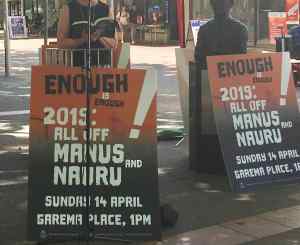
I was especially pleased, given the events in Christchurch last Friday week, that I’d been asked to take part in an all-day public reading of the book No friend but the mountains, written by Kurdish-Iranian poet and Manus Island detainee, Behrouz Boochani. The reading was organised by local writer (and ex-work colleague) Sarah St Vincent Welch, with the support of the Canberra Refugee Action Committee. It took place in Canberra’s Garema Place on Thursday March 21, which happened to be World Poetry Day and World Harmony Day. The reading started at 8.15am and went through into the early hours of the evening, with my 10-minute slot taking place in the early afternoon. It was a privilege to be one of the 60 readers, most of whom were local poets, taking part in the event.

As we all know, it’s strange how events and ideas can coalesce. We have, here in Australia, a current affairs television program called The Drum. It’s a panel discussion show and, earlier this week, in the wake of Christchurch, they had an all-Muslim women panel. It was confronting, but it reinforced the ideas that are also embedded in Growing up Aboriginal in Australia (my review), and that also reflect the experience of the detainees. Each situation is different in specifics and history, but Muslims, indigenous people, and asylum-seekers know what it is like to be reviled. Each member of these groups wakes up each and every day, wondering what act of prejudice or hatred they might confront*. It’s truly appalling.

If only naysayers and decisionmakers would stop, listen and/or read, and imagine walking, for just a moment even, in another’s shoes, they might think again about their actions. This is not about class or religion or wealth or education (though they are implicated in the bigger picture), but about human feeling. I know I speak from a position of fortune – I can’t change that – but I can try to do my bit to lessen the load.

Readings

Two of my recent posts resulted in short story recommendations that I thought worth sharing, though I haven’t yet had time to follow them up myself:

  • Ian Darling, commenting on my post on Rudyard Kipling’s story “The Janeites”, recommended an earlier Kipling story, “Mary Postgate” (available online), originally published in 1915. Ian describes it as “a fearful mixture of hate and compassion.” Sounds eerily relevant doesn’t it?
  • Lisa (ANZLitLovers), commenting on my Monday Musings post on the NSW Premier’s Translation Prize, recommended an Indonesian short story translated by one of this year’s shortlistees, Harry Aveling. The story is “The biography of a newborn baby” and is by Raudal Tanjung Banua (available online).

I will try to read them in the next week or so, once I’ve read this week’s reading group book!

Readers

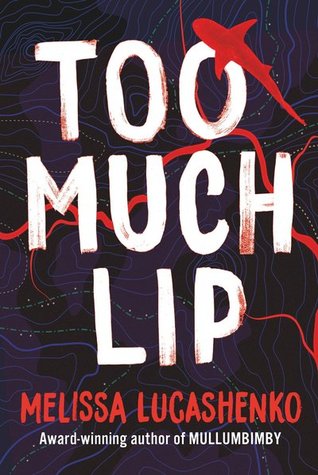
Readers are interesting beasts really (and I use the term affectionately!) We differ greatly in what we like to read, what we think is good, what we think is worth reading. I was interested to read, after writing my post on Melissa Lucashenko’s Too much lip, Karen Wyld’s very thorough review in the Sydney Review of Books. Late in the review she comments on the challenge for readers:

Melissa Lucashenko, Too Much Lip

Too Much Lip is, of course, not the first novel to include family violence or to expose its colonial roots. There are, however, risks with telling stories like these. Non-Indigenous readers could fail to recognise the strength of culture to mitigate intergenerational trauma, and not understand its roots in colonial violence and systemic racism. Some readers might see the Salters through an over-used deficit model, or believe they have the solutions to ‘fix’ Indigenous families. Instead, the Salters’ story shows how ineffective governments have been in trying to patch up the wounds of colonisation through paternalistic and draconian approaches. Some readers might find it hard to grapple with the violence in this novel. And some might find it hard to forgive the Salter siblings’ creative disregard for the law. It’s important to remember that this book is a piece of fiction but it is grounded in reality.

If there is a risk of non-Indigenous readers misconstruing parts of this novel, how can First Nations writers mitigate such risks? In most cases they can’t, and they shouldn’t have to. The responsibility of interpretation and the heavy lifting of expanding one’s worldviews and letting go of ingrained prejudices lies with the reader [my emphasis].

Too much lip is an exciting read, but it is also a confronting one that can easily lend itself to judgement if not moralising. I love that Wyld discusses this potential head on.

Quote of the week

I included a Quote of the Week in my last literary week post, and can’t resist including one again. It comes from Rudyard Kipling’s “The Janeites” (linked above):

“… there’s no one to touch Jane when you’re in a tight place. …”

I’m sure I don’t need to tell you what this means, even if you haven’t read the post!

* Well, asylum-seeker detainees probably have a good idea, as every day brings the same, but I think you take my point.

World Poetry Day 2018

Did you realise that today, March 21, is World Poetry Day? I’m not asking this to catch you out but more because I wonder how well promoted it is – particularly here in Australia? I must say that, as in previous years, I’ve heard very little about it. Perhaps, though, if I went to my local public library, they might be promoting it? You never know.

I have mentioned this day before, including dedicating a Monday Musings post to it in 2016, when I gave a brief explanation of the Day. It was designated for 21 March by UNESCO in 1999, but has been celebrated for much much longer, often in October to align with the birthday of the birth of the Roman poet Virgil. Its aim is to promote the reading, writing, publishing and teaching of poetry throughout the world. There is, as I wrote back in 2016, a Facebook Page for World Poetry Day, but the posts there are an eclectic bunch.

I enjoy poetry, but I don’t write a lot about it here. However, most years I write a few posts and I have a small book by a Tasmania poet on my TBR now that I hope to get to soon.

Now though, I’ll just share a three Australian initiatives I discovered via our good friend Google, and which cover us almost from cradle to grave!

Reading Australia

Leah A, Ten silly poems by a ten year oldThe Australian Copyright Agency’s wonderful Reading Australia, which I’ve mentioned before, is doing its bit. In late February it announced that it would spend “the entire month featuring the diversity and brilliance of our Australian poets, contemporary and classic.” They list five works for primary school students, including a picture book featuring a poem by Australian classic balladist Banjo Paterson, and five for secondary students, including a verse novel I don’t know by Steven Herrick, and works by well-known Australian poets Robert Adamson, Judith Wright, Bruce Dawe and Kenneth Slessor.  For each work, they provide teaching resources, along the lines of this one for Judith Wright’s Collected poems.

They also provide an “extra reading list” for those who want to explore further. This includes a verse novel for primary students, Bully on the Bus by Kathryn Apel, which won the 2015 Australian Family Therapists’ Award in the Young Readers/Picture Book category, and the now classic feminist anthology Mother, I’m rooted from 1975, comprising works from over 150 poets. They say about that that “You’d be hard-pressed to find a collection of poetry that so completely represents the diverse spectrum of being a woman.”

The website doesn’t make clear how they are making this is a month-long focus, but it’s a start – particularly for teachers who are uncomfortable with or unconfident about teaching poetry.

Coffs Harbour Regional Museum

Google also revealed that the Coffs Harbour Regional Museum (up there on the NSW mid-north coast) is celebrating  the day with an event they’re calling Celebrating World Poetry Day with a Rime and an Open Poetic Mic. The word “Rime” comes from their feature poem – Coleridge’s The Rime of the Ancient Mariner – for their. The event, which has a sea theme, comprises an art exhibition named for Coleridge’s poem; a conversation between a poet and the exhibition’s artist; and the open mic session for people “to perform an original or much regarded poem – under 4 minutes please bards” (and sea-themed of course).

What I particularly like about this is that it’s example of the way regional museums and galleries work hard to actively engage their communities in culture, rather than simply present static exhibitions.

Golden Carers

You can probably guess what Golden Carers is – and you’d be right. Based in Brisbane, Australia, its tagline is “Supporting carers of the elderly worldwide since 2007”. The organisation caters for “Diversional Therapists, Recreation Therapists and other caregivers of the elderly, including volunteers”, but to get full access you need to pay. Fair enough.

Wonderfully, they have a page for the 2018 World Poetry Day, and provide a list of activity ideas which look doable for non-experts. The ideas include:

  • Ten Tips for Celebrating World Poetry Day
  • Poetry in Popular Song
  • Poets and Poems Quiz
  • Funny Poems by Roald Dahl
  • Multicultural Poems
  • Share Your Poems

There are resources for all the listed activities, behind the pay wall.

Before I conclude, I’d like to share some lines from a couple of poets* (one Australian, one not). Who would not benefit from thinking and talking about what Emily Dickinson has to say:

If I can stop one Heart from breaking
I shall not live in vain …
(Emily Dickinson)

Or, Judy Johnson:

Listen to which footsteps
placed

on the heart’s risers
produce a squeak

and which treads
are noiseless.

(Judy Johnson, from “Words, after an absence”)

And now, back to the UN and its aims for denoting this day:

One of the main objectives of the Day is to support linguistic diversity through poetic expression and to offer endangered languages the opportunity to be heard within their communities.

The observance of World Poetry Day is also meant to encourage a return to the oral tradition of poetry recitals, to promote the teaching of poetry, to restore a dialogue between poetry and the other arts such as theatre, dance, music and painting, and to support small publishers and create an attractive image of poetry in the media, so that the art of poetry will no longer be considered an outdated form of art, but one which enables society as a whole to regain and assert its identity.

What a comprehensive goal! I wonder if they are doing anything to measure whether or not the Day is achieving anything.

Happy World Poetry Day everyone!

* Emily Dickinson, from The School of Life’s boxed set, 20 poems; Judy Johnson, from Prayers of a secular world.

Monday musings on Australian literature: World Poetry Day

Well, folks, Trove has let me down, which is a very rare occurrence when I’m doing historical research. I looked for the phrase “world poetry day” and I looked for all the words “world”, “poetry” and “day”, but nothing apparently relevant appeared. Hmmm, because …

Interestingly, a Google search did retrieve a photograph on flickr of a World Poetry Day function held in 1963 Australia. The photograph says “all rights reserved” so I can’t reproduce it here, but you can see it online. Clearly World Poetry Day has been known about here for some time, but, oh dear, it’s only poetry so why write about it in the newspapers, eh?

I did find a few more recent references to the day via Google (using “world poetry day Australia”, without the double quotes), such as:

  • an Australia Council for the Arts news item on World Poetry Day in 2013. The item says, among other the things, that the day is for us “to acknowledge the role of poets around the world who are unable to speak openly and freely and who strive to build a better world.” Amen to that.
  • a news item from the United Nations Information Centre in Canberra on World Poetry Day in 2014 stating that “One of the main objectives of the Day is to support linguistic diversity through poetic expression and to offer endangered languages the opportunity to be heard within their communities” but it doesn’t list any activities planned to achieve this in 2014 Australia.
  • an article in the Sydney Morning Herald titled “World Poetry Day 2015: a chance for children to embrace the power of words” but it doesn’t mention any events encouraging children to do just that.
  • a World Poetry Day program (Eureka!) for the 2015 World Poetry Day, fun by the Queensland Poetry Festival. The web page starts with a William Hazlitt quote: “Poetry is the universal language which the heart holds with nature and itself. He who has a contempt for poetry, cannot have much respect for himself, or for anything else.” I don’t see anything for the 2016 day.

That’s pretty much it for the first page of results on my Google search. I guess these results tell me that Trove let me down for a reason. There really doesn’t seem to be much interest in the day here. Most of those links about seem more lip service than commitment, don’t they?

Before I continue, a brief explanation of World Poetry Day. According to Wikipedia (and some of the links above), it was designated as 21 March by UNESCO in 1999. The day, though, has been celebrated for much much longer, often in October to align with the birthday of the birth of the Roman poet Virgil. The UK, says Wikipedia, still celebrates it in October. There is a Facebook Page for World Poetry Day, but I can see nothing on it for Australia in 2016.

And yet, Australia – like many countries – has a rich poetic tradition. We have, to name a very very few, the bush balladists of the 19th century, early twentieth century poets like CJ Dennis and Dame Mary Gilmore, indigenous poets like Oodgeroo Noonuccal, later poets such as Judith Wright, Dorothy Porter and our grand old man Les Murray, and new poets-cum-rappers like Omar Musa*. We have poetry events and slams, poetry prizes, poetry websites, poetry magazines and poetry in literary magazines, and publishers specialising in poetry. I’ve written about many of these over the life of this blog. (See my poetry tag which tags all my poetry-related posts, not just Australian.)

Cover, Four and twenty lamingtonsAmong the first works I read to my children when they were babies were poetry books – AA Milne (of course), Dr Seuss, TS Eliot’s Old Possum’s Book of Practical Cats, and poetry anthologies, of which I bought many. A favourite Australian one was Four and twenty lamingtons. And picture books too, many of which are told in verse. Poetry is such an easy way to introduce children to the fun of language and words and to reading together. Poetry like music is something you can introduce to babies from the beginning.

I’m going to keep this post short – give you an early mark this Monday! And, anyhow, I’m sure you’ve got my meaning.

But, just for a straw poll, no matter where you live, can you tell me whether you’ve heard of any World Poetry Day events in your neck of the woods?

* I hate naming names here, really, because there are so many wonderful Aussie poets I’d love to mention.

POSTSCRIPT: After I drafted this post, the UK-based International Business Time published, for this year’s World Poetry Day, a list of “Famous non-English poets you should read”. Not Australian, but of interest to us all. Check it out.