Friedrich Gerstäcker, Australia: A German traveller in the Age of Gold (Review)

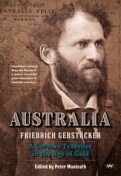
Friedrich Gerstacker, AustraliaFriedrich Gerstäcker’s Australia: A German traveller in the Age of Gold was first published in its original German, as Australien, in 1854. Gerstäcker did prepare, at that time, an English language version of his travels, but the section on Australia, at least, was much shorter than his German edition, and is all English readers have been able to access – until now. Amazing really.

You may remember that I mentioned this book back in November, because it inspired a Monday Musings on 19th century travellers. It is a beautifully conceived book. It has a brief note on the text at the beginning, and an afterword at the end. There is also a decent index, and extensive end notes sharing editor Monteath’s in-depth research. These notes added significantly to my enjoyment and understanding of Gerstäcker’s writing.

So, who was this Friedrich Gerstäcker? A German, he travelled around the world from 1849 to 1852, partly funded by a German publisher. Australien was the fourth of five volumes. His writings were loved in Germany and he was, apparently, a household name there for many years – starting when his mother, unbeknownst to him, gave the diaries he was sending home during his 1837-1843 American travels to a publisher!

Now, as I said in my Monday Musings, historical travel writing can provide valuable “primary” insight into different times and places. But the best travel writers are those who, in addition to that, use language well and give us themselves. Gerstäcker is such a writer.  He provides revealing insights into mid-nineteenth century Australia. But, in addition, his writing is engaging: it has touches of humour mixed with deeper reflection, it includes some gorgeous descriptions, and we get a sense of who he is.

“the truly astonishing number of public houses” (p.21)

Gerstäcker arrived in Sydney in March 1851, and left it at the very end of September in the same year. He provides a fascinating picture of Sydney life at the time, commenting on the plethora of drinking establishments (or “public houses”), but also expressing some astonishment that his prejudices regarding visiting a “criminal colony” were ill-founded. It was not, as expected, full of “an indefinite number of murderers, thieves, burglars and other dreadful, horrible, characters”. He then travels, by the Royal Mail, canoe and foot, from Sydney, via Albury and the Murray River, to Adelaide. The chapters describing this trip (Chs. 2-5) are probably the most interesting in the book.

In South Australia, his focus is on visiting some of the German communities there, particularly in Tanunda, in the Barossa wine region. He sees his role partly as providing “real” information about places for would-be German emigrants, and reflects thoughtfully on what emigration means. He notes that Germans had made themselves a living, one that many “would never have been able to establish in Germany in that time and with those means” but he also sees the cost. He writes:

Now the question still remains of course, how much the heart is still attached not only to old habits but also to old friends and loved ones and perhaps even the old homeland itself, and whether it really was so impossible to secure a living back there that one really had to tear oneself away from everything one held dear and transplant oneself in cold foreign soil. Sometimes – and how often! – a slightly better living is too dearly bought through emigration …

He also writes about the practice of religion by the Australian Germans, particularly the tensions between different groups, and he describes in some detail how government-supported education works in South Australia, pointing out some of its illogicalities. This would have been of interest to prospective immigrants, and is now to current readers and researchers. The material most relevant to contemporary Australians, though, was his navigation of the Murray. How navigable was it was the question on administrators’ lips and Gerstäcker was able to provide first-hand knowledge.

He returns to Sydney by boat, in August, and notices a dramatic change there, providing an on-the-ground insight into the impact of the beginning of the gold rush. In his “short absence” Sydney had changed from “a busy city, but otherwise calm, to all appearances perfectly reasonable” to a city in which everyone was “dizzily, yet tirelessly dancing around the glistening false God of the newly found gold”. His departure being delayed for boat repair reasons, he decides to visit some of the goldfields and the picture he draws is one of frenzy, excitement, and loss. He overlays this with common-sense advice, based on his Californian goldfields observations, that it is generally more profitable to work one claim systematically than to be forever upping stakes to chase another chance to strike it rich.

Interestingly, he castigates the media – the newspapers, in other words – on several occasions. He writes, for example, of people’s failure to make their fortunes, and comments:

All of this is not reported in the Australian newspapers: they only highlight the positive elements of the picture and their purpose and goal is easily recognisable. They want people to come to Australia, workers …

Ah, the media … but that’s another whole story.

“indestructible, unavoidable, unbearable gum trees everywhere” (p. 43)

Gum trees

A boring forest of gum trees (Southern NSW)

You have probably realised by now that while Gerstäcker’s writing is generally informative, it is also limited by the perspective of his times, and by his own cultural biases. For example, imagine my horror at his ongoing disparagement of our gum trees! They are “sorry specimens”, “dull, green” or “dun-coloured”.

Soon after his arrival in Sydney he writes that “strangely enough, all the beauty of the scenery is restricted to the sea and to the nearby coast of Port Jackson”. He shows his cultural hand, most obviously, when he heads into the, admittedly beautiful, Blue Mountains region near the end of his trip, and writes of Mount Victoria that

this was the first place in Australia where I have seen real scenery of a quite impressive nature. Mount Victoria is itself a fairly significant mountain, rugged and picturesque, sloping down into a depression that surrounds it on three sides, forming a wide, deep, densely wooded valley. The vegetation is, however [oh dear, here it comes], the same as in all other parts of Australia that I have seen so far. Gum trees, nothing but gum trees, which makes the remaining countryside so terribly monotonous …

He does admit, a couple of sentences on, however, that seen in the distance “decorated … with the sunlight and … draped … in colourful, misty veils” they have a “mysterious aura”. But then he continues that “in reality they are also just plain, dun-coloured gum trees, all with the same leaves”. I could retort that any single-tree-species forest can be monotonous, but it’s not worth it. He won’t hear me!

There’s a lot more to share and enjoy, but I can’t finish this lengthening post without mentioning his descriptions of Australia’s “Indians” as he calls indigenous Australians. Strangely, Monteath only discusses, in his Afterword, the sources Gerstäcker uses for the extensive information he provides about indigenous life and culture in chapters 8 and 9. He doesn’t comment on Gerstäcker’s attitudes to the “Indians” in his travels, attitudes which are mostly derogatory and fearful, often based more on hearsay than on experience. For example, Gerstäcker repeats the stories he’d heard of the “Indians” killing people for their “kidney fat”, a widely-held belief at the time that Monteath explains in his very useful end-notes.

On his first sighting of “Indians”, near Albury, Gerstäcker writes of finding himself

in amongst the eternal dreary gum trees and amongst the black, dirty, treacherous, murderous people of these forests.

Funny how, despite this, he manages to survive his long trip from Albury to Adelaide, with minimal incident even though he did much of it alone and was carrying items of great interest to the “blacks” he met! Most of the time he repeats stories of “their” treachery, and he regularly describes them as dirty and ugly, but he also says that he does not agree with “acts of cruelty against Indian tribes”. It is “right and proper to apply restraint”, he says, but

we can hardly expect that they should immediately conform to rules and practices which, after all, have been imposed on them by the whites.

And right at the end of his trip, while visiting islands in northern Australia, he comments that he is

firmly convinced that the primary cause of all hostility, indeed of all acts of cruelty toward the savage tribes, is the white man himself.

This is an engrossing book that I took some time to read. It’s certainly not a page turner, but it is full of information, observations and reflections that would appeal to diverse interests. For this reason, it’s probably difficult to market. How lucky we are to have publishers like Wakefield Press willing to take a risk on books like this.

Friedrich Gerstäcker
Australia: A German traveller in the Age of Gold
(Ed. Peter Monteath; Trans. Peter Monteath and his team)
Mile End: Wakefield Press, 2016
303pp.
ISBN: 9781743054192

(Review copy courtesy Wakefield Press)

Monday musings on Australian literature: Arnold Haskell on the Arts (1)

Arnold Haskell, Waltzing MatildaA couple of months ago I wrote a post on British dance critic Arnold Haskell’s book, Waltzing Matilda: a background to Australia (published in Australia in 1944). I said then that I’d come back to it, so here I am, focusing this time on his chapter on “The Arts”. It comprises 22 pages covering, according to the chapter subtitle, “The theatre – The cinema – Painting – The press – Literature”. Today, I’ll just discuss the theatre and literature.

“a national theatre is not yet born”

He starts with the theatre, and says that although he knows “from experience that Australia has a vast theatre-going public and a fine theatrical tradition … the theatre is unfortunately in decay”. Performances are more likely to be “Gilbert and Sullivan” or English or American musicals or sensational-type plays with imported stars. When an Australian does show ability “he [of course, it’s a “he”] promptly leaves for England or America”. If he stays he’ll “probably starve, both artistically and financially”.

Serious theatre – performing, say, Chekhov or Gogol – mostly occurs in amateur repertory societies and some of these “reach an extraordinarily high standard”. He blames the lack of development of a national theatre on “apathy and the great national inferiority complex” (aka “the cultural cringe” I’ve often mentioned here). However, when it comes to music, ballet and opera things are a little better, particularly in opera where Melba, who had died in 1931, had “dealt a smashing blow to the inferiority complex”.

“still in the formative period”

Haskell spends more of his chapter on painting than on anything else but let’s get to literature. He says, it has “not produced men who are the equals of Streeton, Heysen or Gruner”. Interesting. I might be wrong but I’d say that now Miles Franklin, Katharine Susannah Prichard, and Eleanor Dark are at least as well-known as those three artists.

Anyhow, here is his impression:

Those who could write the great Australian novels, who are neither apathetic nor complacent and who correspond in some way to our Bloomsbury, are unfortunately too busy talking to accomplish more than a poem, a pamphlet or a short story. They are dissatisfied, they hate the squatter, despise the ‘dinkum Aussie’ and are well to the left of his traditional labour. Their thoughts are in Spain or Russia. They have both imagination and compassion, but there is more of bitterness in their make-up… They concentrate on the ideal of some vague revolution just as the masses concentrate on sport.

He argues that the “flourishing school of contemporary American literature was started by such minds as these in their magnificently creative intervals from drinking and posing in Paris.” (Don’t you love it?) He’s referring, I presume, to Hemingway, F Scott Fitzgerald, et al. He sees – quite perspicaciously I’d say – that the problem is that Australians were looking to Europe, were seeing the distance between them and Europe “as a handicap” BUT he says “the differences between Australia and England will produce a national art and literature, not the similarities.” In other words, look to your own. America has recognised this, he writes, “and has made her differences a source of pride”. Our own Nettie Palmer saw it too, and argued strenuously for an Australian literature. She pondered in her 1929 article, “The need for Australian literature”, on what recognition the work of Australians had received. “To what extent, ” she asked, “have their efforts been made barren by the ingratitude and even hostility with which they have been met at the outset.” Cultural cringe again? For Palmer, it is the artist (the writer, in her case) who illuminates, or makes understandable, our lives for us.

Anyhow, Haskell does recommend some Australian authors/works which have become “part of the Australia scene”, which I’ll share as I know we all like lists:

  • Marcus Clarke’s For the term of his natural life: Haskell writes beautifully about this book and how Kensignton-born Clarke used his two years’ bush experience to make himself “an Australian writer”. He argues that Clarke’s characters “have a humanity not unworthy of Dostoievsky” and compares him favourably against Henry Kingsley’s Geoffrey Hamlyn which he describes as “stilted and old-fashioned” and Rolf Boldrewood’s Robbery under arms which is just “a typical boy’s yarn”.
  • Henry Lawson’s While the billy boils, and other works: Haskell says Lawson’s work is universally seen as “honest Australian” and that “no interested tourist should omit reading these sketches of the Australian character”.
  • Vance Palmer and Brian Penton “depict the Australian scene with skill and conviction”, and Mrs Aeneas Gunn’s The little black princess “gives a particularly delightful picture of the aboriginal mind and was highly recommended to me by a distinguished anthropologist”. (Oh dear, but these were different times.)
  • Ion Idriess, who covers “the more adventurous sides of Australian life”, is “not a polished writer” but tells “magnificent” stories from his own experience.
  • Katherine [sic] Susannah Prichard, Helen Simpson and Henry Handel Richardson “are so well known in England that they are accepted as English writers”! What does this mean? And interesting that these are all women writers who are described this way. He says that The fortunes of Richard Mahoney “gives a gloomy picture of Australia but it is surely the greatest contemporary work of Australian fiction”.

Haskell also mentions several poets – Adam Lindsay Gordon, Henry Kendall, CJ Dennis and ‘Banjo’ Patterson [sic] – as worth reading. I’m just going to share, though, what he says about Paterson because Paterson, himself, felt he was just a ‘verse-maker’ not a poet. Here is Haskell:

Patterson, a bigger figure [than Dennis], might be called Australia’s Kipling, though there is little actual resemblance. It might be very easy to dismiss this very hearty verse as being of little account, easy but superficial. When one knows Australia this is altogether impossible. It has a quality of greatness because Patterson has written folk-songs and ballads of Australia. His verse has an extraordinary quality of spontaneity. It is truly indigenous.

Dennis, he writes, “is famous for his amusing doggerel in the Australian vernacular” and “has left behind some humorous journalism. It is more deliberate and sophisticated; it is a tour de force and not a cri de coeur.”

Haskell admits that there are other names he could share. However, his aim has not been, he says, to produce “a study of Australian literature” but rather a “personal account” of his “journey” because his prime goal has been to “see Australia at first hand and not through literature”. I understand that …

George Augustus Sala, The tyranny of pie (Review)

When I decide to write about a Library of America (LOA) Story of the Week it is usually because it’s by a favourite author (like Willa Cather, Kate Chopin, or Edith Wharton), or by an author I want to read but haven’t yet (like John Updike or Washington Irving) or on a topic that interests me (like the environment or race issues or food). You can guess from the post title, then, why I chose the story I’m writing about today!

I’ve covered a few LOA food stories: Scotsman John M. Duncan’s “A Virginia barbecue” (1823), American George G. Foster’s “The eating-houses” (1849), and Cuban-American Ana Menéndez’s “Celebrations of Thanksgiving: Cuban offerings” (2004). Two are about events and one about restaurants, though they all mention food too of course. Englishman George Augustus Sala’s piece, however, starts from the point of view of food – the pie, which, I’ve just realised, is appropriate for this American Thanksgiving weekend. Sala, like Virginia-barbecue-Duncan, was a traveller to America, so wrote his piece from the perspective of an outsider.

George Augustus Sala

Sala c. 1855-65, by Mathew Brady (Public Domain via Wikipedia)

But, who was this Sala? Aussies will be interested to know that it was he who coined the still-used description “Marvellous Melbourne” when he visited Australia in 1885. He was born in 1828, and is described in LOA’s notes as a “prolific and flamboyant journalist”. He “found fame” as an acolyte of Charles Dickens, and was a regular contributor to Dickens’ journal, Household Words (about which I’ve written before). However, LOA continues, it was public praise from William Makepeace Thackeray which really launched his career. Unfortunately, although Sala published much and earned good money from writing for The Daily Telegraph, he was a spendthrift who was also often drunk, and “died virtually penniless”.

Now, the piece. It comes from his second trip to the States. His first trip was in 1863 during the Civil War, and while he was critical of much he did like American humour. He wrote, says LOA, a three-book series of anthologies, Yankee Drolleries (1866–1870), which introduced British readers to established authors like Oliver Wendell Holmes (whom I wrote about recently) and the up-and-coming writer, Mark Twain.

During his second trip, which resulted in his book America revisited, he found an improved America. LOA quotes this:

The truth is, that in New York there is room enough for Everybody, whereas in London, huge as it is, there is not sufficient room for Anybody.

By the late 1870s, we’re told, Manhattan had become a popular travel destination for the European upper class.

Sala, LOA also says “had a lot to say about American food. His comments range from despair and scorn to grudging, if infrequent, admiration”.  He apparently approved of New York, because its food and accommodation were “what Europeans usually consider to be refinement and comfort.” But on leaving New York, “you must expect nothing better than pork and beans and Indian pudding, or hog and hominy if you go South; the whole washed down by rough cider or molasses and water.” His short “The tyranny of pie” piece appears as a digression in his America revisited chapter about a train trip to Baltimore.

I’m sure you all know the phrase “as American as apple pie”. The Huffington Post provides some background to this in an article titled “Why are we ‘As American as Apple Pie’?” The pie was an English tradition, and brought to American by the Pilgrims, but by 1860, well before Sala’s second visit, the phrase was already in use. Novelist Harriet Beecher Stowe wrote, says Huffington’s Kimberly Kohatsu, that “the pie is an English tradition, which, planted on American soil, forthwith ran rampant and burst forth into an untold variety of genera and species.”

It is partly this variety which captures Sala’s eye. He commences, though, by praising signs of “improvement and reform” in America – in

everything except Pie. The national manners have become softened—the men folk chew less, expectorate less, curse less; the newspapers are not half so scurrilous as our own; the Art idea is becoming rapidly developed; culture is made more and more manifest; even “intensity” in æsthetics is beginning to be heard of and Agnosticism and other “isms” too numerous to mention find exponents in “Society,” and the one absorbing and sickening topic of conversation is no longer the Almighty Dollar—but to the tyranny of Pie there is no surcease.

What is all this about we readers wonder? Soon he writes:

The day before we left New York one of the ripest scholars, the most influential journalists (on the Democratic side) the brightest wits and most genial companions in the States lunched with us. He would drink naught but Château Yquem; but he partook twice, and in amazing profusion of Pumpkin Pie.

Ah, I was thinking, he’s like me. He doesn’t like Pumpkin Pie, and wonders about the taste of this Château Yquem drinker … but, I was disappointed because, within a couple of sentences he writes:

The worst of this dreadful pie—be it of apple, of pumpkin, of mulberry, or of cranberry—is that it is so very nice. It is made delusively flat and thin, so that you can cut it into conveniently-sized triangular wedges, which slip down easily.

He then suggests that the pie is “as important a factor in American civilisation as the pot-au-feu does in France” but that England has nothing equivalent. The closest England has to a dish “by which we nationally stand or fall” is “the roast beef of Old England” but it is expensive and

there are hundreds of thousands of labouring English people who never taste roast beef from year’s end to year’s end—save when they happen to get into gaol or into the workhouse at Christmastide.

This is where his little piece ends. I did enjoy its cheeky humour, and this pointed conclusion.

George Augustus Sala
“The tyranny of pie”
First published in: America revisited: from the Bay of New York to the Gulf of Mexico, 1882.
Available: Online at the Library of America

Monday musings on Australian literature: 19th century travellers in Australia

I’m a bit of a sucker for 19th century travellers. The one who started it all was Flora Tristan with her Peregrinations of a pariah (1838). Yes, I know, she was a Frenchwoman travelling in South America, so she’s not actually relevant here. And yet, before I get to travellers in Australia I must mention other works I’ve dipped into: Washington Irving’s Tales of the Alhambra (1832), Isabella Bird’s Unbeaten tracks in Japan (1880), and Lafcadio Hearn’s Glimpses of unfamiliar Japan (1894). Of these, Isabella Bird is the only one to have also visited Australia, of which more anon.

Gerstacker

Public domain (via Wikipedia)

None of these, though, inspired this specific post. That honour goes to my current read, Freidrich Gerstäcker’s Australia: A German traveller in the age of gold which was first published in German in 1854, and has now been published in an English translation by Wakefield Press. It chronicles his travels in Australia in the early 1850s. As I started reading it, it occurred to me that while I’ve spoken before about 19th century explorers’ journals, I haven’t mentioned travel writing from the same period.

However, as I started doing a little research, I realised that, particularly given the period and how little the country had been “explored”, there is – or can be – a pretty fine line between explorers’ journals and those of travellers. The difference, I’d say, must be the intention, and here I’ll quote Gerstäcker:

Merely having set foot on a foreign part of the world has its own charm. No matter how passionately people are attached to their own country, they still want to see a different one, so that they can think longingly back to their own.

I’m not sure that the last bit is critical, but he does capture the traveller’s desire to see something different for his or her own reasons, as against the explorer’s goal which is more to travel to new places to gain geographical and/or scientific knowledge, usually for the benefit or use of others. For the person interested in history, though, both offer valuable “primary” insight into the life of another time.

So, I thought I’d share a few 19th century travellers (chronologically by their writings) who wrote about their travels in Australia:

Charles Darwin’s A naturalist’s voyage around the world (1860, text on PGA) describes his visit to Australia in 1836. He opens Chapter 19 with his arrival in Sydney Harbour:

Early in the morning a light air carried us towards the entrance of
Port Jackson. Instead of beholding a verdant country, interspersed
with fine houses, a straight line of yellowish cliff brought to our
minds the coast of Patagonia. A solitary lighthouse, built of white
stone, alone told us that we were near a great and populous city.

He tells of going out to Bathurst “to gain a general idea of the appearance of the country” and goes on to describe what he sees (including “the extreme uniformity of the vegetation”). He comments on his experience of indigenous Australians and also mentions convicts, but his main focus was the natural environment. After spending a couple of weeks in the area around Sydney, the Beagle went down to Hobart before heading to New Zealand.

Ellen Clacy’s A Lady’s Visit to the Gold Diggings of Australia in 1852–1853 (1853, text on PGA): Clacy visited the Australian goldfields with her brother, and was only in Australia for a year or so. Her book was one of many used by Clare Wright in her award-winning The forgotten rebels of Eureka (my review). Wright quotes Clacy’s advice to Englishwomen considering emigration:

Do so by all means … the worse risk you run is that of getting married and finding yourself treated with twenty times the respect and consideration you may meet in England.

The reason for this, Clacy argues, is that because there are so few women “we may be pretty sure of having our own way”. Hmm.

Here she is on Melbourne, or, one aspect anyhow:

The most thriving trade there, is keeping an hotel or public-house, which always have a lamp before their doors. These at night serve as a beacon to the stranger to keep as far from them as possible, they being, with few exceptions, the resort, after dark, of the most ruffianly characters.

Gerstäcker comments on “the truly astonishing number” of pubs in Sydney. Seems our drinking culture started early!

Friedrich Gerstäcker’s Australia: A German traveller in the age of gold (1854): it will be a while before I finish this, but I’ve read nearly a third and am loving his descriptions of mid-19th century Sydney and of his intrepid trip along the Murray. His observations on the people and the landscape, flora and fauna he meets and sees along the way add not only to my understanding of early white-settled Australia but also of mid-19th century European thought. I love that he keeps an eye out for the bunyip, though he’s aware that there’s a chance it doesn’t exist!

Anthony Trollope’s Australia and New Zealand (1873): Trollope visited Australia in 1871, when he was 56-years-old and having negotiated, writes Fullerton (see below), a contract to write a book about the trip. Fullerton writes that “few visitors to Australia have ever worked so hard at seeing everything, learning about Australian institutions and customs, observing locals at work and at play, and covering so much ground, as did Anthony Trollope”. The aim of the book was to be useful to potential English migrants to Australia.

Isabella Bird’s “Australia Felix: First impressions of Australia” (in Leisure Hour, Feb 10, 1877): I’ve enjoyed her writings on Japan but haven’t tracked down an e-version of this article. All I know is that she “disliked” Australia. It was the first exotic place she visited (besides a trip with cousins to the USA) and I wonder whether her attitude might partly be due to inexperience as a traveller – but that may just be me being defensive!

Five is probably enough for my purposes. It’s a subject I’ll return to when I review Gerstäcker’s book … and possibly again in future posts because there are many journals out there.

Sources:

  • Susannah Fullerton, Brief encounters: Literary travellers in Australia 1836-1939, 2009 (includes more writers than I’ve mentioned here including Joseph Conrad and Robert Louis Stevenson)
  • Project Gutenberg Australia (PGA)
  • Clare Wright, The forgotten rebels of Eureka (2013)

Monday musings on Australian literature: Arnold Haskell’s Australia

Arnold Haskell, Waltzing MatildaWho is Arnold Haskell you are probably asking, if you are anything like me. The answer will probably surprise you: he was a British dance critic, who wrote many books on ballet, and was, in fact, involved in the development of the Royal Ballet School. But, he also visited Australia a couple of times, first in 1936, as a publicist-reporter with the Monte Carlo Russian Ballet. He returned to Australia in 1938 to research his book Waltzing Matilda: a background to Australia, which was published in England in 1940 (though not published in Australia until 1944). And guess where I found this book? Yep, in my aunt’s house.

So, he visited Australia a couple of times before the Second World War, but his book was published during the war. I find that quite fascinating – who would be interested in what is really a travel book in such  abnormal times? (I looked at the records for this book in Trove. There are several editions: most are categorised as “description and travel”, but some as “civilisation” and “history”. I think the former is better, but it just goes to show that categorisation is never easy!)

Anyhow, here is how he starts his Introduction:

I happened on Australia four years ago, at four days’ notice and by complete accident. Had I been given a week’s notice I probably would not have come at all. I was completely, even aggressively uninterested in that continent. … When I let my friends know where I was going, they said “Why?” which did not encourage me, and left me speechless for once.

His lack of interest wouldn’t surprise Australians who are aware that for the British, particularly at that time, we Australians were simply colonials, and had nothing of interest to offer, and particularly nothing for those who saw themselves as sophisticated. Haskell saw Australia, for example, as offering “hospitality, hearty but uncouth”. He says in this first paragraph that he was “bribed” to accept the trip, partly by the work (the ballet company) and partly by the opportunity to visit Ceylon (now Sri Lanka) and Honolulu, en route. Harrumph!

However, he “became … enchanted”, and so returned later for 6 months to see more. As there were no books that described Australia in the way he as a traveller wanted, he decided to write it himself:

Australia, in comfort at all costs, in luxury if possible; Australia, stressing the modern plumbing in the most modern hotel in Sydney rather than the lack of plumbing in the dead centre [had he visited his own counties I wonder?]; recounting the lives, thoughts and works of many eminent painters rather than the pathetic state of the rapidly dwindling aboriginal; in fact to write of Australia as one writes of Europe or America: positively and without the eternally negative point of view.

It would be easy for us to take exception to this, but it’s more interesting to read it as a reflection of (a certain segment of) the times, and as something that can provide insight into the world as it was then. And anyhow, he goes on to say that he want to trace

the evolution of a society from brutality and chaos to as perfect an expression of ordered democracy as can be found, to show the amazingly rapid transition from an unhappy group of felons, often not so bad, and their gaolers, often not so good, of overbearing petty Himmlers and dictator governors to a civilised community of amazingly tolerant people living in a country freer from crimes of violence than any other, in a continent that has never known the hatred, violence, hypocrisy and destructiveness of Europe.

Ah, it would be lovely to pat our own backs at this, except that we know that there has been violence here. It just wasn’t spoken of back then.

He goes on, completely oblivious to Australia’s long history of occupation by indigenous people, talking about how Australia’s history is still mainly a “family tradition rather than history”, one in which “I remembers” have not yet made it into “the ordered framework of text-books and university courses”. Again, although his view is myopic, I love this way of describing the “short” history as he saw it.

However, his book is not, he says, a history but a personal story which he hopes will “provide the background” that he found lacking.

I will come back to this book, I think, because as well as travelling around the states, he also did some of his own primary research checking letters, manuscripts etc to obtain his own perspective. It should make for fascinating reading … but for now, I’m tired folks, so signing off with a shorter than usual one!

Emma Ayres, Cadence: Travels with music (Review)

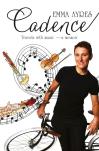
Emma Ayres, CadenceAlthough Emma Ayres’ memoir Cadence had been passed around my reading group with much enthusiasm over the last year or so, I wasn’t intending to read it – not because I wasn’t interested, but because there were other books I wanted to read more. However, when I found the audiobook at my aunt’s house while we were clearing it out, Mr Gums and I decided to listen to it on our trips to and from Sydney. It proved to be a great car book. However, a warning: we listened to it intermittently over two months, so this will be more a post of reflections than a coherent review.

Emma Ayres is probably known to most Australian readers of my blog, but perhaps not to others so let’s start with a potted bio. Born in England in 1967, Ayres is a professional musician – a viola player in fact – who has also worked as a radio presenter. She lived in Hong Kong for eight years, playing with the Hong Kong Philharmonic Orchestra, but in 2000 she rode a bicycle, fundraising for charity, from Shropshire, England, through the Middle East and central Asia, to Hong Kong. She moved to Australia in 2003, and worked as an ABC Classical Music radio presenter for eight years, from 2008 to 2014.

Now to the memoir. Cadence is ostensibly a travel memoir, but it covers a lot of ground within its seemingly narrow construct of chronicling her year-long bicycle journey. The ground it covers, besides the story of her travel, which is exciting enough given the regions she rode though, includes her childhood, her reflections on her life as a musician, and her analyses of classical music. Some of her technical descriptions went over my head, but I found her discussions of composers to be not only accessible and eye-opening, but deeply interesting. And it’s all told with a thoughtful philosophical underpinning.

Cadence is an excellent title for a musician’s memoir, and she plays with its meanings throughout, referring, for example, to a “perfect cadence”, or a “slow cadence”, or more frequently to  “interrupted cadences … moments when the direction is changed”. Indeed, the memoir could be seen as comprising almost continuous interrupted cadences because, although the bicycle trip provides her memoir’s chronological backbone, she skips around frequently, going backwards to her childhood and early years as a musician and forwards to her life after the trip when she briefly toyed with being a cellist. It can take a little concentration to keep track of exactly which part of her life she is writing about at any one time, but it’s not too hard. After all …

Cadences are waypoints in the music, places where you can take a breather, readjust your instrument and hurtle on to the next bit of the adventure.

I greatly enjoyed Ayres’ reflections on life and travel. The book is full of her insights, many learnt on the road. For example, regarding the challenge of deciding whether to do the trip she says:

If you are not sure whether or not you should do something, ask your ninety-year-old self.

At another point she discusses how much she loved Pakistan despite all the nay-saying she had received when she was planning her trip. She was treated, she writes, almost without exception, with kindness and generosity everywhere she went. “Do we make our own welcome?” she wonders, and goes on to suggest that before we criticise another country, we should perhaps look at ourselves first.

Being a woman cycling alone is risky business, particularly in some of those male-dominated countries through which she travelled. She frequently took advantage of her androgynous look, helping it along by keeping her hair very short and wearing non-feminine clothes (where she could). Consequently, she was regularly taken for a man. She discusses gender often, commenting on how we are ruled by it and its associated expectations. She sees herself as “a border dweller in the world of gender”, writing:

I do admire people who are by birth penumbral but have the courage and desire to be firmly one or the other and go through a sex change, but I like the fluidity of being able to float around the middle. I really to think that the basic this or that of male and female is shallow and limiting. How simplistic to think, with all those opposing hormones flowing in each of our bodies, that we are one and therefore not the other. And how much better in countries like India and Thailand that they recognise more than two sexes. More variations in the octave, more variations in gender.

Another theme that runs through the book is the idea of being in the moment. She tells the story of being taken to task for reading Anna Karenina when on a bus in Pakistan. Her young seat-mate is mystified by her passionate rendering to him of the story, saying to her “but you are here!” She genuinely sees his point, and puts the book down. Later in the trip, she regrets not spending more time with a fellow-traveller who crosses her path because “I was too focused on destination and again forgot the importance of the here and now”.

Cadence is a generous, warm-hearted book which abounds with travel anecdotes to delight any lover of travel literature. There are scary moments, and funny ones, and others that are just plain interesting. It also contains intelligent, considered insights into music, some of which I plan to share in a follow-up post. For now, I’ll conclude with a comment she makes early in the book:  “Travel”, she says, “goes inwards as much as outwards”. That is exactly what she demonstrates with this book. I can see why all those in my reading group who read the book urged it onto the next person.

awwchallenge2016

Emma Ayres
Cadence: Travels with music – a memoir
Sydney: ABC Books (by HarperCollins), 2014
284pp.
ISBN: 9780733331893

Emma Ayres
Cadence: Travels with music – a memoir (audio)
(read by Emma Ayres)
ABC Commercial, 2014
8 hours (approx) running time (on 7 CDs)

William Gilpin, Jane Austen and the picturesque

I was introduced to William Gilpin by Jane Austen. Well, not by her so much as by her brother, Henry, who told us* that she was “enamoured of Gilpin on the Picturesque at a very early age”.

Engraving of Rev. William Gilpin.

William Gilpin (Harper’s New Monthly Magazine, No. 231, August, 1869.Public Domain, via Wikipedia)

This month my local Jane Austen group decided to look a little more deeply at Gilpin, his Picturesque, and what Jane Austen really thought. William Gilpin (1724-1804) was an English vicar, schoolteacher, prolific writer and amateur painter. He is remembered primarily for his theory of “the picturesque”. The “picturesque”, according to my Shorter Oxford English Dictionary, dates back to 1703 with the meaning, “in the manner of a picture; fit to be made into a picture”. In his Essay on Prints (1768), Gilpin defined it as “… a term expressive of that peculiar kind of beauty, which is agreeable in a picture”.

The blogger at Austenonly has written an excellent post on Jane Austen and Gilpin in which she proposes – and my group here agreed with her – that Austen was enamoured of him because he appealed to her sense of the ridiculous. He expresses his opinions so dogmatically, he is so opinionated, that she can’t help mocking him. How could she not satirise a man who seriously suggests (“Essay 1: On Picturesque Beauty”, Three Essays) that, when it comes to a portrait, “the highest form of picturesque beauty” is not “the lovely face of youth smiling with all its sweet dimpling charms” but “the patriarchal head” with its “lines of wisdom and experience … the rough edges of age”. Being a woman of a certain age, I rather like Mr Gilpin! But, seriously, is it really a matter of either/or?

Or someone who writes (in the same essay):

A piece of Palladian architecture may be elegant in the last degree. The proportion of its parts — the propriety of its ornaments — and the symmetry of the whole, may be highly pleasing. But if we introduce it in a picture, it immediately becomes a formal object, and ceases to please. Should we wish to give it picturesque beauty, we must, use the mallet, instead of the chisel : we must beat down one half of it, deface the other, and throw the mutilated members around in heaps. In short, from a smooth building we must turn it into a rough ruin. No painter, who had the choice of the two objects, would hesitate a moment.

We must presume that he is not speaking literally when he suggests taking a mallet to a pleasing building in order to make it picturesque! But Jane Austen is sure to have laughed and, as you’ll read in Austenonly’s post, there are many examples in Austen’s novels, particularly Pride and prejudice, Sense and sensibility and Northanger Abbey, in which she satirises the picturesque.

On the other hand, there are also places where she seems to exhibit an appreciation and understanding of Gilpin’s theory because, while Gilpin could be dogmatic, he also argued convincingly for a seeing nature with “a picturesque eye”. He writes in “Essay 2: On Picturesque Travel” about enjoying “the great works of nature, in her simplest and purest stile, open to inexhaustible springs of amusement”, and says

Nor is there in travelling a greater pleasure, than when a scene of grandeur bursts unexpectedly upon the eye, accompanied with some accidental circumstance of the atmosphere, which harmonises with it, and gives it double value.

I’ll illustrate this with two examples of travellers in Austen. First is her description of Fanny’s return to from Portsmouth in Mansfield Park:

Her eye fell everywhere on lawns and plantations of the freshest green; and the trees, though not fully clothed, were in that delightful state when farther beauty is known to be at hand, and when, while much is actually given to the sight, more yet remains for the imagination.

There is also a lovely, similarly genuine, description of the environs of Lyme in Persuasion in which she writes of a “sweet, retired bay, backed by dark cliffs, where fragments of low rocks among the sands make it the happiest spot for watching the flow of the tide …”

The question that comes to mind then is whether she is satrising the picturesque or slavish adherence to it or, even perhaps, its somewhat slippery nature. In fact, Jane Austen, landscape and the Regency is a pretty inexhaustible topic. And so, while I thoroughly enjoyed my brief introduction to Mr Gilpin, I’d love to find time to read more, particularly his travel writings about various parts of the British Isles. Meanwhile, I can’t resist leaving you with another Gilpin satirist, William Combe (1741-1823), who in 1809, as Dr Syntax, wrote the poem “The Tour of Dr Syntax in Search of the Picturesque”. It starts with

I’ll make a tour – and then I’ll write it.
You well know what my pen can do,
And I’ll employ my pencil too:-
I’ll ride and write, and sketch and print,
And thus create a real mint;
I’ll prose it here, I’ll verse it there,
And picturesque it everywhere.
I’ll do what all have done before;
I think I shall – and somewhat more.
At Doctor Pompous give a look;
He made his fortune by a book:
And if my volume does not beat it,
When I return, I’ll fry and eat it.

What a hoot …

* in his biographical note to the posthumously published first edition of Northanger Abbey and Persuasion

Delicious descriptions from Downunder: Isabella Bird on Nikkō in Japan

Woodwork on temple in Nikko, Japan

Carved birds and animals at Toshō-gū Shrine, Nikkō, Japan

This is one of those Delicious Descriptions that is from Downunder but is not of Downunder, if you know what I mean. It’s actually of Japan – as you observant readers will already know given the title of this post – and it comes from Isabella Bird‘s Unbeaten tracks in Japan to which I referred in my first Japan trip post in May.

One of Bird’s first stops after leaving Tokyo was Nikkō, now designated as a UNESCO World Heritage Site for its astonishing complex of shrines and temples. It was, it appears, no less astonishing in the late 19th century than it was for us when we visited it in 2006. Bird spends quite a few pages describing it, but I thought I’d share this one for now:

The shrines are the most wonderful work of their kind in Japan. In their stately setting of cryptomeria, few of which are less than 20 feet in girth at 3 feet from the ground, they take one prisoner by their beauty, in defiance of all rules of western art, and compel one to acknowledge the beauty of forms and combinations of colour hitherto unknown, and that lacquered wood is capable of lending itself to the expression of a very high idea in art. Gold has been used in profusion, and black, dull red, and white, with a breadth and lavishness quite unique. The bronze fret-work alone is a study, and the wood-carving needs weeks of earnest work for the mastery of its ideas and details. One screen or railing only has sixty panels, each 4 feet long, carved with marvellous boldness and depth in open work, representing peacocks, pheasants, storks, lotuses, peonies, bamboos, and foliage. The fidelity to form and colour in the birds, and the reproduction of the glory in motion, could not be excelled. (Letter VIII)

It is, as Bird says, simply marvellous, full of wonderful details that you can spend hours wandering around. However, during Bird’s stay:

there were two shocks of earthquake; all the golden wind-bells which fringe the roofs rang softly, and a number of priests ran into the temple and beat various kinds of drums for the space of half an hour.

Nikkō apparently means “sunny splendour”, and it sure is that – but how vulnerable it is.

Whispering Gums on Deformed Pines

Black Pine overhanging pond, Korakuen, Okayama

Black Pine over hanging pond, Korakuen, Okayama

I am slowly but surely working my way through Isabella Bird‘s Unbeaten tracks in Japan. While we were still in Japan, and enjoying its wonderful gardens, I came across the following passage from early in Bird’s travels:

After running cheerily for several miles my men bowled me into a tea-house, where they ate and smoked while I sat in the garden, which consisted of baked mud, smooth stepping-stones, a little pond with some goldfish, a deformed pine, and a stone lantern. (From Unbeaten tracks in Japan, 1880, Letter VI)

Hmm, I thought, was the pine really “deformed” or is this a case of Bird’s anglocentric eyes missing the beauty of Japanese pines? Because for me, besides of course the overall design, the three things I love about Japanese gardens are the stones, the lanterns and the pines. I cannot resist photographing these “objects”, particularly if I see them in combination. The stones, though, are stones, albeit beautifully chosen and carefully placed. And the lanterns – usually made of stone – come in a range of sizes and forms but are recognisably lanterns. The pines, however, are something else. They come in two main varieties – Red and Black. They are often supported by poles tied to the tree with rope, and their trunks may be protected by a bamboo “coat”. And, they are very particularly pruned, to shapes that I suppose could be described as “deformed” if you didn’t realise there was a plan and a purpose.

Korakuen scene, Okayama

Lantern, stones, pine and water at Korakuen, Okayama

Water, stones and pines are the critical elements of Japanese gardens. And each has its meaning. For now though I’ll just focus on the pine. Pines, we were told by our Korakuen guide, represent longevity. My research for this post confirmed this but added that they also express happiness. I suppose happiness goes with long life? (At least it would be nice to think so!). I also discovered that Japanese red and black pines represent in and yo, “the soft, tranquil female forces and the firm, active male forces in the universe” (From the UCLA Hannah Garden Center). I would have expected from this that red and black pines would usually be found (more or less) together in Japanese gardens, but while we certainly saw both types of pines I wasn’t aware of their being in any obvious relationship with each other or even of regularly being in the same garden. Perhaps I’m reading this symbolism a little too literally. I will do some more research on this one … but, if any of you readers out there are experts in Japanese pines I’d love to know more.

Alex Kerr, in his award-winning book Lost Japan, has some critical things to say about modern Japanese gardens, but as I haven’t finished that book  (either) I will reserve comments for now. Meanwhile, though, I hope you have enjoyed this admittedly little foray away from gums into the world of the Japanese pine!

Monday musings on Australian literature: Travel writers on Australia

Art installation-restaurant, Teshima

Don't panic (or, art installation-cum-restaurant by Tobias Rehberger, Teshima)

Don’t panic, I told myself, the universe with still continue if I miss one week’s Monday musings. You see, after having been in Japan for over two weeks now, my thoughts have strayed rather far from Australian literature. But then, necessity being the mother of invention, an idea came to me. While I’ve been travelling, I’ve been dipping into travel literature about Japan, such as Isabella Bird‘s Unbeaten tracks in Japan (1880), Donald Ritchie’s The inland sea (2002 Ed.), and Alex Kerr‘s Lost Japan (1994). And that made me wonder about travellers to Australia and what they read.

This is not an area I’m expert in. After all, being Australian, why would I actively read up on travel literature about my own country unless, of course, I want to see what others are saying about us? And of course sometimes it’s good to hear what others are saying, and so I have read some writers on Australia (foreigners, of course, because travel literature is, by definition, written by those foreign to the shores they write about). I’ll share a couple I’ve read though it’s been a while since I read them, and I don’t have them in my backpack to refer to now. I would love to hear if you know of others, and whether you would or would not recommend them.

Bruce Chatwin‘s The songlines (1987)

Most of you have probably heard of Bruce Chatwin and his travel writing. I have his In Patagonia on my virtual TBR though when (or if) I’ll get to it is a good question. I did enjoy The songlines, which I read about twenty years ago now, though I recollect that as a travel book it’s a bit problematical. How much of it is nonfiction, how much fiction? But perhaps you could say that about much travel writing? Anyhow, I particularly liked his discussion of indigenous songlines in Australia, and his use of that as a motif for his own travels. I also enjoyed the “snippets” he presented in the second half of the book comprising various thoughts generated by his experiences… They reminded me a little of a “commonplace book”, albeit one composed primarily of one’s own thoughts.

Bill Bryson‘s In a sunburned country (or, Down under) (2000)

Bryson’s book was published under different titles in Australia and overseas I believe. It’s a hoot of a book really and not to be taken too seriously. For example, he made it sound as though Australians face dangers everyday – from snakes, spiders, crocodiles, sharks, and various poisonous sea creatures – but that, while being good for a laugh, is of course an exaggeration. These creatures and associated dangers do exist and most Australians will come across some of them in their lives but we are far more likely to die on the roads or from melanoma than we are from dangerous animals.

What Bryson does well though is, in his lighthearted manner, give you a flavour of the Australian character and what you can expect to see and enjoy on your Australian travels. (You can take this as great praise from one whose city he rather panned, but Aussies themselves pan it too so what’s new?)

These are two recent books, but there has been a long tradition of people writing about Australia, from the First Fleet on. One of the earliest is Watkin Tench’s A narrative of the expedition to Botany Bay (though my copy is titled 1788). It’s an insightful read but perhaps a little too specific to be of interest to the general traveller.

So, do you read travel literature (as opposed to travel guides) when you travel and/or do you read travel literature to armchair travel? I’d love to hear your thoughts.