Raynor Winn, The salt path (#BookReview)

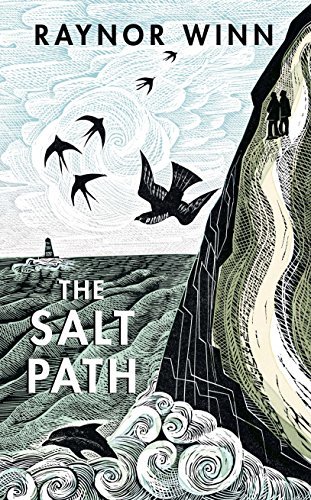
While my reading group’s main fare is fiction, we do include nonfiction in the mix. In fact, this year has been unusual as we’ve scheduled three nonfiction books – Richard Flanagan’s Question 7 (my review), Anna Funder’s Wifedom (my review), and, last month, Raynor Winn’s The salt path. I can’t recollect how The salt path came to be chosen, and nor could the 8 (of our 11) members who attended the meeting, but we weren’t about to complain.

Many of you will know this book already, given it became a bestseller after its publication in 2018. It was shortlisted for some major awards, and won the inaugural RSL Christopher Bland Prize (which I would call a “late bloomer” prize.) However, in case it escaped your notice, I will briefly summarise it. The book opens with two disasters befalling author Raynor and and her husband of 32 years, Moth. He is diagnosed with a rare, terminal degenerative disease called CBD (corticobasal degeneration) and, in an ultimately unjust court case, they lose their home which was also their livelihood. They have nothing but each other (and their two children who, fortunately, are young adults linving away from home). What do you do in a situation like this? You decide to walk England’s challenging 630-mile South West Coast Path, wild camping most of the way. That’s what.

Although it’s essentially a memoir, The salt path is better described as a road story that combines memoir, nature writing and social commentary. I would also argue that it’s a work of creative nonfiction, partly because of its strong narrative arc (albeit this is not uncommon in memoir and travel writing) but also because it includes dialogue (which, given there’s no evidence to the contrary, has presumably been recreated for the book). The result is a book which interweaves description, anecdote, personal reflection, social commentary and dialogue in a way that maintains our interest because it never bogs down in one mode or another. The balance Winn achieves is not only between these modes, but also in tone, which moves between serious and scared, melancholic and thoughtful, and light and humorous.

“you’ve felt the hand of nature … you’re salted” (woman on path)

I want to explore a little more how the combination of memoir and road story works to tell Winn’s story. Memoir, by definition, deals with a particular issue or time period in a person’s life. This gives the story a natural trajectory which conveys how that issue is handled or progresses – and/or what happens over that chosen time – until some sort of resolution or conclusion is reached. A road story has an even more obvious or natural narrative arc – the beginning of the trip, the middle with all the events and challenges met on the way, and the trip’s end (which may or may not be the originally intended one.)

So, in The salt path, the memoir, with its central issues being Moth’s illness and their homelessness, is framed by the road story, which describes the physical journey, that is, the landscape they walk through, and their experience of walking and wild camping. As in most road stories, we meet characters along the way, some positive or helpful, some amusing, and others negative or obstructive. And, as is also common in travel literature, we are introduced to issues that are relevant to the places travelled through. In this case they include conflicting ideas about heritage, conservation and the role of the National Trust in the communities and regions along the path.

There is, then, a lot to this book and while it works well as a coherent whole, some parts, of course, left a stronger impression than others. The strongest was their experience of the path, particularly given its recognised toughness combined with their impecunious state, inexpert preparation, and Moth’s ill-health. They were often hungry, wet and cold, and they walked at half the pace of Paddy Dillon whose guidebook they followed, but as time wore on Moth’s health improved. Why is a question never fully answered because they didn’t know why. Years later, he is still alive, still with the condition. Their strong interpersonal connection sustains them when little else does! And there is always the nature. This is Winn’s first book but she can clearly write. Her descriptions of the environment – the wildlife, the landscape, the vegetation, the sea – and of their feelings as they walk through it are perfect, like:

“A hidden land of weather and rock, remote and isolated. Unchanged through millennia yet constantly changed by the sea and the sky, a contradiction at the western edge. Unmoved by time or man, this ancient land was draining our strength and self-will, bending us to acceptance of the shaping elements.”

“The moon climbed into a clear sky, just past full, polishing the landscape in tones of grey and silver.”

After some time of walking the path, they start to look weathered – peeling skin, ragged clothes, and so on. It is around this time that they meet a woman who recognises the look. She tells them “you’ve felt the hand of nature … you’re salted”. Winn’s title is more than a literal description of a sea-swept path. It is also about being part of the nature, the life, they walk through.

From early in the book, however, another theme is introduced that threads through the book – homelessness. Obviously, it occupied Winn’s mind because they were suddenly homeless, but as the book progresses, she supplements their personal experience of being homeless with facts and figures. The facts are sobering, but they are made powerful by Raynor and Moth’s firsthand experience. For example, very quickly they became cautious about being honest about their circumstances, because it affected people’s attitudes to them:

“We could be homeless, having sold our home and put money in the bank, and be inspirational. Or we could be homeless, having lost our home and become penniless, and be social pariahs.” 

All sorts of other thoughts and issues arise, as you would expect on a long walk. Another is the aformentioned issue of protecting heritage and the environment, and the role of the National Trust. Locals complain about National Trust restrictions affecting their traditional jobs, but she also sees all the money coming in from the resultant tourism and senses “a strong whiff of hypocrisy”. In an area dug up for clay-mines, she discusses the various approaches taken after the mines have gone. One is creating an attraction like the Eden Project. Returning the land to its original state seems the least likely option, because “no tourist is going to pay to walk over a meadow with a leaflet that says, ‘You’d never know it, but this used to be a mine.’” By contrast, there’s the town of Tyneham that had been requisitioned during World War Two, and where

Strangely enough, limited public access, a lack of intensive farming and the occasional blasting by small-arms fire has allowed wildlife and vegetation to thrive throughout the ranges. A form of khaki conservation that no one expected to be the outcome when the villagers left their homes as part of the war effort.

Of course, insights into the land – into the many ways it has been used, modified and re-used – are common to those who walk, and land-loving Raynor Winn is no exception. Her observations are idiosyncratic to her. Readers may not always agree, but she is real and honest.

There is much more to say, but I’ll conclude on the personal, because this is ultimately a personal journey as much as a physical one. Winn starts off, somewhat angry but mostly scared (very scared about her beloved Moth dying) and deeply worried about the future and whether they are doing the right thing. Slowly though, as Moth’s symptoms seem to subside, and as time passes, she senses change in herself

I was no longer striving, fighting to change the unchangeable, not clenching in anxiety at the life we’d been unable to hold on to, or angry at an authoritarian system too bureaucratic to see the truth. A new season had crept into me, a softer season of acceptance.

I don’t think it’s a spoiler to say that The salt path is a book about reality, not miracles but not tragedy either. Its interest lies in the particular situation this couple finds themselves in, in the path itself, and in Winn’s ability to write about it all with warmth, humour and honesty.

So, how did my reading group like it? Very much overall. Depending on our own experiences and perspectives, we varied in our reaction to the different decisions they took, but as lovers of the environment we all appreciated the description of the walk, and as lovers of “stories” we enjoyed the anecdotes about the people they met. Of course, we had questions, and there were little niggles – some didn’t always like the tone, and some couldn’t believe the couple’s poor preparation and apparent lack of sunscreen! But the discussion we had was excellent. So, a good book all round.

Brona also reviewed this book (nearer its publication!)

Raynor Winn
The salt path
Penguin, 2018
273pp
ASIN: ‎ B0793GXSBL
ISBN: 9781405937528

Larissa Behrendt, After story (#BookReview)

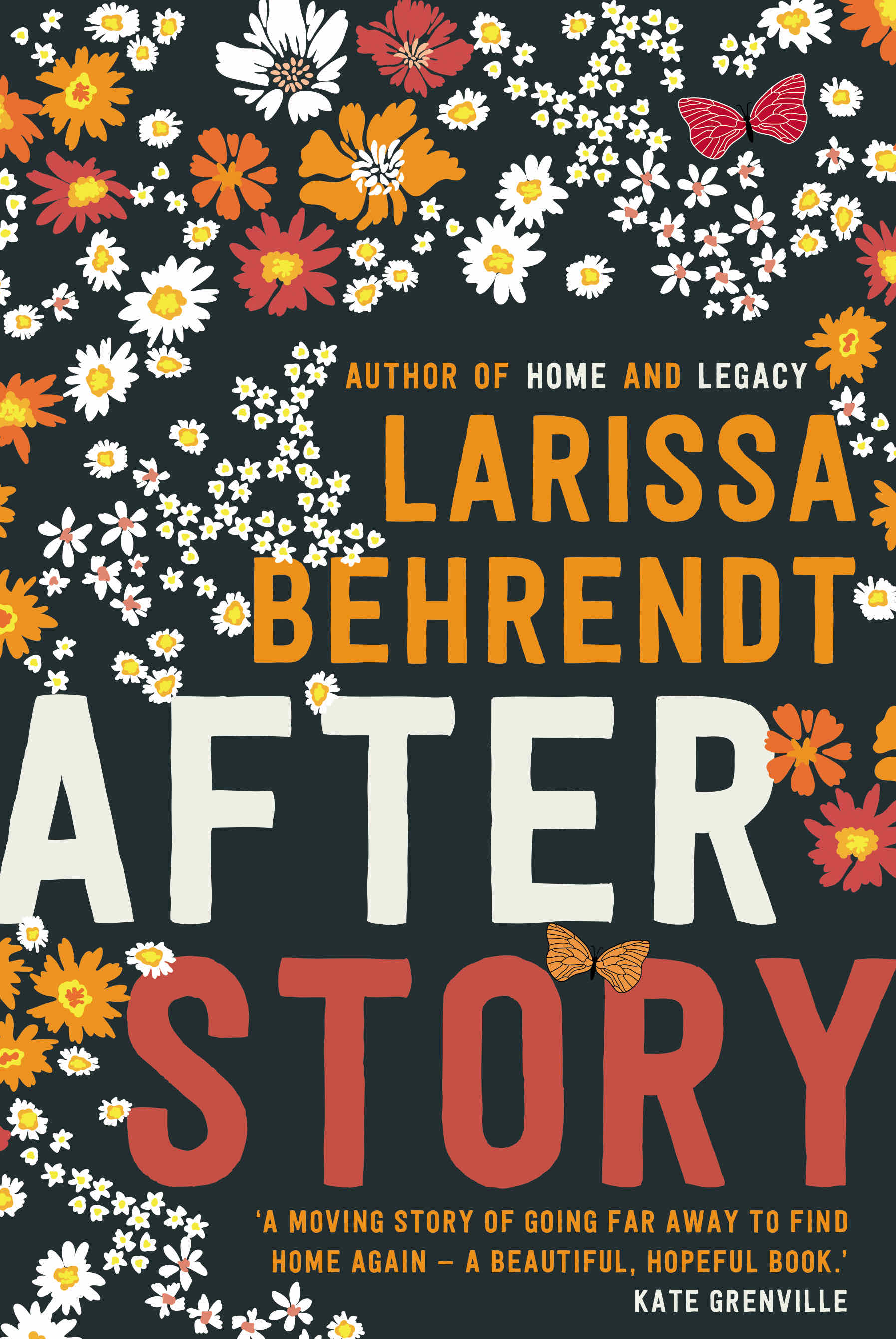
Larissa Behrendt’s latest novel After story has been on my wishlist since it came out last year, so I was thrilled when my reading group chose it as our 2022 NAIDOC-Week read. What self-respecting reader, after all, doesn’t like a literary tour?

After story, for those who haven’t caught up with it yet, is framed around a ten-day literary tour of England that is undertaken by a First Nations Australian mother and daughter, Della and Jasmine, whose relationship is fraught. Through this plot device, Behrendt marries her two storytelling loves – English literature and Indigenous Australian storytelling. In doing so, she draws comparisons between them, and explores ways in which both can reflect on and enhance our lives. She also shows how travel can be an engine of change for people.

Although it contains some very dark matter concerning grief and abuse, After story is a gentle and generous read – for two reasons. First, there’s the characters. Della and Jasmine, are strong, thoughtful and, importantly, real. Both have made mistakes in managing the challenges in their lives, but both genuinely want to have better relationships with those they love. Della, the less educated and more naive of the two, is particularly engaging for her honesty and lack of pretension, for her open-mindedness, and for the rawness of her pain. The other reason is the novel’s tone. It is clear and passionate about the wrongs done to Australia’s First Nations peoples but it is not angry. This is not to say that anger doesn’t have its place – it certainly does – but it’s not the only approach to telling the story of dispossession and dislocation.

What is particularly striking about this book is its structure and voice. After a prologue in Della’s voice telling of the disappearance twenty-five years ago of her 7-year-old daughter Brittany, the novel is structured by the tour, with each day being told, in first person, by Della and then Jasmine, until Day 8, when Della’s built-up grief overcomes her. After that, the order changes and Jasmine goes first. This change marks a turning point in their relationship – albeit not an immediate, epiphanic one. It also jolts the narrative out of a pattern that had risked becoming a little too rigorous. Like a coda, it makes the reader sit up and wonder what will happen next?

What does happen, however, as I’ve already implied, is not particularly dramatic. Rather, this book emulates something Virginia Woolf said, as Jasmine shares:

The great revelation perhaps never did come. Instead, there were little daily miracles, illuminations, matches struck unexpectedly in the dark.

Like life.

But, back to the structure. After story is one of those books in which the structure mirrors or supports its intention – and Jasmine, again, explains it well. Talking about Jane Eyre and Jean Rhys’ response to it in Wide Sargasso Sea, she says, “it’s compelling, the uncovering of the other side of the story”. “Uncovering the other side of the story” is the nub of this novel – personally, in terms of Della, Jasmine, and their relationship with each other and the rest of their family, and politically, in terms of the conflicting views and experiences of the colonisers and colonised. What Behrendt aims for in this novel, I believe, is to bring people together through improved mutual understanding.

Lest this sound too earnest, though, let me reiterate my earlier comment that this novel has a light touch. To balance the heavy material, which includes a number of losses including those related to abandoned and lost children, Behrendt creates a cast of typical tour participants. There’s the white male know-it-all professor and his seemingly mouse-like wife; the feminist young lesbian couple willing to take him on at every turn; the recently retired, educated middle-class couple; the bossy woman and her down-trodden sister; Della and Jasmine; and of course Lionel, the long-suffering tour guide, and bus-driver Brett. Behrendt handles these almost-stereotypical characters well, so that, by the end, even the arrogant Professor Finn is softened for us.

There is much humour in the telling, such as this, for example, from Della as she enters the British Museum, which, she has just discovered, still holds Aboriginal remains:

As we walked into the imposing white building there was a big glass bowl with money in it and a sign asking for donations.
“We already gave,” I said to the guard who was standing next to it.

Comments and asides like this are used throughout the novel to draw our attention to the truths we may not otherwise see. Truth, in fact, is a recurring idea in the novel – the withholding and the sharing. Della, reflecting on Thomas Hardy’s first wife being written out of history, remembers stories of erasure told by her community’s elder Aunty Elaine, and thinks “Sometimes the truth matters and you shouldn’t try to hide the facts”. A little later, Jasmine is also reminded of Aunty Elaine’s wisdom:

Aunty Elaine would remind me that there is more than one way to tell a story; there can sometimes be more than one truth. ‘The silences are as important as the words,’ she’d often say. There is what’s not in the archive, not in the history books – those things that have been excluded hidden overlooked.

Throughout the novel, Aunty Elaine’s stories and wisdom, shared through the memories of Della and Jasmine, provide the First Nations’ foil to the literary tour, sometimes enhancing, sometimes counteracting the messages and lessons of English literature.

I did, however, have one issue with the novel, one shared by a few in my reading group. This concerned its occasional didactic tone. Frequently, for example, the characters tell us what they’d learnt at various sites, such as about Jane Austen’s life or Virginia Woolf’s death. While we could see the point, the way the information was imparted did feel teachy at times. Fortunately, this tone did not extend to the novel’s underpinning ideas which are conveyed through the narrative rather than “told”.

In a Sydney Writers’ Festival panel, Behrendt said something that appeals to me, which is that the goal of being a great writer is to say something important. In After story, she has written an engaging, accessible novel, that also says important things – some subtle, some more overt, but all stemming, ultimately, from the traumas First Nations people have suffered, and continue to suffer, at the hands of the settlers.

Jasmine comes to a significant realisation near the end:

Suddenly I found the museum stuffy. When Aunty Elaine would talk about it, our culture felt alive – the sewing of possum cloaks … the gift of telling stories. They were living and breathing, not relics of the past, frozen in time. Looking at the artefacts surrounding me, I couldn’t help but feel I missed an opportunity with Aunty Elaine to capture her knowledge.

She had, she continues, “rightly valued education” but she had also “taken Aunty Elaine and her knowledge for granted”.

This is the call Behrendt makes in her novel. She wants both cultures given equal respect for what they can offer us. She knows the value of stories in bringing people together. Wouldn’t it be great if her story here achieved just that?

Larissa Behrendt is a Eualeyai/Kamillaroi woman

This book has been reviewed by several bloggers including Lisa, Brona and Kimbofo.

Larissa Behrendt
After story
St Lucia: UQP, 2021
307pp.
ISBN: 9780702263316

Jeanne Griggs, Postcard poems (#BookReview)

If you love travel, you would enjoy Jeanne Griggs’ poetry collection, Postcard poems, which comprises postcard-sized poems ostensibly sent from locations around the USA, and further afield. Like all good travel writing, though, these poems offer more than just simple travel.

However, before I discuss them, I should introduce the poet. Some of you will already know her, because Jeanne Griggs is the blogger behind the wonderfully titled Necromancy Never Pays … and other truths we learn from literature. How could a reader not love this? You can read about her and her blog’s name on the blog, so I’ll just add that at the back of the collection we are told that besides writing her blog she directs the Writing Centre at Kenyon College, and plays violin in the Knox County Symphony.

So, the collection. It’s divided into three parts, and each poem occupies a page – on the left of the page is the poem and on the right is the addressee (like “To Allen/Crystal Lake, IL”) plus that little rectangular box you get on postcards for the stamp. It’s a clear, simple layout, which maintains our focus on the poems’ context. The titles of the individual poems ground us further, with each referencing its subject, such as “Note on a postcard of Cypress Gardens” or “A postcard of Antelope Canyon” or “A postcard with ornamental pear tree”. There is also an epigraph, and I’ll share it because it’s perfect. It’s from Tennyson’s Ulysses: “I am a part of all that I have met; / Yet all experience is an arch wherethro’ / Gleams that untravell’d world whose margin fades / For ever and forever when I move.”

Regarding the trigger for this collection, besides the obvious travel that is, Griggs wrote on GoodReads that “I was writing poems and fitting them onto the back of actual postcards and then sometimes I would send them to my friends and family. Very soon it became clear that this was a collection, that together the poems told a kind of story”.

Now, all this might sound a little cute, but the idea has not resulted in something formulaic or overly structured. Indeed, the poems roam through place and time, and encompass a variety of holidays and trips, some overseas to, say, the Alhambra in Spain (“Note on a postcard of the Alhambra”), and others closer to home, like visiting a child at college (“Note on a postcard of Wellington, Ohio”).

What captures the attention, however, is that alongside the expected description of a place, most poems contain more. There are reflections, some delightfully wry and some pointedly ironic, on the experience of travel – the joys and challenges, the misses and triumphs, the surprises and the ordinary – and their impact on the traveller. I enjoyed, for example, poems about attending festivals, like:

We’ve come to hear about books,
drink bourbon, and eat crawfish,
casting aside our inhibitions
like layers of clothing, extraneous
in the bloodworm Louisianna night.

(from “Note on a postcard of the St Francisville Inn”)

There are also the personal stories that made these trips worth writing about, such as memories of family holidays followed later by cards to children now grown up. There’s the mother remembering her own mother, only to recognise the pattern is repeating:

and thinking about my mother
how she would take me
to fancyhotels and
sit, saying she was content
with the view, watching me
disappearing over the horizon,
like my daughter, now.

(from “Note on a postcard from the El Tovar hotel”)

Letting go isn’t as easy when it’s you doing the letting go!

… so it was the first trip
we took without you. I missed you,
loosing my regret out of earshot,
drowned out by water roaring,
wishing I could watch you
see this …

(from “Notes on a postcard of Niagara Falls”)

The Contents list, in which a poem on Santa Monica Pier, for example, is followed by one containing a piece of the Berlin Wall followed by one from Waikiki, might suggest, on the surface, something quite random. However, reading the poems reveals subtle segues in nearby poems, from simple things like mentions of cereals (Froot Loops and Cheerios anyone?) to concepts like growing older. Books feature too. Few are named, but keen readers will spy the likes of Tolkien and Shakespeare within these pages.

There’s also some politics. One, “Note on a postcard of the Mount Vernon public square”, documents weeks of protesting, of wanting neighbours to realise that their congressman “is voting against / their health benefits, our water supply”, while another, “Note on a postcard of the Marie Laveau Voodoo Museum”, shares how a human skeleton brings to mind “desperate people feeling / no control over their lives, / the deck stacked against them”.

A couple of the poems particularly resonated with me – in addition to those dealing with family, ageing and children growing up. “Notes on a postcard of Mesa Verde”, for example, captured my own wonder about that amazing place and the people who lived there, while the opening poem, “A postcard of a mirrored room”, makes that poignant (there’s no other word for it) point about

… all the places
we’ve been, until
we get to the last one
and who will know
where that is until after
we reach a final destination.

The last poem, “A postcard from the Getty Museum”, offers a different sort of finality – the arrival of the pandemic. It’s not named, but when Griggs writes of not thinking about the crowds until “After, when the press of all / those people became unimaginable” followed by “all future plans suspended”, we know what she means.

Postcard poems is an engaging and accessible collection that uses something as relatable as writing postcards to explore things that matter. It’s nicely crafted, but also accessible. Well worth reading.

Jeanne Griggs
Postcard poems
Frankfort, KY: Broadstone, 2021
56pp.
ISBN: 9781937968885

(Review copy courtesy the author)

Monday musings on Australian literature: Armchair travelling

Over at The Resident Judge of Port Phillip, Janine is publishing a series of travel posts on My non-trip in the year of coronavirus. You see, as she writes in her first post, published on April 3, she would, that day, have been “folding up the laptop, packing my case and taking up my passport all ready for a trip to Peru” that evening. She was grumpy, as other people I know, about the missed trip, the lost payments, and so on – but she found a silver lining: she could armchair travel, so she is posting each day on what she might, or would, have been doing on those days.

We are all, of course, wondering about what our post-COVID-19 world is going to look like. Will we – the lucky we who can afford it that is – jump back into overseas travel as soon as countries open up again, or will we be a little more cautious. Will we stick to home for a while? It is regarding this latter, that I’m writing today’s post – with, of course, “home” for me being Australia. I have written several posts on travel writing. Not all are about Australian travel, and some are about historical travellers, but if you are interested, my travel writing tag will take you to them.

Two of the posts so tagged are Monday Musings: Some Australian travel writing, which includes Australians writing about places other than Australia, but also Robyn Davidson’s classic Tracks, and Travel writers on Australia, which includes non-Australians writing about Australia, like Bruce Chatwin’s Songlines and Bill Bryson’s Down Under aka In a sunburnt country.

And now, having scoured the Internet, leaving no Google search unturned, I bring you the following random and uncurated selection of travel-related books about Australia published this century. Please note that these are not tour guides (though Marcia Langton’s book probably comes close) but writing about places and travel.

  • City Series published by NewSouth: Alice Springs by Eleanor Hogan; Adelaide by Kerryn Goldsworthy; Brisbane by Matthew Condon; Canberra by Paul Daley; Darwin by Tessa Lea; Hobart by Peter Timms; Melbourne by Sophie Cunningham; Perth by David Whish-Wilson; Sydney by Delia Falconer. Here is what Philippa McGuinness, from NewSouth Publishing, says:

I wanted to ask some of our best novelists and writers to write non-fiction about the cities they lived in – or have adopted – in a way that would evoke intense sense memories for people who are familiar with them and give those who aren’t a sense of what it’s like to live in Brisbane or Adelaide or wherever.

There are some other well-known series where famous writers have tackled Paris or Prague, but they’re usually not locals. They’re temporary visitors. I wanted writers who have a stake in a city to write about it, which is why we first billed them as ‘travel books where no one leaves home’.

  • Bill King, King of the Outback, CoverBill King, King of the Outback: Tales from an off-road adventurer (2012): stories from the founder of AAT Kings tour company.
  • Marcia Langton, Welcome to country (2018): “a curated guidebook to Indigenous Australia and the Torres Strait Islands. Author Professor Marcia Langton offers fascinating insights into Indigenous languages and customs, history, native title, art and dance, storytelling, and cultural awareness and etiquette for visitors.”
  • Michael McGirr, Bypass: The story of a road (2004): the story of the Hume Highway, the main road thoroughfare from Sydney to Melbourne.
  • Evan McHugh, Birdsville: My year in the Back of Beyond (2010): Penguin quotes a review from The Age:

McHugh is a clever mixture of curious outsider and eager participant… Written in a simple but elegant style where honesty and thoughtfulness build an accurate picture of the richness of life in one of Australia’s most famous outback towns.

  • David Marks, Australian photographic gallery: Road trips (2015): a coffee table book containing “offbeat” images taken with a Polaroid and Diana camera.
  • David Mason, Walk across Australia: The first solo crossing (2014): a memoir of Mason’s 4,000+km walk in 1998 from Australia’s eastern-most town, Byron Bay, to the western most point near Shark Bay, Western Australia.
  • Graham Seal, Great Australian journeys (2018): a collection of some of Australia’s most dramatic journeys from the 19th and early 20th century collected by Seal who is Professor of Folklore at Curtin University.
  • Nicholas Shakespeare, In Tasmania: Adventures at the end of the world (2005): The Guardian’s review describes this as “a mixture of history, genealogy, travelogue and journalism”. The book was apparently inspired by Shakespeare’s distant relation Anthony Fenn Kemp, whom the reviewer describes as “cruel, pompous and unpleasant bootlegger”! Hmm…

Marcia Langton, Welcome to country, CoverThese books range from the popular to the serious. I’ve only heard of a few of them, and only have a couple in my TBR pile, Paul Daley’s Canberra and Marcia Langton’s Welcome to country.
I note though that, with the exception of the City series and Marcia Langton’s Welcome to country, all these authors are male (white male, I presume). And this brings me to an article (or blog post) in Overland titled “A short history of the dangers of travel writing”. It’s worth a read for its discussion of what travel literature encompasses and the limited voices we are seeing.

Anyhow, you know what I’m going to ask. Do you have any favourite works of travel literature that you can recommend to the rest of us for some armchair travelling in this time of COVID-19?

Monday musings on Australian literature: Some Australian adventurers (1)

Hands up who likes to travel? And keep your hands up if you like to read travel writing! This post is especially for you. I’ve numbered it (1), because I’m drawing primarily from a book, which I think could warrant a few posts.

Edith Moodie Heddle ed., Some Australian adventurers

1957 edition

The book I’m using is another of those that I retrieved from my aunt’s house when Mr Gums and I were clearing. The book is titled, yes, Some Australian adventurers, and was edited by someone called Enid Moodie Heddle, so let’s start with her. Wikipedia says she was an “Australian poet and writer for children”, but she did more than that. Wikipedia says that she joined Longmans publishing house in 1935 where she worked as an educational adviser until 1946, at which time she was appointed Education Manager. In this job, to 1960, she “oversaw the publication of textbooks for schools and universities.” Some Australian adventurers was published by Longmans, Green and Co. in 1944.

Heddle wrote the brief introduction to Some Australian adventurers. She says its aim is “to catch something of the spirit of adventure and joy in discovery which seem to us to be not only characteristic of the majority of the writers here represented, but also of Australians as a race”. Hmm … Australians are known to like travelling, but is it a racial characteristic? She goes on to say that

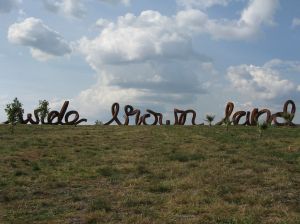
Wide Brown Land sculpture

Wide Brown Land (National Arboretum)

From our British ancestry we have inherited qualities which, no doubt, make us turn eagerly to far horizons, and even our own wide brown land* is not enough for most of us. Like the writers of these extracts, we would walk “the wind-wide ways”* of the world and see strange sights and meet strange people, from the Northern Lights to Antarctic snows. If this is impossible for us, the next best thing is to read of action by others. Here, then, are some accounts of real and imaginary adventures from the legendary wanderings of the aboriginal, at home in the land of the Southern Cross long before the white man came, to modern tales of land, sea and air.

The first thing to say is that these sentiments are very much of their time, so I’m not going to comment on ideas like the “qualities” Aussies “inherited” from “our British ancestry”. As readers, though, we would still agree with the idea that if you can’t travel “the next best thing” is to read other people’s travel writing. And, it is interesting, given the era, that she references Indigenous Australian stories, about which more below.

The last thing I’ll share from her introduction is her discussion of her chosen extracts, from which she says

we may learn, if we wish, something of what goes to build up tradition, of what makes for riches in experience, of what stuff is life.

I love this language, and her aspirations for the book. She emphasises that it comprises fragments from larger wholes, and is thus a “prelude to adventure”. To help further adventuring, she provides bibliographical details for the works excerpted, plus additional reading suggestions.

The book is then divided into thematic sections:

  • In the land of Mirrabooka: from K. Langloh Parker
  • The white intruders: from Eleanor Dark, Elizabeth Bussell, William Hatfield, Ion L. Idriess
  • Animals and men: from Frank Dalby Davison, Vance Palmer, Hedley Herbert Finalyson
  • Further afield: from Jack Gordon Hides, Sir Douglas Mawson, Sir George Hubert Wilkins, C.E. Kingsford-Smith, Alan J. Villiers, Wilfred G. Burchett
  • Strange encounters: from Jack McLaren, Frederic Wood Jones, Walter Murdoch
  • Story and character: from Henry Lawson (twice)

The thing that struck me about the table of contents is that it contains many writers I don’t know. Further investigation explained it, however. Most, though not all, of those I don’t know wrote non-fiction, such as Hedley Herbert Finalyson, Jack Gordon Hides and Jack McLaren. My guess is that non-fiction writers disappear from view faster than fiction ones? Anyhow, some of these new people are interesting, as are the familiar ones. I look forward to sharing some of them in future Monday Musings.

K. Langloh Parker

K Langloh Parker, More Australian Legendary Tales

First published 1898

I’m going to conclude with K. Langloh Parker because she has the opening section of the book to herself! She was, in fact, Catherine Eliza Somerville Stow (1856-1940). She was born (and died) in South Australia but spent time in the nineteenth century in New South Wales where she recorded the stories or legends of the local Ualarai people. Introducing Parker, Heddle writes that

The first adventurers of whom we know in Australia, the land of Mirrabooka, the Southern Cross, were the Australian Aboriginals. Even now we have much to learn of their customs and culture.

She continues that Parker has done a great service “by collecting their legends and retelling them in English in a way as near as possible to the original”. Wikipedia, writing in our time, says that “her testimony is one of the best accounts of the beliefs and stories of an Aboriginal people in north-west New South Wales at that time. However, her accounts reflect European attitudes of the time.” Not surprisingly.

The interesting thing to me, though, is that Heddle recognised the importance and relevance of Indigenous Australian stories to her book. It’s also interesting though that she presumably didn’t have access to Indigenous versions of these stories. Her further reading suggestions are also all by non-Indigenous writers. She says that the book from which her extract “Beereeun the mirage maker” comes was illustrated (uncredited I believe) by an Indigenous artist. Wikipedia says that the Indigenous artist Tommy McRae illustrated the first volume, Australian legendary tales, but doesn’t mention his illustrating the second. It’s likely though that he did, as the same people were involved in producing both.

Australian legendary tales, but not More Australian legendary tales, is available at Project Gutenberg Australia.

* Aussies will recognise “wide brown land” as alluding to Dorothea Mackellar’s poem “My country”. Fewer of us, I think, including me, would recognise “wind-wide ways”, which she encloses in quote marks. It comes from a poem called “The bush” by Bernard O’Dowd, who has been mentioned here a couple of times, first in my Monday Musings about most popular poets and novelists in 1927.

Linda Neil, All is given (#BookReview)

Linda Neil, All is given, coverLinda Neil’s second book, All is given, is subtitled “a memoir in songs”.  I wondered if this meant her memoir would be structured around specific songs – but that’s probably way too prosaic an idea. Certainly, it’s not what I got! I’m somewhat embarrassed to say that I didn’t know of Linda Neil, who is described in the brief author bio as “writer, songwriter and documentary-producer”, but I did enjoy getting to “know” her through this book.

The memoir starts with “Prologue: Songbook”, and immediately I had one of those glimmers of enlightenment because she opens with the end of a house concert. Now, friends of ours hold house concerts. They are such wonderful to-be-treasured occasions, which provide a beautiful way of enjoying music away from big formal concert halls or noisy popular venues. For the performer, however, there are challenges. The concert that Neil opens her memoir on finished at 11pm, and she was hungry, not to mention “spent” after nearly three hours of “singing and telling stories”. Not so, necessarily, the audience. They were energised, inspired, and wanting to talk with her in this lovely intimate venue! So, with food from her host in her hand she sits to chat with one of these people – and discovers that what the woman really wanted to do was share her own stories, which had been stimulated by the concert. Neil, as it turned out, enjoyed hearing her stories – but I learnt a lesson about house-concert etiquette!

Another issue comes up in this opening chapter which attracted my attention. She says that many people think love songs, which she was singing, are autobiographical. However, she writes,

in my experience, they may well be inspired by real people, but the form of a song means that, from this basis of fact, changes need to be made. A bass line is added perhaps. Something high is included. A man becomes a woman. A five-letter name expands to eight …

and so on. The point is, “the facts may not always be true, but the feelings certainly are”. “YES”, I wrote in the margin. And I loved her rider: “and if some events did not happen exactly the way they are described, perhaps they should have”. Haha! Love it. That is what creativity, and living, are about…

Hence, she writes in the last paragraph of this opening chapter:

So think of this collection of stories as a book of songs that contains improvisations and variations on themes of truth. If you listen closely enough you might even be able to hear the fabric of facts and fiction as they are stitched together.

What follows are delightful, non-chronological, stories of travel. This book, in fact, is as much travel memoir as a musical one, and as much about travel to the self as about the places she visits – Shanghai, Paris, Kathmandu, Kolkata, Ulaanbaatar, to name a few – though she writes engagingly about them too.

… a pilgrim of the imagination …

All is given is just a lovely read. Neil presents as a person with such an open heart and curious mind, with such a willingness to give things a go and to test her own preconceptions, that she can’t help but be interesting to read. And when you add to this, her clear, fresh prose, well, you have a book that is a winner on multiple levels. Here, for example, she’s in Paris:

Sometimes a city is the kind of place where, despite being on your own, you are never alone.  Where sitting under a statue or leaning over a balustrade of a bridge is an invitation. You have to discern very quickly, though, who might waylay you, who might waste your time and who might be, like you, a pilgrim of the imagination on a voyage through change. But if your antenna is working properly, the chance encounter with a stranger might bring you something you need at that particular moment in time, something that might not come in any other part of the world, but exactly where you sense of wonder and curiosity has led you, across oceans and skies, out of safety into the unknown.

I wanted to share all of this, but particularly that phrase “a pilgrim of the imagination on a voyage through change”.

This is what the book is about. It’s partly, of course, about the places she goes, the people she meets, the seemingly serendipitous discoveries, such as the recording studio in Kathmandu and the YWCA in Kolkata where she meets a group of people volunteering at Mother Theresa’s Missionaries of Charity, but it’s mainly about the things she learns.

She learns, for example, on her first solo trip, which paradoxically is the last one described in the book, not to travel with the Lonely Planet Guide, because “travel was best unplanned”. It’s a lesson I’m starting to learn. I can’t imagine giving up the guides altogether – not being, clearly, a complete “pilgrim of the imagination” – but I’m gradually freeing myself from the shackles of “musts” to the wonders of “let’s explore”. She experiences the “gift of stories – of listening to and receiving them, of being in the right place at the right time”. This is “the magic of travel”. She learns that she can sometimes be “prim”, when she lectures a young girl on modest dressing in India, where she was “once open-minded”, but on the other hand, that she could be “free”, in opening up to people, where once she “might have felt more cautious”. These are the surprises of travel.

She learns, too, in Mongolia that “freedom” is not the simple concept we like to think it is, that for many Mongolians the initial liberation from Russia was “a catastrophe”. Her Mongolian friend reminds her, once again she says, that:

western narratives of history aren’t the only ones, and that … there are many ways to tell the story of our collection past.

A lesson we Australians are very slowly learning now as we come to grips with different versions of our colonial past. She learns, through this and other experiences, “not to romanticise places” where the reality for the locals is very different, but also to “be happy with tiny moments”.

And so the memoir goes. I’ve focused on travel’s lessons because those reflections spoke to me. Another reviewer could very well pick up the musical motifs, her journey through sound, or perhaps explore the organic way she intersperses moments from her youth with those from travel. The point is, whatever your interest, All is given is an engaging, enjoyable read by a writer-musician who sees that being “real and true” is sometimes different from “being perfect or even good”, but who often manages to achieve both.

aww2017 badgeLinda Neil
All is given: A memoir in songs
St Lucia: UQP, 2016
238pp.
ISBN: 9780702254093

(Review copy courtesy UQP)

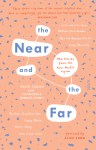
David Carlin and Francesca Rendle-Short (eds), The near and the far: New stories from the Asia-Pacific region (Review)

David Carlin and Francesca Rendle-Short, The near and the far

Anthologies, almost by definition, have a unifying theme, something that explains their existence. There are the “best of” type, as in best of a year or of a genre, for example. There are those drawn from a prize, such as The trouble with flying, and other stories (my review) from the Margaret River Short Story competition. And of course there are subject-oriented ones like Rebellious daughters (my review) or Australian love stories (my review). David Carlin and Francesca Rendle-Short’s anthology, The near and the far, is another type. Its origin is a project called WrICE (Writers Immersion and Cultural Exchange) which, the editors tell us, is “a program of reciprocal residences and cultural events focused on writers and writing from Australia and the Asia-Pacific”. The residencies and events occurred in such places as Singapore, Malaysia, Vietnam and Australia. The aim was to enable Asia-Pacific writers to immerse themselves in the face-to-face exchange of ideas and collaborative experiences, in order to build cultural understanding and find, as one participant says, “sustainable ways of speaking amongst ourselves and relating to one another as cultural practitioners”.

The result is that the stories – and even the forms of the pieces – are varied. The book has been thoughtfully presented. There’s a foreword by Alice Pung and an introduction by the editors at the beginning, and some notes on WrICE and a list of contributors with mini-bios at the back. The stories themselves are organised into three groups – The Near, The Far, and The Near and The Far – though I’d probably have to think hard about why certain stories have been allocated their particular group. There are 21 stories, 15 of which, if I’ve counted correctly, are by women. There’s a lovely extra touch, which is that at the end of each story is an author’s reflection – on the writing process, the goals and/or the experience of WrICE. They were often illuminating.

Before we get to the stories – and of course I’m only going to be able to focus on a few – I’d like to share some comments from the foreword and introduction. In her foreword, Pung calls the book a travel anthology, and I suppose it is, in a sense, though I may not have described it that way if I hadn’t read her foreword! She says

The near and the far is one of those rare travel anthologies, combining fiction with poetry and longform essays, each piece revealing a real insider’s experience of inhabiting a different world without exoticising the foreign. Each story has a centre – whether philosophical, moral, or political – and yet none of them are didactic.

The editors talk of how our different colonial experiences had “left long shadows across our imaginations”. They refer particularly to “settler” Australians who live in what was seen as an “outpost” – further than the “Far East” – and yet who still tend to look to Europe and America for our main cultural input. “The far feels near”, they write, “and the near feels far away”. That makes a lot of sense – to me.

You think you know (Omar Musa)

Now the stories. They come from, as you’d expect, a diverse group of writers, from Australia and Vietnam, from the Philippines and America, and from many places in between. Some I knew – like Melissa Lucashenko, Omar Musa, Cate Kennedy, and of course Francesca Rendle-Short – but most were new to me. Many of the pieces explore in some way the idea of what we know and don’t know. They may be about ignoring what we know because it’s too painful, or because we fear the rejection of others. They may be about the disconnect between what we assume and what we find. Or they may simply be about facing something new or unexpected.

I loved that indigenous Australian writer Melissa Lucashenko’s story, “Dreamers”, was chosen to start the anthology. Set in rural Australia in 1969, two years after the famous referendum, it’s a beautifully structured and told story about the relationship that develops between indigenous woman and her non-indigenous employers. It’s a story about love, loyalty and tolerance, but manages to quietly reference, without being polemical, social change issues such as environmental protest and the stolen generations.

Not surprisingly, the theme of accepting – welcoming, hopefully – diversity runs through the book. In “My two mothers”, Singaporean Suchen Christine Lim shares a story about a young adopted girl’s shame at having two mothers, her unwillingness to appreciate their love and tender care, and her eventual recognition of what they had given her.

If you have ever read or heard Australian-Malaysian performance poet Omar Musa, you won’t be surprised to hear that diversity underpins his contribution, “You think you know”. In this first-person story he explores “the deeply troubling issues” regarding sexual identity in Malaysia through his narrator’s (presumably himself) friendship with a young Malaysian man met on a bus. It’s a quiet, reflective, wrenching story – quite different from the higher octane wordplay of his performance poetry.

A story using a completely different tone and pace is Chinese-Indonesian, now American writer Xu Xi’s “BG: The significant years”. In a time when scientists and historians argue about dating nomenclature – BCE/CE anyone? – Xu Xi has come up with her own, BG or Before Google! Google (created 19 August 2004, if you want to know) provides for her a significant life marker. In short chronological sections, starting with “BG 43 (circa 1961 to ’62)”, she chronicles her life – in a lightly satirical tone – from applying to go to university in America, to becoming a US citizen, and getting a job and then losing it in the 1986 stock market crash. Her commentary on life in the US is enlightening. Joining the unemployment queue meant, she writes, that “for once I wasn’t a minority, because the minority was the majority in that government office”! Telling eh?

There are many more stories I’d like to share: Laurel Fantauzzo’s second-person-told story, Some Hints About Travelling to the Country Your Family Departed, about going back to the place (in her case the Philippines) a parent came from; Francesca Rendle-Short’s “1:25,000” on the geologies of time, on memories, regrets and saying “no”; and Maxine Beneba Clark’s short, painful, 9/11-inspired “Aviation” in which accepting “other” is put to the test.

And then there’s David Carlin’s gender-bending, mind-bending “Unmade in Bangkok”. Inspired by Thailand’s ladyboys, he explores ideas about identity and gender. The story is told in ten sections, mostly in third person but slipping between male and female personas. In section four, “she” considers:

Women make themselves up, men do not. This is curious when she thinks about it. To be a woman, in this culture, is to be a creature dipped in fiction, whereas to be a man is to be altogether real or at least natural, unconstructed.

So she dresses up and considers: “What is she becoming? Ever more fictional? A character in drag?” I enjoyed how Carlin explored gender identity, using broader ideas about “fiction”. “Some fictions trap us”, he writes, “but other fictions free us”. For ladyboys the implications are serious. It’s a complex story which covers a lot of ground. I need to read it again.

I titled this section “you think you know” because in all the stories, the writers are seeking to know, not so life can be assured, or complete, but in the spirit of understanding, of growing. Alvin Pang, in the note to his story “The Illoi of Kantimeral”, discusses the invented language he used:

Their precise meanings may or may not be immediately discernible from context, but neither is the experience of engagement, negotiation, resistance, and mystery within the Asia-Pacific itself as straightforward as we might wish the world to be. There is humility and pleasure in earnest encounter, and in listening out for the inherent humanity of what we do not fully recognise.

Perfect! This is a book which confronts us with many ways of seeing and experiencing. Different stories will appeal to different readers, depending on experiences, but I hope I’ve given you a taste. Books like this deserve a bigger audience than they often get.

aww2017-badge

David Carlin and Francesca Rendle-Short (eds),
The near and the far: New stories from the Asia-Pacific region
Melbourne: Scribe, 2016
288pp.
ISBN: 9781925321562

(Review copy courtesy Scribe)

Monday musings on Australian literature: Arnold Haskell on the arts (3)

This should be my last post on Mr Haskell’s survey of the arts in Australia, and it focuses on Radio and the Movies. First though, in his section on literature, he talked about Australian readers and bookselling. He wrote that the average Australian “is a great reader; more books are bought per head of population in Australia and New Zealand than anywhere else in the English-speaking world”. He admires Australian booksellers who can’t quickly acquire the latest success. So, “they buy with courage and are true bookmen in a sense that is becoming rare in this [i.e. England] country.”

I believe Australians are still among the top book-buying nations, per capita, but I couldn’t find any supporting stats, so I may be making this up! However, I did love his commendation of the booksellers of the time, and his sense of their being “true bookmen” (as against their peers in England). He certainly wasn’t one to look down on the colonials!

“an admirable institution”

He writes about the “admirable” ABC (Australian Broadcasting Commission). He recognises that wireless has become a necessity “in a country of wide open space” because it is, for many, “the only form of contact with the world”. He says the ABC “supplies much excellent music, and at the same time appeals to the man-in-the-street through its inspired cricket and racing reports”. You all know how much I like the ABC.

BUT radio is a vice too, he says, when it is left on all day “in every small hotel, seldom properly tuned and dripping forth music like a leaky tap”. He is mainly referring here to commercial broadcasting which he describes as “assaulting popular taste by their dreary programmes of gramophone records and blood-and-thunder serials … Unlike America, they cannot afford to sponsor worthwhile programmes”. Hmm, my old friends at National Film and Sound Archive might disagree given Australia’s large and by all accounts successful radio serial industry, though perhaps much of this occurred from the mid 1940s on – i.e. after Haskell did his research.

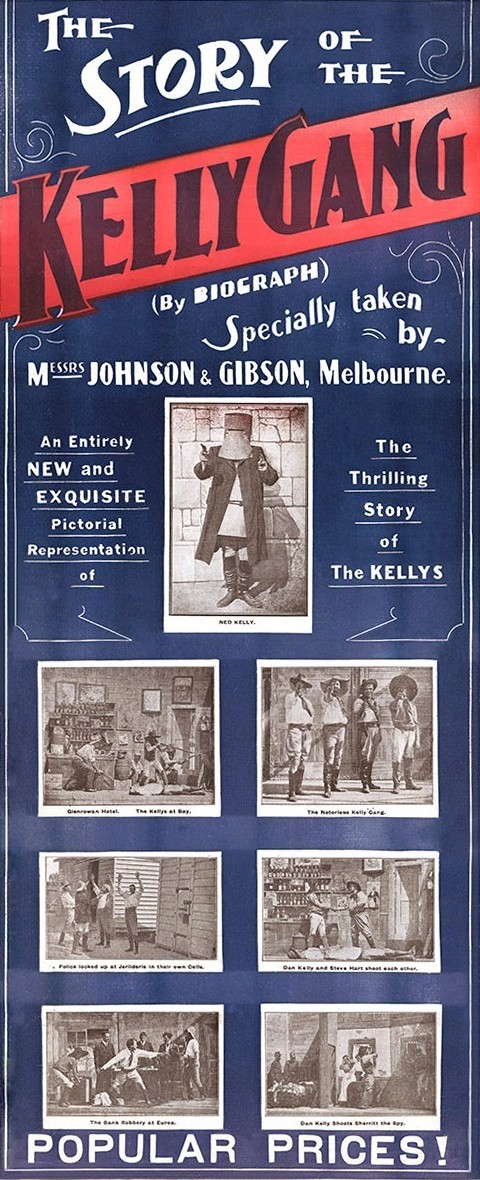
“isn’t Ned Kelly worth Jesse James?”

Haskell has a bit to say about Australians’ love of cinema, with “the consumption per head being greater than anywhere else”. Film theatres are “the largest and most luxurious buildings” in Australian cities, but

the films shown are the usual Hollywood productions. There is as yet no public for French or unusual films.

Poster for 1906 movie (Presumed Public Domain, via Wikimedia Commons)

Poster for 1906 movie (Presumed Public Domain, via Wikimedia Commons)

Australian films are being made, he said, “in small quantities” but are “not yet good enough to compete in the open market.” He is surprised that given Australia’s “natural advantages”, it had “produced so little in a medium that would encourage both trade and travel”. He goes on to describe how much people knew about America through its films -“we have seen cowboys, Indians, army, navy, civil war and Abraham Lincoln”. He suggests that Australia had just as interesting stories to tell and places to explore:

What of the Melbourne Cup, life on the stations, the kangaroos, the koala bear, the aboriginal, the romance of the Barrier Reef and the tropical splendour of the interior, the giant crocodiles of Queensland? What f the early history, as colourful as anything in America? isn’t Ned Kelly worth Jesse James?”

He suggests that films could do more for Australia in a year than his book, and yet, he says it seems “easier and safer to import entertainment by the mile in tin cans and to export nothing”!

He makes some valid points but he doesn’t recognise that Australia produced, arguably, the world’s first feature film, back in 1906, The story of the Kelly Gang – yes, about Ned Kelly.  It was successful in Britain, and pioneered a whole genre of bushranging films that were successful in Australian through the silent era. Three more Kelly films were made before Haskell visited Australia – but films were pretty ephemeral, and he clearly didn’t know of them.

At the time he researched and wrote this book, 1938 to 1940, there was still an active film industry. Cinesound Productions produced many films under Ken G Hall from 1931 to 1940, and Charles Chauvel made several films from the 1930s to 1950s, but the war years were lean times, and it was in those early years that Haskell did his research. It’s probably also true that then, as unfortunately still now, Australians were more likely to flock to overseas (that is, American, primarily) productions than their own.

Anyhow, I hope you’ve enjoyed this little historical survey of an outsider’s view of Australia as much as I have – though I guess it’s all rather irrelevant, and even self-indulgent, if you’re not Australian! Apologies for that!

Monday musings on Australian literature: Arnold Haskell on the Arts (2)

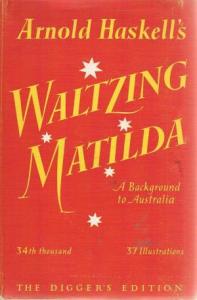
Arnold Haskell, Waltzing MatildaBack in November, I wrote a post on the Arts chapter in dance critic Arnold Haskell’s book Waltzing Matilda and focused on theatre and literature. In this post, I’ll look at his discussion of the press.

“compares … favourably”

Haskell starts by saying that Australia’s press started in a “thoroughly unprincipled and worthless manner”, though he doesn’t explain what he means by this. However, by the time he is writing, he says it “compares, as a whole, favourably with the English and American”, adding that its style is “English and not American”. He describes the press’s treatment of “the abdication” (Edward VIII) and “the September crisis” as “dignified and free from deliberately fostered sensation”.

There were, he admitted, sensational papers, such as Truth and Smith’s Weekly, which “at first glance are not a good advertisement for Australia”. At times their humour is raw and undergraduate, but he comes to admire their humour, even when they targeted him. He praises their writers as “excellent”, and writes:

These papers greatly upset me at first, but I can now appreciate their value as an antidote to wowsing. For all their presentation and methods they are usually on the side of the angels.

Wow, no faint praise here – and rather a long way from today’s “fake news”! Anyhow, he shows himself to be an open-minded traveller.

And then, of course, there’s “Grannie” or The Sydney Morning Herald, which he describes as “the dean of papers” and

the organ of conservative views and amazing respectability. Its very make-up clears it of any suspicion of frivolity. It is a power in the land and it knows it.

Next he discusses the Sydney Daily Telegraph suggesting it might become a rival. It’s owned he writes

by a young man, Frank Packer, a colossus with the figure of a prize-fighter and the flair to do great things. It is brilliant, erratic, out for scoops at all costs, technically well presented.

Packer sold it in 1972 to Rupert Murdoch. And this brings me to Melbourne, which my Melbourne readers will be relieved to read that Haskell doesn’t ignore! He writes:

In Melbourne, probably in Australia, the greatest power in journalism is Sir Keith Murdoch; he has been called ‘Lord Southcliffe’ and also ‘the maker of Prime Ministers’. He looks the part.

Haha … I enjoy Haskell’s references to physical appearances. Haskell praises several Melbourne papers, Murdoch’s Melbourne Herald, as well as The Age and Argus. He’s surprised that they didn’t take sides in Victoria’s “drink referendum”. Of papers in smaller cities, he is similarly positive, saying they “are also of a high standard, and are surprisingly free from parochialism.”

And then he – remember he was an arts critic – says something even more interesting:

The Australian press as a whole gives considerable space to art criticism and treats the artist with far greater respect than our own popular press, though its criticism of local artists tend to be too benevolent to be of the greatest value.

This is interesting on two fronts. One is his praise of the commitment to arts criticism, which suggests too that there was a readership for it. The other is his belief that criticism of the arts can have value – that it is important – but that to have value it needs to be willing to be a bit tougher than it is.

He says Keith Murdoch is interested in art, and that he has “an admirable critic” in Basil Burdett. Haskell describes Burdett as “a man with an artistic background that would be exceptional in any country”. Now, I hadn’t heard of Burdett, so I decided to check him out in Trove. The first hits I got were about his death in an air crash Singapore in 1942. He was Assistant Australian Red Cross Commissioner in Malaya. The Sydney Morning Herald, reporting his death, quoted Australian artist, and President of the Society of Artists, Sydney Ure Smith:

He had taste, knowledge, and that rare quality — enthusiasm … As a writer on art, he was well-informed and progressive without being narrow. He was a valuable art critic.

Anyhow, Haskell mentions two other critics, and I’ll share his description of those too. There’s The Sydney Morning Herald’s “well-informed art critic”, Kenneth Wilkinson, whose field, Haskell writes, “is made to cover painting, music, the drama and the films; probably too much for any one man”. Fair point, don’t you think? And there’s “J.S. McDonald, now curator of the Melbourne Museum”. He “was formerly an art critic” and “whether one agrees with him or not” he “is one of the most entertaining and forceful writers on art”. Has anyone heard of these?

Haskell then turns to the social pages, which occupies much space in all papers and which Australia’s intelligentsia describes as “provincial”. However, Haskell again shows his independence of mind when he suggests it probably is, but why “very lengthy accounts of the doings of that small clique known as cafe society in the London and New York press should be worthier of attention I cannot understand”. Why indeed! Further, he comments that Australian gossip columns are “not snobbish”. They are, and this must clearly be a dig at the British equivalents, “written by journalists about people and not by titled amateurs about their friends”! He writes that

Miss Brown of Wagga, Miss Jones of Gundagai, will both find a space when they come to Sydney or Melbourne, and, what is more, their dresses will be described as minutely as the Governor’s Lady’s.

Perhaps this is a good time to remind you of my first post on Haskell in which I quoted his being (initially) “aggressively uninterested” in visiting Australia.

Haskell also talks about “the paper that has represented Australia the most and that has a place in the history of Australian literature … the famous Sydney Bulletin.” He admits it’s “a little tamed today” but still represents “a national way of thinking”. Its goals, which were to encourage Australians to love their own country, have resulted in “the formation of an Australian manner of expression” which is “often crude, never ‘literary’ from the English point of view”, but is “vigorous and creative”.

I love that an English visitor was able to assess Australia, as a place in its own right and not a little England.

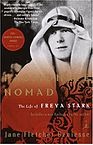
Jane Fletcher Geniesse, Passionate nomad: The life of Freya Stark (Review)

Jane Fletcher Geniesse, Passionate nomad, book coverMy reading group came to read Jane Fletcher Geniesse’s biography, Passionate nomad: The life of Freya Stark, by a somewhat circuitous route – and it started with my blog. One of our members had read my Monday Musings post on 19th century travellers, and suggested that we read a 19th century travel writer. Somehow, as the discussion developed, this morphed into reading a biography of a twentieth century travel writer. As young people say today, whatever!

Some of you probably know of Stark, but to clarify, she was a British-Italian travel writer, explorer/adventurer and historian, who was one of her time’s “most respected experts on the Arab world”. She lived and travelled in the Arabic states from the late 1920s to the mid 1940s, in particular, and was one of the first non-Arabians to travel through the southern Arabian deserts. Amazingly – well, it seems amazing when you’ve read the book and see what she experienced and endured – she lived until she was 100 years old, dying in 1993. Geniesse tells us that her parents both “placed a strong emphasis on stoicism”. She clearly learnt that lesson well!

Stark, Geniesse also tells us, moved among her era’s movers and shakers, including politicians, diplomats and a wide range of intellectuals. Geniesse shows her to be a strong, spirited, canny, resourceful and hard-working woman who took significant risks in order to achieve some remarkable, if not astonishing, feats. This is particularly impressive, given those highly gendered times when women had to fight for independence and recognition. She was, for example, one of very women to be accepted and recognised by the august Royal Geographical Society.

Geniesse traces in excellent, and well-documented detail Stark’s exploration of the Middle East, including, for example, her journeys into remote regions of Yemen which had seen few Europeans before. Unfortunately, the maps in my e-version are impossible to read and I didn’t have time to research every place she visited, so my comprehension of the detail is a little superficial. This excerpt, though, will give you a sense of Stark’s style and approach:

She reentered Luristan on a donkey, draped in native clothing, three Lurs at her side as guides. She bluffed her way past the border guards. (“The great and almost only comfort about being a woman,” she said, “is that one can always pretend to be more stupid than one is and no one is surprised”). (Ch. 8)

She spoke multiple languages, and was prepared to eat and drink what the locals did, sleep where they slept, and respect their beliefs, all of which facilitated her travel into remote, rarely visited lands.

Given the Middle East’s subsequent history, I was more interested in her theory about how the region should be “handled”. It was a theory she started developing when she was quite young, but further expanded over time. She promulgated it to the British and, in 1944 on a bruising British-government-suported lecture tour of the mostly pro-Zionist America. Stark wrote during this trip:

I have been thinking with more and more certitude on the wrongness of all our ways on becoming utilitarian at the expense of human relationships … the human relationship is what counts: and now that I have had time to think it all over, this has come to me so clearly that I feel I can lay hold on it as a definite philosophy and guide.

Respecting people’s sovereignty was a critical point for her, and she believed that any decisions had to be made with the Arabs’ consent. “We musn’t impose solutions,” was her mantra. That view, as we all know now, didn’t prevail.

Concluding the biography, Geniesse argues that while Stark

had not been able to affect British policy in a direct way, she had kept the flag aloft for decency, civility, and compassionate understanding.

Yet, Stark, like most people really, was a complicated person. She achieved a lot, but she also had her moments. One of the strengths of this biography is its even-handed portrayal of its subject. Geniesse shows Stark in all her glory – charming and petulant, wise and imperious, intelligent and petty – and does it with warmth, recognising Stark’s achievement and attraction for others, but also seeing her failings and sorrowing for their impact on her.

Geniesse argues that much of Stark’s paradoxical behaviour stemmed from growing up within an unhappy marriage that had broken up by the time she was 10 years old. She adored her self-centred mother, Flora, and yearned for her approval, but by the time she got it, with her successes in adulthood, the die was cast. She felt insecure about her appearance, and yearned throughout her life to be beautiful. She was also naive about some things, seemingly unaware for example, of the gay men in her midst and, disastrously accepting, later in life, a marriage proposal from one of them.

Stark made long-standing friends, and yet would also use people (and her health) to get what she wanted. She was surprisingly anti-feminist, like some other high achieving women before her, including (predecessor and self-imposed rival) Gertrude Bell. She preferred male company, and was keen to have male bosses (in preference even to being the boss herself, though she still fought for, and won, equal pay for herself from the British government). She was competitive and could be venomous, which her long-suffering but supportive publisher, in particular, tried to tone down.

Geniesse uses primary evidence – Stark’s letters, the writings of others, and interviews with people who knew her – to create her own psychological portrait of the sort of person she thinks Stark was, and why. As readers, we need to be aware that there could be other interpretations, but we can be comfortable, because the end-noting is there, that Geniesse’s picture is thoroughly researched and well-considered.

Geniesse also takes care in structuring her narrative. She starts with a Prologue summarising Stark’s significance, and then in Chapter 1 takes us to 1927/28 Lebanon when Stark was in her mid 30s and on her first trip to the Middle East. Having captured our attention by introducing Stark on the cusp of the grand adventure that became her life, Geniesse returns to her birth and childhood in Chapter 2 and thence tells the story chronologically. She uses foreshadowing, but not over-done, to make links between times and events “(“If Freya could only have known how close she now was to a fascinating life she might have been less depressed by the family responsibilities that again crashed down upon her”) or to focus the narrative (“but this was still a few years off”). Geniesse also finishes some “stories” even though Stark had left the picture, such as what happened post-war to the “ikwan” Stark had established in war-time Egypt to encourage local support for the British, and what happened to her husband after they separated.

In her philosophical book, Perseus in the wind, Stark wrote that:

the art of learning fundamental common values is perhaps the greatest gain of travel to those who wish to live at ease among their fellows.

I’ve really only touched on Stark’s life, and on Geniesse’s biography, but that’s all I can – or should – do. I’d certainly recommend it if you are interested in Freya Stark in particular, or in the Middle East, or in pioneer women travellers.

Jane Fletcher Geniesse
Passionate nomad: The life of Freya Stark
Random House, 1999
ISBN: 9781407053394 (eBook)