Having recently posted on Alana Valentine’s adaptation of Frank Moorehouse’s Cold light, I thought I’d explore other theatrical adaptations of Australian novels, because we tend, when thinking of adaptations, to focus mostly on movies – at least, I think we do.
Now, I haven’t seen many theatrical adaptations of Aussie novels. We get some theatre in my city, but my live performance outings tend to be more dance and music focused, so I’ll be talking here about productions I mostly haven’t seen. There, disclosure done!
Interestingly, I did read an article that bemoaned theatrical directors’ recent focus on adaptations – though the main issue was more about the adaptation of overseas plays (including classics, like Chekhov’s works, et al). The article quotes Andrew Bovell, whom you’ll see mentioned below, on “the rise of adapted plays”:
WRITE your own plays and stop effing around with everybody else’s. It’s lazy. It’s easy. It’s conservative. And it ignores the vibrancy of the contemporary voices that surround you.
Apparently, some of these adapted classics are being called, in some quarters anyhow, “new Australian works”. I’m not going to go there in this post, but do read the article cited above if you’re interested.
Meanwhile, here’s my little set of five original Australian stories adapted to theatre, in chronological order of adaptation…
Cloudstreet
Tim Winton’s 1991 award-winning novel, Cloudstreet, has seen many adaptations – to radio play (1996), theatre (1998), television miniseries (2010, which I’ve seen), and opera (2016). That gives you a sense of the importance (and reputation) of this novel, even if all the other accolades don’t! The stage adaptation was done by Nick Enright and Justin Monjo, who won an AWGIE Award for their adaptation, and the play was directed by one of Australia’s best-known and most successful theatre directors, Neil Armfield. It has not only been staged in Australia but also in London, Dublin, New York and Washington DC. It received the Helpmann Award for Best Play and for Best Direction of a Play in 2002.
The Guardian’s reviewer, writing of the 2001 London production, had some quibbles with the adaptation, but loved Armfield’s production and likened one particular scene to a John Ford film. He continued:
Ford, of course, directed The Grapes of Wrath, and there is more than a hint of Steinbeck’s earthy realism and epic vision in this unfolding saga. But in the end the show is pure Australian, and one hopes it might do something to erode our patronising ignorance of that country’s drama.
I wonder if it has!
The secret river
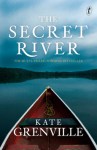
Adapted by one of Australia’s current best-known dramatists, Andrew Bovell, and premiered in 2013, the theatrical version of Kate Grenville’s award-winning novel The secret river was hugely successful, and I’m embarrassed that I didn’t organise myself to see it. I did see the later miniseries adaptation, but that doesn’t count in the context of this post. The production was nominated for – and won – several awards in Australia’s main theatre awards, the Helpmann Awards.
Bovell commented on the process of adaptation:
Sometimes the best approach to adapting a novel is simply to get out of the way. This proved to be the case with The Secret River. The novel is much loved, widely read and studied. It has become a classic of Australian literature. My task was simply to allow the story to unfold in a different form. It took me sometime to realise this.
He talks about the contributions to the adaptation made by the play’s director (the aforementioned) Neil Armfield, Bangarra Dance Treatre director Stephen Page, and the Artistic Directors of the Sydney Theatre Company which staged the play, Andrew Upton and Cate Blanchett. These people are the royalty of Australian theatre so it’s not surprising the play was successful, both critically and at the Box Office!
Storm boy
The oldest novel in my selection this post is Colin Thiele’s 1964 children’s novel Storm boy, which was made into a very successful film in 1976. The play adaptation, however, is far more recent, being premiered in 2013. It was adapted by a writer I don’t know – but I’m no theatre expert – Tom Holloway, whom the play’s director John Sheedy called “one of my favourite Australian playwrights.” Sheedy said Holloway was faithful to Thiele’s story and his style.
For those of you who don’t know, the story is about a boy, whose mother had died, and the pelican he befriends (or, who befriends him). The Canberra Times article (linked above) on the play says this about the pelicans:
The pelicans were crucial to the story and Sheedy said, “For three seconds we thought of bringing real ones in.” But then the decision was made to use puppets, carefully crafted to be the size of real pelicans and operated by two Indigenous performers, Tony Mayor and Phil Dean-Walford.
The play was performed in Canberra, Sydney and other eastern state cities in 2015 and 2016.
Jasper Jones
 Craig Silvey’s 2009 novel (my review) has, like Winton’s Cloudstreet and Grenville’s The secret river, became one of Australia’s most popular contemporary novels. It was adapted for theatre in 2014 and for film in 2017. The play adaptation was done by versatile actor and writer, Kate Mulvany. Being a Western Australian-based story, the play was first performed in Perth, with productions following in Sydney and Melbourne in 2016.
The Sydney Morning Herald’s reviewer, Jason Blake, said the following of the Sydney production:
I finished the book off this morning, just before writing this review. I think Mulvany has done a fine job in creating a play that stands on its own feet, though I do feel slightly cheated of the fiery, cleansing climax Silvey has provided his readers.
But whether you know the book or not, this piercing adaptation is very much worth seeing for the way it depicts – and shows ways across – some of the deep and enduring divides in our society.
The women in black/Ladies in black
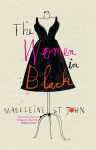 Musician Tim Finn and writer Carolyn Burns’ 2015 adaptation of Madeleine St John’s 1993 novel, The women in black (my review) is an exception in this list for three reasons: it’s the only one whose title differs from the book’s, it’s a musical comedy rather than a drama, and I’ve seen it! It won Best New Australian Work for Finn and Burns at the 2016 Helpmann Awards.
I’ve been pondering the name change, and my guess is that Finn and Burns felt, probably validly, that the word “Ladies” better conjures the 1950s fashion-section-of-a-department-store setting of the story. Anyhow, I enjoyed the adaptation, and loved that Finn took words from the book for the songs, as in “He’s a bastard, a bastard, a standard issue bastard” (“The Bastard Song”).
The Wikipedia article on the musical quotes the ArtsHub reviewer:
a comedy of mid-20th century manners, Ladies in Black is a paean to an optimistic future – the future of an uncomplicated gender equality and seamless multiculturalism. But Finn’s canny lyricism transports the play from its late 50s context to a subtle but salient comment on social issues of today.
While we have certainly moved on since the setting of this novel, this reviewer has a point – but I’m not sure that message will be the show’s lasting impression. It’s probably a bit too light and fun for that.
An aside: Australian film director Bruce Beresford, and friend of Madeleine St John, has been wanting to adapt the novel to film for a couple of decades now. I’d love to see what he did with it.
Is there any Aussie (if you’re an Aussie) or other (if you’re not) novel that you’d love to see adapted (jn any form)?
 Whispering Gums