Gavin Casey, Dust (#Review)

I have had to put aside the novel I was reading for Bill’s Gen 1-3 Aussie male writers week, as my reading group book called. I will get back to it, and post on it later, but in the meantime, I wanted to post something in the actual week.

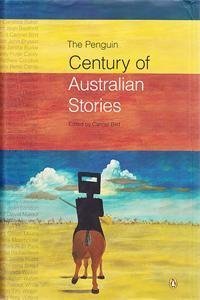
So, I turned, as I have for other Reading Weeks, to The Penguin century of Australian stories, an excellent anthology edited by Carmel Bird. Given Bill’s week encompasses writers working from 1788 to the 1950s, Bird’s anthology offered almost too many choices. Besides the obvious Henry Lawson, there were Steele Rudd, Tom Collins, Vance Palmer, and more, ending with Judah Waten’s 1950 story, “The mother”. I considered several, but Gavin Casey captured my attention because in her Introduction to the anthology, Kerryn Goldsworthy, looking at the 1930s and 40s, commented that Gavin Casey’s “Dust” and John Morrison’s “Nightshift” exemplified the more overtly political stories of this era. She added that:

they are stories in simple, unadorned language … that focus on workers and workplace disasters, on the physical dangers lying in wait for working men and women.

I have been interested in this period – and its socialist-influenced political thinking – for some time, so it had to be Casey or Morrison. Casey it was because I have listed him in a couple of Monday Musings posts but knew nothing about him.

Who was Gavin Casey?

Casey (1907-1964) was an author and journalist, born in Kalgoorlie, Western Australia, to an Australian-born father and Scottish mother. 

He doesn’t have a Wikipedia article but there is a useful biographical entry for him in the Australian dictionary of biography (ADB). Written by Anthony Ferguson, it says he had a sketchy education before obtaining a cadetship with the Kalgoorlie Electric Light Station. However, he left there to work in Perth as a motorcycle salesman, only to be “forced” back to Kalgoorlie in 1931 by the Depression. He then worked “as a surface-labourer and underground electrician at the mines, raced motorcycles and became a representative for the Perth Mirror“. He married in 1933, but “poverty plagued them, long after their return to Perth next year”.

By 1936, he was publishing short stories in the Australian Journal and the Bulletin, and in 1938 he was foundation secretary of the West Australian branch of the Fellowship of Australian Writers. His two short story collections – It’s harder for girls (1942), which won the 1942 S. H. Prior memorial prize and in which “Dust” appeared, and Birds of a feather (1943) – established his reputation. Ferguson writes:

Realistic in their treatment of place and incident, his stories showed—beneath the jollity and assurance of his characters—inner tensions, loneliness, unfulfilled hopes, and the lack of communication between men and women.

You may not be surprised to hear that his first marriage failed!
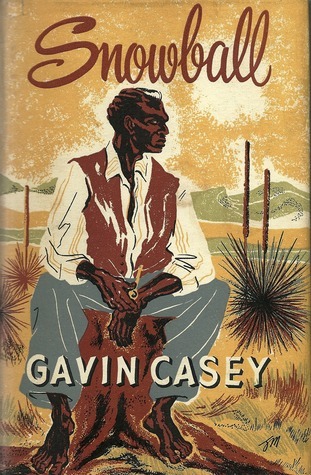
Overall, he wrote seven novels plus short stories and nonfiction works. His novels include Snowball (1958), which “examined the interaction between Aborigines and Whites in a country town”, and Amid the plenty (1962), which “traced a family’s struggle against adversity”. There is more about him in the ADB (linked above).

Ferguson doesn’t specifically address the political interests Goldsworthy references. Instead, he concludes that critics liken Casey’s earlier works to Lawson, seeing “a consistent emphasis on hardship that is tempered, for the male at least, by the conviviality of mates”. Ferguson also praises both for “their perceptiveness” and “their execution”.

The reality of Casey is a bit more nuanced, I understand. For a start, his men are not bush-men but suburban workingmen. Consequently, I plan to write more on him in a Monday Musings Forgotten Writers post, soon. Meanwhile, on with “Dust”.

“Dust”

“Dust” features male characters only, and there are some mates but, while they are important, they are not central. “Dust” also must draw on Casey’s experience of working in Kalgoorlie’s mining industry. It’s a short, short story, and is simply, but clearly constructed. It starts with a physical description of dust swooping through the township, over housetops and hospital buildings, and “leaving a red trail wherever in went”. It sounds – almost – neutral, but there are hints of something else. Why, of all the buildings in town, are “hospital buildings” singled out with the “housetops”, and does the “red trail” left behind signifiy anything?

Well, yes it does, as we learn in the next paragraph. Although this dust comes from “honest dirt” and can do damage like lifting roofs off, it is “avoidable” and is nothing like the “stale, still, malicious menace that polluted the atmosphere of far underground”. Ah, we think, so the “dust” we are talking about is something far more sinister than that flying around the open air.

And here is where the hospital buildings come in. Protagonist Parker and his miner friends are waiting for their six-monthly chest x-rays checking for the miners’ dust lung disease which killed his father. Things have changed since his father’s times, Parker knows. Not only are there the periodic medical examinations, but there are mechanisms to keep the dust down, and a system of “tickets” and pensions for affected miners. But, the risk is still there, and Parker’s anxiety increases as he watches his mates go in one by one, while he waits his turn.

This is a story about worker health and safety – but told from a personal not political perspective. It’s left to the reader to draw the political conclusions. However, it is also a highly relatable story about humans, health, and risky choices and behaviour, because it seems that Parker does have a choice. I won’t spoil it for you, but simply say that the ending made me smile – ruefully.
Gavin Casey
“Dust” (orig. 1936)
in Carmel Bird (ed.), The Penguin century of Australian stories
Camberwell: Penguin Books, 2006 (first ed. 2000)
pp. 86-90
Monday musings on Australian literature: Realism and Modernism

Now that’s an aspirational title for you, and one that I will not live up to in terms of expectations. However, I wanted to write something for Bill (The Australian Legend)’s AWW Gen 3 Week (Part 2). As its focus is, primarily, Realism and Modernism in Australian literature from post-WW1 to 1960, and, as my plan is to contribute a review of an Elizabeth Harrower novel, I figured I could leap into this Realism-Modernism murk and see what I could find!

Essentially, of course, most of us readers just want to read good books, and not worry too much about the trends and “isms” that the academics love, but it is sometimes interesting to think about them – at least a little. Bill has written clearly on the subject on his AWW Gen 3 page, so I’m just going to add a few thoughts and ideas that I’ve gleaned from around the place.

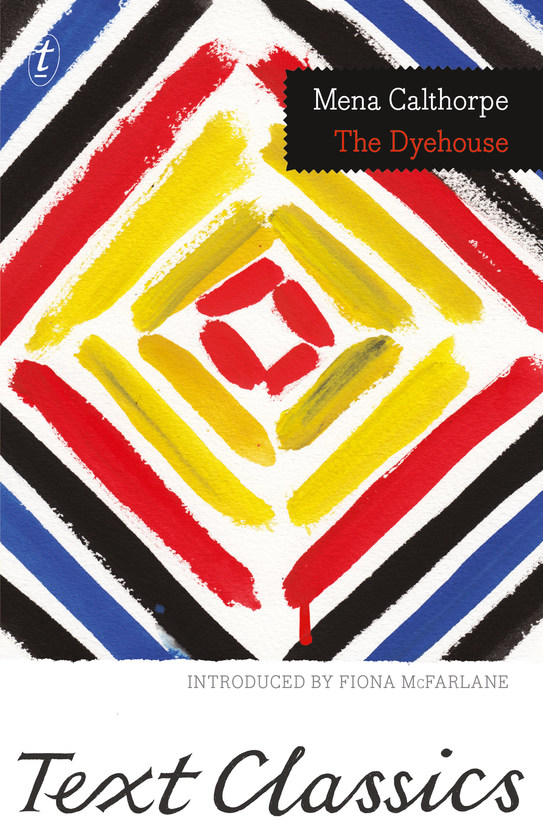
Mena Calthorpe, The dyehouse

Realism – social realism, which is really what we are talking about here – is fundamentally a sociopolitical movement which was concerned about the oppression of the working class by capitalist forces. Its drivers are social rather than psychological, group-focused rather than individual-based. It was the main fictional approach of the first half of the twentieth century, and was a driving feature of Australian literature of the 1920s to 1950s. Mena Calthorpe’s The dyehouse (my review), published in 1961 but set in the mid-1950s, is a good example. In my post, I noted that the characters are types, reflecting the various “players” in the worker-capitalist struggle, but are also authentic, psychologically real human beings which helps make it such a good read. There’s no escaping the fact, though, that Calthorpe’s intent is political.

Book cover

Modernism, on the other hand, focuses more on the individual – on, as Bill quotes, “decay and a growing alienation of the individual. The machinery of modern society is perceived as impersonal, capitalist, and antagonistic to the artistic impulse”. A significant exponent of modernism in Australia was Patrick White. A whole slew of Australian women writers are identified with Realism, but there’s also a good representation of them who worked in the Modernist style, such as Christina Stead, Eve Langley and Elizabeth Harrower (all of whom I’ve reviewed here.) Modernism, the theory goes I believe, eschewed realism.

Realism, or Modernism – or, both?

However, as with all things, real life doesn’t always suit theory, and writers, in particular, don’t always “know” that they are supposed fit the prescriptions of the theorists! So, it was with interest that I read an article about Elizabeth Harrower that discussed this very problem. The article, which appeared in Australian Literary Studies, 15 (3) 1992, is by Nicholas Mansfield, and is titled “‘The Only Russian in Sydney’: Modernism and Realism in The Watch Tower“. Mansfield opens with

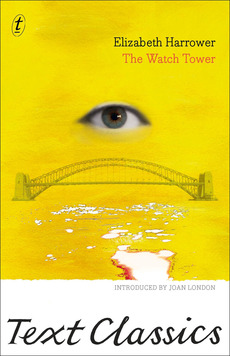
Elizabeth Harrower The watch tower

In the post-war period, the dichotomy between Realism and Modernism seemed to summarise all the important rivalries in Australian fiction — nationalist enthusiasm and political responsibility lined up against cosmopolitan sophistication and formalist experimentation. Given the approximate and tendentious nature of the terms of this dichotomy, it was inevitable that writing that could not fall easily into one or other of its broad categories would be met with some uncertainty and perhaps eventually ignored. The aim of this article is to show how a novel which met such a fate, Elizabeth Harrower’s The Watch Tower, both discusses and defies the simple dichotomy that Australian literary critics in the 1960s were so keen to maintain as their paradigm.

It’s a long article, but the gist is that while there is a Realist aspect to Harrower’s novel – a study of power, and a quest for freedom – it is Modernist by refusing to “definitively explain the basis of power” and by refusing to rely on an “essential truth”, on, I suppose, an absolute reason or answer. These refusals “radically contradict the traditional purposes of Realism” which he called “the most social and rational of all literary modes”. Mansfield argues that

Harrower’s novel, like the work of Christina Stead before her and Helen Garner after her, attempted to subject the techniques and concerns of the traditional social novel — especially the question of the nature and function of domestic power — to the self-consciousness that modernism demanded, without giving in to the temptations of either formalist machismo or realist belligerence.

Mansfield believes, however, that because Harrower’s novel combined “Realist” issues with more “Modern” responses, it confounded critics of the time:

Harrower’s novel not only rejected the quest for essential truth that had such poignancy for writers and readers of fiction in Australia at this time, but also confounded the binary opposition on which much criticism rested. For these reasons, even when it was positive, the critical reception of this novel was tentative, and soon ended in uncertainty and silence.

A case of critics trying to make the work fit the theory, rather than look at the work on its own terms? Anyhow, it probably didn’t help, as he also implies, that Harrower was a woman writing about women’s experience.

Interestingly, I also found an article (from Studies in Classic Australian fiction) that outlined why Patrick White’s works, which can look like “traditional, bulky, realist fiction”, are modernist. The writer, Michael Wilding, however, also admits that White “is playing with the realist tradition”, that he “gestures at realism” which he then denies or inverts. Voss, of course, is an excellent example of this, but Wilding discusses several White novels to support his argument.

I like Wilding’s definition of realism, as:

a committed left-wing realist mode: democratic in its sympathies, egalitarian in its perceptions, naturalistic in its causality and motivation, precise and laconic in its verbal manner.

However, while naming Katharine Susannah Prichard and Vance Palmer as purveyors of this style, he also includes Christina Stead! Just shows the limits of theory?

The question is …

Jane Rawson, A wrong turn at the office of unmade lists

Does all this mean anything? Well, not to our individual reading experiences I think. But, if we believe the arts are (partly) about reflecting and/or responding to our times, then these “trends” mirror what was happening. Social realism recognised a growing concern with the inequalities and oppression wrought on people by increasing industrialisation under capitalism, while modernism reflected a sense of alienation and meaninglessness that the times (progress, industrialisation, war, technology, urbanisation) were effecting in people. In current times, we are seeing, for example, a rise of “cli-fi” and climate-related dystopian literature in response to you-know-what. Literature, in other words, tells us about ourselves and these theories are a way of articulating that.

Anyhow, back to Bill. It will be interesting to consider how these traditions “behave” as we move into Bill’s Gen 4 next year. Meanwhile, I’ll just say that both these “isms” appeal to me. I love the reformist heart behind realist novels, but there’s also that part of me that relates to the modernist’s sense of alienation in an uncomprehending and incomprehensible world. I didn’t fall in love with TS Eliot in my youth for nothing!