I rather enjoyed playing Kate’s #6Degrees “meme” last month so, while I don’t expect to play every month, November’s starting book, Kazuo Ishiguro’s Never let me go, was far too tempting to let go! Once again, read on to see why …
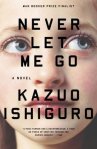 I read Kazuo Ishiguro’s dystopian Never let me go before I started blogging, and have only reviewed one of his works since then. I’m thrilled, therefore, to have an opportunity to record that although I haven’t read all of his books, I have read most of them, because I enjoy his writing immensely. I particularly like his tone, which often comprises a sort of matter-of-fact, almost emotionless description of things which, we come to realise, are pretty unpleasant. And these things are usually told to us by narrators who, themselves, don’t recognise the truth of what they are seeing/describing (or certainly don’t recognise it fully). They are, in other words, often unreliable.

Kazuo Ishiguro, 2005 (Courtesy: Mariusz Kubik CC-BY-SA 3.0)
I rather like unreliable narrators, partly, I’m sure, because most of us aren’t wonderfully reliable at narrating our lives. We see our own stories from our own perspective and, if we ever see the fuller picture, it’s often in retrospect, don’t you think? So, for my next book I’m going to choose the only Ishiguro book I’ve reviewed here, Nocturnes: Five stories of music and nightfall (my review). This is a collection of short stories, some of them linked. In all of them, as I wrote in my post, “the narrator is either unreliable or in some other way not completely across what is going on. This is the Ishiguro stamp … as is the overall tone of things not being quite right, of potential not being quite achieved, of people still looking for an elusive something but not necessarily knowing quite what that is.”
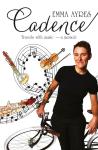 Now, I could link to another book with an unreliable narrator, but that would get boring, so instead I’ll go with content. As the full title of Nocturnes suggests, the book features music and musicians in most of the stories, with the last story being titled “Cellists”. That reminded me of Emma Ayres’* memoir Cadence: Travels with music (my review) about her bicycle trip from England to Hong Kong. It’s a thoughtful, engaging book in which she reflects on her life as a musician, and her desire, violist that she was, to be a cellist! See the neat link!
 Of course, as well as talking about her two main loves, cycling and music, she talks about the places she rides through. One that she fell in love with, despite all the warnings she’d received while planning her trip, was Pakistan, where she was treated with kindness and generosity almost without fail. Her experience of Pakistan brought to mind a book I read for the Man Asian Prize Shadow Jury in 2011, a book that I can’t forget, in fact, Jamil Ahmad’s Wandering falcon (my review). It is set in the decades before the rise of the Taliban and explores life in the multi-tribal region on the borders of Pakistan, Afghanistan and Iran. It highlights what happens when political borders cross tribal lands. The writing evokes the unforgiving landscape and the often brutal justice beautifully. While I don’t remember the details now, its overall impression and theme have stayed with me.
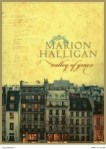
For my next book, I’m not going to link by content or tone, but by author. You see, Jamil Ahmad was a late bloomer. He was born in 1933, but Wandering falcon, his first book, was not published until 2011 (though apparently he wrote the stories in the 1970s). I’ve written a post on late bloomers, so I’m going to choose one of those, but which one? Well, I reckon Marion Halligan, for three reasons: she lives in my city, I love her books, and she’s a stalwart supporter of the arts in the ACT. The last book of hers that I’ve read, though I have a couple on the TBR pile, was Valley of grace (my review). It’s set in Paris, where Halligan lived for several years. It’s a beautiful book and is, as I wrote in my post, Halligan’s “meditation on children – who they are, what they mean to us”.
 So, where to from here? This journey from Kazuo Ishiguro’s Never let me go (which, interestingly, is about children/young adults) has not been plotted in advance. For my final book, I have a few options: I could stick with an author connection, or return to a content link, or launch into something new. Something new? Yes, why not? I’m thinking book designer, because Valley of grace is really beautiful to hold and to read. It was designed by Sandy Cull, an award-winning book designer who also designed a book I read very recently, Anna Spargo-Ryan’s The paper house (my review). Not only is this book’s cover gorgeous, but its interior design is important, particularly in the increasing use of white space later in the book to convey the main character’s heightening mental illness. (There is a content link with this book, too, as it turns out, because The paper house is about parents and children.)
And, there you have it … another fun, for me anyhow, Six Degrees of Separation Meme. I’m surprised, in a way, where I ended up, because Never let me go is a dystopian novel, and I do read such novels, but somehow I led myself off in another direction! I only have myself to blame.
Anyhow, if you’ve read Never let me go, what book would you choose to link from it?
* Since writing this book, Emma Ayres has transitioned to Eddie Ayres. I’ve used the female pronoun here because he wrote this book as a woman.

 Whispering Gums