I love short stories but, as Jason Steger, Literary Editor of The Age and The Sydney Morning Herald, wrote in one of his recent weekly emails, not everyone does. Indeed, he writes:
I know quite a lot of people – people I would consider good readers of fiction – who find them unsatisfactory. Not enough meat to them. Not as satisfying as a novel. Always leaving you wanting more.
And he admits to shifting between the like-don’t like positions himself, before going to say that, “more often than not [with good short stories] you come away knowing precisely enough; you don’t need any more after the author has ended the story with perhaps a surprise, perhaps a neat tying together, or perhaps with ambiguity”. He offers other writers’ thoughts, including English novelist Elizabeth Bowen who wrote in her introduction to The Faber book of modern stories (1937) that “Poetic tautness and clarity are so essential to it [the short story] that it may be said to stand on the edge of prose.”
Bowen, he said, is particularly relevant to what he wanted to share, which was that Tasmanian poet and novelist Kathryn Lomer had won this year’s Furphy Literary Award. Worth $15,000 to the winner, the prize is named after Joseph Furphy, the author (using the pseudonym, Tom Collins), of the Australian classic, Such is life. Lomer’s winning story, “Nothing about kissing” (read it here), is set in Hobart’s MONA, and opens with the protagonist starting her cleaning shift. Steger quotes one of the judges, Stephanie Holt, who said the winning story “unfolds as layers of assured, erudite but often plainspoken reflection. Into these, the writer drops several crucial moments with such startling aplomb you want to stand and applaud.”
Selected recent short story collections
After this introduction, Steger notes that “despite publishers frequently saying that stories are tricky to sell, they still appear”, and then he lists some, noting that collections are more often published by smaller publishers, like Spineless Wonders and Puncher and Wattman. There are others of course, including the somewhat larger, but still independent publisher, UQP.
He gives a few recent examples, which I am including here, in alphabetical order, along with a few of my own. I have limited the list to those published since 2022 to convey a sense of current activity.
- Tony Birch, Dark as last night (UQP)
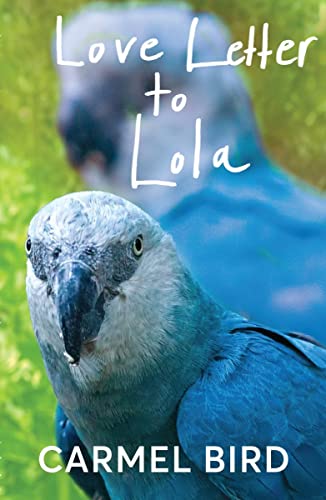
- Carmel Bird, Love letter to Lola (Spineless Wonders, my review)
- Georgia Blain, We all lived in Bondi then (Scribe, Brona’s review): posthumous publication of new stories written during 2012-2015
- Larry Buttrose, Everyone on Mars (Puncher and Wattman)
- Ceridwen Dovey, Only the astronauts (Penguin Books Australia, Brona’s review)
- Fiona McFarlane, Highway 13 (Brona’s review): “a suite of interlinked stories, received a rave review in this masthead” (Steger)
- Laura Jean McKay, Gunflower (Scribe)
- Catherine McNamara, The carnal fugues (Puncher and Wattman, on my TBR): recently shortlisted for the Prime Minister’s Literary Awards
- John Morrissey, Firelight stories (Text Publishing): First Nations speculative fiction
- John Richards, The Gorgon flower (UQP): Gothic-infused short stories
- Mykaela Saunders, Always will be (UQP): First Nations speculative fiction
- Su-May Tan, Lake Malibu (Spineless Wonders)
Anthologies are a specific type of collection, of course, in that they contain writings by different authors, but are worth including here too:
- Suzy Garcia (ed.), New Australian fiction 2023 (Kill Your Darlings)
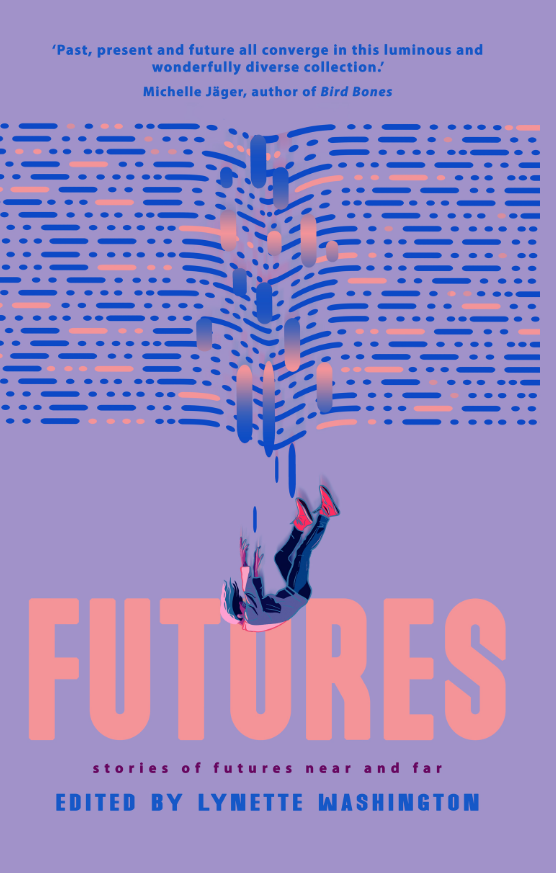
- Lynette Washington (ed), Futures: Stories of futures near and far: includes a story from Carmel Bird’s Love letter to Lola (Glimmer Press)
There are two broad types of anthologies, those selected from previously published stories, and those that result from a call for submissions and contain all new stories. The two above belong to the latter.
Not always, but often, short story collections and anthologies are themed or genre-linked. So, for example, Saunders’ collection comprises First Nations speculative fiction. Speculative fiction, in fact, seems to be a popular genre for short story writers, and currently they are grappling with some of the big issues like climate change and, for First Nations writers in particular, the experience of colonialism.
Ten years ago, ABR (the Australian Book Review) asked ten Australian short story writers to name some favourite short story collections and short stories. One of the ten was Carmel Bird. She introduced her selection with the comment that “I delight in the fact that the ‘short story’ is forever elastic”. She should know, as her own stories epitomise this elasticity, but she’s right because she’s not the only one. Recent stories that I’ve read have been exciting in the degree to which they push and stretch the form, from experiments with micro fiction to trying out different voices, including inanimate. If there’s one way to keep something interesting, it’s to mix it up a bit, and our short story writers are doing that. It’s exciting and encouraging.
Do you read short story collections or anthologies? If so we’d love to hear your favourites.
 I won’t get to many Melbourne Writers Festival events, because those of most interest to me clash with other commitments and responsibilities. This is a shame given this year’s extensive digital program would enable me to attend my first ever MWF. Never mind, there will be other years. Nonetheless, I was thrilled to find a session on short stories at a time I could attend, so attend I did.
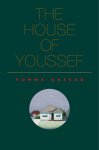 Sullivan introduced The house of Youssef as comprising “spare and sharp” stories about a Lebanese community in Sydney, exploring “the way generations differences play out … the gaps … that make mutual understanding so challenging.” Kassab agreed her stories are about community and family. It’s unavoidable that there will be tensions between generations in any community, she said, but these are exacerbated in migrant communities because of the added layer of different cultural expectations. She’s become increasingly interested in this issue.
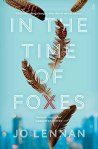 Introducing Lennan’s collection, Sullivan described it as having an international outlook. It has a wide geographic spread, featuring characters taken out of their comfort zones. Lennan observed that mobility has become familiar over the last decades. It seems easy, but is in fact complicated, as she shows in her title story, “In the time of foxes”. It’s about a young filmmaker in London with a young toddler. Her mother is developing dementia back home, and, there’s a fox in the backyard to deal with. She has to face “giving up” her childhood home. Lennan’s point is that living abroad offers immense opportunities but can be accompanied by immense cost. The time has come for this character to pay that cost. (This cost, as many of my generation knows, is also paid by those left at home – particularly with COVID-19, for example, keeping grandparents away from their overseas grandchildren!)
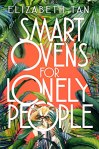 Sullivan introduced Tan by noting that her stories, which include animal protagonists, unsettle readers expectations and assumptions. She asked how this approach allows her to explore perceptions. Tan spoke from personal experience when she observed that people can look at characters – like her cats and mermaids – and assume they don’t have interiority or inner life, that they are just a sidekick to another’s life. She likes exploring how these characters are unexpectedly resilient, and suggested they could mirror how she moves through life. As a young Asian woman, she often feels underestimated. But, she is not always sure if how she thinks the world is seeing her is how it actually is, but how do you know? She quoted Chimamanda Ngozi Adichie’s statement that “the problem with stereotypes is not that they are untrue, but that they are incomplete”.

 Whispering Gums