Edith Wharton, Writing a war story (Review)

According to Keirsey, Edith Wharton may have b...

Edith Wharton (Presumed Public Domain via Wikipedia)

“Writing a war story” is quite different to the Edith Whartons I’ve read to date, and it was clear from the opening sentence – “Miss Ivy Spang of Cornwall-on-Hudson had published a little volume of verse before the war”. It was the comic tone that did it. All the previous works of hers I’ve read, several novels and novellas, plus a couple of short stories, have been serious, if not downright tragic. However, Wharton was a prolific writer, so I wasn’t completely surprised. In fact, I was rather thrilled to have come across this story via the Library of America (a few months ago now).

I haven’t yet read the highly recommended biography of Wharton by Hermione Lee, but I’ve heard enough about her life to know that she lived in France during the First World War, and that she contributed significantly to the war effort. As LOA’s notes tell us, she stayed in France when the war started while others fled. She raised money, visited the front, established refugee hostels and homes for children. She was admired widely but she, herself, apparently underplayed her role, believing, writes LOA, “that nothing she did could compare with the agonies suffered by the soldiers and their families”. Her story, “Writing a war story” satirises both this role and the idea of writing stories for soldiers, for the war effort.

The plot is simple. Ivy Spang, who had published, to minimal recognition, a book of verse, is asked to contribute a short story to a new magazine, The Man-at-Arms, aimed at convalescent soldiers. Flattered, she accepts, and, due for leave from her volunteer work of “pouring tea once a week” for soldiers in a hospital, she sets off “to a quiet corner of Brittany”, because

devoted though she was to her patients, the tea she poured for them might have suffered from her absorption in her new task.

But, the task proves harder than she’d imagined. She struggles to find “Inspiration”, her mind being full of the one serious but unfortunately pretentious and condescending review, by the editor of Zig-Zag, of her published verse collection. She tells her companion, Madsy, that “people don’t bother with plots nowadays” and that “subject’s nothing”. Eventually, in desperation, she accepts Madsy’s offer to use/collaborate on one of the “stories” Madsy had jotted down from her hospital volunteer work. They agreed that Ivy would take the basic story but add her literary “treatment”. You can probably guess the outcome, but you should read the story to see just how it comes out. There’s a photo and a famous novelist involved too. In addition to the satire on “literature” and war volunteer work, there’s also a gender dig.

One of the things I most enjoyed about the story was its satire of literary pretensions, and how easy it is for an unconfident writer to be derailed by the wrong sort of praise, as Ivy is by Mr Zig-Zag!

In the story’s conclusion, a novelist laughs at her story, before he realises she’s the author. When he realises, and she asks for feedback:

He shook his head. “No; but it’s queer—it’s puzzling. You’ve got hold of a wonderfully good subject; and that’s the main thing, of course—”
Ivy interrupted him eagerly. “The subject is the main thing?”
“Why, naturally; it’s only the people without invention who tell you it isn’t.”
“Oh,” she gasped, trying to readjust her carefully acquired theory of esthetics.

Poor Ivy! I liked the fact that Wharton’s satire is subtle, not over the top. We readers can see what’s coming but Ivy isn’t ridiculed. We feel for her aspirations but we can see that her lack of confidence has laid her open to influence. And there’s irony here because that very influence, that editor of Zig-Zag, had warned her of “not allowing one’s self to be ‘influenced'”, of the importance of “jealously guarding” her “originality”.

There’s more to this story, particularly for people interested in Edith Wharton’s biography. My point is that whatever your interest – literature, war literature, Edith Wharton herself – this story has something to offer, as well as being a good read (with a subject, or two!)

Edith Wharton
“Writing a war story”
The Library of America
Originally published in Woman’s Home Companion, 1919
Available: Online
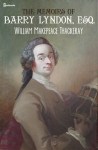
William Makepeace Thackeray, The luck of Barry Lyndon (#Review)

By the time I reached about the 30% mark (on my Kindle) of William Makepeace Thackeray’s classic novel, The luck of Barry Lyndon, I was reminded of a monologue by English comedian Cyril Fletcher which my father had on an old gramophone record. It’s about a “lunatic” (this was in less linguistically-sensitive times) who decided to write a novel. I won’t spoil the fun because you can watch Fletcher perform it himself on YouTube (it’s the first short story):

If you’ve watched it, you might see my point, because Barry Lyndon does go on and on and on, reporting adventure after adventure after adventure, with no apparent change or development in his character (except that he gets older!). I am exaggerating a bit, but …

So, why did I persevere? Firstly, it was my reading group’s June book, and I always like to do my homework; secondly, it is a classic that I haven’t read; and thirdly, I sensed satire, and was intrigued to see just where it was going. As a reading experience though it’s a challenge, one that was perhaps less so for contemporary readers in 1844 because they received it in serial form over 10 months or so. Still, I’m not sorry I read it.

What's in a name?

What’s in a name?

Anyhow, enough introductory patter. Let’s get down to it, starting with a little about the story. It’s a picaresque tale, a popular form in the 18th century in which the story is set, and spans many countries from Ireland and England to much of Europe. Its “hero”, Redmond Barry, pretends to be (believes, indeed, he is) a gentleman – he knows how to speak, dress, and duel – but, see how I enclosed “hero” in quotation marks? That’s because he is, in fact, an anti-hero – a conman and consummate rake (another great 18th century type!). Having lost the hand of his cousin, and then his money through gambling in Dublin, he ends up a soldier fighting the Prussians in the Seven Years’ War. While in Europe, he teams up with an uncle and together they manage to live the high life, gambling their way around Europe. “Luck”, of course, runs out, and he’s penniless again but he manages to essentially bully the wealthy and widowed Countess of Lyndon into marriage. However, things again go bad as Redmond Barry (now renamed Barry Lyndon) mismanages his wife’s money – and so the story continues to its inevitable conclusion.

The “luck” of Barry Lyndon?

One of the questions the book raises is that of “luck”. To what extent is Lyndon master of his own fate and to what extent does luck come into play. As one of the members of my reading group said, Lyndon is one of literature’s greatest justifiers. He can justify (excuse) just about everything he does, but he’s also the consummate unreliable narrator. He continually asserts the “truth” of his story, even though, early on, he’s told us that the “Irish gentry . . . tell more fibs than their downright neighbours across the water.”

The novel opens with:

Since the days of Adam, there has been hardly a mischief done in this world but a woman has been at the bottom of it …

And there it starts. Whatever happens to Lyndon is always someone else’s fault – nothing to do with his gambling, his inability to manage money, or his insensitivity to the needs of anyone but himself. There is a strong misogynistic thread through the novel – but this is part of the satire, which is common in picaresque novels. The targets are many, but a major one is idea of the 18th century gentleman, the sort of person Barry Lyndon proclaims throughout that he is but that he shows by his actions he is not!

The novel is, overall, a romp, albeit a rather tedious one at times, but it does have some things to tell us, besides what a “gentleman” should be. One of these, I think, is that it chronicles social change in Europe, the change from the chivalric life of aristocracy to a more bourgeois life of the middle classes. I’ll give one little example. Lyndon spends his life settling scores through the “gentleman’s” method, a duel (though to be fair he “pinks” people rather than kills them). However, late in the novel, as things close in, he is brought to account for one of his schemes. He writes:

Of course I denied the charge, I could do no otherwise, and offered to meet any one of the Tiptoffs on the field of honour, and prove him a scoundrel and a liar: as he was; though, perhaps, not in this instance. But they contented themselves by answering me by a lawyer, and declined an invitation which any man of spirit would have accepted.

We are talking late eighteenth century, you see – the time of the American War of Independence and the lead into the French Revolution. The times, they were a-changing.

Truth or fiction?

So, there’s the issue of Lyndon asserting the “truth” of his story, asking us to trust that he is the decent, good guy he says he is. His misfortunes, he says, are due to

the consequences of villainy in others, and (I confess it, for I am not above owning to my faults) my own too easy, generous, and careless nature…

Hmm … not quite the “faults” we readers would ascribe to this wife and child-beater, profligate spender, and keen duellist.

However, there’s another angle to this “truth” idea. It’s related to the idea that this is a “memoir”, not a novel. He writes:

Were these Memoirs not characterised by truth, and did I deign to utter a single word for which my own personal experience did not give me the fullest authority, I might easily make myself the hero of some strange and popular adventures, and, after the fashion of novel-writers, introduce my reader to the great characters of this remarkable time. These persons (I mean the romance-writers) …

Later, we find, in one of the occasional “footnotes”, which are part of the novel and provide the occasional corrective to Lyndon’s narrative:

[Footnote: From these curious confessions, it would appear that Mr. Lyndon maltreated his lady in every possible way; that he denied her society, bullied her into signing away her property, spent it in gambling and taverns, was openly unfaithful to her; and, when she complained, threatened to remove her children from her. Nor, indeed, is he the only husband who has done the like, and has passed for ‘nobody’s enemy but his own:’ a jovial good-natured fellow. The world contains scores of such amiable people; and, indeed, it is because justice has not been done them that we have edited this autobiography. Had it been that of a mere hero of romance one of those heroic youths who figure in the novels of Scott and James there would have been no call to introduce the reader to a personage already so often and so charmingly depicted. Mr. Barry Lyndon is not, we repeat, a hero of the common pattern; but let the reader look round, and ask himself, Do not as many rogues succeed in life as honest men? more fools than men of talent? And is it not just that the lives of this class should be described by the student of human nature as well as the actions of those fairy-tale princes, those perfect impossible heroes, whom our writers love to describe? There is something naive and simple in that time-honoured style of novel-writing by which Prince Prettyman, at the end of his adventures, is put in possession of every worldly prosperity, as he has been endowed with every mental and bodily excellence previously. The novelist thinks that he can do no more for his darling hero than make him a lord. Is it not a poor standard that, of the summum bonum? The greatest good in life is not to be a lord; perhaps not even to be happy. Poverty, illness, a humpback, may be rewards and conditions of good, as well as that bodily prosperity which all of us unconsciously set up for worship. But this is a subject for an essay, not a note; and it is best to allow Mr. Lyndon to resume the candid and ingenious narrative of his virtues and defects.] (Ch. 17)

I love the satire here of romance-adventure novels, epitomised by writers like Sir Walter Scott, and note Thackeray’s plea for what became the great social novels of the nineteenth century. (You have to wonder, though, at the idea of “Poverty, illness, a humpback” being “rewards”!)

And here I will end because many have written eloquently about this classic. All I wanted to do was to make a couple of points! Have you read Barry Lyndon, and did you enjoy it?

William Makepeace Thackeray
Barry Lyndon (orig. The luck of Barry Lyndon)
Goldfish Classics Publishing, 2012
[339pp.]

Washington Irving, The adventure of the German student (Review)

Washington Irving, c. 1855-60 (Copy daguerreotype by Mathew Brady, reverse of original by John Plumbe. Public domain, via Wikimedia Commons)

Washington Irving (1783-1859) is best known for his short stories “Rip Van Winkle” and “The legend of Sleepy Hollow”, but in fact he was a prolific writer and, according to Wikipedia, is often credited as being America’s first “man of letters”. I was fascinated to read in Wikipedia that, as well as being a writer, he worked as a diplomat in Europe. He helped other writers, promoted the writers’  rights in issues like copyright, and he was admired by the likes of Sir Walter Scott, Lord Byron and Charles Dickens. I guess Americans know all this, but I didn’t.

However, I have had a recent encounter with Irving, before the story in this post that is, because I dipped into his Tales of the Alhambra (1832) when we visited that part of Spain in 2013. I was fascinated by his description of a place that is not totally unfamiliar to an Australian:

its scenery is noble in its severity, and in unison with the attributes of its people; and I think that I better understand the proud, hardy, frugal and abstemious Spaniard, his manly defiance of hardships, and contempt of effeminate indulgences, since I have seen the country he inhabits.

And I loved his desire to travel with an open heart and mind:

but above all we laid in an ample stock of good humor, and a genuine disposition to be pleased, determining to travel in true contrabandista style, taking things as we found them, rough or smooth, and mingling with all classes and conditions in a kind of vagabond companionship.

That’s the spirit, as Son Gums would say.

Anyhow, let’s get to the story, “The adventure of the German student”, that was recently published in the Library of America’s Story of the Week program. It came from his collection, Tales of a traveller, which comprised essays and short stories published in 1824 under his pseudonym, one of several he used, Geoffrey Crayon. This collection was divided into four “books”, and our story was in the first, titled  “Strange stories by a nervous gentleman”.

Most of the stories are set in Germany and Paris, with “The adventure of the German student” being set in Paris during the French Revolution. The opening lines are:

On a stormy night, in the tempestuous times of the French revolution, a young German was returning to his lodgings, at a late hour, across the old part of Paris. The lightning gleamed, and the loud claps of thunder rattled through the lofty, narrow streets …

The story, you may not be surprised to hear, is Gothic in tone. LOA’s notes say this is surprising because his “supernatural tales are known more for gentle whimsy and wry satire rather than the Gothic horror found in this story”. They tell us that this story predates Edgar Allan Poe “by a good twenty years” and that American horror writer H.P. Lovecraft admired it for diverging from his “lighter treatment of eerie themes”.

It’s a simply told story. After that opening, the narrator decides that before continuing he needs to tell us a bit about this German student, Gottfried Wolfgang. He was “a young man of good family” but was, perhaps, a little too sensitive and suggestible for his own good. During his studies he had “wandered into those wild and speculative doctrines which have so often bewildered German students” and he starts to feel that “there was an evil influence hanging over him; an evil genius or spirit seeking to ensnare him and ensure his perdition”. His friends decide he needs “a change of scene” and send him off to Paris.

There, Gottfried starts by enjoying the revolutionary spirit but soon all the blood gets him down. In true Gothic style he lives in “a solitary apartment” in a gloomy street not far from the monastic walls of the Sorbonne”. He visits “the great libraries of Paris, those catacombs of departed authors”, becoming a “literary goul (sic), feeding in the charnel house of decayed literature”.

However, he also has “an ardent temperament” but is too shy to approach women so, being of fanciful bent, he dreams up a woman of “transcendent beauty”. She haunts him in the way such visions do to “the minds of melancholy men”.

Now, remember, this is set during the French Revolution, so as the story progresses a guillotine appears where our student meets his dream-woman. He brings her to his home and is, of course, totally enamoured. Fortunately, these are modern times:

It was the time for wild theory and wild actions. Old prejudices and superstitions were done away; every thing was under the sway of the “Goddess of Reason.” Among other rubbish of the old times, the forms and ceremonies of marriage began to be considered superfluous bonds for honourable minds. Social compacts were the vogue. Wolfgang was too much of a theorist not to be tainted by the liberal doctrines of the day.

Ha-ha! Who needs “sordid forms to bind high souls together” he tells the young woman. So he talks her into immediately pledging herself to him. And here, I’m afraid I’ll leave you, but let’s just say that things don’t quite work out for Gottfried, or his dream-woman. There are several layers in which we can read the story – political, philosophical, psychological, sexual, feminist – but all point, at some level at least, to satire of the times.

In 1860, Irving wrote this about his stories:

I am not, therefore, for those barefaced tales which carry their moral on the surface, staring one in the face; they are enough to deter the squeamish reader. On the contrary, I have often hid my moral from sight, and disguised it as much as possible by sweets and spices, so that while the simple reader is listening with open mouth to a ghost or a love story, he may have a bolus of sound morality popped down his throat, and be never the wiser for the fraud…

An interesting, thoughtful man, this Irving.

Washington Irving
“The adventure of the German student”
First published: In Tales of a traveller (1824)
Available: Online at the Library of America

Steve Toltz, Quicksand (Review)

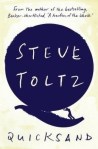
Steve Toltz, Quicksand, soverAldo Benjamin, the anti-hero of Quicksand, accuses wannabe-writer-friend Liam of having “such little imagination”. You could not, however, accuse the novel’s author, Steve Toltz, of this. Quicksand reads a bit like a 19th century satirical novel transplanted into the 21st century. It is big in size (though not as big as his first, A fraction of the whole), broad in subject matter, and full of colourful characters. It’s wild, imaginative, and darkly funny. It’s the sort of novel that you can tackle from different angles depending on what interests you most. Religion, god and fate? Tick. Life and death? Tick. Love and friendship? Tick. Social commentary? Tick. Art (broadly), artists and the making of art? Tick.

“Bad luck is my pathology” (Aldo)

Before I tell you what interested me, though, a little about the plot. Quicksand is the story of Aldo Benjamin, told partly by his friend, Liam Wilder, and partly by himself. Meeting at high school, Aldo and Liam remain friends until the book closes when they are in their early to mid 40s. Together they reveal the ups and downs – mostly downs – of Aldo’s life as he tries to make his way against what he sees as the tide of fate or bad luck. The novel opens when they are in their early 40s and Aldo, a wheelchair-bound paraplegic, has just been released from prison. We don’t know how long he’s been in the wheelchair or how that came to be, and we don’t know why he’d been in prison. These come out in the course of the novel, which flashes back in chapter 2 to their schooldays and then moves between the past and present to tell the story. We also discover in the opening chapter that Liam is trying to restart his writing career by writing Aldo’s story, much to Aldo’s resigned disgust: “I’m nobody’s muse”, he says. Ironically, though, not only is he Liam’s muse but he’d also been one for his musician wife, Stella, and photographer lover, Mimi.

Aldo, “The King of Unforced Errors” as Liam calls him or a sufferer of “clinical frustration” as Aldo sees it, gets into all sorts of strife. He is regularly bailed out by friends (who cover “the full suite of professional services” such as policeman Liam, Doc Castles, his old school teacher Mr Morrell) and lovers. Nothing much works for him, particularly not his various get-rich-quick business ideas, like the device that was supposed to detect the presence of peanuts in food, or clothing for obese toddlers, or tanning salon taxis, or maternity clothes for goths (“a demographic with an 85% abortion rate”). Moreover, his marriage fails, his child dies, his multiple suicide attempts are unsuccessful, and, to rub salt into his wounds, he ends up in the two places he most fears, prison and hospital. As Liam says in response to Aldo’s question about why write his story:

Because you’ll inspire people. To count their blessings.

I love this sort of writing, this dark humour. It’s full-on to read because lines like this frequently fall over each other, sentence after sentence, leaving you wanting to stop and smell the roses for a minute. Still, I was hooked by page 5 when Aldo presents to Liam a long list of our 21st century insecurities, pretensions and self-deceptions, including

‘You know how people are worried their kid’s going to turn to them and say, What did you do to the biosphere, Daddy?

AND

‘And you know how there’s no replacement cycle too short for today’s consumer?’

AND

‘You know how while we’re enjoying reading dystopian fiction, for half our population this society is dystopia?’

These go on for three pages. Wonderful satire. No matter how superior we might feel about most of the pronouncements, there’s bound to be one or two that get us where it hurts! Toltz looks unblinkingly at our lives and shines them right back at us in the most direct, no-punches-pulled way. It made me laugh – but ruefully, if not guiltily at times – almost every page.

“To troubleshoot the human spirit” (Liam)

The other aspect I enjoyed was the thread about art, artists and art-making. The major focus of this is Liam’s novel about Aldo’s life. After years of failure and giving up, Liam finally decides that Aldo is his “natural subject”. Writing about him, Liam tells Aldo, would be “to troubleshoot the human spirit”. It would, he thinks, throw him “into a head-on collision with the meaning of fate, humanity’s sure, but Aldo’s strange specific one too”. Aldo and Liam discuss Liam’s progress frequently, with Aldo always ready with an astute comment or criticism. “Does my character in your book”, Aldo asks, “need to be more consistent than my character in real life?” “No,” says Liam, though in fact many readers do, I find, prefer it to be so!

Liam is not the only creator in the novel. Aldo’s musician wife Stella plunders Aldo’s life for her songs, and then there’s the art teacher from Liam and Aldo’s school, and the artists in the artists’ residence where Aldo lives for a time. Through all these the novel interrogates why we make art, what art is about. Early on, before he starts his Aldo novel and after years of failure, Liam decides to give up writing. He says

I had settled into a life I had always feared but secretly desired, a life uninterrupted and unencumbered by art.

Chapter 2, though, begins with art teacher Morrell’s statement that:

We make art because being alive is a hostage situation in which our abductors are silent and we cannot even intuit their demands.

Art is not, however, presented as something that is easy or even always right. Toltz’s artists struggle to achieve, are frequently self-obsessed, and unapologetically mine their friends and family for material, all the while, thinks Aldo at least, having a good time. “Their brains are all pleasure centres and no circumference”, he tells the court. They are not, in other words, unilaterally lauded, but this is, of course, ironic, if not subversive, since what we are reading is a novel, a work of art itself. The wheels within wheels in this novel – the ironies, the paradoxes, the self-reflexivity – sometimes make your head spin, but in the end, there is an end, and it’s a surprisingly positive one.

And here, I’ll end! This novel is so full of funny lines, so full of ideas, so full of biting commentary, that it’s hard to know when to stop so, as EM Forster* wishes novelists could do, I think I’ll just end, not because I’m bored which is the reason he gives, but because I might as well.

Lisa at ANZLitLovers also enjoyed it.

Steve Toltz
Quicksand
Hamish Hamilton, 2015
435pp.
ISBN: 9781926428680

* Aspects of the novel, by EM Forster

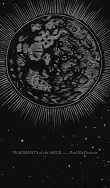
Paul McDermott, Fragments of the hole (Review)

"Paul McDermott DAAS" by Canley - Own work. Licensed under CC BY-SA 3.0 via Commons.
“Paul McDermott DAAS” by Canley. Licensed under CC BY-SA 3.0 via Wikimedia Commons.

If you’re an Australian, you are sure to know who Paul McDermott is. If you are not Australian, you may not, and this book in fact would not enlighten you, because nowhere on the book is it made clear that “this” Paul McDermott is indeed “that” Paul McDermott. It doesn’t take much reading though to realise that indeed it must be. Have I intrigued you? I hope so.

Fragments of the hole is the first of the second set of fl smalls released by small independent publisher Finlay Lloyd. I mentioned them in my recent post on small books, and said then that I’d review them individually as I read them, so here I am.

I’ll start, having already mentioned him, by telling you about the author. Wikipedia describes him as “an Australian comedian, actor, writer, director, singer, artist and television host”. I knew about most of those, but I didn’t realise that his writing included more than writing scripts for his shows, or that he was an artist too. He first came to public notice as a member of the satirical musical comedy group the Doug Anthony All Stars. The Doug Anthony in their name refers to the longtime leader (1971-1984) of the National Party of Australia, which will, perhaps, give you a sense of his political leanings. However, Fragments of the hole is not political satire, so let’s get onto it …

McDermottFragmentsFinlay

The jokes start pretty much on the title page when we are told that the book comprises:

a collection of previously unpublished work from various writer/artists:

Young Master Paul, The Nymbus Art Collective, The Marvellous Mr Me, The Generator, Paul McDermott, Ol’ Miss Daisy & The Caravan King.

Hmm … the way I read it they were all written and illustrated by Paul McDermott but, you know, I could be wrong! Whoever wrote them, though, they are delightful – dark, whimsical, and a little cryptic. The collection comprises one prose story, followed by five in verse form, and most read a little like fairy stories or fables. There’s usually a little point to ponder at the end, even if that point raises another question.

Take, for example, the first poem, “The Bread Girl and the Sparrow”. It is reminiscent of “The Gingerbread Man” which, Wikipedia tells me, is just one of many folktales about “runaway food”. Who’d have thought?  Anyhow, in McDermott’s story, in addition to the issue of trust, there are layers of sacrifice and loyalty between food and predator which adds quite an interesting philosophical twist.

There’s a Roald Dahl-esque edge to the stories. The humour is dark. These are not for (most) children. “Asleep/Awake”, for example, is about the sleeping (real) self meeting the dream self. The exhortation at the end, if you are suggestible, could very well bring on a nasty case of insomnia. You have been warned. I loved too “The man who thought (he was a fog)”, and McDermott’s suggestion that perhaps the initial assumption was not the right one at all. “You look for answers where you may/You find them when you can” he says, but, are you asking the right question?

If any single idea underlies the stories it is something about “self” – what is your “self”, do you protect it, how does it interact with others? Sacrifice – sometimes chosen, sometimes inadvertent – appears in a couple of the stories; the idea of alternative selves appears in others. There is also a sense of life not going to plan. It may not always be –

That evil and sorrow await the naive
At every twist and turn

– but it doesn’t hurt to always have your wits about you.

The poems are told in a fairly simple a-b-c-b rhyming pattern, but the line lengths vary at times to change the pace. McDermott, a comedian who lives by his words, is sure in his language, which is clear and unforced. The pencil drawings are delightful. You can feel the twinkle in his eye – the fun he is having – as you read the stories and look at the pictures. They made me chuckle.

And here I will end because this is a book that is best experienced rather than described or analysed. It’s a cheekily clever but also delightfully charming “little book”. It would, dare I say it, make a perfect stocking stuffer for the discerning reader on your gift list.

Paul McDermott
Fragments of the hole: an illustrated collection (or, Odds and ends, bibs and bobs, and little bits of nothing)
(fl smalls 6)
Braidwood: Finlay Lloyd, 2015
[60pp.]
ISBN: 9780987592958

(Review copy courtesy Finlay Lloyd)

Hanif Kureishi, The buddha of suburbia (Review)

Hanif Kureishi, The buddha of suburbiaThe first thing to say about Hanif Kureishi’s 1990 Whitbread award-winning novel The buddha of suburbia is that it’s pretty funny. It’s a comic satire – over-the-top at times, confronting at others. It has its dark moments, but it’s also brash, irreverent and ultimately warm-hearted towards its tangled band of not always admirable but mostly very human characters. I’ve come late to this book, and only read it now because my reading group decided to align one of our books with ABC RN’s bookclub, which this year is featuring novels from the subcontinent. Kureishi’s book was one of the few we hadn’t read, so it got the guernsey.

It’s a coming-of-age novel about Karim, who is seventeen years old at the start and the son of a Pakistani/Muslim father from Bombay and an English mother. He lives in the suburbs south of London, a place populated, in his eyes, by “the miserable undead”. He wants to live “intensely: mysticism, alcohol, sexual promise, clever people and drugs”. The dreams of a young man which, of course, run counter to everything his parents would wish for – except that his parents aren’t watching. His father leaves his mother early in the novel to pursue his own mid-life crisis enlightenment as a “buddha” dispensing wisdom to other suburbanites, while his mother sinks into her misery and her bed. And so the scene is set …

This is a rather raunchy, bawdy read in which characters push the sexual envelope with little concern for consequences. They engage in all sorts of sex for all sorts of reasons that represent a broad spectrum of human experience and behaviour, some loving, some brutal, some exploratory, some exploitative. The novel is set in early to mid 1970s England, before AIDS, at the dawn of punk, and just before Thatcher’s England (1979 to 1990). This could date it, but I don’t think it does, because its concerns remain relevant today: racism, multiculturalism, the stereotyping of “other”, materialism versus the search for meaning, the role of the arts in our lives, and of course, given the title, the urban-suburban divide.

So, what happens? Both a lot, and not much, in that this is a character and ideas-driven novel rather than a plot-driven one. Told first person by Karim, the novel has two parts – “In the suburbs” followed by “In the city”. In the first part Karim talks of his life in the suburbs, of his friends and family, and describes the breakdown of his parents’ marriage as his father moves in with the lively go-get-’em Eva. It’s a life characterised by racism:

The thing was, we were supposed to be English, but to the English we were always wogs and nigs and Pakis and the rest of it.

Aspirations are low, and education is not seen as being useful:

This was the English passion, not for self-improvement or culture or wit, but for DIY, Do It Yourself, for bigger and better houses with more mod cons, the painstaking accumulation of comfort and, with it, status – the concrete display of earned cash.

The city, on the other hand, is a place where you can remake yourself. It seemed, to Karim, like “a house with five thousand rooms, all different”, far from the stultifying dullness of the ‘burbs. But the dichotomy is not as simple as it sounds. Having moved to the city, like his father and Eva, Karim continues to return to the suburbs to see friends and family. He experiences warmth and support there, while the city, where “the piss-heads, bums, derelicts and dealers shouted and looked for fights” can intimidate him.

Nonetheless, once in the city, Karim does start to remake himself – as an actor. But, as elsewhere in the novel, there’s a sting in the tail. The first role Karim is offered is Mowgli in The jungle book. He does well, and his white family and friends praise him, but his honest, feisty childhood friend Jamila sees it differently:

‘And it was disgusting, the accent and the shit you had smeared over you. You were just pandering to prejudices …’.

Karim, who has, earlier and somewhat defensively, described himself as “beige”, moves on to another theatre group where he is chosen because he is “black”:

‘We need someone from your own background,’ he said. ‘Someone black.’
‘Yeah?’ I didn’t know anyone black, though I’d been at school with a Nigerian.

I think you’ve got the drift now. The humour is sharp, with stereotypes being subverted, twisted or just plain skewered. The book is full of witty asides, clever but insightful quips, and some downright absurd situations. There’s tenderness too. I loved the “heart-ambulance”, in the form of a sister and brother-in-law arriving to take Karim’s mother home with them when her heart is broken.

There’s a fascinating subplot involving Jamila and the marriage arranged for her by her father, Anwar. She accedes, but when her husband, the physically disabled hapless but kind-hearted Changez arrives, she lays down the rules for their so-called marriage, and then sets about reinventing herself – in the suburbs – as a strong, independent, liberated woman.

I said at the beginning that this is a coming-of-age novel, but it’s more than that. It’s about transformation and shape-shifting for people of all ages. The only character among the central group, who is unable to accept the challenge of change, is Jamila’s father Anwar, and his ending is not a positive one. By contrast, his friend, Karim’s father, seeks enlightenment. He wants to be something more than a Civil Service clerk who will never be promoted above an Englishman. So, he sets himself up as a “buddha”, a “visionary” who will provide wisdom from the east. I loved the multiple satire here – the joke of suburbanites seeking wisdom from a so-called eastern mystic, and the subversive idea of a Pakistani Muslim setting himself up as that mystic, a buddha.

The novel is about other things too, such as the arts and culture, and the possibility they offer for salvation. While Karim develops a career as an actor, working out how he can or should use his “culture” to further his goals, his friend Charlie reinvents himself as punk star, Charlie Hero. Like Karim, though for different reasons, he discovers it’s not all as straightforward as he thought.

It’s also about love – romantic love, sexual love, parental love, and the love between friends. All the characters seek it, though not all find it. And underpinning all this is the “immigrant condition”, and the idea that, perhaps, “the immigrant is the Everyman of the twentieth century”.

But, in the end, what it’s really about is the desire for a meaningful life and, without giving away details, I think it’s fair to say that most of Kureishi’s characters achieve this, albeit somewhat messily. That said, I can’t help thinking that Karim’s conclusion that “I thought of what a mess everything had been, but that it wouldn’t always be that way” has an ironic edge.

Hanif Kureishi
The buddha of suburbia
London: Faber and Faber, 1990
ISBN: 9780571249398 (epub edition, 2008)

Peter Carey, Amnesia (Review)

CareyAmnesiaHamishSomewhere sometime ago I read that serious reviewers should read the book they are reviewing at least twice. I think this is good advice, but I admit that with so many books I want to read I rarely follow it. Peter Carey’s latest novel Amnesia is one that well warrants rereading. It assaults you with ideas and action that aren’t easily assimilated on the first read. However, time marches on, so to write this review I am going (or, to be honest, I’m choosing) to rely on the notes I took, supported by a quick flick through. Please read my review in this light!

Amnesia is a satire, and satires can be pretty tricky to read. They’re slippery. They can be funny, but not necessarily. They tend to be about ideas or issues, so their characters are created to serve that end and may not be fully developed or particularly sympathetic. This can make satires tricky to engage with, particularly if you’re the sort of reader who loves to engage with characters. Amnesia presents the reader with some of these challenges. It’s a romp, a thriller, a drama – but in the end it’s all about activism, cyber security and journalism, about politics and the relationship between Australia and the United States of America. I enjoyed it, though the pace was so cracking at times I found it hard to keep up.

The novel starts with a worm, the Angel Worm, which infects the computer control systems of Australian prisons, releasing their locks. Because Australian prison security was designed by American corporations, the worm also infected nearly 5,000 American prisons. Prisoners of all sorts, including asylum seekers, were freed. The U.S. is not amused. As the story breaks, our protagonist, Australia’s self-described “sole remaining left-wing journalist” Felix Moore, is being tried in court for defamation. He’s “grateful for a story big enough to push me off the front pages”. Unfortunately, in the sort of irony typical of satire, he soon finds himself out of the frying pan and into the fire, because, of course, the parents of one of the Worm’s creators are old university friends, Sando Quinn and his wife Celine.

So here’s the set up. Felix is destitute. His book is to be pulped, and his wife has kicked him out. To his rescue comes another old university friend, Woody Townes, who pays him a lot of money to write a book about worm-creator Gaby. Felix soon learns though that this book is not going to be his book expressing the truth as he discovers it, but a book that says … well, let’s just say that here the adventure, romp, thriller, drama, whatever you want to call it, begins.

What then is being satirised? Let’s start with the four main characters, Felix, Sando, Celine and Woody. They met as students at Monash University and became friends. They were radicals and activists who believed they could change the world. They organised marches and protests, they voted in Whitlam and the Labour Government, and they were affronted and angry by Whitlam’s dismissal in 1975. But, who are they now? One of Carey’s targets is this: what happens when radicals grow up? Woody turns capitalist property developer with hints of something worse; Sando is a politician who tries to keep the faith but discovers the compromises he has (or wants) to make; actor Celine sees herself as Bohemian but becomes seduced by the “finer” things in life and doesn’t want to mix with the working class; and journalist Felix sees himself as the tell-it-all saviour but recognises that in the process he has “become an awful creature”.  It’s not a pretty picture.

Underlying this is a thread exploring Australia’s relationship with the USA. There’s the Battle of Brisbane (a two-day fight and riot between American soldiers and locals during World War 2), discussion of US involvement in Whitlam’s dismissal, and, fictionally, fears of what might happen if the US extradited Gaby. (Julian Assange anyone?) Early in the novel, Felix agrees that Woody has a point regarding the extradition risk:

Everything we knew from life suggested that America would do what it liked and Australia would behave like the client state it always was.

Carey also satirises journalism, particularly the sort that prides itself on exposés in search of the truth. Felix becomes the pawn in a game to produce a story that suits the person who gains control of him – by whatever method they can, by money, say, or by abduction. Woody suggests at one stage that Felix make things up to put Gaby in a positive light, but Felix, who believes there’s “no such thing as objective journalism” argues that this doesn’t equate with making things up! Through the course of the book Felix moves (or, more correctly, is moved through mysterious mechanisms) from a classy high-rise in Melbourne, to a remote primitive shack on the Hawkesbury River, and thence to a motel room in the Blue Mountains. All the while he doggedly listens to tapes of mother, Celine, and daughter, Gaby, talking, talking, talking.

Their story of life in Melbourne, from when Gaby was born, significantly on 11 November 1975, is great reading. Melbourne-born Carey knows the city and captures its life, rhythms, and diversity beautifully. The writing is gorgeously descriptive at times, and often funny, but can also be biting.

I think, too, that there’s an element of Carey sending himself up. I’m not suggesting, despite some obvious similarities between character Felix and creator Carey, that Amnesia is intended in any way to be autobiographical. But, in several of the references to writers and writing, I detect digs at some of the criticisms that have been levelled against him. How about, for example, Felix’s comment at the end that:

For the crime of expressing pleasure that my book would be available to future generations, I was judged not only immoral but vain and preening …

Oh Peter, I thought!

To conclude, though, what is all this satire for? Well, the title says it. There’s a reason Gaby was born on the day of the dismissal, and that she becomes the next generation of activists (or hacktivists) – and the reason is that Carey does not want us to forget. He wants us to “maintain the rage”*, to remain aware and vigilant of what is happening, and of whose fingers are in which pie. It’s not subtle, but then what satire is, and it perhaps tries to pack too much in, but it is both an entertaining and a provocative read. I’d be more than happy to read it again.

Peter Carey
Amnesia
Hamish Hamilton, 2014
367pp.
ISBN: 9781926428604

* I drafted my review and then trawled the net, and what did I find but an interview with Carey in The Australian that says just this. I didn’t steal it, promise!

Julian Davies, Crow mellow (Review)

Julian Davies, Crow mellow Book cover

Courtesy: Finlay Lloyd

Julian Davies, author of Crow mellow and publisher at Finlay Lloyd, has written six novels, some of them short-listed for significant literary awards, but, embarrassingly, I only became properly aware of him through his inclusion in the two Canberra centenary volumes that I reviewed in 2013, The invisible thread and Meanjin’s The Canberra Issue. It’s the Meanjin piece that immediately came to mind when Crow mellow landed unexpectedly in my letterbox last year, probably because I was fascinated by Davies’ description of building himself a place in the mountains south of Canberra near Braidwood. (In fact, I mentioned him in a Monday Musings post about the region). He wrote about people’s fear of the bush, about country versus city living, and about the challenges and paradoxes involved in trying to live a self-sufficient life. It’s not something I can imagine doing myself, but I love reading about people who have the passion to do so. Anyhow, this and the short excerpt from his novel The boy in The invisible thread were my introduction to Davies.

I was therefore intrigued when the odd-looking Crow mellow appeared. It is an unusual shape (longer and narrower than most paperback novels), has a dramatic orange and black cover, has no pagination, and is full of black and white drawings, so full in fact that it was a challenge for me to find space to pencil in my marginalia. I managed however! There are no blurbs on the back cover, just these two sentences:

This book is a novel. It has drawings on every page.

I love this sort of cheekiness, so was looking forward to reading the novel produced by the mind behind it. The cheekiness begins with the title, which might ring a bell with some of you? It is a play, as Davies writes in his Introduction, on Aldous Huxley’s first novel Crome yellow (1921). Indeed, if you read the plot summary in the Wikipedia article on Huxley’s novel, you will have a decent summary of Crow mellow – just ignore the names – because, as the Press Release explains, Davies’ novel is “a contemporary social satire closely based on” Crome yellow.

Now, unlike Lisa (ANZLitLovers) who decided to re-read Crome yellow before reading Davies’ “riff”, I decided to read Davies’ book cold. While I cannot speak for how I might have reacted had I read Huxley first, I am happy to report that the novel holds its own as an independent read. Harking back to the tradition of the 19th century “English country house novel” (Wikipedia), it does have a whiff of the “old world” about it, despite its references to modern technology and financial crises. In fact, it’s a rather odd beast. Its set up – a group of artists staying in a country house/bush retreat with their patrons and admirers – suggests historical fiction, but it is firmly set in contemporary times. This past-present tension adds to the fun of it. The tension is compounded by other factors, one being Phil Day’s drawings which provide whimsical and sometimes very pointed satirical commentary on the text, and another being the fact that the novel’s main character, a poet/novelist who observes more than he acts, is named Phil Day! Games must surely be being played with us!

As you would expect from a “country house novel”, whether or not you’ve read one, the novel takes place over several days, and mostly comprises conversation, over meals, and in different parts of the house and gardens as the inhabitants while away their days. Davies writes in his Introduction that he was attracted to Huxley’s novel for two reasons – the idea of having a go himself at “a playful novel of ideas” and the fact that these ideas, in Huxley’s novel, have to do with “the value, purpose and pretensions of art”. He recognised the challenges in taking this on – novels of ideas are often criticised for being didactic, and “art about art risks disappearing up its own fundament” – but these challenges are of course what appealed to him.

Fortunately, I rather like novels of ideas. Ideas – plus character and language – intrigue me more than plots, so this novel with its flawed characters discussing the “important” things in life – art, love and money – was right up my alley. And of course, art-with-a-capital-A is the idea that interested me most. In an interview last year with journalist Sally Pryor, Davies described how, long ago, he’d become frustrated with the pretensions of the art world and, also, with how “venal” publishing had become, which is why he, with three others initially, had established Finlay Lloyd. He questioned publishing’s definition of “success”, saying:

We have a notion that you have to be a bestseller to be successful, but maybe it’s more interesting to do something a little bit weird and different and have a smaller audience who appreciates it.

Finlay Lloyd has succeeded with Crow mellow, achieving that difficult double of producing something different that is also accessible and fun to read.

And now, I believe I’ve done something different too. I’ve written a long so-called review without many specific references to the book itself. Do I need to I wonder, given the book, by its creator’s admission, closely follows Crome yellow’s story? Well, yes, perhaps I should say something. As I was reading, I made many marks in the book, noting ideas that interested me. Here, in Chapter 3, is cynic Scogum (also called, with appropriate Aussie adolescent humour, Scrotum) speaking to Phil Day about novels:

How many million novels would you say have been written in the last century and a half? Before that people seem to have got along well enough without the blasted things, but now every man and his word processor is blathering away putting words on paper, recounting some lame aspect of their own personal lives, celebrating their petty creativity, as though any other human being on earth could really give a damn. And what possible insight could you have to contribute that Tolstoy or Dickens or Proust or Joyce and so on hasn’t put on paper already? Seventy years ago Scott Fitzgerald had already despaired that the novel was obsolete. What original thought could you have, my dear Phil, what formal invention?

Of course, Scogum is not intended to be the last word on the matter. His is just one of the many views put forward about art in the novel. In another scene, Melissa, on the hunt for a love affair, expresses concern that artist Paul’s drawing is too “literal … where were the ideas in this picture, where the irony?” She asks him about his fine, but literal, charcoal marks:

… but don’t you intend to do something with them? I mean, pull them apart and put them in some sort of context that makes an ironic comment on art as a commodity?

And so the discussions go on throughout the book, sometimes pompous, sometimes sincere, but never reaching resolution because in our post-postmodern world, there is no resolution. And that, too, is part of the underlying, albeit tongue-in-cheek, tension in the book.

Meanwhile, Phil hankers for Anna, the daughter of his wealthy host, while she flirts with artist Paul, and Melissa searches for a love affair elsewhere. The set piece of the story is the annual masked ball to which the neighbourhood and wealthy friends are invited and for which the drawings are particularly exquisite. It’s flirty, and fun, but a little creepy too, in a Nero-fiddled kind of way!

Life, Oscar Wilde said, imitates art, more than vice versa. For Davies and Day, I suspect, life and art are so deeply entwined we couldn’t possibly say – but then that’s probably just what we would say in our highly-conceptualised world. Crow mellow is yet another good read coming out of a small publishing house. Do pick it up if it comes to a bookshop (or library) near you, and let me know what you think.

Lisa (ANZLitLovers) has reviewed the book (including a good description of the art), and author Dorothy Johnston’s review was published just last weekend.

Julian Davies
Crow mellow
Illustrated by Phil Day
Braidwood: Finlay Lloyd Publishers, 2014
No numbered pages (but 384pp, says the Press Release)
ISBN: 9780987592941

(Review copy courtesy Finlay Lloyd Publishers)

Djuna Barnes, Come into the roof garden, Maud (Review)

English: Djuna Barnes, writer

A stylish Djuna Barnes (Presumed Public Domain, via Wikipedia)

Okay, I’ll admit it, I’ve never heard of Djuna Barnes (1892-1982). However, I was intrigued when I saw her pop up in the Library of America‘s (LOA) Story of the Week program last month, and so decided to investigate. I discovered that, while I didn’t know her, many did, such as, oh, ee cummings, TS Eliot, Carson McCullers, and other contemporary literary luminaries. She even interviewed, apparently, James Joyce. She was a modernist writer, and, according to Wikipedia, a key figure in 1920s-30s Bohemian Paris.

LOA’s notes state that she wrote around 100 articles for various newspapers, and that these articles “straddle the line between fiction and journalism”. That’s certainly how I’d describe “Come into the roof garden, Maud”. I decided to categorise it, according to my minimal blog taxonomy, “Review – Essays”. It’s an uncomfortable fit, but it’ll do!

Anyhow, to the article I’m reviewing today. LOA’s notes describe it as “fictionalised, comic snapshots of the fashionable crowd chasing the latest craze of the 1910s: rooftop dancing”. I did enjoy it – partly because reading about New York in the early 20th century is a treat in itself, but mainly because it is so deliciously satirical and I do like a bit of satire.

I don’t usually do this, but I think I’ll quote the beginning paragraphs of the article:

First of all, enter the atmosphere.

And this, the atmosphere of a roof garden, is 10 per cent soft June air and 10 per cent gold June twilight, and a goodly per cent of high–hung lanterns and the music of hidden mechanical birds, swinging under the tangle of paper wistaria, fifty feet above, where, between guarding panes of glass, shine electric signs, plus a few stars, of Broadway.

A good deal of the grace of God is there, too. It is a majestic something that keeps a distance east of the champagne bucket, and goes out upon the dancing space not at all.

The thing that is really lacking is a sense of humour. There are not ten people with a really good laugh in their systems in a whole evening on a roof garden.

Doesn’t this – together with the clever title – want to make you read on? It did me …

She goes on to describe the “beautiful people” (though that’s my term, not hers of course) who frequent the roof gardens, skewering their superficiality and inability to have a good time because they are too “hung up” (oh, dear, another anachronistic 1960s term from me) on appearance and being seen. Her language and writing are delicious as she describes this one and that one attending roof garden events. Dancing is a big thing in (or is it “at” or “on”) roof gardens. I loved this description of a band conductor:

The conductor, a great, towering figure in white flannels, stands knee-deep in green foliage, which may or may not be false, but which looks extremely like asparagus gone to seed, fine and green and feathery – a soft accompaniment to a fearsome pair of legs.

And her description of those women “who can come in without looking interested – the very essence of refinement”. (Hmmm … Is this still the case? Are “refinement” and “enthusiasm” mutually exclusive? I fear they may be, at least in the eyes of those who define “refinement”.) There is, though, a couple who throw themselves into dancing … but they’re not American. Her criticism of refined New York is a little reminiscent of Edith Wharton – but reminiscent only. Wharton was three decades older, and her style rather different.

Do read the story: the link is below.

Meanwhile, my question to you is: Have any of you read Djuna Barnes, in particular, her novels? If so, I’d love to hear what you think.

Djuna Barnes
“Come into the roof garden, Maud”
First published: New York Press, July 14, 1914
Available: Online at the Library of America

Marie Munkara, Every secret thing

They all nodded, not knowing what the hell curry* was but getting gist of the story all the same.

Marie Munkara leads us a merry dance with Every secret thing, her first book, which won the David Unaipon Award for an unpublished Aboriginal or Torres Strait Islander writer. What exactly is this “thing” she presents to us? A novel? A short story collection? Well, I think it’s a bit of both. It looks like stand-alone short stories, and can probably be read that way. But, the same characters keep reappearing in the stories and there is a chronological thrust to it with a conclusion of sorts in the final story, so I’d call it connected short stories.

Form, though, is not the only way in which she leads us a merry dance. This is a genuinely funny book – sometimes slapstick or ribald, sometimes more bitter, satiric and/or ironic, but pretty well always funny. However, her subject matter is desperately serious – the destruction of indigenous culture through contact with white culture, specifically in this book through contact with missions and missionaries.

Bathurst Island (Tiwi Islands)
Approaching beautiful Bathurst Island (Tiwi Islands)

Marie Munkara was born in Arnhem Land and spent the first few years of her life on Bathurst Island in the Tiwi Islands. She left there when she was 3 years old, and didn’t return until she was 28. These stories, she says, are drawn from those told to her by friends and family, and are set, I think, in the early to mid twentieth century. She explores a wide range of issues reflective of indigenous-white contact at that time, including education and religion, the stolen generation, sexual abuse, the introduction of alcohol and disease, and anthropological research.

Munkara sees humour in everything (more or less) but her more biting humour is reserved for the “mission mob” because, of course, it is they who wield the power over the “bush mob”. The “bush mob” are shown to be intelligent and resourceful but no match for the power of the muruntawi (white people). Her language draws on a wide range of traditions – including indigenous storytelling, biblical, common clichés – and from these she tells stories that are only too believable. Here she tells us about one of the Brothers:

And so time passed and the natural progression of things came to be and the bullied became the bully, and the bully became the misogynist, and the misogynist became a Brother in a Catholic mission in a remote place in the Northern Territory… (“The sound of music”)

A too familiar story, told in a biblical tone. There is a funny story in which the “bush mob” tries to lead an anthropologist astray by feeding him incorrect information (such as obscene or silly names for ordinary objects), but their victory is Pyrrhic, as the end of the story conveys:

And after all, it was difficult sometimes to tell the difference between the missionaries and the madmen and the mercenaries because their eyes all looked the same and their tongues all spoke the same language of greed. If it wasn’t your soul they wanted, it was something else. Until it became an automatic response whenever a strange muruntani appeared to put out your hand for the specimen bottle to piss into or extend your arm for a blood sample to be taken or for the ungracious thought to pass through their mind that here was yet another who had come to take but as always gave nothing in return. (“Wurruwataka”)

Her stories about the stolen generations are particularly bitter, but again she uses humour. She tells the story of Marigold (née Tapalinga) who’d returned “home” after years away, only to find that she no longer fit, but:

Nor did Mrs Jones want the hussy back as their servant having sprung the little slut underneath Mr Jones in the spare room. The poor man was still traumatised by the ordeal. This wasn’t the first time she’d raped him, he claimed. (“Marigold”)

Only an indigenous writer could write something so patently ridiculous on this topic – and so drive the point home!

Munkara neatly tracks the Bishop’s behaviour and impact on his flock by constantly changing her epithet for him. In the first story, “The Bishop”, he is introduced as “his Most Distinguished” but is then referred to by various names including “his Most Garrulous”, “his Most Impatient” and “his Most Impious”. This changing of names for the Bishop is rather unsubtle humour but it carries a sly comment on the “mission mob’s” disrespect for indigenous culture by insisting on naming indigenous people, completely ignoring the fact that they have their own names. And so, in the first story, we are introduced to Matthew, Mark, Luke and John, to Epiphany, Lazarus, and John the Baptist, to name just a few of the cast of characters populating the book.

Another technique Munkara uses is to pepper her stories with white culture sayings and clichés, such as, “misery loves company alright”, “looking on the bright side”, “but you just can’t please everyone”, and this one:

And so it came to be that for the first time ever, the mission mob found themselves sitting where they’d never sat before – between a rock called ‘you didn’t see that one coming did you’ and a hard place called ‘bush mob’s indifference’. (“The good doctor”)

Overall, this is deceptively simple but clever writing that sets up and undermines its premises every step of the way. First “the mission mob” seems to be winning, and then “the bush mob”. However, while it could be said that “the bush mob” were “clever individuals who had learnt to sit on the wobbly fence of cultural evolution without falling off”, the real truth is that

They didn’t have to die to go to hell because the mission had happily brought that with them when they’d arrived unasked on the fateful shores of the place that was their heaven all those years ago. (“The movies”)

A spoonful of sugar, they say, makes the medicine go down, and that’s certainly true of this book. The sugar is not so strong though that you miss the medicine. Munkara makes sure of that – and the end result is a very funny but also very sobering book. I suspect and hope that Munkara has more … because the missions are only one facet of the history of contact in Australia. There is plenty for her to sink her teeth into.

Musings of a Literary Dilettante and Resident Judge have also reviewed this book.

Marie Munkara
Every secret thing
St Lucia: University of Queensland Press, 2009
181pp.
ISBN: 9780702237195

* Reference to the colloquialism “giving them curry”.