
Well, let’s see how I go with this post on Percival Everett’s Pulitzer Prize winning novel James. I read all but 30 pages of this novel before my reading group’s meeting on 27 May. I was not at the meeting as I was in Far North Queensland, but I wanted to send in some notes, which I did. The next day, our tour proper started and I did not read one page of any novel from then until the tour ended. So, it was some 15 days later before I was able to pick it up to finish it. I found it surprisingly easy to pick up and continue on but, whether it will be easy to remember all my thoughts to write about it, is another thing. However, I’ll give it a go.
I greatly enjoyed the read. The facts of slavery depicted here are not new, but Everett offers a clever, engaging and witty perspective through which to think about it, while also being serious and moving. In terms of form, it’s a genre-bender that combines historical and adventure fiction, but I would say these are overlaid with the road novel, a picaresque or journey narrative, those ones about freedom, escape and survival rather than adventure.
Now, I’m always nervous about reading books that rewrite or riff on other books, particularly if I’ve not read the book or not read it recently. I’m not even sure which is true for Huckleberry Finn, given I came across that book SO long ago. Did I read it all in my youth? I’m not sure I did, but I don’t think it mattered here, because the perspective is Jim’s, not Huck’s. More interesting to me is the fact that at times James reminded me of Toni Morrison’s Beloved, such as when James says “we are slaves. What really can be worse in this world” (pt 2, ch 1) and his comment on the death of an escaping slave, “she’s just now died again, but this time she died free” (pt 2 ch 6).
Before I say more, however, I should give a brief synopsis. It is set in 1861 around the Mississippi River. When the titular slave, James, hears he is about to be sold to a new owner some distance away and be separated from his wife and daughter, he goes into hiding to give himself time to work out what to do. At the same time, the young Huck Finn fakes his own death to escape his violent father, and finds himself in the same hiding place as James. They set off down the river on a raft, without a firm plan in mind. The journey changes as events confront them, and as they hear news of a war coming that might change things for slaves. Along the way they meet various people, ranging from the cruel and brutal through the kind and helpful to the downright brave. They face challenges, of course, and revelations are shared. The ending is satisfying without being simplistic.
“It always pays to give white folks what they want” (James)
All this makes for a good story, but what lifts it into something more is the character and first-person voice of James. Most of you will know by now that Everett portrays James as speaking in educated English amongst his own people but in “slave diction” to white people and strangers. On occasion, he slips up which can result in white people not understanding him (seriously!) or being confused, if not shocked, that a black man can not only speak educated English but can read and write. Given the role language plays as a signifier of class and culture, it’s an inspired trope that exemplifies the way slavery demeans, humiliates and brutalises human beings.
James – the book and the character – has much to say about human beings. There’s a wisdom here about human nature. Not all slaves, for example, see things the same way. Some are comfortable in their situation (or, at least, fear change), while some will betray others to ingratiate (or save) themselves. But others recognise that there is no life without freedom and will put themselves on the line to save another. We meet all of these in the novel. And, of course, we meet white people of various ilks too. Some of the most telling parts of the novel are James’ insights into the assumptions, values and attitudes of white people and into how slaves, and presumably coloured people still today, work around these. It would be funny if it weren’t so deadly serious:
“White folks expect us to sound a certain way and it can only help if we don’t disappoint them … The only ones who suffer when they are made to feel inferior is us. Perhaps I should say ‘when they don’t feel superior’ …” (pt 1 ch 2)
AND
It always made life easier when white folks could laugh at a poor slave now and again. (pt 1 ch 12)
Everett piles irony upon irony, daring us to go with him, such as when James is “hired” (or is he “bought”, he’s not quite sure) to perform with some black-and-white minstrels, and has to be “painted black in such a way as to appear like a white man trying to pass for black”:
Never had a situation felt so absurd, surreal and ridiculous. And I had spent my life as a slave. (pt 1 ch 30)
There are other “adventures” along the way of course – including one involving a religious revival meeting. James is not too fond of religion, differentiating him, perhaps, from many of his peers.
Is James typical of slaves of the time? I’m not sure he is, but I don’t think that’s the point. This is not a realist novel but a novel intending to convey the reality of slavery and what it did to people. James jolts us into seeing a slave’s story with different eyes. We are forced to see his humanity – and perhaps the joke is on “us” white people. Making him sound like “us” forces us to see him as “us”. We cannot pretend he is other or different. This is seriously, subversively witty, I think.
And this brings me to my concluding point which is that the novel interrogates the idea of what is a “good” white person. No matter how “good” or “decent” we are, we cannot escape the fact that we are white and privileged. No matter what we say or do, how empathetic we try to be, it doesn’t change the fundamental issue. James makes this point several times, such as “there were those slaves who claimed a distinction between good masters and cruel masters. Most of us considered such to be a distinction without difference” (pt 1 ch 15). I suppose this is “white guilt”, but I don’t really know how to resolve it. Talking about it feels like virtue signalling, but not talking about it feels like a denial of the truth. There were times when the book felt a little anachronistic, but that’s not a deal-breaker for me because historical fiction is, fundamentally, the past viewed through modern eyes. And how are we really to know how people felt back then?
I’d love to know what you think if you’ve read the novel (as for example Brona has!)
Percival Everett
James
London: Mantle, 2024
303pp.
ISBN: 9781035031245
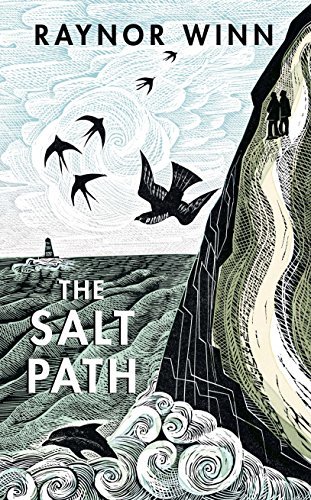
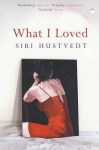 July’s starting book is another I haven’t read. Indeed, I haven’t read any of her books, but if I did, this is the one I’d choose. The book is American writer Siri Hustvedt’s What I loved.
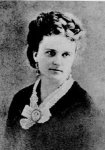
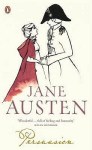 Siri Hustvedt is, I read a long time ago, a Jane Austen fan, so my first link is Jane Austen’s Persuasion (my reviews of
  Another novelist who loves Jane Austen – they are legion in fact – is Helen Garner. She wrote about Austen in her collection of essays, Everywhere I look (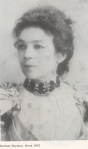
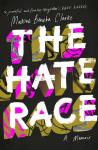 Racism is an issue that we just can’t seem to resolve. Why is it that we can’t all see and respect each other as equal human beings? I have read many books over the years – fiction and non-fiction – that deal with race. However, I’m going to return to Australia, and Maxine Beneba Clarke’s The hate race (
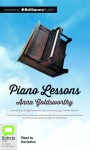 Where to from here? Can I be a little less heavy for my last link? The hate race is a memoir about Clarke’s experience of growing up. I hope it’s not disrespectful to conclude with a very different, and rather happier memoir about growing up, Anna Goldsworthy’s Piano lessons (
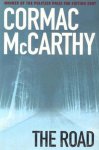 Now to May’s starting book, the 2007 Pulitzer Prize winning novel by America’s Cormac McCarthy – The road. If you haven’t read it, let me tell you that it’s a mesmerising, post-apocalyptic dystopian novel. I loved it, partly because its writing is so spare (see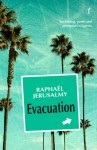
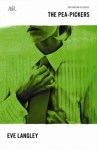 Another, very different road trip underpins Australian writer Eve Langley’s The pea-pickers (
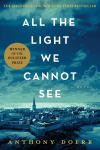 While road trips aren’t the backbone of my next book, American writer Anthony Doerr’s Pulitzer prize-winning novel All the light we cannot see (
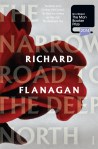 Staying in war-time but moving to a different sort of road, I am taking us to the Thai-Burma railroad as told by Australian writer Richard Flanagan in his Booker Prize-winning novel, The narrow road to the deep north (
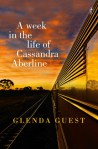 Having mentioned railroads, I’ll stay with them and link to Australian writer Glenda Guest’s A week in the life of Cassandra Aberline (
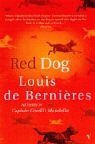 Choosing my final book proved a challenge: I had many to choose from, many I wanted to highlight. In the end I decided to stay in Australia, and go a bit lighthearted. The book is English writer Louis de Berniere’s Western Australia-set Red dog (
 Whispering Gums