The inspiration for these Monday Musings posts comes from all sorts of places, but mostly from online sources and print media. Today’s, however, comes from a catch-up I had last week with my group of litblogger mentees (at which Angharad and Emma from 2017 met Amy from 2018.) It was delightful. You won’t be surprised to hear that a main topic of conversation was reading and writing – during which Emma mentioned Reading Victoria and the stories that have been lobbing weekly into her email inbox. How did I not know about this? Ah well, I do now – better late than never!
Reading Victoria is a Melbourne City of Literature initiative, created in 2018 to celebrate the tenth anniversary of Melbourne’s designation as a UNESCO City of Literature. The aim was to publish “a new piece of writing each week, free and online, themed around a suburb or town in Victoria. From fiction to nonfiction, poetry to prose, the only constant was the titles.” By “constant”, I think they mean that the titles comprise, simply, the name of the place being written about – nothing fancy, just, say, Mallacoota or Ramsay Street. The place, as you say from these examples, could be pretty much any physical place. The About page, linked above, says that by the end of the 2018 they will have published 60 pieces. (Hmmm, lucky Victoria. They seem to have found 8 more weeks in their year. Wish I could!!)
Anyhow, the main page on their simple, clear, website is their Suburbs & Pieces page, which so far lists 57 pieces. It’s now well into 2019 so will there be 60, or have they stopped? I’ve subscribed so will soon find out. It would be lovely if the project continued. The site implies it was just for 2018. It doesn’t say how it is funded and whether the writers (and the editors, Sophie Cunningham, Andre Dao, Elizabeth Flux, Omar Sakr and Veronica Sullivan) are paid? It would be good to know these things?
Meanwhile, back to Suburbs & Pieces. Have you clicked on it already? I probably would have. However, on the assumption that you haven’t, or that you’re not Australian and would like a little more context, I’ll describe the pieces a little more to give you a flavour.
The content is wonderfully varied. I picked some at random to look at – based either on places or authors I know. The first one to catch my eye was Wangaratta (Week 6 by Andy Connor). Wangaratta is an attractive little country town on the Hume Highway between where I live and Melbourne. Connor’s piece is non-fiction, a little memoir, reflecting on all the reasons he had for wanting to escape it and wondering why, upon a return visit, he found you can ” feel nostalgia for a place you never felt you belonged”. Fair question.
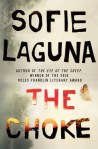 Another non-fiction piece is Sofie Laguna’s Echuca (Week 14), which is on the Murray River near when she set her novel The choke (my review). Her piece is moving, but I particularly like this which gives you a sense of the novelist’s ear and eye:
I read about the Barmah Choke – a place in the Murray where the banks come closer, flooding at certain points in the year, contributing to the wetlands environment. I liked those words – Barmah and Choke and the way they sat together – the first so round, lifting at the final vowel, and the second so tight, hemmed in by biting consonants. The words seemed to contradict each other.
These two pieces are non-fiction but there are also fiction pieces, poems, small plays, interviews. Many well-known published authors are here including Tony Birch, Helen Garner, Alex Miller and Jane Rawson, but there are new-to-me writers too, writers who have been published in journals like Lifted Brow, or are performers, or, even, comic book artists (see Corio, Week 41, Eloise Grills).
Some of the stories have been published elsewhere. At least, I recognised Bruce Pascoe’s fiction piece Mallacoota which appeared, with a few changes and under a different title, in Writing Black. But that doesn’t matter. In fact, one of the great things about short form writing is that it can be “curated” in different places and collections, and that writers can continue to “fiddle” with their pieces for each iteration. Not being a writer, I don’t know, but I’m guessing that sometimes this “fiddling” is to fix up something they don’t like, and sometimes to tailor the piece to its new “home”?
There is of course a very brief bio for each writer at the end of their piece providing their writing background or credentials. That’s particularly useful for writers you don’t know.
For anyone interested in writing about place, this project has a lot to offer. Many of the pieces are gritty, pulling no punches about the places they write about (Sydney Road, Week 38, by Fury is particularly strong), while others are affectionate, or even satirical. There are pieces by indigenous writers (like Tony Birch, Yarra River, Week 46), and by those from migrant backgrounds (like Alice Pung, Footscray, Week 30). When this is published, I will be staying somewhere along the one of Australia’s iconic roads, the Hume Highway, and it is here too: Hume Hwy (Week 48, by Sophie Cunningham).
In some ways this project reminds me of the Library of America Story of the Week program, except that it’s about sharing America’s literary heritage. Reading Victoria, on the other hand, is focused very specifically on contemporary responses to place.
Do you know of any similar initiatives to this – and do they interest you?
 Whispering Gums