After I posted my completion of the AWW Bingo Card yesterday a discussion ensued on Lisa’s ANZLitLovers blog regarding her comment on the dearth of books written by women “set in the outback”. That got me thinking … and it seemed like a good topic to play with in a Monday Musings.
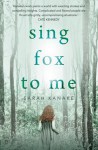 There’s a question to resolve first, that of defining “outback”. What do we mean by it? In my post, I said that I tended to see “the outback” as Australia’s dry remote regions, but for the Bingo I used Sarah Kanake’s Sing fox to me (my review) which is set in a remote mountainous area of Tasmania. Meanwhile, over at Lisa’s blog, a commenter suggested that Lucy Treloar’s Salt Creek is set in the outback (I’ll drop the inverted commas from now on!), to which Lisa replied that she “did think of Salt Creek (because I loved it) but it’s on the coast down on the Coorong, not the outback.”
So, what – or where – is this Outback?
I did some research. Online dictionaries offer broad definitions – “the back country or remote settlements; the bush (usually preceded by the)” (dictionary.com) and “the remote bush country of Australia” (The Free Dictionary). The Advanced English Dictionary, quoted by the Collins Dictionary, has it as “The parts of Australia that are far away from towns are referred to as the outback.”
However, perhaps the best definition for our purposes is that offered by The Oxford Companion to Australian Literature (2nd ed.):
‘Outback’ denotes the remote and sparsely settled inland districts of Australia but does not indicate such extreme remoteness as implied in a similar expression, the ‘Never-Never’.
It goes on to say that the term was used in the latter part of the 19th century, but became more common in the 20th century, so much so that “the original semi-colloquial expression is now an orthodox term”. It also says that while the outback was romanticised, particularly by bush balladists like Banjo Paterson, Henry Lawson “forcibly” presented the other side in his Some popular Australian mistakes where he wishes “that Australian writers would leave off trying to make a paradise out of the Outback Hell”.
I’ve read elsewhere* that the outback is the region “past” the bush. So “past” the bush but not as far as the “Never-Never”! Now, as a librarian, I’m into categorising, but I also recognise that categories need to be loose and flexible. So, I’m going to accept any area that is sparsely populated and that has a challenging or forbidding environment to live in. This means, I’d argue, that mountainous Tasmania could qualify, but that the Coorong is borderline. It’s only 150kms from Adelaide and it is coastal rather than inland (which is where we tend to see the outback), but it does have a rather challenging environment.
Outback literature – past
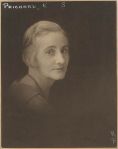
Prichard, 1927/8 (Courtesy: State Library of NSW, via Wikimedia Commons)
I’m not going to write a deeply researched thesis on this, but write primarily from “the top of my head”. Generally – and I am generalising – much late 19th to early 20th century literature set in the outback tended to be about nationalism, identity and the pioneering spirit. There were novels by women about farmers and pioneers (such as Katharine Susannah Prichard’s The pioneers, my review). Miles Franklin wrote her autobiographical novel, My brilliant career, about a grazier’s daughter who wanted a different life from that being mapped out for her, and then of course there’s the remarkable Barbara Baynton whose short stories in Bush studies (my reviews) certainly didn’t “make paradise” of the outback. Life for her characters, particularly women, was hellish. Baynton and Franklin were realists who didn’t buy into the romance of the bush.
Their realism, and that of some of their peers, was picked up through the middle of the twentieth century by writers like Ruth Park (Swords and crowns and rings, which I’ve reviewed and which is set partly in rural areas before moving to Sydney), Kylie Tennant (The battlers) and Eve Langley’s The pea pickers (my review). But, it’s a huge subject and I really want to get to what inspired this post, contemporary women’s writing about the outback. (The Bingo challenge itself though, I should add, didn’t specify contemporary writing.)
Outback literature – current
In the discussion on Lisa’s post, she suggested that today’s outback novels deal with issues like inheritance and indigenous ownership, to which I added climate change and environmental issues. Before continuing, I should mention that there’s a whole genre of writing that I’m not including here, rural romance, because my focus today is literary fiction.
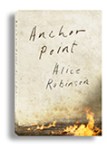 And in this area, contemporary women writers have been contributing some provocative books. Gillian Mears’ historical novel, Foal’s bread (my review), is about hard country life, about conservatism and snobbery which refuses to see substance. Jessica White’s contemporary novel Entitlement (my review), on the other hand, explores issues relating farming succession and indigenous connection to land. Cli-fi, fiction about climate change, can be set anywhere, but not surprisingly a subset is set on farms, which is where Alice Robinson’s Anchor point (my review) sits. She also touches on indigenous ownership issues.
And then, of course, there’s Thea Astley who I’d argue is still “contemporary” given she only died in 2004. Most of her books are set in remote places, including her last novel, published in 1999, Drylands (my review). It is set in “a God-forgotten tree-stump of a town” which is “being outmanoeuvred by the weather. As simple as that. Drought. Dying stock.” Drylands moves us into the dystopian vein and brings me to a book which probably wouldn’t immediately be thought of as an outback novel. I’m talking Charlotte Wood’s The natural way of things (my review), which is set in a remote, isolated place that is critical to the way the plot plays out.

Finally, in this very brief survey, I must mention Indigenous writing. Ali Cobby Eckermann’s Ruby Moonlight (my review) is an historical verse novel exploring early contact between indigenous and non-Indigenous people in remote South Australia. Jeanine Leane’s Purple threads (my review) tells of a mostly-female indigenous family living on a small piece of land in the Gundagai area of New South Wales in the 1950s to 1960s. It explores the experience of being indigenous, being lesser, in a rural community. And Alexis Wright’s Carpentaria (my review) is set in a fictional town called Desperance in northwest Queensland. It depicts conflict between different indigenous groups and with the local multinational mining company, and exposes the psychological, spiritual and physical impact of colonisation on indigenous people.
Note: Bill (Australian Legend) has reminded me in his Bingo post that “the Outback” is a white construct. Mea culpa, he’s right, but I’m going to stick with my paragraph above, because I don’t want to ignore indigenous writing. How hard it is, sometimes, to get out of our own world-view.
So, it’s now very clear to me that women are still writing books set in the outback (by my definition). It’s also clear that the issues they are addressing have moved on – not surprisingly – from those of a century ago.
I’d like to know what you think. Do you accept that these books are “outback” novels? And have they reminded you of other novels by women set in the outback? Now that I’ve started, I could certainly go on …
If you are not Aussie, do you have anything equivalent in your national literature?
* Albeit in Wikipedia, with no citation.
 Whispering Gums