Monday musings on Australian literature: Listen to Indigenous Australian authors

BannerSome years, I’ve written an indigenous Australian focused Monday Musings post to start and conclude NAIDOC Week and Lisa’s ANZLitLovers Indigenous Literature Week. I have been researching a topic for this year’s second post, but it’s taking longer than I expected, so have decided to hold it over to next year. Meanwhile, having committed to a second post, I decided to change tack and instead share some podcasts comprising interviews with Indigenous Australian authors …

So, I’ve put together a sample list of interviews conducted this year with Indigenous Australian writers. They are from ABC RN programs (AWAYE!, The Book Show, and Conversations) and The Wheeler Centre. You can search those sites for earlier interviews with these, and other writers.

I am listing them alphabetically by author to make it easy for you to see if your favourite is here! And I am providing website links, but most if not all of these will be available through podcast services on tablets and smart phones.

Tony Birch

Fighting for family in Tony Birch’s The White Girl, The Book Show, (ABC RN), 24 June 2019, 17mins
Book coverBirch speaks to Claire Nichols “about trauma, bravery and writing stories of the past” regarding his latest book The white girl (my review) He discusses, among other things, the “contradictory and unpredictable” way in which the Act (which limited the freedom of indigenous people to travel, and made children wards of the state) was enforced in towns, and how this increased the level of insecurity and anxiety felt by indigenous people, somehting experienced by his character Odette Brown. The reason for this unpredictability could be incompetence in the local police, or the presence of a genuinely benign policeman, or because there was no law in the place or town.

Stan Grant
Book coverConversations: Stan GrantConversations (ABC RN), 24 April 2019, 52mins

Coinciding with the publication of his latest book Australia Day (about which I reported in another conversation with him), Grant talks with Richard Fidler about his book, and specifically his thoughts about the push to “change the date” of Australia Day. He believes, as the show’s promo says, “that … for now, 26 January is all that we are and all that we are not” and thinks that there are deeper questions to discuss about who we are than simply changing the date. I like his comment on protest – his dislike of “certainty” and of “slogans” – because I feel similarly uncomfortable, much as I agree with the heart of most protests. “I like to live in the space between ideas”, he says.

Melissa Lucashenko

Melissa Lucashenko in conversation at Sydney Writers Festival, AWAYE! (ABC RN), 11 May 2019, 33mins

Melissa Lucashenko, Too Much LipConversation with AWAYE!’s Daniel Bowning, including Lucashenko reading from Too much lip (my review). The show’s promo says “we talk about our grannies, the meaning of place, the role of humour in serious literary work, the fetishisation of Black suffering and why she would never kill off one of her characters.” Lucashenko talks about how the book is about oppressed people (of whatever ilk) standing up. (As she says on another podcast, “if you don’t fight you lose”.) Because she included some negative depiction of indigenous lives (particularly black-on-black violence), she expected backlash from the black community, but it hasn’t come. She feared being honest about this issue at this time in Australia’s history – was it the right time, she wondered – but then realised that “silence is violence”. She says the job of the writer being “to see what’s going on and write about it”.  Oh, and she wanted to write a funny book – which she certainly did.

Other interviews with Lucashenko on this book are available on ABC RN’s The Book Show, including one after its Miles Franklin shortlisting (12 July 2019, 10mins).

Bruce Pascoe
Book coverA truer history of Australia, AWAYE!, 25 May 2019, 12mins

Pascoe talks about Young dark emu, his junior version of his bestselling Dark emu (my review). It includes a reading by Pascoe from the book. He talks about the importance of teaching the true history of Australia to young people in schools, arguing that “ignorance makes you scared, knowledge makes you wonder”.

Alison Whittaker
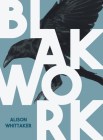
Book coverAlison Whittaker in conversation at Sydney Writers Festival, AWAYE!, 18 May 2019, 32mins

Whittaker talks about (and reads from) her latest work, Blakwork, reviewed for Lisa’s ILW week by Bill and Brona. She talks about the “transformative power of poetry” and says her aim is “to provoke and upset white readers because they are the main readers” of poetry. This issue, that we middle class, white, educated people are the main readers of indigenous writing, is something I often think about. It’s a complex interaction, methinks. Whittaker talks about the paradox of using the English language, the language of the imperialists, to convey feelings and ideas from a very different culture.

An aside. I appreciated her discussion of the word “important” as in, “an important book”. I agree with her dislike of it, and avoid it in my reviews, albeit the temptation can be great. She says that “important is not an interesting thing to say”. The challenge for me, often, is to find the “interesting thing to say” that is also succinct!

Tara June Winch
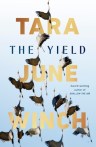
Book coverDocumenting ‘the old language’ in Tara June Winch’s The Yield, The Book Show (ABC RN), 15 July

Winch talks to Claire Nichols about her new book, The yield (reviewed by Lisa/ANZlitLovers), and also reads from the book. In the book, the character Albert Gondiwindi is writing a dictionary of Wiradjuri language. He says that “every person around should learn the word for country in the old language, the first language – because that is the way to all time, to time travel!” Given the current interest in reviving indigenous languages, and the criticality of using our own language to express our own culture, this book sounds really timely.

Alexis Wright

Alexis Wright, TrackerAlexis Wright in conversation with Elizabeth McCarthy, Books and Arts at Montalto, The Wheeler Centre, 14 January 2019 (though recorded in 2018), 1hr 3mins

Wright talks to Elizabeth McCarthy about her collective biography Tracker, which won the 2018 Stella Prize and the Non-Fiction Book Award in the Queensland Literary Awards. The interview focuses mostly on Tracker Tilmouth himself, rather than on the form of the book, and the approach Wright took to writing it.

Do you listen to literary podcasts? If so, I’d love to hear your favourites.

Monday musings on Australian literature: early Indigenous Australian literature

BannerSince 2013, I’ve written an indigenous Australian focused Monday Musings post to coincide with NAIDOC Week and Lisa’s ANZLitLovers Indigenous Literature Week. NAIDOC Week, for non-Aussies out there, occurs across Australia each July “to celebrate the history, culture and achievements of Aboriginal and Torres Strait Islander peoples”. One way litbloggers can recognise and celebrate it is to read indigenous Australian writers and contribute to the list of reviews maintained by Lisa on her blog. (Lisa also accepts reviews of indigenous authors from other nations.)

NAIDOC Week LogoThis year’s NAIDOC Week theme is VOICE, TREATY, TRUTH. How better to celebrate this than through a post on early indigenous Australian literature which, like that of today, aimed to share truths about indigenous Australian experience. It’s a tricky topic because it’s only been relatively recently that indigenous Australian stories (novels, poetry, short stories, plays, memoirs) have been published. However, indigenous people have been writing since the early days of the colony.
This post can only be a brief introduction. The best source for the topic is, I believe, the Macquarie Pen anthology of Aboriginal literature (2008), edited by Anita Heiss and Peter Minter. Indigenous Australian academic Mick Dodson writes in the Foreword that it contains “a range of works that any serious student of Aboriginal history, life and culture will find valuable”. It also, he says, encapsulates Aboriginal “political and cultural activisms”.

The anthology starts with the first-known piece of written text in English by an Aboriginal author, a letter written by Bennelong in 1796 not long after he returned from England. Editors Heiss and Minter write that the anthology contains

writing ranging from the journalism, petitions and political letters of the nineteenth and early twentieth centuries, to the works of poetry and prose that are recognised widely today as significant contributions to the literature of the world.

They go on to say that “Aboriginal literary writing grew directly from a complex and ancient wellspring of oral and visual communication and exchange”. This is something that at least some non-indigenous Australians recognised. FS, writes in The Age in 1938, for example, about indigenous Australian “rock literature” or “picture writing”. FS is responding to a planned German scientific expedition to northwest Australia which was intending, among other things, to “study … rock carvings, cave paintings and similar work on wood to ascertain whether it is a desultory art or a method of writing” [my emph.] S/he believes this goal is unnecessary, because the “rock literature” clearly demonstrates that indigenous Australians have had a “literature” long pre-dating the English language.

Anyhow, back to Heiss and Minter who discuss the necessary nexus between the literary and the political in indigenous literature. They note that 19th century Aboriginal literature primarily comprised “genres that are common to political discourse” – letters, petitions and chronicles – and that between Federation and the 1960s, political manifestos and pronouncements of Aboriginal activist organisations were added to these genres.

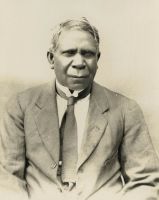
David Unaipon (State Library of NSW, Public Domain)

It wasn’t until 1929, in fact, that the first book by an indigenous Australian writer was published, David Unaipon’s Native legends. A report of the book’s publication appeared in January 1930 in South Australia’s Border Chronicle. The reviewer says (using the sort of tone and language typical of the time):

Not long since there entered the editorial den a full blood aboriginal who said, in that “moistened” voice that the Australian abo always wears, that he was distributing the only book ever written by an Australian aboriginal in the English language … The legends are told in English that will cause wonder in anyone who has tried to master any speech other than his mother tongue. Claudian, the Latin poet, was born an Egyptian, educated as a Greek, and the world has marvelled ever since that he became one of the great masters of Roman speech. Yet Unaipon, is in his way, as great a marvel as Claudian, since his natural atmosphere differs more widely from that in which he works than did the civilization of Claudian’s Egypt and Greece differ from that of Rome. The style of David’s writing is correct by all the formal rules, but differs widely from ordinary written speech. His legends are fairy tales in color, and in “The Song of Hun garrda”, which is an invocation to the God of Fire, he gets into a highly poetic region. Likewise, he is mysticc and writes of “earthly body subjective consciousness”, “earthly life experience”, as if those things had a real meaning to him, which is more than can be said of some of those who talk on such matters in their native speech. It is an interesting little contribution to Australian letters.

Heiss and Minter say the book is “literary in its adaptation of his cultural imagination to particular modes of authorship and narration”. They see his pioneering role in the development of indigenous literature, saying he “gave subsequent Aboriginal writers a significant precedent by which to imagine their authorship of a culturally grounded future literature”.

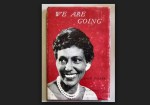
Book coverIt would be over thirty years before another book by an indigenous writer was published, although during that time “letters, reports and petitions” continued to be written in support of “Aboriginal rights and constitutional transformation”. One of these activists was the poet and activist, Kath Walker (later Oodgeroo Noonuccal), and she was the author of that second book. Published in 1964, We are going was mistakenly described by The Canberra Times as “the first book written by an Australian aborigine”. Heiss and Minter again note its pioneering role, saying it “marks the arrival of Aboriginal poetry as one of the most important genres in contemporary Aboriginal political and creative literature.”

It took more time, however, before indigenous writers got a firm foothold. Heiss and Minter argue that it wasn’t until the late 1980s that “Aboriginal writing was firmly established as a major force in Australian letters. David Headon writing in the ANU’s Woroni in 1990 would agree:

Certainly Aboriginal literature is a growth industry of substantial proportions. The sheer number and range of books now available is all the more surprising when one considers that the first [!] published work by an Aboriginal writer, Oodgeroo Noonuccal’s (Kath Walker’s) book of poems, We Are Going, was published in 1964, and at the beginning of the 1980s the only black writers with any kind of national profile were Walker, Jack Davis, Kevin Gilbert, Mudrooroo Narogin (Colin Johnson) and possibly Bobbi Merritt and Faith Bandler. None of these were well-known outside their community. Australian literature has been profoundly altered by the emergence of so many Aboriginal texts in the last 10 hectic years.

He reviews an unknown-to-me 1990 anthology, the gorgeously titled Paperbark. It predates Heiss and Minter’s Macquarie anthology by nearly two decades. Published by the University of Queensland Press and described by them as “the first collection to span the diverse range of Black Australian writings”, it includes writings from the 1840s to 1990. The Aboriginal and Islander authors include “David Unaipon, Oodgeroo Noonuccal, Gerry Bostock, Ruby Langford, Robert Bropho, Jack Davis, Hyllus Maris, William Ferguson, Sally Morgan, Mudrooroo Narogin and Archie Weller.” Like the Macquarie anthology, it also includes “community writings such as petitions and letters”.

Headon’s review is well worth reading for his references to writings, many of which are new to me, but I’m going to leave him on his following point:

Books like Paperbark are in the vanguard of what will surely be one of the great (Australian) cultural debates of this decade: how long can an ex-colony like Australia allow some of its universities to continue to indulge their colonial habits? How long will Old and Middle English, 17th- and 18th-century English literature be the literature major staples at our universities? When will the dominant pressure be post-colonial? Change, Paperbark proclaims, is afoot.

Good question! Interestingly, in 1984, the ANU did offer a 10-week adult education course in ‘Aboriginal Literature’. It may, of course, have only been run that year.

Anyhow, I hope you have enjoyed this little introduction to what I’ll call the first wave of indigenous Australian writing.

Past NAIDOC Week-related Monday Musings

Monday musings on Australian literature: about Arnhem Land

When this post goes live (during NAIDOC Week) I will be in Australia’s Top End, touring a region called Arnhem Land – and will most likely be incommunicado. Located in the north-east of the Northern Territory, it is named after the ship captained by Dutchman William van Colster who visited the area in 1623. The ship, the Arnhem, was named for the city of the same name, in the Netherlands.

According to Wikipedia, the region has a population of around 16,000, of whom 12,000 are Yolngu, the traditional owners. The main town is Nhulunbuy, with other major population centres being Yirrkala, Gunbalanya, Ramingining, and Maningrida. Mr Gums and I will be visiting most of those places during our 12-day tour. Arnhem Land is known for the fact that a large percentage of its indigenous people live on small outstations on their traditional lands, with minimal western cultural influence. Arnhem Land is almost like a separate country – and visitors need a permit to enter.  Many of its leaders continue to push for a treaty that would allow the Yolngu to operate under their own traditional laws.

East Alligator River, western Arnhem Land

Arnhem Land borders, on its west, Kakadu National Park, which we have visited twice in the past. On both occasions we have done short indigenous-led tours of that border area – one on the East Alligator River, and the other into the country as far as the Injalak Art Centre. Those tours introduced us to some of the culture – the law, the art – of the people. It’s gratifying to feel our understanding of our country growing through these experiences.

However, for my Monday Musings of course, I want to share something of the region’s literary heritage, which given that the traditional culture there is oral, includes song. This list is very little, highly eclectic and very selective.

Some musicians

Yothu Yindi

Probably because I lived some of my childhood years in northwest Queensland, Arnhem Land was familiar to me, but it didn’t really, I think, become known to many Aussies until the band Yothu Yindi burst on the music scene in the early 1990s. The group was formed in the mid 1980s, but it was their song “Treaty” (I did mention of treaty in my intro, after all!) from their album Tribal Voice which brought them to national attention in 1991. The lead singer was Mandawuy Yunupingu and his nephew Dr G Yunupingu, about whom I posted last week, was an original member. The song “Treaty” was a collaborative work by the two Yunupingus, and other members of the band, and non-indigenous museum Paul Kelly. “Treaty” has gone on to become one of Australia’s most significant songs, being named in 1991 by Australasian Performing Right Association (APRA) as one of the Top 30 Australian songs of all time, and being added, in 2009, to the National Film and Sound Archive’s Sounds of Australia registry.

Yothu Yindi could occupy a whole post to themselves, so please check the link I’ve provided if you are interested. They have played a major role in promoting and developing Yolngu culture, to both Yolngu and wider Australia’s benefit.

There are many performances of the song, which includes words in language and English, on YouTube, including this one published by mushroomvideos. Here are a few lines:

This land was never given up
This land was never bought and sold
The planting of the union jack
Never changed our law at all

Dr G Yunupingu

I won’t add much here, because I spoke about his legacy in my above-mentioned post on Gurrumul, the documentary film about him. Besides the fact that his music is beautiful, and that he sang about his culture (and lived his culture for all to see), Dr G also made a significant contribution to Australian culture by writing and performing most of his songs in the languages of his region. The pride in culture that singing in language gives to his people can’t be underestimated.

A writer from Arnhem Land

Marie Munkara

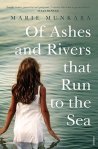
Marie Munkara, Of ashes and rivers than run to the seaA member of the Stolen Generations, Munkara was born on the banks of a river in Arnhem Land, but she was taken, at the age of three, to a mission at nearby Melville Island (part of the Tiwi Islands). From here she was passed on to European foster parents, and didn’t see her mother again until she was 28 years old. You can read some of her story at SBS. I have reviewed her glorious David Unaipon Award winning book, Every secret thing, and plan to read her memoir Of ashes and rivers that run to the sea while I’m in Arnhem Land (for Lisa’s ANZlitLovers Indigenous Literature Week which coincides with this year’s NAIDOC Week. This year’s theme is, appropriately, Because of her we can.)

A blast from the past

Of course, I had to check out the digitised newspapers in Trove, and by narrowing my search to “Arnhem Land Literature” I retrieved a small number of hits, all from the 1930s, only two of which specifically related to Arnhem Land. Both were short stories by non-indigenous writers about Japanese pearlers in the region. I’ll just share one, because it’s by one of Australia’s most popular authors of the day, Ion Idriess (1889-1979). According to Wikipedia (the link’s on his name), he spent some time, after returning to Australian after World War I, travelling in the remote Cape York region, and working with pearlers and missionaries in the Torres Strait islands.

His story, titled “The massacre on the No Gawa Maru”, was published in Sydney’s The Sun on July 11, 1936, and clearly draws from his knowledge of pearling. It’s about a Japanese pearl-shell poacher, Captain Toyama of the “No Gawa Maru”, who “knew he was cruising here against the laws of his own Government and the Australian.” He knows about the Three-Mile limit, and he’s also aware of the Australian patrol boat, the “Larakia”, with its machine gun. It’s “nervy” business this pearl-shell poaching, but they are driven by “fatalism and greed and hope”, the idea of “easy wealth, quickly won.” (Something Idriess likens to the Australian gold field mania which also sent men to “lonely graves”.)

Anyhow, Idriess sets the scene:

They had passed Groote Eylandt lying away eastward with its hills rising as if from a great grey cloud upon the sea. Captain Toyama now stared for’ard where along the Arnhem Land coast islands were taking shape in silhouettes of tree-tops. Presently he saw the sun sheen on straw-colored grass.

Toyama’s crew tell stories of brutal indigenous attacks on boats, too, and of indigenous men selling their women “cheerfully” and the women going “eagerly”, but to accept this “is a death trap. Their women are only a snare. They kill for blood lust and loot.” He refers here to King Wongo of Caledon Bay, who was a real person. Idriess’ story is a gruesome, dramatic story about an indigenous attack on Toyama’s boat. According to the Australian Dictionary of Biography (ADB), it appears that Idriess bought into the idea of Wonggu/Wongo as an “evil genius” behind this sort of brutality, but not all agreed. ADB’s article on Wonggu concludes:

A man of influence, authority and charisma, he represented a romantic and little known aspect of Northern Territory history. More importantly, the events in which he was involved drew attention to the issues of Aboriginal justice and rights to land.

Trove, which I’ve only dipped into about this, certainly includes some very positive articles about Wonggu/Wongo.

The other story is by Keith Ellis, and is called “Sampans”. You can read it online if you like.

I hope that by the time we’ve ended our Arnhem Land tour we’ll know not only more about contemporary culture, but about some of its history and past characters too. I’ll report back if we do!

PS: There’s a good chance I will not manage to post a Monday Musings next week. Enjoy the break!

Monday musings on Australian literature: Reading indigenous literature

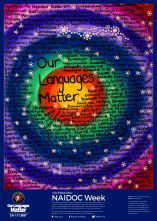
2017 National NAIDOC Poster (used under Creative Commons licence, CC BY-NC-N4 4.0)

Each July, as well as contributing at least one review to Lisa’s ANZLitLovers Indigenous Literature Week, I try to write a Monday Musings post related in some way to NAIDOC week which, as Aussies will know, is a week, usually the first full week in July, during which activities are planned to “to celebrate the history, culture and achievements of Aboriginal and Torres Strait Islander peoples”. Each year there is a theme, and this year it’s a good one, Our languages matter.

I have for as long as I can remember – since high school anyhow – been interested in social justice and civil rights (as we called it in the 1960s & 1970s). I read a lot back then about indigenous Australians and African-Americans in particular, such books as Douglas Lockwood’s I, the Aboriginal and Katharine Susannah Prichard’s Coonardoo. These books helped fire my feelings about injustice: they showed me some of the impacts of the inequities stemming from racism and of course they touched my emotions.

However, the only indigenous Australian writer I remember reading was Kath Walker as she was known then (or Oodgeroo Noonuccal as she became), until I read Sally Morgan’s My place in 1988. These writers started to help me see and feel, under the skin, the experience of being indigenous in Australia.

Now, if you keep up with discussions about the value of reading, you are sure to have read the various arguments for, or theories about, how reading can improve empathy. There was a Scientific American article in 2013 which reported that “Researchers [Emanuele Castano, a social psychologist, and PhD candidate David Kidd] in New York City have found evidence that literary fiction improves a reader’s capacity to understand what others are thinking and feeling.” Another article in The Washington Post in 2016 reported on cognitive psychologist Robert Oatley’s research of over a decade and his conclusion “that engaging with stories about other people can improve empathy and theory of mind”, resulting in improved “social ability”.

There are the naysayers to these arguments, of course, and I don’t know if reading fiction has increased my ability to empathise or not, but I can’t help agreeing with novelist Joyce Carol Oates’ statement that “Reading is the sole means by which we slip, involuntarily, often helplessly, into another’s skin.” “Sole” may be pushing it too far, but otherwise here’s my experience … and I fear I’m a bit clumsy in putting it but hope it makes sense!

I have become aware in recent years that my understanding and awareness of indigenous lives has deepened beyond the intellect and simple empathy, to a level of “knowing”.  In other words, I knew about – and could empathise with – the sense of loss, anger, disempowerment that those earlier, mostly non-indigenous writers described, but now that empathy is increasingly underpinned by knowledge of how dispossession plays out. I can never know what such historic dispossession does to a person’s psyche from personal experience but reading writers like Kim Scott, Alexis Wright, Jeanine Leane, Marie Munkara and many others, has given me the next best thing.

To labour it a little more: because I “know” my white anglo culture, I can can more quickly understand the context for a story about a gay man or an abused wife even though I’m neither of these. The leap to real empathy, which I’m arguing requires a thorough understanding of the underlying culture, is not a big one when people come from my own world. When they don’t, I can empathise at a human level – at the level any of us can when we see someone else in pain, struggling, angry, triumphant, and so on – but I sense that it’s a shallow empathy that doesn’t comprehend the forces behind that pain (etc). How do you get to comprehend those forces?

Well, Jeanine Leane, as I wrote in a recent post, says you need to immerse yourself in the “other’s” culture, in her case, indigenous Australian culture. For most of us, however, this is very difficult, if not impossible, but Leane argues that reading indigenous literature, that is writings by indigenous people about indigenous people’s lives, is a way in which we can engage with the culture. In her book, Position doubtful, which I reviewed recently, Mahood talks about the moments she waits for when, in a sense, a lightbulb turns on, when she experiences “a cognitive shift”. It’s that cognitive shift that I feel happening as I read more and more indigenous authors (of both fiction and non-fiction, particularly memoirs). It manifests in the fact that I don’t have to recalibrate my bearings so much when I open a book by an indigenous author. Certain things are givens – such as the original dispossession, the stolen generations, relationship to country. I don’t have to work to understand these, as I read, they’re there.

I hope this doesn’t repeat too much what I’ve written before, and I hope that it doesn’t sound arrogant, because it’s not meant to. I certainly know that I have much more to learn and understand. However, while I read and listen to commentaries in papers, on television, via the radio, it is through the indigenous writers I’ve read that what once felt more like information is now becoming a truth. I think that’s a powerful thing – and is why I’d argue that more Australians need to read more indigenous authors.

Monday musings on Australian literature: Spotlight on Larissa Behrendt

Courtesy: Annette Marfording

Courtesy: Annette Marfording

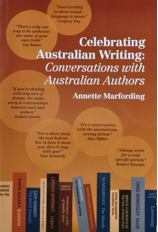
This is the fourth in my occasional series of Spotlight posts inspired by Annette Marfording’s Celebrating Australian Writing: Conversations with Australian Authors, and this time I’m featuring an indigenous author to coincide with Lisa’s (ANZLitLovers) Indigenous Literature Week.

Larissa Behrendt is the perfect subject for what is also NAIDOC Week, not only because she has a few books under her belt, but also because her new book published earlier this year, Finding Eliza, explores how colonisers have written about indigenous people. Behrendt is a Eualeyai/Kamillaroi woman, and in her interview with Marfording describes herself as a Type A person. Looking at what she has achieved in her less that 50 years I can well believe it. She is currently Professor of Indigenous Research and Director of Research at the Jumbunna Indigenous House of Learning at the University of Technology, Sydney. She has won awards for her fiction, and been on the boards of various arts organisations including the Sydney Writers Festival, Bangarra Dance Theatre and the Museum of Contemporary Art. She was the National NAIDOC Person of the Year in 2009 and NSW’s Australian of the Year in 2011. As a lawyer, she has served on many boards, review committees and land councils, most of them indigenous-related. The list is impressive.

Marfording’s interview occurred in August 2010. As she does with each of her interviews, Marfording commences with a brief biography of her subject at the time of the interview, and follows the interview with a biography update to the time of publication. It’s nicely done.

I particularly loved this interview not only because Marfording asks, as she does in all the interviews, thoughtful, relevant questions showing her understanding of the subject, but because in this interview she covers some issues of particular interest to me. More on that anon.

Marfording asked Behrendt, as she tends to ask all award-winners, what winning awards means to her. Behrendt admits that it is affirming to win an award but also says that the richest prize is when a reader tells her that a book “touched” them or that it’s “like me and I never see myself in a book”.

Some of the questions Marfording asked relate to the autobiographical nature of her work, as her two novels, Home (2004) and Legacy (2009), both draw strongly on her family, with Home looking particularly at the stolen generation issue and Legacy being more specifically about her father and her relationship with him. She said that although Home was heavily fictionalised, her father found it hard to read. “It was flattering to me as a writer,” she said, “because it meant I’d got it right.”

Marfording also questioned Behrendt about the fact that her two novels also tend to be issue-based. As a fiction reader, I loved Behrendt’s response. She said that, as a lawyer, she has advocated and written factual pieces on many of the same issues, but that

telling a story that actually explains how a policy can impact on somebody’s life so personally, telling that story from a really human point of view, can influence more people than the most eloquent legal argument, especially when you can talk to somebody through the universals that they understand, like the love between siblings, the love between parents, etc.

I love this reference to universals – to the things that bring us all together. She mentions them again later in the interview, but here I want to share her gorgeous language. She said:

I’ve got very strong opinions, and I think it was a real learning process to learn that sometimes it’s through the whisper of a story that you can influence people more than through the louder, shouting style of activism.

There were other questions too, but I want to conclude on two that focused on her as an indigenous writer, one on labelling, and the other on the issue of non-indigenous people writing about indigenous people (which, as you know, I’ve raised here a few times).

Regarding labelling, Behrendt described it as a complex question. While she has no problem being identified as an indigenous writer, she said it can become problematical when writers are pigeonholed. For example, at the Byron Bay Writers Festival she was invited on a panel discussing “fathers”, a panel that recognised the diversity of perspectives, but in many festivals indigenous writers are lumped together on a panel about indigenous writing. She said that:

What we like to say is that within our writing – and I think that’s true of every Aboriginal author – there are universal themes about family, about love, about betrayal, about hurt, about anger and jealousy, and these are the things that actually unite us.

It’s a problem, in other words, when indigenous authors are seen to be writing only about indigenous subjects. Love it. The comment reminded me of Ellen van Neerven’s Heat and light (my review) in which some of the stories didn’t focus on or clarify race or ethnicity of the characters. They were just about people. For Behrendt, any story – whether the focus is an indigenous issue or not – is, essentially, about universals.

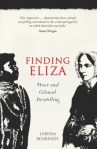
Larissa Behrendt, Finding ElizaAnd finally, that issue about non-indigenous writers writing on indigenous people. Again Behrendt is thoughtful rather than dogmatic. She says she’s always interested in how non-indigenous people portray indigenous people – hence, obviously, Finding Eliza – but that it’s difficult for them to do it authentically because they don’t know enough about Aboriginal life and culture. The reverse is a little different because Aboriginal people are “so bombarded with the dominant culture”. She identifies some writers who have not done it well – albeit she respects their hearts – and then names some who have impressed her. Kate Grenville in The secret river is one. Grenville, she says, doesn’t try an Aboriginal point of view. Instead

through using her non-indigenous characters, by showing their ignorance, their violence, their sense of entitlement, their fear, she tells a very strong story about Aboriginal experience. You read her book and you know exactly what it was like for Aboriginal people.

Grenville talks in Searching for The secret river about the issue of presenting the indigenous perspective. It was something she thought carefully about. Nice to see she’s been vindicated, in the eyes of Behrendt anyhow. The other effective portrayal she offers is Liam Davison’s The white woman. (Davison was tragically killed in the MH-17 disaster, and Lisa reviewed The white woman, as well as his other novels, as a tribute to him.) Behrendt says that Davison tells the story of massacres in Gippsland but relates

the story from the perspective of somebody who goes out as part of those hunting parties, and by getting into the psyche of the kind of person that can actually commit the most brutal aspects of a colonisation of a land, he tells a very strong story about Aboriginal people.

So, while she doesn’t see it as a no-go zone for non-indigenous writers, she does believe that the level of ignorance makes it a difficult challenge.

Another great interview with a writer who’s been in my list of must-reads for a long time. I’ll be starting soon with a short story. Watch this space.

Previous Spotlight posts:

Annette Marfording
Celebrating Australian Writing: Conversations with Australian Authors
Self published, 2015
273pp.
ISBN: 9781329142473

Note: All profits from the sale go to the Indigenous Literacy Foundation. To find out where you can purchase this book, please check Marfording’s website.


Monday musings on Australian literature: Recent books by Indigenous Australians

Next week, from 3rd to 10th of July, Lisa at ANZLitlovers is running her now annual Indigenous Literature Week. While she usually holds it during or near Australia’s NAIDOC Week in order to support that program’s goal of increasing awareness and understanding of indigenous Australian culture, she does in fact accept reviews of works by any indigenous authors worldwide. In other words, you don’t have to be or read Australian to join in, so if you’d like to raise awareness of an indigenous culture near (or not so near) you, do head over to her blog (link above) and make your contribution.

Lisa has included links to lists of indigenous Australian books, including her own, to get people started, so I’m not going to repeat that. But, for my own benefit as well as to support Lisa’s week, I thought I’d suss out and share some works – across genres and forms – that have been published in the last 12 months or so. It’s a serendipitous list:

  • Tony Birch, Ghost riverLarissa Behrendt’s Finding Eliza: Power and colonial storytelling (UQP, 2016): historical analysis of how indigenous people – in Australia and elsewhere – have been portrayed in stories by the colonisers.
  • Tony Birch’s Ghost river (UQP, 2015) (my review): novel set in working class Melbourne in 1960s; long-listed for the 2016 Miles Franklin Award.
  • Ali Cobby Eckermann’s Inside my mother (Giramondo, 2015): poetry collection.
  • Lizzie Marrkilyi Ellis‘ Pictures from my memory: My story as a Ngaatjatjarra woman (Aboriginal Studies Press, 2016). (Yvonne’s Stumbling through the past review): memoir by a Central Australian woman.
  • Stan Grant’s Talking to my country (Lisa’s ANZlitLovers review): memoir, exploring the complicated experience of growing up black in a white dominated world.
  • Ambelin Kwaymullina’s The foretelling of Georgie Spider (Walker Books, 2015): the last in her Young Adult fantasy series, the Tribe trilogy, set in a post-apocalyptic world in which Aboriginal culture and philosophy play a significant role.
  • Marie Munkara’s Of ashes and rivers that flow to the sea (Vintage, 2016): memoir about her search for her origins. (I read her David Unaipon award-winning Every secret thing, and loved her voice)
  • Lesley and Tammy Williams’ Not just black and white (UQP, 2015) (Lisa’s ANZLitLovers review): won the David Unaipon Award in 2014

I decided to focus just on 2015 to 2016, but in my research I included the new biennial Indigenous Writers Prize in the New South Wales Premier’s Literary Awards, and found that the 2016 joint winners were books published in 2014, so I’m including them too:

  • Bruce Pascoe’s Dark Emu (Magabala Books, 2014) (Lisa’s ANZLitLovers review): analyses pre-colonial indigenous Australian culture suggesting that it was more “settled” than the common “hunter-gatherer” assumption. (I’ll be reading this with my reading group later this year.)
  • Ellen van Neerven’s Heat and light (UQP, 2014) (my review): collection of stories, some connected, some not, and including a longform speculative story, about living as an indigenous person in contemporary Australia.

But what am I hoping to read? First up, an older book, Ali Cobby Eckermann’s Ruby Moonlight, followed by, if I have time, a newer one, Stan Grant’s Talking to my country.

Do you make a point of reading indigenous literature? And do you have favourites?

Monday musings on Australian literature: David Unaipon Award

David Unaipon (Courtesy State Library of NSW, via Wikipedia. Public Domain)

David Unaipon (Courtesy State Library of NSW, via Wikipedia. Public Domain)

I’ve mentioned the David Unaipon Award several times in passing but have never devoted a post specifically to it. Today seemed to be a good time to do it, as it would mean I’ve bookended this year’s NAIDOC week with Monday Musings posts devoted to indigenous literature.

Just to recap, David Unaipon is credited as the first indigenous author to be published, with a commissioned book on Aboriginal Legends in the early 1920s. He is featured on Australia’s $50 note. To commemorate him, the David Unaipon Award for unpublished Aboriginal and Torres Strait Islanders was established in 1988, and has had a rather chequered career. In 1999, it became part of the Queensland Premier’s Literary Awards. When those awards were abolished in 2012 by new Premier Campbell Newman, it was carried over to the new Queensland Literary Awards.

I have read and reviewed several past winners on this blog: Ellen van Neerven’s Heat and Light (2013), Jeanine Leane’s Purple Threads (2010), Marie Munkara’s Every Secret Thing (2008), and Tara June Winch’s Swallow the Air  (2004, originally titled Dust on Waterglass). 

But this is only a start. The list of winners, from the first award made in 1989, represents a useful list for anyone looking for works by indigenous authors to read. Here are a few writers that I’m keen to follow up:

  • Samuel Wagan Watson, a poet, who won in 1999 with Of Muse, Meandering and Midnight. According to the New South Wales Writers’ Centre this work is “a collection of moments: snatches of life in urban Brisbane, glimpses into childhood recollections”. Watson is a well-known raconteur, and during NAIDOC Week last week, I heard him recite a very entertaining, gently subversive poem “A message to my publisher”. It reminded me that I need to keep him high in my TBR list, either this book or one of his later ones.
  • Larissa Berendt, a writer, lawyer and academic, who won in 2002 with her novel Home. This novel also won the Commonwealth Writers Prize for Best First Novel in the south-east Asian/South Pacific region. It explores the complex notion of “home” for people for whom home has become a fraught notion: they’ve been dispossessed, stolen, or separated for a variety of reasons from their roots and significant connections. Her second novel, Legacy, won the Victorian Premier’s Literary Award for Prize for Indigenous Writing in 2010. She is frequently recommended to me, and so is also high on my TBR list.
  • Gayle Kennedy, a writer who won in 2006 with her “road trip” novel Me, Antman and Fleabag. It was also shortlisted for the Victorian Premier’s Literary Award and Deadly Award. She was featured in a Guest Post on the Australian Women Writers Challenge last week so, rather than add my own words here, I’ll just point you to there! Fair enough? (There’s an added incentive for visiting that post. If you read and review a work by an indigenous Australian in July you can go in the draw to win a copy of Me, Antman and Fleabag.)
  • Dylan Coleman, a more recent winner of the award, winning in 2011 with Mazin’ Grace. It was also shortlisted for the Commonwealth Book Prize and longlisted for the 2013 Stella Prize. Like Marie Munkara’s Every secret thing, its subject is mission life, a significant part of indigenous Australian experience and a story that needs to be told.

These are just four from a much longer list. I have no idea how many of these books are still in print, but hopefully most if not all are available in libraries. I wonder?

Monday musings on Australian literature: NAIDOC Week 2015

Australians will be aware that this week, July 5 to 12, is NAIDOC Week. NAIDOC originally stood for National Aborigines and Islanders Day Observance Committee, the committee that was once responsible for organising national activities during NAIDOC Week. However, this acronym has now become the name of the week, which suggests just how significant, and well-accepted, this week is now on Australia’s calendar.

The Week aims, as you would expect, “to celebrate the history, culture and achievements of Aboriginal and Torres Strait Islander peoples”, and in doing so, to encourage all Australians to recognise and better understand indigenous Australians. Each year the week has a theme, and this year it is We all Stand on Sacred Ground: Learn, Respect and Celebrate.

This theme, according to the NAIDOC website

highlights Aboriginal and Torres Strait Islander peoples’ strong spiritual and cultural connection to land and sea. The theme is an opportunity to pay respects to country; honour those who work tirelessly on preserving land, sea and culture and to share the stories of many sites of significance or sacred places with the nation.

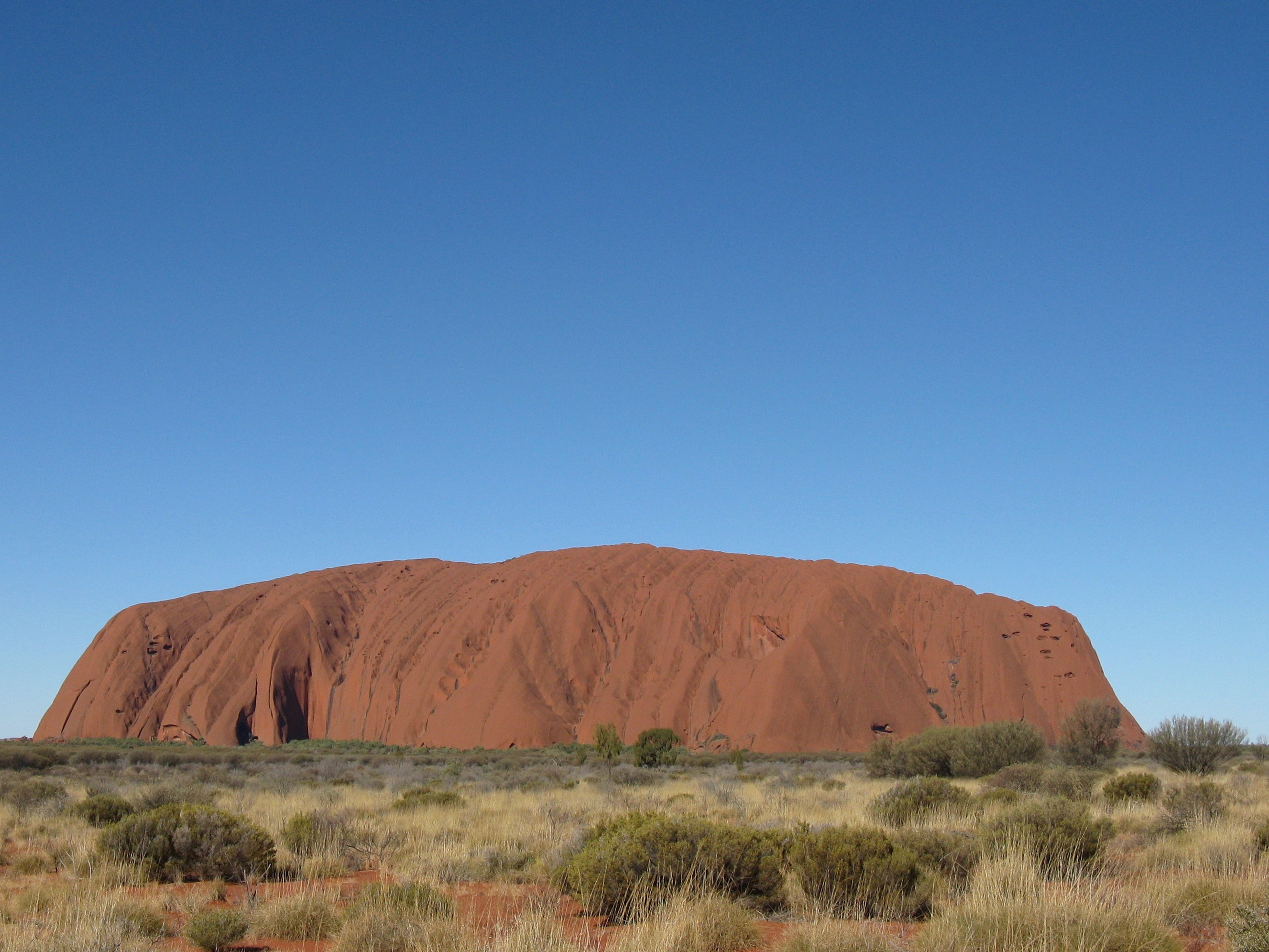
Uluru

Uluru, taken August 2009

The site also tells us that this theme was particularly chosen this year “to highlight and celebrate the  anniversary of the ‘Handback’ of Uluru, one of these sacred sites, to its traditional owners on 26 October 30 years ago”. To that I say, wonderful, as I am visiting Uluru for my third time later this month.

I know my ways of celebrating and supporting indigenous Australian culture are pretty tokenistic in the scheme of things, but in the spirit of this week I thought I’d share with you some of the rather eclectic things I do throughout the year as the opportunities arise:

  • engage with local indigenous culture when I travel, mostly through tours led by indigenous Australians;
  • attend exhibitions featuring indigenous Australian art and culture, ancient, traditional and contemporary;
  • donate to the Indigenous Literacy Foundation;
  • attend performances by the Bangarra Dance Theatre; and,
  • read Indigenous Australian literature (though I don’t seem to read anywhere near as much as I’d like to).

It’s this last way, of course, that is most appropriate to my blog, so to mark this NAIDOC Week, I’m sharing links to posts written by me, and, with her permission, Lisa Hill (ANZLitLovers), on Indigenous Australian literature:

Some of you will know that Lisa has for the last few years run an Indigenous Literature Week during NAIDOC week but, as she wrote recently, this year she plans to run it to coincide with the First Nations Australia Writers’ Network Workshop which will be held in Melbourne next month. Watch out for that.

Meanwhile, Lisa and I hope our links help you discover more about Indigenous Australian culture through literature.

Monday musings on Australian literature: Indigenous writers recommend …

Last week, to commemorate the beginning of NAIDOC Week, I devoted Monday Musings to Anita Heiss’s series of interviews with indigenous Australian writers, In conversation with BlackWords. I said then that this week’s post would also draw from the series – and so here it is.

I’m not 100% sure of Heiss’s process, but I think she sent the same set of questions to all writers, and they answered some or all of questions as they desired. I am focusing, in this post, on one of the questions. Seventeen of the twenty writers responded to it. The question is:

What book do you think every Australian should read?

Anita Heiss, Am I black enough for you?

Courtesy: Random House

The answers are fascinating. Most, as you would expect, recommend books that would help all Australians learn and understand more about indigenous culture and history, and the books they recommend are mostly by indigenous Australians. But, the interesting thing is that there’s a lot less duplication than I expected. I like this. It suggests the existence of an active indigenous literary culture. No simple, easily defined cannon here! It provides a great list for us all to go to – both now, and when we are planning for ANZLitLovers’ 2015 Indigenous Literature Week.

Anyhow, I thought, when I decided to do this post, that I could tally up the recommendations and list them in popularity order. But, given what I actually found, I have decided instead to simply list them in alphabetical order by author/editor, with the name of the recommender/s and comments where appropriate.

  • Berendt, Larissa: HomeEllen van Neerven called this “A very important book.”
  • Carey, Peter*: True history of the Kelly GangJared Thomas said it “alerted me to class struggle – the fact that it is not only Aboriginal people who have endured persecution in this country.”
  • Chi, Jimmy: Bran Nue Dae (script). Kim Scott.
  • Eckermann, Ali Cobby and Fogarty, Lionel (eds): Southerly, Vol 71, No. 2, 2011, “A Handful of Sand: Words to the Frontline”. Lorraine McGee-Sippel described this as “An invaluable resource of Australia’s First Nations writers … Across all genres, ages and life experiences”. She believes is should be “compulsory reading … in all high schools and universities”.
  • Eckermann, Ali Cobby: Ruby MoonlightBruce Pascoe.
  • Gammage, Bill*: The biggest estate on earthKim Scott simply said “an important book”.
  • Gilbert, Kevin: Because a white man’ll never do itKerry Reed-Gilbert, his daughter.
  • Green, Evan*: Adam’s empireSue McPherson described it as “a good Aussie story. It should be made into a film.”
  • Haebich, Anna*: For Their Own GoodKim Scott said that it “focuses on south-west Western Australia, but the power relationship it articulates applies across the continent”.
  • Heiss, Anita: any book. Lionel Fogarty gave Heiss as an example in recommending “Indigenous-authored books such as those by Anita Heiss.
  • Heiss, Anita: Am I black enough for you? Jared Thomas, Bruce Pascoe (my review)
  • Heiss, Anita and Minter, Peter (eds): The Macquarie PEN Anthology of Aboriginal LiteratureKerry Reed-Gilbert.
  • Leane, Jeanine: Purple threadsMelissa Lucashenko (my review).
  • McMullen, Jeff*: any writing. Samuel Wagan Watson.
  • Maynard, John: Fight for liberty and freedom. Recommended by himself.
  • Munkara, Marie: Every secret thingBruce Pascoe (my review).
  • Papunya School with Nadia Wheatley and Ken Searle: The Papunya School Book of Country and HistoryAnita Heiss likes this because it is “accessible to all”.
  • Pascoe, Bruce: works by him. Recommended by himself.
  • Pascoe, Bruce: EarthMelissa Lucashenko.
  • Pilger, John*: A secret countryKate Howarth.
  • Reynolds, Henry*: any book. Kerry Reed-Gilbert argued that “it’s time for people to know the truth of this country”; Samuel Wagan Watson.
  • Reynolds, Henry*: Forgotten WarLorraine McGee-Sippel said that it “addresses Australia’s selective amnesia in relation to the wars fought between Traditional Owners and the Invaders. Where are our memorials?”
  • Reynolds, Henry*: This whispering in our heartsJackie Huggins.
  • Scott, Kim: Benang: From the heart. Bruce Pascoe.
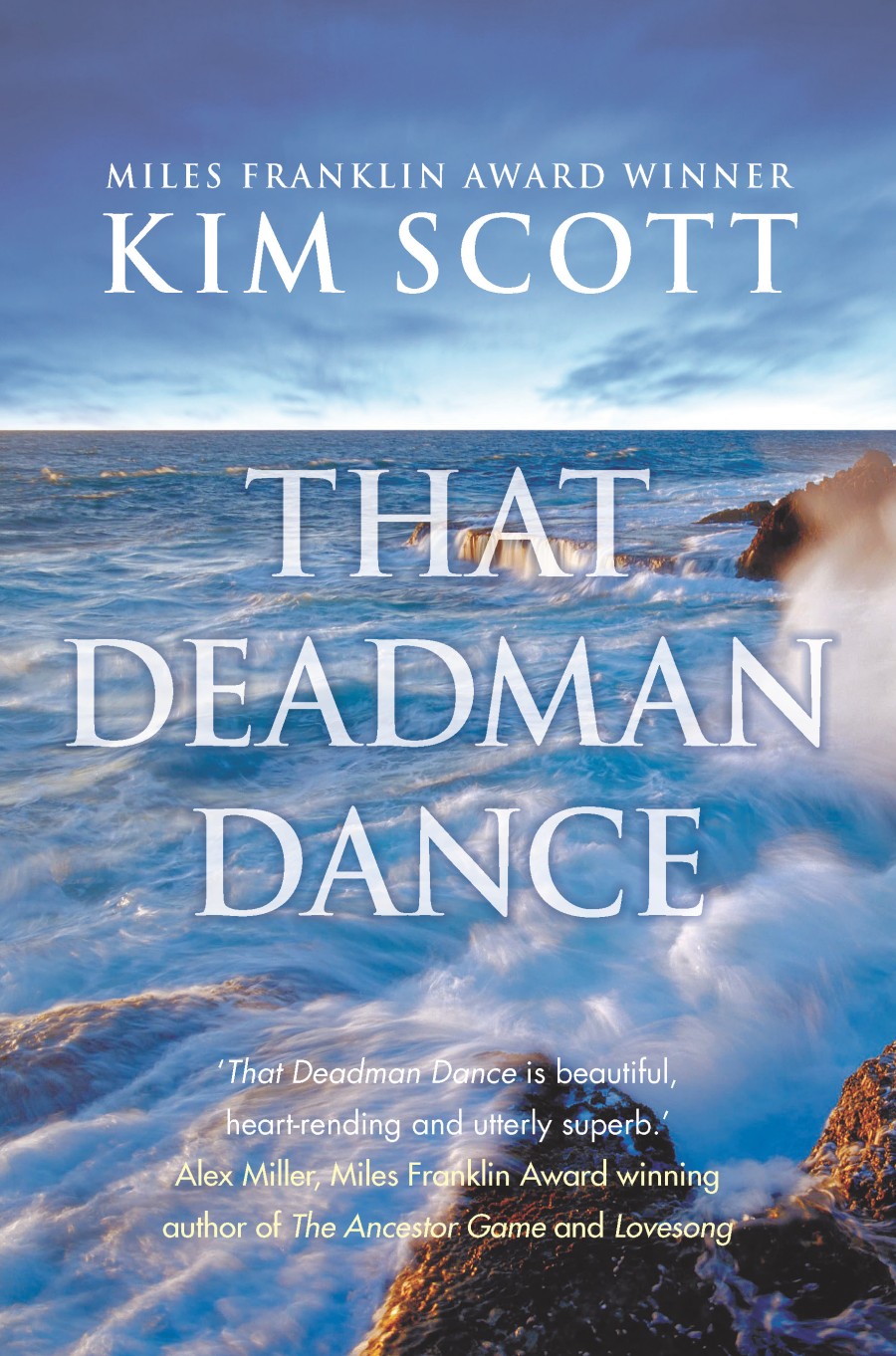
  • Scott, Kim: That deadman danceKerry Reed-Gilbert; Bruce Pascoe (my review).
  • Scott, Kim: True countryMelissa Lucashenko.
  • Thiele, Colin*: Labourers in the vineyardBruce Pascoe.
  • Weller, Archie: stories by him. Bruce Pascoe.
  • Willmot, Eric: Pemulwuy: The rainbow warriorDub Leffler.
  • Wright, Alexis: CarpentariaBruce Pascoe (my review).
  • Wright, Judith*: stories and poems by her. Bruce Pascoe.
Kim Scott also recommended that people read an anthology of writing from the region in which they live, such as Those Who Remain Will Always Remember: an Anthology of Aboriginal Writing, edited by Rosemary van den Berg, Anne Brewster and Angeline O’Neill.

Tegan Chillcott and Samuel Wagan Watson were a little wary of being prescriptive. Chillcott said, simply, ““whatever book seems most interesting to them”.  Watson, though was a little more explanatory. He said:

Every Australian?’ Hmmm … It’s hard to say, and I know mature Australians who have admitted to having never finished reading a book because literature bores them. I can’t answer that question? I’ve never watched a cricket match in my 41 years either … So I must seem weird to people who don’t pick up a book. If I was on a ‘soapbox’, I’d say any writing by Uncle Henry Reynolds or Uncle Jeff McMullen.

But some people can be turned off literature – altogether – by books that are too confronting. And that’s the delicate balance that needs to be dealt by a writer when you’re thinking about audiences. I do believe some writers have no idea that they are either not engaging with an audience or they don’t care? As a writer, on the journey of composing your work or novel or music, you need to consider your audience at every turning point. If you don’t think about the needs of your reader, you are simply writing in a very tight vacuum.

Another respondent who didn’t seem keen to name specific titles or authors was Samantha Faulkner.

Papunya School Book

(Courtesy: Allen & Unwin)

I’d like to conclude with her lovely, generous statement. She wrote:

Any book by an Aboriginal and/or Torres Strait Islander writer. Reading a book by a First Nations Australian writer will identify similarities that connect us, and bring us together, rather than divide us. After all, we live on this beautiful country together.

* Non-indigenous author

Monday musings on Australian literature: In conversation with Black Words

Today* marks the first day of NAIDOC Week 2014, which will run through to July 13. In honour of this, and of Lisa’s Indigenous Literature Week at ANZLitLovers, I thought I’d devote this week’s Monday Musings to indigenous Australian writers – and specifically to Anita Heiss’s “In conversation with Blackwords” series.

This series is described on the AustLit website as follows:

In late 2013 Dr Anita Heiss sent a series of questions to contemporary Aboriginal and Torres Strait Islander writers. The responses she received are at times funny, sad, moving, and always deeply insightful. Universally an important piece of advice was to ‘Read, read, read’ if you want to write. As an ambassador for the Indigenous Literacy Foundation, Anita was very happy to see that advice coming from some of Australia’s most admired and read authors.

As far as I can understand from the website, some 20 interviews were gathered, and posted on the site between November 2013 and May 2014. The last interview (to date anyhow) is with Heiss herself. The writers interviewed include some well-known to me like Melissa Lucashenko, Kim Scott, and Bruce Pascoe, and some I’m not at all familiar with like Dub Leffler and Sue McPherson. Heiss starts by asking them about their mob and where they are from, and then asks them about their writing and their reading – about, in other words, all those things other readers and writers love to know.

I haven’t read all the interviews, as they are pretty extensive, but have at least dipped into most, and will read more in the coming days. Here, in no particular order, are some of the things they say:

Samuel Wagan Watson (internationally recognised poet and storyteller) said this in response to “what makes a good writer”:

As far as what makes a ‘good writer’ … I don’t know? I’m an ‘established writer’ yet I wouldn’t consider myself a ‘good’ writer. Should we define a ‘good writer’ as someone who publishes a novel every year or an artist who simply falls in love with language and is a skilled technician who writes a sentence now and then that simply smokes with pearly-wings of an epiphany in the midst of your mind’s eye?

Anyone who can write “smokes with pearly-wings of an epiphany in the midst of your mind’s eye” must surely make some claim to being a good writer?

Kim Scott That Deadman Dance

(Courtesy Picador Australia)

Kim Scott (author of That deadman dance, among other things) said this about his aims as a writer:

To reach and connect. To provoke, sometimes. To transform, if only a little. As Elizabeth Jolley said, to provide ‘places where people may meet’.

To touch on greater truths. Language and stories shape the world; I sometimes want to flex and remake it again.

He’s won me over, first, by referring to one of my favourite writers, Elizabeth Jolley. But, I also like his desire to “touch on greater truths”. It’s not surprising that an indigenous writer might also want to “flex and remake” the world.

Ali Cobby Eckermann (poet, and author of Ruby Moonlight) offered this advice to writers:

My advice is to be creative! Turn the telly off and be creative. A half an hour each day has the capacity to achieve remarkable results. Be relentless, and find happiness in honouring your story, the legacy of your cultural knowledge.

Being creative, I think, is easier said than done, but I do love her suggestion to “find happiness in honouring your story”.

Ellen van Neerven (winner of David Unaipon Award in 2013) is a writer I hadn’t heard of before. She said in answer to “who do you write for?”:

Sometimes I could be writing for my younger self. I want people to feel less alone. I want people to feel less confused.

Now, that’s an answer from the heart.

Bruce Pascoe (writer of fiction, non-fiction and YA fiction). I had to finish with Pascoe’s response to the question about his writing process:

Get up, go into room and work arse off. Break for lunch, tour of vegetable garden, back into room. In good weather I write down by the river, especially if it’s a job I’m writing longhand. In my room I’ve got a growing gallery of dead Black friends to watch over me and all the birds who come to the door and want to know if it’s ok if they tell me a story. The Willy Wagtail is good but the Scrubwren is profound, the Powerful Owl haunting, the pelican a bit superior on occasions and the cormorants are always good for a laugh. I get a hell of a lot of story from birds and animals.

With such an imagination, you can sure see why he’s a prolific writer.

I plan a follow-up post on this series of conversations for next week’s Monday Musings to conclude NAIDOC Week.

* Hmm … just realised today is 7 July! NAIDOC Week started officially on 6 July!