Helen Keller, I go adventuring (Review)

My reading has been so disjointed recently that I thought I’d look at recent Library of America (LOA) offerings for inspiration, and came across Helen Keller‘s “I go adventuring”, an excerpt from her Midstream: My later life. It appealed to me because I haven’t read anything by Keller since I was a teenager, and because this piece is about New York. I couldn’t resist.

Helen Keller sitting holding a magnolia flower, circa 1920 (Presumed Public Domain, from Los Angeles Times photographic archive, UCLA Library)

Helen Keller sitting holding a magnolia flower, circa 1920 (Presumed Public Domain, from Los Angeles Times photographic archive, UCLA Library)

Firstly, Keller. What an amazing woman. Like many, I suppose, I have always been in awe of her ability to make a meaningful life for herself without sight or hearing. LOA’s always useful introductory notes discuss Keller being asked, in relation to another excerpt, “what she could possibly have ‘seen’ from the top of the Empire State Building”. She replied that

I will concede that my guides saw a thousand things that escaped me from the top of the Empire Building, but I am not envious. For imagination creates distances that reach to the end of the world … Well, I see in the Empire Building something else—passionate skill, arduous and fearless idealism. The tallest building is a victory of imagination.

The notes continue to say that throughout her adulthood, Keller “faced scepticism over her abilities and criticism for her choices of language”. On one occasion, she responded that the deaf-blind person “seizes every word of sight and hearing, because his [using the male pronoun common to her times!] sensations compel it. Light and color, of which he has no tactual evidence, he studies fearlessly, believing that all humanly knowable truth is open to him”. American novelist and essayist, Cynthia Ozick, LOA tells us, accepts Keller’s point, saying, simply, “She was an artist. She imagined”.

Secondly, New York. Before I first visited New York in the early 1980s, I’d lived in Sydney, and had visited great European cities like London, Paris and Rome. None of these interested me greatly because I really don’t much like cities. (Yes, I liked the museums and galleries, the historic sites, but as places to “be” they didn’t really appeal). But New York. There was something about it – and I finally “got” cities. I still don’t like them a lot, but I credit New York with opening my eyes to “city-ness”, if that makes sense, to the buzz and rush and life of them.

However, I’ve indulged myself enough now, so let’s get to Keller’s piece. She starts by referring to her situation:

Cut off as I am, it is inevitable that I should sometimes feel like a shadow walking in a shadowy world. When this happens I ask to be taken to New York City. Always I return home weary but I have the comforting certainty that mankind is real flesh and that I myself am not a dream.

See, that’s New York for you! She then talks about the great bridges, starting with Brooklyn Bridge, which she says is “the oldest and most interesting of them … built by my friend, Colonel Roebling”. In my first visit to New York, one of the places I had to visit was Brooklyn Bridge – because of Ken Burns’ wonderful documentary of the same name. It’s an old film now, 1981, but is well worth viewing if you haven’t seen it and get the chance. Keller, though, says she mostly uses the Queensborough Bridge. She writes that not all poetry is found in poetry books, that

much of it is written in great enterprises of engineering and flying, that into mighty utility man has poured and is pouring his dreams, his emotions, his philosophy. This materializing of his genius is sometimes inchoate and monstrous, but even then sublime in its extravagance and courage. Who can deny that the Queensborough Bridge is the work of a creative artist?

While we continue to build astonishing structures, continue to push the edges of what we can achieve,  we are also, I think, more blasé about the achievements and more questioning about the value and implications. Keller’s admiration reminded me of the awe and wonder of the nineteenth and early twentieth centuries towards engineering feats, though she too, with the word “monstrous”, is perhaps sensing some other ways of seeing?

Keller’s piece is really short, so I’m not going to commentate it all. She describes circumnavigating New York in a boat and talks about about life on the water, and she ends with a vivid description of the power of the subways. I want to close though on another reference to herself. She writes:

New York has a special interest for me when it is wrapped in fog. Then it behaves very much like a blind person. I once crossed from from Jersey City to Manhattan in a dense fog. The ferry-boat felt its way cautiously through the river traffic. More timid than a blind man, its horn brayed incessantly. Fog-bound, surrounded by menacing, unseen craft and dangers, it halted every now and then as a blind man halts at a crowded thoroughfare crossing, tapping his cane, tense and anxious.

With that, she conveys so beautifully, for sighted people, some of her experience of the world.

Helen Keller
“I go adventuring”
First published: In Midstream: My later life, 1929.
Available: Online at the Library of America
Virgil Thomson, Taste in music (Review)

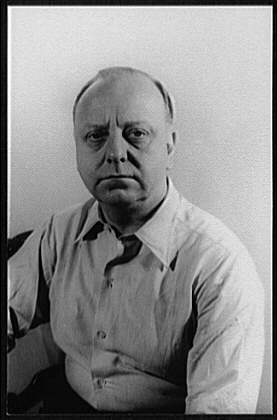
Virgil Thomson portrait, 1947

Virgil Thomson, 1947 (Public Domain, from the Library of Congress via Wikipedia)

There are several reasons why now seemed an opportune time to write my first Library of America (LOA) post for 2015. The first reason is obvious. It’s June and I haven’t featured one yet. The second is because my last post was on music, so writing about an article by American composer Virgil Thomson seemed apposite. The third reason relates to an interesting comment Thomson makes about reviewing, recalling my recent post on the AustLit anthology of criticism.

And then there’s reason why this article, published by LOA back in February, initially attracted my attention. It’s because of Virgil Thomson himself. I first heard of him back in the 1970s as the composer of two beautiful American government sponsored documentaries, The plow that broke the plains (1936) and The river (1938), made by filmmaker Pare Lorents. I won’t reminisce about this now, but I enjoy noting these connections we make over our lives.

In my post on the Austlist anthology of criticism, I quoted the editors as defining criticism as  “interpretation”, something they differentiated from “reviews” which they saw as focusing on “evaluation”. In LOA’s introductory notes to Thomson’s piece, they quote Thomson’s explanation as to why, as music critic and editor for the New York Herald Tribune, he only used composers and performers as reviewers. He said:

It’s a writing job, but the subject is music and you’ve got to know a good deal about the subject in order to be believable. In order to be a reviewer, you have to forget whether you liked it or not and tell your reader what it was like.

Hmmm … a rose by any other name, eh? What Thomson calls “reviewing” is what the anthology editors call “criticism”. Whatever name we give it, I realise that I tend to prefer reviews/criticism that focus on analysing what the work is like, what makes it tick, more than whether the reviewer liked it. “Liking” is such a subjective thing and can depend so much on one’s experiences, preferences, personality even, whereas describing “what it was like” involves knowledge of the art form, the ability to “see” it in context, to understand how it does what it does, and to describe, perhaps, what it “means”. This is not to say that “liking” isn’t important, but that it is not necessarily the most important aspect – for me anyhow.

So, then, Thomson’s “Taste in Music”. He starts by differentiating taste “for” music, which he sees as the ability to enjoy music, pretty much indiscriminately, and taste “in” music, which involves liking certain kinds of music over others. He then discusses admiration versus liking, suggesting that “there are often striking contradictions between what musical people admire and what they like”. Admiration is about “reason” while “liking is an inspiration”. You can’t alter “liking”, he says, “by any act of will”. But “it will frequently alter itself … without warning”. I think we have all experienced that! Loving something, and then suddenly tiring of it, growing out of it perhaps.

Thomson’s main argument is that “development of taste” is not the main objective of music education, that the important thing is “understanding, that whole paraphernalia of analysis and synthesis whereby a piece is broken down into its component details, mastered, restored to integrity, and possessed”. This is true of literature too. How often have you heard people say that studying literature put them off reading, or off the classics. And yet, pulling apart books is the only way you learn to understand them, what makes them tick. Thomson goes on:

Persons unprepared by training to roam the world of music in freedom but who enjoy music and wish to increase that enjoyment are constantly searching for a key, a passport that will hasten their progress. There is none, really, except study.

Oh dear, he’s right, I know he is. And this is why I constantly say that my reports of Griffyn Ensemble concerts do not constitute reviews. They are reports of what I enjoyed, and what I made of the performance. I do not have the skills or training to review music.

Thomson also discusses the familiar versus unfamiliar in music. He writes that “the too old, the too new, the in-any-way strange, we resist simply because we do not know how to take them on”. We enjoy the familiar, he says, and this leads toward “a timid conservatism with regard to unfamiliar music”. He writes that:

The lay public will try anything, but it will be disappointed, on first hearing, in anything it has no method for remembering. We like the idea of being musically progressive, because progress is one of our national ideals; but we do not always know how to conduct a progress.

This is probably true of the new in all of the arts, don’t you think? “To hear music correctly”, he wrote, to “know one’s mind”, we need to be able to “hear patterns in sound”. This is what I feel about all music, but particularly new, unfamiliar work. I might sense patterns but on one hearing, and with almost no musical training, I don’t feel capable of “reviewing” it, of understanding let alone explaining what makes it tick, the same way I can, for example, with a novel. I am experienced at looking for patterns in literature, but not so for music. Thomson suggests that the untrained will “rarely know the difference between their tastes and their opinions”. Hmm … probably true.

His next point is that while professional musicians express “responsible opinions” based on knowledge, it is “lay opinion” which creates the “modes or fashions in consumption that make up the history of taste”.  Interesting. He admits that knowledgeable persons play some role in developing these “fashions” but that they can’t force the public to like what it doesn’t want. He argues that creators cannot behave freely with trendy music. You can’t tinker with what people like. For this reason, he says, unsuccessful or unfashionable music “is sometimes the best music, the freest, the most original”.

What I most enjoyed about Thomson’s essay, though, is that he doesn’t lay down the law. He knows music, like all arts I’d say, is a slippery beast. There “is no rule” that can’t be broken. He writes that:

Those who think themselves most individual in their likings are most easily trapped by the appeal of chic, since chic is no more than the ability to accept trends in fashion with grace, to vary them ever so slightly, to follow a movement under the sincere illusion that one is being oneself.

He then has a dig at intellectuals. “You can always sell to the world of learning” he says, “acquaintance with that which it does not know”!

In other words, the only real answer to understanding and appreciating music, is “labor, much study, and inveterate wariness [because] the pleasures of taste, at best, are transitory”. “Nobody”, he says, “professional or layman, can be sure that what he finds beautiful this year may not be just another piece of music to him next.”

So, having logically argued the meaning of responsible reviewing and the importance of understanding music, Thomson concludes that in the end “the pleasures of taste … are transitory”. The best we can do, he says, is consult our appetite about what we consume and after consuming it “argue about the thing interminably” with all our friends. On that basis, I think, the important thing is to enjoy what we read, hear or see, and when we write about it to be clear about the basis on which we are writing. Our readers can then assess our opinion on the basis of what they understand to be our background, knowledge and prejudices. What do you think?

Virgil Thomson
“Taste in music”
First published: In The musical scene, 1945.
Available: Online at the Library of America
Annie Parker, Passages in the life of a slave woman (Review)

I have, this year, reviewed a couple of Library of America‘s (LOA) stories about slavery in the USA, one being Harriet Ann Jacobs’ “The lover”, and the other William Wells Brown’s, Madison Washington. I’ve always been interested in slavery in the US, so when Annie Parker’s “Passages in the life of a slave woman” appeared in my inbox, I of course wanted to read it – and discovered yet another intriguing story.

When I say I discovered “another intriguing story”, I don’t just mean Parker’s story but the story of Parker herself. Let me explain. Parker’s story, “Passages in the life of a slave woman”, was published, according to LOA’s always illuminating notes, in Autographs for freedom. This was an annual anthology of antislavery literature published as a fundraising venture by the Rochester Ladies Antislavery Society. (Only two were apparently produced). The anthologies included “original works by such dignitaries as Ralph Waldo Emerson, Harriet Beecher Stowe, Theodore Parker, William Wells Brown, Catherine M. Sedgwick, William H. Seward, and Horace Greeley”, as well as Frederick Douglass’ novella, The heroic slave, about Madison Washington. They also included two pieces by Annie Parker – a poem, Story telling”, and the story I’m discussing here. But, here’s the thing – no-one, says LOA, apparently knows who this Annie Parker is (or was).

So, like any good blogger, I did an internet search – just a little one – and found a guest post on the blog of the IAHI, aka, the IUPUI (Indiana University-Purdue University Indianapolis) Arts and Humanities Institute. The guest post, published in September 2014, is titled “In Search of Annie Parker by Professor Jack Kaufman-McKivigan”. Kaufman-McKivigan’s post concerns a symposium that was coming up in October at which experts were “to examine the historical and literary significance of Douglass’s novella, The Heroic Slave.” In preparation for this event, staff members were engaging, he said, in some “literary detective work” – and one of these projects was trying to identify Annie Parker.

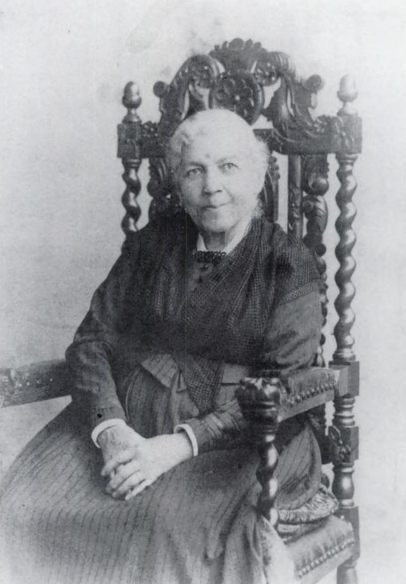
Harriet Ann Jacobs, 1894 (Presumed Public Domain, via Wikipedia)

Harriet Ann Jacobs, 1894 (Presumed Public Domain, via Wikipedia)

Kaufman-McKivigan writes in the post that in recent decades her story “has been anthologized several times as one of the earliest works of fiction by an African-American author”. That’s interesting in itself, because it means they (whoever “they” are) have assumed she was an African-American contributor. It could be so, and the story could be autobiographical, but I also wondered, given the lack of information about her, whether “Annie Parker” was a pseudonym. Anyhow, our professor says they found a couple more articles by an Annie Parker in a temperance journal from Geneva, New York, but then the trail went “cold, very cold”. Genealogical research, he says, turned up “a few possible ‘Annie Parkers’ in the upstate New York region” but none had “any known connection to the antislavery movement and all were white”. He then posits that Annie Parker may not have been a runaway slave as others have speculated, but might have been “a pen-name”. The question then is whose? One possible idea is the above-mentioned Harriet Jacobs. There are some valid reasons for making this connection, as he explains in the post – so do read it at the link above if you are interested. Why Jacobs might have wanted to use a pseudonym is a question the literary detectives are now working on. All very interesting – and one of the reasons I do enjoy these LOA offerings.

Now, though, the story – which is told first person in the voice of a slave, after the opening paragraph is told third person. I was, I must say, quite flummoxed by this. The paragraph has some odd punctuation, in that there are opening quotation marks but no closing ones. LOA’s notes suggest this is to indicate that the rest of the story is composed entirely of her narrative. Fair enough, though I don’t quite understand why Parker needed to start with the third person, except that it does make for an easy way of telling us who the narrator is.

The story is told by the slave, Phillis, sister of another slave, Elsie, who had died giving birth to her second child. Both Elsie’s children – the first, a son, and the newborn, a girl – were fathered by “the young master”. The son, who looks too much like his father is sold off before the young master brings a wife home, thus preventing any awkward questions being asked. Meanwhile, Phillis cares for the daughter, Zilpha, as she grows up to young womanhood. I won’t give away the story here but simply tell you that LOA introduces it as a “tale, charged with incest and gothic intrigue”. You can read it at the link, below. It’s only 6 pages.

This is not a story about beatings and cruel physical treatment. Indeed the new mistress:

proved a kind and gentle mistress. All the slaves loved her, as well they might, for she did everything in her power to make them comfortable and happy.

But, we never forget that slaves are powerless – and, as we know only too well, when anything happens that threatens an owner’s happiness or security, little thought, even on the kindest plantations, is given to the “feelings” of the slaves. They are possessions and can be moved around at will. Their emotional or psychological needs, let alone their physical safety, are not relevant. And so, in this story, as certain truths come to light, the owner takes actions to protect his security and happiness. The irony is that he, like his mistress, is generally (perhaps “superficially” is the better word) kind and fair, but there are limits – and it is the impact of those limits that we are left with, confirming once again what a destructive institution slavery was, indeed is.

Annie Parker
“Passages in the life of a slave woman”
First published: In Autobiography for freedom, 1853.
Available: Online at the Library of America
Toshio Mori, Japanese Hamlet (Review)

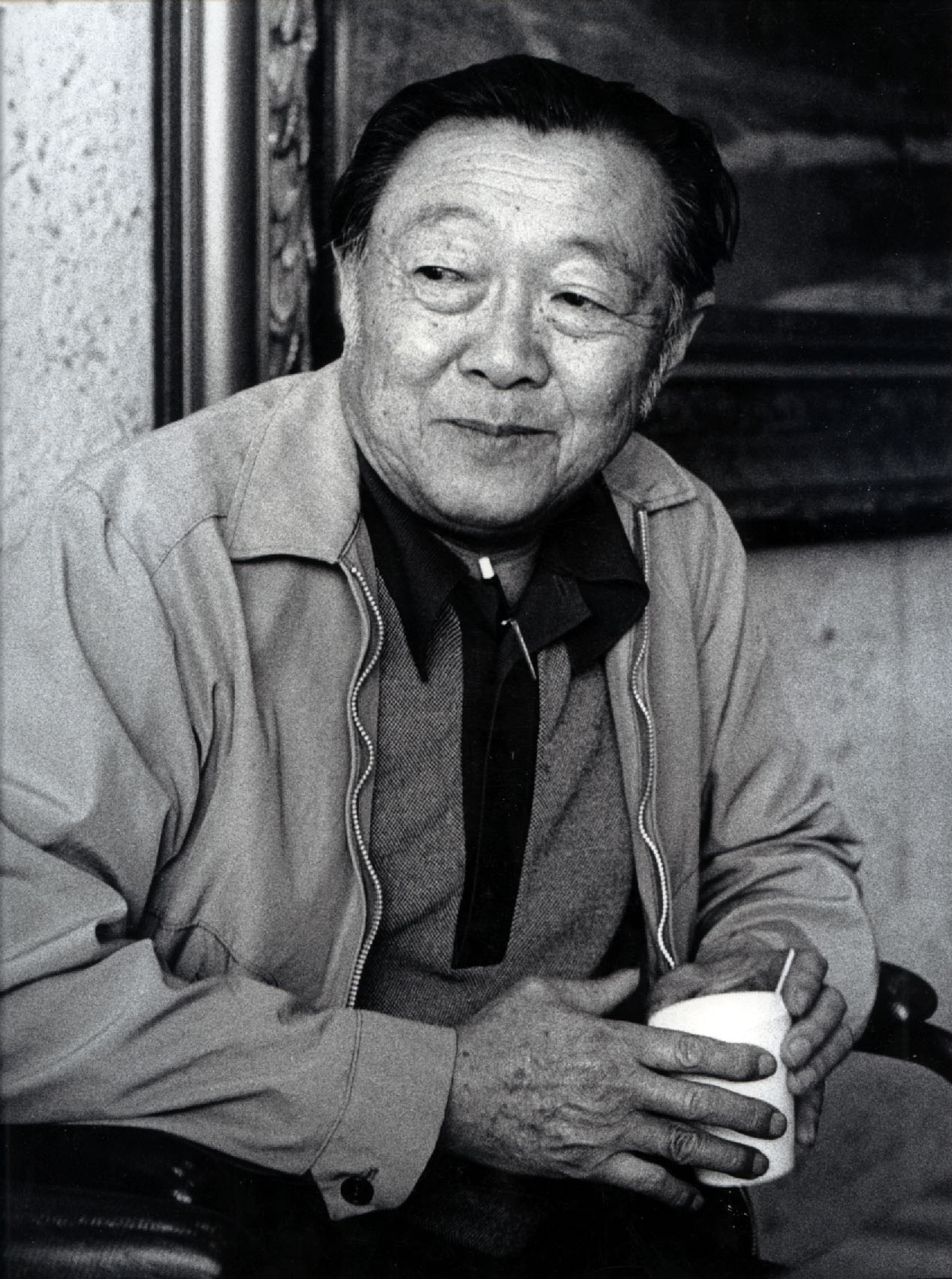
Toshio Mori (Courtesy: Nancy Wong, via Wikipedia, using CC-BY-SA 3.0)

Toshio Mori (Courtesy: Nancy Wong, via Wikipedia, using CC-BY-SA 3.0)

What I love about the Library of America is the variety of works it features in its Story of the Week program. Because of my interest in Japan and Japanese writers, I was particularly attracted to Toshio Mori’s story, “Japanese Hamlet”, that they published a couple of weeks ago. Toshio Mori was one of the first Japanese-American writers to be published in America – and he was best known for short stories. Two things that make him interesting to me.

According to Wikipedia, Mori was born in Oakland, California in 1910. Like many Japanese-Americans, he was interned in a camp (for him, the Topaz War Relocation Centre in Utah) during World War 2. According to LOA, the story “Japanese Hamlet” was written in 1939, but wasn’t published until 1946 – in a magazine called the Pacific Citizen which was apparently the “leading magazine of the Pacific Asian American community”. It was then titled “The School Boy Hamlet”. It appeared later, as “Japanese Hamlet”, in his collection The Chauvinist and other stories, published in 1979, the year before his death.

The story is told by an unnamed first person narrator. He talks of a man, Tom Fukunaga, who “was a schoolboy in a Piedmont home. He had been one since his freshman days in high school. When he was thirty-one he was still a schoolboy”. This Tom, who “did not want anything in the world but to be a Shakespearean actor”,  visits the narrator regularly to recite Shakespeare to him. He’s a schoolboy because he still lives at the school, and has not got a job because he is perfecting his acting skills. Our narrator is happy to hear the recitation because “there was little for me to do in the evenings”.

Tom’s family is not happy with his decision, calling him “a good-for-nothing loafer” who “ought to be ashamed of himself for being a schoolboy at his age”. He tells his relatives that he’s “not loafing” but “studying very hard”. We learn that an uncle visits him regularly trying “to persuade him to quit stage hopes and schoolboy attitude”. His parents have disowned him, his uncle says, and “pretty soon your relatives will drop you”. But Tom is unmoved. He has his goal and will not be swayed from it. He lives on five dollars a week, plus room and board, presumably covered by his family. He feels no guilt about this.

So, what do we have here? We have the would-be artist persisting with his dream. We also have the suggestion of Japanese culture not understanding the pursuit of an individual goal over one’s responsibility to family and community. Then we add the fact that Tom’s favourite role is Hamlet, the quintessential dreamer and procrastinator. I like the complexity of this criss-crossing themes and ideas. Life, we know and Mori shows, is not a simple this-then-that but a complex web of interacting influences.

In all this it’s not clear who the narrator is – a friend, old teacher, neighbour? Is he American or Japanese? Interesting that Mori has chosen to tell the story through a first person narrator, and yet has told us nothing about this narrator. What is the narrator’s role? He (presumably “he”) mediates between us and Tom’s story but he is also an actor in the story. This complicates our response to Tom, I think, because we see him through the eyes of another, but we don’t know who that other is. Regardless of who the narrator is, he starts to be “afraid that Tom’s energy and time were wasted and I helped along to waste it.” He tries to encourage Tom to contact some theatre people, fearing “we are wasting our lives”. Interesting, here, that the narrator is not only worried about enabling Tom to waste his life but about wasting his own. Eventually, the narrator starts to dread Tom’s presence “as if his figure reminded me of my part in the mock play that his life was”. One night he suggests Tom give it up for a while because it is “destroying” him. Tom simply ceases to come.

The narrator feels “bad” because he knew Tom would “never abandon his ambition”. And, while he knew Tom would never become a great Shakespearean actor, he admired “his simple persistence”. The story ends quietly, with no clear resolution – though we do see Tom once again.

LOA’s introductory notes quote a literary scholar, David Palumbo-Liu, who says that while the story seems to offer a simple message, ‘it masks an underlying tension from “a faith in the power of Art to transcend race, ethnicity, and history.””  Ethnicity is not mentioned in the story, except in the title under which it was eventually published – and it is of course  implied in Tom’s name. However, LOA continues, Palumbo-Liu expands his argument: “In a world of racial difference, to be Hamlet, Tom cannot be Japanese; to be Japanese, Tom cannot be Hamlet. Yet the myth of universal art denies that there is any contradiction since, in being an artist, Tom can do both.” LOA suggests that Tom is much like Mori himself who also persevered with his writing, hoping to reach “a wide American audience”.

Not knowing Mori’s oeuvre, I don’t know whether he intended this story to be what Palumbo-Lui sees. I don’t know, either, whether he intended it to be about Japanese culture’s emphasis on duty over individuality, since many Western families would also look askance at a young person not getting a job. What I do know is that although its “simple” message is about the perseverance of a passionate artist, it’s not a simple story. I’m glad to have been introduced to Toshio Mori.

Toshio Mori
“Japanese Hamlet”
First published: in Pacific Citizen, August 17, 1946
Available: Online at the Library of America

John Updike, The lovely troubled daughters of our old crowd (Review)

I have an old-friend-cum-ex-colleague who has been asking me for longer than I can remember to read John Updike. He even, a year or so ago, sent me a link to a Kindle special for Rabbit, Run. I obediently bought it, and I do intend to read it, I do. However, I recently reorganised my Kindle and discovered that I have a TBR pile there of 20 books! How can that be? I hardly ever buy for the Kindle. But, there you are, the Kindle Cloud never lies, so I must have. All this is to say that I realised it could be some time before I got to Updike, so when I saw a story by him appear on the Library of America a year ago, I printed it out! It finally reached the top of the pile and I’ve just read it. My friend is right. I really should read (more) Updike.

The story, “The lovely troubled daughters of our old crowd”, is told from the point of view of a male member of a group of couples who socialised and holidayed together over many years – indeed from the time their daughters were two or three to now, when they are in their mid-twenties. Well, until they were somewhere in their teens anyhow, because the old crowd is no longer together – not only due to “the children, really, growing unenthusiastic and resistant” to group holidays but due to “the divorces as they began to build up”.

He compares happy times of the past – from his perspective – to the less than exciting or fulfilling things all their daughters are doing now – from his perspective. He also compares the daughters to their mothers – and again, of course, it’s from his perspective. This is the important thing about the story – his perspective. We know nothing really of what the girls thought then or think now. We only know what a now middle-aged man thinks. Should we trust his view? What does the fact that Updike included this in a collection, published in 1987, titled (presumably by him) Trust me tell us about his intention?

Late in the story, the narrator also compares the girls to the “daughters of people we hardly knew”. These daughters “are married to stockbrokers or off in Oregon being nurses or in Mexico teaching agronomy” while

our daughters haunt the town as if searching for something they missed, taking classes in macramé or aerobic dancing, living with their mothers, wearing no make-up, walking up beside the rocks with books in their arms like a race of little nuns.

So, here’s the challenge. From his point of view, there’s something wrong with these girls. They are not getting married, they are not in high status or highly admirable jobs or situations. Well, we readers might ask, why should they be, given that their parents have clearly not set good examples of happy marriages? Indeed, our narrator, who’s in “about the last marriage left”, reveals a wandering eye. We wonder, in fact, whether they may have been swinging couples. We might also ask, though, what is wrong with the choices the daughters are making? Why should they wear make-up? To catch a man? What is wrong with walking “beside the rocks with books”? And, do they want to marry a stockbroker?

I love the complexity of this, the fact that Updike has chosen to tell this story through decidedly subjective eyes, and yet has managed to leave the interpretation surprisingly open. It’s a story, I suspect, that can be read very differently depending on each reader’s experience and point of view, despite some givens in the text.

Before I conclude, I want to mention the style. The tone is intimate – as though the narrator is talking to one of his old friends. He refers, for example, to Mary Jo Addison and “that bad spell of anorexia”, implying we know all about Mary Jo’s problems. There’s also some lovely imagery, such as this description of the young girls with “their pale brushed heads like candles burning in the summer sunlight”. Decorative but not very necessary? Is this how they were treated? And, overall, there’s a sense of disconnect between the narrator’s nostalgia and the reality of their lives. I’m not sure he’s unreliable exactly, but he does seem rather deluded about what role he and his friends may have played in who the girls are now.

“The lovely troubled daughters of our old crowd” is such a sly story. It suggests that the daughters are troubled, are somehow wrong, and maybe they are, maybe they’re not, but that is not the real, or the whole, story. And therein lies the lovely irony in the title.

John Updike
“The lovely troubled daughters of our old crowd”
First published: in The New Yorker on April 6, 1981; later republished in his collection Trust me (1987)
Available: Online at the Library of America
J. Sterling Morton, About trees (Review)

One of the first Library of America stories I wrote about here was John Muir’s “A wind-storm in the forests“, so when I saw one titled “About trees” pop up recently, I had to read it. By recently, I mean April – as the Library of America published it to coincide with Arbor Day in the US which occurs at the end of April. J. Sterling Morton is credited as the originator of “this tree-planting festival” – in 1872.

JS Morton, ca 1890s (Presumed Public Domain, via Wikipedia)

JS Morton, ca 1890s (Presumed Public Domain, via Wikipedia)

According to Wikipedia, J. Sterling Morton (1832-1902) was a Nebraska pioneer, newspaper editor and Secretary of Agriculture for President Cleveland. According to LOA’s notes, Morton and his wife moved in the mid-1850s “to a bare, windswept 160-acre homestead in newly incorporated Nebraska City”. This is when, LOA says, his “mania for tree-planting” began. I don’t know much about Nebraska – and what I do know has come from Willa Cather’s novel My Ántonia (my review), which was published in 1918 but set around the 1880s. The landscape Cather describes in that novel rings true to LOA’s description of Morton’s Nebraska. Anyhow, like other successful pioneers, Morton gradually expanded his original small house into something much larger – in his case, a replica of the White House, no less! His estate is now the Arbor Lodge State Historical Park and Arboretum.

Now to the article, “About trees”. It is, LOA tells us, the prefatory chapter in a pamphlet titled Arbor Day Leaves that was compiled in 1893 by the chief of the US Forestry Division, Nathaniel Hillyer Egelston. It was intended as “a complete programme for Arbor Day observance, including readings, recitations, music and general information”. Some pamphlet, eh?

Morton starts by praising trees as:

the perfection in strength, beauty and usefulness of vegetable life. It stands majestic through the sun and storm of centuries. Resting in summer beneath its cooling shade, or sheltering besides its massive trunk from the chilling blast of winter, we are prone to forget the little seed whence it came. Trees are no respecter of persons. They grow as luxuriantly besides the cabin of the pioneer as against the palace of the millionaire.

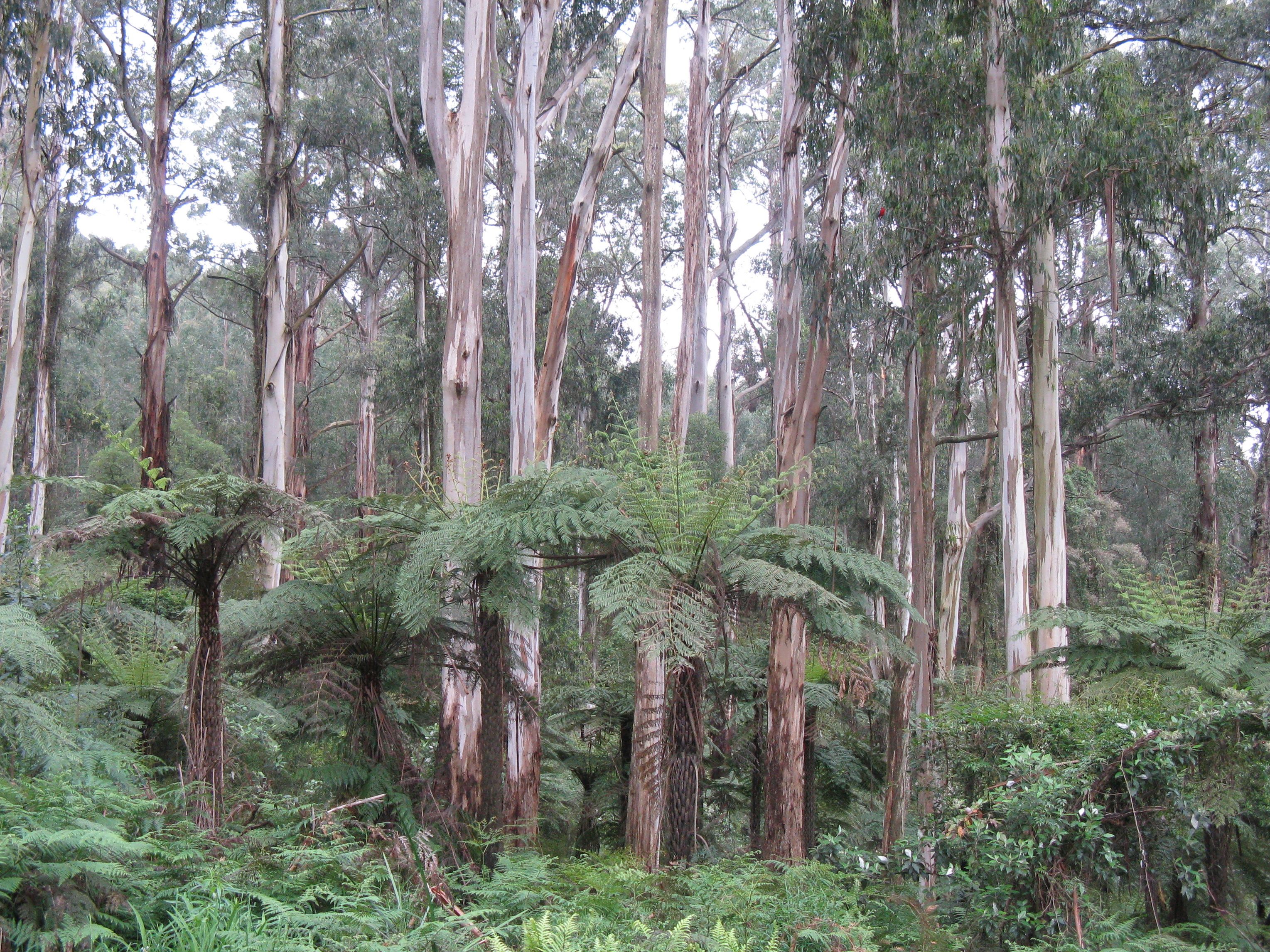
Sherbrooke Forest and Eucalyptus regnans

Sherbrooke Forest (Vic) and Eucalyptus regnans

He says trees are “living materials organised in the laboratory of Nature’s mysteries out of rain, sunlight, dews and earth”, and are the result of a deft metamorphosis. He explains this metamorphosis by telling us more specifically how an oak grows from a planted acorn, and how the earth, through the roots, provides food such as phosphates while:

foliage and twig and trunk are busy in catching sunbeams, air, and thunderstorms, to imprison in the annual increment of solid wood. There is no light coming from your wood, corncob, or coal fire which some vegetable Prometheus did not, in its days of growth, steal from the sun and secrete in the mysteries of a vegetable organism.

I love the John Muir-like romantic prose here! Animal and tree life are, he says, interdependent. Trees are “essential to man’s health and life”. Without vegetable life and growth, animal life would be exterminated:

When the last tree shall have been destroyed there will be no man left to mourn the improvidence and thoughtlessness of the forest-destroying race to which he belonged.

It’s worrying that over a century later, we have Australian Prime Minister Tony Abbott stating that “We have quite enough national parks. We have quite enough locked up forests already. In fact, in an important respect, we have too much locked up forest.” (For one academic’s assessment of the issue, check out forest ecologist Rod Keenan’s* article,  “Abbott’s half right: our national parks are good but not perfect”, at The Conversation.)

Morton argues that “in all civilisations man has cut down and consumed, but rarely restored or replanted, the forests”. In some parts of the world, this has changed, due largely to initiatives like Arbor Day, Earth Hour, not to mention the creation of national parks and reserves. Of course, replanting with (obviously) new trees does change the ecological balance and no matter how carefully managed it is, it is based on knowledge that we know is imperfect. Better then, as much as possible, to preserve forests and let them renew naturally – or so it seems to me!

Anyhow, Morton concludes by reaffirming the importance of planting trees “to avert treelessness, to improve the climatic conditions, for the love of the beautiful and useful combined”.

Arbor Day is, he says

the only anniversary in which humanity looks future ward instead of past ward, in which there is a consensus of thought for those who are to come after us, instead of reflections concerning those who have gone before us. It is a practical anniversary. It is a beautiful anniversary.

When Arbor Day Leaves was published in 1893, forty-four of the USA’s then forty-eight states observed Arbor Day (and by 1920s all states were practising it). What a great legacy.

Later this week, I will post on Australia’s first Arbor Day … watch this space.

J. Sterling Morton
“About trees”
First published: in Arbor Day Leaves (ed. N.H. Egelston), 1893
Available: Online at the Library of America
* I’m no expert, and Rod Keenan is not the darling of all environmentalists, but he offers a reasoned perspective.

William Wells Brown, Madison Washington (Review)

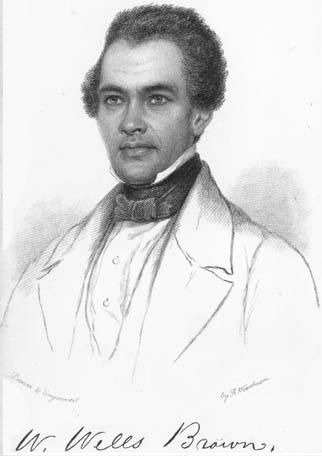
William Wells Brown,

William Wells Brown, 1852 (Courtesy Project Gutenberg, via Wikipedia)

Having recently reviewed Harriet Ann Jacobs’ story “The lover” in the Library of America‘s (LOA) Story of the Week program – and also having seen the movie 12 Years a Slave – I couldn’t ignore William Wells Brown’s story, Madison Washington, when it appeared last month as an LOA offering.

Brown (1814-1884), like Jacobs, was born into slavery. He managed to escape to Canada when he was 19. LOA’s introductory notes tell us that within a decade he’d married, moved to Buffalo, and taught himself to read and write. He lectured against slavery in both Europe and the USA. In 1847, he published Narrative of a fugitive slave which apparently sold so many copies that four printings needed to be done in less than two years. Wikipedia tells me that his novel Clotel, published in England in 1853, is considered to be the first novel written by an African-American. He lived in England from 1849 to 1854, due to the increased risk of recapture posed by the 1850 Fugitive Slave Act.

During and after the American Civil War, Brown continued to publish fiction and non-fiction, earning a reputation as one of the most prolific African-American writers of his time. He apparently actively recruited black Americans to fight in the Civil War, and supported African-American migration to Haiti.

The story published by LOA is just one from his book, The black man: His antecedents, his genius, and his achievements, which contains sketches of the lives of individuals who, Brown writes in his “Preface”,

by their own genius, capacity, and intellectual development, have surmounted the many obstacles which slavery and prejudice have thrown in their way, and raised themselves to positions of honor and influence.

He concludes his Preface with:

If this work shall aid in vindicating the Negro’s character, and show that he is endowed with those intellectual and amiable qualities which adorn and dignify human nature, it will meet the most sanguine hopes of the writer.

The sketch chosen by LOA concerns Madison Washington. But, before I write about that, I must say something about his name. I’ve often been intrigued by how many African-Americans were, and are, named “Washington”. Presumably this has something to do with George Washington, but what exactly? According to the Huffington Post, the 2000 US Census reported 163,036 people with the surname Washington, of whom 90% were African-American. This is apparently a far higher “black” percentage than for any other common name. The article describes a rather complex situation regarding the name. It tells us that during the early post-abolition period, when slaves were allowed to have surnames, many chose Washington. This is most likely linked to the president. However, George Washington had, the article explains, a complicated relationship with slavery, and so the reasoning behind the use of the name is not totally clear. Interestingly, in the case of Madison Washington, his first name is also the name of a slave-owning president? Coincidence?

Now to “Madison Washington” the story! It starts with a description of the man:

Among the great number of fugitive slaves who arrived in Canada towards the close of the year 1840, was one whose tall figure, firm step, and piercing eye attracted at once the attention of all who beheld him. Nature had treated him as a favorite. His expressive countenance painted and reflected every emotion of his soul. There was a fascination in the gaze of his finely-cut eyes that no one could withstand. Born of African parentage, with no mixture in his blood, he was one of the handsomest of his race. His dignified, calm, and unaffected features announced at a glance that he was one endowed with genius, and created to guide his fellow-man.

The story proper then begins six months into his time in Canada when his employer, pleased with his work, realises that Washington is discontented. Upon his enquiry, the story comes out. Washington had a wife with whom he’d planned to escape, but the escape plans had gone awry and he alone had got away. His aim was to work hard, and save the money to purchase her freedom, but he’d begun to realise that it would take him five years to save the required money. So, what does he do? He decides to return to the south, ignoring advice to the contrary and risking recapture, to effect her escape. As Brown reports, “Liberty is worth nothing to me while my wife is a slave”.

Well, the inevitable happens, but Washington manages to escape again, this time by orchestrating a mutiny on the “Creole” which was carrying him and other slaves to the New Orleans slave market.  Via this mutiny, he effected the freeing of 128 slaves, resulting in what is recognised as the most successful slave revolt of the period, more successful than the more famous Amistad mutiny which freed only 53 slaves.

Brown’s telling of the story shows Washington to both a principled and resourceful man – principled because of his treatment of the sailors once the ship was under slave control and resourceful because of the careful planning he’d done to prepare for an escape. It is also, though, rather melodramatic, which is typical of the times, and involves the amazing coincidence of his wife, the “majestic, “beautiful and accomplished” Susan, being on the boat. According to LOA this is “an almost certain apocryphal addition” that appeared in an article a year after the mutiny. It makes for a good story, however!

Interestingly, in 1853, Frederick Douglass wrote a novella, The heroic slave, presenting a fictional account of Madison Washington. Wikipedia, which told me that Brown’s 1853 published Clotel is considered to be the first African-American-written novel written, also states that Douglass’s novella “is now considered the first known piece of African-American fictional literature”. Let’s let Wikipedia fight it out because, in the end, I don’t think it really matters. What matters is that African-Americans were writing and being published, and that we can still access to their works today.

William Wells Brown
“Madison Washington”
First published: In his book, The black man, his antecedents, his genius, his achievements, 1862.
Available: Online at the Library of America or in Documenting the American South

Harriet Ann Jacobs, The lover (Review)

It’s a while since I read a story from the Library of America‘s (LOA) Story of the Week program, but when I saw Harriet Ann Jacobs’ story “The lover” appear in its list of Top 10 stories from 2013 I felt it was time to rectify my tardiness – particularly with the movie, 12 Years a Slave, about to be released here. This story is, in fact, a chapter from her memoir Incidents in the life of a slave girl.

Harriet Ann Jacobs, 1894 (Presumed Public Domain, via Wikipedia)

Harriet Ann Jacobs, 1894 (Presumed Public Domain, via Wikipedia)

Last year was the bicentenary of Jacobs’ birth. Her mother died when she was 6 years old, making her an orphan-slave. Her first masters, LOA says, taught her to read and write, but that mistress died when Jacobs was 12, and she was left in the will to a 3-year-old! That brought her into “a household that introduced her to the true barbarities of slavery”. Jacobs eventually escaped to the north in 1842, when she was nearly 30 years old. Her memoir was published in 1861 by best-selling author of the time Lydia Marie Child, under the pseudonym, Linda Brent. According to LOA, the book and its author enjoyed some minor celebrity in the north at the time, but disappeared pretty quickly, probably due to its being “overwhelmed by the war and later by emancipation”.

LOA goes on to say that it was then “largely forgotten”. Most academics, they say, believed it had been written by Child, suggesting that it may have been “loosely based on Jacobs’s life but ‘too melodramatic’ … to be an actual slave narrative”. However, in 1971, historian Jean Fagan Yellin uncovered the truth of its authorship. She eventually published a biography of Jacobs in 2005, Harriet Jacobs: A life.

The chapter published by LOA as “The lover” gives us a sense of Jacobs’ feisty, resilient nature. It starts with:

Why does the slave ever love? Why allow the tendrils of the heart to twine around an object which may at any moment be wrenched away by the hand of violence? When separations come by the hand of death, the pious soul can bow in resignation, and say, “Not my will, but thine be done, O Lord?” But when the ruthless hand of man strikes the blow, regardless of the misery he causes, it is hard to be submissive. I did not reason thus when I was a young girl. Youth will be youth. I loved, and I indulged the hope that the dark clouds around me would turn out a bright thing. I forgot that in the land of my birth the shadows are too dense for light to penetrate.

I love the way this paragraph confirms that the young-in-love are the same at any time, in any place. Hopeful. Optimistic. How universal. But, how not universal was the situation Jacobs found herself in! She goes on to tell how she’d fallen in love with “a young colored carpenter; a free-born man” in her neighbourhood. She loved him “with all the ardor of a young girl’s first love”. He proposed to her and wanted to buy her from her masters.

Knowing her masters, Jacobs held out little hope for his success, but writes of how “this love-dream had been my support through many trials”. So, she enlisted a sympathetic white woman to plead her case. How nice to read that there were sympathetic white people. Of course the white woman had little to lose other than perhaps the respect and friendship of her peers. I won’t tell you the rest of the story. It’s short and is more powerful in her own words. You can read it at the link below.

A decade or so after her escape (a story in itself) to the North, and over some period of time, Jacobs wrote her book. Then, in the 1860s, she began a career as an activist newspaper journalist. She also worked as a relief worker amongst refugee slaves in Alexandria (Virginia). It was tough work – not only because of the work itself, but because Alexandria, on the border between North and South, had a largely secessionist population. The terrible conditions described by Scott Korb, associate editor of The Harriet Jacob Papers, in his articles “Harriet Jacobs’s First Assignment” and “Harriet Jacobs’s War” reminded me of Geraldine Brooks’ scenes of the Washington DC area in her novel March:

All I could notice was the blight of this place: the pigs wandering the street and dead horses bloating by the roadside … Washington is flooded by the ragged remnants of slavery, contraband cast up here to eke out what existence they may. I felt a pang for the little bootblacks, crying our for trade and going without …

So, I checked. Brooks did, it seems, draw from Jacobs’ book to create her slave character. Now I feel I should read Jacobs’ whole book.

Harriet Ann Jacobs
“The lover”
First published: As Chapter VII of her book, Incidents in the Life of a Slave Girl, 1861.
Available: Online at the Library of America

Willa Cather, Peter (Review)

Surely a whole year can’t have passed since I last wrote about a Library of America short story? But yes, it has. My last one was Robert Frost’s “The question of a feather” in July last year. Many times I’ve chosen one to read, and many times I’ve let other things get in the way – but finally I sat down to read a short piece by Willa Cather, one of my favourite American writers. The story is “Peter” and was apparently her very first published piece. It was published when she was 19 as the result of her university professor sending it off to a magazine.

LOA’s notes, as usual, provide some interesting background, including the information I’ve just provided above. They say that she went on to publish it two more times in 1892 and 1900, each with some revisions, and then incorporated its essence into her novel My Antonia which I’ve reviewed here. No wonder it felt familiar!

English: Willa Cather's childhood home in Red ...

Willa Cather’s childhood home in Red Cloud, Nebraska. (Photo courtesy: Museumsparrow via Wikipedia)

It is, essentially, a character sketch. Its focus is Peter, an old man – now 60 – who emigrated to Nebraska from Bohemia with his wife, oldest son Antone, and other children five years before the story starts. In Bohemia, Peter had been a second violinist “in the great theatre in Prague”.  Without belittling the important role of second violinists, I think in terms of Cather’s story, “second” is meant to convey something about Peter:

He could never read the notes well, so he did not play first; but his touch, he had a touch indeed …

Why he could never read the notes well, we are not told, but we can guess because his neighbours in Nebraska see him as “a lazy, absent-minded fellow”. In fact, it is his son who runs the place:

… people said he was a likely youth, and would do well. That he was mean and untrustworthy every one knew, but that made little difference. His corn was better tended than any in the country, and his wheat always yielded more than other men’s.

There is no love lost between these two rather unappealing men. The story starts with Peter telling his son that “thou shalt not sell it [the violin] until I’m gone”. From his son’s point of view, Peter can no longer play due to trembling and the money would be useful. For homesick Peter though it’s his link to happier times. He doesn’t like “the country, nor the people, least of all he liked plowing”. Cather’s characterisation is effective. We are forced to choose between the hard but hardworking Antone who is trying to support the whole family in a harsh land, and the rather pathetic Peter who, even in his past, was “a foolish fellow, who cared for nothing but music and pretty faces”. Antone and Peter are set up as foils for each other, opposites, and Cather wants us, I think, to see and understand but not judge.

This is a classic migrant story, in which the old find it harder to adapt than the young, for whom the immigration was usually made in the first place! It’s also a father-son/generational clash story. Neither understands each other, and neither seems inclined, it seems, to make many concessions. Given all this, the ending is both shocking and not surprising.

It’s an impressive debut for a 19-year-old writer. However, according to LOA’s notes, Cather regretted allowing her professor to publish it before her style matured. Her biographer Phyllis Johnson wrote that the older Cather “warned aspiring young writers against too early publication”. I wonder why? What damage does she think it did to her? As a reader, I love having access to early works like this – or, to say, Jane Austen’s juvenilia. They illustrate, as LOA suggests, the writer’s “the literary journey”.

What do you think? Do you like to read early/youthful works of favourite writers, or would you rather only read their mature works?

Willa Cather
“Peter”
First published: The Mahogany Tree, May 1892.
(Published several times after this, in various revised versions)
Available: Online at the Library of America

Robert Frost, The question of a feather (Review)

Well I never! Never knew, that is, that Robert Frost wrote prose as well as poetry. I suppose I didn’t know that he didn’t do it, either, but now I know that he did! And how do I know? Through the Library of America of course! This week’s story is “The question of a feather” by Robert Frost.

LOA’s notes, as usual, provide some interesting background. It appears that in 1899 Frost was chronically ill with, the doctor thought, tuberculosis which had caused his father’s death. The doctor’s advice? Go work outdoors, young man! And so Frost, “a born-and-bred city boy”, and his wife, decided to take up poultry farming, first on a rented farm and then on a farm bought for them by Frost’s grandfather. Robert and Elinor farmed for around nine years at the beginning of the 20th century.

Still wanting to write, Frost wrote poems which were, apparently, regularly rejected for publication so, LOA says, “he eventually lit upon the idea of writing pieces for the regional poultry-farming papers”. “The question of a feather” was one of these pieces. Frost scholar, Mark Richardson, amusingly wrote of these pieces:

In regards to Frost’s writing for poultry journals, it must be acknowledged first that they are certainly the best poultry-stories written by a modern American poet.

I bet they are!

Now, I have to be honest here and say that I really only know a couple of Frost’s famous poems – “the road not taken” and so on – so this is not going to be an analysis of how this sketch illuminates or represents his work. Rather I’m just going to introduce it a little, and hope you decide to read it yourselves using the link below. It’s a short piece. (LOA’s notes say that there are hints of this story in his poem “A Blue Ribbon at Amesbury”).

It is subtitled “How an editor got out of the frying pan and into the fire” and concerns the editor of the poultry journal, Hendom, who receives a letter from a reader stating that their poultry farm

is the result of following your instructions to the letter … You have been our only teacher, and we want you to be the judge whether it has been to our advantage.

Now, our editor is not thrilled about this. He tells his readers not to follow him exactly, but to “use judgment in keeping hens”. However, he’s been stuck in his office all day “and he was tired of it” so decides to visit the two sisters “though he did not feel he was to blame”. He fancies the result will be “bad” or “amusing”. He assumes he will be confronted by “a failure to make money in hens”. There’s a mock-heroic sense to all this, which I liked:

He considered himself as having one of the good times incident to his calling. He liked nothing better than visiting a farm, and visiting this one had a spice of real adventure.

Of course, what he finds is not what he – the superior male editor – assumes. And he is confronted with an ethical question regarding poultry showing:

“… you are just in time, Mr Fulton, to help us with that feather on the leg of, I think, our best pullet.”
“Pull it?”
“Yes, pullet.”
“Help you pull it, I mean.”
“Tell us whether it is right to pull it,” she answered, flushed and serious.

There is quite a bit of sly humour in the piece … and a lovely description of character. You know exactly what sort of man the editor is – pompous and patronising towards women, particularly spinsters, and yet his unwillingness to be definite about anything gives away a degree of wishy-washiness, a lack of confidence perhaps. And you know the sisters too, their conscientiousness, openness, and willingness to confront the difficult questions. It’s an odd little piece, really, but shows to me a Frost interested in the details of everyday life, in how people do or don’t communicate, and in describing character. It also provides a little picture of New England at the time.

Robert Frost
“The question of a feather”
First published: Farm-Poultry, July 15, 1903.
(Library of America’s text is from Mark Richardson, The Collected Prose of Robert Frost: A New Critical Edition, Rutgers University doctoral dissertation, 1993. Reprinted by permission)
Available: Online at the Library of America