Kate Chopin, Her letters (#Review)

Kate Chopin

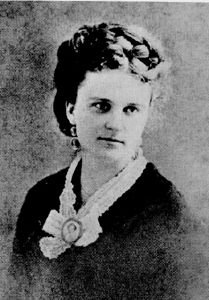
Kate Chopin (Public domain, via Wikipedia)

There are a few American authors who, when they pop up as a Library of America (LOA) Story of the Week, I try to read. These include Edith Wharton, Willa Cather and Kate Chopin. I don’t always manage to read them, but I have read the latest Kate Chopin story they’ve published, “Her letters”. And my, what a powerful one it is. Yes, I know, most of her stories are powerful, but this is certainly up there.

The story is pretty simple, plot-wise, though I shall avoid spoiling it as you may wish to read it from the link below. It starts with a woman, sitting by a “generous wood fire … in an ample fireplace” though outside is “a leaden sky in which there was no gleam, so rift, no promise”. She’s decided that she needs to destroy some letters that, we soon realise, relate to an adulterous affair. She’s been meaning to do this for four years in fact, but they’ve “sustained her … kept her spirit from perishing utterly”. However, she believes her days are numbered and, like many diary-writers and letter-owners, she fears their impact on those left behind, particularly on one “near to her, and whose tenderness and years of devotion had made him, in a manner, dear to her.” Her husband, in other words. The “in a manner” here is telling, isn’t it?

But, she can’t do it. Chopin’s description of her pain at the idea of losing them is visceral. What should she do? She lights on a solution, which is to leave them “in charge of the very one who, above all, should be spared knowledge of their contents.” So, she ties them back up, and leaves them with this note:

“I leave this package to the care of my husband. With perfect faith in his loyalty and his love, I ask him to destroy it unopened.”

Of course, she does die first, and he finds the bundle of letters with the note. (On a day much like that day we’d met her: “The day was much like that day a year ago when the leaves were falling and rain pouring steadily from a leaden sky which held no gleam, no promise.”) What do you think he does?

It’s another powerful story from Chopin, about love, passion, adultery – and also honour and trust. It is a story of its time, but there’s a universality to it too. What is so good about it, though, is the controlled way Chopin unravels the plot, and her language. It’s a little full-blown to our ears, perhaps, but she sustains melancholic tones so well, while at the same time conveying character and emotion.

Without spoiling the ending, I’ll share another excerpt. When the husband finds the bundle of letters, he guesses, of course, that they contain a secret, one that may unlock to him something about this wife whom he’d known “to have been cold and passionless, but true, and watchful of his comfort and his happiness.” He’s affected, but he ponders:

… she had embodied herself with terrible significance in an intangible wish, uttered when life still coursed through her veins; knowing that it would reach him when the annihilation of death was between them, but uttered with all confidence in its power and potency. He was moved by the splendid daring of the act, which at the same time exalted him and lifted him above the head of common mortals.

The conclusion is predictable when you get there, but Chopin leads you carefully along with the husband as he works through the problem. The story has no simple answer, and certainly no condemnation, which is Chopin’s way. She doesn’t judge or pontificate. Rather, she leaves it open for (or, forces!) the reader to consider the ways in which our actions affect others, not to mention the issue of love, passion and marriage, and the accommodations we do or don’t make.

As with other stories by her – including “Fedora”, the last one I reviewed – Chopin didn’t immediately find a publisher for “Her letters”. LOA says:

When she finished the story in December 1894, Chopin sent it off to The Century, which had published several of her previous submissions. By this time Chopin was a well-known and respected writer, but the story was rejected—almost surely because it dealt with a woman’s adulterous affair. The magazine’s editor, Richard Watson Gilder, “felt that fiction should be pleasant and avoid the horrifying, the indelicate, or the immoral,” as Chopin scholar Per Seyersted puts it.

Vogue, though, had no such compunctions – and published it as they had other previously rejected stories of hers. One day I’ll read a biography of her …

Let me know what you think, if you read it (just 8 pages) at the link below.

Note: My other Kate Chopin reviews are A pair of silk stockings, After the winterA respectable womanDésirée’s baby, Morning walk and Fedora.

Kate Chopin
“Her letters”
First published: Vogue, April 11 and 18, 1895
Available: Online at the Library of America
Kate Chopin, Fedora (Review)

Kate Chopin

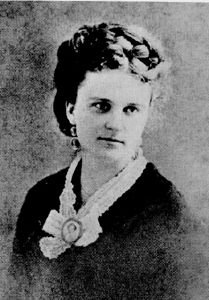
Kate Chopin (Public domain, via Wikipedia)

Time methinks for another Library of America (LOA) Story of the Week, particularly since one of their recent offerings was one of my favourite American authors, Kate Chopin. “Fedora” is the sixth story by Chopin I’ve discussed here, and is probably the shortest, more of a “sketch”. In fact its original title was apparently ““The Falling in Love of Fedora. A Sketch”

If you’ve read any of my previous posts, or her novel The awakening which I read a couple of times before blogging, you’ll know that Chopin was not afraid to tackle confronting subjects, like suicide, adultery, and miscegenation. LOA’s notes briefly discuss the controversy surrounding The awakening. Words such as  “morbid,” “sex fiction,” “poison,” were applied to it, and the clearly more conservative, younger, Willa Cather, whom I’ve also reviewed here, said that “I shall not attempt to say why Miss Chopin has devoted so exquisite and sensitive, well-governed a style to so trite and sordid a theme.”

Well, of course, many of us do know why she explored the themes she did in puritanical late-nineteenth century America, and we admire her for doing so. LOA explains that while her stories were usually sought after, some were a little too hot to handle. “Fedora” was one such, being “turned down by the national magazines that often competed for her work”, only appearing “in an upstart literary journal in her hometown of St. Louis”.

So, what is it that was so shocking about “Fedora”? Well, there’s the rub, because it’s one of those short stories that leaves you wondering. Fedora is 30 years old – and is described pretty much as the quintessential spinster:

The young people—her brothers’ and sisters’ guests, who were constantly coming and going that summer—occupied her to a great extent, but failed to interest her. She concerned herself with their comforts—in the absence of her mother—looked after their health and well-being; contrived for their amusements, in which she never joined. And, as Fedora was tall and slim, and carried her head loftily, and wore eye-glasses and a severe expression, some of them—the silliest—felt as if she were a hundred years old. Young Malthers thought she was about forty.

The story concerns her going to the station – driving the horse and cart – to pick up young Malthers’ sister who is returning from college. Young Malthers is, we are told, 23 – and Fedora has become fascinated by him, suddenly realising he is a man – “in voice, in attitude, in bearing, in every sense — a man”. Now, early in the story, we’d been told that:

Fedora had too early in life formed an ideal and treasured it. By this ideal she had measured such male beings as had hitherto challenged her attention, and needless to say she had found them wanting.

But, suddenly she is aware of him, she watches him:

She sought him out; she selected him when occasion permitted. She wanted him by her, though his nearness troubled her. There was uneasiness, restlessness, expectation when he was not there within sight or sound. There was redoubled uneasiness when he was by—there was inward revolt, astonishment, rapture, self-contumely; a swift, fierce encounter betwixt thought and feeling.

Fedora could hardly explain to her own satisfaction why she wanted to go herself to the station for young Malthers’ sister. She felt a desire to see the girl, to be near her; as unaccountable, when she tried to analyze it, as the impulse which drove her, and to which she often yielded, to touch his hat, hanging with others upon the hall pegs, when she passed it by.

It seems, then, that she is in love with him, as the original title encourages us to think – or that she, at least, feels a desire or passion for him. So, when she picks up Miss Malthers, why does she do what she does? That is the question – and it’s one I’m not going to answer, because that would be a spoiler and because the story is so short that you can read it, and ponder it, yourself. And anyhow, I’m still thinking about it myself, given the way Chopin teases us. Suffice it to say that, however you read it, Chopin was challenging her readers to think about desire – its origins, its expression, and its impact on the person who desires.

This is a beautiful and intriguing little “sketch”, though to call it that doesn’t fully do it justice.

Note: My other Kate Chopin reviews are A pair of silk stockings, After the winterA respectable womanDésirée’s baby and Morning walk. My, they are building up aren’t they?

Kate Chopin
“Fedora”
First published: Criterion, February 20, 1897
(Under the pseudonym, La Tour)
Available: Online at the Library of America

Kate Chopin, A pair of silk stockings (Review)

Kate Chopin

Kate Chopin (Public domain, via Wikipedia)

Over the years, the Library of America‘s (LOA) Story of the Week has published seven short stories by Kate Chopin, and I’ve posted on four of them. Now comes my fifth. It was actually published in February. I noted it, printed it out, but have only now found time to sit down and read it, and of course, I’m glad I did. It’s another little treasure.

Most of Chopin’s writing – including her most famous novel, The awakening, which I’ve read twice – offers commentary on the lives of women in late nineteenth century America. “A pair of silk stockings”, as you can probably tell from the title, doesn’t depart from this.

I enjoyed, as I usually do, LOA’s introductory notes. They are always succinct, yet hone in on something particularly relevant about the writer and the work. The notes to this story remind us that Chopin met with some resistance to her stories, both because of her themes and what literary historian Richard Gray calls her “subversive streak”. Go Chopin! However, what interested me most in these notes was something I’d forgotten, Chopin’s interest in Guy de Maupassant. I loved Maupassant’s short stories in my youth, and still have my little now-yellowing paperback of his stories. Chopin wrote about why she liked Maupassant, in 1896:

Here was life, not fiction; for where were the plots, the old fashioned mechanism and stage trapping that in a vague, unthinking way I had fancied were essential to the art of story making. Here was a man who had escaped from tradition and authority, who had entered into himself and looked out upon life through his own being and with his own eyes; and who, in a direct and simple way, told us what he saw.

LOA’s notes continue to say that Maupassant’s influence on her was substantial, particularly in his “emphasis on psychological character development” and in the use of “the surprise or disconcerting ending”. That’s certainly the case in “Desirée’s baby” (my review).

But today’s post is about “A pair of silk stockings”, which critics argue is one of her best short stories, one critic contending, in fact, that “it is one of the best pieces in turn-of-the-century American literature by anyone”. It is certainly an excellent read – a quiet slice of life with a little bite. The story concerns “Little Mrs Sommers” who suddenly finds herself with a little windfall of $15. We are not told the source of this money, because that’s not the point. The point is how it makes Mrs Sommers feel and what she does with it.

First, though, who is Mrs Sommers? We don’t know a lot about her, but enough. She has a few children – “the boys and Janie and Meg”. I’m sure Chopin is making a little point in naming the girls but not the boys. Anyhow, she is not well off, and has to scrimp and save to dress her children. She “knew the value of bargains” and could line up at sales and “elbow her way if need be” with the rest of them.  She has not always been poor apparently, having once known “better days”, but she doesn’t think of those now:

She had no time—no second of time to devote to the past. The needs of the present absorbed her every faculty. A vision of the future like some dim, gaunt monster sometimes appalled her, but luckily to-morrow never comes.

So, this money, which has “given her a feeling of importance such as she had not enjoyed for years”, needs careful consideration to ensure she makes “proper and judicious use” of it. She doesn’t “wish … to do anything she might afterward regret”.

That’s the set up. As you can probably imagine, for all her careful planning, things work out very differently. The day she goes shopping she’s “faint and tired” having forgotten to eat lunch with all the “getting the children fed and the place righted, and preparing herself for the shopping bout”. She goes shopping – yes – but what she buys and does with her money is nothing like what she planned. Now I could tell you what she spends it on, without telling you the punch-line, but I won’t. It’s only five pages, and is a good read – not only for what it tells us but for its insight into turn of the century American life.

And this last point is what critic Robert D Arner says we should see in the story. It’s not just a story about a poor, struggling woman, but about the whole society, one that is “caught between traditional ideas of feminine roles and the newly emergent American ‘culture of consumption’.” This is not the gut-wrenching Chopin of The Awakening or “Desirée’s baby” but it’s no less poignant for its recognition of the pressures women face in negotiating their lives in a world over which they have little control – not to mention a world in which the temptations to buy are starting to abound.

Kate Chopin
“A pair of silk stockings”
First published: Vogue, September 16, 1897
Available: Online at the Library of America

Kate Chopin, After the winter (Review)

Kate Chopin

Kate Chopin (Public domain, via Wikipedia)

I am, as many of you know, a Kate Chopin fan and I therefore tend to keep an eye out for her in the Library of America‘s (LOA) Story of the Week program. “After the winter”, one of her earlier works, was an LOA story in April and so here I am for the fourth time writing about Kate Chopin.

According to LOA’s notes, “After the winter” was written in late 1891, expressly for Easter, and was bought by Youth’s Companion. However, they never published it. LOA writes:

Chopin’s story includes a mention on the very first page to [?] the calamity that had turned the main character into a misanthrope; while he was away fighting in the Civil War, his wife had grown “wanton with roaming” and had left him. It was Chopin’s first reference in her fiction to an unfaithful spouse, and it’s possible, one biographer [Emily Toth] suggests, that youth in the 1890s needed to be protected from even a passing reference to adultery – especially one that describes “women whose pulses are stirred by strange voices and eyes that woo”.

Chopin sold it again a few years later and it was finally published in 1896.

Despite the apparently risqué reference to “wanton” women, “After the winter” is a lighter story than most of her work that I’ve read. It is also a more straightforward read, but this doesn’t mean it’s not a good read. Chopin has a wonderful ability to engage readers with strong characters and effective imagery.

The story is set at Easter, which of course symbolises rebirth. As we read the story, we wonder whether this symbolism is going to play out literally or ironically, and Chopin manages to maintain our interest and suspense about this right to the end. The plot is fairly simple. Monsieur Michel had returned from the Civil War some 25 years prior to the time of the story to find his wife gone and his child dead

But that was no reason, some people thought, why he should have cursed men who found their blessings where they had left them

or, indeed, why he should have “cursed God”. However, he did and still does, so that by the time of the story he is living pretty much as a hermit, engaging with people as little as possible. Consequently, exaggerated stories had built up about things he’d done and was capable of doing. Enter a young girl, Trézanine, who has no flowers to contribute to the Easter church service. She ventures to the area around Monsieur Michel’s hut and picks all the flowers there, setting off a reaction in Michel that leads us to the story’s conclusion (which I’ll not divulge here).

What this story shows is Chopin’s writing skill and ability to develop a plot, maintain reader engagement, and use effective imagery to convey meaning and tone. The title, for example, is also both literal and metaphoric. Easter, of course, comes after winter, but our misanthrope’s life has, for 25 years, been a wintry one. Chopin makes a clever and ironic link between spring-affected Trézanine and winter-bound Michel. She needs to go hunting for flowers because none can grow in the “bleak, black yard” of her father’s blacksmith shop, while his “low, forbidding” “kennel” that seems to “scowl” is surrounded by “brilliant flowers”.

The story is told in three short acts. In the first we are introduced to Trézanine and Michel, and learn of Trézanine’s plan to go flowerpicking. In the second, Trézanine picks the flowers and Michel comes into town to confront the townspeople, whom he finds in church for the Easter service. The final act resolves the tension … but I won’t give that away except perhaps to say that it has biblical elements.

Another good story from Chopin that I’d happily recommend.

Note: My other Kate Chopin reviews are A respectable womanDésirée’s baby and Morning walk

Kate Chopin
“After the winter”
First published: New Orleans Times-Democrat, April 5, 1896
Reprinted in the story collection A night in Arcadie (1897)
Available: Online at the Library of America

Kate Chopin, A morning walk

Kate Chopin

Kate Chopin (Public domain, via Wikipedia)

It’s been some time since I read (and therefore reviewed) a Library of America offering, but when I saw another Kate Chopin offering pop up a few weeks ago, I couldn’t resist it. And so, I printed it off, but have only just managed to read it. Well, what a surprise…

I thought about starting this post with “And now for something completely different” because this story, “A Morning Walk” (1897), is significantly different from my previous three Chopins – her novel The awakening, and the two short stories I’ve previously reviewed here. All is explained though in the brief but useful introductory notes from LOA:

Chopin gained fame (and notoriety) during the 1890s startling readers with her handling of topics considered bold for the era, but she also continued to publish light or pleasant fiction for local magazines. Among these latter stories are several holiday tales – a genre whose prevalence, along with its promise of good pay, proved attractive to writers during the nineteenth century on both sides of the Atlantic, from Charles Dickens and Washington Irving to Robert Louis Stevenson and Willa Cather (who published under a pseudonym).

And so to “A Morning Walk”. It is a short short story about Archibald’s morning walk. It was originally published under the title “An Easter Day Conversion” which gives a clue to its meaning. Archibald is around forty, not concerned about looking older than he is, and inclined to focus on the practical rather than emotional or sentimental things in life. In the fifth paragraph we are told that:

Archibald has started out for a walk, not because the day was beautiful and alluring but for the healthful exercise, and for the purpose of gathering into his lungs the amount of pure oxygen needed to keep his body in good working condition.

However, the language in the third paragraph hints at something else going on around him, even if he’s not consciously aware of it: the irregular streets “cuddle up” to the houses, “riotous colours” are abroad, and there is “a velvety gust” which “softly” beats his face. And in the fourth paragraph we are told that these sensations of spring “for some unaccountable reason … were reaching him to-day through unfamiliar channels”. Instead of his usual interest in flowers being “to dismember their delicate, sweet bodies for the purpose of practical and profitable investigation”, on this morning “he saw only the color of the blossoms, and noted their perfumes. The butterflies floated unmolested within his reach …”.

On this walk, and in this frame of mind, he meets a young woman, carrying lilies. His thoughts take a sensual turn as she reminds him of “peaches that he had bitten; of grapes that he has tasted; of a cup’s rim from which he has sometimes sipped wine”. The references to the lilies – which tend to symbolise innocence and purity – are even more pointed: their “big wax-like petals” risk being “bruised and jostled”.

And so he accompanies her to church, surprising the congregation with his presence, and hears the beginning of the traditional Easter sermon, “I am the Resurrection and the Life…”. Life seems about to change for Archibald, for the better, as he senses and accepts “the poet’s vision, of the life that is within and the life that is without, pulsing in unison, breathing the harmony of an undivided existence”. The aforementioned “lilies” – and their bruising – add a little edge which I’d expect of Chopin, but the reading is, I believe, intended to be a positive one.

Note: My other Kate Chopin reviews are A respectable woman and Désirée’s baby.

Kate Chopin, Désireé’s baby

Kate Chopin

Chopin (Public domain, via Wikipedia)

I read Kate Chopin‘s short story “Désireé’s baby” (1893) back in March when Kirsty mentioned it in her comment on my last Chopin post, but I didn’t blog it then. However, when it appeared a couple of weeks ago as a Library of America selection, I felt its time had come. But, what to say? It is, in a word, gut-wrenching.

The first short story to create a lasting impression on me was Guy de Maupassant‘s “The necklace” (1884). It was that short story, really, that launched my enjoyment of short stories. I found them particularly appropriate for my student days when I couldn’t justify reading a novel but wanted some escape from set texts. I was consequently interested to read in the Library of America’s introductory notes to “Désireé’s baby” that Chopin has been compared to such writers as Maupassant and Flaubert. I can see the connection.

“Désireé’s baby” starts off gently – and, more to the point, innocuously:

As the day was pleasant, Madame Valmondé drove over to L’Abri to see Désireé and the baby.

It made her laugh to think of Désireé with a baby. Why, it seemed but yesterday that Désireé was little more than a baby herself…

We then discover that Désireé had been an abandoned baby and brought up by the childless Madame Valmondé and her husband, hence I suppose her name. As this (very) short story unfolds, subtle hints of something not quite idyllic are introduced. A young man of an old wealthy family, Armand Aubigny, falls in love with and insists on marrying the nameless, but now 18-year-old Désireé. He fell in love “the way all the Augibgnys fell in love, as if struck by a pistol shot”. What an odd image to use for love eh?

Then we hear that Aubigny is a strict master of his estate. The home is “sad-looking” with its roof “black like a cowl” and “solemn oaks” growing near it. And, more telling, under his rule “his negroes had forgotten to be gay, as they had been during the old master’s easy-going and indulgent lifetime”. Set against this is Désireé in her “soft white muslins and laces”, so we are not surprised when we read that

Marriage, and the birth of his son, had softened Armand Aubigny’s imperious and exacting nature greatly. This was what made the gentle Désireé so happy, for she loved him desperately. When he frowned she trembled, but loved him. When he smiled, she asked no greater blessing of God. But Armand’s dark, handsome face had not often been disfigured by frowns since the day he fell in love with her.

Now, there is a clue to the dénouement in this excerpt, but if you don’t know the plot I’m not giving it away. All I’ll say is that Chopin’s writing is superb in the way she uses imagery and irony to subtly set the scene and leave the clues so that the conclusion, though shocking, meets Amanda Lohrey’s criteria for endings.

In less than 6 pages, Chopin explores a complex set of themes, including the psychological and social ramifications of young love, old wealth, race and gender, with a clarity that is breath-taking. I’m not surprised that it is a much-anthologised and studied story.

Kate Chopin, A respectable woman

Kate Chopin

Kate Chopin: What a lovely face (Public domain, via Wikipedia)

Besides Jane Austen’s works, there are only a few novels that I have read more than once. One of these is Kate Chopin’s The awakening. I was trying to think of an adjective to describe it or my feelings upon reading it, but couldn’t think of anything that wasn’t clichéd. The best way to convey my response is, in fact, the way I have – and that is to say that I’ve read it more than once!

Kate Chopin’s short story, “A respectable woman” (1894), is this week’s Library of America (LOA) offering – and you can read it here. I haven’t read and blogged all of the LOA stories that have lobbed in since I subscribed, but I have done so rather more than I originally expected. This is because they have confronted me with:

  • Authors I’ve never heard of, but who, by LOA’s brief introduction, have intrigued me;
  • Authors I’ve heard of but haven’t yet read, and so have taken the opportunity to be introduced; and
  • Authors I’ve read before and loved (or at least liked a lot!).

As you’ve already realised, Kate Chopin falls into this last category. I was stunned by Chopin when I first read her back in the early 1980s – and this was because I hadn’t before read a 19th century novel that was quite so honest about women’s experience. Thank you Virago!

Written in 1894, 5 years before The awakening was published, “A respectable woman” made me laugh. That’s not quite what I expected when I started it. After all, it is by the author of The awakening! “A respectable woman” has a simple plot. Mrs Baroda (we never learn her first name, she being the woman of the title!) and her husband have just come to the end of the of a busy entertaining period, and she is looking forward to “a period of broken unrest, and undisturbed tête-a-tête with her husband”, but it’s not to be. Her husband, Gaston, has invited his friend Gouvernail to stay…

This is a very short story – just 4 pages – but Chopin is well capable, through some well chosen words, of leading us along. The title for a start sets us up with a number of impressions and expectations that tease us as the story progresses. Will she, won’t she, is the question that follows us. The introductory description of Gouvernail subtly tells us as much about her (and her life with her husband) as about him:

He had been her husband’s college friend; was now a journalist, and in no way a “man about town”, which were, perhaps, some of the reasons she had never met him.

Clearly they are a well-to-do couple moving in other circles. They have a good though not perhaps a passionate relationship: “her husband – who was also her friend”. The story is 3rd person, and told from her point of view – and it explores her reactions to this rather taciturn, self-possessed man who, towards the end, admits that all he now seeks is “a little whiff of genuine life”. What she is learning about herself though is something different:

She wanted to draw close to him and whisper against his cheek – she did not care what – as she might have done if she had not been a respectable woman.

This story is not as iconoclastic as The awakening, but it moves in that direction with Chopin exploring the inner workings of women and their hearts in an honest and sympathetic way. The story plays ironically on the notion of respectability and what that means for women. As for whether she does or doesn’t, well, that’s for you to find out. My lips are sealed.