Monday musings on Australian literature: Writers in the news (1)

Australian writers have been capturing attention – here and overseas – in the last few months. I’ve been noting these stories as they’ve popped up, and kept planning to post on them, but somehow, time just slipped by and more stories kept coming. Consequently, most Aussie readers here will know most of these news items by now, but there might be a surprise, and, anyhow, I’m hoping they might interest non-Aussie readers of my blog. (I am numbering this post because I just might be inspired to write another one sometime.)

Alexis Wright’s multiple awards
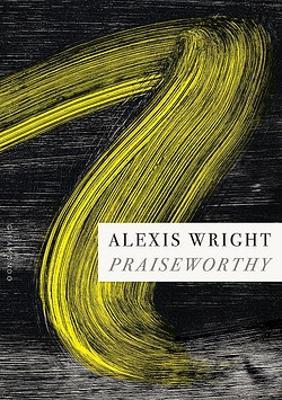
This year, Alexis Wright has won several significant literary awards. She was awarded the Stella Prize in March and the Miles Franklin Prize in August for Praiseworthy, making her the first author to win these two prizes in one year. (Each of these is worth $60,000). In May, it was also announced that she’d won the UK’s James Tait Black Prize for Fiction (worth 10,000 British pounds or $19,000), also for Praiseworthy. Then, this month, she was awarded the triennial Melbourne Prize for Literature which is a body-of-work prize to a writer who has made an “outstanding contribution to Australian literature and to cultural and intellectual life”. It too is worth $60,000.

Melissa Lucashenko’s multiple awards
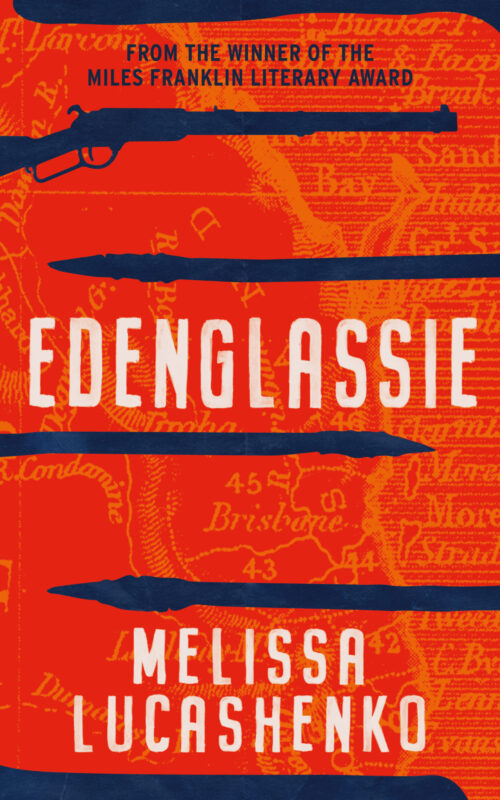
Lucashenko, like Wright, is no stranger to literary awards, but this year, she too has taken out several significant awards, all of them for her first work of historical fiction, Edenglassie (my review): the $100,000 ARA Historical Novel Prize, the $50,000 Margaret and Colin Roderick Literary award; the $30,000 Queensland Premier’s Award for a Work of State Significance, and the $25,000  Premier’s Prize for Fiction. She also won the Fiction award in this year’s Indie Book Awards.

Richard Flanagan’s prize and ethical stand
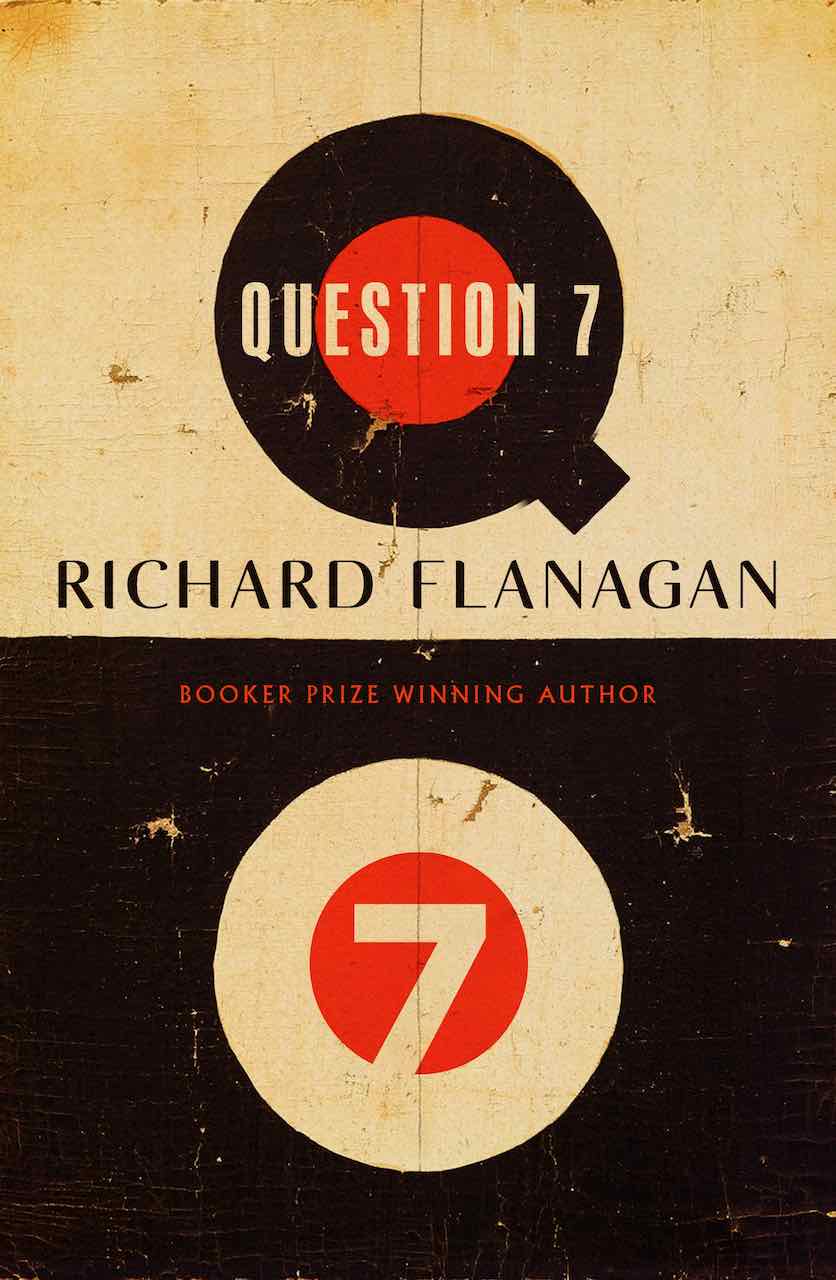
Another recently announced award is Richard Flanagan winning UK’s 2024 Baillie Gifford Prize for Nonfiction for his most recent book Question 7 (my review). This prize is worth £50,000 (or, AUD97,000). If you’ve heard this news, you will also know, as the ABC reported, that Flanagan had pre-recorded his acceptance speech because he was trekking in the Tasmanian wilderness at the time. In this speech, he said he had “delayed” accepting the prize money until sponsor Baillie Gifford put forward a plan to reduce its investment in fossil fuels and increase investment in renewable energy. Flanagan said that “on that day, I will be grateful not only for this generous gift, but for the knowledge that by coming together in good faith, with respect and goodwill, it remains possible yet to make this world better.”

Flanagan is not a rose-coloured glasses idealist. He is not asking for the world, but simply for a plan. The ABC quotes him further:

“… were I not to speak of the terrifying impact fossil fuels are having on my island home, that same vanishing world that spurred me to write Question 7, I would be untrue to the spirit of my book.

[BUT]

“The world is complex. These matters are difficult. None of us are clean. All of us are complicit. Major booksellers that sell my books are owned by oil companies, major publishers that publish my friends are owned by fascists and authoritarians … As each of us is guilty, each of us too bears a responsibility to act.”

I like this honesty and realism. Let’s see what happens next. Will a writer’s stand – which compounds what I believe is already increasing criticism of Baillie Gifford – see a company decide it too can make a stand?

Jessica Au’s novella to be filmed
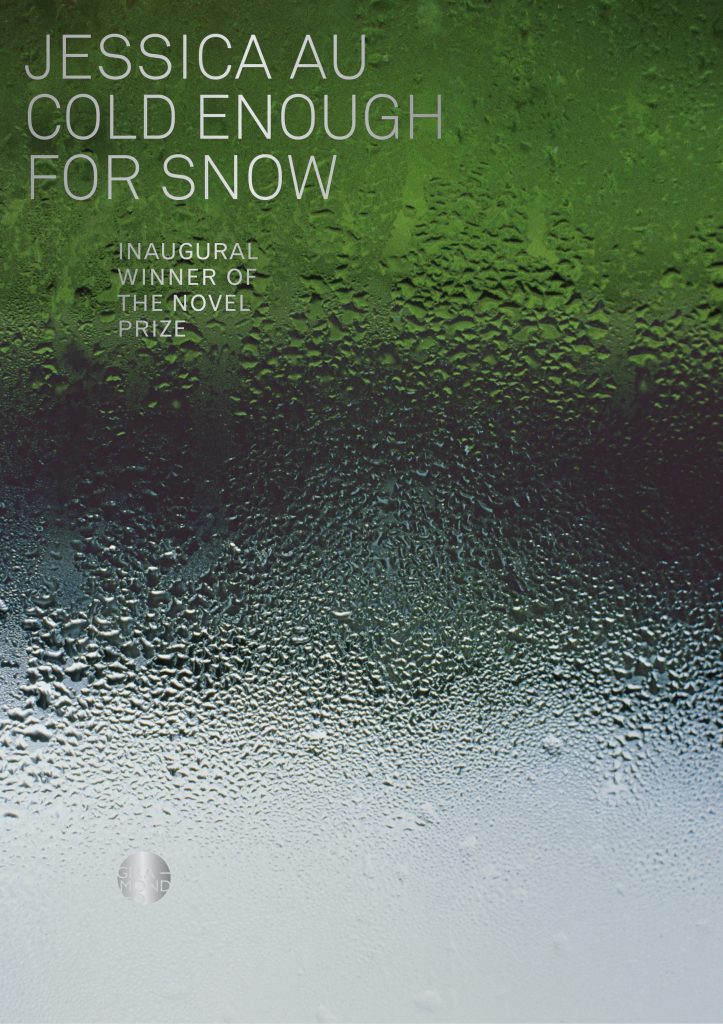
Meanwhile, in non-award news, Jessica Au’s award-wining (ha!) novella, Cold enough for snow (my review), is to be made into a film. According to Variety it will be a U.K.-Japan-Australia-Hong Kong co-production and filming will begin “in fall 2025” (which presumably means next September to December). I first read about it on publisher Giramondo’s Instagram account. They quoted theatre veteran-debut director Jemima James,

I hope the film, like the book, creates space for audiences to think and feel deeply about the important people in their lives, about the relationships that are central to them …I hope it provokes shifts of perspective, new understanding, new compassion for the people they love, however complex or complicated that love might be!

Gail Jones’ Lifetime Achievement Award

I also saw on Instagram – this time Text Publishing’s account – that Gail Jones had received Creative Australia’s Award for Lifetime Achievement in Literature. In other words I’m bookending, more or less, this news post with body-of-work awards. As Text writes, the award “recognises her impressive body of work, and her ongoing mentoring of young writers”.

Creative Australia’s website tells me that Jones was one of “eleven leading artists to receive 2024 Creative Australia Awards”.  They quote their CEO, Adrian Collette AM:

‘It is our immense honour to celebrate these remarkable artists whose work is making an impact in communities across the nation. Each of the recipients contributes their unique voice to our cultural story.’

I recently reviewed Jones’ novel Salonika burning (my review) but I have more on my TBR.

Any comments on these news items? Or, indeed, do you have any to add? (Not that my aim here is to be comprehensive. That would be impossible!)
Novellas in November 2023: Week 1, My year in novellas

I love novellas and have written on and reviewed novellas almost since this blog started, because I love the form, but I have only tinkered around the edges of Novellas in November (run by Cathy of 746 Books and Rebecca of Bookish Beck). Last year, I wrote a Monday Musings on Classic Australian novellas and the year before I did one on Supporting Novellas (here in Australia). Otherwise, I have written a few novella reviews for the month. But I have not focused on the weekly themes suggested by Cathy and Beck. I may not again, because I might become a bit repetitive, but I’m going to start at least.

However, this has been a very strange reading year for me, so I won’t have a lot to say, which is probably good, as it means my posts will be short for you to read! For Week 1, which just runs from 1 to 5 November, the theme is “My year in novellas”. It asks us to write about novellas we’ve read since last November.

Well, I’ve only read one, and that was Jessica Au’s quiet, meditative, award-winning Cold enough for snow (my review). It was the inaugural Novel Prize winner, and also won the Victorian Premier’s Literary Awards prize for fiction (as well as being the overall winner). It’s been shortlisted for more prizes, including, most recently the Prime Minister’s Literary Awards fiction prize. It’s one of those books that’s perfect for the novella form, because it’s an intense, concentrated book rather than a plot-driven page-turner. It says a lot that it has held its own so well in the “novel” world – in terms of awards and overall critical reception – despite its short length. (See publisher Giramondo’s site for its awards to date.)

Cold enough for snow tells the story of a mother-daughter trip to Japan, but its focus is not the trip. Told from the daughter’s point-of-view, it tells about a relationship that is characterised by closeness and distance, by tender caring and frustration, by needs that aren’t always satisfied perhaps because they can’t always be, by a desire to connect. For me it was about the paradoxical nature and mutability of life. But everyone who reads this book – as in my reading group – seems to see something different because it speaks so closely to our individual experiences of life and close relationships. The Prime Minister’s Literary Award judges capture this well in their comment (see the Giramondo site above) that it is “intricately structured and with a flow and reach that, like all remarkable writing, is without boundaries”. “Without boundaries” is a good description …

Au’s book might have been my only novella review in the last twelve months, but all has not been quiet on the novella front. Back in July I wrote a Monday Musings about support for “short novels” from various points of view over the first half of the 20th century – that I found in Trove. And, just a few days ago I wrote about the winners of the new 20/40 novella prize being run by Finlay Lloyd publishers. I plan to read these two winners for this year’s Novellas in November.

Written for Novellas in November 2023

Jessica Au, Cold enough for snow (#BookReview)

What did I say about mothers and daughters recently? Just when I thought I’d done with them for the year, along came another, Jessica Au’s gorgeous novella, Cold enough for snow. However, before I get to that, let me describe the award it won, The Novel Prize.

Cold enough for snow was the inaugural winner of this plainly named, but ambitious prize which was established by three independent publishers, Australia’s Giramondo Publishing, the UK and Ireland’s Fitzcarraldo Editions, and North America’s New Directions. It is “a biennial award for a book-length work of literary fiction written in English by published and unpublished writers around the world”, and looks for “works which explore and expand the possibilities of the form, and are innovative and imaginative in style”. The winner receives US$10,000 and simultaneous publication of their novel in Australia, New Zealand, the UK and Ireland, and North America.

Jessica Au’s novel was selected from over 1500 entries worldwide, and was published in the above-named territories this year, but is to be published in many more. It has made quite a splash, and was one of the most favourited Australian books in my recent 2022 Favourite Picks post. Those who nominated it used words like “meditative”, “mesmerising”, “elegance”, “exquisite” and “quietly brilliant”. I would agree with those.

Told first person, Cold enough for snow revolves around a holiday in Japan organised by a daughter for herself and her mother. They walk, and travel by train; they visit shops, cafes, galleries, churches and temples, the things you do in Japan. Very few places are identified, keeping the focus on the characters and the ideas being explored, rather than on travel. As someone who has visited Japan several times, I was initially frustrated by this. I wanted to compare my experiences with theirs, but I soon realised that this was not that sort of book. Once I accepted that, I also realised that it was, in fact, the sort of book I enjoy.

By this I mean that it is one of those quiet, reflective books, ones without a lot of plot – albeit I like plots too – but with lots to say about life and relationships, and with much to make you think. The novel has an overall chronological trajectory following the daughter and her mother’s journey but, along the way, the daughter – our first-person narrator – digresses frequently to consider other people and relationships in her life, particularly with her sister and partner. It is in these digressions, in particular, that we get a sense of what this trip is about.

Ostensibly, the book is about the daughter and her mother, who live in different Australian cities, reconnecting. In the opening paragraph, the daughter describes their walking to the train station:

All the while my mother stayed close to me, as if she felt that the flow of the crowd was the current, and that if we were separated, we would not be able to make our way back to each other, but continue to drift further and further apart.

However, it soon becomes clear that it is the daughter who is more concerned about drifting further apart. A couple of pages in she mentions that on a previous trip to Japan with her partner Laurie – one of the few named people in the novel – she “remembered thinking” that she wanted to share some of the fun she’d had with him with her mother. On the next page, she refers to a bonsai plant that her mother had had, and “remembered disliking it”, perhaps because it looked “unnatural, lonely, this very detailed, tiny tree, almost like an illustration, growing alone when it looked as if it should have been in a forest”. Subtly, Au has conveyed in the opening pages that the seemingly sure and in-control young woman we thought we had met is not that at all. Gradually this becomes more explicit. Nearly halfway through the novel, in one of her many digressions, she describes house-sitting for a lecturer and comments that “somehow it felt like I was living my life from outside in”.

There is a melancholic tone to this novel, which is not to say it is unhappy. It is simply that our narrator is uncertain about her life, while her mother, for whom she feels responsible, is quietly self-contained. Her relationships – with her partner, Laurie, with her sister, and with her mother – seem positive enough. It’s a ruminative book, in which the daughter’s thoughts roam between history, art, and life past and present, seemingly at will, but of course all carefully structured by Au to lead us to a deeper understanding. It’s a short book but I took time to read it because the thoughts and ideas, so quietly and delicately expressed, would constantly pull me up – because I am used to looking for meaning and answers in my reading. For example, early in the novel, she recounts looking at some pots in a museum. They were “roughly formed but spirited”, their handmade utility “undifferentiated from art”. I could grasp these ideas. So, it’s about art and life I thought, but then later, discussing Laurie’s father’s art, the daughter remembers feeling she didn’t “even know enough to ask the right questions”. And I realised that, perhaps, neither did I – and that this book, in which time and memory move fluidly rather than exactly, is about something very different.

The Japanese setting is perfect for this novel, because Japan too is paradoxical. In the cities, particularly, where our two spend most of their time, Japan is a bustling place but it also, sometimes in the smallest ways, manages to simultaneously exude stillness and quietness. Similarly telling is that the trip takes place in autumn – the mother and daughter’s favourite season – which is surely the season most conducive to reflection, and to the idea of change over which we have no control.

Early in the novel, one of the issues confronting our narrator becomes clear, that concerning whether to have children. She and Laurie have been discussing it exhaustively – between themselves, with their friends, and, it seems, also with her mother. She’s aware that, unlike her own generation, her mother very likely never had the opportunity to choose, and she comes to wonder

if it was okay either way, not to know, not to be sure. That I could let life happen to me in a sense, and that perhaps this was a deeper truth all along, that we control nothing and no one, though really I didn’t know that either.

Cold enough for snow is not easy to write about because its very essence is the mutability of life. How do you pin down something that seems to be about being unpinnable? And yet, Au manages to pin down this very fact, or, at least, to convey the idea that, as the daughter glimpses near the end, “perhaps it was alright not to understand all things, but simply to see and hold them”. A good book, methinks, to end the year on!

Lisa also reviewed this novel.

POSTSCRIPT: An excellent interview with the author on the publisher’s website.

Jessica Au
Cold enough for snow
Artarmon: Giramondo, 2022
98pp.
ISBN: 9781925818925