Northanger Abbey musings (1)

Northerner Abbey illus br Brock

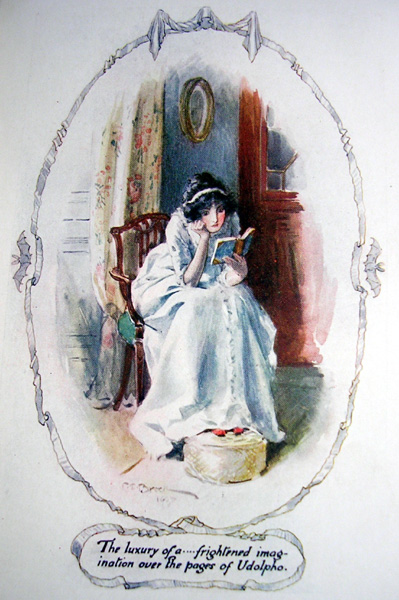
Ch 9, illus. by CE Brock (Presumed Public Domain, solitaryelegance.com)

My Jane Austen group is reading Northanger Abbey – again – because this year is the 200th anniversary of its publication. However, I did write about the novel when we did it in 2015, so what to do? Well, the thing is that every time I read Austen something else pops into my mind to think about – and I’d love to share a couple of them.

Now, my group often does slow reads of the novels, and we are doing Northanger Abbey in two parts: up to Chapter 19, which is just before Catherine leaves Bath; and from Chapter 20 to the end which encompasses her arrival in and departure from Northanger Abbey. My comments in this post relate to the first part.

On heroes and heroines

Northanger Abbey, as you may know, spoofs or parodies Gothic novels, which were popular at the time. One of the clues to the parody is the frequency with which Austen refers to her heroine Catherine’s likeness (or not) to “heroines”. The novel commences:

No one who had ever seen Catherine Morland in her infancy would have supposed her born to be an heroine…

And Austen goes on the describe why Catherine is not heroine material. She’s a simple country girl living in an ordinary family in which nothing dramatic happens. Her father is a “very respectable man” who is “not in the least addicted to locking up his daughters”. There are no lords or baronets in the vicinity to create hero intrigues … and so it goes.

However, it’s not this Gothic spoof that I want to discuss, but the whole concept of hero/heroine. It occurred to me as I was thinking about the heroine thread during this read that when I was a student writing essays I always referred to the protagonists of novels as the “hero” or “heroine”. I don’t do this so much now, preferring something like “main character”. I’m guessing this is part of our post-modern world.

But, this is not what I want to talk about either! My question to myself was where did this concept of “hero” and “heroine” come from, so I did a little digging. And here’s my disclaimer, because it was just a little digging that I did. I discovered a couple of things. One is that the poet-playwright-critic Dryden was the first to use the word “hero” in this way in 1697. The site on which I found this went on to say that “it is still commonly accepted as a synonym for protagonist, even when the protagonist does nothing particularly heroic”. Yes!

Britannica.com told me that:

The appearance of heroes in literature marks a revolution in thought that occurred when poets and their audiences turned their attention away from immortal gods to mortal men, who suffer pain and death, but in defiance of this live gallantly and fully, and create, through their own efforts, a moment’s glory that survives in the memory of their descendants. They are the first human beings in literature …

This must be what Dryden was picking up on – a move from a focus on gods to people and their agency in their own lives. Another site (whose link I didn’t capture) said that:

The Novel was a new genre. Contrary to the epic or the drama, the Novel places the hero at the heart of its reflections. For the first time, we have access to the thoughts and feelings of the hero.

I’d argue that Austen, in presenting Catherine to us as she does, is drawing our attention to a transition from the notion of “hero” (or “heroine”) as someone who “live[s] gallantly and fully, and create[s], through their own efforts, a moment’s glory that survives in the memory of their descendants”, like a Gothic novel hero, to more realistic stories about ordinary human beings that she wrote. This is not to say that ordinary human beings can’t be heroic, but it’s a different sort of heroism, nest-ce pas? This is simplistic, I realise, in terms of analysing the “hero” in literature, but it’s given me something to hang my thinking on to.

On “nice”

In a conversation with hero (!) Henry and his sister Eleanor, Catherine asks Henry “do not you think Udolpho the nicest book in the world?”

Now, if you went to school when I did, you were probably told not to use the word “nice” because it’s over-used and meaningless. Well, this is what Henry teases Catherine about. He replies (teasingly, cheekily, condescendingly, depending on your attitude to our hero), “The nicest—by which I suppose you mean the neatest. That must depend upon the binding.”

At this point sister Eleanor steps in and tells Catherine that

“He is forever finding fault with me, for some incorrectness of language, and now he is taking the same liberty with you. The word ‘nicest,’ as you used it, did not suit him; and you had better change it as soon as you can, or we shall be overpowered with Johnson and Blair all the rest of the way.”

“I am sure,” cried Catherine, “I did not mean to say anything wrong; but it is a nice book, and why should not I call it so?”

“Very true,” said Henry, “and this is a very nice day, and we are taking a very nice walk, and you are two very nice young ladies. Oh! It is a very nice word indeed! It does for everything. Originally perhaps it was applied only to express neatness, propriety, delicacy, or refinement—people were nice in their dress, in their sentiments, or their choice. But now every commendation on every subject is comprised in that one word.”

“While, in fact,” cried his sister, “it ought only to be applied to you, without any commendation at all. You are more nice than wise…”

I loved reading that this injunction we all heard in the mid-late twentieth century was “a thing” back in the very early nineteenth. “Nice” has such a fascinating semantic history that I’m not going to explore here – but I can’t resist telling Henry that he’s wrong because my Shorter Oxford Dictionary says that, back around 1500, it originally meant “silly” or “stupid”. Did Austen know that too, and is having a joke on Henry?

What fun Austen is to read …
My literary week (5), or, those reading coincidences

Last time I wrote a My Literary Week post it was because I’d scarcely read that week, but had some literary moments to share. This time it’s because I’ve been reading things which have generated some thoughts that I want to document, but not in long dedicated posts. (I’m feeling lazy). Most have been inspired by those reading coincidences (or synchronicities) where you read something in one place and then it, or something related to it, pops up in another.  See what you think …

Critical critics (and Jane Austen)

Georgette Heyer Regency BuckA week ago, I read a post about Georgette Heyer by blogger Michelle who, knowing my love of Jane Austen, wondered what I thought about Heyer, given she was an avowed Austen fan and wrote about the Regency. I’m afraid I disappointed Michelle because I confessed that I’ve never read Heyer. I tried one a couple of years ago, but I just. couldn’t. get. into. it. I commented on Michelle’s post that what some of those (not Michelle I might add) who try to compare Heyer and Austen miss is that Heyer was writing historical fiction, while Austen was writing contemporary fiction. Austen was writing about her own time, and this makes their works very different. Heyer doesn’t write Jane-Austen sorts of stories. Her stories are not about small villages and a small number of families, but are set on bigger stages and mostly amongst the wealthy. War and high drama are more her subject matter. Austen’s characters are mostly middle class, and even those who are wealthy live in the country and attend quiet social events. Her themes involve critiques of society and human behaviour.

And here comes the synchronicity, sort of. As I was preparing for my local Jane Austen group’s meeting this weekend on Austen’s grand houses, I read the essay “Domestic architecture” by Clare Lamont in Janet Todd’s (ed.) Jane Austen in context. In it, Lamont notes that critics have expressed disappointment at the lack of architectural information or descriptions of interiors in her novels. But, but, but, I say, Austen was writing contemporary fiction. She was writing for readers who knew the homes the wealthy, the middle-class, the parsons, farmers and others lived in. Austen did not have to describe these in detail. Historical novelists do though! So Austen, being the sort of writer she was, used her descriptions to convey character, not to tell us what the places were like.

When we read, it is so important to know the context and genre within which we are reading before we start casting aspersions!

What contemporary readers know

And this brings me to another comment on the topic of what contemporary readers – that is, readers reading books around the time they were written – know. I was mooching through Instagram this morning, and came across an image of mini-pineapples by Iger aforagersheart. She wrote that she’d read a history of pineapples which told her, among other things, that they were used as a symbol of wealth for “fancy Europeans”.

Aha, I thought, Jane Austen used this – and her contemporary readers would have recognised it for what it was, a pointer to the pretensions and focus on money of the character involved, General Tilney in Northanger Abbey. He has “a village of hot-houses” but, oh dear, “The pinery had yielded only one hundred [pineapples] in the last year” he complains to our heroine Catherine. General Tilney, we gradually discover, values people by their money, and is ungenerous to those without. This starkly contrasts with the admirable Mr Knightley in Emma who grows strawberries and apples, in fields and orchards, and shares them willingly with neighbourhood families. He even gives his last keeping apples, to his housekeeper’s dismay, to the poor Bateses:

 Mrs. Hodges … was quite displeased at their being all sent away. She could not bear that her master should not be able to have another apple-tart this spring.

We readers of later times see, of course, this generosity, but we may not know what the pineapples symbolise, and are therefore likely to miss that little early hint to where Austen was going with General Tilney.

Hungary and the war

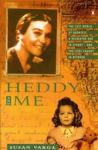
Susan Varga, Heddy and me Book cover

Penguin edition

The third reading coincidence relates to my review last weekend of Susan Varga’s Heddy and me, in which she tells of her mother’s life in Hungary before, during and after the war, and her (and the 1943-born Susan’s) immigration to Australia. A great read. Then, I opened my digital edition of The Canberra Times this morning, and what did I see but an article about local food-blogger Liz Posmyk’s recently published book, The barber from Budapest, which tells the story of her parents through two world wars in Hungary, the challenge they faced in living postwar under Communism, and their subsequent migration to Australia.

There are still many stories to tell about people’s experiences of the two world wars, and about what happened postwar. Whether we’ll ever learn the lessons they provide is another thing.

Christina Stead Week

And finally, of course, I can’t let the post finish without mentioning Lisa’s (ANZLitLovers) Christina Stead Week, with which she has aimed to raise the profile of, and gather together a list of blog reviews for, this often overlooked writer. Stead was, Lisa shares on her post, described by the New Yorker as “the most extraordinary woman novelist … since Virginia Woolf” and by Saul Bellow as “really marvellous.”

I have contributed two posts – one on the story, “Ocean of story”, and another on the first three stories in the Ocean of story collection. I thoroughly enjoyed reading these, and thank Lisa for giving me the impetus to read them.

My literary week (4), or, not a page read

Would you believe that today is the first time in a week that I have opened my current novel? Terrible! But it’s just been one of those weeks of being driven by other things, so much so that reading time has taken a big hit. There have, however, been a few literary moments which I thought I’d share.

My lovely Gran

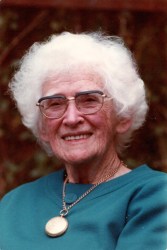
Gran

Gran, on her 65th wedding anniversary

On Monday I wrote a post based on the introduction to the Golden treasury of Australian verse which I found in my aunt’s house. The book belonged originally to my grandmother, and was given to her in 1914. Gran was the daughter of a Presbyterian minister, and the important thing to her was to live a good (Christian) life. However, she didn’t proselytise God. Rather, she promoted treating people well. We grandchildren all remember her Bambi and Thumper ornaments. They were there to remind us all of Mrs Rabbit’s advice to Thumper who had criticised baby Bambi’s wobbly walk. Mrs Rabbit said, as I’m sure many of you know, “If you can’t say something nice… don’t say nothing at all”. None of us have ever forgotten this, though I suspect we don’t always live up to it!

Anyhow, my point is that written in the back pages of the book, and on sheets of paper tucked inside it, are some sayings or inspirational quotes collected by Gran. One comes from Rudyard Kipling:

If we impinge never so slightly upon the life of a fellow-mortal, the touch of our personality, like the ripple of a stone cast into a pond, widens and widens in unending circles across the aeons, till the far-off Gods themselves cannot say where action ceases.

Another she dated 1/8/24 and noted it as “author unknown”, though using the Internet I’ve tracked it down in a webpage called “Bad Poetry”. The poet is Edgar Guest. The concluding lines read:

I never can hide myself from me,
I see what others may never see,
I know what others may never know,
I never can fool myself — and so,
Whatever happens, I want to be
Self-respecting and conscience free.

It might be sentimental poetry, but I do love my Gran’s heart and aspiration.

There are others, including one from Francis Bacon, but the final one comes from the Koran: “If I had two loaves of bread I would sell one and buy hyacinths for they would feed my soul”.

I’ll be keeping this book, needless to say.

My reading group

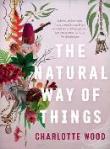
My reading group had its July meeting this week, and our book was Charlotte Wood’s The natural way of things (my review). It was a very lively meeting in which the realists in our group faced off against the willing suspenders of disbelief, with a couple of fence-sitters in between. Ne’er the twain did meet, I’m afraid, but while positions were maintained throughout, the discussion was, as always, respectful.

Charlotte Wood, The natural way of thingsThe problem was that the realists couldn’t work out why the ten women hadn’t ganged up to overpower their two guards, why they didn’t work out they could dig their way out under the electric fence. The women were twits, one said. They should have fought back. She also felt the rabbit trapping was far more successful than you’d expect and that the book had the longest mushroom season ever! It just wasn’t plausible. The willing suspenders, on the other hand, talked more about the book in terms of metaphor, allegory and parable, though they didn’t all agree on which of these the book represents, if any! We defenders felt that Wood, in the opening scenes, showed the disempowering of the women, explaining why they didn’t fight back.

I won’t go on, but the conclusion was that any book which garnered such an engaged discussion must be a good book!

More on my Jane

You know of course to whom I refer, Jane Austen of course, and this week Mr Gums and I went to see the latest Austen movie, Love and friendship which, strangely, is an adaptation of her juvenilia novella Lady Susan (my review) and not of her juvenilia piece actually titled Love and freindship (sic) (my review). We enjoyed it. Kate Beckinsale, who played Emma in a 1995 movie adaptation of that novel, played that “most accomplished coquette in England” Lady Susan with a light touch. Austen’s juvenilia is known for its broad humour/satire, though Lady Susan, being a transition work between her juvenile and adult period is more restrained than the earlier works. I thought director Walt Stillman balanced the tone nicely, here. His use of humorous title cards to introduce the characters sets the satiric tone but this is off-set by a more straight playing of the script, except perhaps for the comic relief provided by Tom Bennett as the foppish, silly Sir James Martin.

But, there was another Jane Austen event this week, a talk which members of my group attended. The topic was Austen’s continued popularity, and the speaker started with – coincidentally – Kipling, who praised Austen in 1924, saying “Praise the Lord for making her, and her for all she made”.

The speaker was enthusiastic about Austen, but her focus tended to be more on Austen’s Regency legacy – fashion, food, beauty – whereas my group is more interested in her ideas about, insights into, human nature, insights that we can find even in her early work. I’ll end this post with one of those insights that I love from Lady Susan. It was included in the film. Lady Susan says that “where there is a disposition to dislike, a motive will never be wanting”. Oh dear, this is too true. My Gran would, I’m sure, have had a saying to encourage us not to have such dispositions in the first place … though, she didn’t know Lady Susan!

Jane Austen, a moral absolutist?

Janet Todd, ed, Jane Austen in context

Janet Todd, ed, Jane Austen in context

In my post on the Jane Austen Festival Australia a couple of months ago, I summarised the various papers presented at their day-long symposium. One of the papers was by a Marcus Adamson and his topic was “The ever absolute Miss Austen”.

Adamson’s paper was a challenge to fully comprehend, partly because he referenced, in a short time, a wide range of philosophers and thinkers from the ancient Greeks on. It was impossible to keep up with the flow of ideas, arguments and connections. Fundamentally, though, he argued that Austen’s novels have a serious moral vision, that they present moral truths and certainties that are innately “known” to us. In other words, she asks, he says, the big Socratic question, “How should I live my life?” I agree with him that Austen’s novels do contain serious commentary about human behaviour, but moral truths and certainties? Moral absolutes? That I was less sure about. My local Jane Austen group decided to make it a meeting topic, so I thought I’d share (document) here my meeting preparation. Bear in mind, though, that I’m not a philosophy student so my ideas are very much of the lay variety.

Many have written about Austen’s moral philosophy, one of the first being her contemporary, the theologian Richard Whately (1787-1863) who described her as a Christian writer, but unobtrusively so. Certainly, none of her books explicitly promote Christianity – though in Mansfield Park, Edmund Bertram does talk about the role of a clergyman in guiding manners and morals.

Anthony Ashley Cooper, 3. Earl of Shaftesbury (1671–1713)

Shaftesbury (Public domain, via Wikimedia Commons)

More commentators, in fact, describe Jane Austen as reflecting the philosophical views of Aristotle, and later thinkers like Shaftesbury, Hume and Adam Smith. Some go further to argue that her moral/ethical views are the opposite of the absolutist ideas of people like Calvin. To generalise very broadly, hers is seen as a value system that tries to marry self-interest (or prudence) with sympathy for or kindness to others (or amiability). A recent writer, Rodham, describes her moral philosophy as one of defining a good life in terms of becoming the kind of person who does the right thing at the right time for the right reasons. No wonder I like Jane Austen!

The idea of being flexible – Aristotelian, perhaps – rather than absolute, can be seen in Persuasion, where Anne Eliot wonders regarding Captain Wentworth:

whether it ever occurred to him now, to question the justness of his own previous opinion as to the universal felicity and advantage of firmness of character, and whether it might strike him, that, like all other qualities of the mind, it should have its proportions and limits. She thought it could scarcely escape him to feel that a persuadable temper might sometimes be as much in favour of happiness as a very resolute character.

It can also be seen in Northanger Abbey, where Henry Tilney tells Catherine Morland, upon realising her wild surmises:

Remember that we are English, that we are Christians. Consult your own understanding, your own sense of the probable, your own observation of what is passing around you … (Chapter 24)

And so, Catherine comes to recognise the complexity of the moral world versus simplicity/absolutes of the Gothic literature she loved to read:

Among the Alps and Pyrenees perhaps, there were no mixed characters. There, such as were not as spotless as an angel, might have the dispositions of a fiend. But in England it was not so; among the English, she believed, in their hearts and habits there was a general though unequal mixture of good and bad. Upon this conviction she would not be surprised if even in Henry and Eleanor Tilney some slight imperfection might hereafter appear… (Ch. 25)

(I’ll ignore the nationalistic aspect of these comments, for now. They are relevant to a different discussion!)

In Emma, we see many discussions about how to live, how to behave, how to treat people, between Mr Knightley and Emma. And so on through the novels …

The way Jane Austen writes conveys her moral world view, too – not only through authorial comment as omniscient narrator, but also in her language. She speaks frequently of the mind (not of the soul or spirit, for example): “inferior in talent and all the elegancies of mind” (Emma); “a thinking mind” (S&S); “one of those extraordinary bursts of mind” (Persuasion), and so on. Her characters tend to be multi-dimensional, and she describes them, writes Ryle, in terms of their “tempers, habits, dispositions, moods, inclinations, impulses, sentiments, feelings, affections, thoughts, reflections, opinions, principles, prejudices, imaginations and fancies”. These terms are, he writes, more Shaftesbury than those of black-white ethics.

Before I conclude, I must digress briefly. Knox-Shaw refers, during his discussion, to ‘Hume’s remarks on how an irrational and universal “propensity to believe” generates a momentum of its own …’. This brought me up short, and pointed me right at today’s politics, at how easy it is to accept what is said – the three-word slogans, etc – without analysis or thinking, which can result in decisions being made on the basis of unsubstantiated fears rather than true understanding of the issues.

Conclusion

Austen’s moral or ethical view seems, from my reading of her novels, to be complex, nuanced. We don’t see many absolutes, but we do see characters, particularly her protagonists, juggling awareness of others with self-preservation. She wants her characters to recognise context and the need for moral discrimination. In other words, I, and I think many of us, decided that Austen doesn’t present moral absolutes, or certainties, but that she is interested in how to live a decent (ethical) life.

Some of my sources:

  • Knox-Shaw, Peter. “Philosophy” in Todd, Janet (2005), Jane Austen in context. Cambridge: Cambridge University Press.
  • Rodham, Thomas. “Reading Jane Austen as a moral philosopher” in philosophy.org
  • Ryle, Gilbert. “Jane Austen and the moralists”, reprinted from The Oxford Review (1), 1966

Monday musings on Australian literature: JAFA, an indulgence

OK folks, today I’m begging your indulgence to let me stray from the “proper” theme of my Monday Musings series. In other words, I’m not going to talk – except for a minor digression – about Australian literature. But, I am going to talk about Australians talking about literature. Bemused? I’ll explain.

Quiet foyer at the Hyatt, outside seminar room.

Quiet foyer at the Hyatt, outside seminar room.

This last weekend in Canberra was the 9th Jane Austen Festival Australia. It’s a festival designed “to explore all aspects of Jane Austen’s world”, so many of the sessions relate to dance, costume, military re-enactments, and learning about the culture of Regency times. However, it also includes a thread focusing on Jane Austen’s novels, and in the last three years this thread has been concentrated into a day-long Symposium, on a theme. The theme for 2016 was the Chawton Years. For those of you unfamiliar with Jane Austen’s biography, the Chawton Years cover the period of her life from 1809, when she, her mother and sister were offered Chawton Cottage as a home after their father and husband’s death in 1805, to 1817, when Austen herself died. All her novels were published after the move to Chawton, but three were specifically written during that time – Mansfield Park, Emma and Persuasion. (We could also add the unfinished novel, Sanditon, if we liked!).

The Symposium comprised 6 papers, and I’m going to reflect very briefly on each, knowing that some of you who come here like things Jane.

Edward Austen Knight and his Legacy at Chawton (Judy Stove)

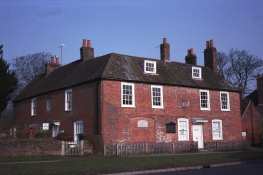
Chawton Cottage (1985)

Chawton Cottage (1985)

Judy Stove was an early member of my local Jane Austen group, until she left town. She’s now an Adjunct Lecturer at the University of NSW in the Faculty of Science, but is also interested in, and has written on, eighteenth century literature. Her paper provided the perfect start to the day, as it was Edward Austen Knight, Jane’s brother, who provided his mother and sisters with Chawton Cottage. Judy took us through a well-constructed argument concerning Edward’s legacy, moving from his and Jane’s immediate family to his descendants, and their role in the beginning of we would now describe as the cult of Jane Austen. From this point Judy developed a case concerning cultural nationalism and the controls now being exerted in many countries on exports of cultural property. Her example was Kelly Clarkson’s purchase of Jane Austen’s turquoise ring. I won’t elaborate here, but Judy proposed that emotion may play a bigger role than rational thought in some of these “material culture” export decisions. A thoughtful, and well structured paper.

“My Fanny” and “A heroine no one but myself will much like”: Jane Austen and her heroines in the Chawton novels (Gillian Dooley)

Gillian Dooley is an Honorary Senior Research Fellow at Flinders University in South Australia, with particular expertise in the music of Jane Austen and her times. This paper, however, was dear to my heart because it got into some literary nitty-gritty regarding point-of-view. Her aim was to explore the degree to which Austen’s heroines might speak for her, thereby giving us insight into Austen’s own beliefs and opinions. To do this, Dooley teased out, to the depth available in her 30-40 minutes time-slot, where Austen’s “authorial persona” does and doesn’t collide with the perspectives of her heroines. She compared excerpts from some of Austen’s letters with statements by heroines, like Mary Crawford (Mansfield Park) and Emma, and she teased out points-of-view in the novels, suggesting where we are in a character’s head, and where it is authorial comment speaking. I found this particularly interesting given my recent reading of Elizabeth Harrower during which I was conscious of a similar slipping between characters and author. As for Dooley’s thesis? Well, we’ll never know exactly who Jane really was, but we certainly have clues to consider!

Marriage in Mansfield Park (Julia Ermert)

Julia Ermert is a retired teacher, historical dancer and Jane Austen aficionado. She is particularly expert in the social history that informs the novels, in those things that readers at the time knew and which can add significantly to (even change) how we understand the novels. For example, a knowledge of the different carriages helps us understand status, and assumptions. And knowing courtship “rules” and practices can be critical to our understanding why, and how, certain events happen. For this talk, Ermert focused on that most controversial heroine, Mansfield Park’s Fanny, and the issue of marriage, that “coldly cruel social obligation”. She took us through laws and practices relating to dowries and marriage settlements, elopements, adultery, breaches of promise, cousin marriage, and the fragility of women’s reputations. Even those of us who know Austen and the era pretty well learnt a thing or two.

“Suppose we all have a little gruel”: the importance of food in Emma (Katrina Clifford)

Clifford is the Dean of Residents at Robert Menzies College, Macquarie University (my original alma mater). She did her PhD on sibling relationships in 18th century domestic fiction, and has written and taught widely on things Austen. Her talk started from the point that there’s nothing superfluous in Austen, that is, if Austen talks about food, or carriages, or jewellery, you can be sure it’s there to make a comment. Food features heavily in Emma: it explains the relationships between characters and the structure of Highbury life. Who is generous to whom and how, who accepts generosity from whom and who doesn’t, provide subtle (or not so) commentary on the characters. For example, Mr Knightley giving the last apples of the season to the impoverished Bateses demonstrates his generosity of spirit, whilst Emma giving a whole loin of pork to them tells us her heart is kind even if she doesn’t always behave well. These also demonstrate that both have a similar attitude to their social responsibility and are a good match. And what about Mr Woodhouse’s gruel, and Mrs Elton and the strawberry party? They provide the book’s comedy but also inform about character and relationships. Another insightful talk, in other words.

The ever absolute Miss Austen (Marcus Adamson)

Adamson is a psychotherapist and ethics consultant interested in the history of ideas and the application of philosophy to psychology. This was the most demanding of the day’s presentations, because of its dense erudition. Referencing philosophers and thinkers from the ancient Greeks on, he argued that Austen’s novels have a serious moral vision, that they present moral truths and certainties that are innately “known” to us. In other words, she asks the big Socratic question, “How should I live my life?” This runs counter to the common assumption that “small ‘r” romance” is the chief attraction of her novels. He then turned to modern times. Our current individual-focused world has, he said, resulted in the individual becoming “unshackled from society”, and thus losing, if I understood him correctly, a moral mooring. Nothing in our post-modern world is certain anymore, everything is open to doubt, and the consequences, he believes, are “catastrophic”. Austen’s novels, with their serious moral vision, can work as a “corrective” to this dilemma. I’ve compressed something very complex into something very simple, but I think that was the gist of it. As an Austen-lover I agree that, for all their wit and humour, Austen’s novels do contain serious commentary about human behaviour, but the bigger picture of his paper? It’s appealing but I need to digest it more.

Napoleonic era British Naval Uniforms demonstrated

Napoleonic era British Naval Uniforms demonstrated

Royal Navy in the Regency Period (John Potter)

After that talk we all needed to decompress a little, and John Potter was just the man to do it. An amateur expert in military and naval history, and in the Napoleonic period in particular, he turned up in full naval uniform, accompanied by some armed officers and sailors, also in historical dress. He talked about the Napoleonic Wars (1793-1815) and regaled us with much information about the British Royal Navy – its ships, its organisation, naval hierarchy and jobs. We learnt about weapons, and his “men” showed a few, including the dirk and cutlass. The Navy tended to be drawn from the middle class, and boys joined very young – around 10-12 years old – as there was a lot to learn about running a ship. The army was a different matter. He also explained how prize money was shared (which is relevant to Persuasion and Captain Wentworth’s returning a wealthy man) and the impress service (i.e. press gangs). A relaxing and enjoyable end to the day.

And that, as they say, was that. Back to Aussie lit proper next week.

Jane Austen on history and historians

Jane Austen, we know from her letters, was a keen reader. She read novels, sermons, plays and poetry, magazines and, of course, histories. Did you know, though, that she also wrote a history? This is her juvenilia piece, The history of England from the reign of Henry the 4th to the death of Charles the 1st (online text), illustrated by her older sister Cassandra and completed in November 1791, the month before Jane turned 16.

It’s not, however, like any history you’ve read before, except perhaps Sellar and Yeatman’s 1066 and all that. Published in 1930, this book, Wikipedia tells us, is “a parody of the style of history teaching in English schools at the time”. Well, interestingly, scholars argue that Austen’s History is a parody of the histories being taught in the schools of her time, in particular, Oliver Goldsmith’s History of England from the Earliest Times to the Death of George II (1771). The parody starts on her title page where she tells us “N.B. There will be very few Dates in this History”. She also identifies the author of her history as “a partial, prejudiced, & ignorant Historian”, satirising Goldsmith’s claims to be objective. “It is hoped the reader admits my impartiality” he wrote in his Preface, but many readers, including our Jane, would not admit this at all given some of his pronouncements!

Mary Queen of Scots, by Cassandra Austen, believed to be modelled on Jane

Mary Queen of Scots, by Cassandra Austen, believed to be modelled on Jane

And so, as you’d expect in a parody, Austen is unashamedly subjective in her History, usually promoting the opposite to the prevailing view of her times. She is, for example, partial to the Stuarts, and particularly to Mary Queen of Scots, and is critical of Elizabeth I, “that disgrace to humanity, that pest of society”. She continues:

It was the peculiar misfortune of this Woman to have bad Ministers —— Since wicked as she herself was, she could not have committed such extensive Mischeif, had not those vile & abandoned Men connived at, & encouraged her in her Crimes. I know that it has by many people been asserted & beleived that Lord Burleigh, Sir Francis Walsingham, & the rest of those who filled the cheif Offices of State were deserving, experienced, & able Ministers. But oh! how blinded such Writers & such Readers must be to true Merit …

If you know anything about Austen scholarship, you won’t be surprised to hear that her History has been the subject of intense theorising, with various perspectives being explored, in addition the parody/satire angle. Other perspectives include that it

  • explores ideas about historiography, and the blurring of fact and fiction; and/or
  • reflects Jane and her sister Cassandra’s maternal line’s Jacobite/Stuart sympathies (which were not shared by the men of the family) or, conversely, it reflects their anti-mother attitudes; and/or
  • supports a feminist reading of her work; and/or
  • conveys Austen’s irreverence towards authority.

My aim is not to discuss these here, though, because I want to refer briefly to Northanger Abbey, the first version of which was written around 1798–99 (that is, only a few years after the History). It is famous for its defence of the novel, but it also contains references to other sorts of reading including, yes, history. I want to share some of these, which make interesting reading in the light of her History. The references come from heroine Catherine Morland’s conversation with Henry Tilney and his sister Eleanor.

When you read Austen, you need to know whether Austen approves of the characters who are speaking, as this affects how we are meant to read the character’s pronouncements. Now, in Northanger Abbey, Catherine is our heroine, but she is also young and a little naive. As the novel progresses, she is “taught” by the somewhat older and wiser, Henry Tilney, but he can also be a little pompous. So, I think we can read the following comments with some respect for Catherine’s position, as well as for Henry’s.

“That is, I can read poetry and plays, and things of that sort, and do not dislike travels. But history, real solemn history, I cannot be interested in. Can you?” [Catherine]

No, not necessarily, Austen is perhaps suggesting:

“… I read it a little as a duty, but it tells me nothing that does not either vex or weary me. The quarrels of popes and kings, with wars or pestilences, in every page; the men all so good for nothing, and hardly any women at all—it is very tiresome: and yet I often think it odd that it should be so dull, for a great deal of it must be invention. The speeches that are put into the heroes’ mouths, their thoughts and designs—the chief of all this must be invention, and invention is what delights me in other books.” [Catherine]

We hear you Catherine! And we think back to Austen’s History where, surely with tongue in cheek, she refers her readers to “inventive” writers for authority, such as Shakespeare (“whereupon, the King made a long speech, for which I must refer the Reader to Shakespear’s Plays” or “he afterwards married the King’s daughter Catherine, a very agreeable Woman by Shakespear’s account”) and Sheridan:

Sir Walter Raleigh flourished in this & the preceding reign, & is by many people held in great veneration & respect — But as he was an enemy of the noble Essex, I have nothing to say in praise of him, & must refer all those who may wish to be acquainted with the particulars of his Life, to Mr Sheridan’s play of the Critic, where they will find many interesting Anecdotes …

Cheeky Jane!

And so the discussion continues, with the reasonable Eleanor Tilney stating that she likes history but is happy if historians, such as Austen’s revered David Hume, embellish speeches to make them readable.

“Historians, you think,” said Miss Tilney, “are not happy in their flights of fancy. They display imagination without raising interest. I am fond of history—and am very well contented to take the false with the true. In the principal facts they have sources of intelligence in former histories and records, which may be as much depended on, I conclude, as anything that does not actually pass under one’s own observation; and as for the little embellishments you speak of, they are embellishments, and I like them as such. If a speech be well drawn up, I read it with pleasure, by whomsoever it may be made—and probably with much greater, if the production of Mr. Hume or Mr. Robertson, than if the genuine words of Caractacus, Agricola, or Alfred the Great.”

Ah Eleanor, I hear you. The scene concludes with Catherine making some concessions while suggesting that she used to think all historians did was to write “great volumes … for the torment of little boys and girls”, and Henry Tilney teasing her about this idea of historians aiming to “torment” rather than “instruct”.

Reading or studying history appears in other novels too, particularly in Mansfield Park, where, for example, Austen tells us Fanny, her heroine, had to “read the daily portion of history” but where she also says of Fanny and her sister, Susan, that “their conversations, however, were not always on subjects so high as history or morals”.

I’ve barely touched the surface of Austen’s discussions of history and what we might make of them, but I hope at least that I’ve shown why students (and lovers) of Austen never run out of ideas to think (and argue) about!

Emma: 200 years of perfection: Pt 3, Gender and the study of Austen

Jane Austen and gender studies are made for each other, not only because the content of her novels inspire feminist critique (albeit sometimes conflicting, because, well, all her heroines get married, don’t they?), but also because reactions to her tend to be polarised along gender lines. (Remember my reporting in a recent post on VS Naipaul’s assessment?). It is this latter issue that Barbara Seeber addressed in her second paper of the conference, “The pleasures (and challenges) of teaching Emma“.

Seeber commenced her talk by stating that “the politics of gender underpin divided opinions of Jane Austen”. She looked at some of the reasons why students (readers, more widely too, I’d say) say they don’t like Emma – Emma herself is unlikable, the book lacks a plot, and it’s mostly a romance – and teased them out one by one, particularly in terms of their gender implications. I’m not going to summarise the paper, but will just share a few salient points that contribute to issues I’ve been thinking and writing about here.

Unlike VS Naipaul, Sir Walter Scott praised Jane Austen’s writing. Nonetheless, in his review of Emma, Sir Walter Scott distinguished between “cornfields and cottages and meadows” which he saw as typical of “the sentimental and romantic cast” and works dealing with “the rugged sublimities of a mountain landscape”. Although Scott himself praises Austen’s “precision” and comic ability, this distinction that he makes does, Seeber argued, reflect a common feminine versus masculine divide.

So, how does the gender divide play out for readers of Emma?

Unlikeable Emma

Well, Seeber herself recognised that as a young woman she did not like Emma because she is bossy and controlling, but did not feel the same about Mr Knightley. She realised she had internalized the prevailing attitudes regarding femininity, the double standard that allows men to be authoritative and commanding but disallows the same in women.

(I must say that Emma’s bossiness wasn’t an issue for me when I first read the novel – perhaps because, as the oldest child, I had a bossy tendency myself!  It was her snobbery that made her less likeable to me, but I have come to a more complex understanding of that.)

Nothing happens, or what happens isn’t important

There’s a gender point too – of course – behind the idea that nothing happens. Seeber quoted Virginia Woolf from A room of one’s own:

Speaking crudely, football and sport are ‘important’; the worship of fashion, the buying of clothes ‘trivial’. And these values are inevitably transferred from life to fiction. This is an important book, the critic assumes, because it deals with war. This is an insignificant book because it deals with the feelings of women in a drawing-room. A scene in a battle-field is more important than a scene in a shop — everywhere and much more subtly the difference of value persists.

Related to this issue of “feelings”, Seeber said that the popular film/tv adaptations can work for and against appreciation of the novel in the classroom. The films, she said, tend to focus on feelings, and can result in students resisting to expand their thinking beyond feelings. Also, in terms of gender, the issue is further complicated by the fact that male students can be self-conscious about liking Austen because of these films.

Too romantic

My dearest, most beloved Emma, tell me at once (Illus. CE Brock, 1909, via solitaryelegance.com)

My dearest, most beloved Emma, tell me at once (Illus. CE Brock, 1909, via solitaryelegance.com)

The focus on feelings in the movies, has been described by some as the “Harlequinisation of Austen novels”. It can result in the shaming of boy Austen readers. Anxiety about normative masculinity, Seeber said, can be present in the classroom. On the other hand, male students can be surprised to find that Austen is actually interesting, and female students surprised to find the male students enjoying her! (Oh dear!)

But then Seeber’s argument became really interesting for me in terms of recent discussions on this blog regarding gendered reading and writing. Seeber argued that denouncing the films as Hollywood romanticism, that dismissing them as popular culture, is related to the devaluing of women, in that works enjoyed by women are often dismissed as trivial. This is ironic, she argued, because Austen satirizes those who claim themselves above the popular novels (eg Mr Collins in Pride and Prejudice, and John Thorpe in Northanger Abbey). Austen, she said, does not distinguish readers by what they read.

The obvious, and frequent, counter made to the argument that nothing happens in the novels, that they are merely domestic or romantic, is to point to references or allusions to wider issues like the Napoleonic Wars, the slave trade, and the governess trade in Austen’s novels. BUT, Seeber argued, to justify Austen in this way is to undermine the real story of, say, Emma, which is about the achievement of self-awareness and living in the every day, about being human or acting humanely, as Norton describes it, or, as I might describe it, about being civil.

In other words, to try to justify the value of Austen by pointing to her references to the bigger picture is to undermine the importance of the so-called feminine (or more domestic) values.

I liked this argument.

Emma: 200 years of perfection: Pt 2, The art of literary research

For my second post on JASA’s Emma: 200 years of perfection conference, I want to share (or, at least, summarise for my own edification) some of the ways the speakers had gone about researching Emma, at least as they became apparent to me via their papers. None of these are particularly mind-blowing – they are the bread-and-butter of literature academics – but I enjoyed seeing how they’d variously gone about it to present the papers and ideas that they did.

Contemporary reading

Sayre Greenfield, David Norton, Barbara Seeber and Susannah Fullerton all drew on works contemporary to Jane Austen’s time to explore their theories about the novel or to elucidate deeper meanings from them.

Sayre Greenfield shared some his research into works that are in the library at Chawton House*, showing how they contribute to our understanding of Austen’s world view and how that might have played out in the writing of Emma. For example, as is obvious to the reader and as many critics like to discuss, riddles and word games feature heavily in Emma. Greenfield pointed us to books and magazines which show that these were a major form of entertainment for girls and young women of Austen’s time. Not only did he remind us of extant riddles written by Austen when she was young, noting that hers tended to be more satirical than those by her brothers, but he also referred to The Ladies Magazine which, like magazines today, contained games and puzzles for its readers. He discussed the role of these word games in the novel’s plot, but also pointed to Mr Knightley’s criticism of Emma to Mrs Weston that:

But I have done with expecting any course of steady reading from Emma. She will never submit to any thing requiring industry and patience, and a subjection of the fancy to the understanding.

For Mr Knightley, games are all well and good, but Emma could do with something more serious!

Another topic that Greenfield explored was that of old maids. He described a book by William Hayley, published in 1785, titled A philosophical, historical, and moral essay on old maids. By a friend to the sisterhood. In three volumes. This description of old maids in one of his chapters sounds very much like Miss Bates:

The curious Old Maid is a restless being, whose insatiate thirst for information is an incessant plague both to herself and her acquaintance; her soul seems to be continually flying, in a giddy circuit, to her eyes, ears, and tongue; she appears inflamed with a sort of frantic desire to see all that can be seen, to hear all that can be heard, and to ask more questions than any lips can utter …

Now, said Greenfield cheekily, Hayley defines old maids as women unmarried by their fortieth year, and it just so happens that the unmarried Jane Austen turned 40 the month Emma was published. What was she really wanting to say about “old maids” he asked.

Seeber drew on contemporary texts regarding animal rights to argue a relationship, that was made during Austen’s time, between the mistreatment of animals and the domination of social “other”, like women and slaves. I’m looking forward to reading her paper, so I can grasp her argument more fully. She had some interesting things to say about fussy Mr Woodhouse and vegetarianism too!

Fullerton explored the many royal connections to places in the novel, which she suggested is partly about “who will be queen of Highbury”, while Norton turned to Samuel Johnson’s dictionary definitions to help us understand the contemporary meanings of words used by Austen. When Emma calls Mr Knightley “humane”, for example, she was likely meaning Johnson’s definition of “civil, benevolent, good-natured”. Remember my point about “civility” in my previous post?

Close textual analysis

Close analysis of the text is, of course, standard practice for academic critics, if not for more general reviewers. I’m mentioning it here, therefore, not because it was surprising but because for me close analysis – of word choice, imagery, structure, and so on – can inform meaning, and provide support for arguments, in interesting and sometimes unexpected ways. And so it proved to be at this conference.

Fullerton and Norton, for example, talked about the wordplay in names – Highbury, where Emma is buried; Donwell, where Mr Knightley has done well, a farm that is doing well; and Hartfield, or the field of the “heart”, of  feelings. These are fun to think about, but what I found most fascinating was Norton’s discussion of punctuation and grammar.

Grammar and punctuation, he said, are straightjackets on how we think, they exert controls on the expression of our thoughts. Austen knew that, Norton argued, and exploited it. Pride and prejudice, he suggested is one of Austen’s most rational, logical novels. We know exactly what Elizabeth Bennet thinks, and her thoughts and feelings progress logically in the book. Emma, on the other hand, is her most secretive novel. Nothing is really as it seems, and what is happening on the surface – Emma’s matchmaking of Harriet, and the possible romance between Emma and Frank – is not the real story.

One way Austen conveys this irrationality and this secrecy is through dashes! Yes, you heard correctly, dashes. And here is where the analysis was particularly interesting because in Pride and prejudice, he said, there is only one dash per 192 words, but in Emma it is one per 52 words. Who’d have thought? The dashes play two roles. Sometimes they convey the dashing around of thoughts – irrational thinking as it were – as characters jump from topic to topic. Miss Bates does this a lot in breathless prose, but Emma is also guilty of it. Etymologically, Norton told us, the “dash” punctuation mark is related to the verb “to dash”, so a dash can give a sense of movement of the mind.

But, formally, according to Samuel Johnson, the “dash” represents “a pause or omission”. And it also plays this role in Emma when characters pause before they say something they might regret, or have not fully realised themselves. Here is Miss Bates trying not to give voice to rumours about Emma and Mr Elton:

A Miss Hawkins. Well, I had always rather fancied it would be some young lady hereabouts; not that I ever — Mrs. Cole once whispered to me — but I immediately said, ‘No, Mr. Elton is a most worthy young man — but’ [and so on]

What, Norton asked us, can happen in a pause?

And so, he argued, Pride and prejudice is written in coherent, grammatical prose, while Emma is significantly less grammatical – and that tells us something about the novels themselves and the minds of their respective characters. If you don’t believe me, go check them both out, and see what you think.

Adaptations

I’ve rambled on enough, and this third one is a little tangential, but Greenfield and Troost’s speciality is the study of Austen adaptations. They explore how analysing adaptations can throw light on both the adaptations themselves – duh – and on Austen’s originals. At this conference, they discussed three recent adaptations of EmmaEmma (BBC miniseries, 2009), Aisha (Anil Kapoor Films, 2010), and Emma – Appoved (Pemberley Digital VLOG, 2014). They demonstrated how these productions focus on themes or ideas that we don’t find in Emma itself, chief among these being materialism, the pursuit of fun, and the idea that life is about being true to yourself. Most recent adaptations of Emma, they argued, have roots in Clueless.

For Greenfield and Troost, adaptations are a worthy topic for Austen study. In my last post on the conference, I’ll tell you what Barbara Seeber thinks.

* Chawton is where Jane Austen spent the last years of her life, and from where all of her novels were published. Her house is now a museum.

Emma: 200 years of perfection: Pt 1, The capacious Emma

This year is the 200th anniversary of the publication of Jane Austen’s Emma, so it was natural that the Jane Austen Society of Australia’s (JASA) biennial weekend conference, held last weekend, would be devoted to the novel. It was a fascinating and inspiring conference, and one I felt well-prepared for having just re-read Emma earlier this year.

There were eight papers, presented by five speakers. I’m not going to summarise the papers in detail – they will be published in JASA’s peer-reviewed journal Sensibilities later this year – but I’d love to share, over a couple of posts, a few thoughts and ideas that came out of the weekend for me.

First, though, I will name the speakers:

  • Susannah Fullerton, President of JASA, author, lecturer, and literary tour leader
  • Sayre Greenfield, Professor of English, University of Pittsburgh (Greensburg), USA (and married to Troost)
  • David Norton, Emeritus Professor of English, Victoria University of Wellington, NZ
  • Barbara Seeber, Professor of English, Brock University, St Catharine’s, Canada
  • Linda Troost, Professor of English, Washington & Jefferson College, Pennsylvania, USA (see Greenfield!)

We all knew it, but just to make it perfectly clear, Seeber commented that Jane Austen’s novels are “capacious”, meaning that they accommodate multiple views which comprehend individual experiences and biases. This is why Austen aficionados can argue so passionately for particular readings of the novels and be right (or, more accurately, be able to justify their reading). Seeber, in fact, quoted Virginia Woolf’s argument that we do not have to provide a final reading of a work, but show how we have arrived at our particular reading. We bloggers know that – but it is nice having the likes of Virginia Woolf support us!

The capacious Emma

What is Emma about? Well this is where its capaciousness is particularly evident because it seems that almost every reader has a different opinion. In my last read I saw a major theme as being about Emma’s search for a “true friend”, and about the definition of what true friendship means and how it relates to marriage. Other themes include social status, social change, and the restricted lives of women. They are all valid.

Another theme was proposed at the conference. It came from David Norton who suggested that the book is about:

What it means to be human, and why it matters (or, how) to be humane

He argued, for example, that while the word “truth” appears many times in the novel, being humane is its cornerstone. When Emma makes her big blunder by insulting Miss Bates at Box Hill, Mr Knightley chastises her not on the grounds of “truth” because, after all, what she said was true, but for being “unfeeling”. He tells Emma that Miss Bates deserves her “compassion”.

Another way we could view this theme, I think, is that it’s about the importance of “civility” in our relationships with each other, that in fact, sometimes, to quote Frank Churchill, “civil falsehoods” are better than “a disagreeable truth”. As Sayre Greenfield commented, Highbury heals itself at the end, but is not a perfect place. There will still be Mrs Elton to cope with! And that will demand, I fear, all the civility that Emma can muster!

Miss Bates, I shall be sure to say three dully things (Illustration by CE Brock, 1909,  from solitary elegance.com)

I shall be sure to say three dull things (Miss Bates) (Illustration by CE Brock, 1909, from solitary elegance.com)

Another area where Emma is capacious is in our reactions to the characters. Jane Austen herself is famous for her statement that “I am going to take a heroine whom no one but myself will much like”. Emma’s likability has engaged readers ever since – but she’s not the only character in the book to engender fierce discussions. Frank Churchill is another. Not all characters cause significant dissent, though. Most readers, for example, see Miss Bates as a silly old maid, and Mr Woodhouse as a fussy, selfish old woman of a man – see how both negatives involve gender terms! – but our speakers had some different views.

Here, however, I’m just going to share some ideas presented by by the speakers on two characters:

  • Miss Bates. Norton and Greenfield, in particular, spoke about Miss Bates and both viewed her in positive terms. Greenfield argued that although Miss Bates fits the popular contemporary image of old maids (more on that in another post), she is the most socially intelligent character in the novel. She knows what’s going on, and she understands the complexity of her community. Norton demonstrated how Miss Bates is “the great revealer” in the novel, and argued that if you listen to her (skip her speeches at your peril, in other words), you will know what is really going on.
  • Frank Churchill. If Emma has a villain, it is Frank Churchill, but over the years I’ve noticed that it is in our reactions to Austen’s main characters that we most demonstrate our personal prejudices and biases (particularly in relation to the so-called “bad boys”). I find it most fascinating, and illuminating! Linda Troost devoted a paper to the question of whether Frank is a good guy or “a jerk”, and argued convincingly (to me anyhow) that he’s more good than bad. Drawing from both a close analysis of the text and an understanding of human psychology, she suggested that much of Frank’s behaviour arrives out of his invidious situation than from any real “badness” in his character. (She also argued that much of Mr Knightley’s criticism of Frank stemmed from – or was at least aggravated by – his jealousy).

These are just a few of the ideas that inspired me from the conference, but I’ll leave it there. In the next post, I want to talk about something completely different – literary research.

Jane Austen, Northanger Abbey (Review)

Although I’ve titled this a review, as I do when I write about a book, this post on my latest read, Jane Austen’s Northanger Abbey, is not really going to be a review. Like all her novels, it’s been intensively written about from multiple angles, and in fact there are many themes and ideas I’d love to write about, but for this post I am going to focus on one aspect that particularly struck me this time. This aspect is not exactly new to me, but it came together this read in a particular way – and it is this …

Northerner Abbey illus br Brock

From Chapter 9, illus. by CE Brock (Presumed Public Domain, from solitaryelegance.com)

Northanger Abbey is often seen as a spoof or satire of gothic novels. And it certainly does make fun of these novels, but it does so largely through satirising readers of these novels, particularly (young) suggestible readers. Northanger Abbey is also famous for its defence of the novel, on which I’ve posted before. However, the thing which stood out this read was how much Austen comments on the art or practice of writing novels. The novel opens with:

No one who had ever seen Catherine Morland in her infancy would have supposed her born to be an heroine.

Now this partly sets up the whole Gothic novel thread, the idea that heroines of Gothic novels are certain sorts of people, and that certain sorts of things happen to them, but on this read I was very conscious that there was more going on here between Austen and her reader (in this case, me). Before I explore this a little more, it’s probably worth outlining the novel’s publishing history. Initially called Susan, it was written around 1798–99, when Austen was 23-24 years old. She revised it in 1803, and it was sold to a bookseller, who never published it. In 1816, the year before Austen died, her brother Henry Austen bought it back. Austen revised it a little more, including changing the name of the heroine, and of the novel, to Catherine, but died before putting it out for publication again. In the end Henry organised for it to be published as Northanger Abbey, along with Persuasion, in 1817.

So, it was the first novel she finalised for publication (even though she had previously started on the books that later became Sense and sensibility and Pride and prejudice) but was the last published. The interesting thing about this essentially “first” novel is that the voice, or point-of-view, is a little different from the other five novels which are written more consistently in third-person omniscient voice. In Northanger Abbey however, the author-narrator frequently intrudes into the story to address the reader – sometimes, though not always, using first person – and in so doing tends to draw attention to the making of the fiction.

For example, she introduces the Thorpe family with a brief background, then writes:

This brief account of the family is intended to supersede the necessity of a long and minute detail from Mrs. Thorpe herself, of her past adventures and sufferings, which might otherwise be expected to occupy the three or four following chapters; in which the worthlessness of lords and attornies might be set forth, and conversations, which had passed twenty years before, be minutely repeated.

There is an element here of satirising Gothic novels which tended to be long and detailed and to deal with nobility, but it is also, as I see it, part of Austen’s novelist’s manifesto. She’s telling us that for the purposes of her story we don’t need long digressions into irrelevant, albeit possibly exciting, pasts.

Her frequent references to Catherine and whether or not she is a heroine sets up the reader for a traditional Gothic romance while at the same time teases us to think about what fiction might really be about. We know, from a letter to her niece, that this is, for her, “Three or four families in a country village”. So, on the one hand Austen tells us that Catherine has been “in training for a heroine” and “that if adventures will not befall a young lady in her own village, she must seek them abroad”, and then on the other hand, she returns us to reality with statements like:

she felt more obliged to the two young men for this simple praise [that she was “a pretty girl”] than a true-quality heroine would have been for fifteen sonnets in celebration of her charms.

Austen plays with us like this throughout, comparing the concerns and expectations of a Gothic novel heroine with those of a more “realistic” one.

Towards the end, the two threads – the Gothic and the natural or realistic – come together. Having discovered that all her wild imaginings of murder and mayhem at the Abbey were just that, wild imaginings, Catherine does have to confront a very real crisis when the General suddenly turfs her out of the Abbey, his home, with no explanation:

Yet how different now the source of her inquietude from what it had been then—how mournfully superior in reality and substance! Her anxiety had foundation in fact, her fears in probability; and with a mind so occupied in the contemplation of actual and natural evil, the solitude of her situation, the darkness of her chamber, the antiquity of the building, were felt and considered without the smallest emotion; and though the wind was high, and often produced strange and sudden noises throughout the house, she heard it all as she lay awake, hour after hour, without curiosity or terror.

This is one of the narrator’s third person pronouncements, but Austen, the author, intrudes in first person again at the end, with two statements that refer directly to the making of fiction. One alludes to the final resolution of the romance:

The anxiety, which in this state of their attachment must be the portion of Henry and Catherine, and of all who loved either, as to its final event, can hardly extend, I fear, to the bosom of my readers, who will see in the tell-tale compression of the pages before them, that we are all hastening together to perfect felicity.

The other refers to the introduction of a new character in the last chapter who helps bring about the above “perfect felicity”:

… I have only to add—aware that the rules of composition forbid the introduction of a character not connected with my fable—that this was the very gentleman whose negligent servant left behind him that collection of washing-bills, resulting from a long visit at Northanger, by which my heroine was involved in one of her most alarming adventures.

I love this aspect of Northanger Abbey – that is, I love Austen’s cheeky, inventive voice. She’s not scared to talk to us, to tell us what she’s doing and what she thinks. It’s a fresh, bright novel that beautifully bridges her juvenilia pieces with her more, let’s say, controlled works. We see here the lively intelligence of a young writer who is thinking, perhaps, about imagination and reality, and certainly about what she likes to read and what she wants to write.

This has been pretty brief, and may not have argued my point as coherently as I would have liked, but at least it documents for me the ideas that this reading brought to the fore. I hope it’s given you something to think about too.

Jane Austen
Northanger Abbey
Digireads.com, 2011
ISBN: 9781596251144 (ebook)