Emily Bitto, The strays (Review)

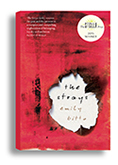
Emily BItto, The strays, book coverLet me start by saying I really enjoyed reading Emily Bitto’s The strays. It was scheduled for my reading group the day after my return from Tasmania, and I suddenly found myself in the last day of my Tasmanian holiday without having started the book. Wah! I read it in two days, helped by several hours in a couple of airports. I haven’t done that for a long time, and what a joy it was to have a real length of time to commit to a book. It helped, of course, that having both a strong plot and an intriguing set of characters, The strays is compelling to read. It reminded me, albeit loosely, of Evelyn Waugh’s Brideshead revisited and Ian McEwan’s Atonement.

This is a debut novel, which also won this year’s Stella Prize. Set primarily in the 1930s, with the last of four parts set in the 1960s, The strays is both historical fiction and a coming-of-age novel. It is also a classic outsider story. Lily, who tells the story first person, is befriended when she is 8 years old by schoolmate Eva, the middle daughter of the Trenthams who, early in the novel invite a number of artist “strays” to form a utopian-bohemian artistic community. The Trenthams are inspired by the Reeds and their Heide group, but The strays is not a Heide story*.  This may be the strength of the novel, but also perhaps its weakness – a strength because it frees Bitto to tell her own story, but a weakness because it removes potential ideas on which to hang her story.

Before I get to that, though, a little more about the story. The first three parts follow the Trenthams for 8 years, from when Lily is 8 to 16. During this time Lily becomes increasingly involved with the Trenthams, in preference to her boring, conservative, middle-class parents, eventually living with them full-time. Some members in my reading group found her parents’ relinquishing of their daughter unbelievable, but this was during the Depression, and Lily’s parents did have some problems of their own to manage. I could suspend my disbelief. From Lily’s point of view, she was in thrall to the excitement of the Bohemian life, telling her parents, “I love you both but I want to be different”.

Her parents, however, should have been concerned, because the Trenthams are rather casual, neglectful parents and the four girls more or less run their own lives, sometimes being fed properly, sometimes not, sometimes, in the case of one in particular, going to school, and sometimes not. The story is as much about them, as about the artists, though we do hear about the artists too. There’s exploration of experimental art and its acceptance or otherwise by society, obscenity charges, mentee supplanting mentor, and so on. There are parties, and other occasions, where artists and children come together. Bitto, through Lily, paints all this beautifully. Indeed, I loved her ability to evoke scenes, people and places with effective, yet tight imagery.

Bitto’s use of Lily as her narrator works nicely. Through most of the novel, we see the story through her child’s point-of-view, but occasionally, with a “later I realised” type of comment, we are reminded that this is an adult telling the story of her childhood:

When was it that I became a voyeur in their midst? I was the perfect witness, an unsuspected anthropologist disguised within the body of a young girl, surrounded by other young girls who were part of the family. Yet I was cuckoo in the nest, an imposter who listened and observed, hoarding and collecting information.

This narrative style keeps the story grounded. We see the dysfunctional dynamics and its effects before Lily, wooed by the excitement, does – though she does have moments of clarity. When the youngest daughter goes missing on one occasion, she writes:

I drew in my breath. These adults were no use in a crisis.

The subtext is that her parents would be.

But, here’s the thing. The book tackles a lot of ideas. There’s the exploration of society’s reaction to experimental art; the idea of coming to terms with the past (for Lily); the utopian artist community and whether it can really work; indulgent or neglectful parenting, creating a dysfunctional family life that comes back to bite; the exploration of girlhood friendships and the whole coming-of-age thread; not to mention those big issues like loyalty and betrayal, envy, sexuality and sensuality. It’s not that these were uninteresting, or even that they weren’t well developed. It’s more that I struggled to find Bitto’s main focus, and I guess I like some sort of central idea on which to hang my understanding of a book.

My reading technique is that when I finish a book I go back and reread the beginning. This usually puts the whole into context, pinpointing what the author was about. However, this technique didn’t work wonderfully with The strays. Bitto’s Prologue starts by discussing the mystery of instant attraction between people, and then moves on to the idea of past life connections and that people’s souls can be twinned from one life to the next. These ideas are used to explain Lily’s relationship with Eva, but I’m not sure that this is fundamental to the book’s meaning. The prologue then discusses the past. Three decades after the main events, Lily receives a letter:

and I become aware of an old compulsive pain I have pressed like a bruise again and again throughout the years.

AND

I feel a tenderness in my chest, and the past rushes in as a deluge I can no longer hold back …

AND

I let my mind turn back once more, to recreate again that distant, still wracked past.

Is it this, the idea of coming to terms with or resolving the past, that binds the book together? It is partly. By the end of the novel, Lily has come uneasily to terms with what happened those three decades ago, and its impact on her life. I say uneasily because – and here we come to the epigraph, by William Pater, which expresses a different idea again to those in the prologue: “To burn always with this hard, gem-like flame, to maintain this ecstasy, is success in life”. Lily’s uneasiness is that she has chosen “conventionality”, but recognises that part of her “is still drawn to the romance of the fully lived life”. Then we have the book’s concluding paragraphs, which are more concerned with mothering and family in Lily’s recognition that it was the Trentham children who paid the debt for their parents’ experiments. See my problem regarding central idea? Or, is it just that I’m being boringly 20th century?!

Whatever it is, they are just niggles. As a read, The strays is up there as one of my most enjoyable for the year – for its lucid writing, for the story and a setting that had such appeal, and, yes, even for that whole raft of ideas that she throws so determinedly at us. Even for that.

Lisa at ANZLitLovers enjoyed the book too.

* Interestingly, a couple of “real” people are mentioned, one being politician and later judge, Herbert Evatt – as a supporter of modern, experimental art.

awwchallenge2015Emily Bitto
The strays
South Melbourne: Affirm Press, 2014
290pp.
ISBN: 9781922213211

Wendy Scarfe, Hunger town (Review)

Scarfe, Hunger Town, Wakefield PressA little over halfway through Wendy Scarfe’s novel, Hunger town, one character says to another that “kindness needs to be a political way of life”. It sounds a little naive I suppose, but in recent months the idea of kindness, in the political as much as the personal arena, has been playing on my mind. How different would Australia be (I’m being parochial here), if our leaders espoused kindness, tolerance and acceptance in their sound-bites, and if, heaven forbid, they placed a value on kindness in their policy-making?

Kindness is not exactly the main theme of this Great Depression era novel but politics certainly is. Set mostly in South Australia’s Port Adelaide River district from the mid 1920s to late 1934, Hunger town tells the story of the struggles of wharf labourers to survive as unemployment and hunger took hold. It explores the ensuing political unrest and the growing attraction of leftist political ideologies like communism and anarchism, alongside unionism, in such a volatile environment.

The novel is told first person in the voice of Judith Larsen, who, at the beginning of the novel, lives on a hulk with her Norwegian-born coal lumper father and homemaker-then-soup-kitchen-volunteer mother. Judith (Jude), intelligent, strong-willed and attuned to social justice issues from an early age, develops her drawing skill to become a cartoonist. Early in the novel she meets her well-to-do friend Winnie’s cousin, Harry, who is not so well-to-do, and a relationship develops. However, while their love story runs through the novel, it is not, as in most “genre” historical fiction, the main narrative arc. They marry, with little romantic build up, part-way through the novel. No, the main narrative focuses on the travails of the workers, and on Jude and Harry’s involvement in the politics of their times, Jude through her satirical cartoons, and Harry through the Communist Party.

The question that always comes to mind with historical fiction is why? Why choose to write about a particular time and place – besides, of course, intrinsic interest in certain times? Some readers love to escape to what they see as a more exciting, adventurous or romantic period. But for me, the book has to be more than “just” history. It has to throw light on “the human condition” and, preferably, encourage reflections on the present. What does the history tell us about who we are, how we got here, I want to know, and (yes, I admit it) can we learn any lessons from it?

Scarfe’s book achieves this for me. Not only does it offer a vivid portrayal of the richness and variety of life on the Port Adelaide wharves, but it encourages us to think about the relationship between the political and the personal, and about how governments do or don’t support some of its most vulnerable people, the working poor. It teases out the differences between theory, idealism and realism. It considers the role of violence. And, along the way, it raises issues like freedom of speech, and the role of the artist. All very topical, n’est-ce pas?

You have probably realised by now that this is a “big” book. Scarfe tells her story in 5 parts through a well-defined set of characters. Although relatively long, around 450 pages, the novel is tightly structured. Seemingly unimportant points made early in the novel reappear with significance later. An example is Harry’s “Judith, you are a card”. Once said, it appears as a refrain throughout, and plays a role in the conclusion. Characters are foils for each other – such as the warm idealistic Harry versus the unemotional, theoretical Communist Party organiser, Nathan; or the pretty, emotional, seemingly superficial Winnie versus the no-nonsense, practical, more socially aware Judith. We can also see Harry, who “really did envisage and believe in a socialist utopia” as a foil for Judith, whose cartoons are grounded “in a more savage awareness of what I saw as the gap between dream and reality”.

Scarfe’s writing is clear and direct, but peppered with lovely turns of phrase. The fog lifts, “not all at once but as if the sun took fistfuls and shook it apart”. Miss Marie, arriving at the women’s march

stepped down from her taxi and made her regal path through the crowd like dawn breaking through a mass of sooty clouds. She was a gasp of radiant colour …

There were times, though, when I wondered whether the first-person voice was the best choice for the novel. Judith is an interesting character, with a strong mind and a good heart. She’s also rather opinionated, occasionally taking sets against people with little (initial, anyhow) provocation. It’s probably just me, but I sometimes yearned for a wise third person omniscient narrator to rub off her edges! That said, Judith, who is described by her art teacher, mentor and friend, Miss Marie, as “an instinctive radical but an individual thinker” guides us engagingly through her world.

As the novel progresses and things worsen on the wharves with scab labour brought in to replace the striking workers, Harry heads off to Spain with Nathan, at the time of the Asturian Miners Strike, to see communism in action. Without giving too much away, this results in, a few months later, Judith and Miss Marie setting off in pursuit. Scarfe’s descriptions of France and particularly Spain in the early 1930s are vivid and believable, and tension builds as our two women, posing as the artists they really are, navigate borders and gun-toting guards to move deep into Franco’s territory. After witnessing a brutal event, Jude produces a cartoon, but Miss Marie demurs about sending it off. Jude, the artist, insists, despite the risks:

To not protest would leave a wound on my soul that might never heal.

The novel concludes with a resolution of sorts to the plot line, but leaves the main questions unanswered. This is as it should be, because these questions – how to balance the political with the personal, and what sort of politics will create a better, fairer society – have no simple answer.

I started by referring to the issue of kindness. I’m going to close on another issue that is close to my heart, that of moderation. Early in the novel, Judith meets librarian Joe Pulham who introduces her to the Aristotelian idea of living moderately. It’s an idea she returns to frequently though, as Miss Marie says, “moderation is not easy. It involves compromise, and to compromise, what do we give up?” Darned if I know, but it seems to me that negotiating that compromise is the best way forward?

Lisa Hill at ANZLitLovers also liked this book.

awwchallenge2015Wendy Scarfe
Hunger town
Mile End: Wakefield Press, 2014
454pp.
ISBN: 9781743053362

(Review copy courtesy Wakefield Press)

Emma Ashmere, The floating garden (Review)

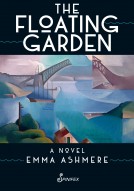
Emma Ashmere, The floating gardenI had a little chuckle when, fairly early in Emma Ashmere’s novel, The floating garden, we discover that our main character, Ellis Gilbey, writes a gardening column under the name Scribbly Gum! Good name, I thought. If it hadn’t been for my school song inspiration, this would have been the name for me!

There’s another synchronicity for me, though, and it relates to the setting of this story. Last week I did a presentation on old Australian ads for an organisation I’m involved in. One of those ads was The charmed cup*. It was made in 1929, runs for around 8 minutes (can you believe it?), and is for Bushells tea. It also, coincidentally, contains footage of the Sydney Harbour Bridge mid-construction. It’s this construction which sets the scene for Ashmere’s story … so now, let’s get to it.

The floating garden is set in Sydney in 1926 when construction on the Sydney Harbour Bridge had started and houses in Milson’s Point on the north of the harbour were being  demolished with little or no compensation to the residents of those homes. One of those residents is middle-aged Ellis Gilbey, who has run a boarding house for over twenty years. At the novel’s opening the last of her boarders has left and she, with other residents in the street, is hoping against hope that some compensation will be offered. Meanwhile, in a well-to-do part of Sydney, south of the harbour, is 30-something Rennie Howarth, a young English artist who had “taken the outstretched arm of an Australian man she hardly knew and had sailed from everything cold, sad and stale”. Unfortunately that Australian man, Lloyd, who had brought her to a life of luxury, was also abusive.

Part 1 of the novel alternates the story of these two women, with more of the chapters devoted to Ellis. Whether these two women are connected, or are going to be connected, we don’t discover until Part 2 of this three-part novel. While we are wondering about this, Ashmere is busy drawing some parallels between the women – both have experienced brutal men in their lives, Ellis her father and then an employee in a house where she’d lived as a young woman, and of course Rennie her husband; both had toyed with theosophy; and both find themselves house hunting. Another parallel occurs within Ellis’s life when, destitute, she is taken in by an older woman, and then, when that doesn’t work out, destitute again, she is taken in by another older, but this time kinder, woman. These parallels are not laboured, but provide a subtle foundation to the story being told, and help hold it together.

Ashmere’s main focus is Ellis. In her story, we shift between past and present, while Rennie’s story is focused on her present. Ellis, we discover, had run away from her farm home, when she was a teen, after her mother died, and had found herself, rather by accident, in the home of theosophist, Minerva Stranks, aka Strankenstein, around the turn of the century. It was out of the frying pan and into the fire for Ellis, as Minerva is a cruel taskmaster and a charlatan, to boot. Ellis is sexually attracted to Minerva’s other protégé, the pretty Kitty Tate. Her belief that Kitty cares for her helps her survive her time in the house until … well, I won’t give this away, but by the novel’s opening, Ellis had been carrying guilt and regret for twenty-seven years.

We are not given the same depth of background for Rennie’s life before the present, but we learn that she’d had a couple of exhibitions in London before fleeing to Australia with Lloyd, and that she’d been a lively, fun woman before her marriage to a man who physically abused and emotionally manipulated her. In Australia her art changes from “polite English watercolours” to “bolder, flatter, earthier colours” that are all-round too confronting for Lloyd. She represents, as Ashmere explained in an interview on ABC’s Books and Arts Daily, the new modernist art movement, a movement which rejected tradition for something bolder. That’s certainly Rennie.

So, despite the parallels in their lives, Rennie works largely as a foil for Ellis, not only because of their class difference, but because she’s lively and risk-taking against Ellis’ more cautious approach to life, which is understandable given her greater age and particular experiences. If I have a frustration with the novel, it would be that Rennie’s story is not as developed as Ellis’s and that perhaps her main role is to be this foil or plot-device to move Ellis on rather than a character in her own right. This is more observation, though, than complaint, because overall the writing is evocative without being overdone, and the characters are engaging,

What I particularly enjoyed about the novel is that Ashmere does for the underprivileged of 1920s Sydney what Ruth Park did for the 1950s in Harp in the south. They are very different books in terms of their narratives and themes, but both exude warmth and sympathy for their motley crew of marginalised characters, and both are valuable for their social history. In The floating garden this includes evoking the about-to-be dispossessed Milson’s Point community, the charlatan fringe of theosophy, the colour of Paddy’s Markets, the energy of the artistic/bohemian community, and the opening up of land in the rural outskirts of Sydney, in Lane Cove.

The novel’s overall theme has to do with memories, guilt and grief, with the idea that you really can’t move on if you haven’t resolved your past. Late in the novel, as Ellis starts to understand the truth of what had happened all those years ago, Ashmere writes:

She’d grown used to her memories for all these years and now her grief – her guilt – had grown around them in the same way a tree’s trunk grew around a rock until both the rock and the tree risked mutual destruction if prised apart.

But sometimes, there can only be progress if they are prised apart – and prised apart they eventually are, of course.

The floating garden is a very enjoyable book. It deals with real issues honestly but gently, and it brings to life a past world in a way that enhances our understanding of the present.

awwchallenge2015Emma Ashmere
The floating garden
North Melbourne: Spinifex Press, 2015
243pp.
ISBN: 9781742199368

(Review copy supplied by Spinifex Press)

* Unfortunately, the ad is broken into three clips on this page. Clip 2 contains the Bridge footage.

Monday musings on Australian literature: The Conversation’s Writing History

This is the post I planned for last week, when Jessica White hijacked me. Like that post, this one too was inspired by another person, this time my historian brother who sent me a link to an article in a new series by The Conversation called Writing History. This series aims to “examine the links, problems and dynamics of writing, recording and recreating history, whether in fiction or non-fiction”. A topic, as regular readers here will know, of interest to me.

I’m not sure how many articles are planned for the series, but here are the five that have been published to date:

I haven’t read them all yet, but I have read the first two, and dipped into another. In the first one, Nelson and de Matos explain that the series draws from essays that were published in a special issue of TEXT, an open-access academic journal. The issue is titled Fictional Histories and Historical Fictions, and its aim is to “get beyond … the often acrimonious exchanges between writers and historians that have been such a characteristic of the History Wars of the last ten years, with its boundary-riding rhetoric.”

The secret River cover

Now, if you are an Australian interested in this subject, you won’t be surprised to hear that both articles I’ve read refer to the conflict between historians and novelists inspired by Kate Grenville’s award-winning, best-selling novel The secret river – or, to be honest, by comments Grenville made about history in relation to her novel. Nelson and de Matos write that the question of who should interpret and write about the past and how the past should be taught or written about has been around for centuries but it was “made palpable” in the tussle over The secret river.

Nelson and de Matos discuss the accessibility of history – and the fact that historians can write accessible history, as proved by writers like Clare Wright in her award-winning The forgotten rebels of Eureka (my review). And they talk about the politicisation of history, referring to comments by politicians like Christopher Pyne bemoaning “the ostensible disappearance of western civilisation from the curriculum” and John Howard’s critiquing of “the black armband view of history”. While political interference is not a good thing, they suggest that in a sense, all history – in its relationship to debates about democracy, identity and social justice – is public history. It makes it even more critical, then, doesn’t it, that we understand what we are talking about and the grounds upon which we are doing it.

In the second article, Tom Griffiths tackles the intertwining of fiction and history. He argues that it was Eleanor Dark, a novelist, who confronted the complacent imperial view of history in Australia’s sesquicentenary, a view that ignored the place of “Aborigines, convicts and women”. She led the way in rethinking our history. Paradoxically, the poet Judith Wright, a few decades later, wrote a history, Cry for the dead, which “gave a secure scholarly foundation to the political campaign of the Aboriginal Treaty committee”. His point is that both writers chose the form that best suited their needs at the time. “Like Eleanor Dark”, he writes, “Judith Wright carefully set about becoming a historian”.

By 1990s, the idea of “frontier conflict” was an accepted part of our historiography but there was a conservative backlash which tried to discredit research by arguing detail such as the number of people who died “as if it decided the ethics of the issue”. It was into this “moral vacuum”, Griffiths writes, that books like Inga Clendinnen’s history Dancing with strangers (2003) and Kate Grenville’s novel The secret river (2005) appeared.

Unfortunately, Grenville’s comments on the value of fiction to history –

The voice of debate might stimulate the brain, the dry voice of ‘facts’ might make us comfortable, even relaxed. It takes the voice of fiction to get the feet walking in a new direction.

– got her involved in the wrong debates, in discussions about history and fiction rather than the topic she wanted, frontier violence. Griffiths suggested this occurred partly because of the timing, because the conservatives were interested, at that time, in debating the “precise, grounded, evidenced truths of history”. To debate on that ground you needed “time, place and specificity”. Grenville, in other words, “found herself at the centre of a debate that goes to the heart of the discipline of history”. I like this explanation. It explains for me some of the reactions to Grenville that never completely made sense, it explains why historians I admired came out so strongly against Grenville, whose story seemed to make a valid contribution to the discussion.

Griffiths concludes that history and fiction are “a tag team” in the study of the past, “sometimes taking turns, sometimes working in tandem”. “History doesn’t own the truth”, he writes, “and fiction doesn’t own the imagination”. We need to understand the distinctions and how they play out, but we shouldn’t see this discussion as “defending territory”.

I look forward to reading the other articles. But for now, I’ll close on a quote my brother also sent me last week. It’s from Jose Saramago’s The Elephant’s Journey (2008):

… that is how it’s set down in history, as an incontrovertible, documented fact, supported by historians and confirmed by the novelist, who must be forgiven for taking certain liberties with names, not only because it is his right to invent, but also because he had to fill in certain gaps so that the sacred coherence of the story was not lost. It must be said that history is always selective, and discriminatory too, selecting from life only what society deems to be historical and scorning the rest, which is precisely where we might find the true explanation of facts, of things, of wretched reality itself. In truth, I say to you, it is better to be a novelist, a fiction writer, a liar.

And so the discussion continues …

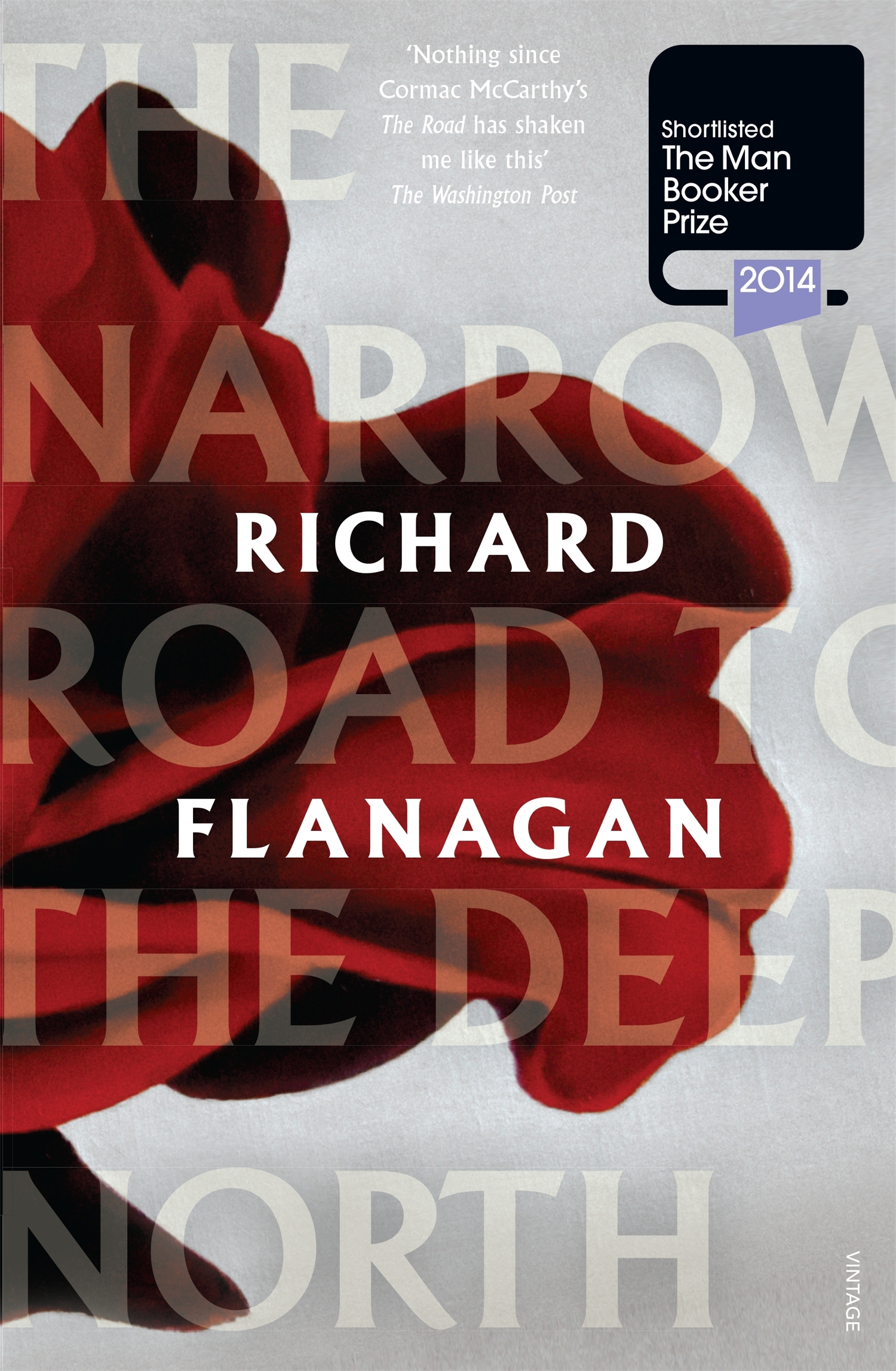
Richard Flanagan: The narrow road to the deep north (Review)

Courtesy: Random House Australia

Courtesy: Random House Australia

I love generosity of spirit, the ability to rise above terrible things to see the humanity that lies beneath. Richard Flanagan’s Booker Prize shortlisted The narrow road to the deep north is, without being sentimental or glossing over the horror, a generous book – and this is why I expect it will be one of those books I’ll remember long into the future.

I know I’m late reading it – but this is because I’ve been saving it until my reading group did it, which was earlier this week. Consequently, I spent the last few days of September engrossed in the life of Dorrigo Evans, war-hero, lover of poetry (and of too many women), and, most significantly, POW from the Thai-Burma Railway. It’s one hell of a tale … and not exactly what I expected.

On the surface, Dorrigo had a successful life. He survived the POW camp for one thing, was highly regarded in his career, became a war-hero celebrity due to a documentary (loved this!), and had a long-lasting marriage with three children. But, this is not the full story. Chapter 2 of Book 1, commences:

A happy man has no past, while an unhappy man has nothing else. Dorrigo Evans never knew if he had read this or made it up. Made up, mixed up and broken down. Relentlessly broken down.

This sounds like it could be PTSD, but it’s not. PTSD is important, of course, but Flanagan is interested in broader issues. In many ways the book feels like a big 19th century novel – it has lots of characters, spans a long time-frame, doesn’t shy from coincidences, and explores big themes – but in style, it’s very contemporary, with frequent shifts in time and place, and multiple third-person subjective points of view. It requires concentration to get all the connections, and would benefit from a second reading. Just the sort of book I enjoy getting my teeth into.

I said in my opening paragraph that the book wasn’t exactly what I expected. That’s because I was expecting more war, and perhaps more anger, than I found. There is war, of course, much of it gruesome, as fits the “truth” of that situation, but the main thread is a love story, accompanied by meditations on ideas like truth, goodness and manhood. I can’t possibly discuss all these or we’ll be here forever, so I’m just going to focus on a couple.

“to somehow be more truthful as a human being” (Nakamura)

One of the novel’s strengths is the balance Flanagan strikes between brutality and humanity. He does this partly by paralleling the life of Dorrigo, the commanding officer of the POWs, with Nakamura, the commanding Japanese officer. Nakamura is the enemy but isn’t vilified as you’d expect. Flanagan shows Nakamura to be brutal towards prisoners but we also get inside his head. We learn that he is not comfortable in his own skin – he is, in fact, addicted to shabu (speed) – and that he needs his superiors’ arguments to convince himself of the right of what he is doing. That he is able to do so – that is, to buy completely into the notion of the “Japanese spirit”, into the Emperor’s goals of “The World Under One Roof” – is believable. What soldiers don’t buy into their nation’s “mythology” (whatever it is based on)?

Flanagan follows Nakamura post-war until his death, as he endeavours to rebuild his life – firstly under a false identity to escape being tried as a war-criminal, and later as himself, married and a father. He struggles to define himself – and is surprised to feel himself transformed into “a good man”. A decade or so after the war, his memory of his brutality fades:

time … allowed his memory instead to nurture stories of goodness and extenuating circumstance.

However, when he is dying, he finds it increasingly difficult to hold onto “his idea of his own goodness”. Comparing this goodness with that of his wife, it comes “close to collapsing altogether”. He searches for the “good things in his life — separate of the Emperor’s will, of orders and authority” but finds they are few when compared with his memory of “skeletal creatures crawling through the mud”. His death poem, concluding with “clear is my heart”, is tinged with irony, but reflects his desire “to conceive of his life’s work as that of a good man”.

By contrast, Dorrigo believes himself not to be a good man, to be “entirely bogus”. He marries a woman he doesn’t love, believing his true love to be dead:

For the rest of his life he would yield to circumstance and expectation, coming to call these strange weights duty. The guiltier he felt about his failure first as a husband and later as a father, the more desperately he tried to do only what was good in his public life. And what was good, what was duty, what was ever that most convenient escape that was conveniently inescapable, was what other people expected.

And yet, he’s a “war hero” and validly so. At one point on the Railway, when they are all starving, he refuses to eat some steak. Rather, he sends it back to the men, having “found himself the leader of a thousand men* who were strangely leading him to be all the many things he was not”. This is not false modesty – the men did bring out his best – and yet this modesty is not completely valid either because Dorrigo did have good in him. He was a man prepared to take action for others, at risk to himself. In his last comatose days, he feels that his life had “only ever been shame and loss”, but his final words are words of action, alluding, self-deprecatingly perhaps, to Don Quixote’s windmill but also reminding us of the last line of the poem that defined him, Tennyson’s “Ulysses” – “to strive, to seek, to find, and not to yield”.

 “a poem is not a law” (Bonox Baker)

Two other notions run through the novel – and I’ve already alluded to them both – the love of literature, particularly poetry, and the workings of memory. One scene in particular brings these ideas together. It concerns the funeral pyre for some cholera victims, who include the artist Rabbit Hendricks. When cholera victims are burnt, their personal belongings must also be burnt, but Bonox Baker wants to save Rabbit’s sketchbook because:

it’s a record … So people in the future would, well, know. Remember, that’s what Rabbit wanted. That people will remember what happened here. To us.

Dorrigo quotes from Kipling’s poem, “Recessional”, arguing that everything is forgotten in the end, that it’s better to just live. Bonox disagrees, telling Dorrigo that

A poem is not a law. It’s not fate Sir.
No, Dorrigo Evans said, though for him, he realised with a shock, it more or less was.

For Dorrigo, for Nakamura and for his commanding officer, Colonel Kota, poetry is essential in some way to their lives. Dorrigo, who lived at a time “when a life could be conceived and lived in the image of poetry” eventually finds himself “living in the shadow of a single poem”, while for Nakamura poetry emulates “the Japanese spirit” by which he tries to justify or explain his actions.

Bonox, though, is interested in something else. He continues to argue with Dorrigo about the sketchbook:

Memory is the true justice, sir.
Or, the creator of new horrors. Memory’s only like justice, Bonox, because it’s another wrong idea that makes people feel right.

And so we come to one of the paradoxes that Flanagan exposes in the book – individual memory versus the memory industry. Dorrigo is outed as a war hero through a documentary, which makes him uncomfortable, and yet “to deny the reverence seemed to insult the memory of those who had died”. The memory industry, however, too often ignores the “truth” of the experience in preference for the facts, as bugle-player Jimmy Bigelow discovers:

His sons corrected his memories more and more. What the hell did they know? Apparently a lot more than him. Historians, journalists, documentary makers, even his own bloody family pointing out errors, inconsistencies, lapses and straight out contradictions in his varying accounts. Who was he meant to be? The Encyclopaedia bloody Britannica? … His words and memories were nothing. Everything was in him. Could they not see that? Could they not just let him be?

Paradoxically, Flanagan is questioning the memory industry while at the same time contributing to it. And it is a powerful contribution. Just goes to show the power of literature!

This is a big messy novel, about the two messiest things humanity confronts – love and war. I love its messiness, its lack of answers, but it sure made it hard to write about. Fortunately, Lisa at ANZLitLovers and John at Musings of a Literary Dilettante have also given it a go.

Richard Flanagan
The narrow road to the deep north
North Sydney: Vintage Books, 2013
ISBN: 9781741666700
466p.

* Aussie readers will recognise Flanagan’s reference here to Weary Dunlop.

Roslyn Russell, Maria returns: Barbados to Mansfield Park (Review)

A week or so ago my local Jane Austen group had a guest speaker at our meeting, Roslyn Russell, the author of Maria returns: Barbados to Mansfield Park. Russell is a local historian who has written this historical novel based on Jane Austen’s novel, Mansfield Park. She is also a lapsed member of our group, so of course we had to ask her to come and talk to us about it. Most of this post draws from my report of her talk, which she titled Maria returns: Barbados to Mansfield Park: Fictionalising the legacy of slavery in Mansfield Park.

Regular readers probably know that I’m not a fan of fan-fiction or sequels of well-known works. In fact, I probably wouldn’t have read any if it hadn’t been for belonging to the Jane Austen Society of Australia. However, having read Deidre Shauna Lynch’s essay, “Sequels” in Jane Austen in context, edited by Janet Todd, I decided that I should relax my “rule”. Lynch convinced me that these books are an important part of our understanding of Austen as a literary and cultural icon. Consequently, I have now read PD James’ crime novel Death comes to Pemberley (my review) and Jo Baker’s Longbourn (my review). Roslyn Russell’s historical novel is my third. In it, she imagines that some ten years after being banished to the country, and upon the death of her companion Aunt Norris, Maria Bertram goes to Barbados and learns about slavery and the abolition movement.

There are, I’m gathering, many different reasons why writers want to write sequels or fan fiction works. For Russell, it was, as she writes in her author’s note, inspired by two passions: her love of Jane Austen and of Barbados. Barbados? How many Australians have been to, let alone developed a passion for, Barbados? Not many, I expect. It was her museum work, in fact, which took Russell to Barbados and there, its history – and particularly the history of its plantations and the practice of slavery – reminded her of Jane Austen’s Mansfield Park in which the leading family, the Bertrams, draw their prime income from their plantation in Antigua.

Jane Austen, Mansfield Park and Slavery

Russell commenced by telling us that although most of the characters in her novel are fictional, some are based on real people. Before discussing this further, however, she read the excerpt from Mansfield Park which contains the only reference to slavery:

“But I do talk to him more than I used. I am sure I do. Did not you hear me ask him about the slave–trade last night?”

“I did—and was in hopes the question would be followed up by others. It would have pleased your uncle to be inquired of farther.”

“And I longed to do it—but there was such a dead silence! And while my cousins were sitting by without speaking a word, or seeming at all interested in the subject, I did not like— I thought it would appear as if I wanted to set myself off at their expense, by shewing a curiosity and pleasure in his information which he must wish his own daughters to feel.” (MP)

She noted that this shows Maria and Julia’s lack of interest in the source of their family’s income. She then referred to cultural theorist Edward Said’s discussion of the novel and his statement that it is not appropriate “to expect Jane Austen to treat slavery with anything like the passion of an abolitionist or a newly liberated slave”. Said, she told us, did not apply 21st century attitudes to his assessment of Austen, but suggested that her work, as that of an author who belonged to a slave-owning society, should be analysed in context and in terms of what she does and doesn’t say rather than simply attacked as being complicit.

Ros then briefly outlined some of Austen’s known or probable connections with plantations:

  • the family’s close relationship with her father’s friend, the plantocrat James Langford Nibbs who was also Austen brother’s godfather. Nibbs apparently took his son out to his plantations in Antigua to settle down his unruly behaviour, which rather mirrors Sir Thomas’ taking Tom out to his plantation.
  • Austen’s aunt-by-marriage, Jane Leigh-Perrot, who was born in Barbados, though went to school in England.
  • Mrs Skeet who is mentioned in Austen’s letters. Skeet is a common name in Barbados, suggesting she had a connection to slavery*.
  • the Holder family of Ashe Park, also friends of the Austens. Holder, too, is a common name in the Caribbean.

The title Mansfield Park, itself, could also reflect Austen’s awareness of the slavery issue, as it may have been inspired by Lord Mansfield who was famous for adjudications which contributed significantly to the eventual abolition of the slave trade. (This is the Lord Mansfield who became guardian of his mulatto niece Dido, fictionalised in the recent film, Belle).

Barbados and Maria Returns

Russell then turned to her own book, first addressing the question of why she had set it in Barbados and not Antigua, where the Bertrams’ plantation was. Firstly, she has been to Barbados several times and knows its history. She couldn’t, she said, write about a place she didn’t know. Secondly, Barbados is also the location of a historical event she uses in her novel.

Mansfield Park was written 20 years before emancipation (i.e. the formal abolition of slavery) in 1834. Maria Returns is set about 15 years after MP, and so during the time when the abolition movement was becoming more vocal. Ros explained that the abolition of the slave trade in 1807 did not seriously affect the Caribbean plantations: they were “breeding” their own slaves and were essentially self-sufficient. However, the abolition of slavery represented a major threat to their livelihoods, and the plantation families were deeply concerned. By the 1820s the abolition movement was becoming active – mostly among Evangelical Anglicans, Methodists and Quakers.

Ros discussed the historical basis of her fiction. For example, at the dinner party in the English village where Maria first meets abolitionist John Simpson, he talks of a trial in Barbados in which slaves were apparently unjustly convicted of and executed for a murder. This trial did occur and is a reason Russell chose Barbados for her setting. The trial was witnessed by James Stephen** who, though he lived a little earlier than our fictional Simpson, is Russell’s model for her character.

Simpson also talks at this dinner about a slave rebellion, led by African-slave Bussa, that occurred in Barbados in 1816. Bussa was killed in the rebellion. Such slave rebellions resulted in plantation owners becoming harsher. Simpson makes it clear which side he is on. This is a wake up call for Maria who:

had not been aware of the strength of feeling in the wider community against the institution of slavery, from which her own family had benefitted so materially. (MR)

After Maria arrives in Bridgetown she meets or hears of other abolitionists, such as the historically real free coloured man, Sam Prescod (who, with Bussa, is now a national hero) and plantation owner Josiah Thompson. Thompson is fictional but, as a former owner who had downsized his estate and treated his slaves-now-servants well, he has historical antecedents. Men who behaved like he did faced hostility from other Barbadians – and so, in the novel, Thompson is a lonely man who is keen to host Maria and her friends at his home. His willingness to import a teacher from England to teach his slaves also has precedents. Maria realises again that she’d never wondered about her father’s plantations, but she begins now to wonder what her father might think about the people she’s meeting.

Ros then spoke about the treatment of slave women by their white owners, particularly in relation to sexual predation. This forms an important part of the story – but I won’t spoil it here. However, she again spoke of historical precedents – not that we really needed any for this one!  We weren’t, though, quite prepared for the example she gave us, one Thomas Thistlewood who kept a diary of his plantation life. Wikipedia confirms what Ros told us: his diary chronicled “3,852 acts of sexual intercourse and/or rape with 138 women, nearly all of whom were black slaves”.

Roslyn Russell, Maria Returns Ros illustrated her talk with some wonderful illustrations, including the painting used on the cover of her book, Agostino Brunias’ The Barbadoes Mulatto Girl. She also mentioned some of the sources she used in her research, like Andrea Stuart’s Sugar in the blood: A family’s story of slavery and empire.

So, the novel

I enjoyed the read. It is pretty much genre historical fiction rather than literary fiction, so not my usual fare. Russell doesn’t try to emulate Austen, and while her writing is clear, her dialogue can be a little too formal and uniform at times. She includes a lot of information about life at the time, information that Austen herself would not have needed to, and indeed did not, supply. But, of course, this is historical fiction, and modern audiences need background that Austen’s contemporaries didn’t.

Russell spins a credible story, both in terms of the plot she creates and how she develops the characters she draws from Mansfield Park. Maria does change significantly, but Russell convinces us that she could. However, this is historical, romantic fiction, not a fierce novel, so Russell’s more culpable characters, in particular Bertram father and son, are let off more lightly than they deserve. This perhaps mirrors the political reality: after emancipation, the Caribbean plantation owners received in total £20 million compensation, while the slaves received nothing.

What did Austen know and feel about slavery? We’re unlikely to ever know, but in Maria returns Russell has given us some insight into the darker side of life that Austen only hints at.

* Names that are common in slave areas are usually so because slaves tended to take on the surnames of their masters.

** Wikipedia tells that Stephen was great-grandfather of Virginia Woolf.

awwchallenge2014

Roslyn Russell
Maria returns: Barbados to Mansfield Park
Flynn: Bobby Graham Publishers, 2014
(Kindle ed.)

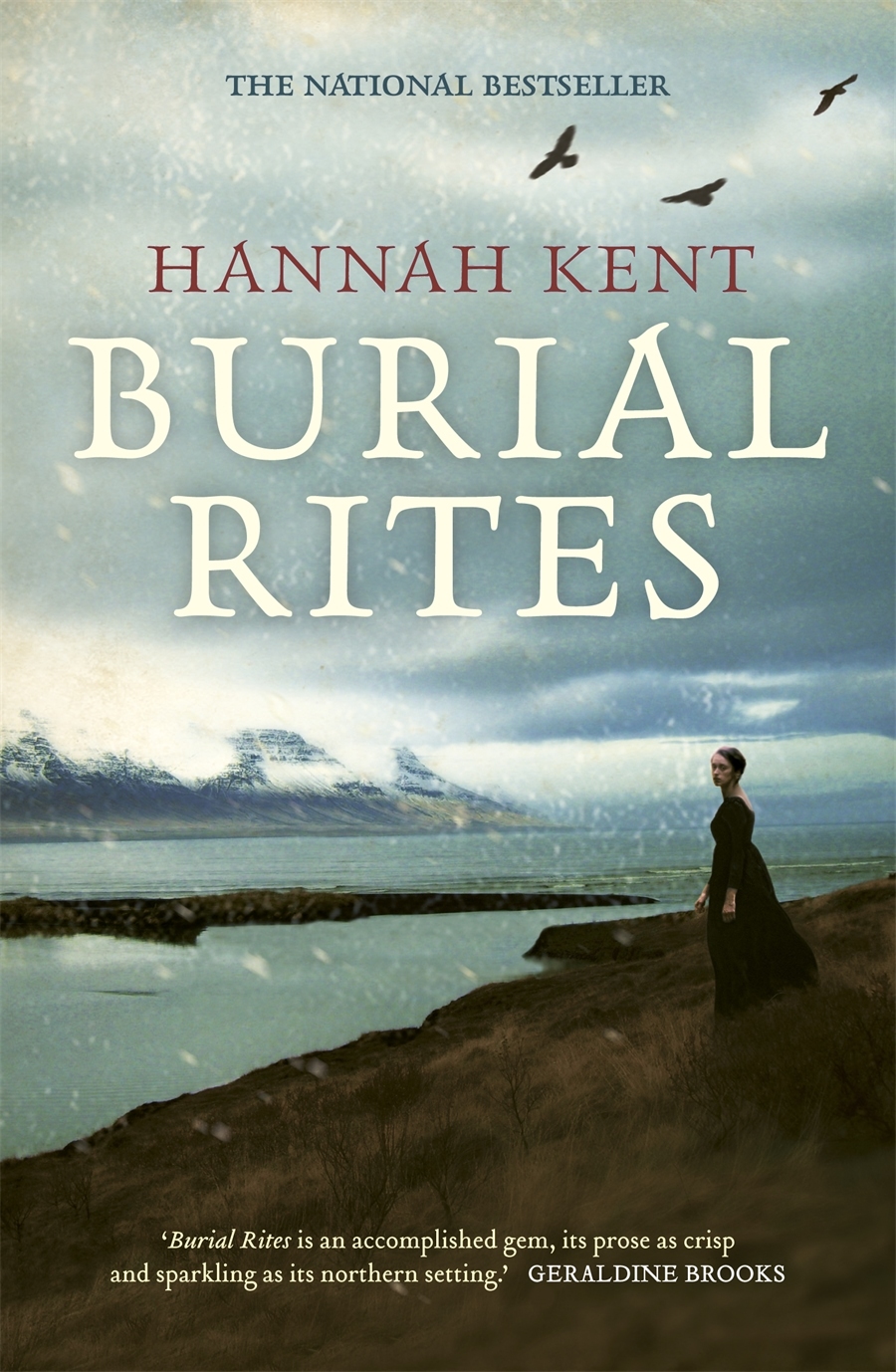
Hannah Kent, Burial rites (Review)

Hannah Kent, Burial Rites bookcover

Courtesy: Picador

“We’ll remember you” says Margrét to Agnes on the day of her execution. We sure will, if Hannah Kent’s debut novel Burial rites has anything to say about it. Kent’s book is the second novel set in Iceland I’ve read, the first being Icelandic writer Halldor Laxness’s unforgettable Independent people. Although Laxness’s novel is set a century after Burial rites, it prepared me for Kent’s novel – for the difficult landscape, the hard lives, and the unforgiving natures that such an environment can engender. Yes, that’s a generalisation I know. You can find unforgiving natures anywhere, but oh, they work so well in harsh environments. Just think, for example, of My Antonia (my review).

But now, what to say about a book that hit the book stands running? I wanted to read it last year, but I also wanted to read it with my reading group, which is why I have only now read it. Reading a book so late can make it difficult to add anything meaningful to the conversation. Fortunately though, while I couldn’t avoid the early buzz, I haven’t read the myriad reviews out there, enabling me to come to it reasonably freshly. So, here goes …

Remember your place, Agnes

It’s a compelling read. Icelanders may know the basic story, but we don’t. It concerns Agnes Magnúsdóttir – great sounding name, eh? – who, in 1830, was the last person to be executed in Iceland. She and two others, Fridrik Sigurdsson and Sigrídur Gudmundsdóttir, were convicted of murdering Natan Ketilsson, a complicated and probably cruel man, and his friend Pétur. Fridrik was also executed, while Sigrídur’s sentence was commuted to life imprisonment. Apparently, executions were normally carried out in Denmark but District Commissioner Björn Blöndal wanted to make an example of Agnes. As it would take some time to organise the executions and as Iceland had no real prison facilities, Agnes and Fridrik, were, literally, farmed out to live with public officials who were also farmers. Most of the novel takes place on the farm, Kornsà, to which Agnes was sent. The main characters, there, are the farmer’s dying wife Margrèt, her two daughters Steina and Lauga, and her husband Jón. Making regular visits is Assistant Reverend Tóti, chosen by Agnes to be her religious adviser. As the novel progresses, we also meet the victim and Agnes’s co-murderers.

Kent creates a believable world in which the people at Kornsà are initially resentful and fearful, but gradually, more gradual for some than others, come to recognise Agnes’ humanity and to believe that her sentence “isn’t right”. Similarly, the anxious but conscientious Tóti grows through his relationship as Agnes’ mentor. We learn about Agnes’ childhood, in which she is early deserted by her mother and then loses a loving foster-mother through death in childbirth. And we learn about her struggles to support herself as a woman. She thought she’d found her place with Natan, who seemed to offer her love while also offering her a job, but he soon reminds her of “her place”! Kent’s Agnes lives most of her life alone, lonely, and unsupported, which was probably not uncommon for women of her class at that time. This is, I’m sure, one of the themes Kent wants to explore in her novel.

You could argue that, overall, Kent’s women are fleshed out more than her men, but this is Agnes’ story and we know, I think, what we need to know about the men. There is a feminist reading to the book, but it is also more broadly sociological, to do with poverty and disempowerment. That women are more likely than men to find themselves in these positions is part of the problem.

This is what I told the reverend

Kent doesn’t use a simple, direct narrative to tell her story. (What novelist does in this post-postmodern world of ours!) For a start, she opens each chapter with one or more translated archival documents. This regular interruption of the main narrative could irritate readers by breaking emotional engagement with the story, but I found it enhanced the novel, particularly considering Kent’s intentions. One of these intentions, as she explained in an interview at last year’s World Book Expo, relates to the fact that she sees the novel as “speculative biography” not “historical fiction”. She describes, in this and other interviews, her methodology which was to use facts wherever they were available. Where the facts weren’t available, she says, she did broader contextual research about Iceland to imagine what was most likely to have occurred. She felt “free to invent” only in the outright gaps. She describes this approach as “research-driven creative-practice”. It’s logical, given all this, that she would use archival documents to support her “story”.

The other main narrative technique Kent uses is to switch voices from first person for Agnes, to third person for everyone else. This also makes sense given that Kent’s prime motivation was to give Agnes a voice, to “find her ambiguity, her humanity” and lift her out of the prevailing, more caricatured image. Again, I think it works, mostly. Agnes’ voice is distinctive, strong, and wavers, as you would expect, from confidence and hope to anxiety and fear. However, there were times when the switch back to third person seemed unnecessary. Mostly the third person sections focus on other characters, even when they are interacting with Agnes, but on a couple of occasions the shift occurs in the middle of Agnes’ story. One minute she is telling her story – “This is what I told the reverend” – and next minute the reverend asks “What happened then” and her story continues in the third person with her words in quotation marks. This was a little disconcerting, though it didn’t spoil the story significantly.

A magic stone

While the main point of the novel is Agnes’ story, Kent, in the process, paints a rich picture of Icelandic society, of the farmers, healers, neighbours, poets, gossips, maids and so on. Religion is clearly important, but for some characters, omens and superstition are equally if not more powerful. Natan is depicted as highly susceptible to bad omens, and for Agnes the ever-present ravens – “their black feathers poisonous against the snow” – reflect her sense of aloneness, and bode ill. By contrast, stones suggest good luck:

The stone Mamma gave me before she left. It will bring you good luck, Agnes. It is a magic stone.

It is, therefore, telling when she spits out a stone from her mouth on the day of her execution.

This brings me to Kent’s writing. It’s strong, evocative and often visceral. She uses motifs, like the ravens and stones, to reinforce her ideas. (It’s probably not coincidental, either, that the novel has thirteen chapters!). She is though, a first-time novelist, and at times the writing becomes a little heavy-handed, like this, for example:

Sometimes, after talking to the Reverend, my mouth aches. My tongue feels so tired; it slumps in my mouth like a dead bird, all damp feathers, in between the stones of my teeth.

But who’s complaining? Burial rites is a magical read that gets you in from the first page and doesn’t let you go until you get out your hanky at the end. Consider yourself warned.

awwchallenge2014Hannah Kent
Burial rites
Sydney: Picador, 2013
Design: Sandy Cull
338pp
ISBN: 9781742612829

Jo Baker, Longbourn (Review)

Jo Baker, Longbourn

Used by permission of The Random House Group Ltd

“Never say never” is one of my favourite mottos, though I must admit there are some things I never will do, such as climb Mt Everest, say, or even write a novel. However, when it comes to reading choices, there are certain types of books that are not my preference, such as crime and Jane Austen sequels, but as regular readers will have seen over the years I can be persuaded. And so, I was persuaded to read Jo Baker’s Longbourn: Pride and prejudice, the servants’ story, a Pride and prejudice spin-off, for my local Jane Austen group’s monthly meeting. I can’t say I loved the book, but it did interest me.

So, what’s it about? As the title suggests, it concerns the “downstairs” staff, the servants, at Longbourn, the residence of the Bennet family of Pride and prejudice. These servants appear, either directly or by indirect mentions, in Austen’s novel, but of course we know nothing about their lives. Baker rectifies that in her story by exploring who they are, how they got there, and what their aims and ambitions are. There’s Mr and Mrs Hill (butler and housekeeper/cook), Sarah and Polly (housemaids) and, for a short time, James the footman. The “heroine”, if a poor orphan housemaid with bleeding, chill-blained, “pruney” hands can be called that, is housemaid Sarah. The plot, particularly concerning James and his relationship to Longbourn, is a little melodramatic and the romantic resolution a little predictable for my tastes but it is probably traditional historical fiction fare. The book is well-written, the characters realistic and engaging, and the plot well-paced. I’m no expert in the genre but it is, I’d say, a perfectly fine example.

Baker nicely handles the relationship with the “parent” novel. The downstairs staff are privy, of course, to what happens to the Bennets, so we see many of the scenes, such as Mr Collins’ proposal to Elizabeth and Lydia’s “elopement” with Wickham, through their eyes. They have their own views on the characters and their own reactions to the events. Baker’s imagination of these is completely believable. Mrs Hill, for example, is sympathetic to Mrs Bennet, understanding that much of her behaviour stems from Mr Bennet’s lack of love and respect for her. She is also very aware of the precariousness of the servants’ situation. What will happen when Mr Bennet dies and the estate falls into Mr Collins’ hands? Will there be enough work for them all as the young misses marry and leave Longbourn?

All this was interesting enough, and the story wasn’t so melodramatic that I was turned off, but what mostly captured my attention was Baker’s evocation of the life of servants in Regency/Georgian times. They work hard, and over long hours, sometimes from 4.30am to 11pm. Baker describes in some detail their duties such as laundering and the hand-ruining scrubbing needed to remove stains, the emptying of chamber pots, and the making of soap and other products such as dubbin. Their needs and feelings are rarely considered. Even “kind” employers’ like the Bennets tend to be oblivious of their servants’ lives, just as the thoughtful Anne Elliot in Persuasion doesn’t notice her sick friend Mrs Smith’s nurse. Their living quarters are cramped, in uncomfortable parts of houses, with housemaids often sharing a bed. Through James, the footman, we learn about the awful lives of young men who “take the King’s shilling” and end up fighting in harsh conditions, treated like fodder and at the mercy of corrupt superiors. James realises:

I had handed my freedom right over. I signed it clean away. I sold myself.

In addition to these rather era-specific aspects of the book were references to behaviours that are more universal to relationships involving disempowered people. One relates to naming. There are two such situations in Longbourn. There’s housemaid Polly whose real name is Mary, but

It’s only ‘cos she’s the Miss and I imnt, that she got to be called Mary, and I had to  be changed to Polly, even though my christened name is Mary too.

This practice, we know, wasn’t limited to English servants. It happened regularly, for example, with indigenous people, as Kim Scott tells us regarding the naming of Bobby in That deadman dance (my review), and Eleanor Catton regarding her Maori character in The luminaries (my review). Then there’s Bingley’s footman, the mulatto Ptolemy Bingley. When Sarah questions his last name, he says:

If you’re off his estate, that’s your name, that’s how it works.

The other issue that struck me was the way servants watch their masters/employers. I’ve already noted that the employers often didn’t notice their servants, but the servants sure noticed them – and more than was simply required for the work they were employed to do. Servants needed to watch because their lives were closely attached to the fortunes of their masters. Similarly, I’ve read that indigenous Australians watch and know non-indigenous Australians way better than we know them. As indigenous activist Lee says in Margaret Merrilees’ The first week (my review):

You think we can’t see you? You think we haven’t been watching you for two hundred years? We’ve had to find out everything there is to know about you.

These sorts of insights are, for me, one of the prime values of reading historical fiction – the lessons learned about how we’ve been and behaved, and the historical continuities between people and times. It’s for these reasons, in particular, that I’m not sorry I devoted some precious reading hours to reading Longbourn.

Jo Baker
Longbourn: Pride and prejudice, the servants’ story
London: Doubleday, 2013
365pp.
Design: Clare Ward
ISBN: 9780857522023

Eleanor Catton, The luminaries (Review)

Courtesy: Allen & Unwin

Courtesy: Allen & Unwin

Now here’s the thing … I don’t make a practice of reading mysteries. I really don’t care about who dunnit. When Mr Gums and I watch television crime shows, I rarely concentrate enough to work out the plot intricacies, but I do watch the characters. I’m always interested in the detectives and their relationships. I want to know who they are and what makes them tick. And so, I must say that I got a little tired of the plot machinations in Eleanor Catton’s Booker prize-winning novel, The luminaries. I didn’t really want to expend effort to keep track of the complexities of whose gold went where, who told whom what, and so on. But, I did find the book an interesting read, nonetheless.

Why? Well, first and foremost because of the characters. In the first half of the novel, as the characters were being introduced, I was impressed by Catton’s understanding of human nature.  Her characters, most of them anyhow, are nuanced – if that’s not too clichéd a term. Here for example is Thomas Balfour:

When a restless spirit is commissioned, under influence, to solve a riddle for another man, his energies are, at first, readily and faithfully applied. But Thomas Balfour’s energies tended to span a very short duration, if the project to which he was assigned was not a project of his own devising. His imagination gave way to impatience, and his optimism to an extravagant breed of neglect. He seized an idea only to discard it immediately, if only for the reason that it was no longer novel to him; he started in all directions at once. This was not at all the mark of a fickle temper, but rather, of a temper that is accustomed to enthusiasm of the most genuine and curious sort, and so will accept no form of counterfeit – but it was nevertheless, something of an impediment to progress.

This made me laugh. Not all descriptions did of course, but most are insightful of humanity.

There is also humour in the book – some funny scenes, and wry asides. Since we’re on Thomas Balfour, let’s stay with him. Here he is meeting the chaplain Cowell Devlin:

‘Good morning’, returned the reverend man, and from his accent Balfour knew at once that he was Irish; he relaxed, and allowed himself to be rude.

Thomas, as you might have guessed, is English – and this of course tells us more about him than about Devlin.

Perhaps at this point I should mention the plot, though as a Booker Prize Winner, its basic premise is probably known to most of you. The novel is set in the New Zealand goldfields, Hokitika mainly, over 1865 to 1866. The plot concerns the death of one man, the disappearance of another, an apparent suicide attempt, and the provenance of a gold fortune. There are 20 main characters – 12 described as stellar, representing the 12 astrological star signs; 7 described as planetary, representing, of course, the planets; and one, the dead man, described as terra firma. It’s a lot to keep in your head but Catton does provide a character chart at the front to help.

There is a lot to enjoy while reading this book, in addition to the characterisation and humour. The plot is intricate and fun to unravel if you enjoy mysteries. The goldfields setting is realistic, with its businessmen, publicans, politicians, prospectors, whores, opium dealers and tricksters, not to mention the salting and the duffers. The writing is sure. I enjoyed her use of imagery. Grey and yellow feature throughout as do references to spirits (ethereal, emotional, and alcoholic), ghosts, apparitions, phantoms, fog and mist. These all helped convey a sense of murkiness, and of things shifting before our eyes.

The main themes are to do with truth, lies and fraud, with love, loyalty and betrayal. It’s quite a cynical world that our characters find themselves in. As the not-yet dead man, Crosbie Wells, says to the whore, Anna Wetherell:

There’s no charity in a gold town. If it looks like charity, look again.

There is, of course, but it’s rare – and, as Wells advises, you have to be darned careful about who you trust, because, human nature being what it is, where there’s gold, there’s always greed.

The big challenge of this novel is its structure. I’ve already mentioned the structure of the characters. The astrological theme is carried through into the structure of the narrative. The book is divided into 12 parts which, I learnt at my reading group, are meant to align with the lunar cycle, each part being exactly half the length of the previous part. This didn’t feel artificial, because the increasingly shorter parts provided a rhythm to the unravelling of the plot. The other point to make about the structure is that the novel commences on 27 January 1866, 13 days after 14 January when the critical plot events take place. The novel then moves forward, through the trial and its aftermath, to 27 April 1866 (Part 4). In this part, we also jump back, in alternating chapters, to 27 April 1865, when the major players in the plot start, shall we say, “orbiting” each other, if not downright colliding. The novel then progresses forward again, ending on 14 January 1866, not quite back at the beginning, but on the day that precipitates the narrative.

There is, then, a certain circularity to it all, but what does it mean? Does this structure do anything for we readers? I’m not sure. There are intricate astrological charts at the beginning of each part showing where the 12 characters are positioned, astronomically speaking, on that date. I don’t have the astrological knowledge to know whether these charts added meaning or not. The circularity does, however, suggest another potential theme – which is, as chaplain Devlin says, that:

Some things are never done.

Devlin says something else too, which is reinforced by the way the narrative progresses via the stories of the various players:

never underestimate how extraordinarily difficult it is to understand a situation from another person’s point of view.

So, in the end, where did it all leave me? Wondering, in fact, whether it was just a little too clever for itself or, maybe, too clever for me. Either way, I did enjoy the read, and was impressed by the skill with which Catton executed her tale and the insight she has into human nature. Beyond that, I think it’s best if you decide for yourselves.

Lisa (ANZLitLovers) wasn’t enamoured, nor was the Resident Judge, but John (Musings of a Literary Dilettante) liked it very much.

Eleanor Catton
The luminaries
London: Granta, 2013
832pp.
ISBN: 9781847088765

Hilary Mantel, Bring up the bodies (Review)

Hilary Mantel, Bring up the bodies

Courtesy: HarperCollins Australia

In her author’s note at the end of her second Thomas Cromwell novel, Bring up the bodies, Hilary Mantel writes that:

In this book I try to show how a few crucial weeks might have looked from Thomas Cromwell’s point of view. I am not claiming authority for my version; I am making the reader a proposal, an offer.

And what an offer it is! In my review of the first novel, Wolf Hall, I quote Cromwell’s statement that “…homo homini lupus, man is wolf to man”. This was related to the theme of the book – the machinations behind the scenes that change the world, something that we Australians are more familiar with right now than we’d like to be. (This is, in fact, a very modern book.) Anyhow, Bring up the bodies continues this theme but with a difference …

That difference is Thomas Cromwell’s motivations, but more on that anon. The plot concerns Henry’s desire to replace Anne Boleyn with Jane Seymour as his wife – and we all know where that led! It’s a much tighter plot – and a somewhat shorter book – than Wolf Hall. It takes place over about 9 months, from September 1535 to Summer 1536, and while the political climate is still evident – the continuing struggle to entrench the Church of England over the Roman Catholic Church and attempts at social welfare reform – politics and political change are not so much to the forefront in this second novel. Why? Well, because ….

Mantel wants to propose a motivation for Master Secretary Cromwell’s engineering of Anne’s downfall: revenge. Now, the word “revenge” is not, at least I don’t recollect it, actually used in the novel, though the softer word “grudge” appears a couple of times. But this is the motivation that Mantel proposes. It’s all to do with which men were and weren’t tried for treason (adultery with Anne) and their role in the downfall of Cromwell’s much-loved mentor, Cardinal Wolsey. Why, for example, was Thomas Wyatt never tried despite his professed attraction to Anne, while Henry Norris was? You’ll have to read the book – although you probably already have, given how late I am coming to it – to see Mantel’s proposition.

It is this revenge “take” on Cromwell that unifies Bring up the bodies in the way that the story of the separation of England from Rome and the Acts of Supremacy unified Wolf Hall even though both are ostensibly about the downfall of a queen. However, I don’t want to write a lot more about the plot and subject matter because I’m guessing many of the reviews before me have done that. What I want to write about is her writing. It’s breathtaking – the way she gets us into Cromwell’s head, the way she makes us feel the times, and particularly the way she uses language to drive the plot and themes.

Appealing to the subconscious, being almost subliminal, is common in fiction, I suppose, but Mantel does it with such aplomb. It’s the dropping of words and ideas that you barely notice or first notice and think they mean one thing only to find they are pointing to another. Take Wolsey for example. When he is first mentioned in the novel, it’s logical, it’s part of filling in the backstory that is common in sequels. But, the thing is, he is dead, long dead before this novel starts, and yet his name keeps cropping up. It’s always logical, but it starts to carry some larger weight – which becomes apparent as the denouement draws near. There are other words too – phantoms, spoils, truth, angels – which start to convey more than their literal meaning or which, through repetition, point us to larger meanings or themes. None of this is heavy-handed. You could almost miss it, but it’s there – drip, drip, drip.

If people had one criticism of Wolf Hall, it was Mantel’s use of the third person “he” for Thomas Cromwell. It seems Mantel took this to heart, so in Bring up the bodies she frequently qualifies the pronoun, using “he, Cromwell”. It does the job, though for one who didn’t find Wolf Hall a problem, it did feel a little clumsy to me at times – but I forgave her that. There’s so much to love.

Towards the end, during the process dissolving Henry VIII’s marriage to Anne Boleyn, the Lord Chancellor says

The truth is so rare and precious that sometimes it must be kept under lock and key.

This is deeply cynical (and ironic). The “council” of men has decided to grant the decree annulling the marriage but to keep the reason secret. Why? Because they really couldn’t agree on a valid one – they just knew it had to be done.

Bring up the bodies is a beautifully constructed but chilling novel in which Cromwell’s character becomes murkier and murkier. What’s to admire and what’s not is the question that confronts us every step of the way. Like many, I can’t wait for The mirror and the light, the next instalment of Cromwell’s story – and would love it if Mantel continued with the Tudors after that. What a fascinating time it was – and what a spin Mantel puts on it.

Hilary Mantel
Bring up the bodies
London: Fourth Estate, 2013
462pp.
ISBN: 9780007315109