Wendy Scarfe, The day they shot Edward (#BookReview)

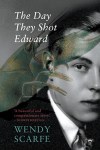
Wendy Scarfe, The day they shot EdwardThere’s something about novellas, about the way they can combine the tautness of the short story with the character development of a novel, and then hone in on an idea, undistracted by side-stories. This, in any case, is what Adelaide-writer Wendy Scarfe achieves in her book, The day they shot Edward.

Like her previous novel, Hunger town (my review), The day they shot Edward is a work of historical fiction. It’s set in Adelaide in 1916, in other words, half-way through World War One. Emotions run high, and 9-year old Matthew, through whose third-person perspective we see most of the events, is often uncertain, if not fearful. The plot is simple enough. We know from the title that Edward has died, and we know from the Prologue that Matthew is implicated in his death in some way, but was a child at the time. From the Prologue we move straight into a chronological narrative telling the story of Matthew, an only child who lives with his restless mother Margaret, his wise Gran (Sarah), and his father, the ironically named Victor, who is dying of tuberculosis on the sleep-out. There are three other main characters, the aforesaid Edward, who is an anarchist and whom Matthew idolises, an intimidating man in a cigar-brown suit, and Mr Werther, the German-born headmaster of Matthew’s school.

Matthew’s life is difficult. A sensitive lad, he is caught between his grounded, politically-aware, loving Gran and his self-centred, unhappy Mother. Gran, who approves of Edward’s activism on behalf of disadvantaged people, is constantly disappointed by her daughter’s readiness to put Matthew’s and anyone else’s interests behind her own desire for acceptance by the “better class”. Matthew himself is conscious of his mother’s self-centredness. Out with Gran and Mr Werther, for example, he feels included, part of “the special laughter and talk of Gran and Mr Werther”, but out with his Mother he feels “alone, beside her but separate” because although she sat with him

in reality she skipped out of her chair nodding, laughing, flirting and frolicking around the room. People always looked at her. She insisted that they did.

Complicating all this is that Edward is attracted to Margaret, and she’s happy to flirt with him but, “lost in her dream of social acceptance”, is unlikely to accept him when she does become free. However, lest you are now seeing Margaret as the villain of the piece, she deserves some sympathy. She had chosen poorly in marriage, and her lot is now doubly difficult in having to care for an ill man who hadn’t been a good husband in the first place. Her life is not easy, and her future not assured.

Anyhow, as if this wasn’t enough in Matthew’s life, there are the political tensions – Mr Werther is insulted by his students and is no longer welcomed amongst people who once socialised with him, and, worse, there are people wanting to trap Edward in the act of subversion. The net is closing in on Edward – as we knew it would from the Prologue.

We see these adult tensions and interactions through Matthew’s eyes – but we know the dangers lying behind the things that simply mystify (or, unsettle) him. I would call Matthew a naive narrator but I’m trying to recollect whether I’ve ever read a third-person naive narrator. Regardless, though, this is essentially what he is.

All this is to say that The day they shot Edward makes for great reading. Although we essentially know the end at the beginning, we do not know who the characters are, nor how or even why it happened. We don’t know, for example, who this Mr Wether is who is accompanying the now violin-playing grown-up Matthew in the Prologue. It is all told through a beautifully controlled narrative. There are recurring plot points – from the opening scene when Matthew decides to save the yabbies he’d caught to his ongoing concern about people liking to kill things, from Edward’s little box-gift for Margaret to the boxes of papers he asks them to store. There’s the quiet build-up of imagery, particularly the increasing references to red/blood/crimson colours. There’s the development of the characters through tight little scenes in the kitchen and living room, on the street and in the schoolyard, in cafes and at the beach. And there’s the language which is poetic, but never obscure.

Ultimately, this is a coming-of-age story. Sure, it’s about politics – about how difficult times turn people to suspicion, intolerance and cruelty – and in this, it’s universal. We see it happening now. But it is also about a young boy surrounded by adults whom he doesn’t understand. He’s only 9 when it all comes to a head – young for a coming-of-age – but as he considers in the Prologue:

Had surprise ceased that tragic night? Or did his understanding as a man mark that moment as his step into awareness?

In this, it’s also universal. Matthew learns some difficult truths the night Edward died – but those truths include some positive ones, such as that love can continue after a person dies, that good choices can be made, and that not all people kill things. A lovely, warm, read.

Lisa (ANZLitLovers) also enjoyed this book.

AWW Badge 2018Wendy Scarfe
The day they shot Edward
Mile End: Wakefield Press, 2018
124pp.
ISBN: 9781743055199

(Review copy courtesy Wakefield Press)

Eleanor Limprecht, The passengers (#BookReview)

The passengers is Eleanor Limprecht’s third novel, but the second I’ve read, that being Long Bay (my review) based on the life of early twentieth century abortionist Rebecca Sinclair. The passengers is also a work of historical fiction, though not specifically based on one person’s experience. Instead, it’s about the Australian war brides who married American soldiers during World War 2 and followed their husbands to the USA after the war.

It is also somewhat more complex in conception and structure than Long Bay’s simple chronological third person narrative. It is framed around a journey, that of war bride Sarah who, through the course of the novel, travels back to Australia, on a cruise-ship, after a 68-year absence. She is accompanied by her circa twenty-year-old American grand-daughter Hannah, who has anorexia nervosa. The narrative comprises alternating chapters in Sarah and Hannah’s first person voices: Sarah’s is primarily her telling her story to Hannah, while Hannah’s is more her internal reflections on her life and her grandmother’s story.

Now, I’m going to get this voice decision out of the way first, because I found it a bit problematic. In her Acknowledgements, Limprecht thanks some people for helping her to hone her focus, and for showing her “how not to be scared of trying a different structure”. Good for her, I say. There’s nothing wrong with trying a different structure. This alternating-voice one, which is not particularly new or out-there, can be used effectively to throw light on two different perspectives and experiences, which is essentially what it does here, though war bride Sarah’s is the main story being told. Hannah never comes quite as alive as Sarah. She provides neat segues between episodes in Sarah’s story, and creates some parallels in their respective experiences, but she, and her condition, don’t really add significantly to the novel. Given this proviso, however, Limprecht does capture her illness authentically, and doesn’t trivialise it by presenting a simple resolution.

Still, the structure works. My issue is more the first-person voices, particularly Sarah’s storytelling one, because it constrains the narrative to the sorts of things Sarah would tell a grand-daughter. She is surprisingly open about deeply personal things like sex with her husband/s, but this narrative approach reduces the opportunity for deeper, more internal, reflections about the emotional, social, and mental challenges faced by war brides.

But now, that discussed, I’ll get on to all the positive things, because this is an enjoyable read. For a start, Limprecht’s evocation of Sarah’s life in Australia, first on a dairy farm south of Sydney and then in Sydney during the war, beautifully conveys life at that time, and captures the strangeness of those days:

How was anyone to make sense of it? The world was upside down, flipped and spinning backwards–women working men’s jobs, street and railway station signs taken down or covered in case the Japs landed, coupons needed just to buy butter, tea, sugar or meat. … The army and navy requisitioning anything they wanted, anything they needed for war. Japanese subs in Sydney harbour.

When death is close, you have to live.

It’s no wonder, as naval officer Jim says to war bride Sarah now en-route to Virginia, that the war “made us do strange things.” For many young women like Sarah, those strange things included marrying young American men whom they barely knew, and not fully comprehending the post-war implications of these weddings, which was that they would be expected to live in America!

Limprecht clearly did her war-bride research well – and I love that she details it at the end of the novel. It shows in the vivid way she relates the experience of these brides as, accompanied by Red Cross workers, they travelled by boat to America and then by train to their husbands all over the country. This part of the narrative not only felt authentic, but it was also highly engaging. At one point Sara describes herself as “barrelling blindly forwards” with “no idea of what world I would enter.” Brave stuff, really. Sarah’s journey continues after her arrival in Virginia, taking us from her early 20s to the present when she is a widow, and retired vet, in her late 80s.

As you’ll have realised by now, the novel’s unifying theme is the journey – a theme I discussed only recently in my post on Glenda Guest’s A week in the life of Cassandra Aberline. Cassie’s journey was about deciding whether she’d made the right decision to leave Perth when she was around 20. Sarah’s is somewhat more complex. It’s about reconnecting with her past, and about putting right, or resolving, the lies she had told both before and after leaving Australia. There’s a journey for Hannah too. She thinks she is there to help her elderly grandmother, but in fact her grandmother had invited her because she hoped it would help Hannah get well. The relationship between Sarah and Hannah is a lovely part of the novel.

There are also several references in the novel to John Steinbeck’s The grapes of wrath, which Sarah reads on her train journey across America. Although the Joads’ travels are rather different from Sarah’s, she sees some similarities to her family’s farm struggles in Australia, and she sees value in Tom Joad’s practical philosophy that “There ain’t no sin and there ain’t no virtue. There’s just stuff people do.”

Overall, then, The passengers is an engaging book about a by-product of war – and the long tail of its aftermath – that has tended to be forgotten in the ongoing focus on men and their experiences. For this, as well as for its lively descriptions of war-time Sydney and of the war brides’ journey by boat to America, I’d recommend it.

Lisa (ANZLitLovers) also enjoyed the war-bride story.

AWW Badge 2018Eleanor Limprecht
The passengers
Sydney: Allen & Unwin, 2018
336pp.
ISBN: 9781760631338

(Review copy courtesy Allen & Unwin)

Robyn Cadwallader in conversation with Catherine Milne

It’s some time since I last attended an author event, not because there haven’t been any but because they’ve clashed with other commitments. I mean, why do organisations choose the same day of the week for events, like, say, Thursdays? Why don’t they get together and agree to share them across all the week days? (Hmm, then they’d only clash with something else, so let’s just recognise that life is busy, that we have too many options, and move on …)

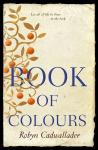
Robyn Cadwallader, The book of colours

Anyhoo … it so happened that our regular Thursday activity was off this week, as was our occasional one that bumps the regular one, so we were free to attend the In Conversation event with local author Robyn Cadwallader. You have met Cadwallader here before: I’ve reviewed her debut novel, The anchoress, and have reported on another event with her when she conversed with Irma Gold. Now, with her second novel, Book of colours, having been published, she’s doing the rounds again, as authors do.

Book of colours is also historical fiction set in mediaeval England, but in the 1320s, some 70 years after The anchoress. Introducing Cadwallader, HarperCollins publisher Catherine Milne commented that in contrast to The anchoress’ small, cramped setting, Book of colours encompasses the world, or, at least, London and Paternoster Row. Its subject is the creation of illuminated books, in particular those little books of hours owned by women; its characters include Mathilda who commissions such a book, and its creators, John Dancaster, his wife Gemma, and a man called Will. (I think that’s right; I haven’t read the book yet.)

The conversation focused on two broad (and obvious) issues – the research and the book itself. So let’s start with the research …

Exploring a gap, a fault-line

Milne began by asking Cadwallader to read from her book, something she did a few times throughout the hour. Milne and Cadwallader then discussed the period. It was a turbulent, often violent, time for London, for England in fact. There’d been famine, the inept King Edward II was on the throne, and tension was rising (though it would be another 60 years before the Peasants’ Revolt).

Howard Psalter and Hours (British Library, Arundel 83 I), 1310-20. Public Domain

Cadwallader explained that her inspiration for the novel was her interest in books of hours, and particularly in the strange marginalia that many have. This marginalia often depicts weird creatures, and scenes telling stories, some of them rather bawdy. Sometimes they support/illustrate the content, but sometimes they seem to do the opposite, representing, for example, the wages of sin. These stories told via the illuminations, she said, can operate at different levels. What was behind this practice? No-one knows apparently, so here was her gap, her fault-line to explore.

Cadwallader’s research included:

  • lots of reading, about London, about illumination and art, of court rolls and proceedings, about privies and prostitutes. You name it, she probably read it.
  • walking London with a 14th century map, trying to capture what the place was like.
  • talking to an art historian who told her about identifying the different artists working on a particular book of hours …
  • and spending time with that book of hours until the different artists became apparent to her.

Gradually, she said, she began to see the four different people working on this book and by the time she’d finished looking at it she had a sense of her characters.

Milne then told us that in Book of colours, Cadwallader had written a book-in-a-book. Called “The art of illumination”, it’s written, I think I’m right, by Gemma. Excerpts from this preface many chapters. Milne asked Cadwallader to read one of these, and I’ll share a bit here. It starts by stating that the words must be in an order, in lines, to facilitate reading,

But the requirements of decoration are not so simple. The page needs shape and order, but not so much order that life withers. Consider the beauty of the curve and curl. And, as with a breathing city, let all of life be there in the book, from high to low, animal to monster, story and joke, devotion and dance, for God the Artisan made it all. On some pages, simple vines and flowers may be enough. On others let decoration be lush and bountiful.

“Animal to monster” took us to gargoyles and another reading of a vivid scene in which Will, looking at gargoyles, senses one coming to life … he represents Will’s secret, his shame, said Cadwallader, who loves gargoyles. (Don’t we all?)

Challenging the centre …

Moving on to the core of the book, its meaning, Cadwallader said something interesting about marginalia. It’s on the edge she said, a bit like shadows. Because of this position, it challenges the centre, but in so doing it makes the centre more real. I liked this. She said that there’s something about pictures and stories. They refuse to be bound by convention. They – their meaning, their impact – change depending on the reader, or viewer.

Milne then asked about the main theme of the book. It’s a novel about power, she said, of which women have little. How do they wield what they have?

Cadwallader responded, as she also did about The anchoress if I remember correctly, that she’s interested in ordinary women. Gemma and Mathilda (despite the latter’s privilege) are ordinary women. How do they manage the second-class roles they are assigned by their society? Illuminators, for example, like Gemma, worked alongside their husbands but were never recognised by the guilds, while women like Mathilda have more privilege but are controlled by their husbands. In fact, she has less freedom than Gemma.

Cadwallader is interested in how these women dealt with what they were given, “in how they managed to find value in their lives within the constraints.” Laughingly, she said she’s impressed with the gains her characters managed to make!! She spoke briefly about ensuring these gains, their achievements, are real, that is, believable for the time. She feels, she said, knowledgeable enough about mediaeval times, in which she has a PhD, to be able to strike the right balance. During the Q&A, Cadwallader reiterated this point, and said that she was determined not to “damage the women of the era by presenting them differently from what they are”.

That the audience was enthused by the conversation was evident in the wide variety of questions which concluded the event. The topics included the ownership of books of hours, the education of women, the writing process, and the fact that, for all its historical research, the novel contains a “ripping yarn”! I’m always interested in the writing process, and enjoyed Cadwallader’s answer to a question about Will. She said she was able to “find” him by writing a scene with him, that she discovered more about him as the action developed. For Cadwallader, as for many authors I think, their characters are, in a sense, living, changing beings.

The final reading was another excerpt from “The art of illumination”, near the end of the novel. It concluded with:

All you can do is paint faithfully and well, let the book go.

And so Cadwallader has done. I look forward to reading it and sharing my thoughts with you in the near-ish future.

ANU/The Canberra Times Meet the Author
MC: Colin Steele
Australian National University
26 April 2018

Six degrees of separation, FROM Memoirs of a geisha TO …

Last month I complained about the start of autumn because although I love autumn, I hate winter. This month, another nail went in the warm-weather coffin, with the ending of daylight savings. Oh dear … The good news for me, though, is that I have actually read April’s starting book for the Six Degrees of Separation meme, which is currently hosted by Kate (booksaremyfavouriteandbest). Please click the link on Kate’s blog-name for her explanation of how it works. Meanwhile, I’ll get on with the meme, which starts with Arthur Golden’s Memoirs of a geisha. As always, I’ve read all the linked books.

Arthur Golden, Memoirs of a geishaI’m guessing many of you – unless perhaps you are millennials – will have read Memoirs of a geisha. It was quite the book when it came out. It’s an historical fiction novel, set in Japan before, during and after World War 2. Golden, an American writer, wrote it first person in the voice of a geisha. It was controversial at the time because he had based his story on a geisha whom he’d interviewed. He had promised her anonymity but then included her as a source in his acknowledgements.

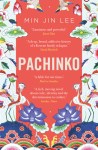
Min Jin Lee, PachinkoAnother historical fiction novel set in Japan by a non-Japanese author is Min Jin Lee’s Pachinko (my review). There is a slight difference here, though, in that American-based Min Jin Lee was born in South Korea, and her novel’s focus is the experience of Koreans in Japan. Wikipedia, quoting a PBS report, says that it’s “the first novel written for an adult English-speaking audience about Japanese Korean culture.” I certainly found it fascinating.

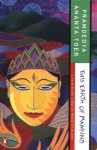
Pramoedya Ananta Toer, This earth of mankindNow, I should probably showcase my reading of Japanese literature here, as I’ve read a fair variety over the years, but instead I’m going to do something different, and choose a book by another author with a three-part name, Indonesian writer Pramoedya Ananta Toer and the first of his Buru quartet, This earth of mankind (my review). The book presents his idea of nationalism, in response to the long colonisation of his country.

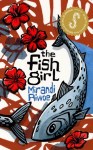
Mirandi Riwoe, The fish girlAnd now you might guess where I’m going … it’s to the recent book I’ve read that was set in Indonesia, and which also, in a different way, responds to the impact of colonialism on the country. In this case, however, the emphasis is on its impact on a particularly powerless part of the Indonesian community, the women. The book is Mirandi Riwoe’s The fish girl (my review).

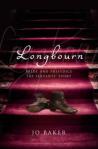
Jo Baker, LongbournAnother interesting thing about Mirandi Riwoe’s book is that it’s a response to another piece of fiction, in her case to W. Somerset Maugham’s “The four Dutchmen”. So that aspect is going to be my next linking point. The book is Jo Baker’s Longbourn (my review) which retells Jane Austen’s Pride and prejudice from the point of view of the servants. While there were plot elements I didn’t like, the historical research underpinning it made it a good read.

Roslyn Russell, Maria Returns Barbados to Mansfield ParkI’m going to stick with the retelling idea here, and link to another retelling of a Jane Austen novel, Roslyn Russell’s Maria returns: Barbados to Mansfield (my review). Like Baker, Russell underpins her novel with research, but in her case it’s the history of Barbados, and particularly of slavery there. Our disgraced heroine is redeemed by supporting the abolitionist movement.

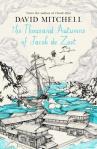
David Mitchell, The thousand autumns of Jacob de PoetThis brings us to the final link and it’s a bit spurious – but it’s neat so I’m going to stick with it. It’s spurious because, whilst slaves are mentioned, they are not the focus of the book. It’s neat because it’s another historical fiction book set in Japan by a non-Japanese writer, this time an English one. The book is David Mitchell’s The thousand autumns of Jacob de Zoet (my review).

Well, I’m proud of myself this month, because after travelling very conservatively the last two months, this time we’ve spread our wings. True, we’ve spent a bit of time in Japan, but we’ve also been to England, Indonesia and Barbados! We’ve also traversed time from the late 1700s to the late 1900s, and we’ve read two male authors amongst our six. On the negative side, we’ve stayed pretty much with historical fiction. There’s always something to improve …

And now, my usual ending question: Have you read Memoirs of a geisha? And whether or not you have, what would you link to? 

Stephen Orr, Incredible floridas (#BookReview)

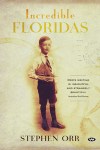
Stephen Orr, Incredible floridasThe good thing about reviewing Stephen Orr’s latest book Incredible floridas is that you know the end at the beginning, so there’s no need to worry about spoilers. The end, the one that you read at the beginning that is, is that Hal, the 22-year-old son of artist Roland and his wife Ena, commits suicide. By the end, the real end that is, you have some understanding of why he does, but you are also left to think about the drive to create art and its impact on family, about parental love and father-son relationships, and about that notion that it takes a village to raise a child.

To make this work, Orr uses a flashback-style chronology. The novel starts in 1962, just after Hal’s death, and then flashes back to 1944, when Hal is 4. From there it moves forward in irregular bunches of years -1948, 1950, and 1956 – until we arrive again at 1962 where it takes us through the events leading up to the death. This, then, is not the book for those who seek excitement and plot. Rather, it’s for those who love character, are intrigued by families and neighbourhood relationships, and like historical fiction.

There’s more to it than this, however – and it relates to the artist-father Roland. He is clearly modelled on the Australian artist Russell Drysdale (1912-1981) about whom I wrote a couple of years ago. Roland’s work and career as described by Orr – his angular lonely figures in stark landscapes, and the decline in his reputation – is similar to Drysdale’s. And Drysdale’s biography – his having a son and daughter, his being rejected for war service because of a detached retina, and his son committing suicide at the age of 21 in 1961 – is similar to our fictional Roland’s.

And then there’s the title. “Incredible floridas” rang a bell with me, and a little research brought it back. Peter Weir made a short film called Incredible Floridas in 1972. (It’s available on YouTube.) It portrays Australian composer Richard Meale (1932-2009) creating his work, Incredible Floridas, which was inspired by the 19th century French poet, Rimbaud. Curiouser and curiouser.

But, how much of this is relevant to Orr’s novel? Well, Meale’s work is an homage to Rimbaud, just as Orr’s is to Drysdale. And Weir’s award-winning short film has been described as “a wonderful tribute to artistic inspiration” which we can see in Orr’s book. Then there’s Rimbaud’s poem, “Le bateau ive” (“The drunken boat), which includes the words “incredible floridas”. It’s about inspiration and ecstasy, and their downsides, disappointment and disillusion. There are, in fact, several references to boats in the novel, paper ones and a painting Roland does of a child in a boat with panthers, another reference to Rimbaud’s poem, in the background.

And, while I’m at it, there are also allusions to Shakespeare’s Henry IV Pt I. Hal is nick-named Prince Hal, and the allusion is underlined by one character telling him to watch out for Hotspur. The irony, of course, is that our Prince Hal does not win out in the end.

I hope all this hasn’t been boring – or worse, off-putting. The book can be read very comfortably without knowing any of this, but I love the layers they contribute. Now, the novel.

“casualty of art”?

Set in mid-twentieth century suburban Adelaide – mostly – the novel tells of Hal’s growing up within a small community comprising, primarily, his family (father, mother and older sister Sonia) and neighbours Mary, her brother Sam, and her lupus-afflicted daughter Shirley who is ostracised and bullied by the neighbourhood kids. Other characters, who appear more sporadically, include Roland’s art school friend James, Mary’s cousin Trevor, and Hal’s grandmother Nan who works for Dr Bailey. These make up “the village” which raises, or tries to, Hal.

From 1944, when Hal is 4, it’s clear that he’s not an easy child. And it’s also clear that Roland is driven by his art – “art was an all-or-nothing proposition”. How these two are related is central to the book. Hal regularly feels he comes second, but Roland is not the stereotypical dark, inward-looking artist. Sure, he thinks about his work most of the time, and sure, he had his “periods … months on end when they barely saw him”, but he is also seen engaging with the family and making time for Hal. Finding the art-life balance is a challenge for creators, particularly when they work from home. Always being there doesn’t mean they are always available. Is Hal a “casualty of art” or are his problems something else?

When Hal is around 16 years old, directionless and acting erratically, sometimes violently so, Roland takes him on the first of several road trips because “he knew that Hal could only be made better under the stars” (albeit Ena thinks Hal “needs a proper doctor”). To a degree it works, but Roland can never quite get it right. Of course he thinks about art and makes sketches – creating a visual diary of the trip – while they travel, but he’s also there communicating with his son, talking about options, and not pushing him to be anything in particular. Unfortunately, Hal doesn’t see the love, the sacrifice, the wish for him to be “happy”. He just sees it as Roland “trying to improve his character”.

Stepping into some of the gaps left by Roland’s busy-ness is next door neighbour Sam. He becomes a second father to Hal, taking him to the racecourse, providing his own thoughtful counsel when Hal comes calling, and making significant sacrifices to help Hal. Nan’s employer, Dr Bailey, is also generous. But Hal just keeps on getting into scrapes – at school and in the neighbourhood. He has few friends because, as he himself realises, he doesn’t know how to be one. As Ena says in the opening section, “Hal was Hal, and his wires were crossed”.

While art and the artist’s life is an overall theme, this is primarily a book about men, about fathers and sons. And Orr portrays them so authentically. There are women here too, but this is the mid-twentieth century and it’s essentially a man’s world in which women’s agency is limited. All they can do, Ena sees, is to follow the men, and try “to make the unworkable work.” Similarly, poor Shirley sees the sacrifices Sam makes for Hal, who has treated her poorly, and wonders where she fits.

So what more is there to say? The writing is clear, evocative and, what I especially love about Orr, includes wonderfully natural dialogue. I’ll just share one excerpt (but it’s so hard to choose!). It comes from 1944 when four-year-old Hal and Roland visit an airforce base with Trevor Grant:

Uniform or not, things were looking up. Hal studied the plane’s wings and asked his dad, “D’yer reckon it’s got guns?”
“No.”
“D’yer reckon I could look inside?”
“Prob’ly not.”
Grant and the other man approached them. The man messed his hair. “This is top secret,” he said. “Has Corporal Grant administered the oath?”
“No, sir.”
“Well, he will, later. And once you’ve taken it you can’t say nothing about this to no one, or else the government will come lookin’ for you. Got it?”
“Yes, sir.”
Roland noticed the same look on his son’s face, as Hal studied the two men. Like he’d just seen a comet for the first time. Something marvellous, new; a boy in a boat in a jungle full of panthers.

Incredible floridas is the third Orr book I’ve read, the others being The hands (my review) and Datsunland (my review). What keeps me coming back is his ability to capture ordinary, day-to-day human interactions, human hopes and fears, with such realism and warmth. There’s no judgement from Orr. He leaves that for the reader to consider.

Lisa (ANZlitLovers) is also a Stephen Orr fan and enjoyed this book.

Stephen Orr
Incredible floridas
Mile End: Wakefield Press, 2017
335pp.
ISBN: 9781743055076

(Review copy courtesy Wakefield Press)

Diana Blackwood, Chaconne (#BookReview)

Diana Blackwood, ChaconneDoes a book set in the early 1980s qualify as historical fiction? Does a book about a twenty-something woman’s romantic adventures, and search for direction, qualify as coming-of-age? The answer is probably yes to both. Certainly, it is within these parameters that it’s appropriate to discuss Diana Blackwood’s debut novel Chaconne.

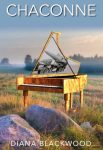
Chaconne, as you can see, has a gorgeous cover. Rather than an image of a pretty young woman, promoting the idea of a “woman’s book”, it features a harpsichord – with an image of a Pershing (or similar) missile inside its open lid – sitting in a golden-lit rural landscape. This clues us into some important aspects of this novel, which are that music and war are involved. Of course, the title, Chaconne, also suggests a music theme. A chaconne, says Wikipedia, is “a type of musical composition popular in the baroque era when it was much used as a vehicle for variation on a repeated short harmonic progression, often involving a fairly short repetitive bass-line (ground bass) which offered a compositional outline for variation, decoration, figuration and melodic invention”. By this description, the “chaconne” works as a metaphor for Eleanor who is “sort of” progressing in her life, though with a deal of repetition, particularly in her way of choosing the wrong men and of  bumbling along, without goal, from job to job. And within this main storyline are several interesting people and events which intervene along the way to add variety and decoration to the whole!

The novel starts with 24-year-old Eleanor arriving in Paris in 1981 to meet her lover, the bourgeois communist Julien whom she’d met a couple of years earlier in Sydney while he was an exchange student in Australia. Eleanor, who has “a fuzzy sense of being shut out of her proper story as if she had failed youth, been found wanting by life itself”, seems to have little direction in her life, though we know from flashbacks that she’s interested in music. One of her complaints against her mother, Mavis, and there are many, is that she’d stopped Eleanor’s piano lessons, replacing them with something she deemed more important for Eleanor’s education, maths tutoring! Escaping to Paris, though, is a bit of out-of-the-frying-pan-into-the-fire, because Julien proves to be rather less than she thought. She finds herself spending much time alone in a tiny flat, relieved somewhat by her English teaching job at a lycée. Fortunately, her loneliness is assuaged a little by some lovely people, such as Rosa and the kind Monsieur Joubert who recognises her interest in music and starts, in a small way, her musical education.

As her relationship with Julien flounders, she meets Lawrence, an American who is flat-sitting for her next-door neighbour. It’s not long before she follows him to Germany, where he, a PhD student in deconstructive theory, is an English tutor on an American airforce base near a German village. The novel is set during the Cold War, when fear of nuclear destruction was high. Here Eleanor also obtains work teaching English. But, Lawrence – as we readers could have told her, just as we could have with Julien – doesn’t turn out to be the man she hoped.

Providing a background to Eleanor’s lacklustre romantic life is the unsettled political situation. Julien is engaged in communist politics, taking part in peace marches and the like, while Lawrence works on a military base where Eleanor keeps her Parisian life quiet and tries not to get too close to the base’s scary off-limit areas. Nonetheless she lives with “the unpalatable truth … that the nuclear umbrella was sheltering her by paying her rent.”

Not only does Lawrence draw her to this uncomfortable environment, but he is also not interested in music. What was she thinking in following him? Luckily, Eleanor finds a choir in the village, and her life gradually starts to change as she finally finds the thing that enlivens her.

And this is perhaps where the novel was a little problematical for me. While Eleanor’s journey to self-discovery was interesting, I never quite “felt” her sadness or her joy. I liked her, but I didn’t fully engage with her. This may be because she makes too many bad decisions that didn’t quite ring true for the intelligent young woman she clearly is. The coming-of-age felt a little late (particularly for the 1980s, which was before our 30-is-the-new-20 age?) But, this could just be sensible me speaking! Still, I would love to have seen more of her gutsy-but-also-life-challenged friend Ruth.

Nonetheless, there’s a lot to like about this book. I particularly enjoyed Blackwood’s obvious love of the English language. Eleanor and her Australian friend Ruth – not to mention her aforementioned mother – are grammar nazis (though that’s an unfortunate phrase given the post-war setting of this novel, a time when Germany was particularly uncertain about its past). The book delights in wordplay (including puns), alongside more serious discussions of grammar. Lawrence pegs Eleanor as “a proponent of prescriptive grammar” while she expects that “traditional grammar was another thing he would like to see tossed on the scrapheap”. The discussions Eleanor has about language are those we have here among the extended Gums’ family. We discuss language with each other, yell at the TV, argue about prescription versus description, ponder how and why language does or should or shouldn’t change. There are no answers but it’s fun exploring the issue.

Blackwood’s writing is also beautifully evocative, such as this description of Monsieur Joubert – “loneliness was close about him like a Parisian winter”. And this of the beginning of spring:

In the last few days spring has retreated. The quickening of the senses, the opening up to life and fate, had been dampened by chilling rain and the need to wear a jumper again.

This is exactly why I’m not a big fan of spring! It taunts with moments of warmth before plunging us all into cold again! Time and again Blackwood captured moments perfectly.

Chaconne, then, is an intelligent, well-written, well-structured book set in interesting times and places. I did like the cheeky metafictional reference to The catcher in the rye’s Holden Caulfield. Eleanor suggests that he needed “a firm but loving grandmother”. However, she also recognises that,

of course, the whole point of being a fictional character was to suffer misadventures and setbacks and humiliations without being bailed out by your grandmother, at least not until you’re sufficiently chastened.

Very true – and in the end our fictional character is – but no, I’ll not give it away.

Chaconne is book that should appeal to those who love Western Europe and baroque music, who remember the 1980s, and who like their romantic novels to be thoughtful and not neatly wrapped up. By the end, Eleanor has grown, but, as in life, we know she has yet more growing to do – and that’s the sort of ending I like.

Lisa (ANZLitLovers) loved this novel and includes two YouTube links to music referenced in the novel.

AWW Badge 2018Diana Blackwood
Chaconne
Melbourne: Hybrid Publishers, 2017
296pp.
ISBN: 9781925272611

(Review copy courtesy Hybrid Publishers)

Min Jin Lee, Pachinko (#BookReview)

Min Jin Lee, PachinkoIf you are looking for a big, engrossing read that takes you into a little-known world, then I offer you Korean-American author Min Jin Lee’s Pachinko. It tells a story about the Korean diaspora in Japan over a period of 80 years, and was my reading group’s pick for August. There wasn’t a bored person in the room.

Interestingly though, several in the group had no idea what Pachinko was, so in case that’s the same for you, let’s get that out of the way first. It’s a sort of pinball-arcade game that is hugely popular in Japan. It’s a gambling game – a bit like our poker or slot machines – except that gambling is illegal in Japan so there is a complicated system of winning “prizes” which can be sold at a separate business for money! Pachinko parlours, which are highly visible in the entertainment districts of big cities, are dominated by Koreans – that is, their management and/or ownership is – which is where the title for Min Jin Lee’s book comes in.

Lee starts her novel in a small fishing village, Yeongdo in Busan, on the South Korean peninsula. It’s 1910, and a match is being made between Hoonie the cleft-palated, club-footed only son of a fisherman and his wife, and Yangjin, the 15-year-old daughter of a struggling family. A recipe for disaster you might expect, given the way historical sagas often go, except that Hoonie is a decent, loving man and Yangjin a hardworking, appreciative and loving young woman. They produce one daughter, Sunja, and it is her story – together with that of her family and friends – which forms the basis of Lee’s novel, until it closes in 1989.

The date 1910 was specifically chosen for the start of her novel because this is the year Japan annexed Korea, changing Koreans’ lives forever. With Koreans effectively belonging to Japan, many made the physical move there, believing their economic chances would be better, but most ended up in ghettos, living in poverty, and with minimal rights. Being Korean was, essentially, a passport to a second-class life, but they survived and this book chronicles their lives and spirit.

The first thing to say about Pachinko is that it’s a ripping read, covering four generations juggling life in a hostile land. We quickly become engaged in the lives of Sunja and her husband Isak as they move to Japan to live with his brother, Yoseb, and sister-in-law Kyunghee. Two children come, Isak is arrested (for preaching Christianity), and Sunja and Kyunghee join other Korean women selling kimchi and candy in an open market to help the family survive. Lee tells her story in straightforward, matter-of-fact language, with very few descriptive flourishes, which keeps the narrative moving without holding the reader up with extensive scene-setting. This description of Sunja’s second son, Mozasu, is a perfect example of Lee’s clear no-nonsense writing:

Mozasu had grown noticeably more attractive. He had his father’s purposeful gaze and welcoming smile. He liked to laugh, and this was one of the reasons why Goro liked the boy so much. Mozasu was enthusiastic, not prone to moodiness.

The rhythm is almost staccato at times, but never stilted. On occasion though, Lee will break out with something that is more evocative, and it can leave you breathless, such as this description of yakuza Hansu’s money-collector, Kim:

Hansu preferred Kim to do the collection because Kim was effective and unfailingly polite; he was the clean wrapper for a filthy deed.

The other interesting thing about Lee’s writing is that most of the big emotional events – marriages, births, and particularly deaths of which there are some awfully tragic ones – happen off-camera, and are reported to us in the same tone as the rest of the story. This is not the sort of storytelling you usually find in big family sagas, which love to squeeze out every emotional drop they can. I’d say this is because Lee’s goal is not to engage her readers in those sorts of emotions but to demonstrate the resilience and gutsiness of the people …

…. Because Koreans in Japan have had to be gutsy to survive in the face of being ostracised as aliens, of being treated as illiterate and filthy people, of being prevented from accessing higher level jobs. We, like the Koreans, are never allowed to forget their lack of status and, as a result, their reduced choices and opportunities.

It’s not surprising then that one of the themes is parents wanting education for their children, seeing that as a passport for a better future. Sunja’s son Noa wants to go to university, and later Noa’s brother Mozasu, himself not keen on schooling, sees education as a path out, preferably to America, for his son, Solomon. It’s not easy though. Korean children are bullied and ostracised at school, and are not encouraged to go to university. Only the dedicated make it through. The rest – like Mozasu – have to find work, which Mozasu does, luckily, albeit in a Pachinko Parlour. This, to his brother Noa’s disgust, becomes his career, but he becomes a wealthy man. Wealthy perhaps, but still Korean! He says to his friend Haruki:

In Seoul, people like me get called Japanese bastards, and in Japan, I’m just another dirty Korean no matter how much money I make or how nice I am.

And this brings me to my next theme, that of home. Lee provides three epigraphs in the novel, one for each of its parts, and the first one comes from Dickens: “Home is a name, a word, it is a strong one; stronger than magician ever spoke, or spirit answered to, in strongest conjuration”. It’s clear throughout the novel that our Koreans in Japan are homeless – reviled in Japan, they also no longer belong in Korea, particularly the succeeding generations that were born in Japan. As our omniscient narrator says at one point:

There was always talk of Koreans going back home, but in a way, all of them had lost the home in their minds for good.

And so, in this book, characters need to find their own sense of “home” which is, in most cases, family. It is in this context – and I think I can say this without spoiling anything – that we might understand Solomon’s decision at the end and Noa’s tragedy.

The third theme is perhaps the most obvious one, as it relates to the title, which clearly has metaphorical as well as literal readings. I’ll let Mozasu explain it:

Mozasu believed that life was like this game where the player could adjust the dials yet also expect the uncertainty of factors he couldn’t control. He understood why his customers wanted to play something that looked fixed but which also left room for randomness and hope.

However, here’s the thing. This is such a big, baggy monster that every reader is going to come up with different themes, different emphases. Lee herself, in an interview included with my edition, talks about her themes as “forgiveness, loss, desire, aspiration, failure, duty, and faith”. And, of course, all those are there too!

So, to sum up, Pachinko is a wonderful read about an engaging cast of characters. It provides a broad historical sweep of a region many of us could know more about, and it exposes the situation faced for a century or more by alien Koreans in Japan. It is also a book about human beings, one that never quite plays to type, that doesn’t opt for the easy marks. Instead, it is suffused with a clear-eyed humanity which encompasses the best and worst in people, and lets the reader make his or her own assessment. As I said, a thoroughly engrossing read.

Min Jin Lee
Pachinko
Head of Zeus, 2017
ISBN: 9781786691347 (e-Book)

Canberra Writers Festival 2017, Day 2, Pt 1: A conversation with Tony Jones

Choices, choices. Such a surfeit of riches across such dispersed venues made today a difficult one. In the end I had to make the tough decision to not see Jane Rawson, whose session was across the lake, though it broke my heart. My decision was made harder by the fact that as I was drafting this intro over my lunch break, a tweet came through promoting the event. Wah, but I’m trying to keep a cold at bay so being sensible about rushing around was the way to go.

But now, I’m going to have to try to emulate those historical fiction writers who need to leave out much of their research, otherwise I’ll be here all night – and I have things to do, books to read. Even so, I’m going to break this post into three parts.

Crime: Tony Jones with Krysia Kitch

Kitch and Jones

Kitch and Jones

Writers can’t always avoid controversy, particularly if they are political journalists, and so it was for Tony Jones who was attending the festival to discuss his new book, Twentieth man. Outside the venue was a small group of protesters holding a placard that said “Phony Tony, Propaganda through Plagiarism”. They believe the book is anti-Croatian, and that it plagiarises, writes Ina Vukic on her blog, “a Yugoslav era work of Propaganda titled Dvadeseti čovjek (the Twentieth Man) written by Đorđe Ličina”. I can’t comment on the propaganda aspect, because I haven’t read the book, but in his talk Jones mentioned that there has been speculation that there was a twelfth man in the Bugojno group which carried out an attack in Yugoslavia in 1972. So he decided to create a fictional twelfth man who survived the attack. And that’s all I’ll say about the protest, which Jones referred to a couple of times during the conversation.

Twentieth man is Jones fictional debut, and the first question turned on a favourite topic of mine, genre. Well it’s not that I love “genre” per se but I do enjoy discussions about definitions because they can help us tease out expectations. The question was, is this crime (as it was described for the Festival) or political thriller? Jones skirted answering this decisively by saying that it’s thrilling, it has crimes and it’s about politics! Fair enough. As the conversation progressed, I decided a third genre (or, perhaps, sub-genre) could be considered, historical crime! (Though again that raises the spectre from yesterday’s session about when is “history”.)

We’ll return to history later, but first something about the plot. It starts with the bombing of two Yugoslav Travel Agencies in Sydney in 1972 and ends with an assassination attempt on the Yugoslav prime minister. (Jones told us this so I don’t think it’s a spoiler!) Jones spent some time talking about the inspiration for the novel, at the same time giving us a refresher on fairly recent Australian political history.

Convenor Kitch from the National Portrait Gallery then referred to the Festival’s theme of Power, Politics, Passion and asked Jones what he thought about the power of the past over the present. Jones responded by referring to a quote often attributed to Mark Twain that:

“History doesn’t repeat itself but it often rhymes.”

He then talked more about the historical background to the novel, and about subsequent reporting and actions through the 1980s, 1990s and into the present, which prove that “history resonates again and again, it rhymes”.

Kitch mentioned how the shift of power between individuals is a major part of book. She said she loved his visceral descriptions of fear, and asked how he did it. Jones flippantly responded that he works at the ABC, but then, more seriously, said that he used his imagination … and that he could draw on some tricky situations he’d been in as a journalist.

This led to more conversation about the process of writing, such as his decision to mix “real” people with fictional ones. After all, he said, Tolstoy did it! He said he likes novels which deal with real history and fictional characters, and named James Ellroy’s novel on the Kennedy assassination, American tabloid, and Marlon James’ Booker prize-winning A brief history of seven killings exploring the assassination attempt on Bob Marley.

He also talked about researching and using documentary evidence to support his story, saying that the novel is fictional (of course) “but as close to real” as he could get. He’s not claiming it’s history but hopes it will encourage its readers to “reflect on the past”.

Kitch asked him about pacing – including the role of the moments of solitude for the characters – and also about his use of landscape to support his themes and characterisation.

Jones also mentioned the role of respected Australian publisher and editor Richard Walsh who offered to look over his manuscript. He told Jones there were two or more books there. So, folks, there will be a sequel!

There was so much more but this is getting long and I’ve covered the main issues I wanted to. There was discussion about the passion part of the Festival’s theme. First, Jones is clearly passionate about the topic. But, also, there’s a Romeo and Juliet style love story between the young Jewish journalist and the Croation hero/antihero.

Finally, Jones talked about the role of Canberra in the book, saying the city is “the star of this novel”. He thinks it provides a good picture of Canberra and its inhabitants at the time it is set. This was a blatant pitch to the locals as, he admitted, he’d been told to do!

There were some intelligent questions, but really, I must finish here, and will do so on Jones’ final words that Twentieth man is “a novel, largely a work of imagination but based on real events”.

Canberra Writers Festival 2017, Day 1: A panel and a conversation

It’s on again – the newly revamped Canberra Writers Festival, I mean. Due to a family commitment in Melbourne, from which I only returned at midday today, I didn’t get to some of the first day’s prime events. I missed, for example, a conversation with Graeme Simsion. I also missed a wonderful sounding panel titled Women in the Media, featuring Kathy Lette, Katherine Murphy, Virginia Haussegger.

The Festival’s theme – fitting for the nation’s capital – is Power, Politics, Passion, but my sessions today were more traditional writers festival fare.

Grasping the past: Tracy Chevalier, Amy Gottlieb and Rachel Seiffert in conversation with Gillian Polack

CWF, Polcak, Gottleib, Chevalier, Seiffert

From left: Polack, Gottleib, Chevalier, Seiffert

I chose this session because these writers interest me, as did the topic, historical fiction, which was one of the themes running through last year’s festival.

For those of you who don’t know the panelists, they were:

  • Gillian Polack (convenor): an historian and speculative fiction writer.
  • Amy Gottlieb: novelist and poet, whose debut novel, The beautiful possible, was published in February 2016.
  • Tracy Chevalier: novelist, most famous for The girl with the pearl earring but who has written 9 novels including Remarkable creatures which I’ve reviewed.
  • Rachel Seiffert: novelist, the daughter of an Australian-born father and German mother. She’s published three novels, of which the first, The dark room, was shortlisted for the Booker Prize.

What was excellent about this session is that it didn’t traverse the common issue of plausibility and authenticity. Instead, our jetlagged convenor wanted them to talk about how they transform their research into fiction. She was interested more in the process. It took a little while to get there but the discussion along the way was enjoyable anyhow!

A couple of issues were toyed with as the panelists grappled with the question. One of these related to the label itself. Gottleib, for example, said she didn’t see herself as an historical fiction novelist. It was the marketing people who labelled her book as such – because of its historical setting. Chevalier raised the issue of definition. When is a setting historical, she asked? Is her novel set in the mid 1970s historical? Seiffert agreed with Gottleib regarding the marketers applying the label, and suggested that historical fiction is seen as “more serious”. That intrigued my friend and me – and was immediately picked up by Chevalier who said that in England historical fiction tends to be seen as genre, and in opposition to serious literary fiction!

What came though strongly throughout the discussion is that these writers do not necessarily see themselves as historical fiction writers but simply as writers!

Meanwhile, Polack returned to her question regarding transforming historical research to fiction, by asking a more specific question regarding how they get their food research into their novels. This resulted in a detailed response from Chevalier who talked about her research process. She said that she can’t write about a period until she knows what people eat, how they eat, when they eat, what they sat on to eat, and so on. In other words, she needs to know what her characters would do on a day-to-day basis. And, here’s the challenge! She has to know this detail to create her period but she can’t tell it all in her novel. This is, as she clearly knows, one of the major criticisms levelled at historical fiction writers, i.e., that they can’t resist including their research, whether or not it’s not critical to the story.

Gottleib, though, starts with character. She knows the story – for example her character was going to leave Nazi Germany, travel to India, and then move to America. Once she knows this, she has to apply the scaffolding – to find out how he made this journey. This requires research. Seiffert, on the other hand, starts with the story first, being inspired, for example, by case studies and essays of people who resisted the Nazis.

Polack then asked the panel how they can do that thing that historians can’t, namely they can bring back erased people from past (such as women or servants), they can right wrongs or address flaws in past. How do they do this she asked?

Gottleib reiterated her interest in character, in their motivations, dreams, and longings. The history for her comes later. Chevalier referred to the book she made her name on – The girl with a pearl earring. She said she likes making things up, so she goes for the gaps – in the “real” story – and tries to fill them in. She likes to give voice to others, to their interior or emotional life. She is not about truth and facts, she said but about the emotional truth of the times. Seiffert referred to Kate Grenville’s The secret river and her feeling the need to write Searching for The secret river. It was as though she’d felt she’d “committed the sin of writing historical fiction” which is clearly something Seiffert felt she didn’t need to do.

Chevalier commented at this point that she has a huge respect for historians; she relies on them.

Polack then moved onto the thorny issue of avoiding cultural and historical bias when writing about a time different from their own. Chevalier said she was always on the look out for 21st century attitudes in her characters. She had to remember in Girl that a 17th century maid would have no feelings of social or economic empowerment.

Seiffert, who has written two books about the Third Reich, took this a bit further explaining that her character in A boy in winter doesn’t know the Holocaust is proceeding but the readers do. She had to fight that, showing that he had to make choices not knowing the full story, while the readers do know. You need, in other words, not to give characters foreknowledge.

Gottleib said that she handles this issue by having a narrator. She said that Latin-American fiction and Gabriel Garcia Marquez  got her into writing fiction, because she loved his multiple layering of stories. The narrator is her “out” of this mire.

This led Polack to raise the issue of their narratorial choices – past versus present tense, and 1st, 2nd or 3rd person. These are the most important things a writer must choose, said Chevalier. If they get it right, readers don’t notice. She started writing in first person, because she found it easier, but she said that the ability to handle third person is the sign of a more mature writer!

Seiffert said she wrote two historical novels using the present tense, because she wanted to situate reader in the time of the novel. The most interesting thing, she said, is that even when you don’t act there is a consequence.

Polack asked then about how fiction writers set up a conversation with history. Gottleib said her novel revealed a conversation, and that it turned out to be different to the one she thought she was having. Chevalier said that writing historical fiction can set up “an alchemy or magic that is hard to explain”.

Q&A

There were a couple of questions from the audience but I’ll just share the one concerning whether they have start with ideas they want to explore or whether the themes appear more serendipitously. Gottleib said that yes, hers is a novel of ideas but that she had to work to ensure the ideas didn’t overwhelm the characters. Seiffert said she has done this, as has Chevalier, but she said you have to avoid preaching.

Overall, this was an interesting discussion which explored historical fiction more from the practitioner’s end than from the reader’s response aspect, as I’ve often seen.

COMMENT: My friend and I did discuss the “cultural and historical bias” issue a little. We believe that there have always been iconoclastic thinkers. The challenge for the author, when creating these, is to know they are doing so and be able to justify it.

Authors and agents: Linda Tate and Valerie Parv

Linda Tate and Valerie Parv

From left: Linda Tate and Valerie Parv

I’m not a professional writer, and so don’t plan to employ an agent, but I chose this session – a conversation between author Valerie Parv and her agent Linda Tate – because I am interested in the business of writing, in how writers manage the bigger picture.

It was a very nicely presented session. Tate and Parv clearly know each other well and work well together, but beyond that, it was clear that they’d work-shopped their session so it flowed easily, and informatively without feeling artificial.

I’m not going to summarise it in depth, but will say that they focused on the role of an agent, arguing that the point is not how you publish – indie or traditional, through apps like Radish, or by repackaging older works, and so on  – but that you publish. Agents can help with the publishing aspect of writing. They can help with other business aspects too, such as managing the writer’s diary, ensuring s/he isn’t taken advantage of. They can also free up the writer’s time to do what writers do best – which is write.

One thing writers do need to do, though, they argued is to have a social media presence, and to have such a presence BEFORE they offer a manuscript for publication. Publishers want to know what the writer can offer, above the actual work, because it is these extras which can often sway a publisher. A writer needs a brand, needs to know what s/he wants to be known for, what his or her niche is.

They also warned about contracts, including the importance of IP. Their advice regarding contracts was always consider the worst case, and not to sign anything they can’t live with in the worst case.

This was all teased out with examples, but in the end this was the message – the writer writes, the manager handles the business. As was the point that, no matter how well agent and writer get on, it is a business relationship. The agent can only work for a writer if it’s commercially worthwhile for the agent (obviously!)

Oh, and they gave a lovely plug to the ACT Writers Centre which they described as one of the most pro-active in the country! Nice eh.

A worthwhile session – even for amateur me – although I did notice that there was no discussion of the payment aspect of the relationship.

Sara Dowse, As the lonely fly (#BookReview)

Sara Dowse, As the lonely blySome books grow out of their author’s desire to engage the reader in an issue they feel passionate about, such as Jane Rawson on climate change in A wrong turn at the Office of Unmade Lists (my review) and Charlotte Wood on the scapegoating of women in The natural way of things (my review). Sara Dowse’s latest book, As the lonely fly, falls into this category, but for Dowse the issue is the Israel-Palestine problem, the “rightness” or otherwise of establishing a Jewish state. This doesn’t mean, however, that books so inspired are boringly earnest or stridently polemical. It’s a risk, of course, but in the hands of good writers, like the three mentioned here, issues are turned into stories that engage us, while simultaneously raising our consciousness.

Unlike Rawson and Wood’s more dystopian novels, Dowse uses historical fiction, with a hint of mystery/thriller, to explore her ideas.  The novel is set in the first half of the twentieth century, and follows the lives of two Russian-Jewish sisters, Clara and Manya, and their niece, Zipporah. We start, theoretically at least, with Clara (who changes her name to Chava when she arrives in Palestine), but are immediately introduced to her younger sister Manya (who had migrated to the US with their parents and who becomes Marion).  Niece Zipporah, the committed Zionist who followed Clara to Palestine, opens Part Two.

The story is divided into 6 parts in fact, the first labelled “Clara begets Chava 1922-1925” and the last “Tikkun? 1967” (“tikkun” being, significantly, a Hebrew word for “fixing/rectification”). The narrative has an overall forwards momentum, but the chronology is not linear and the perspectives change. Following all this requires an alert reader, but it enables Dowse to fill in backstories at the relevant moment (such as Clara’s experience of the 1905 Odessa uprising) and to link various characters and ideas. Her goal is to explore the difficult situation confronting Eastern European Jews in the early 20th century and the concomitant creation of Israel. In so doing, Dowse raises bigger questions about idealism and justice, and exposes the challenges of migration, particularly of migration that is politically charged.

While Part One is labelled 1922-1925, the first chapter is headed “Marion 1967”, ensuring an important, comparative, role for the American experience. However, the bulk of this part tells of socialist Clara/Chava’s early days working to create a new Jewish state. It’s not long before the hard-working Chava starts to question what they are doing, to see the difference between the political Zionism of Herzl and the cultural (or spiritual) one of Ahad Ha’am. She starts to agree with Ha’am, as she writes to Marion,

that there shouldn’t even be a state like the one Herzl advocated, but a centre in Palestine where Jews reconnect with our culture and from there would disseminate it through the Diaspora. That the land wasn’t empty as Herzl had us believe, that it would be difficult to find land that wasn’t already cultivated, and the Arabs wouldn’t be overjoyed about the space we’d taken up in what happened to be in their land too. Or ecstatic about losing their jobs. The Marxist in me is increasingly uneasy about this … (Pt 2, Ch. 11, Uncorrected proof copy)

If you are an Australian, this idea of taking up space that’s not empty will resonate, as I’m sure Dowse intends it to do!

… too much head …

Eventually Chava finds occupying this already occupied land too difficult and, after supporting an Arab uprising, willingly returns to Russia where, unfortunately, she finds anti-semitism on the rise. Meanwhile, Zipporah provides a foil to Chava, retaining her commitment to the Zionist ideal, albeit seeing the trauma that can be caused by commitment to a political idea. The story of her student, Talli, provides this insight. Dowse, in other words, provides no easy answers, but forces us to face, through stories of real human beings with whom we fully engage, the complexity of the situation.

Chava meets in Jerusalem, a cobbler, Ha-Kohen, a spiritual rather than a political Hebrew man. He says to her:

You and your chaverim, those pals of yours, can you really believe all those things you read? It’s all from the head. And the source of all evil on this earth is too much head, my dear, and not enough heart. (Pt 2, Ch. 10, Uncorrected proof copy)

A little more empathy, in other words, is what is needed.

As the lonely fly could be described as a family saga. There are many characters besides the three women I’ve introduced here – including another sister (Zipporah’s mother) and her family, various friends and colleagues, and a love interest or two – and the novel spans six decades from 1905 to 1967. There’s also a thriller element including some espionage, and a nod to the mystery genre too. What is wrong with Talli, and what does happen to Clara? Through these Dowse explores her themes while involving us in real lives – via lovely domestic details of rooms, meals and close relationships, and vivid descriptions of place. By the end of the novel I was deeply engaged with her characters and their dilemmas, whether or not I agreed with all their decisions.

… the passion for justice …

Manya/Marion is a somewhat more shadowy character than Clara and Zipporah, and yet, as the one who migrated to America, the land of the free, she provides an important counterbalance to the lives of the other two. On the surface, her ambition to be an actor, and her oh so western focus on colouring her hair, on “the showering, the creaming, the makeup’, are as “exasperating” to us as they are to Zipporah, but she is the character who opens and closes the novel, so we need to heed her. Her idealistic, bookish husband, Sidney, dies a very American death, and leaves her with two young sons. It provides a counterpoint to the high drama that was occurring in Israel.

In the loneliness of her later years, she finds herself still struggling to understand him, but she comes to see that both his and Clara’s idealism was really “a passion for justice”. In the book’s final chapter, she and Zipporah, whom she visits in Israel, attend a Hebrew performance of a favourite play of hers, O’Neill’s The iceman cometh. Now, I don’t know this play – besides knowing of its existence – but I presumed Dowse had chosen it for a reason, so I checked Wikipedia. It told me that the play’s main themes are the self-deceptions, the pipe-dreams – the lies, in other words – that we tell ourselves to keep going. The play references, apparently, political ideals such as anarchism and socialism. Certainly, Clara discovers her socialist ideals being undermined when the factory managers in Soviet-era Moscow start employing capitalist techniques to increase production. However, I’m sure Dowse intends us to read O’Neill’s theme in terms of how we behave today – in relation to Israel/Palestine and to all the other injustices that we see around us, but try to justify away.

The past is not, in fact, the burden we thought, says Zipporah to Marion. It’s the future we need to worry about. Like all good ideas novelists, Dowse has not bombarded us with answers but, instead, has intelligently and compassionately given us plenty to think about.

aww2017 badgeSara Dowse
As the lonely fly
For Pity Sake Publishing, 2017
327pp. (Uncorrected proof edition)
ISBN: 9780994448576

To be published: June 2017

(Advanced review copy courtesy For Pity Sake Publishing)