With a certain event happening in Paris, and other parts of France at the moment, I thought it would be fun to briefly explore, some literary connections between Australia and France. I say “some” because there’s no way I could know, let alone list, all the ways in which our countries have connected over the years through literature. My aim, instead, as I often do in Monday Musings, is to introduce the topic with some ideas and let you all do the rest.
Settler Australia’s connection with France starts right back at the time of the arrival of the British in 1788, when French explorer Jean François de Galaup, comte de Lapérouse, and his expedition, met Captain Phillip’s First Fleet in Botany Bay in January 1788. After spending a few weeks in the settlement, the French left, and, as Wikipedia reports, “neither he nor any members of his expedition were seen again by Europeans”. In early 1801, another French explorer, Nicholas Baudin, led an expedition to map the coast of New Holland, as Australia was called back then, not leaving until July 1803. During this time they met Matthew Flinders’ expedition which was also charting the coast. Baudin stopped in Mauritius en route home, and died there of tuberculosis.
These were just the start of many links between France and Australia over time. Some have been negative (often military in origin, like nuclear testing and a certain submarine cancellation) and some positive (mostly cultural, like the work of Alliance Française and an interesting organisation called ISFAR, or Institute for the Study of French-Australian Relations), but overall there are strong and continuing connections. After all, who can resist some French pastries with their coffee?
Now, though, my main point, literature …
Australian novels set in France
Australians being the travellers they are, it’s not surprising that our novelists sometimes set their stories in places other than Australia, like, say, France, albeit their reasons vary as greatly as their novels. War is one reason characters find themselves in France, and work is another, while for others it is travel, or study, or following lovers. Many of the novels I list here are not fully set in France, but all spend some time there – and they are almost all from this century.
- Diana Blackwood’s Chaconne (2017, my review): starting in Cold War Paris, about a young Australian who goes to Paris for love only to find it’s not what she expected.
- Michelle de Kretser’s The life to come (2017, my review): a big novel about contemporary social issues including emigration and personal challenges, one of its five parts is set in Paris.
- Alan Gould’s The lake woman (2009, my review): a “romance” involving an Australian airman who parachutes into a lake in France just before D-Day.
- Marion Halligan’s The golden dress (1988, read before blogging): multigenerational novel set in Newcastle, Paris and Sydney.
- Marion Halligan’s Valley of Grace (2009, my review): set wholly in contemporary Paris, and about fertility, babies and children.
- Anita Heiss’ Paris dreaming (2011, my review): one of Heiss’ “choc lit” books about professional First Nations’ women, this one about a young art curator mounting an Indigenous Australian art exhibition in Paris.
- Mark Henshaw’s The snow kimono (2014, my review): a mystery set mainly in mid-late 20th century Paris and Japan about two men, their fractured lives, lies and memory.
- Katherine Johnson’s Paris savages (2019): historical fiction based on the true story of three Badtjala people from Queensland’s Fraser Island, who, in 1882, were taken to European cities, including Paris, as ethnographic curiosities.
- Mary Rose MacColl, In falling snow (2013): historical fiction about an elderly woman in 1970s Australia reflecting on her life as a nurse in France during WW1.
- David Malouf’s Fly away Peter (1982, read before blogging): about three very different Australians, and the impact on them of their experience of WW1 in France.
- Alex Miller’s Lovesong (2009, my review): the love story of Sabiha and John who met in Paris, told to a writer in Melbourne, who ponders the art and responsibilities of storytelling.
There are also Australian short story collections which contain stories, sometimes just one, set in or referencing France, including Emma Ashmere’s Dreams they forgot, Irma Gold’s Two steps forward, Paddy O’Reilly’s Peripheral visions, and Tara June Winch’s After the carnage.
Australian novels written or published in France
Too many Australian novels have been translated into French over the years, so here I’m sharing some different examples of connections that can happen.
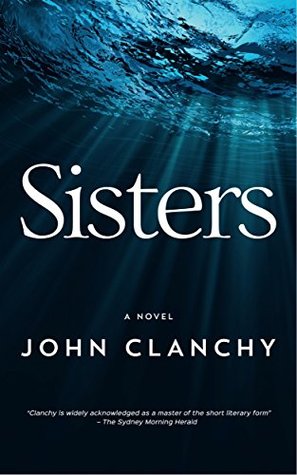
Writers’ retreats are loved by many writers for the opportunity they provide for dedicated, uninterrupted writing time, but not many Australian writers get to do so in France. This however is what John Clanchy did in 2008. His novel Sisters (2017, my review) was originally drafted at the La Muse writers retreat in southern France, and was later published by the retreat. The retreat is open to all sorts of creators, besides writers.
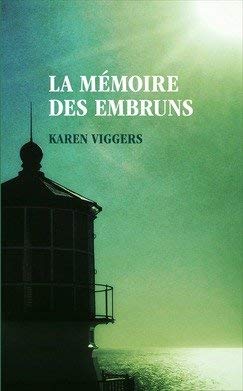
When it comes to translation, a highly successful contemporary Australian writer is Karen Viggers (see my posts). She is a bestselling author in France, with her novel The lightkeeper’s wife having also been awarded the Les Petits Mots de Libraires literary prize. Her latest novel (her fifth) is being translated. On why she is so popular in France, she says that they love her “big landscapes”. Most of her novels have strong environmental themes and are set in gorgeous Australian landscapes. (She has a French page on her website.)
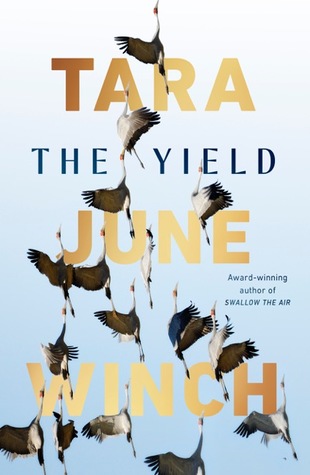
Then, in a different again example of Australia-France literary connections, there is Wiradjuri author Tara June Winch who moved to a French country town when, as a young woman in her 20s, she found herself caught up in the Andrew Bolt “It’s so hip to be black” discrimination case. She withdrew from the legal action taken by several First Nations Australian identities, and disappeared from view for some years, during which, living on her French farm, she wrote her award-winning novel The yield (2020, my review). As far as I know, she is still based in France.
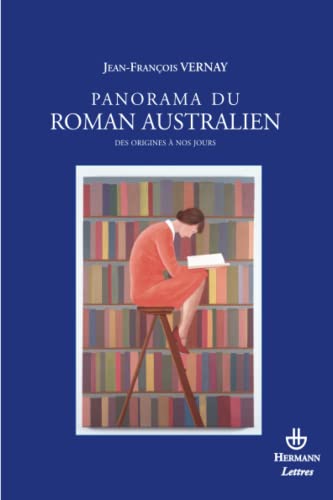
Different again, but still relevant, is Noumea-born Jean-François Vernay, whose somewhat quirky book about Australian novels, Panorama du roman Australien, was published in France in 2009. (It was later revised and expanded, and published in Australia as A brief take on the Australian novel, on my TBR).
Finally, there is our lovely French blogger, Emma (bookaroundthecorner) who includes Australian books in her reading diet, giving our often strange idioms her very best shot.
Now, you know what to do – share your love of bookish France.
 Whispering Gums