 I won’t get to many Melbourne Writers Festival events, because those of most interest to me clash with other commitments and responsibilities. This is a shame given this year’s extensive digital program would enable me to attend my first ever MWF. Never mind, there will be other years. Nonetheless, I was thrilled to find a session on short stories at a time I could attend, so attend I did.
Let me be brief (Sunday 9 August 5-6pm)
The session was moderated by Wheeler Centre Programming Manager Veronica Sullivan who knew the books well. She managed the 45 minutes or so tightly but with intelligence and warmth. The panel comprised three writers of recently published short story collections: Yumna Kassab (The house of Youssef), Jo Lennan (In the time of foxes), and Elizabeth Tan (Smart ovens for lonely people). I’m sorry to say that despite liking short stories, I haven’t read any of their books.
Sullivan started by asking each writer about her collection, targeting her questions to what she saw as significant aspects of those collections.
Introducing the writers
Yumna Kassab
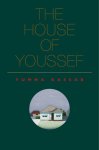 Sullivan introduced The house of Youssef as comprising “spare and sharp” stories about a Lebanese community in Sydney, exploring “the way generations differences play out … the gaps … that make mutual understanding so challenging.” Kassab agreed her stories are about community and family. It’s unavoidable that there will be tensions between generations in any community, she said, but these are exacerbated in migrant communities because of the added layer of different cultural expectations. She’s become increasingly interested in this issue.
Sullivan wanted to know what drew her to these sorts of moments in the very short story form that she mostly uses. Kassab said it wasn’t her initial plan. She thought she’d need to be more dramatic, but found this form appropriate for exploring relationships. She’s always liked short stories. She said – provocatively perhaps – “the novel is a fleshier version of the short story”. She feels the form is well suited to delivering the message she wants to deliver – delivering a strong message is clearly important to her.
Jo Lennan
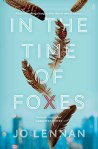 Introducing Lennan’s collection, Sullivan described it as having an international outlook. It has a wide geographic spread, featuring characters taken out of their comfort zones. Lennan observed that mobility has become familiar over the last decades. It seems easy, but is in fact complicated, as she shows in her title story, “In the time of foxes”. It’s about a young filmmaker in London with a young toddler. Her mother is developing dementia back home, and, there’s a fox in the backyard to deal with. She has to face “giving up” her childhood home. Lennan’s point is that living abroad offers immense opportunities but can be accompanied by immense cost. The time has come for this character to pay that cost. (This cost, as many of my generation knows, is also paid by those left at home – particularly with COVID-19, for example, keeping grandparents away from their overseas grandchildren!)
Sullivan asked her to explain the fox motif which recurs through the collection – sometimes real, sometimes simply referenced. Lennan responded that foxes have spread throughout the world and have adapted to various environments, creating so many parallels with human mobility. They are also, she said, survivors and shapeshifters. However, she’s suspicious of themes in short story collections. Hmm, having just read Emily Paull’s Well-behaved women (my review), which does have a unifying idea, I don’t think overall themes are necessarily bad! Anyhow, she said that in her collection, the fox motif was “never a straight-jacket”.
Lennan also said that, despite this overall animal motif, the book is very much about human relationships, because they are the stuff of short fiction, of fiction in general. In her collection, relationships sometimes go disastrously, but in many stories there is a turn-up at the end. In one, for example, the protagonist doesn’t get what he wants but is changed, becoming a larger and better person at the end.
Elizabeth Tan
 Sullivan introduced Tan by noting that her stories, which include animal protagonists, unsettle readers expectations and assumptions. She asked how this approach allows her to explore perceptions. Tan spoke from personal experience when she observed that people can look at characters – like her cats and mermaids – and assume they don’t have interiority or inner life, that they are just a sidekick to another’s life. She likes exploring how these characters are unexpectedly resilient, and suggested they could mirror how she moves through life. As a young Asian woman, she often feels underestimated. But, she is not always sure if how she thinks the world is seeing her is how it actually is, but how do you know? She quoted Chimamanda Ngozi Adichie’s statement that “the problem with stereotypes is not that they are untrue, but that they are incomplete”.
Sullivan asked Tan about the surreal and humorous or satirical aspects of her stories, wondering what responses she was looking for. Tan said that she didn’t set out to be funny, but hoped people find her stories funny. Friendship, she said, can be defined by laughter, by empathy in sharing silly things and humour about them.
Choosing the short story form
Sullivan wanted – naturally, given the “theme” of the session – to discuss the short story form: what drew the writers to the form, how they attack its particularities, and how they consider aspects like structure and characterisation.
Many of Kassab’s stories are very short. Why, wondered Sullivan? Kassab said she didn’t really make a choice, that for her the voice of the character is the important thing. It’s this, and the idea, that dictates the structure, and word choices. She didn’t set out to write the collection. She likes shortness, believing that she can deliver a greater message that can get lost in larger work. She also said that it is easier to experiment – with technique, structure, voices – in shorter work. Such experimentation is harder to sustain in a novel.
Lennan’s stories are longer and more disparate. They have a depth of characterisation, with a sense, said Sullivan, that they start before the story and continue after it. Lennan agreed with Kassab that short stories provide scope for experimentation. She said she “inevitably” writes longer short stories, which facilitates the deep characterisation that people want in a novel. It’s having her cake and eating it too, she said! She’d been working on a novel but realised that her best writing was in her WhatsApp chats with friends! Short stories are more immediate, and felt the right way to bring immediacy and freshness to her writing.
Tan is different because her first book was a novel. However, she agreed with Lennan that brevity offers freshness, and with Kassab about the flexibility possible with short stories. You can be more playful, she said. Sometimes she gets reader feedback wishing a story was longer, but she likes that you can explore a particular moment without having to build an entire world. She said that reality is fragmented, without a lovely shape. Short stories can capture fleeting moments. Tan suggested that the desire for longer stories is a desire for conclusiveness that life can’t offer. Sullivan concurred, suggesting that short stories leave a space for readers wanting more, for anticipation. I agree. Short stories frequently leave you wondering whether you’ve “got it”, but I think this is often the author inviting us to explore.
Sullivan asked the three what advice they’d give writers regarding writing short stories. Lennan said do both, novels and short stories in tandem, arguing that few visual artists work on one piece at a time. Kassab agreed, saying writers are creative people. Ideas change, and interests change, so try different things and be prepared to throw preferences out the window. Tan also agreed, saying you don’t have to choose. Rubik (on my TBR) was going to be short stories, but the same characters kept popping up.
Sullivan suggested that the idea of conforming to set forms comes from the publishing industry. There was some discussion about this, with a general feeling that the narrow definitions are breaking down. Kassab didn’t set out to write a short story collection. It just happened. She suggested that you create the work first and let the marketers try to categorise it! There was also discussion about contemporary attention spans versus that of older generations, and that short stories might better suit the more fragmented way we consume media these days. I know this is often bandied about, but I’m not completely convinced. I’d have to see the research!
I liked Lennan’s response to this attention span argument. She proposed that in some ways they ask more of a reader. Readers have to keep reinvesting in characters, from story to story. The writer has a responsibility to make it a worthy transition for for the reader. The collection needs to work as a whole. She recognises that reading fiction right now – besides beach reads – is a big ask of people. You need to think about what you want for your reader – catharsis, to move them, to present a provocative twist, for example?
Naming favourites
The session ended with that favourite festival question about the writers’ current favourites.
Kassab: This is her year of South American writers. She’s loving Jorges (great thinker about literature and ideas) and Bolaño (great experimenter).
Lennan: Chekhov (his “clear-sighted and sympathetic portrayal of humanity”, which is timeless); Tatyana Tolstaya’s On the golden porch; and the Australians Tegan Bennett Daylight (Six bedrooms, my review) and Christos Tsiolkas (Merciless gods).
Tan: Tom Cho’s Look who’s morphing (TBR) and Julie Koh’s Portable curiosities. Both show you can write about anything you want, you can make stuff happen. Also Emily Paull’s Well-behaved women, and Wayne Marshall’s Shirl (which makes her laugh).
A great session, which offered, to me anyhow, some short story gold.
Lisa (ANZLitLovers) is also posting on the Festival, as is Theresa (Theresa Smith Writes).
 Today, I present another Monday Musings guest post coordinated for me by
 It’s the story of a young woman living in Sydney during WWII. The War is merely a backdrop – instead, the focus is on Amy and her decision to leave her children in the care of her parents in regional New South Wales, while she goes to Sydney to make a life for herself. Amy puts considerable effort into setting up a home. There’s a slow accrual of ‘things’ – a bed, a wardrobe, a kitchen table – and the coveting of the unobtainable (Amy’s fantasies include “…a little glass fronted cabinet containing a bottle of sherry and fine stemmed glasses and a barrel of wafer biscuits. She would put a match to the gas fire ‘to take the chill off the room’, without having to consider the cost…”). She digs a vegetable garden and meets the neighbours. She gets a job, and begins a relationship.
 On whether the pandemic is affecting their thinking about their writing. Viggers, a practising vet, said she is still consumed with the summer bushfires. She is interested – horrified? – to see how politicians have engaged with scientists on the pandemic, when they haven’t done so regarding climate change and bushfires. Her writing content is not really affected. Robinson said it’s tricky trying to write about something unfolding at present, and she feels sheepish saying she’s trying to write about it. Mundell commented that she’s been obedient when she’s usually not, and has felt paranoid when others haven’t been doing the right thing. This made me laugh, as I tend to be obedient but I haven’t felt at all paranoid!
 I joined during the discussion of intergenerational trauma. Morton shared his mother’s statement, “I don’t hate your father, I feel sorry for him”. You do inherit these things, he said. He wrote his book carefully because he wanted to show the impact on him but didn’t want to make his father a villain. (How generous and understanding!) That said, he, his mother and sister have determined they “will never let this cycle of abuse continue”.
 On whether the women are true friends given the evident tensions. This is an issue discussed in my own reading group, but we felt exactly the way Wood responded. Yes, she said, they love each other. Their remarks about each other are a reflection on their own anxieties. Some readers, she said, don’t think her characters are likeable. Grrr … this is an issue that really bothers me. Why do characters have to be likeable? Smith asked the right follow-up question …

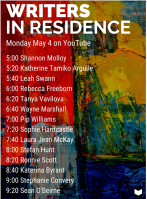
 Today I attended several sessions of the first Yarra Valley Literary Festival, which the organisers turned around and converted to an online event with the arrival in our lives of COVID-19. I plan to write up a couple more sessions over the next week, when time permits, but you can also check
  With information coming from every which way, I’m not sure how I heard about the
 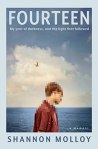 Molloy’s book, simply titled Fourteen, was published in March. It is an autobiographical coming-of-age memoir about being a gay teen. It is set in Yeppoon, in regional Queensland, in 2000. Molloy admitted that his story is harrowing, but believes it also has a strong message of hope. He wants kids “to know there is an end in sight”.
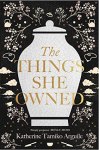 Arguile’s debut novel, The things she owned, was published in late April. Describing herself as “from all over the place”, Arguile, was introduced by Orton as a Japanese-British-Australian artist and journalist. She explained the title of her book. The things are objects which the protagonist, Erika, inherited from her mother, Michiko. Erika is half-Japanese like Arguile, and the novel draws from her own experience. However, as she stressed, The things she owned is a novel, and Michiko is nothing like her own mother.
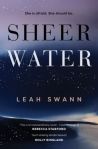 Swann’s novel Sheerwater, which was published in March, is garnering a lot of reviews for the Australian Women Writers Challenge. (I’ve
  The dictionary of lost words, published in late March, is Pip Williams’ debut novel, though she has written other books. She was one of the reasons I was keen to register for this event as I gave this book to my mother for Easter. She, a retired lexicographer, loved it.
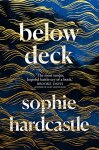 Artist and writer Hardcastle’s novel Below deck, was published in March and is her first novel for adults. It is divided into four parts, with the last being set in Antarctica. Hardcastle had had, she said, an artist’s residency in Antarctica. She wanted to write a work that explored “climate change and our relationship with the natural world.” She thought that a story of the body being violated could work as a metaphor for the environment being violated. The rest of the conversation, however, didn’t really discuss this aspect further.
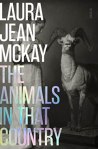 McKay’s novel, Animals in that country, was published in late March. It’s another I had bought as an Easter gift, because, not only did it seem appropriate for the times, given it involves a flu pandemic, but it sounded innovative and feminist. Right up Daughter Gums alley! The novel does have talking animals, including a dingo called Sue! McKay had spent time in a Northern Territory wildlife park as part of a writer-in-residence program, and got to know some dingos here. Sue was apparently inspired by an actual dingo.


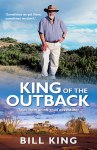 Bill King, King of the Outback: Tales from an off-road adventurer (2012): stories from the founder of AAT Kings tour company.
 These books range from the popular to the serious. I’ve only heard of a few of them, and only have a couple in my TBR pile, Paul Daley’s Canberra and Marcia Langton’s Welcome to country.
 Whispering Gums