Wayne Bergmann and Madelaine Dickie, Some people want to shoot me (#BookReview)

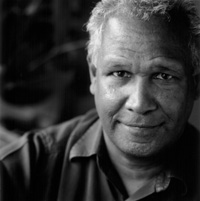
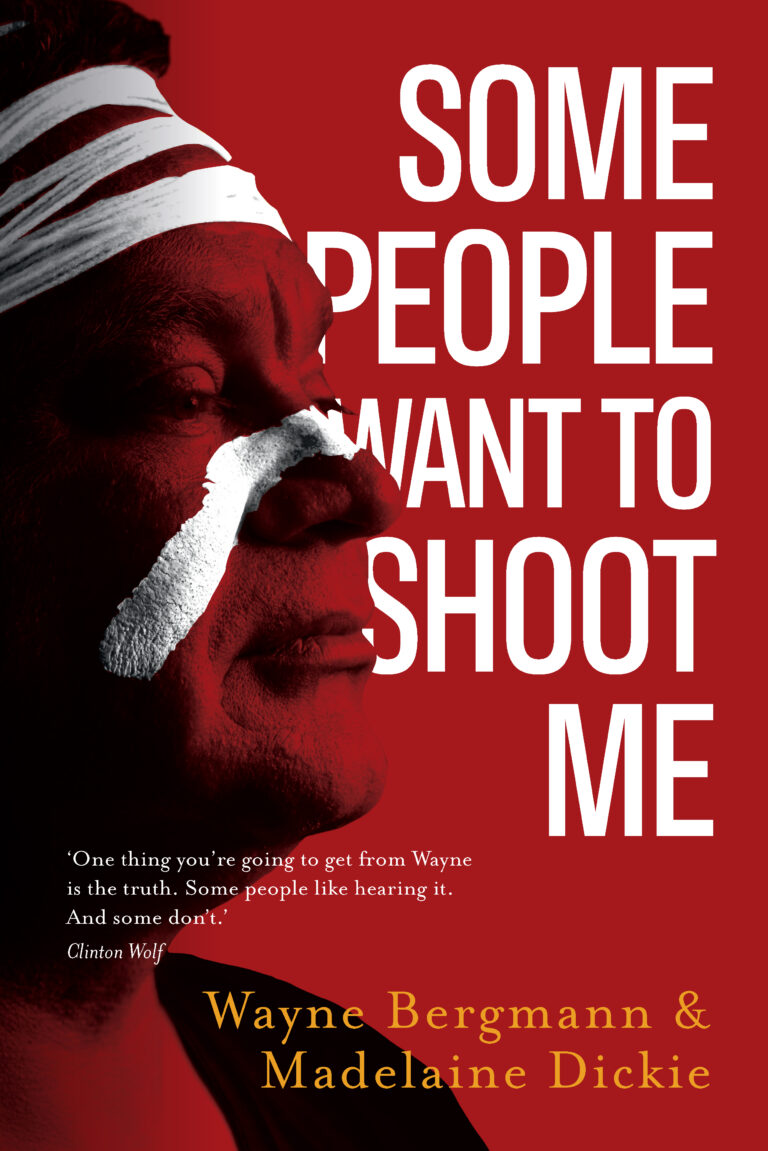
Having finally read Wayne Bergmann and Madelaine Dickie’s Some people want to shoot me, I am not surprised that it has been shortlisted in the Nonfiction category of this year’s Western Australian Premier’s Book Awards. It is moving; it is clearly written; and it is informative about big issues. Wayne Bergmann is a Nyikina* man and Madelaine Dickie a kartiya (white) woman, making this one of those collaborative novels I wrote about recently.

Before I continue, a little on its form. This is a work of nonfiction. It is essentially memoir, written in third person by Bergmann and his collaborator, Dickie. And, being a memoir, it has a specific focus. In this case, it is one underpinned by a powerful sociopolitical message concerning the right of First Nations people to survive and prosper on their own land.

“walking in two worlds”

So … Some people want to shoot me is about a man who realised he must walk in two ways – the kartiya way and the old people’s way, that is the white way and the way of his traditional culture. For his heart and soul he needed to walk the traditional ways, but in his head, seeing the suffering and the social and economic dysfunction caused by dispossession and powerlessness, he had to walk the kartiya way. The book exposes just what a tough balancing act this was – and is. It demanded (demands) strength, bravery, nous, clarity of purpose – and the support of family.

The book opens with a Prologue which sets the scene. It’s 2011 and Bergmann, who is at breaking point after years of negotiating on behalf of Kimberley Traditional Owners, walks out of a meeting with a mining company and heads, with his wife and children, back to country:

to the mighty Martuwarra, the Fitzroy River – lifeblood of Nyikina country, Wayne’s country, his children’s country – made by Woonyoomboo when the world was soft.

From here, the book starts in Chapter 1 the way memoirs usually do – at the beginning. For Bergmann, the beginning is Woonyoomboo who tasked the Nyikina people to look after country. This they did, until the arrival of white settlers in the late 19th century, when things “radically changed”. The first two chapters chronicle some of this change through the lives of Bergmann’s forbears. It depicts a world where the legacy of nuns, monks, ethnographers, pastoralists and miners “was still felt acutely”, where “frontier massacres had occurred within living memory”, and “where justice, under whitefella law, didn’t often grace Kimberly Aboriginal People”. Bergmann, who was born in 1969, saw this, felt this, and took on the pastoralists, mining companies and governments to “upend the status quo”.

Of course, such upending doesn’t come easily, and the people doing this upending aren’t always understood and appreciated, which is where we came in at the Prologue. The book details, chronologically, Bergmann’s work, from his early work with the KALACC (Kimberley Aboriginal Law and Culture Centre) and his realisation that for Aboriginal people to be empowered under Western law and able to make systemic changes, “they needed to understand the kartiyas’ law system inside out”. So, he did a law degree, and then, at the age of 33, became CEO of KLC (Kimberley Land Council) and here is where the really hard work started, and it was not pretty. It demanded every ounce of energy, intelligence and resilience, he could muster.

Bergmann had to be clear about the role, which was, as a native title representative body, “to facilitate a process and follow procedure in accordance with native law to allow Traditional Owners (TOs)” to make decisions “about their country”. This meant consulting with the TOs and ensuring they understood what they were being asked for and what was being offered. When stakes are high, emotions also run high. Some environmentalists, for example, would turn against TOs (and thus the KLC) when their views diverged, but sometimes TOs believed that some development was advantageous to their people. Then, of course, there were times TOs didn’t agreed with each other, or when there was disagreement between TOs and others in their communities. This is to be expected, of course. Do all kartiyas agree? But, it makes for very difficult times, and Bergmann was at the centre. As well as working with the relevant Kimberley TOs, Bergmann was also negotiating with the Western Australian government and, for example, the Woodside mining company, negotiating not only the actual agreements, but for money and resources to carry out consultations so that the TOs could come to the table well informed. All this is explained clearly in the book, making it well worth reading for anyone who has not followed native title cases closely. It’s both enlightening and chastening.

Bergmann made some significant deals, but it was a bruising time, so after a decade, wiser and with a clear view ahead, he moved on to establish KRED Enterprises. A charitable business, wth the tagline of “walking in two worlds”, its aim was (and is) to support cohesive Aboriginal economic development in the Kimberley, to encourage businesses run by and for Aboriginal people. The rest of the book covers Bergmann’s work – under the KRED umbrella and in other areas (including buying a newspaper, the National Indigenous Times) – all focused on the one goal, to pull his people out of poverty and disadvantage, to ensure they have the opportunities available to all Australians, and in so doing to improve their lives and outcomes. Nothing less will do.

We had to create some wealthy Aboriginal organisations, and wealthy Aboriginal people, so we could shape our own future, on our own country.

Woven through the accounts of Bergmann’s work are stories about his personal life, some good times but also the egregious attacks his wife and children faced at the height of his KLC work. We come to see the truth of Dickie’s description of him in her Introduction, as “demanding, smart, intensely political and visionary”. This is a man who puts himself on the line because he is driven to see First Nations Australians prosper.

Some people want to shoot me packs a lot into its 223 pages. That it covers so much, with great clarity and readability, is due to the writing. It’s well structured, and employs some narrative techniques, including evocative chapter titles and the occasional foreshadowing, which keep the story moving. At the end of the book is an extensive list of Works Cited and a Select Bibliography, which provide authority for what has gone before, if you need it.

Meanwhile, here are some words by another First Nations leader, Clinton Wolf:

One thing you’re going to get from Wayne is the truth. Some people like hearing it. And some don’t.

This book tells Wayne’s story, and I did like hearing it. It’s a great read about a great Australian, telling truths we all need to hear.

* First Nations cultures are orally-based, which results in inconsistent spellings when their languages are written. This post uses the spellings that Bergmann and Dickie use in their book.

Wayne Bergmann and Madelaine Dickie
Some people want to shoot me
North Fremantle: Fremantle Press, 2024
223pp.
ISBN: 9781760992378
Monday musings on Australian literature: Collaborative story-telling between First Nations Australian and white writers

National NAIDOC Logo (2025)

NAIDOC Week 2025 started yesterday, and as I have done for many years now, I am devoting my NAIDOC Week Monday Musings to celebrating First Nations writers in some way.

This year is a particularly special year because it marks NAIDOC Week’s 50th anniversary, 50 years it says, “of honoring and elevating Indigenous voices, culture, and resilience”. The 2025 theme is “The Next Generation: Strength, Vision & Legacy,” and is intended to celebrate not only past achievements achievements, “but the bright future ahead, empowered by the strength of our young leaders, the vision of our communities, and the legacy of our ancestors”. 

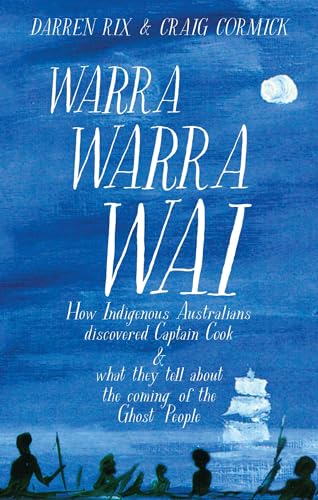
.Now, over the years, I have written posts on a wide range of First Nations writing and storytelling, was wondering what to write about this year, when a couple of weeks ago this idea of collaborative writing projects popped into my head because I’ve come across a few in the last few years. Then, at the ACT Literary Awards last Thursday night, another such collaboration was not only shortlisted but won the Nonfiction award. The book is Warra Warra Wai: How Indigenous Australians discovered Captain Cook & what they tell about the coming of the Ghost People, and is by Darren Rix and Craig Cormick. That sealed the deal!

In the introduction to this book, Darren and Craig, the names they use to sign off the Introduction, say that:

This book has been a blackfella-whitefella collaboration, because too much of our history has been written by one voice only, and we need to find more collaborative ways to tell our past, present and future.

I would love to discuss all the collaborations I’m going to share in this post – including researching how the collaborations worked, who did what, and how differences (if any) were resolved – but that would be a big project. I have, however, met some of the writers involved, and have followed some of the projects on social media, so I am aware of some of the processes the writers followed. For now, though, I will share what Darren and Craig say in their Introduction:

In this collaboration, we each worked to our strengths. Craig did most of the work in the archives, and Darren did most of the oral interviews – and the people we talked to got the final say on the text. The stories we gathered belong to the individuals and communities we visited. This is their book.

Selected list of collaborative books

This list is presented in alphabetical order by the name of the first author listed on the title. I did think about dividing it into two lists – one fiction, one nonfiction – but decided that all these books aim to share truths about our society and culture, whether told within a factual or imaginative framework, so one list it is. (Links on authors’ names are to my posts on that author.)

There has been a lot collaborative publishing in the children’s literature sphere, over a significant period of time, but I’ve been less aware, until relatively recently, of similar activity in the adult sphere.

Wayne Bergmann and Madelaine Dickie, Some people want to shoot me (memoir, Fremantle Press, 2024, on my TBR): shortlisted for Nonfiction Book of the Year in the Western Australian Premier’s Book Awards.

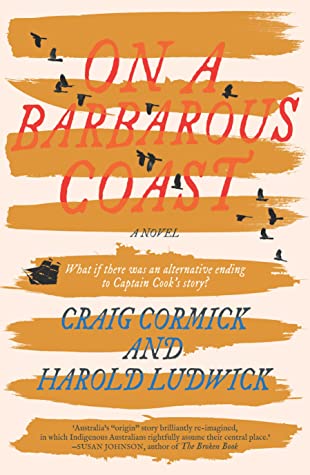
Craig Cormick and Harold Ludwick, On a barbarous coast (historical fiction, Allen & Unwin, 2020, my review): a re-imagining of what happened when Captain Cook’s Endeavour was wrecked off the coast of Far North Queensland.

Aaron Fa’Aoso with Michelle Scott Tucker, So far, so good: On connection, loss, laughter and the Torres Strait (memoir, Pantera Press, 2022, Bill’s review): apparently the first memoir by a Torres Strait Islander to be commercially published, which means it addresses “the under-representation of Torres Strait Islander perspectives in Australian life”. You can read more about it on Tucker’s website.

Aaron Fa’Aoso and Michelle Scott Tucker with Lyn White, Spirit of the crocodile (YA fiction, Allen & Unwin, 2025, on my TBR, Bill’s review): a coming-of-age novel set against the challenges to the Saibai island community of climate change.

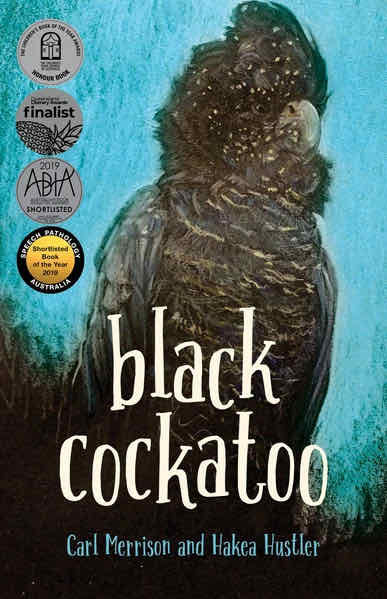
Carl Merrison and Hakea Hustler, with Dub Leffler (illus.), Black cockatoo (YA fiction, Magabala Books, 2018, my review): pleasingly, this book was in my Top 10 visited posts last year, and is in the Top 20 this year to date.

Boori Monty Pryor and Meme McDonald, Maybe tomorrow (memoir, 1998, my review): one of the first books I reviewed on this blog. Pryor has focused much of his life’s work on helping young people feel strong in their culture.

Boori Monty Pryor and Jan Ormerod, Shake a leg (Children’s picture book, Allen & Unwin, 2010): one of several children’s book collaborations involving Boori Monty Pryor.

Darren Rix and Craig Cormick, Warra Warra Wai: How Indigenous Australians discovered Captain Cook & what they tell about the coming of the Ghost People (history, Scribner, 2024, on my TBR): follows Cook’s journey up “Australia’s” east coast, visiting the places he renamed and gathering the local people’s stories.

Nicolas Rothwell and Alison Nampitjinpa Anderson, Yilkari: A desert suite (“unclassifiable” but fiction, Text Publishing, July 2025, on my TBR)

As the word “selected” conveys, this is not intended to be a comprehensive list, but an introduction to the range of collaborative writing that’s been happening. However, I (and readers of this blog I’m sure) would love to hear of other First Nations-settler collaborations, including from other parts of the world.

Click here for my previous NAIDOC Week-related Monday Musings.

Have you read any First Nations-white writer collaborations? And if so, care to recommend any?

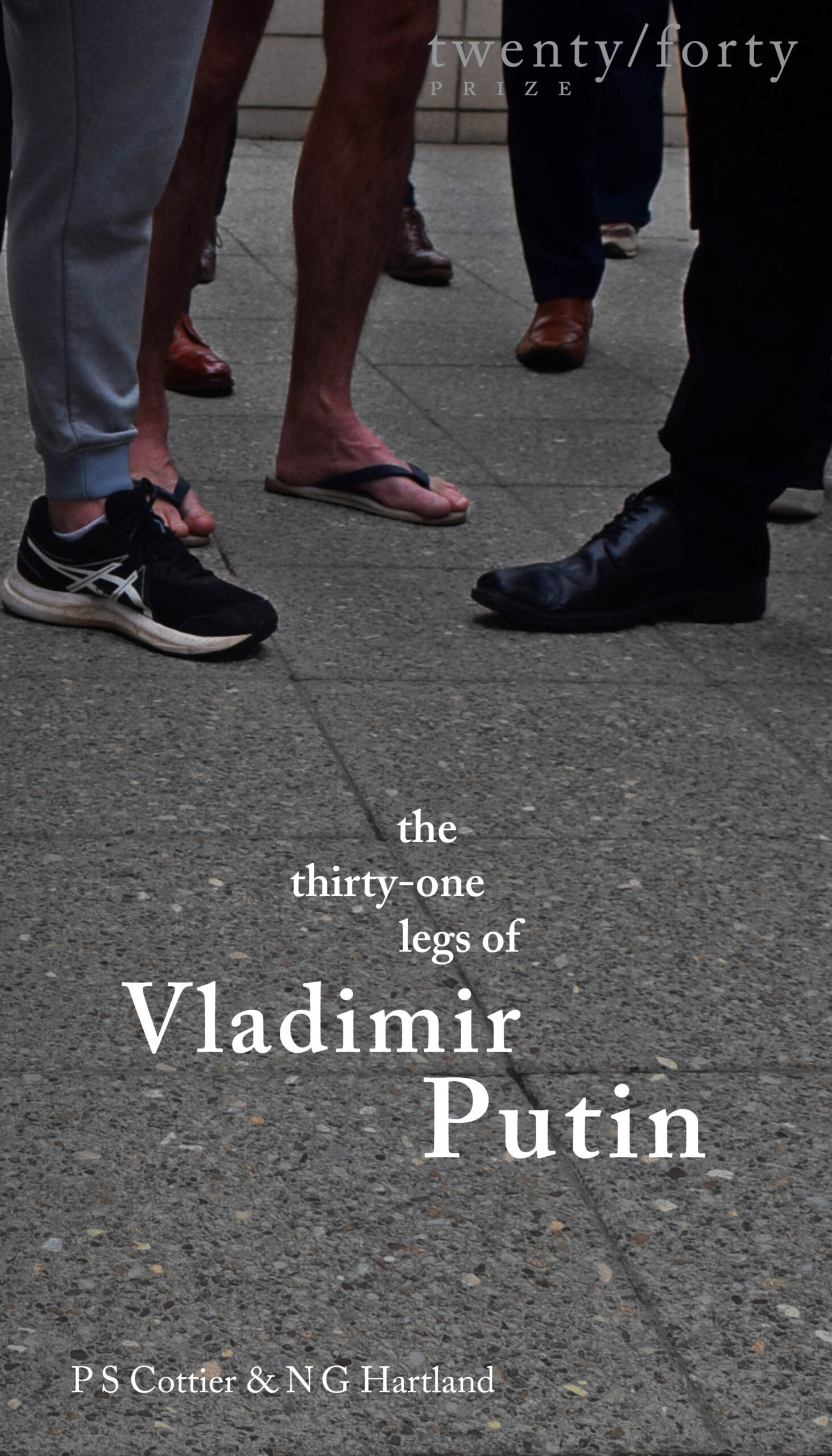
PS Cottier and NG Hartland, The thirty-one legs of Vladimir Putin (#BookReview)

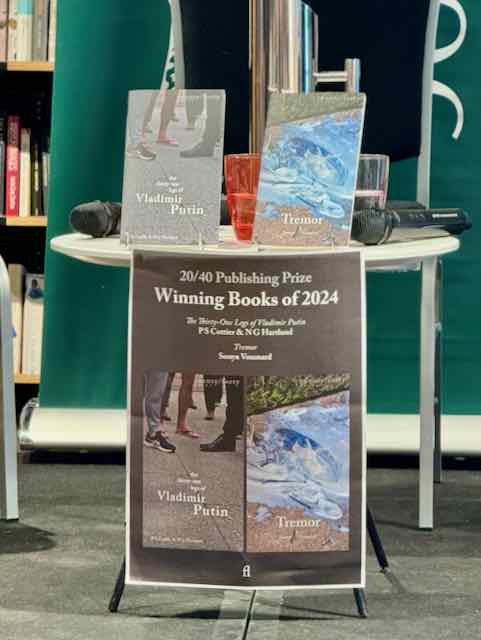
Earlier this month, I posted on a conversation with the winners of the 2024 Finlay Lloyd 20/40 Publishing Prize, P S Cottier and N G Hartland, who wrote The thirty-one legs of Vladimir Putin, and Sonya Voumard, who wrote Tremor. On the surface, these books look very different, but conversation facilitator, Sally Pryor, found some similarities suggesting both explore ideas related to identity, one’s place in the world, and how we can be captured and defined by the systems within which we live. Having now read Cottier and Hartland’s novella, and having started Voumard’s memoir, I can see she has a point.

If you didn’t read my conversation post, you may be wondering what the heck this book with its curious title is about. Besides the fact that it’s a novella, which I love, I was attracted to it from the moment I saw it on the shortlist because the description said it “spirits us away on a comedic journey into a world where the reality and absurdity of political power are increasingly indistinguishable”. That sounded just too delicious and I was glad to see it win.

Ok, so I still haven’t told you what it’s about, but be patient, I’m getting there. The novella was inspired, said Cottier and Hartland, by the idea that there are such things as Putin “body doubles”. There is even a Wikipedia page about this “theory” so it is a thing, as they say! The titular “thirty-one legs” belong to 16 of these body doubles whose stories are told in the book. Sixteen, you ask? That doesn’t compute from 31? True, but one of the doubles only has one leg! How can that be, you might also ask, how can a “double” of two-legged Putin only have one leg? Good question, and I won’t give it away, but let’s just say that the idea epitomises the absurdity of the notion.

Now, this is a collaborative novel, and if I understood correctly from the conversation, Cottier and Hartland started by “pushing out” individual Putins. In fact, the novella reads rather like a set of interconnected short stories because each Putin stands alone, with minimal connection between them except they are all Putin doubles and most of them assume there must be others. However, there is a narrative arc to the whole. Each Putin tells us something about their recruitment and its impact on their lives, with some threads recurring through the different Putins, depending on their location and personality. Two Putins also bookend the story. Surfing Putin, Dave McDermott in Western Australia, opens the book in the Prologue and concludes it with his own story, while English Putin Samuel Chatswood starts off the stories proper, and returns with the penultimate story. Each chapter is titled with the name and location of a Putin, so we have, for example, “Maja Dahl, Oslo, Norway”, “Richie ‘The Putin’ Rogers, Cirencester, England”, “Joppe Stoepke, The Hague, Netherlands”, and “Andrei Galkin, Rostov-on-Don, Russia”.

The set-up, or plot, is simple. People from around the world who look like Putin have been recruited to act as Putin doubles should they be so needed. This recruitment has happened over twenty years, but the book is set post the Ukraine invasion, so our doubles suspect they will not be called upon to play Putin. Some are quite edgy about this, while others are more phlegmatic. For all of them, though, being paid – because paid they are, monthly, from an anonymous bank account – comes with questions, if not challenges.

Our first fully-fledged Putin, Samuel Chatswood from London, sets the scene. He tells us about his fears about being a double. Not only is he frequently teased about his resemblance to Putin and asked “why anyone would want to invade Ukraine?”, but he’s anxious because he has been increasingly getting dark looks from strangers since the Skripal poisoning. However, having recently spied another lookalike, he is “comforted” by the idea that “whatever suspicion and recriminations are possible, they are less likely to entangle me if I’m not the only Putin lookalike”. He also heralds the denouement, when he returns to find that such comfort might have been misplaced.

We meet all sorts of Putins, from the fearful, through the deluded, and the thoughtful, to the confident or more upbeat, but all ponder what being a Putin double means for them. For some their own identity gets lost in the role, and some are confused, or at least perplexed, about what’s expected of them. For others, like the resourceful Chilean, Sebastian Soto, it’s a business proposition, while several capitalise on their lookalike-ness. Steve Pinebrother in “International Waters”, for example, not only makes money, secretly, as a double but, publicly, as a performer on a cruise ship. Each one is beautifully individuated, and I find it hard to pick a favourite. There’s much humour in many of their stories, but there’s pathos too, particularly with those who get lost in – or fearful about – their roles. Life is not simple when you accept money without clarity, eh?

“the butterfly of truth does not need questions to emerge from its cocoon of facts”

So, what’s the takeaway. An obvious one is contemporary culture’s focus on appearance and its willingness to monetise looks without much substance behind it. But another is murkier. This novella, I’m tempted to say, could be read as an allegory of the changing world order. No matter where the Putins live, recent changes are unsettling them. The ground is shifting and they (we?) don’t know how to react. Do they bury their heads in the sand, believing it will be alright? Do they wait for the inevitable or, try to withdraw? Or do they take action, and if so, what action can they take? For French Putin, Hugo Fournier,

It matters not, I conclude, what is reality and what is an extravagant theory from a feverish mind. The answer of course is that I should trust no one. I am the only Putin who can, and will, look after me.

Is such isolationism the answer? Through their various Putins, Cottier and Hartland pose serious questions, including, what do we believe and what we can or should we do?

The thirty-one legs of Vladimir Putin is an audacious “what if” story. Its episodic approach works well in the novella form. Were the book much longer, the conceit would, I think, start to lose its freshness. As it is, there are enough Putins to provide a variety of stories, without becoming repetitive. The tone is light enough to be highly entertaining, but the content is informed and thoughtful enough to engage our minds. This book would make a perfect Christmas stocking stuffer, which is not to say I put it on a par with chocolates and scratchies, but that it is small in size, well-priced, physically lovely, and a thoroughly absorbing read.

Read for Novellas in November.

PS Cottier and NG Hartland
The thirty-one legs of Vladimir Putin
Braidwood: Finlay Lloyd, 2024
115pp.
ISBN: 9780645927016

Review copy courtesy Finlay Lloyd.

Finlay Lloyd 20/40 Publishing Prize 2024 Winning Books Launch with Conversation

I mentioned the nonfiction winner of the 2024 Finlay Lloyd 20/40 Publishing Prize, in this week’s Monday Musings, but saved the full winner announcement until after I attended the launch at a conversation with the winning authors this weekend.

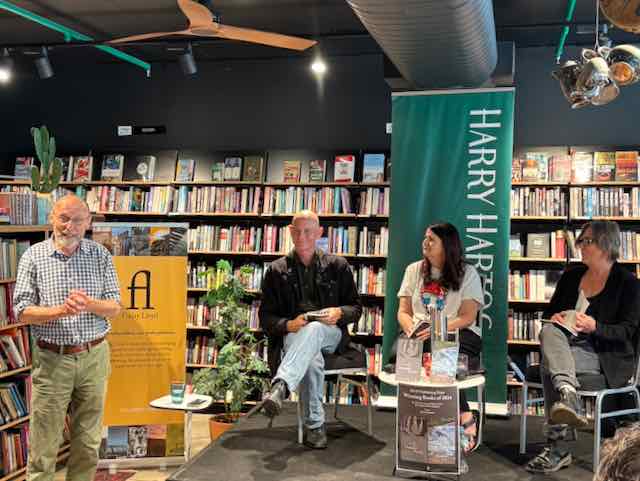
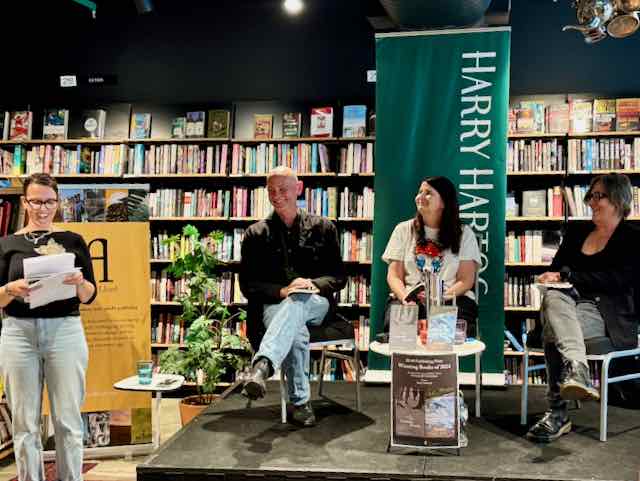
The participants

This year, as publisher Julian Davies had hoped, there was a prize for fiction and one for nonfiction. The winners were all present at the conversation, and were:

  • Sonya Voumard for Tremor, which the judges described as “notable for its compellingly astute interweaving of the author’s personal experience with our broader societal context where people with disabilities, often far more challenging than her own, try to adapt to the implicit expectations and judgements that surround them”.
  • P S Cottier & N G Hartland for The thirty-one legs of Vladimir Putin, which the judges said “welcomes us to a world where absurdity and reality are increasingly indistinguishable and where questions of identity dominate public discourse. The book spirits us off on a playful journey into the lives of a group of individuals whose physical attributes appear to matter more than who they may be.”

The conversation was led by Sally Pryor who has been a reporter, arts and lifestyle editor, literary editor and features editor at The Canberra Times for many years. Born in Canberra, and the daughter of a newspaper cartoonist, she has a special connection to our city and its arts world.

And of course, the publisher, Julian Davies, started the proceedings. As I wrote in last year’s launch post, he is the inspiring publisher and editor behind Finlay Lloyd, a company he runs with great heart and grace (or so it seems to me from the outside.)

The conversation

Before the conversation started proper, Julian gave some background to the prize, and managed to say something different to what he said last year. He described Finlay Lloyd as a volunteer organisation, with wonderful support from writers like John Clanchy. He reminded us that they are an independent non-profit publisher, but wryly noted that describing themselves as non-profit seems like making virtue out of something that’s inevitable! Nonetheless, he wanted to make clear that they are not a commercial publisher and aim to be “off the treadmill”. And of course he spoke of loving “concision” and the way it can inspire real focus.

As last year, the entries – all manuscripts, as this is a publishing prize – were judged blind to ensure that just the writing is judged. The judging panel, as I wrote in my shortlist post, included last year’s winners.

Then, Sally took over … and, after acknowledging country, said how much, as a journalist, she also loved concision. Short books are her thing and they are having a moment. Just look, she said, at Jessica Au’s Cold enough for snow (my review) and Claire Keegan (see my post). Their books are “exquisite”. She then briefly introduced the two books and their authors. Sonya’s Tremor is a personal history told through vignettes, but which also explores more broadly the issue of viewing differences in other. She then jokingly said that she “thinks” Nick and Penelope’s book is fiction. Seriously though, she loved the novel’s set up which concerns the lives of 16 Putin “doubles”. It’s a page-turner. The books are very different, but share some themes, including identity, one’s place in the world, and how we can be captured and defined by the systems within which we live.

On Sonya’s journey

The conversation started with Sonya talking about her journey in writing this book. She was about to have brain surgery, a stressful situation. But she’s a journalist, and what do journalists do in such situations? They get out their notebook. Her coping mechanism was to cover it as a story, one of big stories of her life.

She has had a condition called Dystonia – mainly tremor in her hands – since she was 13. She managed for many years but, as she got older, more manifestations developed, not all easily linked to the condition, and her tremor got worse. Getting it all diagnosed took some time.

Sally noted that in the book, the doctor is thrilled that he could diagnose her and have someone else to observe with this condition (which is both environmental and genetic in cause). Sonya, of course, was thrilled to have an answer.

On Nick and Penelope’s inspiration and process

It started when they were holidaying in Queensland. I’m not sure I got the exact order here, but it included Penelope’s having read about Putin doubles, and Nick having been teased about looking like Putin. Penelope said it was a delight to write in a situation where humour would not be seen as a negative. The story is about look-alikes being recruited from around the world to act as Putin doubles should they be so needed.

Sally commented that the doubles respond differently. For some, it provides purpose, while others feel they lose their identity. What’s their place in the world, what does it mean?

Putin, said Nick, is an extraordinary leader who has morphed several times through his career. They tried to capture different aspects of him, though uppermost at the moment is authoritarianism. How do we relate to that? Penelope added that it’s also about ordinary people who are caught up in politics whether we like it or not. Capitalism will monetise anything, even something genetic like your looks.

Sally wondered about whether people do use doubles. Nick and Penelope responded that it is reported that there are Putin doubles – and even if they are simply conspiracy theories, they make a good story.

Regarding their collaborative writing process, Nick started “pushing through some Putins” so Penelope wrote some too, but they edited together. Nick is better at plot, at getting a narrative arc, Penelope said.

On Sonya’s choosing short form not memoir

It was a circuitous process. There is the assumption that to be marketable you need to write 55,000 plus words. She had the bones, and then started filling it out, but it was just “flab”. The competition (and later Julian) taught her that there was a good “muscular story” in there, so she set about “decluttering”. Sally likes decluttering. The reader never knows what you left out!

“Emotional nakedness” was a challenge for her, and to some degree members of her family found it hard being exposed – even if it was positive – but they learnt things about her experience they hadn’t known. Sonya’s main wish is that her family and loved ones like what she’s written.

But, did she also have a sense of helping others? Yes! There are 800,000 Australians with some sort of movement disorder, and many like she had done, try to cover it up. (For example, she’d sit on her hands during interviews, or not accept a glass of water). Her book could be liberating for people.

Continuing this theme, Sally suggested there are two kinds of people, those who ask (often forthrightly) about someone’s obvious condition, and those who would never. She wondered how Sonya felt about the former. It varies a bit, Sonya replied, but it feels intrusive from people you don’t know well. At work it can feel like your ability is being questioned.

On Nick and Penelope’s editing process

Nick explained that their story had a natural boundary, given they had a set number of Putins. (And they didn’t kill any Putin off in the writing!) There was, however, a lot of editing in getting the voice/s right, and getting little arcs to the stories.

In terms of research, they read biographies of Putin, and researched the countries their Putins come from.

Sally wondered whether Nick and Penelope saw any legal ramifications. Not really, but they did research their Putins’ names to get them appropriate but unique, and they have a fiction disclaimer at the end (though Julian didn’t believe it necessary!)

On Sonya’s writing another book on the subject, and on negotiating with those involved

While there are leads and rabbit holes that could be followed, Sonya is done with this story (at present anyhow).

As for the family, Sonya waited until the book was finished to show them, but she also tried to avoid anything that might be hurtful or invade people’s privacy. She’s lucky to have a family which has tolerated and understood the journalistic gene. Regarding work colleagues, she did talk to those involved. It was a bit of a risk but she didn’t name those who had been negative towards her. Most people just thought her shaking was part of her, and she liked that.

Sally talked about the stress of being a daily newspaper journalist, with which Sonya agreed, and gave a little of her personal background. She started a cadetship straight out of school and was immediately thrust into accidents and court cases. It was a brutal baptism. Around the age of 30, when the tremor and other physical manifestation increased, she decided she couldn’t keep doing this work.

Were they all proud of their achievement with this format?

As a poet Penelope is comfortable with brevity, so this was an expansion (to sentences!) not a contraction. Nick was obsessed with “patterning” – with ordering, moving between light and dark, internal and external, providing an arc. Penelope added that it started with less of an arc, including no names for the Putin doubles.

Sonya paid tribute to Julian for being “such an amazing editor” who taught her about how to impose structure on chaos. Penelope added that it was an intense editing process. It was also a challenge because, being a publishing prize it’s not announced until publication so she couldn’t tell people what she was working on. But the editing process was interesting.

Q & A

There was a brief Q & A, but mostly Sally continued her questions. However, the Q&A did bring this:

Is Nick and Penelope’s book being translated into Russian and/or will it be sent to Putin: Julian said Finlay Lloyd were challenged enough getting books to Australians. Penelope, though, would love Russians having the opportunity to read it. Perhaps, said an audience member, it could be given to the Russian embassy …

Julian concluded that it had been a joy working with these authors who “put up with him”, and thanked Sally sincerely for leading the conversation.

This was a lovely warm-hearted event, which was attended by local Canberra writers (including Sara St Vincent Welch, Kaaron Warren, and John Clanchy) and readers!

These books would be great for Novellas in November. You can order them here.

The Finlay Lloyd 20/40 Publishing Prize Winning Books of 2024 Launch
Harry Hartog Booksellers, Kambri Centre, ANU
Saturday, 2 November, 12.30-1.30pm

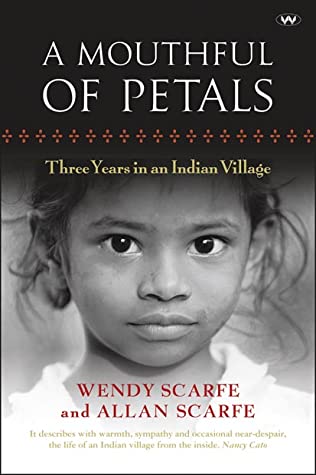
Wendy Scarfe and Allan Scarfe, A mouthful of petals: Three years in an Indian Village (#BookReview)

Husband and wife writers, Wendy and Allan Sharfe, first published A mouthful of petals, the story of their three years in the remote Indian village of Sokhodeora, in 1967. It is not, however, their only book. Wendy Scarfe has written poetry and several novels, two of which I’ve reviewed here, Hunger town and The day they shot Edward, while her late husband, Allan, also wrote some novels and short stories. Collaboratively, they wrote several books besides A mouthful of petals, including a biography of Indian independence activist Jayaprakash Narayan.

It was Jayaprakash, or JP as he was known, who invited the Scarfes to return to Sokhodeora in 1960, after their 6-month volunteering stint, because he believed serving India was in their hearts. Their service would, he wrote, be “of great value to us and would add to that international good-will and understanding that are so badly needed”. In their opening chapter, the Scarfes write poetically of the place that was to be their home for three years:

Sokhodeora is a dot that is part of the plain: beautiful, serene, full of a sense of continuity with the very beginnings of human civilisation.

But to enter the narrow, zigzag alleys between the congested houses is to lose much of the impression of beauty and to realise the antiquity of man’s anxiety, poverty and misery.

Their role was to be education-related, though on their arrival JP admitted that “frankly” he didn’t know “what specific, clear-cut work” to give them! Ah, the days before KPIs! (Or, more likely, as the Scarfes say, the difference between Western and Eastern world views.) The big picture, the ideal, was that education was needed, and that the villagers needed to see that education was about more than gaining Government employment, which, of course, most villagers would never do.

And so, the Scarfes set about developing their own goals and schedule of work, regularly calibrating with the supportive JP. Uppermost was starting a school for children and night classes for adults. However, they also responded to the practical reality of village life which was characterised by extreme poverty, which in turn meant problems like hunger and poor health. How can children learn, for example, if they are not reasonably nourished? When Jayaprakash comments on the villagers’ apathy, Wendy replies that she believed it was “nutritional”:

People can’t have physical and mental vitality on two meals of rice and pulse a day. A huge proportion of village women suffer from anaemia and they must be just dragging themselves around.

Here is where we realise that aid work like this requires not just the necessary professional skills – in this case, teaching – but resourcefulness and entrepreneurship. The Scarfes, for example, discovered the existence of a supply of powdered milk, and developed a program for its distribution. They wrote many appeals for foodstuffs, eventually landing a winner with the American Meals for Millions Foundation, which provided an awful-sounding but highly nutritional product called “Mysore Multi-Purpose Food”. Again, they were heavily involved in distribution and teaching how to use it. They looked at other issues too, including the provision of toilets, family planning, the building of a classroom, and so on. All this is macro-level. They also worked at the micro-level, supporting individual villagers in all sorts of ways, especially in obtaining the medical help and pharmaceuticals they needed. It’s no wonder that, as this edition’s Publisher’s Note says, this book served, for years, “as a primer for intending field workers”.

None of this was easy of course, and the challenge was exacerbated not only by the usual infrastructure problems – such as transport – but also by cultural and personal issues, particularly the challenge of engaging the villagers in an environment characterised by caste prejudice, gender inequality and inter-family quarrelling.

A mouthful of petals, then, has plenty of interesting content, but I would also like to comment on the writing. It’s a collaborative book, but what voice do you choose to write a book involving both authors’ lives? Ruth Park and D’Arcy Niland, in their memoir The drums go bang (my review), used first person plural when writing about joint experiences, and third person when writing about the experience of one of them. The Scarfes took a different approach, narrating the book in first person from Allan’s point of view, with Wendy spoken of in third person. It works, but I rather like Park and Niland’s approach.

Overall, the writing is straightforward, as it has to be to impart all the information it does, but there are lovely flourishes all the same, like the description of Sokhodeora I cited early in this post. The book is also enhanced by the people populating it. Not only are we given some insight into JP, but the Scarfes tell stories about several villagers, including the initially apprehensive but willing Mahadev who works for them from the start and the ultimately tragic Kesurwa whom they choose to train as their kindergarten teacher. These people give life to the bigger picture being told.

Now, when I read a book like this, by which I mean a book that is about a different place and time – after all, we are talking India of 60 years ago – I think about its relevance (beyond any intrinsic interest in the subject matter) to my place and time. This book provided a few such points, one being the importance of education. There’s literacy, of course, but the Sharfes specifically discuss the value of understanding cause-and-effect, of the ability to draw logical or useful conclusions from observation and experience – regarding pain and illness for example – and how this lack impeded village and villagers’ development. This made me think, rightly or wrongly, of what has been happening in the USA recently where there seems to be just that lack of ability in some of the populace. A failure of education?

Then there’s the big point: the idea of having global responsibility for each other. The Scarfes write:

We are all responsible for the human condition and those who are educated are responsible to those who are not.

I like the use here of “responsible to” not “for“. It shifts this idea of responsibility from a patriarchal notion to something more cooperative or service-oriented.

A mouthful of petals is a passionate book that still offers much to think about. It is well worth reading.

Lisa (ANZLitLovers) also enjoyed and reviewed this book.

Challenge logo

Wendy Scarfe and Allan Scarfe
A mouthful of petals: Three years in an Indian village
Mile End: Wakefield Press, 2020 (rev. ed. with Epilogue; orig. ed. 1967)
275pp.
ISBN: 9781743056844

Review copy courtesy author and Wakefield Press.

Carl Merrison and Hakea Hustler, Black cockatoo (#BookReview)

Black cockatoo is a young adult novel written by Indigenous Australian author, Carl Merrison, and his non-Indigenous collaborator, Hakea Hustler, and illustrated by Indigenous Australian illustrator, Dub Leffler. It is a beautiful, little (in size, not value) book that made quite a splash when it was published. It was shortlisted for several children’s literature awards in 2019, including those by the Children’s Book Council of Australia, Readings, the Australian Book Industry Association, and the Queensland Literary Awards. However, it is not the sort of book that I would normally post on here, so I plan to keep this review short.

I say this for a few reasons. For a start, children’s and young adult literature are not my main interest, though I do occasionally make exceptions, as I am making here. My main reason, however, is that not only am I not the typical age demographic for this book, but I am also the wrong cultural demographic, which makes me two steps removed from its target audience. But, I ordered this book from Magabala because I was intrigued about what was being written for young Indigenous readers, and it is on that basis that I’m posting on the book.

The story is set in a remote community in Australia’s Kimberley region, and focuses on 13-year-old Mia. She is disturbed to see her 15-year-old brother, Jy, becoming increasingly alienated from his community and culture, but feels powerless to do anything about it. In the book’s first chapter she rescues a young black cockatoo (dirrarn) which had been injured by Jy who had been target practising with his shanghai. The dirrarn is her totem animal.

What makes this book interesting for someone like me to read is the way it conveys the issues that I, an outsider, am aware of through my reading. One of these is the issue of family breakdown in Indigenous communities. Mia and her brother are being raised by their mother and grandparents, and haven’t seen their father or his family for many years. It’s clear that this is a tough gig for the grandparents. Mia overhears her grandfather (her jawiji) tell her grandmother that he’s “just tired”, and that:

I’m not sure I have it in me to teach him the right ways anymore. He’s just so headstrong.

In one way, of course, Jy is a typical teenager – stubborn and defiant – but concern about this behaviour is magnified in Indigenous communities where disconnection from culture can leave young people, young men in particular, highly vulnerable. In this story, the grandparents, like many in Indigenous communities, do their best to inculcate knowledge of and respect for culture, while also supporting their grandchildren’s need to make their way in a world they don’t know themselves.

This brings me to the main subject of this story, Mia. Her angst stems not only from her concern about her brother, but from having to make a decision about whether to take up her place at “a fancy school down south”. She’s confronting that conundrum faced by young Indigenous people that I’ve also gleaned through my reading, the challenge of straddling two cultures. There is a lovely sense here of Mia being supported and encouraged by her family, but also of her having some agency in what she does:

“You live in both worlds,” her grandmother added. “You will be strong in both ways.”

Black cockatoo is a short story but Merrison and Hustler pack a lot in here about the warmth and humour within extended Indigenous families, which lightens the more serious concerns they confront. The tone is not heavy, which is appropriate given the aim of this book being presumably to support young Indigenous people in making good choices rather than to demoralise them with the challenges they face!

The book is illustrated by Dub Leffler, with stylish, sometimes realistic sometimes more subtle, black-and-white images opening each chapter. Words from Jaru language are lightly scattered through the text:

It had been a proper long barranga dry weather, so to hunt we didn’t have to travel far to find big fat bin.girrjaru bush turkey.

There are two small glossaries at the end, one of Jaru words, and the other of Aboriginal English/Kriol words, that are used in the text.

While not all issues are resolved by the end, as you would expect, the novel’s conclusion, as you would also expect, is positive, with Mia coming to realise both her own inner strength and that she has the ongoing support of family and culture. It’s a good message in an accessible book, it seems to me, but the real proof is whether it works for its target readers, and that, of course, I don’t know.

Challenge logo

Carl Merrison and Hakea Hustler
Dub Leffler (illus.)
Black cockatoo
Broome: Magabala Books, 2018
62pp.
ISBN: 9781925360707

Craig Cormick and Harold Ludwick, On a barbarous coast (“BookReview)

Craig Cormick is a Canberra-based writer whom I’ve seen at various literary events around town, but not read until now, so I was especially glad when Allen & Unwin sent me this book to review. Titled On a barbarous coast, it was written collaboratively with Harold Ludwick, “a Bulgun Warra man whose traditional lands lie west of Cooktown”.

On a barbarous coast offers something a bit different for reviewers. Besides its collaborative nature, there’s its form or genre, which is that sub-genre of historical fiction called alternate (or alternative) history. In this case, it involves looking at a period of Australian history and asking “what if things had happened differently?” Those things, for Cormick and Ludwick, relate to Captain Cook’s exploration of Australia.

The story springs, then, from Captain Cook’s 1768-1771 voyage to Australia to observe the Transit of Venus. During that expedition, in late 1770, the Endeavour was seriously damaged around the Great Barrier Reef, but managed to limp on to Batavia. However, Cormick and Ludwick posit a different scenario, suggesting that the Endeavour was shipwrecked and that only a small number of the crew survived – including Cook, though he remains comatose though much of the story. The survivors make their way to land, and … the question is, as the cover states, “What if there was an alternative ending to Captain Cook’s story?” Would Australia’s history have been different, and how?

While I’ve not read many, I do quite like alternative histories. They encourage us to look at the past from different angles, which can illuminate the implications of decisions made and actions taken.

So, this is how it goes …

The story is told in two alternating first-person voices, Cormick’s being that of American Midshipman James Magra, and Ludwick’s being the young Indigenous boy, Garrgiil.

Magra chronicles the actions and fates of the shipwreck survivors, who very quickly break into two antagonistic camps, while Ludwick shares the thoughts and actions of the local Guugu Yimidhirr people. For the bulk of the narrative, the two cultures remain apart. There is quite a bit of humour in watching Garrgiil’s people trying to decide whether these strange “spirit things” are ancestors or just men. Initially, they feel they must be ancestors, but the way they stumble around, starving while “walking past food every day”, not to mention behaving incorrectly in sacred or special areas, suggests that this may not be the case.

… their presence gives our people great stories of their stupidity and clumsiness to tell around the fire at night. Like the one who stood in the river and let Gandhaar [crocodile] eat him …

Meanwhile, we watch Magra and his co-survivors bickering amongst themselves, trying to plan a solution to their predicament, and sensing the “natives” are out there but not seeing them. The stage is set for a meeting. The question is: how will it go? You will have to read the book for yourselves to find out.

So, how does it all come together?

Magra gets the lion’s share of the story, which could be seen as giving the invaders the upper-hand (yet again) in story-telling. However, I’m going to assume that this was all discussed and agreed between the two authors. Also, I think we could argue that the unequal number of physical pages doesn’t necessarily mean that the emotional impact of the two narratives is similarly unequal. Garrgiil’s voice is strong enough, and compelling enough, to be in our minds, even when he’s not centre-stage.

In the Authors’ Note at the end, Cormick says they “tried to stay as close to known history as possible, both within the known and imagined paths of the story”, which requires a bit of mind-bending but I get what they mean. They drew upon “many existing knowledges” including several journals, such as those of James Cook, Joseph Banks, Sydney Parkinson, and an anonymous journal believed to have been written by James Mario Magra, whom Cormick uses as his narrator. They also looked at the work of Indigenous and non-Indigenous historians, journalists and academics, and at historical accounts of several shipwrecked individuals who had lived with Indigenous people. Cormick notes that while their story divides easily into the two narratives, “it is not so easy to unpick how each of us influenced each other’s work”.

Ludwick adds that his aim was to pull readers into “the world of Guugu Yimidhirr language (which was first recorded in 1770 by Sydney Parkinson and Joseph Banks)”. He says that many of the practices and knowledge he describes in the book are still used by his people. He also says that he wove Dreamtime stories into his narrative to help readers understand his people’s traditional explanations of how the land became what we see today.

The end result is the sort of book I like to read, one that entertains me with its story, while also engaging my mind as I consider what the authors (plural, in this case) were trying to do, how they were trying to do it, and whether they pulled it off. It is an earnest book. Sometimes this comes a bit close to the surface when we are “told” things to make sure we get it (such as “I know the Captain controlled how the stories of our journey would be told”). This – and the strange though interesting little “magical realism” interludes where Magra talks to Gandhaar, the crocodile – creates a little unevenness in the narrative. Also, the use of parenthesis to translate the local language used by Garrgiil felt clunky. Yet, I applaud the book’s extensive use of this language. We need more of it in contemporary Australian literature. As Gandhaar tells Magra:

You create the landscape in your own words. If you don’t know the right words, you will never know the land properly.

But these are minor “picky” things. Cormick and Ludwick have attempted something significant in terms of story, intent, and process, and they pulled it off in a way that engaged me, right through to their considered ending which suggests possibilities, while being realistic about probabilities. Without irony, we could call this book “a grand endeavour”. It is certainly exciting to see such Indigenous-non-Indigenous collaborations happening in our literary sphere.

Lisa (ANZLitLovers) also found this book intriguing.

Craig Cormick and Harold Ludwick
On a barbarous coast
Crows Nest: Allen & Unwin, 2020
309pp.
ISBN: 9781760877347

(Review copy courtesy Allen & Unwin)

Ruth Park and D’Arcy Niland, The drums go bang! (#BookReview)

Book coverVolume 1 of Ruth Park’s autobiography, A fence around the cuckoo, covers the period of her life up to when she lands in Australia to marry D’Arcy Niland. Not being sure, perhaps, that there’d be a sequel, Park concludes with:
We lived together for twenty-five years less five weeks. We had many fiery disagreements but no quarrels, a great deal of shared and companionable literary work, and much love and constancy. Most of all I like to remember laughter.

That autobiography was published in 1992. The drums go bang, written collaboratively by Park and Niland, was published in 1956 and covers the first five or so of these years to just after the publication in 1947 of The harp in the south.

The first thing that struck me was its point of view: it slips astonishingly between third person and first person plural, sometimes in the middle of a paragraph. And then the penny dropped, its collaborative nature. When they are talking about one of them, Tiger (Ruth’s nickname) or Evans (D’Arcy’s), third person is used, but when they are talking about them together, first person plural is used. Here is an example about their delayed honeymoon:

We didn’t mind the delay. Tiger was crazy to see Sydney, and besides she wasn’t too keen on going away to the Blue Mountains with a strange man. While Evans was away at the Railway she went around the city on her own …

Once you work out what’s going on, it works very well. However, to understand this particular paragraph, and the “strange man” comment you’ll need to read their story for yourself, as I want to move on to other things. Suffice it to say that this comment, while containing an element of truth, given the way their relationship developed, is also an example of their light, self-deprecating humour. As Park said in her autobiography, “most of all I like to remember laughter”.

The drums go bang is a short and often funny book, but it manages to cover a lot, including their struggles to find accommodation in 1940s Sydney when accommodation was scarce, their decision to go freelance and the resultant struggle to survive, their work in the outback, two pregnancies, their lives in Surry Hills and other Sydney suburbs, and their relationships with a wonderful cast of characters. The aspects which interested me most were of course Surry Hills, because it inspired The harp in the south, the writing life, and the writing itself, which provides such an insight into their skills.

Although they tell it with such humour, Park and Niland are very clear about how difficult the freelance life is. For most of the five years covered by the book they live a hand-to-mouth existence, experiencing poverty at close hand. However, there’s also good advice here for would-be writers. For example, early in the book, Tiger expresses frustration at Evans’s belief that a good story will sell regardless, but even this is told with humour:

He was convinced that if the story were good it must sell. He bailed up an amiable Salvation Army major and tried to persuade him that “The Other Side of Love” was just what was needed for the War Cry. He submitted “The Menace of Money” to the Business Man’s Monthly, and a sentimental animal story to the house magazine at the Abattoirs.

They share their Minor Carta, their manifesto for writers who wish to make a living writing. Its eight articles include some hard learnt truths, such as that you have to “write anything and everything”, you cannot afford to be “snobbish” about your art, and you can’t let rejection slips get you down. They talk about the variability of payment systems for freelance work, unscrupulous writing schools, and the importance of marketing, of needing to “shape it to fit”. They write articles, songs, short stories, radio plays, children’s radio, comedy sketches, and more – anything that might bring in a cheque (and they do it sharing one old typewriter.)

I’d love to share more about their lives, and particularly the characters in it, like Evans’ brother Young Gus, the generous freelance publisher Mr Virtue, and colourful relations like Aunt Nibblestones and Uncle Looshus, but I want to get onto something that is most relevant to Bill’s AWW Gen 3 Week, their time in Surry Hills and how it inspired The harp in the south. Initially scared by “the place, with its brawling, shrieking life”, abusive drunks and fighting prostitutes, Park started to adapt, and

… began to study the people for what they were, and not what they did. Their true kindness, their generosity and charity filled her with shame. They were so much more genuinely loveable than she had given them credit for being, and she began to understand how the incredible congestion of their lives, the rabbit-warren houses, the inescapable dirt of an area which is built around the big factory chimneys all contributed to their innately lawless, conventionless attitude towards life. She began to understand that in such a place dirt ceases to become important, morals are often impracticable, and privacy is an impossibility.

As it turned out, though, The harp in the south was written, almost, you could say, accidentally. In New Zealand for some needed R&R after the birth of their second child, they are sent a clipping by Uncle Looshus which announces a Sydney Morning Herald competition for a novel, short story and poem. Park tries to convince Niland to write a novel but he refuses, saying he only writes short stories, and tells her to have a go. So, she does, and of course Surry Hills is her inspiration:

… she felt she understood them. She certainly liked them, mostly because in the midst of all their dirt and poverty and fecklessness they contrived to be happy.

She wrote down a sentence that seemed to sum up their philosophy: “I was thinking of how lucky we are”.

That sentence, the last line in the book, was the key that opened the door. From then on the story grew by itself.

This book, published serially in 1947 to both acclaim and vituperation, has become a classic of Australian social realism, albeit, as Paul Genoni says, “tempered with romanticism”. The same could be said of this delightful memoir.

Challenge logoRuth Park and D’Arcy Niland
The drums go bang!
Illustrated by Phil Taylor
Sydney: Angus and Robertson, 1956
195pp.
ISBN: None

Boori (Monty) Pryor, Maybe tomorrow

Boori Pryor
Boori Pryor

I wonder why I didn’t read this book when it was published about 10 years ago? In the 1960s, when I was in my teens, I read poems like Kath Walker’s (later Oodgeroo Noonuccal) We are going; in the 1970s when I was at university it was more academic works such as the white anthropologist CD Rowley’s The destruction of Aboriginal society; and in the 1980s it was Sally Morgan’s My place. Later, in the 2000s it was Leah Purcell’s Black chicks talking. These and other books have both moved and educated me with their portrayals of the richness of indigenous culture in Australia and of the dispossession of its people. And yet, in the 1990s, I missed this treasure (written in collaboration with Meme McDonald).

It is a treasure because, although Boori Pryor and his family have experienced huge tragedy and significant intimidation, he is able to preach reconciliation and mutual respect. Classed as a biography and often promoted as a book for young adults – indeed it was shortlisted in the Children’s Book Council of Australia awards – the book has a much wider ambit. While we learn a lot about Boori’s life, that is not his purpose in writing the book. His purpose is to encourage white society to understand – really understand – where Aboriginal people are coming from, and particularly the far-reaching implications for them of Invasion Day, and to encourage Aboriginal people to trust in their roots and to recognise the importance of their stories, their cultural tradition, to their individual survival as well as to the survival of their people.

Much of the book deals with his work in schools where he aims to encourage students to develop an understanding of and respect for Aboriginal people and for the land. He believes that all people need to have and know their “place”: the first chapter is subtitled “To be happy about yourself you have to be happy about the place you live in”. He talks about the thoughtless and insulting things young people say to him and how he handles it. He says

You have to be the water that puts out the fire. If you fight fire with fire, everything burns.

He seems to be able to “maintain the rage” regarding what has been done to his people while at the same time working wisely and calmly to make things better.

Boori says in the book that storytelling is part of who his people are. After reading this book – with its mix of anecdote, metaphor, analogy and humour – I, for one, would not argue with him.

Boori Monty Pryor with Meme McDonald
Maybe tomorrow (1998)