Monday musings on Australian literature: My favourite (Australian) fictional character(s)

Over the last twelve months or so, The Conversation has published occasional articles titled “My favourite fictional character“. In each article the writer names a character and justifies their choice.

As far as I can tell, there have been six so far, and most have chosen non-Australian characters. The choosers and their choices have been:
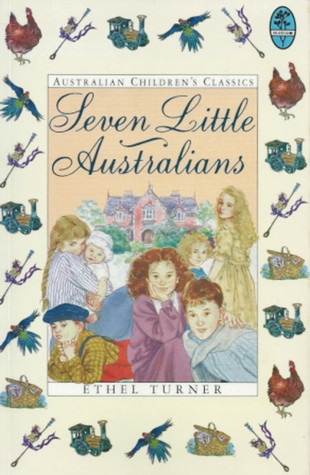
Ethel Turner, Seven Little Australians
  • Carol Lefevre, whose Murmurations I’ve reviewed: Ivy Eckdorf in William Trevor’s O’Neill’s Hotel (1969), for her “crazed, compelling voice”.
  • Edwina Preston, whose Bad art mother I’ve reviewed: Judy in Ethel Turner’s Seven little Australians (1894), who was “wild … equipped to conquer the world, but not to survive it”.
  • Melanie Saward: Queenie in Candice Carty-Williams’ Queenie (2019), who is “complex, funny, broken, fun”.
  • Jane Gleeson-White, whose book, Australian classics: 50 great writers and their celebrated works, is in my reference collection: Lyra in Philip Pullman’s Northern lights (1995) AND (she cheekily chose two) Lila Cerullo in Elena Ferrante’s My brilliant friend (2011), for being “half-wild, ‘too much’ heroines”.
  • Amy Walters, who was a blogger in the New Territory program: Esme Lennox in Maggie O’Farrell’s The vanishing act of Esme Lennox (2006), who “refuses to be the ‘perfect victim’ – even in an asylum”.
  • Alexander Howard: John Le Carré’s George Smiley (first appeared, 1961), who is “unattractive, overweight, a terrible dresser – and a better spy than James Bond”

If you are interested in their justifications, you can find all the articles at the link in my opening paragraph. I note that to date only Preston has chosen an Australian character. Also, her character is the only one from a bona fide classic, which surprised me a little. So far, there have been five female choosers to one male, and their choices have matched their genders. Telling?

Meanwhile, I’ll share a few (yes, I’m allowing myself a few) of my favourite Australian fictional characters. It’s a challenge not just because it’s always hard to choose favourites, or because “favourite” is a slippery concept, but because favourite characters don’t necessarily come from favourite books. Most do, but, for example, a longtime favourite novel of mine is Voss, but I wouldn’t say the characters were favourites.

I’m giving you my favourites in six random categories:

Favourite childhood character: Ethel Turner’s Judy in Seven little Australians. I’m with Edwina Preston. How could any red-blooded Australian girl not want to be the brave, warm-hearted, rebellious Judy.
Kim Scott That Deadman Dance

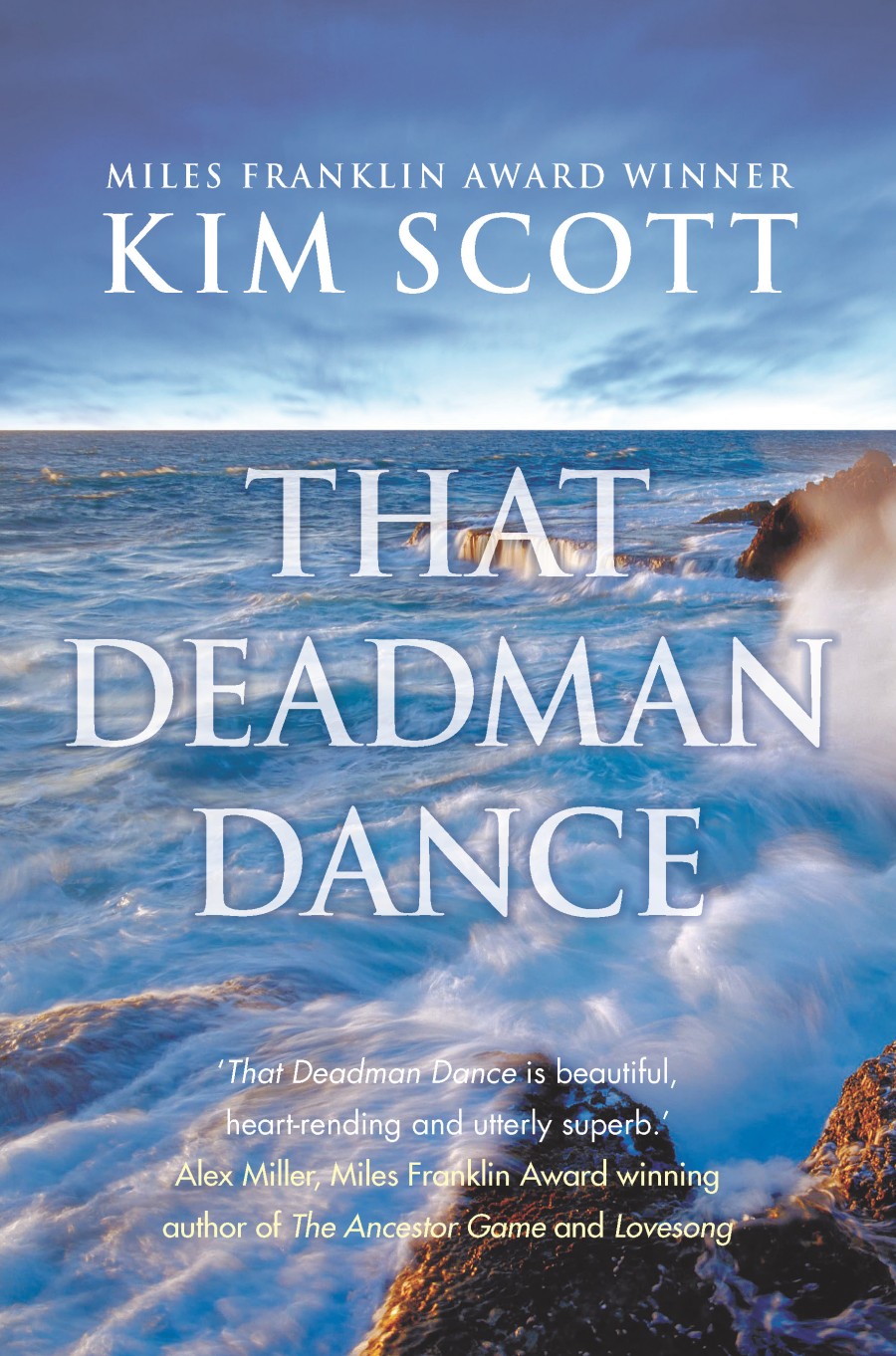
Favourite First Nations character: Bobby Wabalanginy in Kim Scott’s That deadman dance (my review). While not the only voice in the book, young Nyoongar boy Bobby is our guide, and he fulfils that role with wit, intelligence and honesty. But I have others, like the flawed Kerry in Melissa Lucashenko’s Too much lip (my post) and the motherly Odette in Tony Birch’s The white girl (my post).

Favourite older character: Kathleen in Thea Astley’s Coda (my post). Being a woman of a certain age, I’m interested in women traversing the closing decades of their lives. There are more around in our literature than you might think, and I’ve liked many of them, but Kathleen is a favourite because she’s a memorable, wily, acerbic, old woman, a self-styled “feral-grandmother”, who is not ready to be, as she says, “corpsed”. She knows the “four ages of women: bimbo, breeder, babysitter, burden” and she’s doing her darnedest to rise above it. I’m not really like her, but that doesn’t mean I can’t love her.
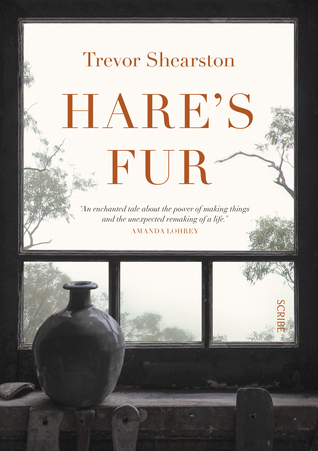
Favourite nice guy: Russell Bass in Trevor Shearston’s Hare fur (my review). OK, I admit it. I’m a sucker for “nice guys”, in fiction as well as in life. I’m not one of those (see below) who find nice guys boring or unbelievable. Fiction is full of unpleasant men, or, if not that, of dull, dithery, helpless, “dun-coloured” (to quote Patrick White) men. But there are good men too, like Will the doctor in Eleanor Limprecht’s The coast (my post). I’m going with Russell Bass, however, because of how, with humanity, he navigates the tricky human, legal and moral territory of supporting kids who are hiding from welfare authorities.

Favourite villain: Father Pearse in John Clanchy’s In whom we trust (my review). What makes a villain a favourite? Their villainy? Their redemptive qualities? Or, that they are only villainous because of their circumstances? For me, certainly not their villainy. I was never one of those girls who liked “the bad boys”, though “favourite” doesn’t necessarily mean “like” does it? Grenouille in Patrick Süskind’s Perfume could be a favourite character because he is pure villainy perfectly rendered, but I don’t like him. Father Pearse is not the worst character in Clanchy’s book, so is perhaps not, literally, a “villain”, but he is a weak man whose cowardice impacts the the children in his charge, until he is confronted.
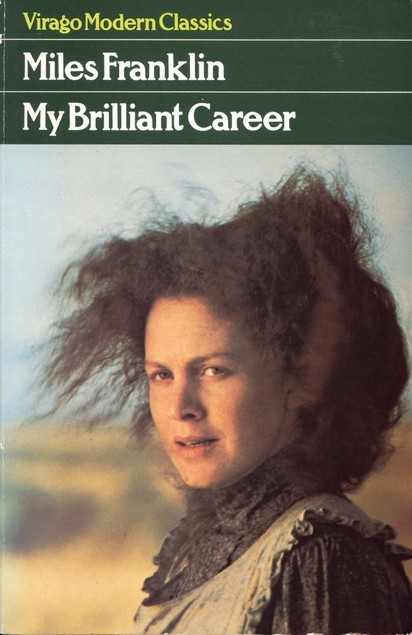
Favourite independent woman (in a nod to Bill): Sybylla in Miles Franklin’s My brilliant career, of course. Like Ethel Turner’s Judy, she’s impossible to go past. She set the standard. But I must also give a nod to two femocrats, Cassie Armstrong in Sara Dowse’s West block (my review) and Edith Campbell Berry in Frank Moorhouse’s Edith trilogy. I’ve only read and reviewed the third, Cold light, since blogging, but she has energy and force that might land her in trouble at times but she keeps on going.

So, an eclectic lot, really, and I’ve sidestepped – because I can – the challenge of choosing ONE favourite character, but I hope I’ve got you thinking.

Would you care to share one or two favourite characters (and, if you are Australian, I’d really love to hear your Australian ones!)
Monday musings on Australian literature: Memorable Australian fictional families

A bit of a fun post this week that I hope will engage you, regardless of where you live or what you read. This post is a sort of companion to one I wrote back in 2017 on Memorable Australian characters. I’ve had this post in mind ever since then, but have kept putting it off because – well – how many truly memorable fictional families are there in Australian literature? I have a few which I’ll share below, but first I thought to whet your appetite with some non-Australian ones like, of course, Jane Austen’s Bennets and Louisa May Alcott’s March family.

What makes a memorable family? Is it the relationship between the members? Is it the liveliness or some other strong characteristic of certain members? Is it the family’s ability to rise above misfortune or tragedy? Is it the chemistry of the family as a whole? Or is it all in the writing?

So, here is my list, presented alphabetically by the family’s name …

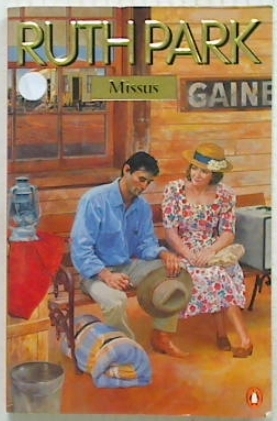
The Darcys: When I thought about this topic, Ruth Park’s Darcy family was uppermost in my mind. It comprises parents, daughters, a son-in-law and more as the books progress. I first read The harp in the south (1948) and its sequel Poor man’s orange (1949) in my mid-teens and I loved them because of the warmth of the family – they were real, they disagreed with each other, they struggled to make ends meet, but they fundamentally loved and supported each other. I also loved that nearly four decades later, in 1985, Ruth Park wrote a prequel, Missus (my review), in which she tells how the parents, Mumma and Hughie, met and got together. The thing about these books is that not only do they contain the story of an engaging family, but they tell an important story about early to mid-twentieth century Australia.

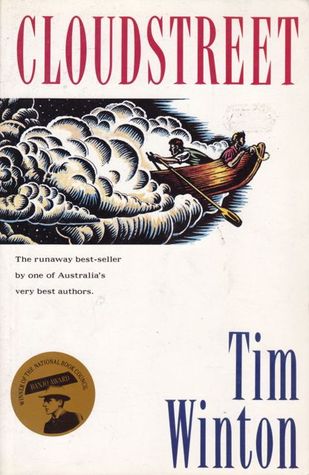
The Lambs and the Pickles: Winton’s two families, like the Darcys, have become classics of Australian literature – as is the house in which they live together, the titular Cloudstreet (1991). Park’s novels are very much about the Aussie battler, and so, in a way, is Cloudstreet, except that it’s a book of a different time and a different literary sensibility. Winton uses his families to confront us with our assumptions about who we are. Wikipedia quotes Australian picture-book author, Mem Fox, as saying “If you have not read Cloudstreet, your life is diminished . . . if you have not met these characters, this generous community, these tragedies, the humour. It is so wonderful.” Can’t say much better than that. For some, Cloudstreet is our GAN.

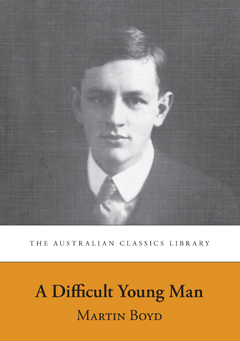
The Langtons: This family does not, I suspect, jump immediately into people’s minds, but Martin Boyd’s Langton Tetralogy, which started with The cardboard crown in 1952, and finished a decade later with When blackbirds sing (Lisa’s review), offers a fascinating insight into a very different sort of family to the Darcys, Lambs, and Pickles. The Langtons are well-to-do and are based on Boyd’s own, somewhat eccentric, intellectual and artistic family. They, the Langtons, think little of whizzing over to England when life is unsatisfying in Australia. I have read the second novel, A difficult young man (my review), and would happily read more. Wikipedia quotes academic Gillian Dooley on why these books may not as well-read today:

“Boyd’s subject matter is no doubt the principal reason for his neglect. By any standards, his prose is strong and luminous and his novels are beautifully crafted and immensely readable. But the late twentieth century had little patience with the scandals and vicissitudes of Anglo-Australian aristocratic families, with no apparent connections with convicts, sealers or whalers, or the indigenous people. Boyd was admittedly something of a good old-fashioned snob.”

Like Lisa, and I believe Dooley, I think Boyd’s novels are worth reading for their writing, their wit – and for their insights into a different place, time and people. I don’t agree with what seems to be a fairly common notion that the well-to-do are neither valid nor interesting to read about – particularly if the writing is of high calibre.

Ethel Turner, Seven Little Australians

The Woolcots: If you don’t know who the Woolcots are, you are probably not Australian! They are Ethel Turner’s family in her Seven little Australians series. These are children’s books so the family focus here is on the seven children, their relationships with each other, and what they get up to. Apparently, according to Wikipedia, Seven little Australians, the first in the series which was published in 1894, was an instant hit in Australia and overseas. Here is some praise from Rockhampton’s Morning Bulletin (7 November 1894) which suggests why it was popular:

Because there is no preaching, or homilies on the evils of wrong-doing, children will read the book more readily, and they will be dullards who will escape the moral tone of it. Our authoress gives us nice descriptions of Australian scenery, all the more attractive that they are truthful and not over-coloured. Old hands, we dare-say, will pick holes in the book, but on the whole it is truthfully realistic. 

So that’s my (very) little eclectic list. I know there are others but my aim is not to be comprehensive but to start a discussion about some of the “classic” families in literature and why we like them.

Now, over to you. Who are your most memorable families, Australian or otherwise, and why?

Monday musings on Australian literature: Memorable Australian characters

Image on screen as we waited for Kim Scott

Image on screen as we waited for Kim Scott

The inspiration for today’s somewhat fun post, came from something more serious, Kim Scott’s Ray Mathew lecture that I attended last week. As I was waiting in the National Library’s gorgeous theatre waiting for the lecture to start, I found myself thinking about Bobby in Scott’s novel That deadman dance. What I realised was that Bobby is still vivid in my mind, years after I read the book – and I started to think about other similarly vivid characters…

Because, I don’t know about you, but I have read many books over the years. Some have been forgotten, some I remember generally, and some in more detail for one reason or another. Those reasons can vary – they can be the emotion that was engendered in me, or the ideas the book inspired me to think about, or the language delighted me, or, even, the plot surprised me, but there’s only a few for which that reason is very specifically a character. I thought it would be fun to share those – and for you to share back. Of course, as this is my Australian literature post, I’ll be focusing on Aussie books only. In other words, you won’t find Darcy or Elizabeth here! You, though, don’t have to be similarly constrained, so go for it. Bring out your Atticus Finches and Emma Bovarys. Let’s see what happens.

I have another proviso for this post, besides my characters having to be from Australian books, and that’s that I have to have read the books at least five years ago. Otherwise, I’m not sure I could say they’ve stood the test of time. My earliest favourite character comes from my pre-teen reading.

I noticed something interesting as I was compiling this list: not only do the characters vary in terms of age, gender, role/position, etc., they also fall into types like “my favourite pioneer character” or “child character” and so on. There’s very little duplication of these categories.

I am a bit nervous about this post, because I know I’ll omit some memorable characters that have slipped my mind (briefly!), exposing my shallowness, but I’ve decided to screw my courage to the you know what, and jump in. Oh, and one final point before I do: while these characters come from books I’ve loved, those books won’t necessarily be among my top books, particularly now, years later (though some will be).

So, here is my list, presented alphabetically by the character’s first name!

  • Bobby Wabalanginy, from Kim Scott’s That deadman dance (published 2010, read and reviewed 2011) is a luminous, unforgettable First Contact character whose generosity of spirit is knocked back again and again by the colonial settlers. He represents all that could have been good and positive in our first indigenous-settler relationships in this country.

We thought making friends was the best thing, and never knew that when we took your flour and sugar and tea and blankets that we’d lose everything of ours. We learned your words and songs and stories, and never knew you didn’t want to hear ours.

  • The drover’s wife, from Henry Lawson’s short story “The drover’s wife”. As far as I remember, she doesn’t have a name, but stands for the archetypal 19th century pioneer woman who had to face the terrors of the bush alone while her husband was, well, droving. She, like the rest of her ilk, had to become “used to the loneliness”.
  • Joe Harman and Jean Paget, from Nevil Shute’s A town like Alice, survived much, particularly being POWs during World War 2, before finally realising their love for each other. Yes, they are my favourite romantic couple from my adolescence, and I had to share them here.
  • Judy Woolcot, from Ethel Turner’s Seven little Australians, is, in a way, Australia’s version of America’s Beth (from Louisa May Alcott’s Little women). She’s the tragic character of our childhood. However, where Beth was a sweet town-living girl, Judy was a courageous, feisty tomboy from the bush.
  • Patrick White, VossSybylla Melvyn, from Miles Franklin’s My brilliant career, has to be in the list of any Aussie female reader. How can she not be, with her independent spirit and her refusal to let a handsome, wealthy man distract her from her dream of a “brilliant career”.
  • Voss, from Patrick White’s Voss, was inspired by Prussian explorer Ludwig Leichhardt and his expedition into the Australian outback in the 1840s. He’s tragic, mythic, romantic, and I first fell for him, and thus also for Patrick White, in my teens.
  • Weekly, from Elizabeth Jolley’s The newspaper of Claremont St, is a working class woman, a cleaner in fact (hence her “name”). She works steadily towards a dream that she will not give up, not for any anything.

And I think I’ll leave it there. I could go into families – like Tim Winton’s Lambs and Pickles (Cloudstreet) and Ruth Park’s Darcys (The harp in the south) but that would be diluting the theme which I don’t want to do. I’m aware that this is not at all representative of my favourite authors, but that’s because I love them for other reasons.

And now, over to you. Who are your most memorable characters?