Monday musings on Australian literature: Nurses in Australian fiction

As some of you may know, last Tuesday, 12 March, was International Nurses Day, the date chosen because it was Florence Nightingale’s birthday. The day’s aim  is, in Wikipedia’s words, “to mark the contributions that nurses make to society”. Each year, apparently, has a theme. This year’s – presumably chosen long before COVID-19 – seems quite prescient: “Nurses: A Voice to Lead – Nursing the World to Health”. One of the ways the day is marked in Australia is to recognise nurses through a raft of awards, including naming a Nurse of the year. This year’s winner was Monash Health nurse Tania Green, who was chosen for her “championing of patients with cleft and craniofacial conditions”.

Oh, and to put a bit of icing on the cake, 2020 happens to also be the World Health Organisation’s International Year of the Nurse & Midwife!

Now, you may have noticed that my reading and blogging are currently slow and sporadic – something that will continue for some time yet, I expect. The reason is some significant family care needs which have, coincidentally, resulted in my getting to know many wonderful carers and nurses.

Why not then, I thought, check out some novels which feature nurses. I should warn you, though, that while my experience of nurses and carers over the last little while has been very positive, writers explore the dramatic possibilities of nurses in ways that are not always the most laudatory. Remember Nurse Rached?

(Very) select list of nurses in Australian fiction

What follows here is a highly serendipitous list plucked pretty much out of the air (and my blog). I’m sure there are many romance novels featuring nurses, but as I don’t read romance, you won’t find those here. There are crime novels featuring nurses, but as I don’t – well, you get the drift. Instead, what you’ll find here is an arbitrary list of books, mostly at the more literary end of the spectrum, in which nurses are either the protagonist or, at least, a significant, character. I’m listing them in chronological order.

Mollie Skinner’s “The hand” (1924) (my review): a short story with a hint of the occult, about a young nurse’s enlightenment.

Book coverElizabeth Jolley’s My father’s moon (1989) (my review): a semi-autobiographical novel about a young, lonely and alienated woman, Vera, who also happens to be a nurse. She’s not the most sympathetic character, shocking us at times, but Jolley gets to the heart of being an outsider.

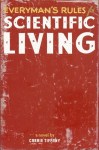
Carrie Tiffany’s Everyman’s rules of scientific living (2005): historical fiction inspired by Victoria’s Better Farming Train which travelled through rural Victoria educating communities about domestic skills and agricultural practices. One of the characters is a nurse, Sister Crook, though the main characters are sewing teacher Jean and agricultural scientist Robert. (I loved this book when I read it, a few years before blogging.)

Thomas Keneally’s The daughters of Mars (2012) (Lisa’s review): historical fiction about two sisters and their experiences working as nurses during World War 1, in the Dardanelles and France.

Fiona McFarlane’s The night guest (2013) (my review): I’m throwing McFarlane’s book in here because, while one of the main characters is not a nurse, she appears as a government care worker to live with the main character, an ageing woman who may be starting to lose her mind, or is she? Who is Frida, the care worker, and what about that tiger who prowls around the house? A clever, disturbing book about the vulnerability that accompanies growing old.

Eleanor Limprecht’s Long Bay (2015) (my review): historical fiction based on the true story of young woman jailed for manslaughter in 1909 due to a botched abortion she performed, having learnt the trade from her mother-in-law Nurse Sinclair. This is a deeply humane book about poverty, women and their choices.

Charlotte Wood’s The natural way of things (2015) (my review): the rather grotesque “nurse” Nancy is not one of the main women characters in Charlotte Wood’s novel, but she becomes a significant character, offering another perspective on women’s agency, or lack thereof.

So, folks, this is my off-the-top-of-the-head tribute to nurses and carers. A weird tribute, I agree, given many of the nurses identified do not meet your traditional stereotype, but every character here has an interesting story and contributes to our understanding, in one way or another, of the caring professions.

Do you have any favourite fictional nurses, or novels featuring nurses?


Stella Prize 2020 Shortlist announced

Well, lookee here, the Stella Prize shortlist was announced this morning while I was at Tai Chi so I am just getting to it now. And, I am rather pleased because, although I’ve only read one of the six, I am currently reading another, and have a third on my reading group schedule, so that’s half of them without really trying! Not that I don’t WANT to try, but my reading schedule is so packed that I find it HARD to try. I therefore love it when the listed books are ones I plan to read anyhow.

So …

Book coverThe shortlist:

  • Jess Hill’s See what you made me do (nonfiction)
  • Caro Llewellyn’s Diving into glass (memoir)
  • Favel Parrett’s There was still love (novel) (will be read in May) (Lisa’s review)
  • Josephine Rowe’s Here until August (short stories)
  • Tara June Winch’s The yield (novel) (reading now) (Lisa’s review)
  • Charlotte Wood’s The weekend (novel) (my review)

After a rather “out there” longlist, which included several books many of us had not heard of, the shortlist, as often happens with the Stella I think, has narrowed down to a less surprising list. Would most you you agree with that? This is not being critical of the longlist – because I hadn’t read most of those books – but simply saying that the shortlist seems more geared to the books that have been generally well received critically. I like to think that that’s because they shine out …

Anyhow, the judges’ chair, Louise Swinn commented on the shortlist that:

Writers across the gamut of their career appear on the 2020 Stella Prize shortlist, which includes authors who are household names alongside some we are just getting acquainted with. The six books on this year’s shortlist are all outward-looking, and they tell stories – of illness, family life, friendship, domestic abuse, and more – in remarkable ways. If language is a tool, or a weapon, then these writers use their skills with tremendous courage. We found a lot to be hopeful about here, too – not just at the stories being told, but at the quality of the art being produced.

The winner will be announced on April 8.

Any comments?

Monday musings on Australian literature: The Guardian Australia’s Unmissables

Although I’d seen it before, it was BookJotter Paula’s latest Winding Up the Week (#110) post that reminded me of The Guardian Australia’s Unmissables series. Initiated last March, Unmissables aims to highlight 12 new releases they deem “significant”.

Before I share the books highlighted to date, though, I’d like to talk about the project’s funding because, as most of you know, how quality journalism is paid for is, currently, a critical issue. The Guardian, unlike some other newspapers online, is not paywalled. Instead, it asks readers to support them financially, by either subscribing, which I do, or, “contributing”, which, in effect, means donating without tax deductibility. Clearly, though, that’s not enough to produce the breadth and depth of content that we readers like. Consequently, they also turn to “outside” sources. They have at least three models: “supported by”, “paid content/paid for by”, and ‘”advertiser content/from our advertisers funding”. Unmissables comes under the first one, and is “supported by” the Copyright Agency Cultural Fund. This method is, unlike the other two, “editorially independent”. They say:

Before funding is agreed with a client, relevant senior editors are consulted about its suitability and the editor-in-chief has the final say on whether a funding deal is accepted. A client whose branding appears on editorial content may have a role in suggesting what kind of topics are covered, but the commissioning editor is not obliged to accept ideas from the funder. The content is written and edited by Guardian and Observer journalists, or those approved by GNM [Guardian News and Media], to the same standards expected in all of our journalism. GNM will not show copy to funders for approval.

I’ve written about the Copyright Agency’s Cultural Fund a few times before, including in a dedicated Monday Musings post. From my observer’s point of view, it seems like this fund is doing some good things to support and promote our literary culture.

Now, though, the books …

Stella Prize 2020 Longlist

I don’t do well at having read the Stella Prize longlist at the time of its announcement. In 2017 I’d read none; in 2018 it was one, and last year two! Will it be three this year? (BTW by the end of 2019, I had read six of the 12, one more than in 2018! At least I’m going up, albeit at a snail’s pace.)

I do do better at reading the winners, however, having read Carrie Tiffany’s Mateship with birds, Clare Wright’s The forgotten rebels of Eureka, Emily Bitto’s The strays, Charlotte Wood’s The natural way of things, Heather Rose’s The museum of modern love and Vicki Laveau-Harvie’s The erratics. So far, I’ve only missed 2018’s winner, Alexis Wright’s Tracker.

The judges are again different to last year’s – with the exception of the chair, Louise Swinn, who was also chair last year. 2020’s judges are award-winning journalism and author Monica Attard, journalist and editor for NITV News Jack Latimore, feminist editor and author Zoya Patel, and poet, educator and researcher Leni Shilton. Once again, as you’d expect from an organisation like Stella, attention has been paid to diversity on the panel.

Book coverThe longlist:

  • Joey Bui’s Lucky ticket (short stories)
  • Gay’wu Group of Women’s Songspirals: Sharing women’s wisdom of Country through songlines 
  • Jess Hill’s See what you made me do
  • Yumna Kassab’s The house of spirit
  • Caro Llewellyn’s Diving into glass
  • Mandy Ord’s When one person dies the world is over
  • Favel Parrett’s There was still love (on my TBR) (Lisa’s review)
  • Josephine Rowe’s Here until August (short stories)
  • Vikki Wakefield’s This is how we change the ending
  • Tara June Winch’s The yield (on my TBR) (Lisa’s review)
  • Charlotte Wood’s The weekend (my review)
  • Sally Young’s The paper emperors: The rise of Australian newspaper empires

Well, wow! All I can say is I guessed Winch and thought probably Wood, and maybe Parrett, but several of the others I haven’t even heard of. I was hoping that Carmel Bird’s Field of poppies, Madelaine Dickie’s Red can origami, and Amanda O’Callaghan’s This taste for silence, for a start, might get up – not to mention Jessica White’s Hearing Maud. But, as I haven’t read most of the longlist I’m not going to judge. I will say though that my record, that was on the up, has taken a beating, as I’ve only read one to date. Nonetheless, it is good to see diversity again in the list – both in terms of author and form.

The judges’ chair, Louise Swinn commented on the longlist that:

… This longlist is varied: it includes a graphic memoir, a young adult novel, Aboriginal songspirals, personal memoir, history, short stories and novels. We’ve been given a sense of just how influential our newspapers have been on public policy; we’ve learnt some history of our land; and we’ve been given the lowdown on both the dire statistics and the real-life stories of domestic abuse. We’ve been transported: we were sixteen years old all over again (gulp!).

All of the writers we longlisted are finding innovative ways to communicate their stories, and there is a very real sense when opening these books that an honest dialogue is being entered into. These authors are craftspeople serious about their intention and dedicated to the art. We were educated and entertained by these twelve longlisted books and we recommend them heartily.

The shortlist will be announced on March 6 (not March 8, International Women’s Day, as recently been tradition), and the winner on April 8.

Any comments?

Monday musings on Australian literature: Literary series

Series and literary fiction are not, I’d say, common bedfellows, not the way, for example, that series and crime, or series and fantasy, or, even, series and children’s/YA books are. However, there are significant literary fiction series, of which I’ve reviewed some of here – Willa Cather’s Great Plains trilogy, Marilynne Robinson’s Gilead trilogy, and Hilary Mantel’s Cromwell series. The first two Cromwell books – Wolf Hall (my review) and Bring up the bodies (my review) – won Booker Prizes, and the final one is scheduled (at last) for publication this year.

This week, I expect to post a review of a book in an Australian literary fiction series, and it’s this which inspired me to write today’s post. As I do with these sorts of posts, I’m just going to present my selection (as this by no means comprehensive) in list-form – in chronological order of the publication date for the first book in the series.

  • Miles Franklin’s My brilliant career series: Unlike the rest of the series below, there are just two books in Franklin’s series, My brilliant career (1901) and My career goes bung (1946). This latter she wrote soon after the first but it wasn’t published until much later. However, like others below, the first has become a much-loved and studied classic.
  • Eleanor Dark’s The timeless land trilogy: This is an historical fiction series dealing with the early history of European settlement in Australia. The first book, The timeless land (1941), is an Australian classic and has been taught in schools. It is significant, particularly given its time, for telling the story from both European and Aboriginal Australian points of view. The subsequent books are Storm of time (1948) and No barrier (1953). 
    Book cover
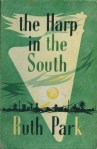
  • Ruth Park’s The harp in the south trilogy: The first book in this series, The harp in the south, was published in 1948, and is now an Australian classic which is regularly taught in schools. I wrote a little about it in my recent review of Park and husband Niland’s memoir, The drums go bang. The other two books in the series are Poor man’s orange (1948), and the prequel in terms of story chronology but the last written, Missus (1985) (my review). The series, an example of Australian social realism, tells the story of the Darcy family of Surry Hills, Sydney. The harp in the south won The Sydney Morning Herald’s competition for an unpublished novel, in 1946.
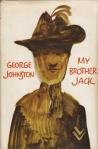
  • Book coverGeorge Johnston’s My brother Jack series: George Johnston’s My brother Jack (1964) is also now an Australian classic. Both it and its sequel, Clean straw for nothing (1969), won the Miles Franklin Award, and both are regularly taught in schools and/or universities. The third book is A cartload of clay (1971). The series is semi-autobiographical, about Johnston’s own life, starting in the between-the-war years.
  • Rodney Hall’s The Yandilli Trilogy (also known as A Dream More Luminous Than Love): This series comprises Captivity captive (1988), The second bridgeroom (1991), and The grisly wife (1993). All three have been shortlisted and/or won significant literary awards, including, for The grisly wife, the Miles Franklin.
  • Steven Carroll’s Glenroy series: This six book series comprises The art of the engine driver (2001), The gift of speed (2004), The time we have taken (2007), Spirit of progress (2011), Forever young (2015), and The year of the beast (2019). Like Johnston’s series above, it is based on his own family and their life in the Melbourne suburb of Glenroy. As in Park’s series, the final novel is a prequel, so the first, chronologically, and is set in the country rather than the city/suburb where the rest are set. Four of the titles have been shortlisted for significant literary awards, with The time we have taken winning the Miles Franklin Award.
  • Kate Grenville’s The secret river series which started with a controversial bang with The secret river (2005), when Grenville locked horns with historian Inga Clendinnen over novelists writing history. Anyhow, this series is a little different from some because The lieutenant (2008) (my review) deals with early settlement but is based on an historical figure, not Grenville’s fictional Thornhills, while the third book, Sarah Thornhill (2011), is a more traditional  sequel to The secret river. The secret river was shortlisted for several awards and won the NSW Premier’s Literary Award for fiction.
  • Audiobook coverSteven Carroll’s Eliot Quartet: Carroll must love writing series, because he also has a series inspired by TS Eliot’s Four Quartets. Three of the four have been written, to date: The lost life (2009), A world of other people (2013), and A New England affair (2017). A world of other people was a joint winner of the Prime Minister’s Literary Award (Fiction).
While I don’t naturally gravitate to series, I have read and enjoyed some. It’s interesting that so many of the above have won awards and/or have been (or still are) standard literature texts. It suggests that authors can and do sustain both literary quality and readers’ interest in a continuing subject. Many of the above have also been adapted to other art forms, including plays and television miniseries.

Lisa (ANZLitLovers) has reviewed many of these, which you can find by searching her blog.

Do you have favourite literary fiction series (and yes, you can include The lord of the rings if you must!)?

Monday musings on Australian literature: Some New Releases in 2020

It seems from my stats that people like my “new releases” post, so here is the 2020 version. As in previous years, my list is mostly drawn from the Sydney Morning Herald, and as it is a Monday musings on Australian literature post, it will be limited to Australian authors (listed alphabetically.) Do click on the link to their see coming releases from non-Aussies, or from those Aussies I’ve omitted because I’ve only listed those most relevant to me, or for some basic information about the books.

Last year, I listed 27 fiction works, and read only four of them – but I will be reading a few more of them in the next 2-3 months.

Links on the authors’ names are to my posts on them.

Fiction

  • Patrick Allington’s Rise and shine (Scribe, June)
  • Richard Anderson’s Small Mercies (Scribe)
  • Robbie Arnott’s The rain heron (TextJune)
  • Margaret Bearman’s We were never friends (Brio, March)
  • James Bradley’s Ghost species (Hamish Hamilton, April)
  • Steven Conte’s The Tolstoy estate (Fourth Estate, August)
  • Trent Dalton‘s Shimmering skies (Vintage, June)
  • Meaghan Delahunt’s The night-side of the country (UWAP, March)
  • Jon Doust’s Return Ticket (Fremantle Press, March)
  • Ceridwen Dovey’s Life after truth (Hamish Hamilton)
  • Chris Flynn’s Mammoth (UQP, May, UQP).
  • Dennis Glover’s Factory 19 (Black Inc., July)
  • Kate Grenville‘s A room made of leaves (Text, July) (Coincidentally, Michelle Scott Tucker recently blogged about this Elizabeth Macarthur inspired novel. Do check it out!)
  • Sophie Hardcastle’s Below deck (Allen & Unwin, March)
  • Tom Keneally’s The Dickens boy (Vintage, April)
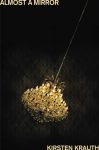
  • Book coverKirsten Krauth‘s Almost a mirror (TransitMarch)
  • Sofie Laguna‘s Big sky (working title) (Allen & Unwin, second half)
  • Bem Le Hunte’s Elephants with headlights (Transit, March)
  • S.L. Lim’s Revenge (Lounge, June)
  • Jamie Marina Lau‘s Gunk Baby (Brow BooksMay)
  • Donna Mazza’s Fauna (Allen & Unwin, February)
  • Kate Mildenhall’s The mother fault (Simon and Schuster, September)
  • Liam Pieper’s Sweetness and light (Hamish Hamilton, March)
  • Mirandi Riwoe‘s Stone sky gold mountain (UQP, April)
  • Craig Silvey‘s Honeybee (working title) (Allen & Unwin, second half)

I have been wondering what Grenville was working on, so am pleased to see another novel coming our from her. And, I’m very pleased to see Krauth and Riwoe producing new novels after their powerful debuts.

SMH also lists “new voices” (including new forms for old voices!):

  • Paul Dalgarno’s Poly (Ventura, August)
  • Anna Goldsworthy’s Melting moments (Black Inc, March) (old voice)
  • Erin Hortle’s The octopus and I (Allen & Unwin, April)
  • Tobias McCorkell’s Everything in its right place (Transit Lounge, July)
  • Laura Jean McKay’s The animals in that country (Scribe, April)
  • Andrew Pippos’ Lucky’s (Picador, second half)
  • Alice Pung‘s One hundred days (Black Inc., October) (old voice)
  • Ronnie Scott’s The adversary (Hamish Hamilton, April)
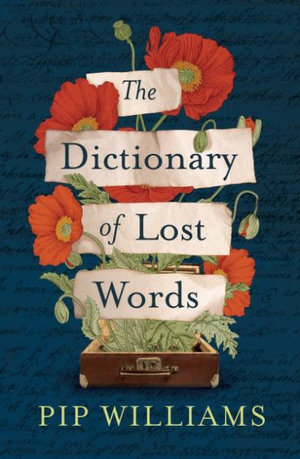
  • Pip Williams’ The dictionary of lost words (Affirm, April).

Short stories

Yes, I know these are fiction too, but they deserve a special section!

  • Emma Ashmere‘s Dreams they forgot (Wakefield Press, April)
  • Laura Elvery’s Ordinary matter (UQP, second half)
  • Mark O’Flynn’s Dental tourism (Puncher & Wattmann, February, );
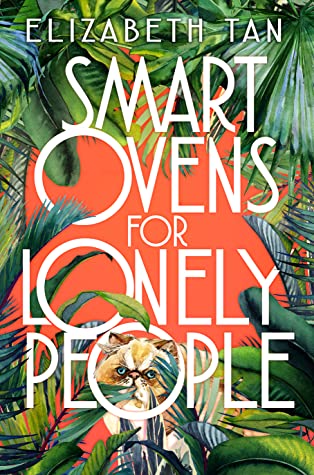
  • Elizabeth Tan’s Smart ovens for lonely people (Brio, June, Brio)

Book coverAnd some “new” short story voices:

  • Melissa Manning’s Smokehouse (UQP, second half the year)
  • Wayne Marshall’s Shirl (February, Affirm)
  • Sean O’Beirne’s A couple of things before the end (Black Inc., February)
  • Stephen Pham’s Vietnamatta (Brow Books, October)
  • Barry Lee Thompson’s Broken rules and other stories (Transit Lounge, August)

Non-fiction

SMH provides a long list of new non-fiction books covering a huge range of topics, so my list is selective – but still, there’s a lot:

  • Randa Abdel-Fattah’s Growing up in the Age of Terror (NewSouth, July)
  • Elizabeth Becker’s Journaliste (Black Inc., September): on female journalists during the Vietnam War
  • Elise Bohan’s Future superhuman (NewSouth, October): on embracing the “transhuman”
  • Rutger Bregman’s Human kind (Oneworld, second half): on how altruism offers a new way to think
  • Bernard Collaery’s Oil under troubled water, March, MUP): the story of his being charged after exposing an Australian bugging operation in East Timor
  • Peter Cronau’s War on Terror (The Base, June): Australia’s role in the War on Terror
  • Robert Dessaix’s Time of our lives (Briosecond half): on ageing
  • Lindy Edwards’ Corporate power in Australia (Monash, February): on big business
  • Carly Findlay’s (ed) Growing up disabled in Australia (Black Inc, June): see my post on the Growing up series.
  • Fiona Foley’s Biting the clouds (UQP, September): 19th century Aboriginal “protection” and Indigenous opium addiction.
  • Rebecca Giggs’ Fathoms: the world in the whale: “the stories we tell about whales, what those stories signal about how we imagine our own species, and what whales reveal about the health of the planet” (from Scribe)
  • Julia Gillard and Ngozi Okonjo-Iweala’s Women and leadership (Vintage, July): gender bias
  • Book coverSubhash Jaireth’s Spinoza’s overcoat: Travels with writers and poets (February, Transit): on writers and writing
  • Ketan Joshi’s Road to resolution (NewSouth, August): climate change
  • Royce Kurmelovs’ Just Money (UQP, second half): on our debt
  • Garry Linnell’s Badlands (Michael Joseph, September): the fall of the Australian bushranger
  • Sophie McNeill’s We can’t say we didn’t know (HarperCollins, March): stories from war-ravaged areas by a former ABC Middle-East Correspondent
  • Paddy Manning’s Body count (S&S, May): climate change
  • Rory Medcalf’s Contest for the Indo-Pacifc (March, La Trobe): on “regional tensions”
  • Patrick Mullins’ The trials of Portnoy: how Penguin broke through Australia’s censorship system: “the first account of the audacious publishing decision that — with the help of booksellers and readers around the country — forced the end of literary censorship in Australia” (quoted from Scribe)
  • Jonica Newby’s Climate grief (NewSouth, September): climate change
  • Aaron Smith’s The rock (Transit, November): Australia as perceived from its northerly outpost, Thursday Island
  • Victor Steffensen’s Fire country (Hardie Grant, March): looks at how Indigenous fire practices might help our country (from an Indigenous fire practitioner)
  • Gabbie Stroud’s Dear Parents (Allen & Unwin, February, A&U): by the author of the well-regarded Teacher
  • Malcolm Turnbull’s A Bigger Picture (Hardie GrantApril): from our latest ex-Prime Minister
  • Marian Wilkinson’s Carbon Club (Allen & Unwin, June): climate change

I note that a book that was flagged for coming out last year – and which I noticed didn’t appear – is now flagged for this year: journalist Julia Baird’s Phosphorescence (Fourth Estate, April).

It’s interesting, encouraging and not surprising to see quite a few books on climate change in the above list.

Biography and memoir (loosely defined)

  • Darleen Bungey’s Daddy Cool (Allen & Unwin, May): “memoir” of crooner Laurie Brooks, father of biographer Bungey and writer Geraldine Brooks. Can you write a memoir of someone not yourself? Or, is this a hybrid memoir-biography?
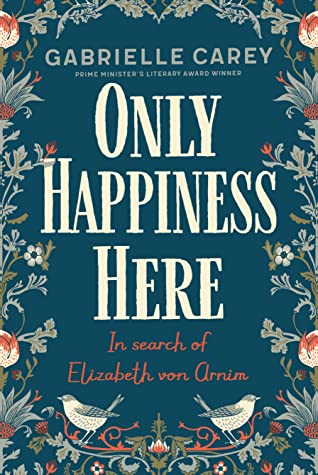
  • Gabrielle Carey‘s Only happiness here (UQP, second half): on Australian-born novelist Elizabeth von Arnim (whose work I love and for whom I have another biography already on my TBR)
  • Melissa Davey’s A fair trial (Scribe, second half of the year): on George Pell
  • David Duffy (Radio Girl, May, A&U): on the first Australian woman electrical engineer, Florence Violet McKenzie
  • Clementine Ford’s How we love (Allen & Unwin, second half): on her experience of love
  • Evelyn Juers’ The dancer (Giramondo, September): on Philippa Cullen
  • Mary Li’s Ballet, Li, Sophie and me (Viking, September): memoir by Australian ballerina, and wife of Li Cunxin
  • Alex Miller: a memoir untitled? (Allen & Unwin, second half): on his friend and mentor, Max Blatt
  • Cassandra Pybus’ Truganini (Allen & Unwin, March): on the titular Indigenous Tasmanian woman
  • Miranda Tapsell’s Top End girl (Hachette, May): memoir
  • Robert Wainwright: untitled (July, Allen & Unwin): on the great granddaughter of the Lindeman wines founder, Enid Lindeman
  • Donna Ward’s She I dare not name (Allen & Unwin, March): on being a spinster

Does anything here interest you?

Reading highlights for 2019

Regular readers will know that my Reading Highlights post is my answer to other bloggers’ Top Reads posts. It does not contain a ranked list of the books I considered my “best” of the year, because I prefer to talk about “highlights”, which I define as those books and events that made my reading year worthwhile.

I don’t set reading goals, but I do have certain “rules of thumb”, such as trying to reduce the TBR pile, increase my reading of indigenous authors, and read some non-anglo literature. How do you think I went?

Literary highlights

Literary highlights really means literary events, and there were some inspiring ones this year:

  • Festival Muse: for the third year running, Muse (cafe/bookshop/event venue beloved by Canberra’s booklovers) held, in March, their Festival. It’s a busy time of year and a long weekend, but I had booked to attend the opening, as I always do, and one other event. Unfortunately, a family member’s hospitalisation meant we had to miss the opening, but I did get to Alice Pung in conversation.
  • Sydney Writers Festival has been live streaming selected sessions to regional locations – like Canberra – for a few years now. I attended three in 2019: Boys to Men: The masculinity crisis; Andrew Sean Greer in conversation about Less; and “I do not want to see this in print”.
  • Canberra Writers Festival about which I wrote 7 posts: to find them click this link and select the 2019 festival posts.
  • Simpson and White

    Simpson (L) and White (R), Muse, 2 Nov 2019

    Author interviews/conversations: I only got to a few of the many, many offered: Jane Caro, Frank Bongiorno, Stan Grant, Jessica White and Helen Garner.

  • Book launches: Two of the book launches I attended this year were particularly special because it was perfectly obvious that the authors involved were surrounded by a large, warm and enthusiastic group of people who cared deeply about them and their work: Nigel Featherstone’s Bodies of men (my review) and Madelaine Dickie’s Red can origami (on my TBR).
  • The Constructive Critic panel: this was the year I relented and finally said yes to a request to take part in a festival panel. It was part of the Design Canberra Festival, and I did manage to write it up, here.

Reading highlights

As in previous years, I’m sharing some random observations about the year’s reading, without ranking them in any way. Just know that I’d be happy to recommend all those I mention here:

  • The locals: Canberra is said to punch above its weight in terms of, per capita, the number of authors we have here. I don’t know whether this is statistically substantiated, but we are certainly well endowed! This year I read the latest novels by two of our well-published authors, Nigel Featherstone and Karen Viggers. (I also met Kaaron Warren, who is a multi-award winning author in genres I don’t read, speculative fiction and horror.)
  • The “dreaded” TBR: I didn’t make impressive inroads into the TBR, but I did reduce it by four, including two highlights, Louise Erdrich’s above-named book, and Marilynne Robinson’s Gilead. Can I improve next year?
  • Memoirs with a difference: There is a tried-and-true formula for memoirs in which the writer relates a trauma and how they’ve risen above it, or, if they’re celebrities and sportspeople, write tell-alls about their successes and failures. These memoirs have value, but are not my chosen fare. I prefer those that do something a bit different, like, say, Jessica White’s hybrid biography-memoir, Hearing Maud, and Ros Collins’ Rosa: Memories with licence in which she teases us about whether the book is indeed memoir or fiction. Or, like those which share experiences in order to educate readers. These can be off-putting if not handled well. Fortunately, Neil H Atkinson in The last wild west and David Brooks in The grass library managed to do just this, about racism and animal rights, respectively.
  • The book I wasn’t planning to read: Still on the subject of memoirs, I hadn’t planned to read Vicki Laveau-Harvie’s The erratics, feeling it was going to be a bit too much of the rise-above-a-trauma style, but when it won the Stella Prize, I decided to give it a go – and was rewarded for my effort.
  • Some interesting voices: This year didn’t produce any unusual narrators like fetuses or skeletons, but Sayaka Murata’s mystified yet open Convenience store woman is an engaging narrator who encourages us to think about people who don’t meet societal expectations. Trent Dalton and Tim Winton sustained powerful young male voices in Boy swallows universe and The shepherd’s hut, while Amor Towles’ A gentleman in Moscow was one of the most charming narrators I’ve read for some time.
  • Forgotten Australians: Bill’s (The Australian Legend) annual AWW Gen weeks provide the perfect opportunity for me to feed my love of past Aussie women writers. This year Louise Mack and Capel Boake had their turn.
  • Older Americans: This year also saw me read some older, excellent American novels – the already-mentioned Marilynne Robinson’s Gilead and Mary McCarthy’s The group.
  • Death, be not proud: Amanda O’Callaghan, in her debut short story collection This taste for silence, writes about death in more ways that you could think possible, and yet leave you wanting more.
  • Out of left field came Kim Scott’s nicely researched local history, Katherine’s tropical housing precinct 1946-1956.
  • The book I’ve recommended the most: Melissa Lucashenko’s Too much lip is a perfect example of how to create engaging but flawed characters, and how to tackle deeply political issues with both humour and passion.
  • The one that got away: as always, there are the books that got away, which included, this year, Behrouz Boochani’s No friend but the mountains. It is still sitting in my TBR pile, accusingly.

These are just some of this year’s worthwhile reads.

Some stats …

I don’t read to achieve specific stats, but I like to keep an eye on what I’m doing to ensure some balance, all the while maintaining my particular interest in women and Australian writers:

  • 70% of my reading was fiction, short stories and novels (versus 80% in 2018): Around 75% is my rule of thumb, so I’m happy!
  • 64% were by women (making my average for the last five years, 2015-2019, 68%): As women writers are an important priority for me, without wanting to be exclusively so, this proportion seems reasonable.
  • 28% were NOT by Australian writers (versus 18% in 2018): Last year, I said I wanted to redress the balance to be something more like my previous one-third non-Australian, two-thirds Australian, and I got close.
  • 24% were published before 2000 (rather less than for the last two years which hovered around 30%): While this is ok, I’d really like to read more older books.
  • 34% were published in 2019 (similar to last year), which pleases me, because I don’t want all my reading to be current.

Overall, it was a good reading year in terms of what I read, but less so in terms of how much. Life got in the way moreso than usual! As always, I’m grateful for all of you who read my posts, engage in discussion, recommend more books and, generally, be all-round great people to talk with. Thank you for being here.

I wish you all an excellent 2020.

What were your reading or literary highlights for the year?

Monday musings on Australian literature: Australian Women Writers Challenge 2019

AWW Challenge 2019 BadgeFor some years now, I have devoted my last Monday Musings of the year to the Australian Women Writers Challenge* – and this year I am continuing that tradition! Sorry, if you hoped for something else. With the New Year – I love the sound of 2020 – just two days away, I wish all you wonderful Whispering Gums followers a wonderful year to come in whatever form you would like that to take.Thank you, too, for supporting my blog with your visits and comments.

Now, the challenge … it has continued to go very well. The full database now contains reviews for nearly 6,100 books across all forms and genres, from all periods, of Australian women’s writing. This means that the number of books reviewed on our database increased in 2019 by 900 books, or 17%, which is about the same increase as last year. In my area of Literary and Classics, we had roughly the same number of reviews posted as last year.

My personal round-up for the year

It was not, I have to say, my best Challenge year, as I posted only 25 reviews over the year, about 25% less than last year. I’m not sure how that happened, but c’est la vie. It was clearly a different sort of reading year. Anyhow, here they are, with links to my reviews:

Book coverFICTION

Book coverSHORT STORIES

ANTHOLOGIES

Book coverCHILDREN’S PICTURE BOOKS

  • Nhulunbuy Primary School, with Ann James and Ann Haddon, I saw, we saw (picture book)

NON-FICTION

Book coverThis year, fiction (including short stories) represented around 57% of my AWW challenge reading, which is similar to last year. I read no poetry or verse novels again this year, and I read fewer Classics than last. However, I did read three classic short stories by Capel Boake for Bill’s (The Australian Legend) Gen 2 week as well as Louise Mack’s novel. On the plus side, I read more indigenous writing this year – two anthologies, a picture book, and Melissa Lucashenko’s Miles Franklin award-winning Too much lip (as well as some male authors who shall not be mentioned here!)

If you’d like to know more about the Challenge, check it out here. We are also on Facebook, Twitter (@auswomenwriters), and GoodReads. Do consider joining us. All readers are welcome.

Finally, a big thanks again to Theresa, Elizabeth and the rest of the team. I love being part of this challenge, not only because it equates with my reading goals but also because the people involved are such a pleasure to work with. See you in 2020.

And so, 2020

Challenge logoThe 2020 sign up form is ready, so this is also my Sign Up post for next year. As always, I’m nominating myself for the Franklin level, which is to read 10 books by Australian women and post reviews for at least 6 of those. I expect, of course, to exceed this.

Do you plan to sign up?

* This challenge was instigated by Elizabeth Lhuede in 2012 in response to concerns in Australian literary circles about the lack of recognition for women writers. I have been one of the challenge’s volunteers since 2013. Theresa Smith (of Theresa Smith writes) now oversees the day-to-day management of the blog, but Elizabeth is still an active presence.

Books given and received for Christmas, in 2019 – sorta

Regular readers here will know that on my Boxing Day I usually publish a post on the books I gave and received for Christmas. However, this year I’m doing something different. I’ve just read a link that Paula (Book Jotter) posted in her latest Wind-up Post. It’s from The Guardian and is about the challenges of book gift giving. If you give books, as most of you are sure to, you will have confronted or considered the issues involved, so I thought I’d share them and, along the way, include some of the books I gave or received this year.

Elle Hunt, who wrote the article titled “I thought you’d like to read this”, writes that books as gifts are “thought to be less personal than jewellery, but far more telling of the giver (and what they think of the recipient) than anything that comes in a turquoise box from Tiffany. Not to mention infinitely more likely to be passed on.” She then offers a few rules:

  • always save the receipt, the reason being that if you have chosen a book you’ve thought to be the perfect present for someone, so probably have others. Fortunately, my mother had saved the receipt for the book she gave me this Christmas, Helen Garner’s Yellow notebook, because I already have it (albeit as a review copy, not a gift.)
  • never write an inscription in a book, unless you’ve written it yourself. Do you write inscriptions? I used to once, but gave it up long ago, because it does mean the book can’t be returned (or re-gifted), if the recipient has it. The article discusses the pros and cons of this issue, from different angles, but the suggestion is that it’s probably safer to write your sentiment in a card.
  • Book coverchoose for the recipient rather than what you think they should read! Now this, to me, is a no-brainer. Surely the aim is to give your recipient something they’ll enjoy and remember you fondly for! I’m really hoping my toddler grandson likes Pamela Allen’s Mr McGee. And I was very confident that my lexicographer-grammarian mother would like John Sutherland’s How good is your grammar. The article notes that giving books can signal your own taste, and touches on the pros and cons of this and of giving books you love. It suggests if you can’t overcome the influence of your ego when choosing books, ask the advice of a knowledgeable (often independent) bookseller! Good suggestion. This year, as in most years, I gave some books that I’ve loved – like Tim Winton’s The shepherd’s hut to Son Gums and Amanda O’Callaghan’s This taste for silence to Brother Gums’ partner – because I think the recipients will like them. But, I have also given books I haven’t read, for the same reason. Horses for courses, as they say.

Others have written on the subject too, like the Book Riot blog back in 2015. Their “10 Rules for Book Giving” post takes a slightly different tack, including offering a few suggestions on how to find out what books your recipient might like, particularly if that person is a non reader. Hmm … given their first rule is “don’t be an evangelist” for a book you’ve loved and give it to everyone “regardless of whether they’re interested in it or not”, I’m not sure we should be going there? Do you want to antagonise the non-reader, do you want to guilt them? I think there are better times to encourage non-readers than at gift-giving time, but maybe that’s just me! (Of course, I’m not talking about babies here: give them books, books, and more books I say, so they are readers from the beginning.)

Book coverThe Huffington Post also wrote on the topic in 2012, “How to pick just the right book gift”. The writer Roxanne Coady starts by commenting on the trend towards gift cards. “I get the ease and even the appeal,” she writes, but then suggests that “it results in missing an opportunity. The perfect gift to receive or give is one that reflects an understanding, an appreciation, or a quirk of someone. In the razzle dazzle of the pace of our lives, why miss the opportunity to show someone that you took the time to think of them — took the time to think of what might delight or surprise them?” Yes, there it is, the most important thing to me about gift-giving – showing someone that you took the time to think of them and to think about “what might delight or surprise them”. I’m sure this was behind Brother Gums’ gift to me, a book of poetry and paintings, The voice of water by Adrienne Eberhard and Sue Lovegrove. Brother Gums loves to promote Tasmanian culture – and this book is by Tasmanians – but he also knows that I love beautiful books that are a little different from those I usually read. You will hear more about this book in the coming weeks.

Like the writers of two previous articles, Coady also suggests asking booksellers for advice as an option, but she makes some other interesting observations, of which the most interesting to me was to take into account your relationship with the recipient. What an excellent point. Even if you think you know someone’s likes or tastes, you might want to think about the message you are sending about yourself and/or about what you think of them in the book you choose – see Elle Hunt above. This could be a minefield, if the relationship is not a close one.

So, what about you? Do you follow any rules or practices when choosing books as gifts? Or, do you think the gift card is a safer option?

My reading group’s top picks for 2019

In what is becoming a tradition, my reading group once again voted for our top picks from our 2019 schedule. Given many of us like hearing about what other reading groups do, I’m sharing the results as I did last year.

First, though, here is what we read in the order we read them (with links to my reviews):

  • Trent Dalton, Boy swallows universe (my review): debut novel, Australian author
  • Anita Heiss, Growing up Aboriginal in Australia (my review): memoir anthology, Indigenous Australian editor
  • Marilynne Robinson, Gilead (my review): novel, American author
  • Amor Towles, A gentleman in Moscow (my review): novel, American author
  • Sayaka Murata, Convenience store woman (my review): translated novel, Japanese author
  • Mary McCarthy, The group (my review): novel, American author
  • Anton Chekhov, The lady and the dog (my review): translated short story, Russian author
  • Enza Gandolfo, The bridge (my review); novel, Australian author
  • Les Murray night: read any book by or about him (I was in Japan, so did not contribute): Australian poet
  • Karen Viggers, The orchardist’s daughter (my review): novel, Australian author
  • Tim Winton, The shepherd’s hut (my review): novel, Australian author

So, five men and six women; six Australian writers and five non-Australian; two translated works; three works written before 2000 (plus much of Les Murray’s work); an anthology of Indigenous Australian writing; nine fiction works plus a poet and a collection of memoirs. A decent mix, I think, given our focus always has been women and Australian writing but not exclusively so.

The winners …

Twelve of our thirteen currently active members voted. We had to name our top three picks, which resulted in 34 votes being cast (one member casting just one vote). The results were:

1. Boy swallows universe, by Trent Dalton (8 votes)
2. A gentleman in Moscow, by Amor Towles, and The shepherd’s hut, by Tim Winton (7 votes, each)
3. Convenience store woman, by Sayaka Murata (6 votes)

So, four of our eleven books received 28 of the 34 votes cast, that is, 80%, which is an interesting concentration, given that none of our reads this year were actively disliked. Despite the overall variety in our reading this year, our top books were not as varied as last year: the top three were books were all by men, with just the fourth being by a woman, and all four are novels.

Highly commended was The bridge, by Enza Gandolfo, but, various members also made special mentions of Marilynne Robinson’s Gilead, Mary McCarthy’s The group, and Karen Viggers’ The orchardist’s daughter.

Of course, this is not a scientific survey. Votes were all given equal weight, even where people indicated an order of preference, and not everyone read every book, so different people voted from different “pools”.

Selected comments (accompanying the votes)

  • Boy swallows universe: Commenters used words like “brave”, “raw”, “edgy”, “energetic”, “unusual”, with one noting its “generosity for its flawed characters.”
  • A gentleman in Moscow: Two commenters captured the gist of our responses with “Beautifully written, fascinating premise, and thoroughly engaging, while hinting at the dramas around” and “A classy read. Sometimes hilarious whilst also full of dignity and the unexpected.”
  • The shepherd’s hut: Commenters on this in-your-face book used rather different words, like “strong”, “despite the language” and “uncompromisingly”, but the book clearly made an impact on us to share equal second favourite for the year. As one of us said, “what a tale”!
  • Convenience store woman: Our commenters emphasised its quirkiness and its very different voice – though, in fact, most of our top books had rather different voices. However, one commenter nailed what was particular about this one, with “Gives a voice to someone who is normally excluded. Love the relentless logic of the narrator.”

And a bonus!

Bruce Pasco, Dark emuAs last year, a good friend (from my library school days 45 years ago) has agreed for me to share her reading group’s schedule from this year:

  • Circe, by Madeleine Miller (novel, American author)
  • Bridge of clay, by Markus Zusak (novel, Australian author)
  • Dark emu, by Bruce Pascoe (non-fiction, indigenous Australian author)
  • The lover, by Marguerite Duras (novel, French author)
  • Little fires everywhere, by Celeste Ng (novel, American author of Chinese descent)
  • On the Java Ridge, by Jock Serong (novel, Australian author)
  • Anything is possible, by Elizabeth Strout (novel, American author)
  • The Romanov sisters, by Helen Rappaport (novel, British author)
  • The buried giant, by Kazuo Ishiguro (novel, Japanese-English author)
  • Dear Mrs Bird, by AJ Pearce (novel, English author)

My group has read one of the above books – Dark emu – but a few years ago. This wasn’t the case with their list last year, where we had read none.

I don’t think this group did a formal top pick list this year, but my friend’s favourite was Circe, which she described as such “a rewarding read”. Her second choice, she said, would “perhaps” be On the Java Ridge. She said that “although the writing was uneven, we in the group thought the content was significant”. Her least favourite, by far, was Dear Mrs Bird. Many of you, I know will have read and agree with her about Circe. I would like to read it, but I am particularly interested in Jock Serong, because his books keep popping up in Australian readers’ lists.

But wait, there’s more!

This year, some members of my group named other (ie non bookgroup) favourite reads of the year, and I share them with you (with links to my reviews if I have read them, regardless of whether I nominated them for this list!):

  • Maxine Beneba Clarke’s The hate race (my review)
  • Louise Erdrich’s The bingo palace (my review)
  • Robert Galbraith’s (aka J K Rowling) Lethal white
  • Gail Honeyman’s Eleanor Oliphant is completely fine
  • Melissa Lucashenko’s Too much lip (my review)
  • Ian McEwan’s Machines like me
  • Liane Moriarty’s The husband’s secret
  • Liane Moriarty’s Truly madly guilty
  • Liane Moriarty’s Big little lies
  • Michelle Obama’s Becoming 
  • Henry Handel Richardson’s The getting of wisdom
  • Jock Serong’s On the Java Ridge
  • Jock Serong’s Preservation
  • Jock Serong’s Quota
  • Tara Westover’s Educated

If you are in a reading group – face-to-face or online – would you care to share your 2019 highlights?