Monday musings on Australian literature: Australian Women Writers Challenge 2020

AWW Challenge 2019 Badge

Once again I am devoting my last Monday Musings of the year to the Australian Women Writers Challenge*. Last year in my opening paragraph, I wrote that I loved the sound of 2020 – and I wished you all a wonderful year to come in whatever form you would like that to take. My, oh my, little did we expect what was going to eventuate (which for me included a personal loss in addition to the impacts of the pandemic and other catastrophes). I no longer like the sound of 2020, and fervently hope 2021 turns out much better for us all. And so, may you all have a positive and fulfilling 2021.

Now, the challenge … it has continued to go very well. The full database now contains reviews for nearly 7,000 books across all forms and genres, from all periods, of Australian women’s writing. This means that the number of books reviewed on our database increased in 2020 by 900 books, which is about the same number added as last year, or just under 15%.

My personal round-up for the year

This year, for obvious reasons, was not my best Challenge year. I posted only 26 reviews relevant to the Challenge over the year, about the same as last year which was also a strange year (but differently). I feel disappointed about all this, but such is life. Anyhow, here they are, with links to my reviews:

Fiction

Book cover

Short stories

Book cover

Anthologies/Essays

Non-fiction

Book cover

This year, fiction (including short stories) represented around 61% of my AWW challenge reading, which is a little more than last year and a bit closer to my preferred ratio. I read three Classics. Two were novels and one a memoir, and they were read for Bill’s (The Australian Legend) Gen 3 week and Lisa’s (ANZLitLovers) Thea Astley week. Thanks to Bill and Lisa for the impetus to read these books, because they added a special depth ! In terms of that problematic word “diversity”, I read two novels by Indigenous Australian women, and one translated novel by an Iranian-born Australian writer.

Chloe Hooper, The Arsonist

My non-fiction reading was eclectic, featuring biography and memoir of course, a work of creative or narrative nonfiction, a beautiful collaboration between an artist and a poet, and, unusually for me, also two books that could be seen to be in the self-help vein.

If you’d like to know more about the Challenge, check it out here. We are also on Facebook, Twitter (@auswomenwriters), and GoodReads. Do consider joining us. All readers are welcome.

Finally, as always, a big thanks again to Theresa, Elizabeth and the rest of the team. I (still) love being part of this challenge, partly because equating with my reading goals it is not really a challenge, and also because I enjoy working with the people involved. See you in 2021.

And so, 2021

Challenge logo

The 2021 sign up form is ready, so this is also my Sign Up post for next year. As always, I’m nominating myself for the Franklin level, which is to read 10 books by Australian women and post reviews for at least 6 of those. I expect, of course, to exceed this.

Do you plan to sign up?

* This challenge was instigated by Elizabeth Lhuede in 2012 in response to concerns in Australian literary circles about the lack of recognition for women writers. I have been one of the challenge’s volunteers since 2013. Theresa Smith (of Theresa Smith writes) now oversees the day-to-day management of the blog, but Elizabeth is still an active presence.

My reading group’s favourites for 2020

In what is becoming a tradition, my reading group once again voted for our favourites from our 2020 schedule. Given many of us like hearing about what other reading groups do, I’m sharing the results as I did last year.

First, though, here is what we read in the order we read them (with links on titles to my reviews):

I really don’t know what came over us this year, as this is way less diverse than we our usual schedule. Almost all are Australian; all but three are novels; there’s not one translated novel; there’s no classic and indeed all were published in 2017 or later. Fortunately, the first half of next year will see us reading a much greater variety, which is good. Our focus always has been Australian – with a special interest in women – but it was never meant to be quite so narrow as this year.

The winners …

All twelve of our currently active members voted. We had to name our three favourite works, which resulted in 36 votes being cast. No weighting was given to one over another in those three, even where some members did rank their choices. Unlike the last couple of years which saw the the favourite books bunched quite closely to each other, there was a runaway favourite this year:

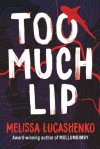
  1. Too much lip, by Melissa Lucashenko (10 votes)
  2. Overstory, by Richard Powers; and Griffith Review 68: Getting on (5 votes each)
  3. One hundred years of dirt, by Rick Morton, Mammoth, by Chris Flynn, and Phosphorescence, by Julia Baird (3 votes each)

I love that Lucashenko’s book was so enjoyed and appreciated (partly because it was one of my recommendations!) It’s interesting that all three of the non-novels on our list featured among our favourites. What does that say about us, or about this year, or about our time of life? Anything? Nothing? Last year, four books (as against 6 this year) made our top three positions, and all were novels by men!

Every book but one received at least one vote, and that one, Anna Goldsworthy’s Melting moments, got an honourable mention (ie, a sneaky extra vote!) from one member.

Of course, this is not a scientific survey (and it’s a very small survey). Votes were all given equal weight, even where people indicated an order of preference, and not everyone read every book, so different people voted from different “pools”.

Selected comments (accompanying the votes)

  • Too much lip: Commenters used words like “engaging” and “authentic” next to “flawed characters”. Several also commented on the humour, and the originality and freshness of its writing and story-telling.
  • Overstory: Most commented on what they learnt about trees, nature, and wildlife activists. One wrote that in this pandemic year, it pulled her into “trees and nature … at a time when I particularly needed to be there”.
  • Griffith Review 68: Getting on: It’s not surprising that a group of women who are “getting on” liked this read. Commenters said things like “essential reading”, “eye-opening” and “thoughtful ideas on a depressing subject”.
  • One hundred years of dirt: Commenters appreciated Morton’s “heart-rending” honesty about his family’s challenges, and his “tribute to his mum”.
  • Mammoth: Commenters loved that it’s “quirky”, “original”, or, as one member said, “a real work of imaginative and stimulating writing”.
  • Phosphorescence: One member, in particular, “adored” it, calling it “a thought-provoking and thoughtful reflection on life, friendship, children, getting old, nature… a book to keep dipping into” while another said, simply, that “Julia helped me find some truths.”

But wait, there’s more!

As last year, some members of my group named other (ie non bookgroup) favourite reads of the year, and I share them with you (with links to my reviews for those I’ve read):

  • Robbie Arnott’s Flame
  • Thea Astley’s An item from the late news (my review)
  • Elisabeth Tova Bailey’s The sound of a wild snail eating
  • John Clanchy’s In whom we trust (my review)
  • Jeanine Cummins’ American dirt
  • Trent Dalton’s All our shimmering skies
  • Bernadine Evaristo’s Girl woman other (scheduled for 2021)
  • Robert Galbraith’s Troubled blood
  • Vicki Hastrich’s Night fishing
  • Christy Lefteri’s The beekeeper of Aleppo
  • David Mitchell’s Utopia Avenue 
  • Sharon Pincott’s Elephant tracks
  • Lucy Treloar’s Wolfe Island
  • Edith Wharton’s The custom of the country (read, and loved, but long before blogging)
  • Tara June Winch’s The yield (my review)

If you are in a reading group – face-to-face or online – would you care to share your 2020 highlights?

And whether you do or not, here’s to you all for the best sort of Christmas you can muster this year. Hope you can make it a good one. Now’s the time to make good stories of our lives if we possibly can. Look forward to catching you on the other side! 

Monday Musings on Australian literature: ABR’s 2020 Books of the Year

The Australian Book Review (ABR) recently published its annual books of the year as selected by 34 of its contributing critics and reviewers, who include novelists, poets, historians and literary critics. Most are known to me, but there are a few newbies too.

I know we discussed the pros and cons of lists in my last Monday Musings post but I want to share this because of the variety and for the value-add of the comments made. I am not going to share every “pick” but just a selection of the Australian ones. Most of the contributors named both Australian and non-Australian books in their mix but two deserve a shout-out, says parochial me, for choosing only Australian books: poet John Kinsella (whose memoir, Displaced, I recently reviewed) and new-to-me historian Yves Rees.

ABR presented its list, logically, by contributor, but for us here, I’m going to organise the Aussie picks by form, starting with novels. Here goes …

Novels

Book cover

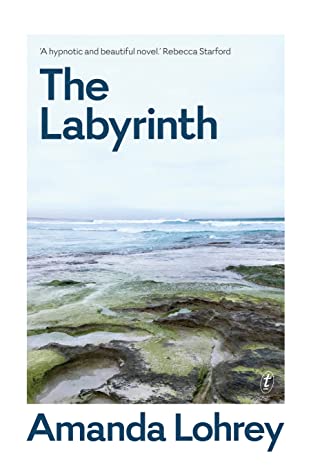
Only one novel was mentioned more than once, Amanda Lohrey’s The labrynth. Literary editor and critic, Susan Wyndham said Lohrey “shows how art can both destroy and heal”. Poet and critic Felicity Plunkett agreed, saying it “examines the trace and wrack of violence and the counterbalancing creativity that might transmute it”. Historian Judith Brett, describing it as being “about suffering and redemption”, writes that “Lohrey’s social observation is acute and the writing is superb, spare, and filled with light and wisdom.” Lisa (ANZLitLovers) also loves this book.

The other novels named are:

  • Robbie Arnott’s The Rain Heron, which historian Billy Griffiths says “conjures the magic of a Studio Ghibli production”.
  • Garry Disher’s three novels set in South Australia’s dry farming country, Bitter Wash RoadPeace and Consolation. Judith Brett loves the plots, and that Disher’s policeman is “warmer and less troubled than the average fictional copper”, but says “the richest pleasure is Disher’s superb evocation of place”.
  • Gabrielle Everall’s Dona Juanita and the Love of Boys is, says poet and academic, John Kinsella, a “unique, ironic, confronting, frequently traumatic, and dissecting verse novel of sexuality and desire, passion but also abusive invasiveness”.
  • Richard Flanagan’s The Living Sea of Waking Dreams is, says academic Tony Hughes-d’Aeth, a “slow-burning, eerie tour de force”. Again, Lisa liked this too.
  • Sofie Laguna’s Infinite Splendours , is “a brilliant, heartbreaking portrait of a damaged but resilient soul” says Susan Wyndham.
  • Laura McPhee-Browne’s Cherry Beach, “pulled” writer Sarah Walker “into a house vibrating with the rumblings of things going wrong”. “The dreamy, slightly dissociative quality of the writing felt right for this year: hovering above a life that is slipping between our fingers”.
  • Mirandi Riwoe’s Stone Sky Gold Mountain offers, says historian Yves Rees, “a refreshing counter-narrative of the goldfields” from Chinese miners’ perspectives.
  • Jessica Townsend’s Nevermoor series, of which the third of nine, Hollowpox: The hunt for Morrigan Crow, has just been published, “balances”, according to author and critic Beejay Silcox, “sophisticated menace, gleeful morbidity, and guileless wonder”.
  • Tara June Winch’s The Yield was part of Yves Rees’ plan to decentre “whiteness in her reading diet”. Winch’s book made her feel “frontier violence … like never before”. It’s a “reminder that stories trump facts when truth-telling about Australia’s past”. Yes!
  • Davis Wood’s At the edge of the solid world is, writes, academic and critic, Kerryn Goldsworthy, “a detailed study in grief and empathy” and is “utterly original”.

And, for something a little different, author, poet and academic Ali Alizadeh named My favourite work novelist Elizabeth Bryer’s “eloquent translation” of José Luis de Juan’s Napoleon’s Beekeeper, as his favourite work by an Australian author.

Short stories

Book cover

Just one Australian short story collection was mentioned, but it was mentioned four times, Elizabeth Tan’s Smart Ovens for Lonely People. Essayist-critic Declan Fry “liked it even more than Robbie liked Cecilia in Atonement“! Kerryn Goldsworthy liked that its “witty stories are set in a futuristic yet easily recognisable world where the human relationship with technology becomes ever closer and more anxiety-inducing while creating some laugh-out-loud scenarios and lines”. Yves Rees calls it “a romp of dazzling imagination that injected whimsy into my lockdown” and Tony Hughes-d’Aeth liked its “blend of Vonnegut surrealism and Carveresque suburbia”, believing it “is already destined to be a classic”.

Poetry

Book cover

Poetry was very popular with this set of contributors, with a few collections mentioned more than once. Ellen van Neerven’s Throat, says novelist and academic Tony Birch, shows “yet again, that van Neerven is an important and gifted poet”. Tony Hughes d’Aeth says it’s “the poetry book that spoke most directly” to him in 2020, calling it “wickedly sharp”. Yves Rees admits that “poetry has never been my tipple, but Ellen van Neerven’s Throat converted me. Each line lands like a punch, the whole book an assault on settler complacency”.

Two collections were mentioned twice:

  • Felicity Plunkett’s A kinder sea was named by John Kinsella who described it as “a sinewy book of survival with a deceptive tautness beneath its flows” and poet, critic and musician David McCooey called it “a necessary rejoinder in a year of unkindness, illustrating Plunkett’s ability to write poetry that is both deeply intelligent and profoundly moving”.
  • Jaya Savige’s Change machine is described by poet Sarah Holland-Batt as “an intoxicatingly inventive and erudite collection rife with anagrams, puns, and mondegreens that ricochets from Westminster to Los Angeles to Marrakesh”. John Kinsella calls it “a work of razor-sharp verbal plays and passion for detail shimmering on international wavelengths. It disputes colonial usurpings of language by breaking them down and playing them back in confronting, ironic, and liberated ways. It’s a book of social critique and family, and an incisive investigation of the estrangement and bewilderment many of us feel”. Sounds like it speaks to some of the issues Kinsella cares about in Displaced.

Ten other collections were mentioned but I can’t let this be a tome, so if you are interested, please check the link in the opening paragraph. However, I will share one more, the Indigenous Australian poetry anthology edited by Alison Whittaker, Fire Front: First Nations poetry and power today. Writer and artist A Frances Johnson says the book “dynamically situates seminal poets alongside ascendant talents (e.g. Oodgeroo Noonuccal, Lionel Fogarty, Raelee Lancaster, Baker Boy)” and notes the value added by the essays introducing each section.

But now, non-fiction, which, interestingly, formed the bulk of the named books.

Non-fiction

Book cover

Of the many many non-fiction books named, only one received multiple mentions and it’s a surprising one because, although by an Australian historian, the subject is the Fens of England. The book is James Boyce’s Imperial mud: The fight for the Fens. Tony Birch calls it “a wonderful example of history writing embedded in the narratives of place”. Novelist, poet and musician describes it as “a surprising and wonderfully slushy next layer in the ecological oeuvre of my favourite Australian historian”, while historian Billy Griffiths, says it “offers a lively and refreshingly antipodean history of the Fens in eastern England”. Fascinating.

Now what to do? There are far too many books for me to mention here, so I’ll have to be selective. Several of course deal with our colonial history and Indigenous issues in general. Billy Griffiths named other histories besides Boyce’s. He liked Grace Karskens’s People of the river: Lost worlds of early Australia about the “lives, cultures, and histories along the ancient waterway of Dyarubbin”, and Tiffany Shellam’s 2020 Prime Minister’s Literary Award winning book, Meeting the Waylo: Aboriginal encounters in the archipelago, which “searches the silences of colonial archives”.

Meanwhile, the ever-political John Kinsella named Ambelin Kwaymullina’s Living on stolen land as “an essential and clear statement” that “confronts colonial injustice and decisively shows why Australians should understand and address the history of dispossession, the fact of Aboriginal sovereignty, and continuing connection to country”.

There were some books of more literary subject matter which of course interest me. One is on my TBR, Brenda Niall’s Friends and Rivals. Writer Jacqueline Kent suggests that “this study of four Australian women writers working against the grain of their literary times, accomplishes a great deal”, adding that “her sometimes mordant commentary is particularly enjoyable”. Lisa calls it a must-read for Aussie literature fans.

I could go on. There’s so much – on contemporary politics in this oh-so-political year, on environment and climate change issues, on more esoteric topics like the history of Australia’s bad language, and so on. If you are looking for great reads on contemporary subjects, here is a great place to start. I feel like the proverbial child in the lolly shop, so I’ll end with one that sounds quite out there, Ellena Savage’s Blueberries. It apparently defies description but is, basically, an essay collection. Declan Fry says it:

stole my heart. Not surprising, either, given all the larceny it contains: the theft of land that birthed settler-colonial Australia; the theft of time as one’s twenties make way for their thirties; the cruel coercion and theft of self that marks sexual violence.

I do love a challenging essay collection.

Do let me know if anything grabs you from their selections.

My life in books 2020

As I started reading other people’s contributions, I said that I might play the “my life in books” meme – and I have not decided that I will! So, thanks to Lisa for bringing it to my attention and to Annabookbel for managing this fun meme.

It’s a simple meme, and goes like this:

Using only books you have read this year (2020), answer these prompts. Try not to repeat a book title. (Links in the titles will take you to my reviews where they exist)

Book cover

I’m sorry about the paucity of images, but darned if I could get the columned gallery work in block editor. WordPress’s support page said that even if you choose the number of columns you want “Your images will automatically arrange themselves to look good no matter how many columns you select.” Well, no thanks, WP. I want the columns to do what I want them to do and not what you think looks nice! (I think it’s to do with desktops vs tablets vs phones, but the end result is no control at all, it seems to me.)

Monday musings on Australian literature: Summer picks 2020

For a few years now, I’ve shared ABC book journalists’ top Aussie reads of the year, but this year I’m doing something a little different. I’m sharing picks from three different sources. Most of these include non-Australian books, but I like to share them in a Monday Musings post and focus on the Aussie books among them. So, here goes.

Readings bookshop

Book cover

Readings staff actually shared their favourite Australian books of the year, which is really great of them so they get first billing here. Their list is called “the best Aussie fiction books of 2020” but in fact the text describes the list as their “favourite” books, which puts a different, and better, slant on it I think.

Here’s their list, reorganised into alphabetical order. I don’t know whether their order was by popularity vote, but alphabetical is easier for people to look for their favourites…

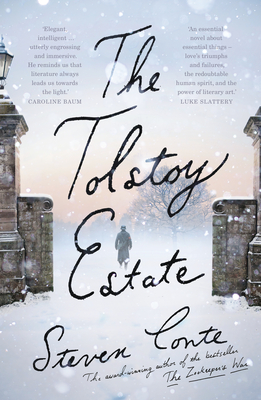
  • Steven Conte’s The Tolstoy Estate
  • Kate Grenville’s A room made of leaves
  • Victoria Hannan’s Kokomo
  • Laura Jean McKay’s The animals in that country
  • Kate Mildenhall’s The mother fault
  • Sean O’Beirne’s A couple of things before the end
  • Andrew Pippos’ Lucky’s
  • Nardi Simpson’s Song of the crocodile
  • Elizabeth Tan’s Smart ovens for lonely people
  • Jessie Tu A lonely girl is a dangerous thing
  • Pip Williams’ The dictionary of lost words

I like this selection because, although I’ve not yet read one of them, I have given some as gifts during the year, and I have a couple on my current TBR. Whether I’ll get to them in summer is another thing, but I will get to some …

ABC RN’s Bookshow and The Book Shelf presenters

Book cover

Claire Nichols, Sarah L’Estrange, Kate Evans and Cassie McCullagh put together a list they call “The best books of 2020 for your summer reading list”. It includes books from around the world, but, as I explained above, I’m just going to share their Aussie picks, which are but few!

  • Erin Hortle’s The octopus and I
  • Laura Jean McKay’s The animals in that country, which Kate Evans describes as “Surprising and surprisingly-convincing characters, and a well-realised, inventive premise”.
  • Jessica Tu’s A lonely girl is a dangerous thing, of which Claire Nichols says “the passion and the obsession drips off the page”
  • Pip Williams’ The dictionary of lost words, of which Sarah L’Estrange says, “For lovers of language and the power of words, this story has everything you want”.

Interesting that three of the four here also featured in Readings’ list. Are these the books we are likely to see on awards long and shortlists next year? Interesting too that all are women writers (as were the selectors. I can live with that!)

ANU English Department picks

Book cover

Now this list – on the ANU website, but shared with me by retired University Librarian Colin Steele (thankyou Colin) – is an unusual one, partly because it has very few contemporary (or any other) Australian books. The Aussies are:

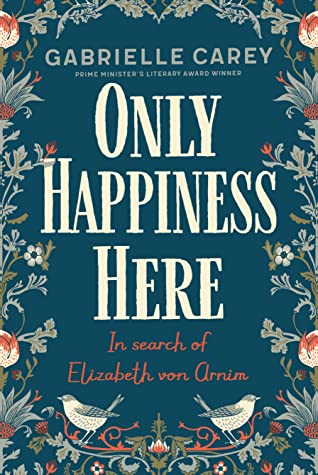
  • Gabrielle Carey’s Only happiness here, her biography of Elizabeth von Arnim, though, weirdly, the description doesn’t mention that at all. It just says “a literary sensation of the early twentieth century weaves a wonderful tale of love, pleasure, gratitude and survival that is written beautifully, perfect for the history buffs and women’s literature lovers among us”. Why not mention the name of the “literary sensation” or that it’s a “biography”? It could sound like a novel?
  • Sarah Hopkins’ The subjects, which is on the Small Press Network’s Book of the Year shortlist, is described as “a gripping read, which follows a gifted teenage delinquent down an uncertain path”
  • Michelle de Kretser’s The life to come, which came out a couple of years ago now, is described as “a wickely [sic] funny novel about the stories we tell and don’t tell ourselves as individuals, as societies and as nations”.

On lists …

When is a list not a list? Regular readers here know that I don’t tend to produce my own annual “best of” or “top reads” lists. I prefer to write a Reading Highlights post (which I will do again in early January for 2020). In this post, I don’t rank books or even talk about best books. Instead, I talk about the books and events that made my reading year worthwhile – and, already, I know I will have some interesting trends to comment on for this year. It is, though, still a list, I suppose! Just a very loose, porous one.

For a thoughtful piece on lists, you might like to check out an article written by one of my 2019 New Territorians, Rosalind Moran. Titled “Against best-of lists” it’s available at Overland Literary Journal. While much of it covers thoughts I’ve had myself, it’s beautifully and clearly expressed – and it did give me some additional points to ponder! (Thanks for Lisa for the heads-up).

What do you think about lists? Are some useful, despite their failings? Or, would you prefer to eschew them altogether?

Monday musings on Australian literature: Bookprint, Australian-style

Have you heard of the term or concept of bookprint? I came across it in a December 2019 article in The Conversation titled “5 Australian books that can help young people understand their place in the world”. The Conversation credits the term to African-American educator Alfred Tatum who, according to the University of Illinois’ Today website, coined it to describe “one’s memory of personally influential books”. It goes on to say that Tatum believes “most young black males need to acquire a bookprint outside their school-assigned reading”.

Claire G Coleman, Terra nulliusConsidering this concept, The Conversation authors Larissa McLean Davies, Sarah E. Truman, Jessica Gannaway and Lucy Buzacott, came up with their list of five books for young Australians. They are:

  • Clare G. Coleman’s Terra nullius (my review) – for ages 16+
  • Michael Mohammed Ahmad’s The tribe (Lisa’s review) – for ages 13+
  • Tara June Winch’s The yield (my review) – for ages 16+
  • Maxine Beneba Clarke’s Growing up African in Australia (Lisa’s review) – for ages 15+
  • Rebecca Lim and Ambelin Kwaymullina’s (ed) Meet me at the intersection – for ages 15+

To see their reasons for choosing these books, please click the link to the article in my opening paragraph. The authors make the point that “historically underrepresented people including Aboriginal writers, writers of colour, migrant writers, queers writers and writers living with disability are particularly underrepresented” in school curricula. Clearly – and with good reason – this is what they mostly address in this list.

Of course, what’s “personally influential” is, by definition, deeply personal, but this list looks to at least encourage young people to look outside their own box, to walk for a little while in the shoes of others – and that, it is presumably hoped, will develop empathy with and tolerance of others.

For me …

… the works that were “personally influential”, those I often find myself remembering, included those which confronted me with moral choices, those which helped me develop the moral code I (try to) live by. Shakespeare’s King Lear and Macbeth, and the characters in Albert Camus’ The plague (my review), for example, had big choices to make, choices that could mean life or death for them or for others, choices that involved behaving selfishly or selflessly, choices that exposed the moral codes they lived by. What Australian books would I recommend that encourage this sort of thinking, that confront students with choices about how to live?

Kim Scott’s That deadman dance (my review) could be one. While there is an overall narrator, we see several perspectives. We also see characters making choices and, sometimes, reflecting on the validity or implication of those choices. Thea Astley’s An item from the late news (my review) is another. There is meaty moral discussion to be had here, and, as in Shakespeare’s big tragedies, our protagonist is deeply flawed while also seeing what is right and wrong. In John Clanchy’s In whom we trust (my review), the protagonist has a big decision to make, one that would right poor decisions earlier in his life.

This is a topic that could go on forever – and I could certainly suggest more titles – but at this stage, having introduced the topic, I think I’ll pass it over to you, my Gummie brains trust. So …

Do you have books that were personally influential to you and/or what would you recommend for young people (and why)?

Monday musings on Australian literature: Nurses in Australian fiction

As some of you may know, last Tuesday, 12 March, was International Nurses Day, the date chosen because it was Florence Nightingale’s birthday. The day’s aim  is, in Wikipedia’s words, “to mark the contributions that nurses make to society”. Each year, apparently, has a theme. This year’s – presumably chosen long before COVID-19 – seems quite prescient: “Nurses: A Voice to Lead – Nursing the World to Health”. One of the ways the day is marked in Australia is to recognise nurses through a raft of awards, including naming a Nurse of the year. This year’s winner was Monash Health nurse Tania Green, who was chosen for her “championing of patients with cleft and craniofacial conditions”.

Oh, and to put a bit of icing on the cake, 2020 happens to also be the World Health Organisation’s International Year of the Nurse & Midwife!

Now, you may have noticed that my reading and blogging are currently slow and sporadic – something that will continue for some time yet, I expect. The reason is some significant family care needs which have, coincidentally, resulted in my getting to know many wonderful carers and nurses.

Why not then, I thought, check out some novels which feature nurses. I should warn you, though, that while my experience of nurses and carers over the last little while has been very positive, writers explore the dramatic possibilities of nurses in ways that are not always the most laudatory. Remember Nurse Rached?

(Very) select list of nurses in Australian fiction

What follows here is a highly serendipitous list plucked pretty much out of the air (and my blog). I’m sure there are many romance novels featuring nurses, but as I don’t read romance, you won’t find those here. There are crime novels featuring nurses, but as I don’t – well, you get the drift. Instead, what you’ll find here is an arbitrary list of books, mostly at the more literary end of the spectrum, in which nurses are either the protagonist or, at least, a significant, character. I’m listing them in chronological order.

Mollie Skinner’s “The hand” (1924) (my review): a short story with a hint of the occult, about a young nurse’s enlightenment.

Book coverElizabeth Jolley’s My father’s moon (1989) (my review): a semi-autobiographical novel about a young, lonely and alienated woman, Vera, who also happens to be a nurse. She’s not the most sympathetic character, shocking us at times, but Jolley gets to the heart of being an outsider.

Carrie Tiffany’s Everyman’s rules of scientific living (2005): historical fiction inspired by Victoria’s Better Farming Train which travelled through rural Victoria educating communities about domestic skills and agricultural practices. One of the characters is a nurse, Sister Crook, though the main characters are sewing teacher Jean and agricultural scientist Robert. (I loved this book when I read it, a few years before blogging.)

Thomas Keneally’s The daughters of Mars (2012) (Lisa’s review): historical fiction about two sisters and their experiences working as nurses during World War 1, in the Dardanelles and France.

Fiona McFarlane’s The night guest (2013) (my review): I’m throwing McFarlane’s book in here because, while one of the main characters is not a nurse, she appears as a government care worker to live with the main character, an ageing woman who may be starting to lose her mind, or is she? Who is Frida, the care worker, and what about that tiger who prowls around the house? A clever, disturbing book about the vulnerability that accompanies growing old.

Eleanor Limprecht’s Long Bay (2015) (my review): historical fiction based on the true story of young woman jailed for manslaughter in 1909 due to a botched abortion she performed, having learnt the trade from her mother-in-law Nurse Sinclair. This is a deeply humane book about poverty, women and their choices.

Charlotte Wood’s The natural way of things (2015) (my review): the rather grotesque “nurse” Nancy is not one of the main women characters in Charlotte Wood’s novel, but she becomes a significant character, offering another perspective on women’s agency, or lack thereof.

So, folks, this is my off-the-top-of-the-head tribute to nurses and carers. A weird tribute, I agree, given many of the nurses identified do not meet your traditional stereotype, but every character here has an interesting story and contributes to our understanding, in one way or another, of the caring professions.

Do you have any favourite fictional nurses, or novels featuring nurses?


Stella Prize 2020 Shortlist announced

Well, lookee here, the Stella Prize shortlist was announced this morning while I was at Tai Chi so I am just getting to it now. And, I am rather pleased because, although I’ve only read one of the six, I am currently reading another, and have a third on my reading group schedule, so that’s half of them without really trying! Not that I don’t WANT to try, but my reading schedule is so packed that I find it HARD to try. I therefore love it when the listed books are ones I plan to read anyhow.

So …

Book coverThe shortlist:

  • Jess Hill’s See what you made me do (nonfiction)
  • Caro Llewellyn’s Diving into glass (memoir)
  • Favel Parrett’s There was still love (novel) (will be read in May) (Lisa’s review)
  • Josephine Rowe’s Here until August (short stories)
  • Tara June Winch’s The yield (novel) (reading now) (Lisa’s review)
  • Charlotte Wood’s The weekend (novel) (my review)

After a rather “out there” longlist, which included several books many of us had not heard of, the shortlist, as often happens with the Stella I think, has narrowed down to a less surprising list. Would most you you agree with that? This is not being critical of the longlist – because I hadn’t read most of those books – but simply saying that the shortlist seems more geared to the books that have been generally well received critically. I like to think that that’s because they shine out …

Anyhow, the judges’ chair, Louise Swinn commented on the shortlist that:

Writers across the gamut of their career appear on the 2020 Stella Prize shortlist, which includes authors who are household names alongside some we are just getting acquainted with. The six books on this year’s shortlist are all outward-looking, and they tell stories – of illness, family life, friendship, domestic abuse, and more – in remarkable ways. If language is a tool, or a weapon, then these writers use their skills with tremendous courage. We found a lot to be hopeful about here, too – not just at the stories being told, but at the quality of the art being produced.

The winner will be announced on April 8.

Any comments?

Monday musings on Australian literature: The Guardian Australia’s Unmissables

Although I’d seen it before, it was BookJotter Paula’s latest Winding Up the Week (#110) post that reminded me of The Guardian Australia’s Unmissables series. Initiated last March, Unmissables aims to highlight 12 new releases they deem “significant”.

Before I share the books highlighted to date, though, I’d like to talk about the project’s funding because, as most of you know, how quality journalism is paid for is, currently, a critical issue. The Guardian, unlike some other newspapers online, is not paywalled. Instead, it asks readers to support them financially, by either subscribing, which I do, or, “contributing”, which, in effect, means donating without tax deductibility. Clearly, though, that’s not enough to produce the breadth and depth of content that we readers like. Consequently, they also turn to “outside” sources. They have at least three models: “supported by”, “paid content/paid for by”, and ‘”advertiser content/from our advertisers funding”. Unmissables comes under the first one, and is “supported by” the Copyright Agency Cultural Fund. This method is, unlike the other two, “editorially independent”. They say:

Before funding is agreed with a client, relevant senior editors are consulted about its suitability and the editor-in-chief has the final say on whether a funding deal is accepted. A client whose branding appears on editorial content may have a role in suggesting what kind of topics are covered, but the commissioning editor is not obliged to accept ideas from the funder. The content is written and edited by Guardian and Observer journalists, or those approved by GNM [Guardian News and Media], to the same standards expected in all of our journalism. GNM will not show copy to funders for approval.

I’ve written about the Copyright Agency’s Cultural Fund a few times before, including in a dedicated Monday Musings post. From my observer’s point of view, it seems like this fund is doing some good things to support and promote our literary culture.

Now, though, the books …

Stella Prize 2020 Longlist

I don’t do well at having read the Stella Prize longlist at the time of its announcement. In 2017 I’d read none; in 2018 it was one, and last year two! Will it be three this year? (BTW by the end of 2019, I had read six of the 12, one more than in 2018! At least I’m going up, albeit at a snail’s pace.)

I do do better at reading the winners, however, having read Carrie Tiffany’s Mateship with birds, Clare Wright’s The forgotten rebels of Eureka, Emily Bitto’s The strays, Charlotte Wood’s The natural way of things, Heather Rose’s The museum of modern love and Vicki Laveau-Harvie’s The erratics. So far, I’ve only missed 2018’s winner, Alexis Wright’s Tracker.

The judges are again different to last year’s – with the exception of the chair, Louise Swinn, who was also chair last year. 2020’s judges are award-winning journalism and author Monica Attard, journalist and editor for NITV News Jack Latimore, feminist editor and author Zoya Patel, and poet, educator and researcher Leni Shilton. Once again, as you’d expect from an organisation like Stella, attention has been paid to diversity on the panel.

Book coverThe longlist:

  • Joey Bui’s Lucky ticket (short stories)
  • Gay’wu Group of Women’s Songspirals: Sharing women’s wisdom of Country through songlines 
  • Jess Hill’s See what you made me do
  • Yumna Kassab’s The house of spirit
  • Caro Llewellyn’s Diving into glass
  • Mandy Ord’s When one person dies the world is over
  • Favel Parrett’s There was still love (on my TBR) (Lisa’s review)
  • Josephine Rowe’s Here until August (short stories)
  • Vikki Wakefield’s This is how we change the ending
  • Tara June Winch’s The yield (on my TBR) (Lisa’s review)
  • Charlotte Wood’s The weekend (my review)
  • Sally Young’s The paper emperors: The rise of Australian newspaper empires

Well, wow! All I can say is I guessed Winch and thought probably Wood, and maybe Parrett, but several of the others I haven’t even heard of. I was hoping that Carmel Bird’s Field of poppies, Madelaine Dickie’s Red can origami, and Amanda O’Callaghan’s This taste for silence, for a start, might get up – not to mention Jessica White’s Hearing Maud. But, as I haven’t read most of the longlist I’m not going to judge. I will say though that my record, that was on the up, has taken a beating, as I’ve only read one to date. Nonetheless, it is good to see diversity again in the list – both in terms of author and form.

The judges’ chair, Louise Swinn commented on the longlist that:

… This longlist is varied: it includes a graphic memoir, a young adult novel, Aboriginal songspirals, personal memoir, history, short stories and novels. We’ve been given a sense of just how influential our newspapers have been on public policy; we’ve learnt some history of our land; and we’ve been given the lowdown on both the dire statistics and the real-life stories of domestic abuse. We’ve been transported: we were sixteen years old all over again (gulp!).

All of the writers we longlisted are finding innovative ways to communicate their stories, and there is a very real sense when opening these books that an honest dialogue is being entered into. These authors are craftspeople serious about their intention and dedicated to the art. We were educated and entertained by these twelve longlisted books and we recommend them heartily.

The shortlist will be announced on March 6 (not March 8, International Women’s Day, as recently been tradition), and the winner on April 8.

Any comments?