Monday musings on Australian literature: Coming up in 2013

In a first for Whispering Gums, I have decided to post about coming attractions. It seemed an appropriate first Monday Musings for the year. But, how to do it? As I can’t possibly list them all, I’m going to make a selection and group them in sets that make sense to me. So here, as you’ve heard me say before, goes. Remember, this is just a selection reflecting the sorts of books I’d like to read. Whether or not I actually manage to read them all is another thing entirely.

John Maxwell Coetzee

Coetzee, 2006 (Courtesy: Mariusz Kubik, via Wikipedia)

Fiction from authors I’ve read before

  • J.M. Coetzee, The childhood of Jesus (March 2013 from Text Publishing): It’s been over 5 years since Coetzee’s last piece of fiction, Diary of a bad year (my review). I look forward to seeing whether Coetzee plays further with the novelistic form, as he has in recent outings, in this new offering.
  • Richard Flanagan, The narrow road to the deep north (August 2013 from Random House): Similarly it’s been over 4 years since Flanagan’s Wanting (which I read before starting this blog). This new novel, I gather, moves from Australia where his previous novels have been set to the Burma-Siam death camps.
  • Andrea Goldsmith, The memory trap (May 2013 from Fourth Estate): Goldsmith’s last novel Reunion (my review) was not my favourite Goldsmith, but she’s well worth watching.
  • Joan London (November 2013 from Random House): I don’t know the title of London’s next book, but I can’t wait to see it, as her Gilgamesh (which I virtually gifted to Stu) is one of my favourite Australian novels. My review of her most recent novel, The good parents (2008), was one of my first reviews on this blog.
  • Alexis Wright, The swan book (August 2013 from Giramondo): It’s been nearly 7 years since Indigenous author Wright’s last novel, Carpentaria (my review). It won the Miles Franklin award in 2007 so a new one from her is long-awaited.

Fiction from authors I’ve been meaning to read

  • Georgia Blain, The secret lives of men (April 2013 from Scribe): A collection of short stories and you know how I like short stories.
  • Fiona Capp, Gotland (July 2013 from Fourth Estate): Apparently about a reluctant Prime Minister’s wife, but this article written by Capp in 2009 might throw some light on the title.
  • Steven Carroll, A world of other people (May 2013 Fourth Estate): A Miles Franklin Award winning author I haven’t read. Boo me!
  • Robert Gott, The holiday murders (February 2013 from Scribe): OK, I’m lying with this one. Gott is not an author I’ve been meaning to read. In fact, I’d never heard of him. He has written children’s books, crime (not my genre), and a newspaper cartoon. Why then you are probably asking am I including him? Well, he, like PL Travers of Mary Poppins fame, was born in the same not-well-known town that I was, Maryborough in Queensland. And that’s good enough in my mind to give him a nod!
  • Chris Womersley, Cairo (September 2013 from Scribe): I’m still hoping to find time to read Womersley’s second and well-reviewed novel, Bereft, but if I don’t, this might well be my introduction to him.

Debut fiction

  • Balli Kaur Jaswal, Inheritance (February 2013 from Sleepers)
  • Lesley Jørgensen, Cat & fiddle (February 2013 from Scribe)
  • Maurilia Meehan, Madame Bovary’s haberdashery (April 2013 from Transit Lounge): Described as quirky crime novel, so I might just be interested.

Non-fiction

  • Anna Goldsworthy, Quarterly Essay (June 2013 from Black Inc): I’ve reviewed a couple of Quarterly Essays (by Krien and Flannery) and am interested in this one which will apparently be on misogyny/feminism in Australian politics.
  • Anna Krien, Night games (May 2013 from Back Inc): I’ve reviewed Krien’s Into the woods about forestry in Tasmania (my review) and her Quarterly Essay (see above). I enjoy her style and perspective. This book is apparently about the rape trial of a footballer.
  • John Safran, Murder in Mississippi (July 2013 from Penguin): This intrigues me – an Australian writing about the murder of a white supremacist in the American south – but then Safran has made somewhat of a career of investigating religion and related issues around the world.
  • Helen Trinca, Madeleine (April 2013 from Text): I’ve reviewed one of Madeleine St John’s novels, The women in black (my review), and know a little of her life. She was apparently the first Australian women to be shortlisted for the Booker Prize. She’s also a peer of Australian expat intellectuals, Germaine Greer, Robert Hughes, Clive James and filmmaker Bruce Beresford who, many years ago, optioned The women in black for film. I’d love to read this biography.

For more information about these or other books coming out in 2013, you might like to check the publishers’ websites:

Highlights of 2012: Notable reads for 2012

To complete my 2012 round-up triumvirate, which started with my blogging highlights and was followed by my Australian Women Writers challenge wrap-up, this post documents my notable reads of the year. If you are sick of me and my round-ups, I won’t be offended if you click away now!

Like last year, I’m not doing a top 10, because I find defining “top” reads such a movable feast. I would really like to list almost everything I read! So, again, I’m listing my notable reads under categories to give a flavour of this year’s reading life. Last year’s categories were based on review clichés and jargon, but this year I’m going to just make up my own, as whim takes me. Here goes, in no particular order:

Most disappointing read: PD James’ Death comes to Pemberley. It’s not that it was a bad book, exactly, but I’m not much of a crime reader and I don’t tend to read Jane Austen sequels/spin-offs, and I just felt this didn’t cut it, mainly because Elizabeth and Darcy didn’t ring true. They were flat, there was no chemistry. Without that, it was lost.

Most surprising read: Fergus Hume’s The mystery of a hansom cab. What did I say about not reading crime? Well, that’s partly why this was my most surprising read, because it is a late nineteenth century Australian crime novel and I loved it. It provided such a great social history of Melbourne of the period – and was a rollicking good read as well. Quite coincidentally a new telemovie adaptation was broadcast late in the year, and I enjoyed that too.

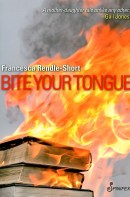
Francesa Rendle-Short book cover Bite your tongue

Bite your tongue Bookcover (Courtesy: Spinifex Press)

Bravest book: Francesca Rendle-Short’s Bite your tongue. I loved the creative way Rendle-Short went about telling her uncomfortable story via a fictional-memoir. This book is an example of what Rebecca Giggs meant when she talked about writers finding new modes of authority by which they can describe (and we can find valid) how the world “actually” is.

Most inspiring book: Izzeldin Abuelaish’s I shall not hate. What can I say? Abuelaish’s ability to rise above a pain that no parent should face, the death of his daughters in a targeted terrorist attack, and continue to argue for peace and reconciliation between Palestinians and Israelis should be a lesson to us all. I have never liked the idea of revenge, but also have never had my philosophy seriously tested. He has and shows that it is possible to see things a different way.

Favourite e-Book: Willa Cather’s My Antonia. I didn’t read many e-Books this year, but this e-notated version of an American classic was special. While I had some reservations about a couple of the features, overall the e-notation enhanced my reading and, anyhow, it’s a great novel. A re-read for me, and I’d read it again (if I had the time!)

Book scoring most “hits”: Julian Barnes’ The sense of an ending. This popularity was quite a surprise. I was fairly late – given its 2011 Man Booker Prize win – to read and review it, and yet my post seems to score high in Google searches. Why, I have no idea, but there you go! I’m happy to list it in my “notable reads” because, besides its being popular with the search engines, I liked it.

Favourite classic: Elizabeth Harrower’s The watch tower. I read a few “classics” this year – novels and short stories – and enjoyed them all. There’s something about reading good writers from the past – for learning about the world they were writing in, and for providing a different perspective on our own world (if that makes sense). Harrower’s novel is so of its time and place and yet is absolutely universal in its study of power and control in intimate relationships.

Favourite translated novel: Yan Lianke’s Dream of Ding Village. This was one of the books I read for the Shadow Man Asian prize earlier in the year. I also liked the winning book Kyung-Sook Shin’s Please look after mother and several others but, as time has gone on, it’s Ding Village that most often comes back to me. A great study of power and greed, with personal and political implications.

Favourite recent Australian book: Gillian Mears’ Foals’ bread. What can I say? This is one of those books that hits you in the guts. It’s about character, passion (of all sorts), and the ambiguities in human relationships – and Mears nails it.

Favourite short story: Paddy O’Reilly’s “The salesman”. This was very hard, so much so that I nearly decided not to create a category for it. I read several great short stories in 2012 but I had not read O’Reilly before and I was impressed by her control of the form. It’s a powerful story about deprivation, racism and the violence that lies just, only just, below the surface. It’s both subtle and unsubtle at the same time.

That’s 10. I could go on with more categories but I won’t bore you any further. Before I go, though, I’ll just, because I can, give a special mention to those writers who are published by the little presses and who deserve wider notice: Nigel Featherstone (Blemish Books), Catherine McNamara (Indigo Dreams) who has a collection of literary short stories coming out in 2013 to follow her 2012 commercial novel, and Michael Sala (Affirm Press).

My most unforgettable books, to date!

I was going to title this post “Life-changing reads” but decided that that wasn’t quite right. I’m not sure that any book has quite changed my life though many have opened my eyes to other ways of seeing and being in the world.

May marked my third year of blogging and I started this post then, thinking to mark the moment by reflecting on the books that have most impacted me (in some way or another). Somehow life got in the way, and I am only getting back to it now. I think it’s still worth doing – for my benefit, if not for anyone else’s. It’s going to be hard to keep my list short – as you litbloggers and litblog readers will surely understand. So here goes, in alphabetical order by author – it’s hard enough limiting the number (to a self-imposed arbitrary number of ten) without ranking them too!

Margaret Atwood‘s The handmaid’s tale: Such an astonishing evocation of what might happen should extremist fundamentalist views be taken to their, hmm, logical conclusion. The book functions as both a wake-up call – we can never rest on our laurels while injustice and inequality remain in our world – and a great read.

Jane Austen‘s Pride and prejudice: A great read on multiple levels that introduced me to Austen. I love all Austen’s novels and really can’t pick a favourite, but this is the one that started it all. I can read (and have read) her books multiple times – and every time I find something new. Can’t ask more than that from a writer I reckon.

Albert CamusThe plague: Oh, this one fed my youthful idealism, except I don’t think I’ve ever grown out of the belief that Camus’ Rieux is right when he says “that there are more things to admire in men than to despise”. I have read this three times, and will read it again. (My review)

Gabriel Garcia Marquez‘s Chronicle of a death foretold: It’s all about the tone. I love the way this story is told. I’ve read and enjoyed other books by Garcia Marquez but this is the one that stays in my brain.

Kazuo Ishiguro‘s The remains of the day: This one’s all about the tone too – and the unreliable narrator. There’s a wry humour to the butler’s narrow-minded focus on things that don’t matter while being completely oblivious to the things that do.  I have gone on to read all (but one, so far) of Ishiguro’s oeuvre.

Elizabeth Jolley‘s The newspaper of Claremont Street: I loved the black humour here. It reminded me of a (very) modern Jane Austen. I’m sure Austen would have loved Jolley. After all, I love them both.

Rohinton Mistry‘s A fine balance: This book showed me how a grim book can still offer hope (though not all readers agree with me). What else can I say? If you haven’t read it, I say do!

Toni Morrison‘s Beloved: This post was inspired by the “Getting started with Toni Morrison” post at Book Riot. It’s impossible to forget Sethe and the decision she makes.

Junichiro Tanizaki‘s The Makioka sisters: I didn’t know much about Japan when I read this in the early 1990s, but what I knew was that it was a pretty homogenous society. And, it is, but The Makioka sisters showed me a more diverse society than I had imagined. This is not the main subject of the book, but it was eye-opening for me. I also enjoyed it as a thoughtful analysis of Japan on the cusp of change from a traditional to a modern society , particularly in relation to the lives of women. Oh, and it is an engrossing story.

Patrick White‘s Voss: What can I say? Voss introduced me to Patrick White. It spoke to my teenage sense of the romance of grand ideas and of doomed love in language that was intense but accessible. I went on to read more Patrick White – and am still reading him. I’ve some still to read, and some I’ve read more than once. Such is the life of a reader…

Three of these books – Pride and prejudice, The plague and Voss – I read in my teens. I shall be forever grateful to them for the introduction they provided to the world of literature and what it can mean to one’s life.

I’d love to hear about the books that resonate most with you. (And I’m sure that, for some of your choices at least, I’ll say, “Oh yes, that too!”)

Monday musings on Australian literature: The Australian Novel, 1945 style

Joseph Furphy (Tom Collins)

Joseph Furphy (Presumed Public Domain, from the State Library of New South Wales, via Wikipedia)

Every now and then I like to delve into the newspapers digitised by the National Library of Australia and made available via its website. Last week, I was pottering around researching another topic for Monday Musings (for which you’ll now have to wait) when I came across an article written in 1945 about a series of books,”arranged” by Colin Roderick, being published about Australian prose. The series aimed “at introducing to students the work of Australian writers of prose fiction” but another article suggested that it would be of value to adult readers interested in the subject.

The first volume is titled The Australian novel and was published in 1945. It’s an anthology containing précis and excerpts from the selected works, and some critical analysis, and has a foreword by Miles Franklin. She wrote that:

People settling in new lands need novels and dramas closely concerned with their own time, place and community to support and lighten the great classics and world masterpieces in literature. Certain stories relate us to our own soil, and when such works find universal acceptance, they still retain greater significance for the people of their origin than for other readers by imparting a comforting glow which springs from the intimacy of home … writings, redolent of our own land and our life in it, thus fulfilled one of the functions of imaginative literature by heightening and illuminating everyday life in familiar surroundings.

I love her description of “writings redolent of our own land and our life in it” and their importance to “illuminating everyday life”.

The 19 (strange number, eh?) works were presented in order of their age:

It’s an intriguing list for me. Some of these works and authors I’ve read, and some have been on my list to read for a long time. But there are some here that I have never heard of – such as Brian Penton and Leonard Mann. It makes me wonder which writers from our last half century or so will be no longer well-known in 60 or 70 years. Longevity in the arts is such a fickle thing really, isn’t it?

Next week, I’ll write on the second volume in which Roderick presented 20 significant novelists.

Raising my consciousness: Thoughts of a reader on International Women’s Day

Australian Women Writers Challenge 2012 Badge

Australian Women Writers Challenge (Design: Book’dout – Shelleyrae)

I am not, and never have been, scared to use the “F” word – that is, I call myself a Feminist. My philosophy is a simple one: women are not the SAME as men, but women deserve EQUAL rights and respect as men. This is not to say that the interpretation and application of this philosophy is simple but it is to say that all our thinking on how we live, how we (as humans) should be treated and how we should treat others needs to start from this fundamental principle.

Books and reading have of course fed my thinking on this issue … and so today I’m listing a few books that have meant something to me. They are not, all anyhow, the usual suspects, but they are books that have remained in my consciousness years after I read them.

Germaine Greer‘s The female eunuch (1970)

I read this a year or so after it was published. It provided an underpinning to my thoughts from that point on. Greer’s analysis of how women are objectified fundamentally changed how I viewed myself and it informed how I have dressed and presented myself ever since. She politicised my decisionmaking and gave me permission to not spend time and money (that I could better spend elsewhere) on unnecessary grooming and uncomfortable, or demeaning, clothing. She said much more besides about women’s self-actualisation but it all stemmed for me from this basic premise …

Margaret Atwood‘s The handmaid’s tale (1985)*

Most of the books I’m going to list here are non-fiction but we litbloggers know the value of fiction in presenting and analysing human thought and behaviour, in showing us how we are and/or how we could be. Atwood’s The handmaid’s tale depicts with horrific clarity how we could be. It’s a dystopian novel, a cautionary tale; it describes with horrendous, gob-smacking clarity what could happen if we don’t remain vigilant about women’s right to equality. If you haven’t read it and you wonder whether Feminism’s for you, read this book before you make up your mind!

Diane Bell‘s Generations: Grandmothers, mothers and daughters (1987)

I recently read an article written in 1905 about Jane Austen, in which the author, William James Dawson, wrote:

It is often deplored that professional historians, who are capable enough of describing the pageantries of a court, the contests of politicans, the sumptuous lives of the rich, or even the miserable conditions of life among the disinherited and the criminal, appear incapable of producing any accurate picture of the average kind of life lived by those distinguished by neither great  wealth nor great poverty …

Lives, for example, lived by women. Dawson goes on to say that Jane Austen provides “a picture of England itself”. I love his recognition that fiction can provide us with social history … even though the rest of my list is non-fiction.

Anthropologist Diane Bell describes objects in women’s lives and how women pass them down from generation to generation. If I tell you that one of the chapters is titled “Darryl got the farm and mum got the pearls” you’ll get the picture. The book draws from interviews she conducted with several families of women. The women talk about pianos, sewing machines, textile crafts, jewellery, china, books, and so on, describing not only how they are passed down through the female line but also the memories these objects invoke – and what they tell us about women’s lives then and now. It’s a beautiful book, that I’d love to quote from if I had the time. I read it when it came out, and I think of it often.

Katie Holmes’ Spaces in her day: Australian women’s diaries, 1920s-1930s (1995)

Holmes is an historian and this book, like Bell’s, provides an insight into women’s lives – but through their diaries rather than through interviews. The book, also like Bell’s, is organised thematically but instead of by type of object hers is by women’s roles and life stages. The descriptions of women’s work (in the days before labour saving devices) are exhausting!

Start work 8 o’clock finish 11pm, feel awfully fed up, this life is much worse than the farm was even if I didnt have any clothes, here I do not have time to wear them, so it is worse, dont know what to do about it, but I am fed up. (Mabel Lincoln, 21 January 1930)

She also describes the way women were expected to give up their dreams to help others – to take over a family when a sister dies or becomes sick, for example. Unmarried women, in particular, were only “allowed” a life of their own for as long as someone else in the family didn’t need them. Another book I haven’t easily forgotten.

Helen Garner‘s The first stone (1995)

This is, probably, a strange book for me to include, mainly because Garner made me so MAD. Garner is a feminist but her response to the incident at Ormond College did not sit well with many feminists, me included. As I recollect, the incident involved the master of the College, the man in power that is, making untoward (read, unwanted) sexual advances to two students at a College party. When the students complained to the College hierarchy, they did nothing, so the two young women went to the police. Garner argued they should not have done that, that they should have simply, literally or metaphorically, “slapped” the man and got on with their lives, leaving him and his reputation secure. She felt their reaction was not mature and was taking the issue of harassment to unnecessary levels. But, for me, there were two significant issues that made me disagree vehemently with Garner. Firstly, the young women tried to complain within the College system and got nowhere. Had the College taken their complaint seriously, the situation could very well have been handled quietly and with a rationality that could have worked for all parties. But, the College didn’t. And secondly, this was a situation of power. It’s (depending on the situation) one thing to receive an unwanted advance at a party from a peer. Garner’s suggested response could very well be the appropriate one BUT, and I think it’s a big BUT, it’s quite another thing to receive such an advance from someone with real power over you. I’ve listed this book, though, because Garner is a great writer and so very honest about her views and feelings. We need more honesty like this, and more willingness to confront the issues and tease them out … and that, of course, is the other reason I’ve listed it. It got some issues teased out, albeit, for some, in an emotionally charged and hurtful way.

… and that, as they say, is that. I’d love to know what books have contributed to your thinking on women’s rights (or, indeed, on any issue of importance to you).

* Most of the books I’ve listed here are Australian but, given the topic is International Women’s Day and given the significance (to me) of Atwood, I had to include her here.

Monday musings on Australian literature: Favourite first (Australian) lines

This is a bit of a copout, I know, but I’m travelling this week and don’t have a lot of time to write a seriously considered post. So, I’ve decided to simply do a list – of some of my favourite first lines from Australian literature. Like most readers I think, I do love a good first line, and the way it can get you into the story from the get-go. We all know the famous ones from books like Pride and prejudice, Moby Dick, A tale of two citiesAnna Karenina but these books haven’t cornered the market on great first lines. Here are some of my favourites from Australian works (in alphabetical order by author):

“I’m losing my nouns”, she admitted. (from Thea Astley‘s Coda)

“I’ve never sailed the Amazon.” (from Thea Astley’s Drylands)

No one knew or cared where the Newspaper of Claremont Street went in her spare time. (from Elizabeth Jolley‘s The newspaper of Claremont Street)

What have you brought me Hester? (from Elizabeth Jolley’s The well)

The sea has many voices. (from David Malouf‘s Ransom)

Breed ’em tough, the old man says … (from Geoff Page‘s verse novel, The scarring)

There was movement at the station, for the word had passed around/That the colt from old Regret had got away … (from Banjo Paterson‘s poem, “The man from Snowy River)

“There is a man here, miss, asking for your uncle,” said Rose. (from Patrick White‘s Voss)

What makes a great first line? Here are some of the features that grab me – though not every great first line has all of these:

  • Is brief or spare (though there are some good long ones like A tale of two cities)
  • Reads well, particularly in terms of rhythm
  • Surprises me, shocks me or makes me laugh
  • Is puzzling or mysterious
  • Contains wordplay or intriguing imagery

There are practical things good first lines may do too, such as give an idea of what the novel is about and/or its theme/s (even if this isn’t immediately clear), set the tone and, perhaps, introduce the main (or, a significant) character. But these are additional benefits. I don’t think they are essential to grabbing the first-time reader.

How important is a first line to you? Guy Dammann, writing in The Guardian bookblog argues they are critical:

They say you should never judge a book by its cover, but they didn’t say anything about opening lines, which are surely fair game. For it seems to me that if the author can’t take the trouble, or hasn’t got the nous, to sculpt those words from which all the rest flow, then they probably won’t have taken the trouble in all those other key moments of the text when the interpretative pressure is at its highest, when the duty to capture a whole fictional world in a single breath is at its most pressing. Screw up the opening, screw up the book.

Do you have favourite first lines? I’d love to hear them – and your reasons if you’d like to share that too.

Notable reads for 2011

I’ve been wondering whether to jump on the “Best of” bandwagon and, if I did it, how to do it. Then today I read Lizzy Siddal’s (love that name!) list and decided that I’d follow her lead and use categories rather than go for a simple Top Ten (or whatever) which always feels fraught. I know Lizzy’s not the only one to use categories but hers was the one that inspired me today.

However, for my categories I’m going to use book reviewer cliches since, of course, I never use them in my reviews!

Some mosts

  • Grittiest: Joyce Carol Oates’ Beasts for confronting sexual predation on multiple levels.
  • Most thought-provoking: André Gide’s The immoralist for, well, making me think.
  • Most rivetting: Lloyd Jones’ Hand me down world because even though I guessed the set up fairly early on I still wanted to know how it was going to play out.
  • Most haunting: Horace Walpole’s The castle of Otranto. What else? Case dismissed.
  • Most lyrical: Alan Gould’s The lakewoman for its mesmeric, poetic, romantic sensibility.
  • Most unflinching: Mario Vargas Llosa’s no-holds-barred The feast of the goat about the last days of the Trujillo regime … it was an apposite read given the events of the Arab Spring
  • Most powerful: That would have to be the power couple, Franklin and Eleanor: An extraordinary marriage, by Hazel Rowley
  • Most poignant: Jay Griffiths’ A love letter from a stray moon for being fiery, passionate and poignant all in one.

And, to be fair about it, a couple of leasts

  • Least epic: Jane Austen’s The Watsons. After all, how could an unfinished Jane Austen come even close to being epic?
  • Least nuanced: Howard Jacobson’s The Finkler question, though perhaps there’s nothing more nuanced than the substitution of “Finkler” for “Jew”?

There aren’t many Aussie books in this list, but that’s because I focused on Aussie highlights in this week’s Monday Musings. To include them again would be like double-dipping, wouldn’t it?

And now over to you … what were your most notable reads for 2011?

Oh, and Happy New Year to you all … may the reading gods smile kindly on you in 2012.

Monday musings on Australian literature: Meanjin’s Tournament of Books

Henry Handel Richardson in 1945, a year before...

Henry Handel Richardson, 1945 (Presumed Public Domain. Courtesy: Wikipedia)

Many Monday musings ago I wrote about the reduced visibility of women writers in Australia. I wasn’t the only one concerned and things have been afoot to up the ante for women writers. For example, a new award targeting women writers, the Stella Prize, was announced earlier this year. And now Meanjin, a longstanding literary magazine, is emulating the Morning News’ Tournament of Books (to which a favourite blogger, Hungry like the Woolf, introduced me a couple of years ago) by conducting a tournament comprising books by Australian women writers.

Meanjin describes the tournament as follows:

The way it works is this: 16 books are chosen … and then divided into pairs. A judge is given a pair, reads them both, writes up their decision process and announces which of the pair they deem the better book. That book then progresses into the next match to go up against a winner from a previous round. It’s a sporting tournament for people who don’t like sport.

This year, in light of the discussion around women’s writing and literary prizes, we’ve selected a short list of novels exclusively by Australian women. The list has been chosen by us, and is incomplete, capricious and arbitrary. That’s ok. There’s no way you could do Australian women authors justice in 16 books…

Fair enough … and being this upfront about their selection makes it hard for us to complain, doesn’t it? And really, I wouldn’t want to, because I can’t imagine we’d ever get universal agreement on 16 books, anyhow.

The tournament schedule can be viewed at the Meanjin site so I won’t detail it here, but I will list* the 16 books, partly because it’s a useful list, despite its arbitrariness, for those interested in Aussie women’s lit:

Regular readers of my blog will recognise some of my favourite and oft-mentioned authors here. Interestingly, a couple of young adult/children’s novels (those by Carmody and Marchetta) have been included – one of their “capricious” decisions, perhaps! Not that I have anything against such novels – I thoroughly enjoyed Marchetta’s Looking for Alibrandi – but I wonder whether they have the weight to beat a Stead or an Astley, a Wright or a Jolley, for example. Well, keep reading …

Round 1 results

  • Match 1, Gilgamesh beat The lost dog. Both are interesting books but Gilgamesh is a beautiful one. I would have chosen it too.
  • Match 2, The children’s Bach beat Mr Scobie’s riddle. This is harder. I love The children’s Bach but have not read Mr Scobie’s riddle. I’m not sure it’s the Jolley I’d have chosen … but, oops, I said I wasn’t going to go there, so let me just say that this match is a tricky one – the judge thought so too – and I’m glad I wasn’t asked to call it!
  • Match 3, My brilliant career beat Tirra lirra by the river. Another hard one, but My brilliant career would have to be the sentimental favourite in this pairing. And, anyhow, how could I not agree with a book the judge called “chick-lit amongst the gums” and “Austen in an Akubra with a broad Australian twang and some permanent sun damage”?
  • Match 4, Looking for Alibrandi beat Harp in the south. Interesting decision. A main criterion for the judge seemed to be the ability to stand the test of time … but, but, I argue, Looking for Alibrandi is only 20 years old while Harp in the south has already stood the test of time. And, I’m not sure that Alibrandi reaches adult audiences in the same way that Harp does. Still, perhaps I should read Alibrandi again to be sure.
  • Match 5, The secret river beat A kindness cup. Both good books, and a very hard choice … one the judge clearly found hard too. It seems as though it was Astley’s more dystopian view that was the deciding factor. That seems a bit of a cop out to me!
  • Match 6, The man who loved children beat Obernewtyn. Now this must surely have been a no-brainer and the judge agrees, explaining why they were (mis)matched in the first place. I’ll say no more.
  • Match 7, The fortunes of Richard Mahony beat Of a boy. Another pretty obvious choice, really. While I do think a short novel or novella can beat a hefty tome, this is probably not the hefty tome to be up against!
  • Match 8, The world beneath beat Carpentaria. Now this does surprise me. The latter won the Miles Franklin award while The world beneath was not shortlisted. I don’t think we should give excessive credence to awards but it seems the judge gave the match to The world beneath because he found Carpentaria “difficult”. Is this fair or right, I cry into cyberspace? No, but at least the judge admits to being “covered in the stench of subjectivity”, so all one can do is vote Carpentaria back in the zombie round.

Plot, humour  and readability seemed high on the various judges’ agendas. They would not be my top criteria but, as this tournament is mainly about promotion of women writers and having some fun, I’ll say no more, except that I’ll report again on the tournament after the second round has been played …

* The two linked titles are to reviews on this blog. I’ve read many of the books listed, but mostly long before I started this blog.

Monday musings on Australian literature: the Great Australian Novel, or?

Henry Handel Richardson in 1945, a year before...

Henry Handel Richardson, 1945 (Presumed Public Domain, via Wikipedia)

First, a confession. I am not one who believes we need to define such a beast as “The Great [name your country] Novel”. However, just to be perverse, I thought that for this week’s Monday musings it would be interesting to look at what might qualify for such a label – and, in doing so, consider what might constitute an Australian canon.

A canon gets us away from having to define the “Great Australian Novel”*, from having to decide whether it must be written by an Australian, must reflect “Australia” in some sort of specific way. In fact, on the latter, Professor Gelder, a literature professor from Melbourne argued in 2009 that globalisation and transnationalism make “the great Australian novel” “almost impossible”. This is because he defines the GAN in terms of being “a nationalist project”. And, perhaps, that’s the only way you can define a GAN. A canon, on the other hand, can be more diverse, can reflect the variety – in space, time, theme, and so on – that makes up our – and, any, really – national literature.

Without getting into the pros and cons, rights and wrongs, of polls, I thought I’d list the top ten Australian books (mostly novels) from  three different and reasonably recent polls to see what they tell us.

Poll 1: The Australian Society of Authors Top 10 as voted by their members in 2003:

  1. Cloudstreet (1991), Tim Winton
  2. The man who loved children (1940), Christina Stead
  3. The fortunes of Richard Mahony (1930), Henry Handel Richardson
  4. Dirt music (2001) Tim Winton
  5. Voss (1957) Patrick White
  6. The tree of man (1955), Patrick White
  7. The magic pudding (1918), Norman Lindsay (children’s)
  8. An imaginary life (1978), David Malouf
  9. Tirra lirra by the river (1978), Jessica Anderson
  10. My brother Jack (1964), George Johnston

Poll 2: The Australian Broadcasting Corporations’s Top 10, as voted by Australians via ABC promotions in 2003:

  1. Cloudstreet (1991), Tim Winton
  2. A fortunate life (1981), AB Facey (memoir)
  3. Dirt music (2001),Tim Winton
  4. My brother Jack (1964), George Johnston
  5. The magic pudding (1918), Norman Lindsay (children’s)
  6. The tree of man (1955), Patrick White
  7. Seven little Australians (1894), Ethel Turner (children’s)
  8. The fortunes of Richard Mahony (1930), Henry Handel Richardson
  9. Tomorrow when the war began (1993), John Marsden (young adult)
  10. My place (1987), Sally Morgan (memoir)

Poll 3: The Australian Book Review’s (ABR) Top 10, as voted by Australians via ABR promotions, 0ver 2009/10 (and reported by me last March)

  1. Cloudstreet (1991), Tim Winton
  2. The fortunes of Richard Mahony (1930), Henry Handel Richardson
  3. Voss (1957), by Patrick White
  4. Breath (2008) Tim Winton
  5. Oscar and Lucinda (1988), Peter Carey
  6. My brother Jack (1964), George Johnston
  7. The secret river (2005), by Kate Grenville
  8. Eucalyptus (1998), by Murray Bail
  9. The man who loved children (1940), by Christina Stead
  10. The tree of man (1955), Patrick White

Hmm … accounting for the fact that the third poll was taken several years after the first two and so includes a couple more recent books, the noticeable thing is the remarkable congruence between the three. You would have to say that, in the early twenty-first century, Tim Winton’s Cloudstreet would get the GAN gong, though Professor Gelder would disagree. He argued that only Patrick White would qualify. He said that

Tim Winton’s ‘Cloudstreet’ got close to being a ‘great Australian novel’, but at a cost. It was nostalgic, homely, remote from reality, and conservative.

Oh dear, maybe these are the very reasons the novel is popular with readers (though authors, too, liked it!)!

Anyhow, the appealing thing to me is that, despite the to-be-expected inclusion of recent authors, these lists do also take a relatively (given the youth of our country) long view. It’s good to see the inclusion of Henry Handel Richardson, Christina Stead and George Johnston, alongside the also to-be-expected inclusion of our only literary Nobel Laureate, Patrick White. And, it’s satisfying to see a goodly number of women writers recognised – not only Richardson and Stead, but also Jessica Anderson, Ethel Turner, Kate Grenville and the artist/memoirst Sally Morgan.

You might think that such agreement might be reflected in what is being taught in Australian universities but you’d be wrong, at least according to the Teaching Australian Literature website. Its Top Ten texts (that is, those appearing on most reading lists) are:

  1. The secret river (2005), Kate Grenville
  2. My brilliant career (1901), Miles Franklin
  3. Remembering Babylon (1993), David Malouf
  4. Loaded (1995), Christos Tsiolkas
  5. Carpentaria (2006), Alexis Wright
  6. True history of the Kelly Gang (2000), Peter Carey
  7. Summer of the seventeenth doll (1953), Ray Lawler (play)
  8. The monkey’s mask (1994), Dorothy Porter
  9. My place (1987), Sally Morgan (memoir)
  10. Swallow the air (2006), Tara June Winch
    True country (1993), Kim Scott

A (generally) more “edgy” list and, in its own way, rather encouraging. But, where does that leave the canon? Perhaps as a work-in-progress … to which we might (or might not!) return to in Monday musings.  Meanwhile, talking about works-in-progress, Lisa at ANZLitLovers is working on a somewhat different tack. She is developing a List of Australian/New Zealand Books You Must Read. Go check it out – and if you’d like to make a suggestion, please do …

Do you think there is value to the idea of a canon? Or does it discourage wide and open-minded reading and coincidentally encourage a too narrow view of the culture it refers to?

* the GAN, not to be confused with another GAN, the “Great American Novel”.

The gift of words

Xmas Tree

There be words in there

Middle age has come
and all the plans and needs
are chaff not seeds,
blowing down the blue air
to fall flat and trampled
by some window where
a hopeful girl braids
her thick hair and hums.

(“Humble”, by Ginny Jackson)

Better late than … hmm, perhaps not, but I’m going to tell you anyhow.

I’ve noticed in recent years that I don’t receive a lot of books for Christmas – and when I do, they are often not fiction – but a few hardy gift-givers still bravely feed my obsession. And so, I received a small but intriguing bunch this year, which I will list by category:

Fiction:

  • Margaret Atwood‘s The year of the flood. Atwood is one of my favourite writers but I’ve dropped the baton on her a bit in recent years. I hope to pick it up again and run this year with this, her most recent. Thanks, Mum.
  • Helen Simonson’s Major Pettigrew’s last stand. I have already read and reviewed this one – and suggested at the time that there were people I knew who would enjoy it. I didn’t have a copy then so couldn’t lend it to them. I now do … thanks Sandra, from my bookgrouplist swap.

Poetry:

  • Ginny Jackson’s The still deceived. I can always rely on my brother to choose something a little bit different for me, and this year was no exception. My brother lives in Tasmania and this book, published by Ginninderra Press, is by a Tasmanian poet/artist. I have only dipped into it – but if you like the poem opening this post you might like to dip into it too. Thanks, bro!
  • There’s something about a rose. I knew immediately who chose this book – my Dad, the rose lover. It comprises a selection of poems and art celebrating, yes, roses, and was compiled by the Friends of Old Parliament House Rose Gardens. The poems are by Australian poets, some well-known, such as Barbara Blackman, Les Murray and Chris Wallace-Crabbe, and others not so well known (to me at least). I have already dipped into and enjoyed several of the poems…and may share some with you as the year goes on. Thanks, Dad.

Non-fiction:

  • The Canberra gardener. I’ve had previous editions of this gardening bible, but not for some years. Published by the Horticultural Society of Canberra, this one is the 10th edition published in 2010. The previous edition was published in 2004, just as our last serious drought was starting to bite. As a result, this new edition focuses on how to create lovely gardens with less water. Funnily enough, our dams are now suddenly full (last year they were at 50%) but we have all learnt (if we didn’t already know it) that Australia is a dry continent and that we should make water conservation a permanent goal regardless of annual fluctuations in water levels. This book will help me in my endeavour. Thanks, Carmel.
  • Roger McDonald‘s Australia’s wild places. I do like a good coffee table book and this is a good coffee table book. It’s published by the National Library of Australia and comprises landscape photographs of Australia from the Library’s collection. The photos were chosen by award-winning Australian novelist, Roger McDonald, whose books tend to have strong rural themes. The book has an introductory essay, with a strong environment message, by McDonald, followed by gorgeous images by some of our top photographers, including Peter Dombrovskis and Frank Hurley. It is just the book for me to look at now, as we prepare for our annual foray into the Snowy Mountains for a bit of post-Christmas R&R. It was given to me by a friend who spent most of her career working with these images. Thanks, Sylvia.

So, there you have it, six books from six people, each book reflecting a little bit of both the giver and the receiver. What more can one ask of a gift?

And now, if it’s not too late, I’d love to hear if any of you received books this year, and what they were.