Monday musings on Australian literature: Australian Women Writers Challenge 2018

AWW Badge 2018As has become tradition, I’m devoting my last Monday Musings of the year to the Australian Women Writers Challenge* – but, this year it coincides with New Year’s Eve. When this post goes live, who knows what revelry I’ll be up to! Hmm … I can but hope! Seriously, though, I wish all you wonderful Whispering Gums followers an excellent 2019 in whatever form you would like that to take. I also want to thank you for supporting my blog with your visits and comments. You make this blog such an enjoyable experience for me.

Now, the challenge … it has continued to go very well. In my area of Literary and Classics, we consolidated 2017’s impressive increase in the number of reviews posted, with roughly the same number posted again this year. Theresa Smith (of Theresa Smith writes), continued to oversee the day-to-day management of the blog, enabling Challenge founder Elizabeth Lhuede to be less hands-on. Elizabeth is, however, still an active presence, particularly when it comes to resolving technical issues, reviewing our policies (such as “do we need to update our definition of historical fiction”?), and so on. The database now contains reviews for nearly 5,200 books across all forms and genres, from all periods, of Australian women’s writing. This means that the number of books reviewed on our database increased by 800 books – a 17% increase. Most of these were new releases but older books were also added, making the database particularly rich for readers interested in the long tail!

Most years, I’ve shared some highlights from the Challenge, but this year was more one of consolidation than of many new happenings, so, in the interests of keeping this post short and to the point, I’ll move straight on to reporting on the reviews I contributed for the year.

My personal round-up for the year

Let’s start with the facts, followed by some commentary. I posted 34 reviews for the challenge, four more than I did in 2016 and 2017, but one, admittedly, was a guest post. Here they are, with links to my reviews:

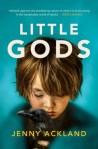
Jenny Ackland, Little godsFICTION

CHILDREN’S PICTURE BOOKS

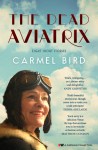
Carmel Bird, Dead aviatrixSHORT STORIES

SCRIPTS

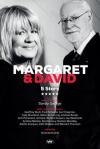
Amanda Duthie, Margaret and DavidNON-FICTION

This year I reversed the trend of previous years which saw me reading fewer and fewer novels for the Challenge – 48% in 2015, 40% in 2016, and only 34% in 2017 – compared with other forms of writing. This year, however, novels comprised over 55% of my AWW challenge reading, which proportion more closely reflects my reading preferences.

I read no poetry or verse novels this year, but I did read two plays by Garner. I also read fewer short story collections or anthologies, but I did read more Classics, including individual short stories. I’d love to read more of those. My non-fiction reading was more diverse – that is, significantly fewer memoirs than last year.

Claire G Coleman, Terra nulliusI’m disappointed that I only read two books this year by Indigenous Australian women – Claire G. Coleman’s novel and Marie Munkara’s memoir. I’d like to improve this next year – and have two right now on the “definitely-will-be-read pile”, so that’s a start.

Anyhow, if you’d like to know more about the Challenge, check it out here. We are also on Facebook, Twitter (@auswomenwriters), GoodReads and Google+. Do consider joining us. All readers are welcome.

Finally, a big thanks again to Theresa, Elizabeth and the rest of the team. I love being part of this challenge, partly because I believe in its goals but also because the people involved are so willing and cooperative. They are a pleasure to work with. See you in 2019.

And so, on to 2019

AWW Challenge 2019 BadgeThe 2019 sign up form is ready, so this is also my Sign Up post for next year. As always, I’m nominating myself for the Franklin level, which is to read 10 books by Australian women and post reviews for at least 6 of those. I expect, of course, to exceed this.

* This challenge was instigated by Elizabeth Lhuede in 2012 in response to concerns in Australian literary circles about the lack of recognition for women writers. I have been one of the challenge’s volunteers since 2013, being responsible for the Literary and Classics areas.

New Territory Litbloggers’ Year in Review, 2018

When my 2018 New Territory blogging mentee Amy (of The Armchair Critic) suggested that we do some sort of joint end-of-year blog post I loved the idea. The only question was what would we talk about, and how would we do it? It wasn’t too hard to decide former, as the subject matter was obvious: we would write about our favourites reads of this year, what we’d like to read over summer, and the ACT Writers Centre’s New Territory program which brought us together

As for how, we tossed around various formats, but settled on something simple: each of us would write a post responding to our agreed topics, and would then post the other person’s answers on our own blog. This means that you can read Amy’s responses below, and mine on Amy’s blog.

I do hope you enjoy Amy’s thoughts. We would both love to hear your comments on her reading.

Amy’s highlights

Best Fiction

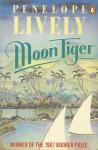
Penelope Lively, Moon tiger

I’ve managed to narrow it down to three. All of them happen to have won prizes but this is a coincidence; I take an interest in prizes but I don’t let my reading habits be defined by them. First up is Moon Tiger by Penelope Lively. This won the Booker Prize in 1987. It tells the story of Claudia, a journalist, who mentally revisits her life as she is dying. The fluidity of Lively’s prose reminds me of Virginia Woolf, and, like Woolf, it encapsulates multiple perspectives of the same event. It is a short book but extremely dense, though in a good way – it is emotionally and historically rich, spanning events throughout the twentieth century including the second world war.

My other favourite novel was The bookshop by Penelope Fitzgerald which coincidentally is also a previous Booker winner. I read it after seeing the movie, which I reviewed on my blog. I loved Fitzgerald’s witty turn of phrase and the sense of quiet devastation that her understated prose leaves you with. A hard-hitting meditation on justice, personal culpability and the cost of pursuing a life in art.

My final fiction read is The museum of modern love by Heather Rose which won the 2017 Stella Prize. This book centres around a performance work at MONA in New York by Marina Abramovic and weaves aspects of Abramovic’s life with the contemporary life of the protagonist, Arky Levin, whose wife is seriously ill. It explores themes including the purpose of art, and the nature of human connection.

Best Non-fiction

Again I have to pick the top three. First up is Murder without a motive by the Saturday Paper’s chief correspondent Mart McKenzie Murray. Murray investigates the murder of schoolgirl Rebecca Ryle in Perth’s northern suburbs in 2004, and how her family manages to live in the knowledge of what happened to her. Mckenzie-Murray and I both grew up in Perth’s northern suburbs around where the murder took place, so I identified strongly with his (not so flattering) evocations of it. What clinched the book for me was how Mckenzie-Murray explored how the life trajectory of Ryle’s murderer was conditioned by his stultifying surroundings which were characterised by toxic masculinity.

Next up is Draw your weapons by Sarah Sentilles. I heard Sentilles at this year’s Adelaide Writer’s Week, and I highly recommend these podcasts for summer listening. Sentilles, a pacifist and former art history professor, writes about the ethical entanglements we all have with our society’s violent structures, and how we can take both a moral and practical stand against being implicated in perpetuating such violence. The book is held together by the stories of two men; a conscientious objector from World War Two and a soldier who worked at Abu Graib. Saying a book changed your life can be a throwaway line, but in this case it is true.

Lastly is Small wrongs: How we say sorry in life, love and the law by Kate Rossmanith. Rossmanith is an academic with degrees in theatre and anthropology. The book is “hybrid,” as she examines remorsefulness and redemption in her own life, as well as in other spheres such as the law. Her writing is beautiful and she is brutally honest about her own actions, which is very compelling and refreshing. I literally could not put this book down.

Best biography

I reviewed Do oysters get bored by Rozanna Lilley for New Territory. Lilley is such a talented writer, and I enjoyed the way she teased out her complicated relationships with her parents and the artistic community she grew up surrounded by. As I wrote in my review, I really believe Lilley has done Australian society a major service by demonstrating the moral conundrums and aftermath of artists’ delusional or egocentric behaviour.

My other favourite was Twin by Allen Shawn. Shawn is a composer and musician whose father was William Shawn, the long-serving editor of the New Yorker. Like his father, Allen has many anxieties and phobias which he has also written about. Twin is an account of how Shawn’s autistic twin sister Mary was removed from the family at the age of five and has spent her life in an institution. The dynamics of Shawn’s family are complex – there is a major twist about his parents’ relationship, and it really demonstrates the extent to which self-deception and sacrifice, mostly on the part of mothers, are necessary to maintain a bearable home life. Shawn’s writing is poetic and devastating.

Highlights of my summer reading list

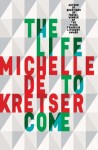
  • Michelle de Kretser, The life to comeThe life to come by Michelle de Kretser and No more boats by Felicity Castagna: I heard these two authors together at Adelaide Writers Week and am really looking forward to getting into their work
  • The helpline by Katherine Collett: Collett is co-creator of the podcast The First Time and this is her first book. Apparently it is hilarious, and revolves around a mathematician who works on a senior citizens’ helpline …
  • Shell by Kristina Olsson: set during the building of the Opera House, a building I am fascinated by. It is billed as a moving reflection on art and shame.
  • Giving up the ghost by Hilary Mantel: I came across this while researching Mantel’s views on historical fiction for my first New Territory piece. It is about her relationship with her family history.
  • Any ordinary day by Leigh Sales: I picked this up in a bookshop and was totally compelled by the first few pages.

What has New Territory meant to me?

New Territory has been great for many reasons. I’ve spent time with the amazing Sue Terry and have built relationships with the wonderful staff at the ACT Writers Centre, whose advice I really value. I’ve been exposed to rehearsals at The Street and have come to understand what it takes to produce theatre. I have attended some great events at the National Library, not to mention being able to speak to Rozanna Lilley courtesy of the Canberra Writers Festival.

From a craft point of view it was helpful to have the experience of being edited, and seeing how a good editor can really improve your work. I was also really privileged to attend the Hard Copy conference, where I heard from writers, agents and publishers about the publishing industry and how to get people to read your writing. This was invaluable, and helped me develop my goals for next year, which include pitching to a writers festival as a presenter, and networking with the writing community both online and at events.

Books given and received for Christmas, in 2018

In what is becoming a Boxing Day tradition – I have many end-of-year traditions it seems – I am doing, again, a post on the books I gave and received this Christmas. There weren’t many as it’s becoming hard to pick the right books for people, somehow, even though we are a reading family.

Robert Drewe, The true colour of the seaHere are the books I gave:

  • For Ma Gums, something different from the word and dictionary oriented books of recent years: Robert Drewe’s short story. collection, The true colour of the sea, because she enjoys a good short story.
  • For Son Gums, who likes something a bit humorous or edgy: Andrew Sean Greer’s Pulitzer prize-winner Less.
  • For new Grandson Gums, who is going to love books whether he likes it or not, a few books including Alison Lester’s Kissed by the moon.
  • For Brother Gums: Nana Kwame Adjei-Brenyah’s Friday black, because it’s hard to find something he hasn’t read and I was hoping this would be that thing!
  • For Sister-in-law Gums: Sukegawa’s Sweet bean paste, because a bit of sweetness is just what the doctor ordered.
  • For the other Sister-in-Law Gums: Sukegawa’s Sweet bean paste, because she enjoys Asian literature.
  • For Gums’ Californian friend, to whom I always like to send something Aussie: Michelle de Kretser’s The life to come (my review), because I think many of its issues are universal to other Western nations.

Deborah Hopkinson, Ordinary, extraordinary Jane AustenAs for what I received, a small but much appreciated selection:

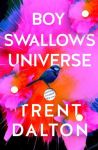
  • From Parent Gums: Trent Dalton’s Boy swallows universe, because I put it on my list as it’s my reading group’s next read.
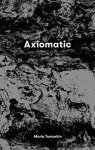
  • From Brother and Sister-in-law Gums: Maria Tumarkin’s Axiomatic, because my bother loved it and thinks I will too.
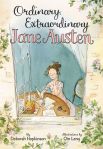
  • From a good friend who knows me well: Deborah Hopkinson’s gorgeous children’s picture book biography Ordinary, extraordinary Jane Austen: The story of six novels, three notebooks, a writing box, and one clever girl, because, well, that’s obvious isn’t it!

What about you? Any Christmas book news you care to report?

Monday musings on Australian literature: ABC RN presenters name their 2018 summer picks

Last Monday, I posted the best picks for 2018 by ABC RN’s Book Show presenters and some of their guests. I considered not posting at all this Monday. After all, it’s Christmas Eve and most of us are busy, but then, yesterday, I saw that the ABC had posted “2018’s best summer reads” recommended by their Hub on Books and Bookshelf program presenters. Of course, I couldn’t resist.

Unlike last week’s post, though, where I justified giving equal weight to all the picks, this week I’m going to prioritise their Aussie selections, and then mention the rest at the end. Seems fair enough for this Monday Musings series!

So, just four of the eleven picks were by Aussies, and they are:

  • Michael Mohammed Ahmed’s The lebs (Hachette): Sarah L’Estrange , producer of The Hub on Books, says that “There’s a lot of violence, homophobia and sexism in the novel — the author doesn’t recoil from an honest portrayal of life through the eyes of his protagonist” but that it is also “a lyrical, at times comical and often challenging read”.
  • Melissa Lucashenko’s Too much lip (UQP) which is on my TBR and I’ll be getting to it soon, maybe in summer!: Kate Evans of The Bookshelf, calls it “a cracking tale of family dynamics” that has “a touch of magic that’s light enough to feel entirely real, and keep readers reaching for words like ‘tough’ and ‘uncompromising’.” (Lisa has reviewed.)
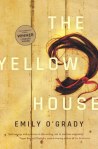
  • Emily O'Grady, The yellow houseEmily O’Grady’s The yellow house (Allen & Unwin) (my review): The Hub on Books’ Claire Nicholls describes it as “a chilling book that explores the different ways that trauma resonates through a family.”
  • Tracy Sorensen’s The lucky galah (Picador Australia): Sarah L’Estrange said that “While it might sound kooky, the novel is written in a warm, vivid and charming manner. Who knew that galahs could provide insight into 1960s Australian family dynamics?” (Lisa has reviewed and while it’s not her top pick, she thinks debut author Sorensen has promise.)

Interestingly, of last year’s six Aussie picks, I had read none at the time, and have picked up only one since, Sarah Krasnostein’s The trauma cleaner (my review). However, this year, I have already read one, as I’ve mentioned, and will be reading at least one other very soon.

Anyhow, the other picks were:

  • English writer Pat Barker’s The silence of the girls
  • American writer Amy Bloom’s White houses
  • Northern Irish writer Anna Burns Booker prize winner The milkman
  • American writer Andrew Sean Greer’s Pulitzer prize-winner Less
  • Chinese-born American writer Ling Ma’s Severance (which was published here by Text)
  • Indian writer Anuradha Roy’s All the lives we never lived
  • Canadian debut novelist Katherena Vermette’s The break (published here by Allen & Unwin).

While there was a preponderance of non-Aussie books in their picks, the selection as a whole feels more diverse than last year’s, with Arab-Australian writer Ahmed and indigenous Australian Lucashenko making up two of the four Aussie selections, and the rest not being your mainstream English and American writers (not to cast aspersions on the quality of the writing from those writers!) How great, for example to see a Canadian debut author here. The versatile Vermette is from Winnipeg and is of Métis descent, a group I hadn’t heard of before.

I should make a point here about my reference to diversity. My raising the issue is somewhat equivalent to discussion about quotas or not for increasing diversity in workplaces, in parliament, etc. I believe in merit, but I also believe that merit is often not judged in a fair playing field. This means that equally meritorious writing (however we define that) from non-dominant culture writers does not necessarily get equal exposure, because, for example, publishers, agents, and even, if they do get published, readers, do not take a “risk” on them. The more we talk about the issue, the more, I hope, the opportunities will be equalled.

Anyhow, if you are wondering about my picks, I’ll be joining the fray next week when 2019 arrives … I know you can hardly wait!

Meanwhile, have you read any of these books, and would you support the presenters’ recommendations for them?

My reading group’s top picks for 2018

Having enjoyed doing our top picks last year, my reading group decided to repeat the exercise this year. I’m assuming that, in the spirit of end-of-year lists, you might be interested to see the results, particularly as you will all know at least some of these books.

I’ll start, though, by listing what we read in the order we read them (with links to my reviews):

We returned to our fiction roots this year. Last year four of our eleven books were non-fiction, but this year only one was (except that for our Helen Garner night there was, not surprisingly, a mix of fiction and non-fiction.) This re-balancing mirrors my own reading this year.

And now, the winners …

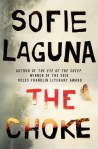
Sofie Laguna, The chokeEleven of our twelve currently active members voted. We had to name our top three picks, which resulted in 31 votes being cast (one member casting just one vote). The results were:

1. The choke, by Sofie Laguna (6 votes)
2. The immortal life of Henrietta Lacks, by Rebecca Skloot (5 votes)
3. The sympathizer, by Viet Thanh Nguyen; The merry-go-round in the sea, by Randolph Stow; and Austerlitz, by WG Sebald (4 votes each)

Highly commended: An unnecessary woman, by Rabih Alameddine (3 votes).

In other words, six of our eleven books received 26 of the 31 votes cast, which is similarly decisive to last year’s figures. It’s interesting, given that most books were liked

Of course, this is not a scientific survey. Votes were all given equal weight, even where people indicated an order of preference, and not everyone read every book, which means different people voted from different “pools”. 

Anyhow, a reasonably varied lot. Of the five which shared the top three positions, we had two Aussies, two Americans (albeit one Vietnamese born), two women, one translated fiction, one classic and one non-fiction. No indigenous writer, though we did read one.

Selected comments (accompanying the votes)
  • The choke: Two of the comments focused on the naive narrator, one saying “rivetting read and clever use of naïve narrator”;  and one referred to its emotional impact, saying “harrowing but brilliant and insightful.”
  • The immortal life of Henrietta Lacks: The doctor in our midst said, simply, “every medico should read it”, while another member was more expansive, saying, “What a marvellous account of a scientific breakthrough, within the real challenges of black lives, and this family in particular. A nuanced account of a continuing ethical dilemma.”
  • The sympathizer: Most of us commented on its offering a different, valuable, perspective on The Vietnam (or American) War. One member elaborated: “The bleak humor and cleverness of the writing showed why it won the Pulitzer, but it was the extraordinary character leading through a war and revolution that really made it something new and challenging.”
  • The merry-go-round-in-the-sea: The two commenters said “Sophisticated, layered autobiographical novel; lovely, involving descriptions of rural Australian life;  beautifully developed complex characters; humour” and “So glad to have read this superb Australian author, whose depiction of landscape, and his torn relationship with Australia and his family was truly beautiful.” Couldn’t have said it better myself.
  • Austerlitz: Both commenters noted the “dense writing” with one adding that it was “a great feat of imagination” and the other referring to its “amazingly sustained mesmeric tone.”

If you are interested in our schedule for next year, I have already posted that in my most recent My Literary Week post.

And a bonus!

A good friend of mine – we met over 40 years ago in library school – has just told me her reading group’s Top Picks for the year. She’s happy for me to share them – so we’ll start with the books her group read this year:

  • The dry, by Jane Harper (novel, Australian author)
  • The good life by Hugh Mackay (non-fiction, Australian author)
  • The rules of backyard cricket, by Jock Serong (novel, Australian author)
  • And the mountains echoed, by Khaled Hasseini (novel, Afghan-born American author)
  • The rip, by Robert Drewe (short story collection, Australian author)
  • Lincoln in the Bardo, by George Saunders (novel, American author)
  • The good people, by Hannah Kent (novel, Australian author)
  • The light between the oceans, by M L Stedman (novel, Australian author)
  • Warlight, by Michael Ondaatje (novel, Sri Lankan-born Canadian writer)
  • The shepherd’s hut, by Tim Winton (novel, Australian author)

It’s amazing isn’t it, how two reading groups comprising women of a similar age living in the same region, end up reading completely different books! So many books, I suppose.

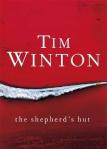
Tim Winton, The shepherd's hutAnyhow, their top picks were:

  1. The shepherd’s hut, by Tim Winton
  2. Warlight, by Michael Ondaatje
  3. The rules of backyard cricket, by Jock Serong

So, all fiction, all male, two Aussies, and none read by my group! But, all worthy books for reading groups, and all books I’d very happily read. Just saying – in case your group is looking around for books to read!

If you are in a reading group – face-to-face or online – would you care to share your 2018 highlights?

Monday musings on Australian literature: ABC RN presenters name their top 2018 reads

In recent years, I’ve shared ABC RN presenters’ suggested summer reads, but this year I’m sharing Best Reads of 2018, from the two presenters of The Bookshelf program, and some of their guests. For more lists, and related links, you can check out the webpages for their December 7 and December 14 radio shows.

Trent Dalton, Boy swallows universeNicole Abadee (literary consultant and books writer for AFR Magazine and Good Weekend):

Trent Dalton (author of Boy swallows universe):

  • Haruki Murakami, Colourless Tsukuru Tazaki (Japanese)
  • Geraldine Brooks, People of the book (Australian-American) (an older book, and one I read before blogging)
  • Larry McMurtry, Lonesome Dove (American) (another older book, as I’m sure you know)

Kate Evans (presenter on The Bookshelf): 

  • Melissa Lucashenko, Too much lip (Australian)(on my TBR – I’ll get to it soon)
  • Michael Ondaatje, Warlight (Canadian)
  • Imogen Hermes Gowar, The mermaid and Mrs Hancock (English)
  • Peter Cochrane, The making of Martin Sparrow (Australian)
  • Tayari Jones, An American marriage (American) (Kate of booksaremyfavouriteandbest identifies this as the book which appeared most frequently in the 37 best-of-2018 lists she analysed)

Amelia Lush (Stella Prize judge, and head of Children and Young Adult programming for the Sydney Writers’ Festival):

  • Rebecca Makkai, The great believers (American)
  • Tara Westover, Educated (American) (A memoir highly recommended by my Californian friend)
  • Maria Turmarkin, Axiomatic (Australian) (Highly recommended by Brother Gums)

Cassie McCullagh (presenter on The Bookshelf): 

  • Rachel Cusk, Kudos (Canadian-born English)
  • Sally Rooney, Normal people (Irish)
  • Tim Winton, The shepherd’s hut (Australian)
  • Peter Cochrane, The making of Martin Sparrow (Australian)
  • Tayari Jones, An American marriage (American)

Shaun Prescott (author of The town)

  • Dag Solstad, T Singer (Norwegian)
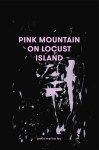
  • Jamie Marina Lau, Pink Mountain on Locust Island (Australian)
  • Olivia Laing, Crudo (English)

OK, so not many of these are Australian, but for this particular Christmas list I relax my rules to focus on Australian readers (at the ABC!)

Anyhow, a few observations. Of the 23 top picks, there are only three duplications: Peter Cochrane’s The making of Martin Sparrow; Tayari Jones’ An American marriage; and Rebecca Makkai’s The great believers. Only one of these is Australian, Cochrane’s historical novel set in the early days of the colony. This lack of duplication is probably not surprising given all the books that are out there for us to read.

Just two of the books (unless I’ve missed something) are non-fiction – Tara Westover’s Educated and Maria Tumarkin’s Axiomatic. Again, probably not surprising.

And, most of the books are anglo – Australian, American, English, Canadian, Irish – with just two that aren’t, Murakami from Japan, and Solstad from Norway.  We really aren’t, it seems to me, very good at reading translated books from other cultures – and I admit that my reading diet is light on in that area too. Only one, as far as I can tell, is by an indigenous Australian.

Anyhow, I hope you have found this at least a bit interesting!

What ONE book would you recommend from your 2018 reads for the rest of us to read over the holidays?

Monday musings on Australian literature: Some New Releases in 2018

This, you may be pleased to know, is the last of my set of end-of-year-beginning-of-year posts. And, as is obvious from the post title, it’s about books that will be published this year. As in previous years, I’ll just be sharing a selection of those that interest me (though listing them doesn’t mean that I expect to read them all, just that they interest me!!) A quick scan of last year’s list shows that I read about 20% of what I listed, though a few more are on the TBR pile, so you never know.

My list, as in previous years, is mostly drawn from Jane Sullivan’s article in the Sydney Morning Herald. And, because this is a Monday musings on Australian literature post, my list will focus on Australian authors – and will be listed alphabetically by author.

Fiction

  • Jenny Ackland’s Little Gods (Allen & Unwin, April)
  • Stephanie Bishop’s Man out of time (Hachette, September)
  • John Clanchy’s Sisters (La Muse Books, early 2018)
  • Ceridwen Dovey’s In the garden of the fugitives (Hamish Hamilton, March)
  • Justine Ettler’s Bohemia Beach (Transit Lounge, April). I admit that I hadn’t even heard of her until Bill (The Australian Legend) posted on her recently.
  • Rodney Hall’s A stolen season (Pan Macmillan, April)
  • Rosalie Ham’s The year of the farmer (Pan Macmillan, no date but later in the year)
  • Gail Jones’ The death of Noah Glass (Text, April). I have yet to read Jones. Maybe this will be it.
  • Thomas Keneally’s Two old men dying (Vintage, October) seems to be inspired by Mungo Man, whose story I’ve researched in the past.
  • Eleanor Limprecht’s The passengers (Allen & Unwin, March) which interests me given I enjoyed her historical novel, Long Bay (my review)
  • Melissa Lucashenko’s Too much lip (UQP, August) which I’d love to read, as I’ve reviewed short stories and essays by her here, but not a novel.
  • Kristina Olsson’s Shell (Scribner, October)
  • Avan Judd Stallard’s Spinifex and sunflowers (Fremantle Press, February) is inspired by the author’s experience while working in a refugee detention centre.
  • Tim Winton’s The shepherd’s hut (Hamish Hamilton, March) apparently has “an anti-hero who will break your heart”.

Short stories

Yes, I know these are fiction too, but they deserve a special section!

  • Robert Drewe’s The true colour of the sea (Hamish Hamilton, September). Another Drewe book title inspired by the sea, like The bodysurfers, The drowner, The rip and Sharknet!
  • Anna Krien’s Act of grace (Black Inc, September) is a debut collection from an established non-fiction writer whom I’ve reviewed here a few times.
  • Gerald Murnane’s collection of short fiction from the last 30 years (Giramondo, April): I’ve reviewed a couple of his works to date.

Non-fiction

Sullivan provides a rather long list of new non-fiction books, including several memoirs, so I’m going to be very selective here (which will give away my interests – but you know them already so it won’t really surprise you!)

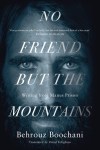
  • Behrouz Boochani’s Manus (Pan Macmillan, June): memoir by journalist and detained asylum seeker, written on a smuggled cell phone
  • Danielle Clode’s The wasp and the orchid (Pan Macmillan, April): biography of Australian naturalist Edith Coleman
  • Anita Heiss’s Growing up Aboriginal in Australia (Black Inc, April): an essay anthology
  • Kon Karapanagiotidis’ The Power of Hope (HarperCollins, July)refugee memoir by the founder of the Asylum Seeker Resource Centre
  • Hung Lee’s The Crappiest Refugee (Affirm Press, March): memoir by comedian, the title clearly satirising Anh Do’s 2010 memoir, The happiest refugee!
  • Michelle Scott Tucker’s Elizabeth Macarthur: A life at the edge of the world: biography by the delightful blogger MST (Adventures in Biography) whom I met early-ish in this book’s journey. Check out her blog for the fascinating story of its genesis
  • Anne Summers’ Becoming (Allen & Unwin, no date): memoir by one of Australia’s best-known feminists
  • Gillian Triggs’ Speaking up (UQP, October): memoir
  • Majok Tulba’s When elephants fight (Hamish Hamilton, August): memoir, by Sudanese refugee, a follow-up to his Beneath the darkening sky
  • Maria Tumarkin’s Axiomatic (Brow Books, May): described as “part-cultural history, part-essay, and part-memoir [on] how we look at the past”
  • Fiona Wright’s second essay collection (Giramondo, September), which I look forward to, having liked her Small acts of disappearance in 2016.

Do you actively look out for coming releases, or just wait until they appear and you read or hear about them?

Reading highlights for 2017

I do hope I don’t disappoint my Monday Musings fans too much, but as this Monday also happens to be January 1, I’d like to use it to share my reading highlights for the year. Rest assured – if you care – that Monday Musings will be back. (Indeed, next week’s is already in the bag.)

So, to my 2017 reading highlights. As usual, I won’t be naming a top ten, or somesuch, because as I’ve said before I’m a wuss. It’s too hard. I could never be a literary awards judge. However, I had a great reading year – albeit a very unusual one – as you will see …

First, though, this year’s …

Literary highlights

Muse bookshop

Muse bookshop (before an event)

Literary highlights mean for me literary events, and there were many wonderful events in Canberra this year. I missed a lot f them because I was away or had clashes, but those I did attend gave me much to think about:

  • Festival Muse: Muse is one of my favourite places in Canberra. Billing itself as “Food, Wine, Books”, Muse is a cafe, bookshop and event venue. They regularly hold author events, but early in the year they organised a literary festival. The sessions I attended were wunderbar. Given our Canberra location, their Festival, like the Canberra Writers’ Festival, includes quite a bit of political content. I wrote two posts (Women of the Press Gallery, Robyn Cadwallader author interview)
  • Canberra Writers Festival on which I wrote four posts (Day 1, Day 2 Pt 1, Day 2 Pt 2, Day 2 Pt 3): I loved the variety of sessions I attended, but had to miss the last day due to a cold which made attending the second day hard enough. Roll on 2018.)
  • Author interviews: I missed so many this year, but I did enjoy hearing Charlotte Wood, Sofie Laguna, and Jelena Dokic.
  • Two annual lectures at the NLA, which I try to make a fixture in my calendar: the Seymour Biography Lecture, given this year by Raimond Gaita; and the Ray Mathew Lecture given by Kim Scott. These lectures are the best – and we always follow them up with supper at Muse! What’s not to like!

Reading highlights

As in previous years, I’m going to discuss this year’s reading highlights – the books that made the biggest impression – under categories appropriate to this year’s experience (links to my reviews).

The reading … it was a year of …

  • Sara Dowse, As the lonely blyLosing myself in grand sweeps: There was Sara Dowse’s As the lonely fly which spanned the lives of Russian Jewish émigrés to Israel and the USA over most of the twentieth century; Min Jin Lee’s Pachinko which looked at Koreans in Japan over the same period; and Catherine McKinnon’s Storyland which, in an inventive structure, told the story of a region of southeast Australia from the late 18th century to a 28th century dystopian future! Now that was a grand sweep! All three books were great reads which gave me plenty to think about.
  • Exploring displacement: As I reviewed my reading for the year, the theme of displacement kept popping up, book after book. I wonder why that would be!? The first two grand sweep books fit this theme, but others included Ali Cobby Eckermann’s Too afraid to cry (about being an indigenous child adopted into a non-indigenous family), Stan Grant’s Talking to my country (about indigenous people’s displacement by colonial settlers), Yuri Herrera’s Signs preceding the end of the world (about Mexicans making the crossing to the USA), AS Patrić’s Black rock white city (about Serbian refugees in Australia), Hoa Pham’s Lady of the realm (about a Vietnamese Buddhist nun displaced in her own country) and Viet Thanh Nguyen’s The sympathizer (about Vietnamese refugees in the USA).
  • Ali Cobby Eckermann, Inside my motherDelving into indigenous Australia: While I only read four works by indigenous Australians, they were a varied, inspiring lot: Ali Cobby Eckerman’s memoir Too afraid to cry and her poetry collection Inside my mother, Stan Grant’s hybrid memoir Talking to my country, and the Writing black anthology edited by Ellen van Neerven. These, and two other books, The stolen children edited by Carmel Bird, and Kim Mahood’s Position doubtful, contributed significantly to my growing understanding of life as experienced by indigenous Australians and how I might accommodate this understanding in my own life.
  • Indulging in short stories: Are you surprised! Okay, okay, I can’t name them all, so I’m picking the four that jumped into my head: Rebekah Clarkson’s Barking dogs and Karen Thompson’s Flame tip, which were connected by location and theme; the more traditional collection, Stephanie Buckle’s Habits of silence and Stephen Orr’s Datsunland.
  • Anos Irani, The scribeMeeting unusual narrators: Unlike some readers who look askance at odd narrators, I’m open to them (in the hands of great writers, anyhow). Ian McEwan’s foetus in Nutshell and Carmel Bird’s skeleton in the cupboard in The family skeleton took me along with them into their – hmm – challenging families. The transgendered Madhu in Anosh Irani’s The parcel fits here too, though perhaps shouldn’t (be seen as unusual, I mean). The confessional tone maintained by the unnamed mole (of the spy not furry variety) narrating Viet Thanh Nguyen’s The sympathizer made him a somewhat unusual narrator too. And finally, how can I forget the slippery Hartmann Wallis in the eponymous (sort of) Who said what, exactly.
  • Discovering the lives of “real” others in fiction and non-fiction: Heather Rose’s novel The museum of modern love and Bernadette Brennan’s literary portrait A writing life; Helen Garner and her work were standouts here.

There were many more great books, including several classics (see, I haven’t even mentioned she who should be named) and some fascinating biographies, but I need to finish somewhere – don’t I, dear patient reader.

Some stats …

And here is where there are some surprises (for me, anyhow):

  • 53% of my reading was fiction, short stories and novels (versus 63% in 2016, and even more in 2015): While I was vaguely aware this was happening, I must say I’m not happy with it. Part of the reason is that my reading group did more non-fiction this year – four out of eleven in fact – where we usually only do one, and part of it is due to review copies sent my way. Very few of the non-fiction I read were actively chosen by me. I hope to recalibrate this somewhat next year.
  • 73% of the authors I read were women (versus 65% and 67% in 2016 and 2015 respectively): Again, while I like to read women writers and count reading them as one of my specific reading interests, I didn’t actively seek to increase the proportion this year. I can’t blame my reading group for this one, as our ratio there was 55%!
  • 35% of the works I read were NOT by Australian writers (versus 32% in 2016!): Roughly one-third non-Australian, two-thirds Australian feels like a fair ratio to me.
  • 31% of the works I read were published before 2000 (similar to last year’s 35%): Again, I’m happy with this. I like to keep delving into past works, but it’s a challenge doing so while trying to keep up with the contemporary literary scene.

So, some trends I’m comfortable with, and some less so. I don’t usually set goals for the year – besides a soft goal of trying, vainly, to reduce the TBR pile – but in 2018 I will do my best to lift the fiction ratio (albeit my first review for 2018 will be – wah – non-fiction!) This is not to say I don’t like non-fiction, because I do, but I have felt the lack of fiction at times. I need it in my life.

Overall, it was a good reading year, and I have loved sharing it with you. So, as I wrote last year, a big thankyou for reading my posts, engaging in discussion, recommending more books and, generally, being all-round great people to talk with.

I hope you all have a wonderful 2018. I also hope that you will continue to visit me here to share your thoughts. (And I will do the same for those of you who have your own blogs. What a lovely community we have.)

What were your reading or literary highlights for the year?

Books given and received for Christmas, in 2017

Claire G Coleman, Terra NulliusIn what is becoming a Boxing Day tradition – I have many traditions it seems at the end of the year – I am doing, again, a post on the books I gave and received this Christmas.

  • For Ma Gums, who has worked as a lexicographer, another word-oriented book (giving her such books is becoming another tradition!): Ann Patty’s Living with a dead language: My romance with Latin. My mum loved Latin at school and how it’s helped her with language throughout her now long life. I hope she likes this book.
  • For Daughter Gums, who reads widely but perhaps less so in the classics: A classic Australian, Christina Stead’s Little hotel.
  • For Brother Gums, who reads broadly, including keeping up with new Aussie releases: Robert Drewe’s latest, Whipbird, which was recently reviewed favourably by Lisa (ANZLitLovers).
  • For Sister-in-law Gums, who’s always interested in diverse authors and subjects, another recent Aussie book: Claire Coleman’s Terra nullius.
  • For Gums’ Californian friend, to whom I always like to send something Aussie: Stephanie Buckle’s short story collection, Habits of silence (my review). Not only is it a great read that appeals particularly, I think, to older readers, but it’s also a light one to post!

Peter Carey, A long way from hereAs for what I received, a varied but a much appreciated bunch:

  • From Parent Gums: Three books, because, strangely, they know I like to read. What a bonanza: Peter Carey’s A long way from here, Michelle de Kretser’s The life to come, and W. Bruce Cameron’s A dog’s way home.
  • From Son and Daughter Gums, who heard about my reading group schedule: Claire Coleman’s Terra nullius and Richard Flanagan’s First person. (I think I’m set for our next schedule now. I just have to find time to read them now.)
  • From Brother and Sister-in-law Gums, who, I’m pleased to say, usually give me books from their southern state: Rachel Leary’s novel Bridget Crack, which has been getting some good reviews around the blogs, and Tasmanian poet Robyn Mathison’s gorgeous little poetry collection Still bravely singing. I love reading books from our southern state.
  • From my Californian friend who gave me Viet Thanh Nguyen’s wonderful Pulitzer prize-winning The sympathizer last year: Viet Thanh Nguyen’s follow-up book The refugees, which fits beautifully into what seems to be my current reading trend, stories about displacement.
  • From a Jane Austen group member who organised a lucky dip of her duplicates at our end-of year-plus-Jane’s-birthday-celebration. An inspired idea – at least we all thought so (!): Paula Byrne’s Jane Austen: A life in small things. I have been tempted to buy this book several times, so am thrilled to have a copy.
  • From my now Octogenarian volunteer from my working days, with whom I keep in contact for semi-regular lunches: A gift voucher from a bookshop. Woo-hoo!

What about you? Any Christmas book news you care to report

Monday musings on Australian literature: Australian Women Writers Challenge 2017

aww2017 badgeAs has become tradition, I’m devoting my last Monday Musings of the year to the Australian Women Writers Challenge*. But, this time, my last Monday Musings also coincides with Christmas Day, so I wish a happy, peaceful holiday season to all my readers here who celebrate this time of year, however or whatever you celebrate.

Now, on with the show … This year has been an active one at the Challenge with a significantly increased number of reviews, in my area at least. We’ve also, with the help of new Challenge volunteer Theresa Smith (of Theresa Smith writes), published a large number of interviews with authors in our Spotlight series and, through connections made by Challenge founder Elizabeth Lhuede, published several posts on classic Australian women writers. In other words, we are extending the content on the blog to make it a broader resource beyond our round-ups and the reviews database which is, of course, the backbone of the challenge. The database now contains reviews for over 4,400 books across all forms and genres of Australian women’s writing, from all periods. This represents an increase of over 20% on last year’s total. Another good achievement.

Once again the Challenge ran some special events during the year, achieved some milestones, and introduced some new initiatives. These include:

  • Spotlights: Throughout the year we posted a variety of Spotlights – Saturday and Sunday Spotlights comprised author interviews (of which I did two, with Sara Dowse and Dorothy Johnston), Small Press Spotlights in which we featured some of Australia’s small publishing houses), and spotlights on classic women authors, like Ada Cambridge.
  • Facebook Page: Our Facebook Page – Reading Australian Women Writers – which was created last year, continues to attract readers wanting to share their latest Aussie women writers’ reads.
  • Bingo: We ran our second Bingo challenge – two in fact, one general, one classic – but I let it slip. Next year I will try a reminder system, although I’m not keen to overfill my blog with non-review content.
  • New releases: We are playing with how to capture and promote upcoming releases. We haven’t settled on the perfect process yet. Watch the blog for more on this.
  • Diversity: Once again author and researcher Jessica White coordinated a series of guest posts by “diverse” writers. There were posts by writers living with mental illness, by lesbian/queer writers, and others. These sorts of posts help make the AWW blog stand out from the crowd.

My personal round-up for the year

Let’s start with the facts, followed by some commentary. By the end of the year I will have posted 30 reviews for the challenge, the same as last year. Here they are, with links to my reviews:

Catherine McKinnon, StorylandFICTION

Rebekah Clarkson, Barking dogsSHORT STORIES

POETRY and VERSE NOVELS

Gabrielle Carey, Moving among strangersNON-FICTION

I’ve noticed an interesting trend over the last three years in my Aussie women’s reading – a noticeable decrease in the proportion of novels:  48% in 2015, 40% in 2016, and just 34% this year. I’m not sure why this is, but I have been aware of reading more non-fiction this year – more by accident than on purpose. The types of novels I read changed from last year too, with very few debut novels this year as against nearly half last year, and two classics as against none last year!

Indigenous writers represented 10% of my total, with two books by Ali Cobby Eckermann and one by Ellen van Neerven. And memoir featured significantly – again – in my non-fiction reading, though they weren’t all your traditional memoir, one being an essay anthology, and two being what I would call “hybrids”. Overall, I’m reasonably satisfied with the diversity of my contribution – though I could always do better.

Anyhow, if you’d like to know more, check out the challenge here. The 2018 sign up form is ready, so do consider joining us. All readers are welcome. I’ll be there again (this being my sign-up post).  The challenge is also on Facebook, Twitter (@auswomenwriters), GoodReads and Google+.

Finally, a big thanks to Theresa, Elizabeth and the rest of the team – including my longtime online bookgroup friend Janine Rizzetti (Resident Judge of Port Phillip), who joined us this year. Once again it has been a positive experience, which is a credit to the willingness and flexibility of those involved. See you in 2018.

* This challenge was instigated by Elizabeth Lhuede in 2012 in response to concerns in Australian literary circles about the lack of recognition for women writers. I am one of the challenge’s volunteers – with responsibility for the Literary and Classics area.