My reading group’s favourites for 2025

Once again, I am sharing my reading group’s top picks for the year, because I think, like me, many of you enjoy hearing about other reading groups.

I’ll start by sharing what we read in the order we read them (with links on titles to my reviews):

Last year, I wrote that our schedule had been less diverse than it had been for a while, with eight of our eleven authors being Australian, seven of whom were Australian women. I’m always happy to support Australian women writers as you know, but diversity in a reading group is good. This year we did mix it up more. Only five of our eleven authors were Australian, four of whom were women. Of the other six, three were by American writers, and three by writers from Great Britain and Ireland. This could sound a little white-anglo focused but there was some diversity in our writers’ backgrounds, with an African American, First Nations American, and three Australians coming from migrant backgrounds (including Winnie Dunn, the first published Tongan Australian novelist). We read four male writers this year, versus two last year, but only one nonfiction work versus three last year. We didn’t read any novels in translation, which I’d love to rectify, and for the first time in a while we read no First Nations Australian work.

The top picks …

Like last year all eleven of our regularly attending members voted, meaning the maximum a book could get was 11 votes, and that there were 33 votes all up. The rules were the same. We had to name our three favourite works, and all were given equal weighting. Last year, the top three positions were closely fought with just a vote between each of the place-getters, but this year we had a runaway winner, and second place was ahead of the pack too, with two then tying for third place. (A bit more like 2023’s Top Picks).

2025’s top three places were:

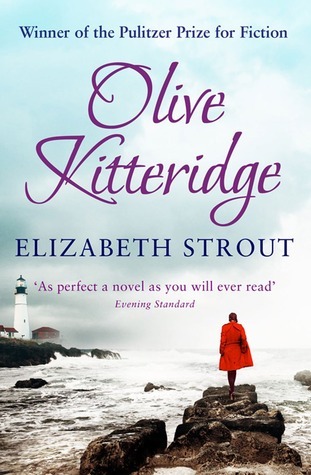
  1. Olive Kitteridge by Elizabeth Strout (9 votes)
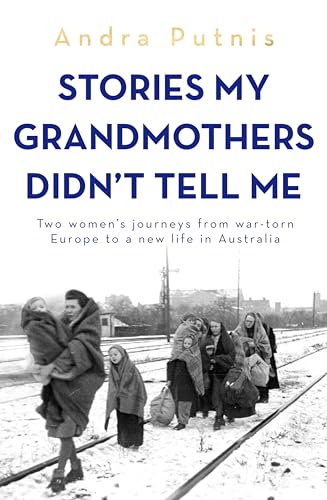
  2. Stories my grandmothers didn’t tell me by Andra Putnis (7 votes)
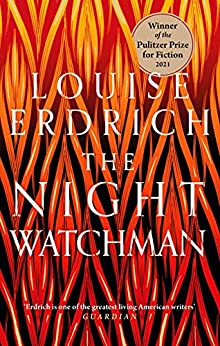
  3. Caledonian Road by Andrew O’Hagan and The night watchman by Louise Erdrich (4 votes each )

We didn’t name any highly commendeds because the rest of the votes were evenly spread across the rest of the books, with four receiving two votes, one receiving one, and two receiving no votes (not because, as we discussed at our Christmas do, they were disliked so much as they just didn’t jump out at people when it came to choosing three.) Some of the biggest Austen fans in the group didn’t vote for Mansfield Park (which received two votes) because, first, it was a multiple re-read for most of us and we decided to choose from new reads, and second, because it is in a league of its own.

As for my three picks, it was very tough (as always). I got something out of every book I read, and many will stay with me for a long time. There were five that I really wanted to nominate. Unlike last year, the group’s top pick was in my top three, but like last year, and like most years, my three books were all fiction. They were, in alphabetical order, Louise Erdrich’s The night watchman, Percival Everett’s James, and Elizabeth Strout’s Olive Kitteridge. I chose these because Strout took a flawed middle-aged woman and her community and described them with great humanity; because Erdrich captured an important story in First Nations American history and told it through characters who felt whole and real; and because Everett, with clever wit, used language in a way that shows the fundamental role it plays the power dynamic.

Selected comments

Not everyone included comments with their picks, and not all books received comments, but here’s a flavour of what was said:

Cover
  • Olive Kitteridge: Commenters talked about the humour and characterisation that made us come to like and understand a flawed protagonist; one described it beautifully saying “original voice, earthy characters, and quirky stories”.
  • Stories my grandmothers didn’t tell me: Commenters focused on its impact on their feelings, and its meaningful portrayal of the experiences of migration; one described it as “deeply personal [but] also universal”.
  • Caledonian Road: Four votes but only one comment which, however, summed it up perfectly, “loved the depth, breadth, Dickensian layers of multiple characters, and stories of modern London”.
  • The night watchman: The two commenters talked of its evocation of place and characters, and its depiction of a community coming together to oppose unfair laws that threaten to dispossess them more than they already were.

I’d love to hear your thoughts, particularly if you were in a reading group this year. What did your group read and love?

2025 Mark and Evette Moran Nib Literary Award shortlist

This is a quick post because I’m on the road in Japan, but I do like the Mark and Evette Moran Nib Literary Awards, and their shortlist has just been announced, so here is a quick post.

Just to recap if you don’t recollect my previous posts on this award, it is not limited by genre or form – that is both fiction and non-fiction are eligible. The judging is based on “on literary merit, research, readability, and value to the community”. Research and value to the community are interesting criteria. I have written about it before, so if you are interested in its origins and intentions please check that link. Previous winners include historians Alison Bashford and Claire Wright, biologist Tim Low, novelists Helen Garner and Delia Falconer, and journalist Gideon Haigh.

Each of the six finalists receive the $1500 Alex Buzo Shortlist Prize and are eligible for the $4,000 Nib People’s Choice Prize, which, by definition, is awarded by popular vote. The winner will receive $40,000.

The judges for the 2025 award are Sydney based writer, editor and arts producer Lliane Clarke, publisher and award-winning editor Julia Carlomagno, and author and publishing professional Angela Meyer (whom I’ve reviewed a few times here). They said, according to the email I received from Waverley Council which manages the award:

“In reading the nominations this year, we noted the effort, dedication and often bravery required to delve with such depths into topics of personal, political and cultural significance. The shortlisted books display great passion and commitment on the part of the authors and publishers, often years and decades of work, and they are all thoughtfully constructed, absorbing, moving works of literature with great value to the community”.

The email also said that this is the Award’s 24th year, and describe it as “one of Australia’s most high-profile and valuable book prizes, celebrating the most compelling research-based literature published annually”.

The 2025 shortlist

Last year I had, unusually for me, read two of the six shortlisted books, but this year we are back to the status quo! That is, I’ve read none, though most interest me. There were 174 submissions.

  • Helen Ennis (ACT), Max Dupain (biography)
  • Amy McQuire (Qld), Black witness (nonfiction/essays)
  • Rick Morton (NSW), Mean streak (nonfiction)
  • Samah Sabawi (Vic), Cactus pear for my beloved (memoir) 
  • Martin Thomas (ACT), Clever men (history)
  • Tasma Walton (WA), I am Nannertgarrook (historical fiction)

This list seems to be a bit broader, as in less life-writing heavy, than it has sometimes been, but like last year, there is just one work of fiction.

You can vote for the People’s Choice award at this link, but voting closes on October 9.

Have you read any of these books?

Miles Franklin Award 2025 shortlist

For some reason, I haven’t posted on the Miles Franklin Award shortlist for a few years, probably partly due to timing because I often travel in the southern hemisphere winter. However, I have time to post on this year’s shortlist that has just been announced, and, what’s more, I have read or will read more of this list than I have for some time. I find the list exciting, mainly because all have caught my attention – though I’ve not read them – before they were listed. That hasn’t always been the case recently.

The shortlist

  • Brian Castro, Chinese postman (Giramondo) (on my reading group’s 2025 schedule) (Lisa’s review): Castro has been shortlisted before
  • Michelle de Kretser, Theory & practice (Text Publishing) (my review): de Kretser has won twice before, and this book recently won the Stella
  • Winnie Dunn, Dirt poor islanders (Hachette Australia) (on my reading group’s 2025 schedule): debut novel by a Tongan Australian writer
  • Julie Janson, Compassion (Magabala Books): sequel to Benevolence (my review); this author’s first listing
  • Siang Lu, Ghost cities (UQP): Lu’s first shortlisting for the MF
  • Fiona McFarlane, Highway 13 (Allen and Unwin) (kimbofo’s review): McFarlane has been shortlisted before; but this book straddles the short story/novel divide. I’m keen to read it.

Some random observations:

  • Five of the six shortlisted writers are writers of colour, reflecting the increasing diversity in Australian publishing.
  • Two of the shortlisted writers – Castro and Lu – are male, but a male writer has not won since 2016 (AS Patrić’s, Black rock white city – my review).
  • “Each of the six books investigates race, class and gender in contemporary Australia but in different ways. It’s very hard to compare books like Ghost Cities and Dirt Poor Islanders because they’re written in such distinct ways, but they both encourage us to think about narrative and who owns stories” (from Sarah L’Estrange of the ABC).
  • One of the books, Highway 13, is more like a short story collection, and others are “quite formless”, says Declan Fry (of the ABC) who approves the trend.
  • There’s a wide spread of publishers, including a few independent Australian ones, which is always good to see as these small publishers do the hard yards with our literary writers

For more discussion by the ABC RN’s book people – on the shortlist and on each of the books – check out this page.

For posterity’s sake, here was the longlist

  • Brian Castro, Chinese postman
  • Melanie Cheng, The Burrow (my review)
  • Michelle de Kretser, Theory & practice
  • Winnie Dunn, Dirt Poor Islanders
  • Julie Janson, Compassion
  • Yumna Kassa, Politica (on my TBR)
  • Siang Lu, Ghost Cities
  • Fiona McFarlane, Highway 13
  • Raeden Richardson, The degenerates (Lisa’s review)
  • Tim Winton, Juice (kimbofo’s review

Each of the shortlisted writers will receive $5000 from the Copyright Agency’s Cultural Fund, with the winner receiving $60,000 prize.

This year’s judging panel comprises Richard Neville (Mitchell Librarian of the State Library of NSW and Chair), Associate Professor Jumana Bayeh (literary scholar), Dr Mridula Nath Chakraborty (literary scholar and translator), Professor Tony Hughes-d’Aeth (literary scholar and author) and Professor Hsu-Ming Teo (author and literary scholar).

ArtsHub, from which I drew the names on the judging panel, quotes the judges as saying:

“The shortlist for the 2025 Miles Franklin Literary Award celebrates writing that refuses to compromise. Each of these works vitalises the form of the novel and invents new languages for the Australian experience.”  

“Vitalises the form of the novel” and “invents new languages for the Australian experience” sound positive to me. Finding language for our experience is the issue, many of you will recognise, that I’ve found constantly in my Trove searches about Australian literature. It’s something that should never stop. As our society changes (its makeup for a start), so does our culture, and so also should the language we use to explore and reflect that.

The winner will be announced on 24 July

What do you think of the shortlist?

Monday musings on Australian literature: on 1924: 2, New novels

Then as now, newspapers regularly announced new Australian novels as they are published. In these year-based series, I’ve not done a post specifically on the new releases, so have decided to do it for this year. This is not complete but contains books by authors who had some career longevity.

New novel releases

I’ve listed the books alphabetically by title, and have included some of the assessments made by the papers. I’m not including the books published by Bookstall, of course, because I listed them last week.

Dale Collins, Ordeal (Cornstalk Publishing): The Land (1 August) says that “it may be said without hesitation that Ordeal would be a remarkable and arresting story under any circumstances, but it is all the more remarkable for being a first essay in this class of fiction” (this class being, I think, a sea adventure). However, there are also reservations: “Occasionally the writer does not appear to be over-sure of his ground, and here and there we have lapses into excessive analyses of emotions, with a slight over emphasis of subtle suggestion, but on the whole the work is admirable. 

Zora Cross, Daughters of the Seven Mile (Hutchinson): Cross’s debut novel was praised, albeit faults were also identified by The Australasian (10 May): “It is not by any means a book without faults, but its merits are many and considerable, and most of them are to be found in the drawing of its characters. The scene is laid in Queensland, in the bush country outside a promising mining town, and the theme of the story is the difficulty of bringing two great forces into harmony, the call of the bush and the allurement of life in great cities.” The paper claims that with her first novel she has “won an important place in the ranks of Australian novelists”.

Ruby M. Doyle, The winning of Miriam Heron (Edward Dunlop): I wrote a recent Forgotten Writers post on Doyle, so I won’t say much. The Australasian (8 November) says that “its best points lie in the studies of bush life, with which the author is evidently familiar”. The plot “is slight”, but Doyle “shows a facile, kindly pen in dealing with the humorous type, and writes a straight, healthy story, that has less of morbidity than has the usual Australian bush tale”. The Advertiser (18 November) also admires her ability to write of the bush. However, The Queenslander (15 November), which also criticises the plot, concludes, interestingly, with “Miss Doyle appears to have attempted to graft something of the Ku Klux mystery into the character of the Australian bush, and so the story develops an atmosphere in places that is not Australian”.

Mabel Forrest, The wild moth (Caswell): According to The Advertiser (9 August), its strength is less its story as its descriptions of the bush. It concludes that “the vivid descriptions of the various phases of Australian life are its most enduring and attractive features”. 

Fergus Hume, The moth woman (Hutchinson): Hume is not Australian, but he did live in Australia for while, and published his detective novel The mystery of a hansom cab (my review) here, which made him of interest to Australians. The Australasian (26 January) says it is “written with a vigour and a freshness that a younger man ambitious of writing stories of the kind might envy” and that “the night life of London, the drug traffic, a mysterious murder following upon efforts to cope with the vices of the under world, provide thrills enough to satisfy the most blase reader of “shockers.” Then the little kicker: “Probabilities or possibilities matter little when one excitement follows on another, when the reader likes that sort of thing.”

DH Lawrence, ML Skinner, The boy in the bush
First US ed., Thomas Seltzer, 1924

D.H. Lawrence and M.L. Skinner, The boy in the bush (Martin Seeker): Bill and I have both written about Lawrence and Skinner’s collaboration so I won’t repeat that here, but The Australasian (1 November) says that it’s “not easy to decide where Mr. Skinner [except it’s not Mr.] comes in, since there seems to be not a page in the book that is not unmistakably stamped with Mr. Lawrence’s peculiar genius”. Overall, the reviewer is not overly impressed, saying “an irritating mannerism is the repetition, of certain words and phrases, particularly in the description of physical peculiarities. While at times the story is vivid and almost overwhelmingly powerful, it lacks somehow the vital spark”. The Advertiser (22 November), on the other hand, is positive about its humour and insight, and calls it “readable”, but also comments that “at times Australians may be inclined to resent some of the severer criticisms of habits, dress, and customs”.

Vance Palmer, Cronulla (Cornstalk): The Australasian (13 December) gives Palmer’s book fairly short shrift, saying it “will be read with interest by reason of its Australian setting and the act of its being the work of a leading Australian writer”. For the reviewer, however, this station-life story is “built on well-worn lines, and has nothing new to offer either in plot or treatment”.

A few points about this list. First, there is the focus on bush and rural stories. Only two, it seems, are not; one is a sea story, and the other set in London. Even though our population was well urbanised, the bush was how we differentiated ourselves – both to ourselves, and in marketing ourselves to others. Then, there’s the fact that women writers are well in evidence, which confirms again what we know about Australia’s literary scene from the 1920s to 1940s. And, finally, I notice here, as I frequently notice in these earlier Trove articles, a willingness to identify faults. The comments are generally not smart-alecky or cruel, just clear about what they see as strengths and weaknesses. In some cases they recognise that the identified weaknesses are not important to the readers. In other cases, they note that it is a new author who can work on the problem areas. I wonder how the authors felt.

Thoughts?

Previous posts in the series: 1, Bookstall again

Monday musings on Australian literature: on 1924: 1, Bookstall, again

During 2022 and 2023, I wrote a series of posts on Australian literature as it was read, and thought about, a century earlier, in 1922 and 1923. Last year, I researched 1924, with a view to doing the same, and in fact heralded the upcoming 1924 series, but didn’t end up writing any posts. This was partly because many of the concerns were the similar to those of 1923, and partly because other ideas overtook me. But there were some interesting things said, so, nearly a quarter of the way through 2025, I’ve decided to write at least a couple of posts relating to 2024, starting with the Bookstall Company’s Bookstall series of Australian fiction.

This series of cheap paperbacks of Australian novels, as I have posted before, were introduced to the Australian market in 1904. I featured them in posts on 1922 and 1923, and am here updating us with 1924’s output. The series continued to serve its purpose, it seems, of supporting Australian writers as well as of providing reading matter at an affordable price. The Queenslander, introducing two new books in the series, started its brief article on June 7 with:

Australian novelists owe a great deal to the New South Wales Bookstall Company, which, during the last few years, has published more than 200 novels by Australian writers. 

Sydney’s The Labor Daily made a similar comment on December 16.

As far as I can tell from the research I did, publication did slow down with significantly fewer books published in 1924 than in 1923. Here is what I found.

  • Roy Bridges, By mountain tracks
  • Ernest Osborne, The copra trader
  • S.W. Powell, The trader of Kameko: South Seas
  • Lilian M. Pyke, The harp of life
  • W. Sabelberg, The key of mystery
  • H.E. Wickham, The great western road

So, just 6 books, compared with 20 in 1923, and only one by a woman. (There may have been a few more, but it’s these six that kept popping up in my searches.) Most are adventures of some sort and most feature a “love interest”.

Bushranger stories were still popular at this time, even though the worst of the bushranger era had ended by the 1880s. Both Roy Bridges’ By mountain tracks and Wickham’s The great western road belong to this genre. That said, Bridges’ book is described in The Queenslander (7 June) as “a story associated with the Kelly gang, but the theme generally is that of a romantic love episode”.

Two of the books, those by Pyke and Sabelberg, seem to be contemporary stories, Pyke’s being a tangled story about a waif rescued from the arms of its dead mother on a Queensland beach, and Sabelberg’s a mystery/thriller.

Adventures in the South Seas were apparently making a come-back around this time, with Jack McLaren (who appeared in my 1923 post), Ernest Osborne and S.W. Powell all setting books there. Hobart’s World (12 February) wrote of Powell’s novel as being “full of incident and adventure, and aglow with the rich color of the South Seas. A good shilling’s worth.” This latter point was frequently mentioned in reviews of Bookstall books. Indeed the World, in the same article, said of Wickham’s novel that

“Most of the characters in the book are well-drawn, and convincing, and there are humorous episodes to relieve the tragedies, and compensate for the author’s rather marked tendency to waste words in trite moralisings, and in a too-conscious elaboration of dialogue. Just the same, it is a marvellous shilling’s worth.”

Most reviewers of these books understood their intention as escapist reads or, what we would call today, commercial fiction, and wrote about them within that context. They either praised the works – with one, in fact, describing Osborne’s novel as “brilliantly written” – or, where they were critical, they tempered it with this understanding, as in the Powell example above. However, a report in the Murray Pioneer and Australian River Record (5 December) was not so generous. Sabelberg’s The key of mystery, it said, “is a crude murder story, crudely written”; Powell’s The trader of Kameko, “is a story, with no literary merit, of a white man, two brown girls and a hurricane”; and Wickham’s The great western road “is a story of the early gold rushes in N.S.W. of the same crude character as the other two”. Of course, reviewers do pitch their writing to their audience. Perhaps readers of the Murray Pioneer and Australian River Record had more refined tastes, and more money to spend, and our writer recognised that?

Some newspaper articles noted that some of these writers had already developed their writing skills in other forms. Sabelberg and Wickham, for example, are described as established, successful short story writers, and Lilian Pyke as a writer of “capital” stories for boys and girls – all of which proves, I guess, the point about Bookstall’s role in supporting Australian writers. How better to cut your teeth as a novelist than with a company like this?

And I will leave 1924 on this point. Life has been very busy this last week … so I have not been able to pay as much attention to reading and my blog as I’d like, but I do hope to post a review this week.

Stella Prize 2025 Longlist announced

Last year the Stella Prize longlist announcement took place on a Monday, gazumping that week’s Monday Musings. This year it’s a Tuesday, and it was again streamed online from the Adelaide Festival Writers Week …

As I say every year, I don’t do well at having read the Stella Prize longlist at the time of its announcement. In recent years the most I’ve read has been two (in 2019). Last year I’d read none at the time, but have read one since. This year, I have read one of the longlist (see below). I have read 8 of the 12 winners to date, which means I am falling behind! It’s not that I necessarily disagree with the winners, but just that my reading has been leading me in other directions.

In Stella’s spirit of keeping their judging panels fresh, none of this year’s judges were on last year’s panel, though some have judged before. This year’s panel comprises Gudanji/Wakaja woman, educator and author Debra Dank; teacher, interviewer/podcaster, and critic Astrid Edwards; writer and photographer Leah-Jing McIntosh; Sudanese–Australian media presenter and writer, Yassmin Abdel-Magied; and journalist and author with a special focus on social policy, Rick Morton. Astrid Edwards was the chair of the panel, and made the announcement.

The longlist

Here is the list, in alphabetical order by author, which is also how they were presented:

  • Jumaana Abdu, Translations (novel)
  • Manisha Anjali, Naag Mountain (poetry)
  • Melanie Cheng, Burrow (novel, my review)
  • Mantilla Chingaipe, Black convicts: How slavery shaped Australia (nonfiction)
  • Michelle de Kretser, Theory and practice (novel, on my TBR, kimbofo’s review)
  • Dylin Hardcastle, A language of limbs (novel)
  • Emily Maguire, Rapture (novel, my CWF Sessions 2 and 3)
  • Amy McQuire, Black witness: The power of Indigenous media: A family story from Gaza (nonfiction)
  • Samah Sabawi , Cactus pear for my beloved (nonfiction)
  • Mykaela Saunders, Always will be (short stories)
  • Inga Simpson, The thinning (novel) (Brona’s review)
  • Cher Tan, Peripatetic: Notes on (un)belonging (nonfiction)

So, seven fiction (including one short story collection), four nonfiction and one poetry collection, this year. You can read about the longlist, including comments by the judges at the Stella website.

Prior to the announcement, I pre-loaded this post with 15 potential longlistees, as a little test to myself on how many I might identify of the 12. I picked only three, partly because I hadn’t heard of some of the books the judges listed and partly because I didn’t know a lot about many of the others.

As always, I am not going to question the selection. The Stella is a diverse prize that aims to encompass a wide range of forms and styles, including some I don’t necessarily chase, and I haven’t read widely enough from 2024’s output, anyhow. But I have read one here, and gave a couple of the others to family members at Christmas. One was Rapture and it was loved. I’m keen to read the novels and the short story collection, in particular.

Last year there was an interesting panel discussion between the judges, but I don’t know whether there was one of not this year, because the YouTube link dropped out just as Astrid Edwards was finishing the list. Darn it.

Each of the longlisted authors receives $1000 in prize money, donated by the Copyright Agency’s Cultural Fund. The winer will receive $60,000. There were over 180 submissions this year.

“Literary prizes are subjective beasts, but I assure you, the works on this year’s longlist are remarkable.” Astrid Edwards

The shortlist will be announced on 8 April, and the winner on 23 May. You can seen more details on the Stella 2024 page.

Any comments?

Monday musings on Australian literature: Prime Minister’s Summer Reading List, 2024

In early December last year, I started looking out for the Grattan Institute’s Prime Minister’s Summer Reading List for 2024. But somehow, although it was published on their website on 9 December, I missed it. I have no idea how, because I went to their website, but maybe I was a day or two too early, and then forgot in my Christmas-busyness-befuddlement. Anyhow, I believe it still has value, even if the PM is back at work, so here goes …

For those of you who haven’t caught up with this initiative, some background. The Grattan Institute is an Australian non-aligned, public policy think tank, which produces readable, reasoned reports on significant issues. They have also published annually, since 2009, their Prime Minister’s Summer Reading List which, as they wrote back in 2009, comprises “books and articles that the Prime Minister, or any Australian interested in public debate, will find both stimulating and cracking good reads”.

Here is the 2024 list in their order (but with the author first), accompanied by an excerpt from their reasoning, which is available in full on their site):

  • Clare Wright, Ṉäku Dhäruk The Bark Petitions: How the people of Yirrkala changed the course of Australian democracy (Australian): “The truths told in Wright’s Näku Dhäruk make it essential reading for the Prime Minister and the Australian people. If studying history helps us learn from our mistakes, Australia’s dismissal of the bark petitions is a chapter worth poring over.”
  • Adam Higginbotham, Challenger: A true story of heroism and disaster on the edge of space (British): “At its heart, Challenger is a human story … The frozen rubber O-rings that ultimately led to the disaster were a known problem. But a flawed decision-making process allowed it to become merely one ‘acceptable risk’ among many. As demands on governments grow even as trust in institutions declines, Higginbotham provides a timely reminder of the role of individual agency in shaping the success or failure of humanity’s greatest endeavours.” 
  • J. Doyne Farmer, Making sense of chaos: A better economics for a better world (American): “Farmer argues that traditional economics fails to grapple with the complexity and uncertainty of real-world economies. He makes the case for complexity economics, a new approach that draws insights from biology, neuroscience, and physics. This framework models the economy from the ground up, simulating the dynamic web of interactions between people, goods, and institutions … With vast data and computational power now available, complexity economics could be the next testbed for evidence-based policy.”
  • Caitlin Dickerson, Seventy miles in hell (American): “In contemporary debates, where migration policies are entwined with political positioning, easy scapegoating, and a way for politicians to signal ‘toughness’, migrants are often treated as numbers, inputs into an economy, or worse, rather than as human beings with their own hopes, strengths, and impossible choices … Dickerson’s message is clear … ‘What I saw in the jungle confirmed the pattern that has played out elsewhere: The harder migration is, the more cartels and other dangerous groups will profit, and the more migrants will die.’”
  • Madhumita Murgia, Code dependent: Living in the shadow of AI (Indian): “as AI is increasingly embedded in our systems and decisions, what does this mean for our society? … Murgia argues that our blindness to AI systems and how they work makes it harder for us to understand when they go wrong or cause harm. And there’s a risk that those harms disproportionately affect marginalised groups … The questions that policymakers must grapple with are almost as numerous as the possible uses of AI: How do we know if AI technologies are safe, or if they are being manipulated or used in discriminatory ways? Which laws need to be amended to take AI into account? More broadly, who is ultimately responsible when AI technologies cause harm?” 
  • Ceridwen Dovey, Only the astronauts (Australian): “Dovey, an Australian science writer as well as novelist, shows us humans as they might appear to the objects we create and use. Like Adam Higginbotham in Challenger, Dovey critiques the masculine bravado of the space race … This inventive collection of stories has moments of beauty, as well as laugh-out-loud fun …”

The selection process, we’re told, was rigorous. The staff book club “read, loved, loathed, and debated an extensive array of novels, non-fiction books, essays, and articles”. They believe their final six are “all cracking good reads”, and summarise their choices as follows:

Ṉäku Dhäruk and Challenger are case studies in how a handful of people can shape the course of history, for better or for worse.

Making Sense of Chaos argues that we can glean new insights into the economy by modelling individuals’ behaviour from the ground up.

Seventy Miles in Hell and Code Dependent remind us of the human consequences of our high-level policy choices on migration and AI.

Our last pick, Only the Astronauts, is a little different: it’s a series of vignettes about inanimate space objects. But it too offers a new perspective on the human experience by looking in from the outside.

It’s interesting – and, I admit, disappointing – that only two are by Australian writers. And again, only one is a work of fiction. Also, while the ongoing challenge of reconciling our colonial past is included, it’s not in a work by a First Nations writer – as excellent as Clare Wright is. However, I do like that, while it may look like some critical issues are not covered, there seems to be some big picture and lateral thinking included here, which is important.

My track record for reading Grattan’s selections is poor. To date, I have read two of 2022’s list, Debra Dank’s We come with this place (my review) and Jessica Au’s Cold enough for snow (my review), and only one of 2023’s list, Anna Funder’s Wifedom (my review), though I had hoped to also read Ellen van Neerven’s Personal score. Let’s see how I go with 2024’s list!

You can see all the lists to date at these links: 2009, 2010, 2011, 2012, 2013, 2014, 2015, 2016, 2017, 2018, 2019, 2020, 2021, 2022, 2023.

If you had the opportunity to make one book recommendation to the leader of your country, what would it be?

Monday musings on Australian literature: Some New Releases in 2025

For some years now, my first Monday Musings of the year has comprised a selected list of new Australian book releases for the coming year. And, for many years, the bulk of this post came from a comprehensive list prepared by Jane Sullivan for the Sydney Morning Herald. However, this year’s SMH’s list, prepared by Melanie Kembrey, is highly selective, comprising just fifteen fiction and fifteen nonfiction titles. Further, it only covers the first half of the year, and as usual includes non-Australian books – meaning it has only a handful of Aussie titles.

So, I did a lot more research than usual. I checked many publisher websites, and found a couple of publisher emails useful. I also found The ArtsHub’s list prepared by Thuy On, which is a little longer than Kembrey’s and comprises selected Australian new releases for the first half of the year. I gleaned my list from these disparate sources, which varied in how well and thoroughly they shared their forthcoming titles.

The information I provide for each title varies a little, depending on what information I found easily. Links on the authors’ names are to my posts on those authors.

Fiction

As always, I have included some but not all the genre fiction I found to keep the list manageable and somewhat focused. Here’s my selection:

  • Mandy Beaumont, The thrill of it (March, Hachette)
  • Ashley Kalagian Blunt, Cold truth (February, Ultimo)
  • Tara Calaby, The spirit circle (historical fiction, January, Text)
  • Jane Caro, Lyrebird (April)
  • Shankari Chandran, Unfinished business (January, Ultimo)
  • Madeleine Cleary, The butterfly women (historical crime, April, Affirm Press)
  • Rachel Coad, Stray cats and bad fish: Silence of the eels (graphic novel, September, Upswell)
  • Anna Dombroski, After the great storm (February, Transit Lounge)
  • Laura Elvey, Nightingale (genre-bender, May, UQP)
  • Beverley Farmer, The seal woman (repub. of 1992 edition, March, Giramondo)
  • Irma Gold, Shift (March, MidnightSun)
  • Andrea Goldsmith, The buried life (March, Transit Lounge)
  • CE Grimes, The Guts (literary thriller, April, Puncher and Wattman)
  • Joanna Horton, Catching the light (April, Ultimo Press)
  • Luke Horton, Time together (March, Scribe)
  • Catherine Jinks, Panic (crime, January, Text)
  • Gail Jones, The name of the sister (June, Text)
  • Yumna Kassab, The theory of everything (March, Ultimo Press)
  • Vijay Khurana, The passenger seat (April, Ultimo Press)
  • William Lane, Saturation (May, Transit Lounge)
  • Zane Lovitt, The body next door (crime, March, Text)
  • Charlotte McConaghy, Wild dark shore (March, Penguin)
  • Nadia Mahjouri, Half truth (February, Penguin)
  • Steve MinOn, First name second name (March, UQP)
  • Debra Oswald, One hundred years of Betty (March, Allen & Unwin)
  • Jacquie Pham, Those opulent days (February, Upswell)
  • Sophie Quick, Confidence woman (April)
  • Diana Reid, Signs of damage (March)
  • Madeleine Ryan, The knowing (February, Scribe)
  • Josephine Rowe, Little world (April, Black Inc)
  • Ronni Salt, Gunnawah (historical rural crime fiction, January, Hachette)
  • Gretchen Shirm, Out of the woods (April, Transit Lounge)
  • Anna Snoekstra, The ones we love (June, Ultimo Press)
  • Jessica Stanley, Consider yourself kissed (April, Text)
  • Sinéad Stubbins, Stinkbug (May/June, Affirm Press)
  • Marion Taffe, By her hand (historical fiction, HarperCollins)
  • Hannah Tunnicliffe, The pool (January, Ultimo Press)
  • Madeleine Watts, Elegy, southwest (March, Ultimo Press)
  • Chloe Elisabeth Wilson, Rytual (May, Penguin)
  • Sean Wilson, You must remember this (January, Affirm Press)
  • Ouyang Yu, The sun at eight or nine (February, Puncher and Wattman)

Short stories

  • Peter M. Ball, What we talk about when we talk about brains: The Red Rain stories (January) 

Nonfiction

I am sorting these into two broad categories …

Life-writing (loosely defined)

  • Clem Bastow and Jo Case, Someone like me: An anthology of nonfiction by autistic writers (anthology, March, UQP)
  • Bron Bateman (ed), Women of a certain courage: Life stories (anthology, no month, Fremantle Press)
  • Brooke Boney, All of it (memoir, April)
  • Judith Brett, Fearless Beatrice Faust: Sex, feminism and body politics (biography, April, Text)
  • Geraldine Brooks, Memorial days (memoir, January)
  • Kerrie Davies, My brilliant career, Miles Franklin undercover (autobiography, March)
  • Robert Dessaix, Chameleon: A memoir of art, travel, ideas and love (memoir, March, Text)
  • Kate Grenville, Unsettled: A journey through time and place (Black Inc, April)
  • Hannah Kent, Always home, always homesick (memoir, May)
  • Sukhjit Kaur Khalsa, Fully Sikh: Hot chips and turmeric stains (memoir, February, Upswell)
  • Josie McSkimming, Gutsy girls (memoir, February, UQP)
  • Robert Manne, A political memoir: Intellectual combat in the Cold War and the Culture Wars (Black Inc, April)
  • Dean Manning, Mr Blank (memoir/biography, March, Puncher and Wattman)
  • Paul Marshall (ed), Raparapa: Stories from the Fitzroy River drovers (anthology, February, Magabala Books)
  • Brenda Niall, Joan Lindsay: The hidden life of the woman who wrote Picnic at Hanging Rock (biography, February, Text)
  • Sonia Orchard, Groomed: A memoir about abuse, the search for justice and how we fail to keep our children safe (memoir, January, Affirm Press)
  • Lucy Sussex and Megan Brown, Outrageous fortunes: The adventures of Mary Fortune, crime-writer, and her criminal son George (biography, Black Inc, February)
  • Grace Tame, The ninth life of a diamond miner: A memoir (memoir, repub., March, Pan Australia)
  • Naomi Watts, Dare I say it (memoir, January)
  • Jessica White, Silence is my habitat: Ecobiographical essays (memoir/ecoliterature, October, Upswell)

History and other non-fiction

  • Vanessa Berry, Calendar (essays, October, Upswell)
  • Anne-Marie Conde, The prime minister’s potato and other essays (June, Upswell)
  • Stephen Gapps, The Rising War in the colony of New South Wales, 1838-1944 (history, April)
  • Joshua Gilbert, Australia’s agricultural identity: an Aboriginal yarn (First Nations, Penguin, May)
  • Robert Godfree, Drought country: The dry times that have shaped Australia (eco-literature, February, CSIRO Publishing)
  • Alyx Gorman, All women want (women’s studies, March, HarperCollins)
  • Tom McIlroy, Blue Poles: Jackson Pollock, Gough Whitlam and the painting that changed a nation (history/biography, February/March, Hachette)
  • Alison Pouliot, Funga obscura: Photo journeys among fungi (photography/ecology, March, New South)
  • Belinda Probert, Bill’s secrets: Class, war and ambition (narrative nonfiction, January, Upswell)

Poetry

Finally, for poetry lovers, I found these, almost entirely from publisher websites:

  • Gregory Day, Southsightedness (April, Transit Lounge)
  • Yvette Henry Holt, Fitzroy North 3068 (March, Upswell)
  • Anna Jacobson, All rage blaze light (September, Upswell)
  • Šime Knežević, In your dreams (February, Giramondo)
  • Cameron Lowe, BliNk (February, Puncher and Wattman)
  • Thuy On, Essence (February, UWAP)
  • Helena Pantsis, Captcha (February, Puncher and Wattman)
  • Omar Sakr and Safdar Ahmed, The nightmare sequence (April, UQP)
  • David Stavanger, The drop off (April, Upswell)

So far I have read only three from my 2024 lists, though have several more on the TBR. How will I go this year?

Meanwhile, anything here interest you?

Reading highlights for 2024

And suddenly it’s the end of the year again, meaning time for the annual highlights posts. For me, this means posting my reading highlights on December 31, and blogging highlights on January 1. I do my Reading Highlights on the last day of the year, so I will have read (even if not reviewed) all the books I’m going to read in the year, and I call it “highlights” because, as most of you know, I don’t do “best” or even, really, “favourite” books. Instead, I try to capture a picture of my reading year. I also include literary highlights, that is, reading-related activities which enhance my reading interests and knowledge.

Literary highlights

This mostly comprises my favourite literary events of the year. I never get to all that I would like – not even close – but those I attend I enjoy. Even where the books or authors may not be my favourite genre or topic, there is always something to learn from writers and other readers.

  • Canberra Writers Festival: I attended six sessions this year, and you can find my write-ups on them (plus previous festival sessions) on my Canberra Writers Festival tag. I attended conversations with Rodney Hall, Emily Maguire, Catherine McKinnon, Charlotte Wood, Robbie Arnott, and Anita Heiss, as well as a lively panel on the art and role of the critic.
  • Awards events: I attended fewer awards events this year, just two live ones: ACT Literary Awards; and the Finlay Lloyd 20/40 Winners Launch and Conversation with Authors.
  • Book launches and author conversations: I attended the same number as last year, and most were part of the The Canberra Times/ ANU Meet the Author series: Brigitta Olubas and Susan Wyndham (with Julianne Lamond); Sulari Gentill and Chris Hammer (with Anna Creer); Shankari Chandran (with Karen Viggers); and Karen Viggers (with Alex Sloan). I can’t believe I didn’t get to more, but my records tell me that I didn’t!
  • Podcasts: I am not a big podcast follower, mainly because I prefer not to be constantly plugged in. When I walk, I walk in peace. When I do housework, I listen to music. When I drive locally, I listen to the radio, but when we drive long distance we often listen to podcasts – and this year we’ve focused on Secrets from the Green Room. Targeted primarily to writers, the episodes have much to offer readers who like to understand how it all works – the writing, the editing, the publishing, the promotion, and so on.

Reading highlights

As usual, I didn’t set reading goals, but kept my basic “rules of thumb”, which are to give focus to Australian and women writers, include First Nations authors and translated literature in my list, and reduce the TBR pile.

2023 was a very strange year – our downsizing year – and it showed in my reading, which was unusually high in short stories and low in nonfiction. This year saw me return to something like my usual pattern, but not quite. Short stories, for example, remained a higher proportion of my reading. This works fine in this new phase of my life which involves frequent trips to Melbourne to see family and spend time with grandchildren.

But now the highlights … each year I present them a bit differently, choosing approaches that I hope will capture the flavour and breadth of my reading year. Here are this year’s observations from my reading:

The characters

  • Mothers in extremis: Mothers aways feature in my reading, but this year’s included some seriously challenged ones: Al Campbell’s The keepers, about a mother of two autistic sons; Jane Caro’s The mother, about the mother of a daughter subjected to coercive control by her husband; and Marion Halligan’s memoir Words for Lucy (review coming), about a mother’s grief for a daughter who died too young.
  • Young people in extremis: Life is rarely easy for the young, but Lucy Mushita’s Chinongwa and Barbara Kingsolver’s Demon Copperhead have more than their youth and inexperience to contend with. The system is stacked against them. In Karen Viggers’ Sidelines, on the other hand, the issue starts closer to home. It’s the parents who need to take a look at themselves.
  • It’s never too late: Rachel Matthews’ middle-aged characters in Never look desperate show that romance is not just for the young.
  • The oldies have it: Older characters have shone in this year’s reading. Besides those in Matthews’, Caro’s and Halligan’s books, I enjoyed the stoic 80-year-old Wilf in Stephen Orr’s Shining like the sun, matriarch Maya in Shankari Chandran’s Chai time at Cinnamon Gardens, the aging Zelda in Michael Fitzgerald’s Late, and Nunez’s determined narrator in The vulnerables. Not only did they show that “Life” doesn’t stop when you age, but that, while age might bring some wisdom, it doesn’t bring all the answers.
  • Most unlikable character: Sometimes there are characters you just want to shake (not that I would ever shake a person of course!) and this year, self-pitying Deidre in Karen Jennings’ Crooked seeds wins the award. If only she’d read Dale Carnegie’s How to win friends and influence people!
  • The odd couple: Odd couples are not unusual in romance, but privileged-on-the-run Jagger and eco-warrior Nia make a fetching pair in Donna Cameron’s The rewilding.
  • Most naive characters: This goes to most of the characters in P.S. Cottier and N.G. Hartland’s The thirty-one legs of Vladimir Putin. What were they thinking!
  • Don’t forget the animals: Animals are rarely forgettable when writers create them, and I certainly couldn’t forget Sigrid Nunez’s miniature macaw Eureka, Carmel Bird’s cat Arabella, and definitely not all those mice in Charlotte Wood’s Stone Yard devotional.

The subject matter

  • Writers’ lives: I always enjoy reading literary biographies and memoirs, and this year I read three very different works, from Sean Doyle’s more traditional Australia’s trailblazing first novelist: John Lang to more personal, hybrid takes in Nell Stevens’ Mrs Gaskell and me, and Anna Funder’s Wifedom.
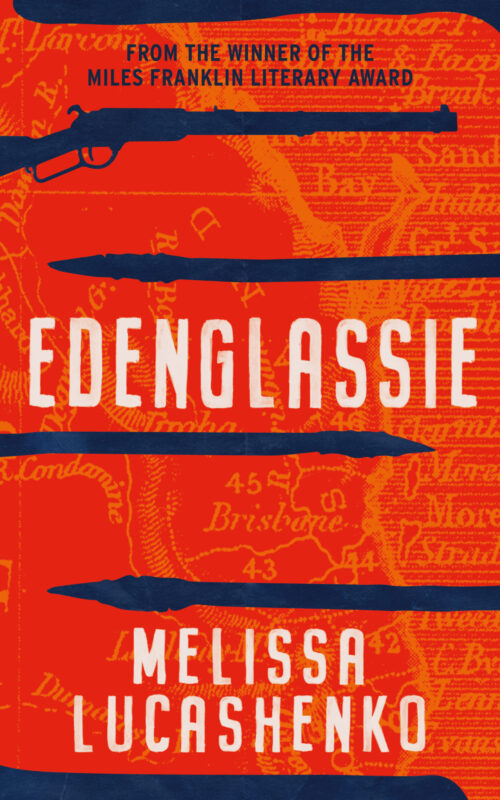
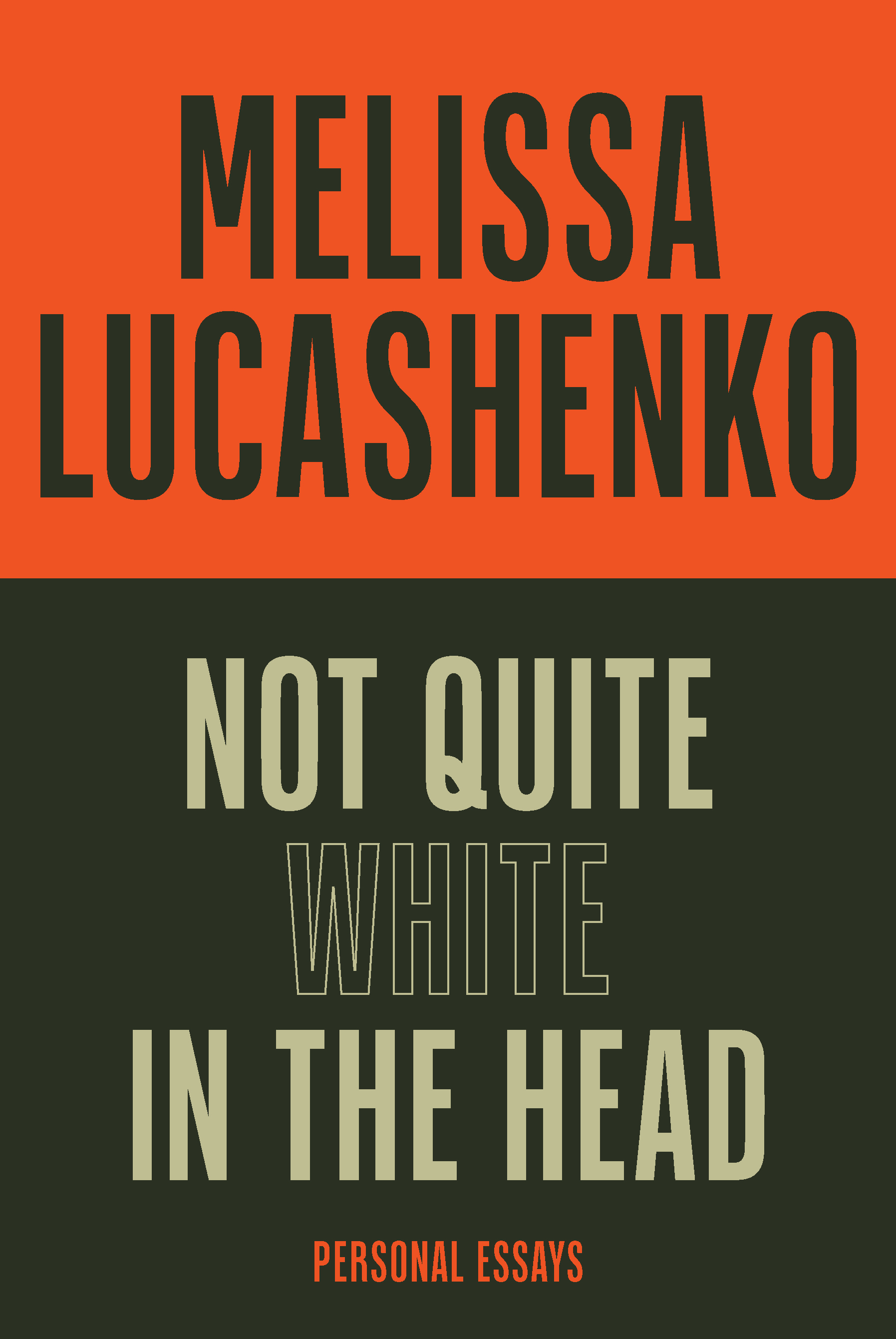
  • Truthtellers of the year: I used this category last year, and I think it’s a keeper because truthtelling, particularly regarding the “colonial project”, is not done. This year’s highlights include First Nations Australian Melissa Lucashenko’s Edenglassie, and two from North America, Thomas King’s “Borders” and Sherman Alexie’s “War dances“, each of which added different layers to the truths we need to hear.
  • Vividly rendered places will always get me in, and this year three were skilfully evoked, the Monaro (in Charlotte Wood’s Stone Yard devotional), Naples (in Shirley Hazzard’s The bay of noon), and the South West Coastal Path (in Raynor Winn’s The salt path).
  • Only fools have answers“: the best writing for me is that which leaves us with questions. Many of this year’s reads did just that, but leading the way was surely Richard Flanagan’s Question 7.

The reading life

  • Good things come to those who wait: Gail Jones has been on my must-read list (and in my TBR) since Sixty lights was published in 2004. Finally, this year I read a novel by her, Salonika burning. It must not be my last.
  • Re-find of the year: Having not read a Shirley Hazzard novel for many years, I loved finding the opportunity to read The bay of noon for Novellas in November and the #1970 Year Club
  • Re-reads of the year: Of course these were by Jane Austen, Mansfield Park and her novella, Lady Susan.

Only when I was young did I believe that it was important to remember what happened in every novel I read. Now I know the truth: what matters is what you experience while reading, the states of feeling that the story evokes, the questions that rise to your mind, rather than the fictional events described. (Sigrid Nunez, The vulnerables)

Some stats …

While I don’t read to achieve specific stats but, I do have some reading preferences which I like to track, but it’s boring to repeat them all each year. So let’s just say that

  • 85% of this year’s reading was fiction and 75% of my authors were women, both of which are higher than my long-term average.
  • Nearly 50% of this year’s reading comprised works written before 2000, which is also higher recent percentages.
  • 58% of this year’s authors were Australian.
  • Last year’s big downsizing project saw short stories and novellas comprising over 60% of my year’s reading. This halved in 2024 to just over 30%.
  • 11% of this year’s reading was by First Nations writers, largely due to my reading several short stories by First Nations American writers.

I read only two books from my actual TBR – Nell Stevens’ Mrs Gaskell and me and Gail Jones’ Salonika burning – but I will add to this Shirley Hazzard’s The bay of noon, which has been on my virtual TBR for many years.

Tomorrow, I (hope to) post my blogging highlights.

Meanwhile, I’ll repeat my usual end-of-year huge thanks to all of you who read my posts, engage in discussion, recommend more books and support our little litblogging community. It is special. I wish you all an excellent, book-filled and peaceful 2025.

What were your 2024 reading or literary highlights?

Monday musings on Australian literature: Favourite fiction 2024

Around this time of December, I have, for a few years now, shared favourite Aussie reads of the year from various sources. The specific sources have varied a little from time to time. Last year, a significant source – The Sydney Morning Herald/The Age – became unavailable to me as it is now paywalled, and I haven’t prioritised going to the library to access the paper. I have no problem with paywalling. We should pay for journalism, and I do, but for different news sources (such as The Canberra Times, because it’s my local; The Guardian via its app; The Saturday Paper and The Monthly digital editions; and The Conversation by donation). Not being able to access The Age/SMH is a bit disappointing, because theirs is a comprehensive listing. I’d love it if more sites offered the option to buy individual articles.

Anyhow, these lists are all subjective, of course. Plus, the pickers vary. There are critics and reviewers, commentators and subject specialists, and publishers and booksellers. Also, different pickers use different criteria, besides the fact that what they are asked to do, in the first place, varies. For example, some pickers are “allowed” to name several books while others are limited to “one” best (or favourite). Further, as The Conversation wrote, these lists rely not only on what each person has read, but what they remember, all of which means this exercise of mine is more serendipitous than authoritative. But, I think it is still interesting!

As always, I’m only including the Aussie choices, but I am providing links, where they exist, to the original article/post so you can read all about it yourselves, should you so wish.

Here are the sources I used:

  • ABC RN (radio broadcaster), in which presenters and guests named their recommendations from their reading of the year
  • Allen & Unwin (publisher) email, which shared one favourite A&U book per staff member
  • Australian Financial Review (newspaper, traditional and online), which shared “the top picks from our journalists to make your summer reading list sizzle” 
  • The Conversation (online news source), which invited 30 of their writers, “from fields as disparate as wildlife ecology and mathematics to literature and politics, to share their best books of 2024”, as well as letting the Books and Ideas team name theirs!
  • The Guardian (online news source), which promotes its list as “Guardian Australia’s critics and staff pick[ing] out the best of the best”
  • Readings (independent bookseller), which has its staff “vote” for their favourite books of the year, and then lists the Top Ten in various categories – Australian fiction, picture books, international fiction, junior & middle grade fiction, nonfiction, and adult nonfiction.

I apologise in advance for those of you who love poetry, nonfiction, and children’s books – which I also enjoy – but to keep this post a manageable length, I have decided this year to limit the list to my main interest, fiction.

Novels

  • Robbie Arnott, Dusk (Michaela Kalowski and Kate Evans, ABC RN; James Bradley, The Guardian; Readings Staff; see my CWF conversation) (Lisa’s review)
  • Ella Baxter, Woo woo (Bec Kavanagh, The Guardian; Readings Staff)
  • Brian Castro, Chinese postman (Tony Hughes-d’Aeth, The Conversation)
  • Melanie Cheng, The burrow (Jason Steger, ABC RN; Steph Harmon, The Guardian; Readings Staff; on my TBR)
  • Pitaya Chin, The director and the demon (Giselle Au-Nhien Nguyen, The Guardian)
  • Miranda Darling, Thunderhead (Readings Staff)
  • Emma Darragh, Thanks for having me (Readings Staff)
  • Michelle de Kretser, Theory & practice (Julianne Van Loon, The Conversation; Susan Wyndham, The Guardian; on my TBR)
  • Alison Edwards, Two daughters (Jess, Allen & Unwin)
  • Lexi Freiman, The Book of Ayn (Michaela Kalowski, ABC RN)
  • Katerina Gibson, The temperature (Readings Staff)
  • Sara Haddad, The sunbird (Jumana Bayeh, The Conversation)
  • Dylin Hardcastle, A language of limbs (Kate Evans)
  • Anita Heiss, Dirrayawadha (Charmaine Papertalk-Green, The Conversation; see my CWF Conversation)
  • Heather Taylor Johnson, Little bit (Jason Steger, ABC RN)
  • Malcolm Knox, The first friend (James Bradley, The Guardian)
  • Siang Lu, Ghost cities (Beejay Silcox, The Guardian; Readings Staff)
  • Catherine McKinnon, To sing of war (Michaela Kalowski and Kate Evans, ABC RN; see my CWF Conversation)
  • Emily Maguire, Rapture (Rafqa Touma, The Guardian; see my CWF conversations one and two) (Lisa’s review)
  • Murray Middleton, No church in the wild (Readings Staff)
  • Louise Milligan, Pheasants Nest (Eleanor, Allen & Unwin)
  • Kylie Mirmohamadi, Diving, falling (Sian Cain, The Guardian)
  • Liane Moriarty, Here one moment (Cosima Marriner, Australian Financial Review)
  • Bruce Pascoe, Imperial harvest (Joseph Cummins, The Guardian)
  • Ailsa Piper, For life (Michaela Kalowski, ABC RN)
  • Jordan Prosser, Big time (Steph Harmon, The Guardian)
  • Jock Serong, Cherrywood (Dennis Altman, The Conversation) (Lisa’s review)
  • Inga Simpson, The thinning (Kate Evans, ABC RN; James Bradley, The Guardian) (Brona’s review)
  • Jessica Tu, The honeyeater (Anabel, Allen & Unwin)
  • Tim Winton, Juice (Michaela Kalowski, ABC RN; Sian Cain, The Guardian; Readings Staff; on my TBR)
  • Charlotte Wood, Stone Yard devotional (Cosima Marriner, Australian Financial Review) (my review)
  • Evie Wyld, The echoes (Readings Staff)

Short stories

  • Ceridwen Dovey, Only the Astronauts (Cassie McCullagh, ABC RN) (Melanie’s review)
  • Fiona McFarlane, Highway Thirteen: Stories (Jo Case, Honorable Mention, The Conversation; Kate Evans, ABC RN; Ash, Allen & Unwin) (Brona’s review)

Finally …

It’s interesting to see what books feature most. Popularity doesn’t equal quality, but it does provides a guide to the books that attracted the most attention in the year. Of last year’s six most mentioned books, three did receive significant notice at awards time, particularly the most popular 2023 pick, Alexis Wright’s Praiseworthy (as I noted in a recent post). The other two of the six which also featured well at awards time were Melissa Lucashenko’s Edenglassie and Charlotte Wood’s Stone yard devotional.

This year, I have a bit of help with identifying the most popular picks, because, thanks to Colin Steele again, I can report that Books + Publishing (an online book trade site) listed the most mentioned Australian books from five sources, three of which I’ve accessed (Guardian Australia, ABC RN and the Australian Financial Review) and two of which I’ve not been able to (The Age/Sydney Morning Herald and Australian Book Review)

These are the fiction books which received at least three mentions across the publications were (in alphabetical order):

  • Ella Baxter, Woo woo
  • Melanie Cheng, The burrow 
  • Michelle de Kretser, Theory & practice
  • Malcolm Knox, The first friend 
  • Emily Maguire, Rapture 
  • Tim Winton, Juice 
  • Charlotte Wood, Stone Yard devotional 

To these, I would add, from my sites:

  • Robbie Arnott, Dusk
  • Fiona McFarlane, Highway Thirteen

In 2024, I read five books from 2023’s lists, three novels (Shankari Chandran’s Chai time at Cinnamon Gardens, Melissa Lucashenko’s Edenglassie and Charlotte Wood’s Stone yard devotional) and two works of nonfiction (Anna Funder’s Wifedom, and Richard Flanagan’s Question 7). I would love to have read more, but I can attest that those I read were all worthy favourites.

So, what has caught my eye from this year’s list. Those on my TBR, of course, and those I heard about at this year’s Canberra Writers Festival. Several more have now caught my eye, but as I’m unlikely to read many of them, I’ll just keep them to myself, and pass the baton over to you for your …

Thoughts – on this or lists from your neck of the wood?