Thea Astley, An item from the late news (#BookReview)

Book coverSet in the satirically named town of Allbut, whose nearest large town is the equally satirically named Mainchance, Thea Astley’s An item from the late news is framed by the story of a man who comes to the town, fearful of “the atom bomb”, and wanting to live a quiet – sheltered, you might say – life.

Wafer is this man, and the story is narrated, from the perspective of ten years after the events, by townswoman Gabby. Introducing the story, she tells us that she was living at the coast when he arrived for “his sad little attempt at reclusion”, and goes on to say that

I reckon now, sprawled on my day-bed guilt, that … the town wasn’t really different from anyplace else except that its final actions become more redly horrible as I think about them.

This tells us much, that the story is not going to end well, that Gabby is implicated, and that Allbut is “anyplace”. It focuses our mind less on what’s going to happen, and more on how and why things go badly. This being Astley, the answers lie in small-mindedness, cowardice, brutality – and, in this story in particular, in greed. It is greed which provides the impetus for the denouement, but along the way, we see sexism, racism, and machismo running amok, all of which lay the groundwork for the behaviour that brings about the end.

Allbut is “anyplace”, one of hundreds of towns set in “landscape skinned to the bone”. It’s a “nothing” town, or, alternatively and ironically, “a clean and decent town”, “a caring town”. It has “all” the obvious things – people, farms, cemetery, pub, war memorial, police – “but” what you really need, kindness and generosity. Into this town comes the outsider, Wafer. Hippie-like in dress and behaviour, “he smiles at children, blacks, old gummy folk. He doesn’t count his change.” Indeed, Gabby tells us, he is “too friendly with the blacks. The town hates that.” He is too kind, too generous, but is also afraid. Having seen his father blown up before his eyes during the war, and having followed the Hiroshima attack, he has come to Allbut to build a bomb shelter.

Narrator Gabby, although of the town, is also an outsider, also a misfit. She has never quite fit with normal “squatting class” expectations, couldn’t be “the daughter of their Sunday social page dreams”. An artist by trade, she’d painted “the very heart of boredom”, albeit unrecognised by her buyers. After failed relationships, institutionalisation for a mental breakdown, and overseas travel, she returns to town, still bored and looking for love. She falls for Wafer, and starts painting again – well, drawing, anyhow. But, she tells us – ominously – “this whole horrible canvas will have the detail of a Brueghel and the alarm of Goya.”

Allbut is peopled with several characters: loner Moon with “the trigger-quick temper”, Sergeant Cropper, Councillor Brim, Smiler Colley and his teen daughter Emmeline, Headmaster Rider and son Timothy, the regularly mentioned but rarely seen (of course) Indigenous woman Rosie Wonga, and Doss (with “blonde hair set in jazz age waves”) and her man Stobo. Karen Lamb, in her Astley biography Inventing the weather, writes about Astley’s use of music: “A character’s mind might be full of classical music – to show an evolved intellect – but jazz was better to bring out a character’s exuberance and refusal to follow convention”. Doss, then, is one of the positive characters in the book, though she has little power to affect the outcome.

An item from the late news is a slim volume – at 200 pages in my edition – but through irony, foreshadowing, repetition, and evocative menace-laden language, Astley builds her story painstakingly but irrevocably to its conclusion. Sexual violence – first against shop dummies, then an assault on Emmeline – sets the stage, but it’s Wafer’s gemstone which captures the attention of the men in the town. It is then that the brutality really starts to build, and we know, even if we’d hoped before, that this really will not end well.

The novel is Astley’s 8th of 15, that is, it’s slap bang in the middle of her fictional oeuvre. By the time she wrote it, her broader themes were well established. These include concern about the Americanisation of Australian culture, the negative influence of television, rabid commercialisation and development (“Sunshine of the vanished sand … the high-blood pressure of the high rise”), poverty and social inequity, not to mention racism and sexism. She fears for the “nothingness” that she sees characterising people’s lives; she rails against what Wafer calls “this blinkered world”; and she exposes her ultimate truth that, as Wafer again says, “we all fail … we fail each other”.

You could also say, though, that there is a cliche at the heart of this story, that of the woman scorned, because although it’s the men of the town who are the most brutal, it’s Gabby who fails her big moment. However, she is such a complex creation that this is not how the novel reads. Instead, by having the damaged Gabby operating as both observer and actor in the events, Astley subtly subverts that trope – and encourages us to be generous.

It was in her review of An item from the late news, that Helen Garner described Astley’s writing as “heavy-handed, layered-on, inorganic, self-conscious, hectic and distracting” and wrote that “this kind of writing drives me beserk”. If you know the writing styles of these two writers, this will make sense, but I suspect Garner, who had a long relationship with Astley, came to appreciate her work. Certainly, the language could be seen as “heavy-handed, layered-on”, but I love its evocativeness and power, the richness of her allusions, the succinct yet poetic way in which Astley can convey an idea. Even the title conveys a punch. It’s thrilling to read.

An item from the late news is quintessential Astley. It offers an unflinching look into the heart of small-minded Australia, and finds much to disturb us. And that is the value of reading literature like this.

Read for ANZLL Thea Astley Week; Lisa also reviewed the book for her week.

Challenge logoThea Astley
An item from the late news
Ringwood: Viking, 1999 (Orig. ed. 1982)
200pp.
ISBN: 978014069488

Desley Deacon, Judith Anderson: Australian star, First Lady of the American stage (#BookReview)

Book coverWhen historian Desley Deacon offered me her biography of Dame Judith Anderson for review, I was a little reticent because my review copies were getting out of hand. Little did I know then what was in store for me, and just how much more behind I would become. However, finally, its turn came, and here I am with my review.

First though, I must say something about the publication itself, particularly given our recent discussion here about Print on Demand books. Deacon’s Judith Anderson: Australian star, First Lady of the American stage is available as an e-Book or a PoD one. I read the PoD edition, and it is beautiful. The cover is gorgeous, and the book’s overall design is stylish, with an art deco look reflecting the style of Anderson’s early life and career. The book is big and heavy, but the binding is strong allowing the book to open well for reading. And, the icing on the cake is that it is gorgeously illustrated with quality reproductions of images from the full range of Deacon’s life. These illustrations are beautifully interspersed throughout the book, rather than concentrated, as is more common, into a couple of glossy photographic sections.

But, of course, the important thing is the content. There are, broadly, two main types of biography, those written in the narrative or creative fiction style, like, for example, Sarah Krasnostein’s The trauma cleaner (my review), and those traditional, scholarly, cradle-to-grave ones, like Philip Butterss’ An unsentimental bloke: The life and work of C. J. Dennis (my review). These latter tend to be closely referenced and well-indexed. Judith Anderson is one of these.

“she has a way with her” (critic)

So now, Judith Anderson. Like many of my generation, my first introduction to her was as the terrifying Mrs Danvers in Alfred Hitchcock’s classic 1939 (no I wasn’t alive then!) Rebecca. But, Judith Anderson had been around a long time before that. Born in Adelaide in 1897, she (as Francee Anderson) went to the USA in 1918, and this is where she both established her career and made her home for the rest of her life. It wasn’t easy – is an actor’s life ever? – but eventually Anderson began to get roles. Deacon chronicles the trajectory of her career meticulously, from these early days to her final performances when she was in her eighties. It was a long, and distinguished career which, while centred on the stage, also included film, television, radio and the college speaking circuit. Anderson, unlike some actors, was not averse to working in forms – like television, like, even, television soaps – scorned by others. Regarding this latter, Anderson is quoted as saying “there is no indignity in earning $5,000 per week”. No, indeed, particularly when you never knew where your next pay check was coming from, and when you were providing significant support to other family members.

Various themes run through this story of Anderson’s life. One is the frequency with which critics praised the brilliance of her acting but bemoaned the silliness or inappropriateness of the vehicle. Indeed, this issue was the main reason for the long time it took for her to have her breakthrough. However, Anderson, always a hardworker, kept at it, and eventually her vehicle came, the play Come of age, by Clemence Dane. It was 1934, and she’d been treading the boards in America for 16 years! English playwright Keith Winter saw the play and wrote:

There are in the English speaking world, three actors who have genius of a quite staggering order – Charles Laughton, Edith Evans, and Judith Anderson. Perhaps Laurence Olivier.

No small praise. In the end, though, besides the aforementioned Mrs Danvers, the two roles for which Anderson was most known, was as Euripides’ Medea and Shakespeare’s Lady Macbeth. Character and strong women roles did seem to be her forte.

“same old muddling” (Anderson)

While the biography’s focus is Anderson’s work life, largely because that was her life, Deacon also includes something of her personal life, including, in particular, her two short disastrous marriages. It was a sadness for Anderson that she never managed to have her own family and children. This brings me to another theme that runs through the biography: she had, as Deacon describes it, a “hectic personality” or, as Anderson herself said, “I have not myself a very serene temperament”.

Australian arts administrator, Robert Quentin, said during her 1955 tour in Australia, that she was “more than living up to her reputation as being the most troublesome actress in the world.” Deacon is not one of those biographers who psychoanalyses her subject. Her approach is more straight – that is, she presents what is on record, using the occasional “may” or “could” when some fact or other is not known. However, I’d like to suggest that, while this apparent difficult behaviour of Anderson’s was probably partly her temperament, it may also have stemmed from ongoing frustration with the acting life, with the challenge of getting work, with being messed around, with having to accept what she felt were less than ideal plays or co-players, and so on. In 1935, for example, she was being sussed out for a play, but there was the usual to-ing and fro-ing as backers, producers, and/or agents negotiated and fiddled around. She writes, “when I left Wed afternoon it was definite – but now the same old muddling.” You can feel the frustration.

“near perfection in the dramatic art” (Variety)

Judith Anderson: Australian star, First Lady of the American stage is clearly, like Deacon’s friend Jill Roe’s biography of Miles Franklin, a passion project that was years in the making. Thoroughly researched, and written in a formal but accessible style, it is a positive but non-hagiographical story of an actor who was once described by Variety as achieving “near perfection in the dramatic art”. Dame Judith Anderson is too little remembered today, but her struggle to fulfil her creative self is timeless. For this reason, if no other, her biography is well worth reading.

Challenge logoDesley Deacon
Judith Anderson: Australian star, First Lady of the American stage
Melbourne: Kerr, 2019
509pp.
ISBN: 9781875703067 (PoD)

(Review copy courtesy the author.)

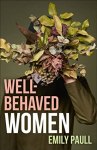
Emily Paull, Well-behaved women (#BookReview)

Book coverWell-behaved women is a debut collection of short stories by Western Australian writer Emily Paull. It is one of those collections that has a unique title, and what a perfect – and teasing – title it is for a collection of stories focused on women.
It has, you won’t be surprised to hear, the usual mothers, grandmothers, sisters and wives, but there are also teachers and students, writers, a step-father and step-daughter, and a vagrant woman. They span all ages. Most of the stories are told first person, with a few third person ones, and in nearly all the narrator or protagonist is, of course, female.

The collection starts with a bang, with a story described on the back page, so I’m not spoiling it, as “a world champion free-diver disappears during routine training” (“The sea also waits”). It’s the ideal opener because it’s about a woman who has chosen a dangerous sport because it’s – dangerous. She’s a woman whose “devil-may-care coastal ways” seem to disgust seemingly better behaved women with their painted nails and carefully tanned skin. It sets up the collection well as one likely to explore the nuances of women’s lives and the consequences of their decisions – oops, behaviour.

And so, from this first story on, Paull interrogates women’s lives from diverse angles. The stories read, mostly, like lovely little slices of life rather than as dramatic stories with twists. I like these sorts of stories, provided they ring true to life, because I’m curious about the choices people make. Paull has probably pored over these stories, honing them to the essential, but what we see is writing that looks easy. It flows well, and the stories show rather than tell, leaving readers to draw their conclusions. There’s nothing particularly inventive about the style or structure. Paull uses foreshadowing and flashbacks, traditionally, but judicially, to move her narratives along. The end result is a collection of accessible, well-crafted stories about relatable characters in, mostly, Western Australian settings.

The second story, “Miss Lovegrove”, has a young female drama student talking about her teacher. This teacher feels the need to tell her students the realities of life – “you will most likely never be on television at all during your careers, which will be short” – and she teaches our narrator a very cruel lesson. She is certainly not a well-behaved woman. Is she brutal? (Yes.) Is she bitter? (Probably.) Is she doing her young student a favour as she intimates? (We need to decide.) Fortunately, the next story, “Crying in public”, is gentler. It’s about the first real heart-break and a grandmother’s wisdom. Unlike “Miss Lovegrove”, Grandma wants to nurture her charge through the pain of the real world. This idea neatly links the two stories. There is, in fact, careful crafting in the order of the stories, with subtle links connecting one story to the next. I enjoyed identifying what I thought were the links!

Anyhow, other stories tell of friends found and lost, of coming out, of grief. In some, the stories could be any of us – an old high school flame returning to see if she can recover a past love (“Down south”), a sister grieving over her terminally ill sister (“Sister, madly, deeply”), a young woman discombobulated by her grandparents’ death (“Nana’s house”), a woman trying to fit the the image of the perfect wife (“The settlement”). But some are a little more dramatic, such as that about a woman whose backyard is found to hold a human skeleton (“From under the ground”), or the warm-hearted story about a vagrant woman caught in a bushfire (“The things we rescued”), or the tragic coming out story (“Picnic at Green’s Pool”).

What I most liked about the stories – even those that were more dramatic in flavour – is that the people are believable. Their emotions and reactions, in the main, are those of “normal”, flawed human beings. They make mistakes, like the young woman who leads on a colleague she’s not really interested in (“Nana’s house). They eat too much or too little, in a struggle to be themselves (“Dora”). And so on. You could see this as a feminist book. The title certainly suggests there’s an element of this in Paull’s thinking – but the book is not stridently so. The title is more wry, than barbed.

While most of the stories are average short story length, one, “Font de Gracia”, is a little longer. Its premise is a rather typical teacher-student affair, but it is well handled and resolved, without didacticism. It has some lovely writing, such as this description of mother-daughter tension:

Joana snatched up her bag without breaking eye contact with her mother. Their anger was like the pull between magnets.

It’s hard to pick favourites, but I did like the last two. “Versions of herself” is about a prickly 90-year-old in a retirement village – no, not in aged care or a nursing home, but independently living in a retirement village. It’s one of the broken-heart stories. Shirley Carruthers is not the most likeable woman around, but Paull, as she does with all her characters, encourages us to see and feel beneath the surface, to understand the whys. The point for me is that we don’t have to like everyone, but we can be kind.

The final story, “The woman at the Writers Festival”, concludes the collection beautifully, with a cheeky exploration of the writing life – particularly its challenges for women – and it does have a twist.

Well-behaved women, then, is a tight, engaging collection of stories about ordinary women, and the messiness of life. Rather than offer answers, it challenges readers to think about these messes, and consider what could be done to tidy them up a bit – next time around. Another good read from the people at Margaret River Press.

Challenge logoEmily Paull
Well-behaved women
Withcliffe: Margaret River Press, 2019
242pp.
ISBN: 9780648652113

(Review copy courtesy Margaret River Press)

Helen Garner, Yellow notebook: Diaries, Volume 1, 1978-1987 (#BookReview)

Book coverThe opening session of last November’s inaugural Broadside Festival featured Helen Garner in conversation with Sarah Krasnostein about her recently published Yellow notebook, the first volume of her edited diaries. It was an excellent, intelligent conversation. Garner came across as the forthright writer she is, one who fearlessly exposes difficult and unpleasant things, alongside joys and triumphs.

The epigraph she chose for her diaries is therefore not surprising:

We are here for this–to make mistakes and to correct ourselves, to stand the blows and hand them out. (Primo Levi, The periodic table)

Certainly, in Yellow notebook, Garner both stands some blows and hands a few out. She admits to many mistakes. She allows herself to be vulnerable. She may have cut a lot, as she told Krasnostein, but she clearly didn’t sanitise. Her aim was to select what others might find interesting. She didn’t rewrite, only changing (or adding) something if it would otherwise have been meaningless. A diary, she said, “has no voiceover, unlike a memoir”. That is, a diary contains what you did/felt at the time without the benefit of later reflection; she had to accept herself – both hurting others and being hurt – as she was at the time of writing. This gave her “fellow-feeling” with others.

She also decided not to identify people. She uses initials, such as M for her daughter, F for her husband at the time. Some of these people are, of course, easily identifiable for anyone who knows her biography, but I think there is still value in taking this approach. In this spirit, I decided not to investigate beyond what I already knew about her life.

The yellow notebook has a lot to offer Garner lovers. For what is quite a short book, its content is wide-ranging. It includes observations from life around her (as you’d expect from a writer), snippets of conversations (both overheard and her own), the occasional news item, stories from her life, thoughts about other writers, and of course reflections on her own writing. We are introduced to her love of music, and her interest in religion. We hear about her marriage break-up and her all-encompassing love of her daughter. All this reveals a messy person – someone who can be wise at times, and immature at others, who can be confident but also excruciatingly insecure, who can be unkind but also warm and generous, a person, in other words, like most of us, except most of us don’t lay the worst of ourselves quite so bare.

I could give examples of all of the above – and I should, because there’s glorious sentence after glorious sentence – but I want to focus on her writing life. For the rest, do read the book yourself.

“thinking voluptuously of the stories I’m going to write”

Part of understanding a writer is knowing who they read and admire. The writer Garner mentions most in this volume is Elizabeth Jolley. While Jolley and Garner are, in some ways, quite different writers, they have a lot in common. Both don’t shy away from some of the darker aspects of human behaviour. Sometimes Garner simply quotes Jolley – as we do when a writer reminds us of something we’re experiencing. Sometimes she shares little anecdotes about Jolley, but other times she comments on Jolley’s writing, even when referring to another writer!

‘Cod seemed a suitable dish for a rejected one and I ate it humbly without any kind of sauce or relish.’ –Barbara Pymm, Excellent women. This is Elizabeth Jolley’s tone and it made me laugh out loud.

Elizabeth Jolley makes me laugh out loud too. Garner also loves Jane Austen. She writes:

Mansfield Park. She never tells you anything about the appearance of her characters. As if they were moral forces. I love it.

You can see why I love Garner. She, Jolley and Austen all get to the heart of humans, incisively – and with wit. Garner writes about being rejected:

My short story was rejected by the Bulletin because it contained four-letter words. A letter from Geoffrey Dutton: ‘It pains me to have to knock this back … it’s you at your best.’ Thanks a lot. I suppose he’s a skilled writer of rejection letters.

Other writers Garner mentions include, randomly, Frank Moorhouse, Janet Malcolm, Joan Didion, Tim Winton, Virginia Woolf, Patrick White, DH Lawrence (who “uses the same word over and over till he makes it mean what he needs it to”), EM Forster, Katherine Mansfield, Henry James, James Joyce, Doris Lessing, Christina Stead (whom, she discovers, is “a visonary”), Randolph Stow, Rosa Capiello, and Les Murray:

The infuriating accuracy and simplicity of his images – birds that ‘trickle down through’ foliage. Of course, I think, this is what they do – why didn’t I know how to say it?

Four of Garner’s own books are published during the ten years covered by these diaries, the novels Moving out (1983) and The children’s Bach (1984) (my review), and short story collections, Honour; and Other people’s children (1980) and Postcards from Surfers (1985) (my review).

She shares many of her struggles and challenges in writing The children’s Bach, in particular:

… each morning I set out for my office weak with fear. I will never be a great writer. The best I can do is write books that are small but oblique enough to stick in people’s gullets.

AND

This flaming book is jammed again. I feel my ignorance and fear like a vast black hole.

AND

I’m scared to go into my office in case I can’t make things up.

AND

Went to work and fiddled around for half an hour, then began to properly feel it come … Delirious I ran downstairs and bought myself a pastie …

She shares her thoughts about writing, such as

About writing: meaning is in the smallest event. It doesn’t have to be put there: only revealed.

This is so Austen, too.

More broadly, she also speaks of critics, awards, and readers. It’s engaging and heart-rending all at once – and probably applicable to many writers.

Finally, she reflects on the value of art and on the creation process. Describing the experience of a painter finishing a portrait, Garner writes:

The miracle of making something that wasn’t there before. Pulling something out of thin air.

It’s that capacity that impresses someone like me. I’m sorry for the pain writers (and other creators) endure, but I’m so glad they are prepared to do it. I look forward to Volume 2, and beyond.

Challenge logoHelen Garner
Yellow notebook: Diaries, Volume 1, 1978-1987
Melbourne: Text Publishing, 2019
253pp.
ISBN: 9781922268143

(Review copy courtesy Text Publishing)

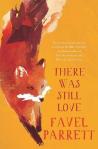
Favel Parrett, There was still love (#BookReview)

Book coverFavel Parrett’s third novel, There was still love, is one of those novels in which not a lot happens but has a lot going on. Just the sort of novel, really, that I tend to like. (It all started with Jane Austen!)
The novel revolves around the lives of two Czech sisters, one who ends up in Melbourne with the other remaining in Prague, but their story is mainly seen through the eyes of their grandchildren. Melbourne-based Malá Liška or “Little Fox” lives with her grandparents Máňa and Bill, while Prague-based Luděk lives with his Babi (grandmother). The novel is set mostly in 1980, and alternates between these two places, with occasional forays into other places and/or times to fill in some backstories. It’s a carefully constructed book, one that benefits from close reading, which is not to say it’s hard reading, because it’s not. It’s one of the fastest reads I’ve had in some time.

Now, if you know your European history, the above description will have suggested to you the book’s framework, and you’d be right. Separated during World War Two, with young Máňa going to England, the women’s lives are further up-ended by the 1968 Czechoslovakian Revolution. Through it all, although physically separated, they stay in touch, via letters and the occasional visits back to Prague by Máňa and Bill:

My grandparents saved their fifty-cent coins to buy aeroplane tickets. They managed to do this every four years, sometimes every three years if they were careful. If they saved very hard.

They bought the cheapest tickets.

They took the longest route.

Such is the call of home, about which more later.

The stories, as mentioned above, are told through the eyes of Malá Liška (in first person) and Luděk (in third person.) I suspect Malá Liška’s is first person because she is modelled on Parrett herself, thus providing a grounding authenticity. Luděk’s story is, the Author’s Note says, drawn from the experiences of her cousin Martin. The Prague scenes, she writes, “would be nothing” without his help. I haven’t visited Prague, but Parrett, through Luděk via Martin, brings it alive:

Luděk loved the mess, the decay. His city wasn’t clean, it wasn’t pretty. And there were wires everywhere in the sky and they crisscrossed like a million black lines. Everything was covered in stinking soot, in pigeon shit, covered in old rusted scaffolding … Prague was his city, the flat his whole world, and he loved it all.

Prague, and his grandmother’s flat, in other words, are his home.

There was still love is about many things, of which love, which survives upheaval and separation, and home, which you can make and remake throughout life while never forgetting your origins, are the two overriding ones. These are big themes, and yet the novel is just over 200 pages. I’m in awe of Parrett’s concision. There were some in my reading group who wanted the whole family saga – which I get – but I loved Parrett’s ability to convey a wealth of meaning and history in a phrase, a sentence or a short scene. Here, for example, is a scene between Luděk and his uncle Bill, in Prague:

‘I think that man is following us,’ he [Bill] said, and his eyes moved up the path towards another bench.

Luděk remembered how his Mama said they were always watching at the airport, watching, taking photos …

Babi told him never to say anything important on the telephone.

The reality of living under surveillance is conveyed quietly, thus, in a couple of pages, but we readers know exactly the fear and brutality that lie just behind these words.

Another example of this concision is a brief scene in a Melbourne shop during which Máňa is called a “stupid wog”. She walks out of the shop with dignity, but Malá Liška notices that “a tear, just a small one, spills down her soft, powdered cheek and she does not wipe it away.” Again, a brief scene, but we know that this is not the only time Máňa has been treated like this. Life, Parrett shows, can be difficult whether you stay or go.

Parrett also achieves concision through a “suitcase” motif. It is introduced in the gorgeous brief poetic prologue called “The suitcase”. Parrett describes suitcases being everywhere, evoking a powerful image of people on the move, of people escaping and of people not getting away. She writes:

You must close up tight, protect your most needed possessions … your heart, your mind, your soul. You must become a little suitcase and try not to think about home.

From here on, suitcases of all sorts are subtly dropped into the narrative to suggest various ideas – a suitcase in a roof space holding an old gymnastics blazer from a past life; “a suitcase with yellow eyes – a suitcase with a mouth like a big black hole” in a Czech Black Light Theatre performance in Melbourne; people arriving at airports, looking “dazed, pushing trolleys loaded up with suitcases”. The most powerful reference, though, comes from The Black Light Theatre Company’s Magician (based on the still living Jiří Srnec):

I put the broken in my suitcase and take them with me until they are ready to go home again.

There is still love.

There it is, home and love again. Luděk’s much missed mother travels with this company, and is tempted to defect to the free West.

Closely related to the idea of love and home is the story of refugees, of migration. In a little section devoted to him, Bill tells of changing his name from Vilém in 1942 England in order to fit in, while Máňa “works on her accent”. He shares the pain of leaving one’s home:

The only way to live now is to keep moving forward and not look back. It is the only way his heart can keep on beating and not break. He must look forward and not behind.

He must never look behind.

A common – and painful – experience for refugees.

Finally, There was still love is also a story about women, and particularly old women who carry on. It is Luděk, loving his grandmother and coming to care for another old women, who voices this:

The city was full of old women left behind, left to keep everything going – to carry the old goddam world by themselves.

My reading group briefly discussed the title, There was still love. What did “still” mean we pondered? “Still” as in ongoing, or as in continuing despite everything? Both, I think. Whatever the meaning, however, There was still love is a moving read that reminds us yet again that the most important things in life are home and love, wherever you find them.

Lisa (ANZLitLovers) also loved this book.

Challenge logo

Favel Parrett
There was still love
Sydney: Hachette Australia, 2019
214pp.
ISBN: 9780733630682

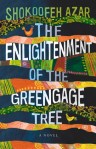
Shokoofeh Azar, The enlightenment of the greengage tree (#BookReview)

Book coverI bought Shokoofeh Azar’s novel The enlightenment of the greengage tree when it was longlisted for the 2018 Stella Prize, for which it was also shortlisted. However, it was its shortlisting this year for the International Booker Prize that prompted me to finally take it off the TBR pile.
Born in Iran, artist and writer Azar was still a child when the Islamic Revolution started in 1979. She grew up there, and, as an adult, obtained work as an independent journalist. However, after being imprisoned three times, she fled Iran by boat, ending up on Australia’s Christmas Island, and was eventually accepted as a political refugee by the Australian government. She has written a children’s book and two short story collections, but The enlightenment of the Greengage tree is her first novel. Like many first novels, it feels autobiographical, though given the narrator is a ghost and Azar is clearly still with us, it is not exactly autobiography!

The story chronicles the lives, experiences, and reactions of a family caught up in the chaos and brutality of post-revolutionary Iran. This family comprises father Hushang, mother Roza, son Sohrab, daughter Beeta, and another daughter, the above-mentioned ghost narrator, Bahar. Following the 1979 Revolution, they flee Tehran for the remote village of Razan, which was untouched for years by the revolution, until it came there too during the Executions of 1988.

While the story is roughly linear, it does slide around a bit, so you need to keep your wits about you. It starts in Razan with Roza’s attainment of enlightenment “at exactly 2:35pm. on August 1988, atop the grove’s tallest greengage plum tree”, the same moment at which her son Sohrab is executed amongst hundreds of other political prisoners in Tehran. This, of course, is told to us by thirteen-year-old Bahar who, we don’t discover until chapter 5, had died in a fire set in her father’s library in 1979 by Revolutionary Guards.

Now, the book is described on its back cover as magical realist, but this is term I have been uncomfortable about ever since hearing Alexis Wright question it. I fear that with our rationalist Western minds, the description “magical” can carry a hint of condescension. Alexis Wright said that “Some people call the book magic realism but really in a way it’s an Aboriginal realism which carries all sorts of things.” Toni Morrison has spoken similarly. Azar, on the other hand, embraces the term, describing it like this: “People of old or ancient cultures sometimes seek the metaphysical solution for realistic problems”. That makes sense. I also rather like this description in Wikipedia by Mexican critic Luis Leal. He says “to me, magical realism is an attitude on the part of the characters in the novel toward the world” or, to be more specific, toward what happens to them. I guess it’s really a matter of a rose by any other name, and that the issue is less the term, than how we readers understand or approach what we read?

So, when I tell you that Roza finds enlightenment at the very top of a greengage tree, that the ghosts of 5000 executed people confront the Grand Ayatollah Khomeini in his bedroom, that Beeta becomes a mermaid and joins the merpeople to escape the sorrows of the world, that forest jinns place curses, or, even, that the novel is narrated by a ghost, I am accepting that this is how the characters experience their world.

The enlightenment of the greengage tree is, then, the story of people in extremis. The background is the repressive regime, but the book’s ambit is much bigger. It’s about life and death, love and loss, and how those play out in brutal, politically-charged times. While “most people”, says Hushang, “wanted to get used to everything”, his family heads to the jungle town of Razan, where they think, foolishly as it turns out, they will be safe. When the revolution does reach them, the people are unprepared, and are left

wondering how they’d ended up in a game whose rules they hadn’t written. The game of aggressor and victim. A game in which it didn’t take long for the victims to become the aggressors; become victim aggressors… it wasn’t long before they forgot their myths and dreams, their history and balance …

With Sohrab soon arrested, our family soldiers on, each reacting to the brutality they confront in their very different, beautifully differentiated, ways.

Roza leaves home early in the novel because:

… she wanted to lose herself.  She didn’t want to sit in her newly rebuilt house and look at the freshly-painted walls, and the new furniture and carpet, and imagine how Sohrab was killed or how I suffered as I burned.  She didn’t want to think about the future and what other calamities might befall Beeta and Hushang.  She wanted to run away from herself, from her fate.  She didn’t want to be wherever she was.

Beeta, on the other hand, who had stayed and struggled, eventually transforms into an aquatic creature, “so as to experience and live life with a freedom that had been impossible as a human”. Meanwhile, Hushang, who also stayed, reads. He had “a thirst for reading”, a desire to be “connected with the world’s thinkers”, to distance himself “from the contemporary world of intellectual midgets that had overrun his country.” Eventually though, his reading brings him to “contemporary Iranian history; the place where all his questions turned to bottomless chasms”.

History is, in fact, a constant thread in the novel, one that is pored over from every angle – including an attempt by the people of Razan to discard it altogether. Azar shows, graphically, the damage done by those regimes which try to quash people’s past, their heritage.

Late in the novel, there’s a confrontation between Hushang and his brother Khosro who had taken a mystical path. Hushang is furious, arguing that “this mysticism game” had done nothing against the various atrocities and traumas, and criticising “smart people” like Khosro for hiding “in the safety of temples instead of doing something to fight the corruption and injustice.” Khosro, though, believes, probably realistically, that nothing can be done to avert the ongoing destruction of Iranian culture. He argues that “all I can do is not become tainted by something I don’t believe in.”

The enlightenment of the greengage tree is a wonderful read if you like books which pose these sorts of fundamental questions about how to live in difficult times. It could be a grim read, given the brutality contained within, but it’s not. It’s tragic, of course, but it has a sort of unsentimental, slightly melancholic tone that doesn’t weigh you down. Two-thirds of the way through the novel, Beeta tells Bahar that “imagination is at the heart of reality”. A perfect description of what Azar has done in this book.

In the front matter, Azar expresses gratitude to the Australian people for accepting her “into this safe and democratic country” where she can “have the freedom to write” such a book. We, however, should be grateful, in return, to have such a creator in our midst.

Lisa (ANZLitLovers) also liked this book.

Challenge logoShokoofeh Azar
The enlightenment of the greengage tree
Translated by Adrien Kijek*
Melbourne: Wild Dingo Press, 2017
268pp.
ISBN: 9780987381309

* Translator’s name is a pseudonym; the European edition was published with translator as anonymous.

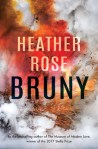
Heather Rose, Bruny (#BookReview)

Book coverIf The yield (my review) was Tara June Winch’s passion project, I’d say Bruny is Heather Rose’s. It’s a very different book to her previous novel The museum of modern love (my review). Not only is it a strongly plot-driven novel, but it’s about something that is clearly dear to her heart, the future of Tasmania and, perhaps more generally, of liberal democracy.

Bruny could be described as a genre-bender. Part political thriller, part romance, verging even towards dystopian fiction, the novel tracks the fate of a bridge being built to join the main island of Tasmania with Bruny Island. In it, New York-based UN conflict resolution specialist, and twin sister of Tasmania’s premier, Astrid Coleman returns home at the behest of her twin brother to ensure that the bridge is completed on time after a bomb had nearly destroyed it. It’s not long, however, before she smells a rat. Just what that rat is, who’s behind it and why, is what keeps us turning the pages.

Now, as this is a plot-driven book – and one underpinned by political intrigue – I am fearful of giving too much away. However, fortunately, it’s not all plot, because the plot serves a purpose. The book reminds me in a way – though I’m not sure Rose will appreciate this – of Richard Flanagan’s The unknown terrorist (which I read long before blogging.) It too is a strongly plot-driven novel from a literary fiction author, and it too was inspired by a clearly passionate political concern. In Flanagan’s case it was how government and the media were handling the terrorism threat, engendering fear and consequently facilitating the scapegoating of people with little or no evidence.

Anyhow, back to Bruny. In the Bruny teaser on her website, Rose describes her book as a “political thriller”, “satire”, “love story”, and “family saga”, which, fundamentally, is questioning the “new world order”. Now, Rose has done something clever, I think, in setting her book just into the future. The American president isn’t named in the novel, but the description Rose provides leaves us in no doubt as to the timing of her novel, which would be around 2022. Astrid says:

‘Right now, America has an isolationist, neo-conservative president who doesn’t believe in American strength being used to stabilise the world. Quite the opposite. He considers it the chief weapon to exert dominance. And he’s in his second term. He’s turned his back on American’s allies because he doesn’t believe in that framework. Now we’re seeing the fallout of that approach and it’s crippling international relations, the global economy, the American economy.’

I say the dating is clever because, being just into the future, we can’t say “that didn’t happen”, but Rose can say “this is what might happen”. Readers, of course, have to decide for themselves whether they agree that what Rose proposes could happen, but I must say she was uncomfortably prescient about cruise ships!

It made the whole front page of the newspaper. BIO-SCANDAL! The whole fiasco of cruise ships and no policing, no ability to quarantine sick passengers and get medical help to them on board. The risk of an epidemic, if they were allowed into our hospitals.

So, what are Rose’s concerns? She is concerned that, with America withdrawing from the field, another power – in this case, China – can step in. She sets up a Macchiavellian plot based on this supposition, but this is as far as I’ll go about that. She is concerned more broadly about the increasing conservatism of governments, on their focus on money (“jobs and growth”) over people (“health and education”). She is worried that unimpeded progress – which is already a concern in Tasmania – will be detrimental to community, to society. She sees the destruction of the arts as weakening our culture and laying us open to outside influence. Government official Edward tells Astrid:

‘ … This government, at a state and a federal level, they’ve hammered the arts for years. They’ve eviscerated it … Every theatre company or film production company in this country – unless it’s making a Marvel movie – has been defunded. That’s our cultural expression, and if we don’t have that, it weakens everything. It’s a bit like leaching. We’re wilting with cultural anaemia…’

Ok, so now you might be thinking this is a preachy novel – as political novels can be – and it is to a degree. There are times when the explanations threaten to take over, but Rose manages not to bog it down too much. The story gradually builds up pace, with most of the messages carried through dialogue. Being told first person helps, too, because we don’t have an omniscient third person telling us like it is, but Astrid sharing her thoughts, concerns, and ponderings with us. Is there something, though, that she’s not telling us? How reliable is she? That little niggle also keeps us reading.

And then there are the characters. Astrid’s family is not exactly your typical one. Her endearing but stroke-affected father says little except to – rather perspicaciously – quote Shakespeare at his family; her prickly mother has terminal cancer; and her half-sister, Max, is the Labor leader of the opposition. Her brother, as I’ve already said, is the state premier, while his wife Stephanie has a warmth and intelligence that belies her supportive political wife demeanour. There is also a love interest for 54-year-old divorced Astrid down there on Bruny! The relationships between all these characters not only move the story and ideas on, but they also provide a little human respite from the machinations. Respite also comes from little touches of humour, much of it drawing from Rose’s deep understanding of Tasmania and Tasmanians. You have to laugh, for example, at the plethora of activist groups, like the Pythonesque Bruny Friends Group, Bruny in Action, and the Bruny Progress Society!

Concluding the above-mentioned Bruny teaser, Rose says “I hope you are entertained by this novel; I hope that you are intrigued by it; and I hope that it also makes you think?” She achieves all of this. The plot and the strongly delineated characters, as befits her satire, make it both intriguing and entertaining to read, while the politics certainly make you think. The Chinese government – together with neo-conservative governments – are the villains of the piece. This makes for uncomfortable reading, and not just because of the truth of the issue but because naming villains this way, as we know, can lead to wrong and dangerous assumptions. The Chinese government is not all Chinese people, just like a certain American president does not stand for all Americans. It behoves thinking readers to make that distinction.

And finally, there’s the ending. Without giving it away, I will say that there’s a certain question of the ends justifying the means, of those believing they are right taking matters into their own hands. It makes you think! Bruny, then, is more than an engaging political thriller. It is a book intended to challenge us to think about the world we are making for ourselves, and to consider what we can do about it.

Lisa (ANZLitLovers) enjoyed the novel; Bill (The Australian Legend) also enjoyed it, with some reservations.

Challenge logoHeather Rose
Bruny
Crows Nest: Allen & Unwin, 2019
ISBN: 9781760875169
408pp.

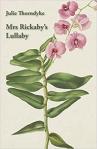
Julie Thorndyke, Mrs Rickaby’s lullaby (#BookReview)

Book coverQuaint title, eh? I really didn’t know what to expect when I accepted this book for review, but accept I did because the publisher is a quality little press and because the author, Julie Thorndyke, although unknown to me, has a track record as a writer, particularly of tanka. Mrs Rickaby’s lullaby, however, is her first novel.
In addition, I was intrigued by the advance description of the protagonist as a “semi-retired botanical illustrator … with a penchant for Mozart”. Well, I love botanical illustrations and I’m a fan of Mozart. Who isn’t? And finally, there was the fact that the novel is set in a “peaceful retirement village”. Being of an age that is eligible for retirement village living, that was a bit of a drawcard too.

So far so good, but what sort of book is it? Well, the back cover blurb provides a hint when it says that Mrs Rickaby’s “tranquility is disturbed when close friend and neighbour brings home a twice-widowed younger man of dubious character, and introduces him as her future husband. Petty theft, vandalism and violence disrupt the peaceful retirement village. How can Mrs Rickaby protect her friend from this con-man lover?”

Now we are getting closer. I think the best way to describe this novel is “cosy crime”, which Wikipedia describes as “a subgenre of crime fiction in which sex and violence are downplayed or treated humorously, and the crime and detection take place in a small, socially intimate community.” This is not really my genre, any more than any crime is, but Mrs Rickaby’s lullaby turned out to be a light enjoyable read.

The story is told in Mrs Rickaby’s first person voice. She is in her early 70s and had moved to the retirement village after losing her much loved husband. She has two children who, at the start of the novel, are both living overseas, so her most important social contacts are her friends at the village, particularly her neighbour Irene, plus her cat Missy.

It’s a curious book, because it doesn’t, I’d say, perfectly conform to the “cosy crime” genre. Much of it reads like a story about contemporary life, and the challenges of ageing, of losing your partner and having to make a new life for yourself. All this Mrs Rickaby does. Her days are occupied by spending time with Missy, by her involvement in the local Orchid Society, by her free-lance botanical illustration commissions, and by socialising with her friends in the village. It’s only gradually that the crime aspect comes into view as her early suspicions about Irene’s new man, Ralph, start to seem valid. Gradually, the mystery aspect hots up as Mrs Rickaby and another friend from the village, Annette, start nosing around about Ralph in their effort to protect Irene from making a bad, and potentially dangerous, mistake.

I enjoyed reading about Mrs Rickaby’s relationships with family and friends, albeit they were generally easier relationships than those in Charlotte Wood’s The weekend (my review). This is not surprising, perhaps, as most of Mrs Rickaby’s friends are new, and thus free of the years of baggage carried by Wood’s friends who are, coincidentally, in the same early 70s age range. My only demur regarding the characters concerns Irene, “a skilled surgeon” who was still volunteering for Doctors Without Borders”. Could such a person be taken in by such a con man? My initial reaction was not, but perhaps I’m naive? Anyhow …

The narrative is framed by Mrs Rickaby’s love of music. The ten chapters all have musical titles, like Nocturne, Misterioso, Counterpoint, Agitato, and Danse macabre. You can see, by these, how the chapter titles might reflect their content. Threading through all this is one particular song, a favourite of Mrs Rickaby’s, the lullaby “Weigenleid”, which is also the title of the final chapter. Once ascribed to Mozart modern research now suggests otherwise. It is a piece of music that is at once calming and melancholic, making it suited, Mrs Rickaby suggests, to contemplating the end of one’s life …

As you would expect with the “cosy” style, the novel has a light humorous touch. It also has some reflections worth pondering, such as this on loneliness:

It is quite amazing to me how easily habits, both good ones and bad, are formed. The single glass of chardonnay in the evening can easily become a bottle, and then two; one spoon of tiramisu becomes a bowlful; an attentive man becomes a lover to a lonely woman, then her husband, whether or not she wanted or needed one, in her rational mind. But loneliness does odd things to one, and even the simplest of pleasures can become a habit, a need, a necessity.

And this on life from Annette who reassesses her realisation in her forties that “life is short” to:

“Well, now I realise that it’s actually too long … too long and too lonely. The evenings,” she whispers. “Just too many and too long.”

And, this important one:

Investments in friendship are the most vulnerable and irredeemable of assets.

Mrs Rickaby’s lullaby is probably not a book for everyone – then again, what is – but is perfectly suited to those looking for something gentle and reflective, but spiced-up with just a little page-turning twist as well.

Challenge logoJulie Thorndyke
Mrs Rickaby’s lullaby
Port Adelaide: Ginninderra Press, 2019
183pp.
ISBN: 9781760417093

(Review copy courtesy the author)

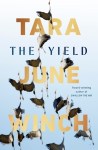
Tara June Winch, The yield (#BookReview)

Book coverTara June Winch’s novel, The yield, follows her impressive – and David Unaipon award-winning – debut novel Swallow the air (my review). Ten years in the making, The yield could be described as her “passion project”. It makes a powerful plea for Indigenous agency and culture.
I wrote about The yield’s genesis last year, but will repeat it here. It was inspired by a short course Winch did in Wiradjuri language run by Uncle Stan Grant Sr (father of Stan Grant whom I’ve reviewed here a couple of times). Discovering language was, she said, transformative, but turning her passion into a book proved tricky. She started with too broad a canvas, until her mentor, Nigerian Nobel Laureate Wole Soyinka, encouraged her to focus on 500 acres of land, telling her she could tell her story through that lens. So, she found her 500 acres on the Murrumbidgee, created fictional places – the Murrumby River, and the towns, Massacre Plains and Broken – and her novel started to take shape.

“that unhandsome truth”

But my, what a shape it takes. It has three, roughly alternating, narrative strands, each quite different in style but each reflecting or enhancing the other two. They are:

  • Poppy Albert Gondiwindi, dictionary writer, first person narrator. He is dying but is also a time-traveller, so, Winch said, his story has elements of magical realism. It’s told through the words in his dictionary, starting at the end of the alphabet, “a nod to the backwards whitefella world I grew up in”. “The dictionary”, Poppy says, “is not just words – there are little stories in those pages too.” There sure are. Through them Poppy tells the story of his and his people’s lives; he passes on as much of their culture as he has learnt and can tell; and he shares his hopes and values:

respectyindyamarra I think I’ve come to realise that with some things, you cannot receive them unless you give them too. Unless you’ve even got the opportunity to give and receive. Only equals can share respect, otherwise it’s a game of masters and slaves – someone always has the upper hand when they are demanding respect. But yindyamarra is another thing too, it’s a way of life – a life of kindness, gentleness and respect at once. That seems like a good thing to share, our yindyamarra.

  • August Gondiwindi, Poppy’s grand-daughter, third person voice. She tells a contemporary story of the 500 acres where the Gondiwindis live, and the challenges faced, including from mining and river degradation. Her story is about finding her place after living overseas for ten years. It’s a quest story, in a way, a little like that of Swallow the air’s protagonist. We meet her in Chapter 2 as she hears of the death of Poppy:

She knew that she had once known the beloved land where the sun slapped the barren earth with an open palm and knew too that she would return for the funeral … go back and try to find all the things she couldn’t find so many thousands of kilometres away.

(“Where the sun slapped the barren earth with an open palm”. Winch’s language throughout is gorgeous.)

  • Reverend Ferdinand Greenleaf, Lutheran missionary, first person voice. Winch created him, she said, to “round” out the story. He’s her villain, but she gives some balance, humanity, to him by sharing his own experience of loss of home and mother tongue. His story is told through the letter he writes in 1915 to Dr George Cross of the British Society of Ethnography about his experiences running a mission from the 1880s. The first instalment ends with why he is writing it:

To tell how wrongs became accepted as rights. … I will tell that unhandsome truth, even if it will amount to last words. The circumstances and the times demand it.

His story is the most problematic for readers because he, with good intentions, established the ironically named mission, Prosperous House, near the non-ironically named town of Massacre Plains. Indeed, Poppy writes in his dictionary that the Reverend was “the only good white gudyi” he’d known, gudyi meaning medicine man, priest, conjuror. Greenleaf’s heart is in the right place – having seen the “the vile inhumanity practised by the white-skinned Christian on his dark-skinned brother in order to obtain land and residence, for ‘peaceful acquisition'” – but of course he is a man of his times and his paternalistic actions have their own consequences. August sees the paradox in his “trying to protect those ancestors at the same time as punishing them”, while her aunt Missy takes a harsher stance.

These three stories span over 100 years from the late nineteenth century to the present, with Poppy Albert’s dictionary providing the novel’s backbone, spiritually, culturally, and plot-wise. August’s story, on the other hand, provides its emotional heart, while Greenleaf’s provides important historical context.

The stories don’t, then, just meander along side by side for their own sakes. Each contributes to an overall plot which concerns a proposed mine, and efforts to stop it – a story that is broadly reminiscent of non-Indigenous Australian author Madelaine Dickie’s Red can origami (my review). In both stories the Indigenous people need to invoke Native Title if they are to have a chance of stopping the mine, and in both stories competing interests and loyalties, not to mention a helping of skulduggery, work to prevent the Indigenous owners from progressing their claim.

In Winch’s story, Poppy’s dictionary, which documents not only language but his people’s ongoing connection to the land, together with a collection of artefacts that had been donated to a museum by local rich landowners, and the information in Reverend Greenleaf’s letter, are critical to the Native Title claim. August and her family’s challenge is to realise the relevance of and/or discover and locate these “proofs”, while others try to foil them. It’s the oft-repeated story across Australia when traditional owners, protestors and landowners, with competing or criss-crossing interests, confront development, particularly mines.

Threading through all this is the novel’s heart, August’s journey to find herself and her place of belonging, as she navigates her people’s painful history of being “torn apart”, of massacres and dispossession, of racism, of incarceration, and of abuse from both within and without her culture. These are stories we’ve heard before. However, Winch keeps them fresh and urgent by engaging with contemporary thought (concerning, for example, Indigenous agricultural practice and the idea of slavery) and by creating characters who feel real and authentic, who are complicated like those in Melissa Lucashenko’s Too much lip (my review), rather than simple mouthpieces for ideology.

For all the anger and sadness in the book, it is also a positive – perhaps even hopeful – one. Early on, Poppy’s wife and August’s grandmother, Elsie, tells her, “Please don’t be a victim”. This is, I’d say, Winch’s plea to her people, and is reinforced by Poppy’s dictionary words at the end in which he says the time for shame is over. It is time, in other words, to heal, to be proud, to embrace country with confidence.

The yield is a rewarding read. Its three very different voices challenge our minds to think carefully about what we are reading, while its plot and characters engage our hearts. I would be happy to see it win the Stella Prize next week.

Challenge logoLisa (ANZLitLovers) also loved the book and includes examples from Poppy’s dictionary.

Tara June Winch
The yield
Hamish Hamilton, 2019
344pp.
ISBN: 9780143785750

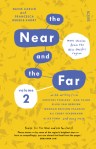
David Carlin and Francesca Rendle-Short (eds), The near and the far: More stories from the Asia-Pacific region, Vol. 2 (#BookReview)

Book cover

This anthology, like the first The near and the far volume, stems from a project called WrICE (Writers Immersion and Cultural Exchange), an intercultural and intergenerational program which “brings together Australian and Asia-Pacific writers for face-to-face collaborative residencies in Asia and Australia”. The most recent residencies have been in Indonesia (2018), The Philippines (2017) and China (2016). The editors write in their Introduction to this volume that these residencies provide a safe space in which writers come to trust “in a way that is powerful and unusual, that their bumbling work-in-progress and their wild hopes will be met with kindness.” This is probably why, as Maxine Beneba Clarke describes in her Forward, “the writing in this book veritably sings: it is a cacophony of poetry, essay-writing, fiction and nonfiction”.

This volume is structured similarly to the first, starting with the foreword and introduction, and concluding with some notes on WrICE and a list of contributors with mini-bios at the back. There is also, in this one, a conversation between the two editors. The works are again organised into three sections, this volume’s being Rites of passage, Connecting flights, and Homeward bound. For some reason, I enjoyed more of the pieces in first and third sections, than the second. There are 27 stories, with a little over half being by women; three are translated. As in the first volume, each piece is followed by a reflection by the author – on the writing process, their goals and/or their experience of WrICE.

To tame words with ideas (Nhã Thuyên)

Now the stories. Given the project, the writers are of course a diverse group, coming from Australia (including two First Nations writers), Vietnam, Indonesia, the Philippines, and elsewhere. I knew the Australians – Ali Cobby Eckermann, Alice Pung, Christos Tsiolkas, Ellen Van Neeerven – but most were new to me, which feels embarrassing, really.

I’m not sure I could ascertain a strong theme running through this collection as I did last time, but there is an overall sense of writers trying “to tame words with ideas” (“Utterances, by Nhã Thuyên, tr. by Nguyên-Hoàng Quyên), of trying to find the right words to articulate their ideas across diverse cultural spaces. I like this image of taming words with ideas. It suggests to me many things, including that words are hard to pin down, and that ideas/emotions/passions are hard to communicate in words. It is certainly something that you feel the writers working at in this book, some of them consciously, overtly, sharing their struggles with us.

I particularly liked the first section “Rites of passage”, with its pieces about, essentially, identity, though the subject matter includes issues like aging, coming out, postnatal depression, father-son relationships. Christos Tsiolkas in “Birthdays” writes of a gay man, grieving after the break-up of a longterm relationship, and facing aging alone. Told third-person, but with an immediacy that has you identifying with the narrator’s unhappy restlessness, his questioning of who he is, and where he is going, makes a perfect, accessible first piece for the anthology.

In “Eulogy for a career”, Asian Australian, Andy Butler explores the challenges of identity in white Australia, of finding his place, particularly as a young Asian-looking boy wanting to ballroom dance! He cynically notes that, after years of ostracism, he is suddenly, in this new pro-diverse world, being offered opportunities. “Progressive white people,” he writes, “can’t get enough of us”. But, he knows and we know how fragile this foundation is likely to be. First Nations writer Ellen van Neerven closes out this section with small suite of poems, “Questions of travel”, riffing on Michelle de Kretser’s novel of the same name. “When we travel”, she writes, “we walk with a cultural limp.” Our identities can be fluid or feral or freer – when we travel – but there are no easy answers to living and being.

In the second section, “Connecting flights”, the pieces are loosely linked by explorations of place and self. Mia Wotherspoon’s Iceland-set short story, “The blizzard”, exposes the moral and ethical complexities of contemporary political activism, while Steven Winduo’s “A piece of paradise” crosses continents, with characters from Papua New Guinea, Australia and the US pondering the possibility of intercultural relationships. Han Yujoo’s “Private barking” is one of the pieces that overtly addresses that challenge of taming words. “Sometimes we need a knife to write. (Or teeth)”, says Korean Yujoo, trying to write with her “little English”.

First Nations author, Ali Cobby Eckermann opens the last set with “Homeward bound”, a home-grounded poem set in a cave where self finds home in place, but knows it’s not secure. Else Fitzgerald’s  “Slippage” is a cli-fi short story, in which grief for the environment is paralleled by grief for a lost love. The very next story Lavanya Shanbhogue Arvind’s “A long leave of absence” is also about a lost love, this one due to a father’s forbidding the marriage, resulting in the narrator turning to alcohol. For each of these writers, home is fraught.

There are several pieces in this section that I’d love to share, but the one I must is deaf writer Fiona Murphy’s “Scripta Continua”. I must share it because it reiterates much of what Jessica White writes about in Hearing Maud (my review). This five-part piece takes us from the idea of “conversations”, which Murphy often feels like she is “peering into, rather than partaking in”, through the “spaces” (and silences) deaf people frequently inhabit, the fatiguing “attention” so necessary for communication, and the “writing” that helped her start to understand herself better, to “Auslan”, the sign language system that brings new, less fatiguing, ways of conversing and inhabiting space!

The final piece, “Wherever you are” by Joshua Ip, is a real treat. A long poem comprising 28 quatrains, it consistently flashed my memory with phrases and ideas that sounded familiar. Well, of course they did, because, as he explains in his closing reflection, “Each quatrain is a response to each writer’s gift, in sequence”! So 27 pieces, 27 quatrains in response, with a concluding one of his own. How clever, and what respectful fun many of them are. “Words span and spin the globe”, he writes. If you are interested in such words – touching, probing, confronting ones – I recommend this book.

Challenge logo

David Carlin and Francesca Rendle-Short (eds),
The near and the far: More stories from the Asia-Pacific region, Vol. 2
Melbourne: Scribe, 2019
295pp.
ISBN: 9781925849264

(Review copy courtesy Scribe)